Our readers keep the lights on and my smoothie glass nicely filled. As an Amazon Associate, I earn from qualifying purchases.
Choosing a VR headset in 2025 means deciding between standalone convenience, PC-powered fidelity, and specialized use cases like full-body motion capture. The market spans from wireless all-in-one units ideal for fitness and social gaming to high-end systems designed for simulation work and professional content creation, each with its own trade-offs in resolution, tracking accuracy, and ecosystem lock-in.
I’m Mohammad Maruf — the founder and writer behind WellFizz. I’ve spent hundreds of hours comparing optical stacks, chipset performance, battery life, and tracking methodologies across the full VR spectrum to build this definitive guide.
Whether you prioritize crisp pancake lenses, a high refresh rate OLED panel, or the flexibility of a modular mixed-reality system, this breakdown of the best current vr headset will help you match the right hardware to the experiences you actually want to play.
How To Choose The Best Current VR Headset
Before you settle on a headset, you need to match the hardware’s strengths to your primary use case. The core decision points are standalone versus PC-tethered, display technology, tracking type, and comfort for extended wear.
Standalone vs. PC VR: The Freedom-versus-Fidelity Trade-Off
Standalone headsets like the Meta Quest 3 and Quest 3S run the operating system and games directly on the onboard Snapdragon XR2 Gen 2 processor. No wires, no PC required. The trade-off is reduced graphical fidelity compared to a PC-tethered headset like the Valve Index or HTC Vive Pro Eye, which leverages your computer’s GPU for high-detail rendering. If you want to play wireless fitness games or social VR on the move, standalone is the way. For high-fidelity sim racing or flight simulation, a PC VR system is non-negotiable.
Display and Lens Technology: The Gateway to Immersion
Panel type (LCD vs. OLED), resolution, and refresh rate define clarity and motion handling. OLED panels deliver true blacks and richer contrast, while LCD panels often hit higher brightness and longer lifespan. Pancake lenses allow a thinner headset profile and sharper edge-to-edge clarity than older Fresnel lenses. A 120Hz refresh rate significantly reduces perceived motion sickness compared to 90Hz or 72Hz. For a premium current get, look for at least 1832×1920 per eye and 90Hz minimum.
Tracking System: Inside-Out vs. Base Station
Inside-out tracking, used by the Meta Quest 3 and HTC Vive XR Elite, uses onboard cameras to map your environment and controller positions. This eliminates the need for external sensors but has a blind spot behind the head. Base station tracking, used by the Valve Index and HTC Vive Pro, uses infrared towers placed in the room for sub-millimeter accuracy and full 360-degree tracking, essential for competitive esports and full-body motion capture setups. For most consumers, inside-out tracking is more convenient.
Comfort, Battery Life, and Ergonomics
VR sessions lasting more than 30 minutes demand balanced weight distribution. Headsets with a rear battery counterweight, like the HTC Vive XR Elite, distribute the mass evenly. Swappable batteries or USB-C pass-through charging are critical for all-day use. The facial interface material, padding thickness, and venting affect heat buildup and sweat management, especially during active fitness routines. Headsets with adjustable IPD and diopter dials accommodate a wider range of user vision profiles without wearing glasses.
Quick Comparison
On smaller screens, swipe sideways to see the full table.
| Model | Category | Best For | Key Spec | Amazon |
|---|---|---|---|---|
| Meta Quest 3 512GB | Standalone | Wireless Mixed Reality | 4128×2208 per eye / 120Hz | Amazon |
| Valve Index VR Full Kit | PC VR | High-Fidelity Gaming | 1440×1600 per eye / 144Hz | Amazon |
| HTC Vive XR Elite Deluxe Pack | Standalone + PC VR | Mixed Reality + Productivity | 3840×1920 / 90Hz / Diopter | Amazon |
| PlayStation VR2 Horizon Bundle | Console VR | PS5 Exclusive Games | 3840×2160 per eye / 120Hz OLED | Amazon |
| Meta Quest 3S 256GB | Standalone | Mixed Reality Starter | 2880×1600 / 120Hz | Amazon |
| Meta Quest 3S 128GB | Standalone | Budget Mixed Reality | 2064×2208 per eye / 90Hz | Amazon |
| Oculus Quest 2 256GB | Standalone | Entry-Level Wireless | 1832×1920 per eye / 90Hz | Amazon |
| Acer AH101-D8EY WMR | PC VR | Entry-Level PC VR | 1440×1440 per eye / 90Hz | Amazon |
| Oculus Rift S | PC VR | Affordable PC VR Gaming | 1440×1600 per eye / 80Hz | Amazon |
| HTC Vive Pro Eye | PC VR | Eye Tracking + Simulation | 1440×1600 per eye / 90Hz OLED | Amazon |
| Sony mocopi Pro Kit | Motion Capture | Full-Body Mocap | 12 Sensors / 10hr Battery | Amazon |
In‑Depth Reviews
1. Meta Quest 3 512GB

The Meta Quest 3 512GB is the standout all-in-one wireless headset on the market today. Its pancake lenses deliver a clear, edge-to-edge image that eliminates the blur common in Fresnel designs, and the nearly 30 percent resolution leap over the Quest 2 makes text and distant objects sharp. The Snapdragon XR2 Gen 2 processor handles demanding titles like Asgard’s Wrath II with fast load times and smooth frame pacing.
Dual RGB color cameras enable high-fidelity mixed reality passthrough, letting you place virtual objects around your real room without removing the headset. The default strap is adequate for light use, but the battery life at about two hours is the main limitation — most users will want a third-party battery strap for extended sessions. Wireless PC VR via Air Link or Virtual Desktop streams SteamVR titles without noticeable lag on a compatible router.
With 512GB of onboard storage, you can install dozens of games without managing space. The Touch Plus controllers use improved haptics for accurate feedback. Every aspect of this headset — from the clarity of pancake lenses to the thermal design that keeps the unit cool during fitness games — makes it the most versatile current get for both newcomers and veterans upgrading from Quest 2 or Rift.
Why it’s great
- Best-in-class pancake lens clarity with 4K+ Infinite Display
- True wireless standalone capability with 120Hz refresh rate
- Spacious 512GB storage for large game libraries
Good to know
- Battery life limited to about 2 hours per charge
- Default strap lacks counterweight; budget for a third-party Elite Strap
- Mixed-reality passthrough is grainy in low light
2. Valve Index VR Full Kit
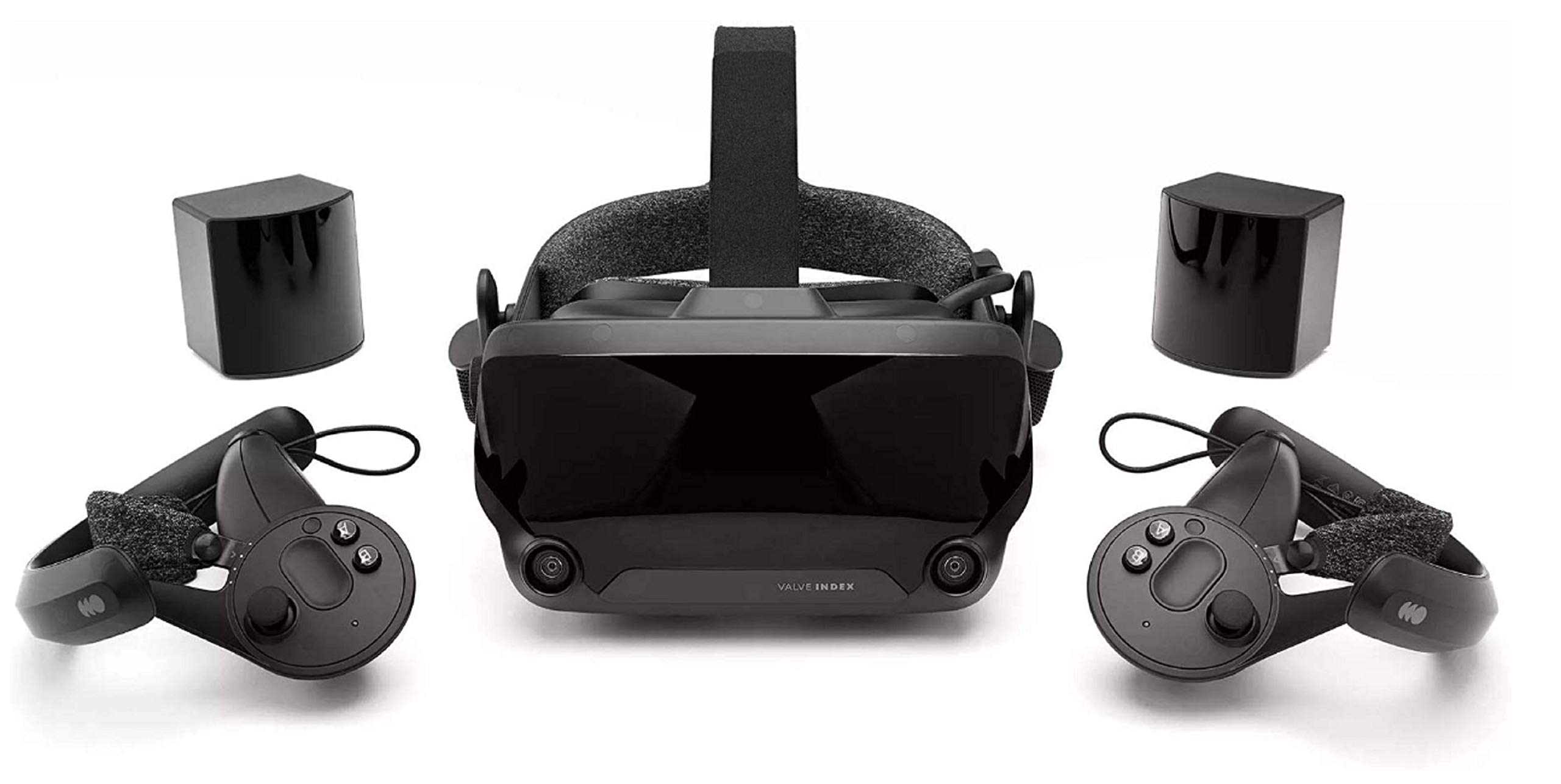
The Valve Index remains the gold standard for PC VR gaming. Its dual 1440×1600 LCD panels with full RGB subpixels drive a 144Hz refresh rate — the highest available in a mainstream headset — which dramatically reduces motion judder and eye strain in fast-paced titles like Beat Saber and Half-Life: Alyx. The 130-degree field of view is noticeably wider than the 110-degree standard, pulling you deeper into the scene without tunnel vision.
The SteamVR base station 2.0 tracking system delivers sub-millimeter position accuracy across an area up to 10 meters by 10 meters. The Index controllers use individual finger tracking, letting each finger move independently, which adds a layer of presence that simple button presses cannot match. The off-ear speakers produce spatial 3D audio without touching your ears, keeping you aware of real-world sounds.
The physical IPD adjustment ranges from 58mm to 70mm, accommodating a broad range of users. The headset is wired via a 10-meter breakout cable, requiring a VR-ready PC with DisplayPort and USB 3.0. Comfort is excellent thanks to the balanced overhead strap and ratcheting knob, though the 1.8-pound weight is noticeable during long sessions. For pure high-fidelity PC VR, nothing beats the Index’s combination of refresh rate and tracking accuracy.
Why it’s great
- 144Hz refresh rate for ultra-smooth motion
- Wide 130-degree field of view with precise IPD adjustment
- Full finger tracking through SteamVR Index controllers
Good to know
- Requires a powerful PC with DisplayPort output
- Wired tether limits movement range to cable length
- No standalone mode; fully dependent on PC ecosystem
3. HTC Vive XR Elite Deluxe Pack

The HTC Vive XR Elite is a modular headset that bridges standalone VR and PC VR. Its 3840×1920 combined LCD panels offer 19 pixels per degree, making text crisp for virtual desktop productivity. The standout feature is the stepless diopter dial — you can adjust focus from -7 to +7 diopters without wearing glasses under the headset — plus a physical IPD slider for a precise fit.
The hot-swappable battery is housed in the rear strap cradle, acting as a counterweight that makes the headset feel lighter than its actual weight. Inside-out tracking uses four wide-FOV cameras with full-color passthrough and a depth sensor for room scanning. The Deluxe Pack includes the upgraded Face Gasket 2.0, a firmer Deluxe Strap, Temple Clips, and a Mixed Reality Gasket that blocks external light for darker VR scenes.
Hand tracking is built in, allowing you to navigate the interface with natural finger gestures. When connected to a VR-ready PC via USB-C, the XR Elite handles low-latency SteamVR gaming. Battery life is around two hours per charge, but the swappable design means you can carry a spare and never stop. This headset excels for anyone who wants both productivity apps and high-end PC VR without being stuck to one platform.
Why it’s great
- Built-in diopter adjustment eliminates need for glasses
- Hot-swappable rear battery acts as counterweight for comfort
- Versatile standalone + PC VR hybrid capability
Good to know
- Standalone game library is smaller than Meta’s ecosystem
- 2-hour battery life requires carrying a spare for long sessions
- Full body tracking requires additional Vive Ultimate Trackers
4. PlayStation VR2 Horizon Call of The Mountain Bundle

The PlayStation VR2 delivers true OLED HDR visuals with a per-eye resolution of 2000×2040, offering inky blacks and vibrant colors that LCD panels cannot match. Each pixel renders at 120Hz, and the eye-tracking system drives foveated rendering — the GPU allocates detail only where your gaze lands, boosting performance without sacrificing the overall sharpness. The 110-degree field of view feels expansive, and the headset haptics add physical rumble that syncs with in-game events.
The Sense controllers use finger touch detection and adaptive triggers, similar to the DualSense experience. The setup is plug-and-play with a single USB-C cable to the PlayStation 5, making it the easiest high-fidelity VR system to get running. The Horizon Call of the Mountain bundle includes a full copy of the game, which showcases the headset’s contrast range and environmental detail at its best.
Compatibility is limited to the PS5 ecosystem, meaning no SteamVR or standalone apps. The cable is 4 meters long, which restricts room-scale movement compared to wireless alternatives. A few third-party adapters now offer limited PC compatibility, but this is not a system for general PC VR gaming. For PS5 owners who want the best console VR visuals, the PSVR2 is purpose-built and delivers a uniquely immersive experience.
Why it’s great
- Beautiful OLED HDR panels with true black levels and vibrant color
- Foveated rendering via eye tracking boosts GPU performance
- Simple single USB-C connection to PS5 with no calibration
Good to know
- Limited to PlayStation 5 ecosystem; no native PC support
- Wired 4-meter cable limits room-scale movement
- Sense controller battery life is around 4 hours
5. Meta Quest 3S 256GB
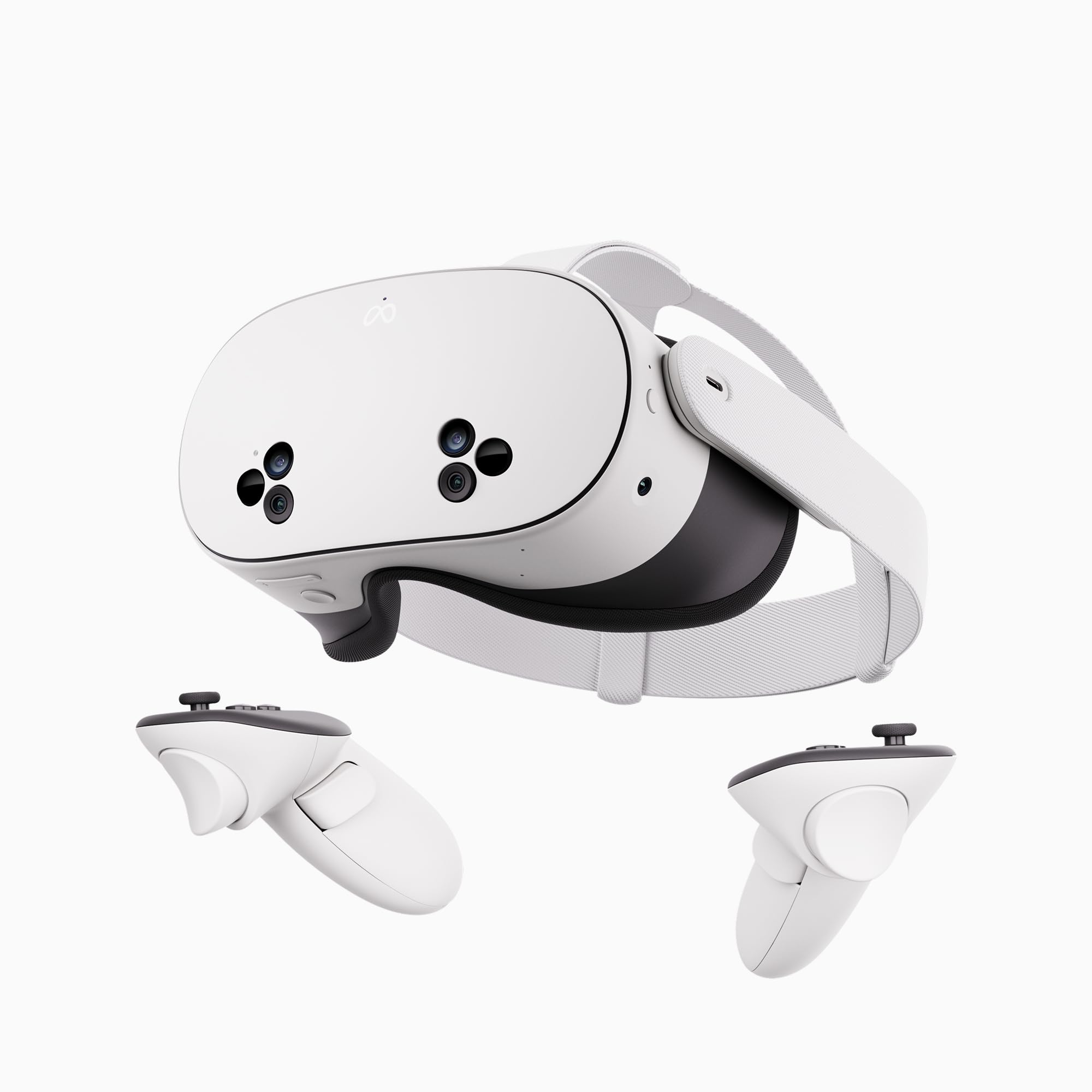
The Meta Quest 3S 256GB is the gateway to mixed reality gaming without the premium price tag. It uses the same Snapdragon XR2 Gen 2 processor as the full Quest 3, meaning apps load quickly and graphics run at 120Hz. The full-color passthrough cameras allow you to seamlessly place virtual objects in your real living room — playing Eleven Table Tennis on your actual table is as convincing as it sounds.
The all-in-one form factor means no PC, no cables, and no external sensors. The 256GB storage handles a moderate library of 15 to 25 apps and games, including system software. The included Touch Plus controllers offer responsive tracking in front of the headset, though they lose tracking if held behind you. Comfort is acceptable out of the box, but the fabric facial interface absorbs sweat — a silicone cover is a smart upgrade for active use.
Battery life is similar to the Quest 3 at about 2 to 2.5 hours. The 3S does not feature pancake lenses; it uses the older Fresnel design, which means clarity drops off toward the edges. For the price, this is an excellent entry point into mixed reality, but users who prioritize sharp edge-to-edge visuals should budget for the standard Quest 3. If you are new to VR and want to try mixed reality without a heavy investment, the 3S is the correct choice.
Why it’s great
- Same powerful XR2 Gen 2 chipset as the higher-end Quest 3
- Full-color mixed reality passthrough for immersive object blending
- Standalone wireless design, no PC required
Good to know
- Fresnel lenses have softer edge clarity compared to pancake lenses
- Battery life around 2 hours; needs external pack for long sessions
- 256GB fills quickly with large titles; 128GB version available
6. Meta Quest 3S 128GB
The 128GB version of the Quest 3S strips down the storage to lower the entry cost while retaining the same Snapdragon XR2 Gen 2 processor and 8GB of RAM. For a user who mainly plays shorter titles, streams content from the web, or uses the headset for social apps like VR Chat, 128GB holds plenty of software without filling up. The dual RGB cameras deliver the same color passthrough and room tracking as the larger storage variant.
At 90Hz refresh rate, motion is smooth for most games, though fast-twitch players will notice the difference if they have experienced 120Hz on other headsets. The 2064×2208 per-eye resolution offers respectable clarity for the price bracket, and the 90Hz refresh rate strikes a balance between battery life and visual fluidity. The included 3-month trial of Meta Horizon+ gives you immediate access to 40-plus games.
The trade-off is storage space — if you plan to buy many large titles like The Walking Dead: Saints & Sinners or Medal of Honor, you will hit capacity quickly and have to manage deletions. The rest of the hardware is identical to the 256GB version, including the Fresnel lenses and the standard strap. For someone on a tight budget who still wants the full mixed reality capability of the Quest 3 software suite, this is the most practical entry-level option.
Why it’s great
- Lowest entry price for a full mixed reality standalone headset
- No additional hardware needed — setup is out of the box
- 3-month trial unlocks a large game catalog immediately
Good to know
- 128GB fills quickly with AAA games; manage storage regularly
- Fresnel lenses lack edge-to-edge clarity of pancake optics
- 90Hz refresh is good but not as fluid as 120Hz alternatives
7. Oculus Quest 2 256GB

The Oculus Quest 2 may be a generation behind, but the 256GB refurbished model remains a solid entry-level wireless headset. It runs the Snapdragon XR2 Gen 1 processor, which handles most standalone games and apps at 90Hz. The 1832×1920 per-eye LCD panel provides adequate clarity for casual gaming and media consumption, and the 110-degree field of view matches many newer headsets.
The inside-out tracking uses four cameras on the front of the headset, offering reliable six-degrees-of-freedom tracking for room-scale gaming. The Touch controllers are responsive and comfortable, using the familiar Oculus button layout. The 256GB storage gives ample room for dozens of games and apps, making short work of any capacity concerns. Setting up a new unit requires a Facebook account, which remains a sticking point for privacy-conscious buyers.
The refurbished condition means you might encounter cosmetic wear, and a few users report battery degradation if the unit was used extensively before resale. The fabric facial interface can trap sweat, and the base strap lacks the rigid support of premium aftermarket alternatives. It runs the same software as the Quest 3, with slightly lower graphical fidelity and no mixed reality passthrough. For someone who just wants to try wireless VR at the lowest possible cost, this is a proven performer.
Why it’s great
- Proven, reliable standalone VR ecosystem with thousands of apps
- 256GB storage holds a substantial library
- Refurbished price offers the best per-dollar entry to wireless VR
Good to know
- Requires a Facebook account for setup and app purchases
- Lower resolution and no mixed-reality passthrough
- Battery degradation possible on older refurbished units
8. Acer AH101-D8EY Windows Mixed Reality

The Acer AH101-D8EY is a Windows Mixed Reality headset that offers a low-cost path to PC VR gaming. It uses two LCD panels at 1440×1440 per eye with a 90Hz refresh rate. The inside-out tracking cameras eliminate the need for external base stations, making the setup relatively simple — plug the HDMI and USB 2.0 cables into a compatible PC and install the Mixed Reality Portal software.
The 100-degree field of view is narrower than premium headsets, creating a more tunnel-like experience, but the 13-foot cable gives decent freedom for seated or standing play. The included Acer Motion Controllers are battery-powered and track accurately within the camera view, though they lose positional tracking if held behind your back. The headset is adjustable for head size and fits over glasses, which is helpful for users with vision correction.
The main drawback is the requirement for a PC with specific hardware — not all USB ports or HDMI 2.0 connections work reliably, and some users need a dedicated USB 3.0 PCIe card. The foam facial padding has been reported to peel near the nose after several uses, and the headset can trap heat against the face during longer sessions. For someone who already has a capable Windows PC and wants to explore VR without a big investment, the Acer WMR headset is a functional starting point.
Why it’s great
- No external base stations required for room-scale tracking
- Affordable entry point into PC-based VR gaming
- Fits comfortably over most prescription glasses
Good to know
- Setup can be hit-or-miss; may need PCIe USB and adapter
- Narrow 100-degree FOV creates a tunnel vision effect
- Foam padding near nose has durability concerns over time
9. Oculus Rift S

The Oculus Rift S is a PC-tethered headset that uses inside-out tracking via five onboard cameras, removing the need for external base stations like the original Rift. Its 1440×1600 per-eye LCD runs at a maximum of 80Hz, which is below the 90Hz standard of many newer headsets, though the reduced refresh is less noticeable during slower-paced simulator games. The halo-style headband distributes weight across the forehead, making it comfortable for extended sessions.
The Touch controllers are the same generation as the Quest 2’s, offering capacitive touch sensing for natural hand gestures. The Rift S requires a DisplayPort 1.2 output and a USB 3.0 port, and the cable is about 16 feet long, giving you good range of motion for standing and room-scale use within a small to medium play area. The integrated VR audio speakers provide adequate sound without headphones, though bass response is limited.
Tracking performance is generally good but can struggle when controllers are held close to the headset or behind the back. Some users report needing a dedicated USB 3.0 PCIe card for stable power delivery. The IPD adjustment is software-based, which does not work well for users outside the average IPD range — if your IPD is significantly above 67mm, expect blurry visuals. The Rift S remains a capable PC VR headset for those who already have a strong gaming PC and want a simpler tracking setup than the Rift CV1.
Why it’s great
- Five-camera inside-out tracking needs no external sensors
- Comfortable halo headband design for long sessions
- Integrated off-ear speakers keep ears free
Good to know
- 80Hz refresh is lower than competitors; more motion blur possible
- Software IPD adjustment does not physically shift lenses
- Requires DisplayPort and stable USB 3.0 connection
10. HTC Vive Pro Eye

The HTC Vive Pro Eye is built for professionals who need integrated eye tracking. The OLED panels deliver a per-eye resolution of 1440×1600 at 90Hz, with deep blacks and high contrast that improve depth perception in simulation environments. The built-in eye tracking goes beyond consumer features — it supports heatmapping, gaze analysis, and foveated rendering, which dynamically reduces GPU load by lowering detail outside your focal point.
The SteamVR 2.0 base stations provide room-scale tracking with sub-millimeter accuracy, locking at speeds up to 100 Hz for jitter-free 360-degree gameplay. The over-ear headphones with built-in microphone offer spatial 3D audio, isolating you from external noise. The ergonomic design distributes weight with a top strap and ratcheting headband that accommodates various head shapes without pressure points.
Setup involves mounting the base stations, connecting the link box via DisplayPort and USB, and running through calibration. The system works with SteamVR, supporting thousands of titles. The eye tracking calibration must be repeated for different users, and the software ecosystem for enterprise analytics requires additional licensing. The 13.8-pound package weight includes the base stations and controllers — the headset itself is well-balanced. If eye tracking is essential for research, training, or simulation development, the Vive Pro Eye remains the reference standard.
Why it’s great
- Integrated precision eye tracking for foveated rendering and analytics
- OLED panels with true blacks for high-contrast simulation
- SteamVR 2.0 tracking with sub-millimeter room-scale accuracy
Good to know
- Requires external base stations and wall mounting
- Eye tracking calibration must be run for each user
- Eye-tracking API is best suited for commercial/enterprise use
11. Sony mocopi Pro Kit

The Sony mocopi Pro Kit is not a VR headset in the traditional sense — it is a dedicated full-body motion capture system that pairs with headsets like the Meta Quest or Vive XR Elite for inverse kinematics-driven body tracking. The kit includes two sets of 8-gram sensor units — twelve in total — worn on the head, waist, wrists, ankles, arms, thighs, and hands, capturing slow straight arm raises and precise finger and knee orientations that standard VR headsets cannot register.
Each sensor runs for up to 10 hours on a single charge, and the system connects wirelessly to the included QM-PR1 receivers, which stream data to a PC or mobile app. The instant reset button on each receiver allows you to recalibrate your pose and position in seconds without interrupting a stream. The mocopi PC app supports real-time streaming to Unity, Unreal Engine, Blender, and Maya, making this a genuine tool for 3D animators and VRChat performers.
The major limitation is software lock-in — the sensors only work with Sony’s XYN Motion Studio and mocopi Link app; there is no direct SDK for Unreal or Unity without using the PC app bridge, and the pro-level export features require a monthly subscription. The tracking drift reported by some users means precise alignment fades after several minutes. For anyone building animated avatars or producing VR content that demands accurate full-body motion, the mocopi Pro Kit provides professional-grade capture in a portal form factor.
Why it’s great
- Twelve lightweight sensors deliver full-body capture with high precision
- 10-hour battery life supports all-day capture sessions
- Real-time streaming to Unity, Unreal, Maya, and Blender
Good to know
- Software ecosystem is restricted — no open SDK for direct engine integration
- Tracking drift can accumulate during longer recording sessions
- Pro-level export features require a monthly subscription
FAQ
What is the difference between a standalone headset and a PC VR headset for current gaming?
Do I need a high-end PC to use a current VR headset?
Can I use a PSVR2 headset with a PC for Steam games?
What is foveated rendering and which headsets support it?
Final Thoughts: The Verdict
For most users, the best current vr headset winner is the Meta Quest 3 512GB because it combines pancake lens clarity, a vast standalone game library, wireless freedom, and solid mixed reality passthrough into one affordable package. If you want the highest possible refresh rate and the most accurate base station tracking for competitive PC gaming, grab the Valve Index VR Full Kit. And for professional-level eye tracking and foveated rendering in simulation or training environments, nothing beats the HTC Vive Pro Eye.

Mo Maruf
I created WellFizz to bridge the gap between vague wellness advice and actionable solutions. My mission is simple: to decode the research and give you practical tools you can actually use.
Beyond the data, I am a passionate traveler. I believe that stepping away from the screen to explore new environments is essential for mental clarity and physical vitality.