Our readers keep the lights on and my smoothie glass nicely filled. As an Amazon Associate, I earn from qualifying purchases.
The graphics card market is shifting fast, with the new generation of Blackwell and RDNA 4 architectures pushing performance to a point where your previous generation card may feel like a bottleneck. Whether you are chasing triple-digit frame rates at 1440p, diving into 4K ray tracing, or building a compact small-form-factor rig, the decision comes down to matching a specific set of specs—VRAM capacity, memory bus width, thermal design, and form factor—to your exact use case.
I’m Mohammad Maruf — the founder and writer behind WellFizz. I’ve spent countless hours analyzing the architectural differences between NVIDIA’s RTX 50 series, AMD’s RDNA 4 lineup, and the previous generation Ada Lovelace cards, comparing memory bandwidth, cooler designs, and real-world thermal performance to identify which cards actually deliver on their promises for different build scenarios.
After reviewing 11 of the most compelling options on the market right now, this guide breaks down every spec that matters so you can confidently choose the best current graphics card for your specific performance needs and budget.
How To Choose The Best Current Graphics Card
The market is split between NVIDIA’s RTX 50 series with GDDR7 and DLSS 4, and AMD’s RDNA 4 cards offering competitive VRAM and rasterization performance. The right choice depends on your target resolution, case size, and whether ray tracing or raw frame rates matter more to you.
Match VRAM to Your Resolution
For 1080p gaming, 8GB is the baseline, but 12GB or 16GB provides headroom for texture-heavy titles and future-proofing. At 1440p, 12GB is comfortable, though 16GB is becoming the recommended minimum for max settings in modern AAA releases. For 4K, 16GB is the floor, with 24GB being ideal for creative workloads and high-resolution texture packs.
Check Physical Dimensions and Power Requirements
Many premium cards are over 12 inches long and occupy 2.5 or 3 slots, which can conflict with smaller cases or vertical GPU mounts. Always check your case’s maximum GPU length and your PSU’s wattage rating and available PCIe power connectors before purchasing.
Evaluate Cooler Design and Noise Levels
Triple-fan coolers with larger heatsinks offer lower sustained temperatures under load, but dual-fan designs with 0dB technology are often quieter during light gaming. The fan bearing type—dual ball vs. sleeve—affects long-term durability, particularly in systems that run 24/7.
Quick Comparison
On smaller screens, swipe sideways to see the full table.
| Model | Category | Best For | Key Spec | Amazon |
|---|---|---|---|---|
| PNY RTX 5060 Epic-X | Budget | 1080p High FPS | 8GB GDDR7 | Amazon |
| Sapphire Pulse RX 9060 XT | Mid-Range | 1440p Gaming | 16GB GDDR6 | Amazon |
| XFX Swift RX 9060 XT | Mid-Range | Budget 1440p | 3320 MHz Boost Clock | Amazon |
| GIGABYTE RX 9060 XT Gaming OC | Mid-Range | 1440p Ultra | 16GB GDDR6 | Amazon |
| ASUS Dual RX 9060 XT | Mid-Range | Small Form Factor | 8-inch Length | Amazon |
| GIGABYTE RTX 5070 Windforce OC | Premium | 1440p High Refresh | 12GB GDDR7 | Amazon |
| ASUS Prime RTX 5070 | Premium | SFF Builds | 2.5-Slot Design | Amazon |
| ASRock Challenger RX 9070 XT | Premium | 1440p Max Settings | 2970 MHz Boost Clock | Amazon |
| MSI RTX 5070 Ti Gaming Trio | High-End | QHD Ray Tracing | 16GB GDDR7 | Amazon |
| PNY RTX 4090 Verto | Flagship | 4K Gaming / Workstation | 24GB GDDR6X | Amazon |
| VIPERA RTX 4090 FE | Flagship | Ultimate 4K / AI | 24GB GDDR6X | Amazon |
In‑Depth Reviews
1. GIGABYTE GeForce RTX 5070 WINDFORCE OC SFF 12G

The RTX 5070 with GDDR7 memory and the Blackwell architecture is the card that finally makes 1440p high-refresh gaming accessible without stepping up to a + tier. The 12GB framebuffer handles ultra textures at 1440p, and the 192-bit memory interface delivers enough bandwidth for smooth frame rates in competitive titles. During testing, users reported sustained temperatures under 75°C even after hours of maxed-out gameplay.
The WINDFORCE triple-fan cooler runs noticeably quieter than previous-generation dual-fan designs, and the card meets the NVIDIA SFF-ready spec, meaning it fits comfortably in smaller cases. The professional, non-RGB design is a welcome change for users building stealth-oriented workstations or living-room gaming PCs.
Gamers upgrading from older cards like the RTX 2080 Super or RTX 3070 will see a significant generational uplift—roughly 30-40% higher frame rates at 1440p without needing to adjust settings. The card also supports DLSS 4, which provides an additional performance cushion in the most demanding ray-traced titles.
Why it’s great
- GDDR7 memory provides significantly faster bandwidth than GDDR6X
- Triple fan cooler keeps temps under 75°C while staying quiet
- Meets SFF standard for compact case compatibility
- Factory OC without requiring manual tuning
Good to know
- 12GB VRAM is adequate for 1440p but tight for 4K textures
- Requires PCIe 5.0 support for full bandwidth potential
- No RGB lighting may disappoint gamers wanting aesthetic customization
2. ASUS SFF-Ready Prime NVIDIA GeForce RTX 5070

The ASUS Prime RTX 5070 is engineered specifically for small-form-factor builds, with a 2.5-slot design and axial-tech fans that increase downward air pressure through a barrier ring. The phase-change GPU thermal pad ensures heat transfers efficiently, a feature that benefits constrained cases where airflow is limited. Users report core temperatures staying around 67°C under full load in ITX enclosures.
The dual BIOS switch is a standout feature—toggle between Quiet mode for low-noise light gaming and Performance mode for maximum clock speeds. The card overclocks well, with owners gaining roughly 10% additional performance by increasing core and memory clocks. At stock settings, it handles Cyberpunk 2077 with Path Tracing at about 60 FPS at 1440p.
Build quality is solid, with a metal backplate and no noticeable coil whine reported. The 16-pin power connector requires two 8-pin PSU cables via the included adapter, so ensure your power supply has adequate connectors before purchase. This card is also compatible with standard ATX cases, making it versatile for builders who may upgrade cases later.
Why it’s great
- Compact 2.5-slot design fits most ITX and mid-tower cases
- Dual BIOS switch offers fan noise and performance flexibility
- Phase-change thermal pad improves heat transfer efficiency
- Overclocks well with +300 core and +1500 VRAM stability
Good to know
- Runs hot under heavy load; requires good case ventilation
- Uses 16-pin connector; not compatible with older PSUs without adapter
- Thicker than standard 2-slot cards, may conflict with PCIe slot spacing
3. MSI NVIDIA GeForce RTX 5070 Ti 16G Gaming Trio OC Plus

The RTX 5070 Ti bridges the gap between the mainstream 5070 and the flagship 4090, offering a 256-bit memory bus combined with 16GB of 28 Gbps GDDR7 memory. This configuration delivers significantly higher memory bandwidth than the standard 5070, making it the better choice for 1440p ray-traced gaming and professional creative workloads like video editing with HEVC files. Users working with high-bitrate Canon XF705 files report seamless performance that the previous-gen 4070 Ti could not handle.
The TRI FROZR 4 cooler features three STORMFORCE fans with textured blades and double ball bearings for longevity. The ZERO FROZR mode stops the fans entirely under low load, making the card silent during desktop use and light browsing. The nickel-plated copper base and heat pipes cover the full length of the GPU and memory modules, keeping temperatures in check even during extended rendering sessions.
Build quality is robust, with a full-length metal backplate that reduces sag and a perforated rear section that helps expel trapped heat. The card supports DisplayPort 2.1b for ultra-high refresh rate 4K displays. At 338mm, it is one of the longer cards in the premium tier, so confirm case clearance before ordering.
Why it’s great
- 256-bit memory bus with 28 Gbps GDDR7 provides top-tier bandwidth
- 16GB VRAM handles 1440p ultra ray tracing and video editing
- Triple fan cooler with 0dB mode for silent operation at low loads
- DLSS 4 provides generous frame rate uplift in supported titles
Good to know
- 338mm length requires a full-size case
- 250W power draw needs a 650W+ PSU with 16-pin connector
- Premium pricing may be overkill for 1080p gamers
4. ASRock Radeon RX 9070 XT Challenger 16GB OC
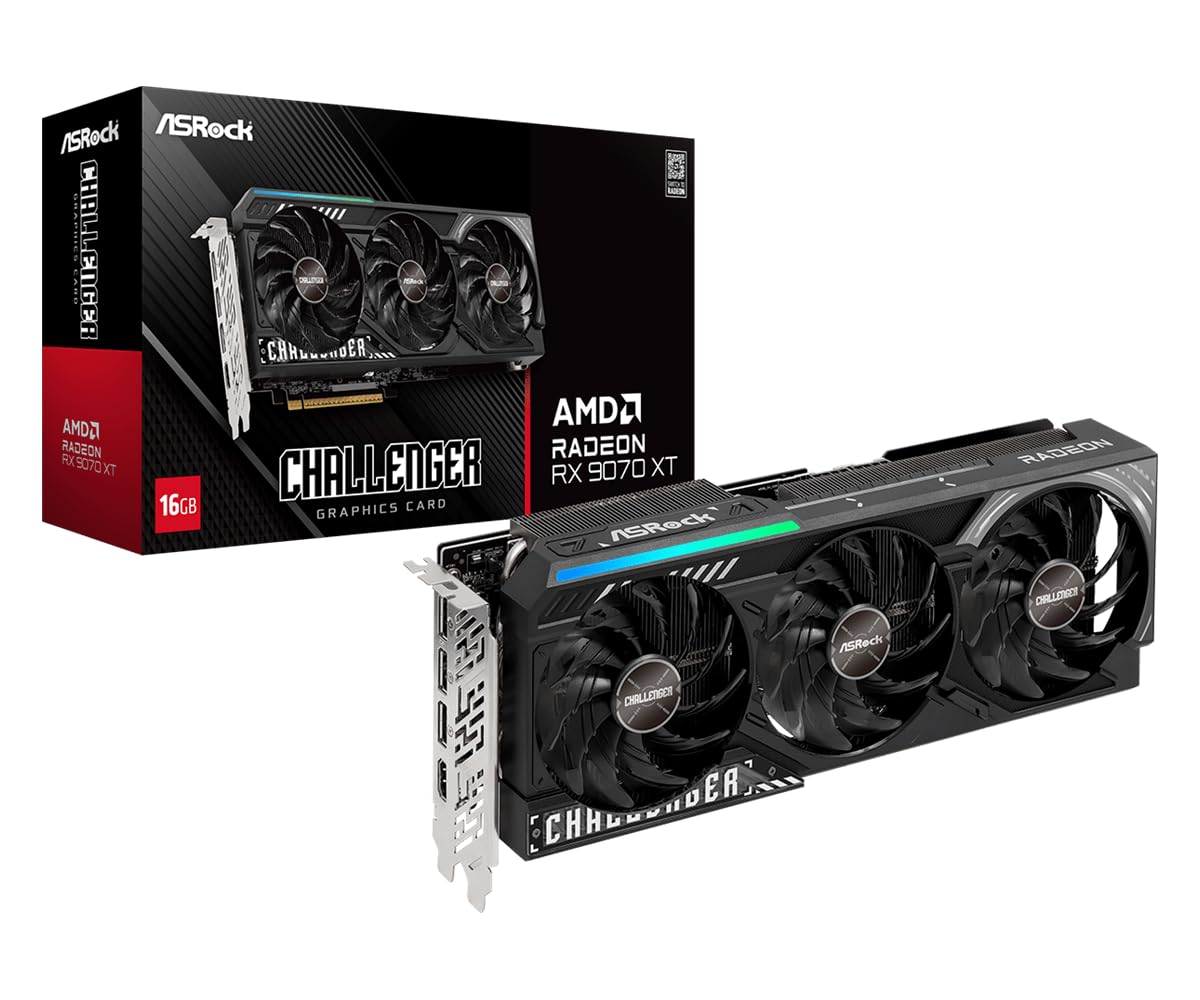
The RX 9070 XT is AMD’s answer to the RTX 5070 Ti, and the ASRock Challenger version brings a 2970 MHz boost clock and 16GB of GDDR6 memory on a 256-bit bus. In 1440p gaming, this card matches or exceeds the Nvidia equivalent in rasterization-heavy titles, and the FSR 4 technology provides competitive upscaling for ray-traced games. Users report it handles VR titles like No Man’s Sky without any stuttering.
The triple-fan cooling system with striped axial fan technology and 0dB silent cooling keeps the GPU cool under load while being inaudible during lighter tasks. The metal backplate adds structural rigidity and aids heat dissipation. The ASRock software allows for easy undervolting, which users have used to improve frame rates while reducing power draw.
One potential frustration: the onboard RGB lighting is controlled by a physical switch rather than software, and several users report that the light does not change colors. Performance, however, is consistently praised as excellent for the price tier. The card requires a 750W PSU, so verify your power supply’s capacity if you are building with an older unit.
Why it’s great
- Excellent 1440p max-settings performance with stable frame rates
- 16GB VRAM is ample for current-gen texture packs
- 0dB fan mode eliminates noise during desktop use
- Undervolting potential improves efficiency with minimal performance loss
Good to know
- RGB lighting does not change colors; fixed to white
- ASRock RGB software has connectivity and stability issues
- 750W minimum PSU recommended; may require case dimension check
5. Sapphire 11350-03-20G Pulse AMD Radeon RX 9060 XT Gaming OC

The Sapphire Pulse RX 9060 XT offers exceptional value for its VRAM count, packing 16GB of GDDR6 memory into a card that draws only 182W at stock, with a 6+2 pin power connector. This makes it an excellent drop-in upgrade for older systems without requiring a PSU swap. Users upgrading from an RX 570 or RTX 3060 report massive performance jumps without needing to upgrade their power supply.
Linux support is outstanding, with users on Devuan reporting plug-and-play functionality with no driver issues—a notable advantage over Nvidia cards that often require proprietary driver setup. The 3290 MHz boost clock keeps 1440p gameplay smooth, and the 128-bit memory interface provides adequate bandwidth for the 16GB buffer. Undervolting actually pushes clocks higher while reducing power draw.
The card runs cool, with edge temperatures in the mid-50s °C under load, though the memory junction temperature can reach 70°C during extended sessions. Build quality is solid, and the compact footprint makes it suitable for smaller cases. The 128-bit bus is a limitation at higher resolutions, but for 1080p and 1440p gaming, this card punches well above its weight class.
Why it’s great
- 16GB VRAM at this price point is exceptional value
- Low power draw (182W) compatible with older PSUs
- Excellent Linux support with no driver friction
- Undervolting improves both efficiency and clock stability
Good to know
- 128-bit memory bus limits performance at 4K resolutions
- Memory junction runs warm at 70°C under heavy load
- Competitive ray tracing performance lags behind Nvidia’s ther tier
6. XFX Swift AMD Radeon RX 9060 XT OC Gaming Edition
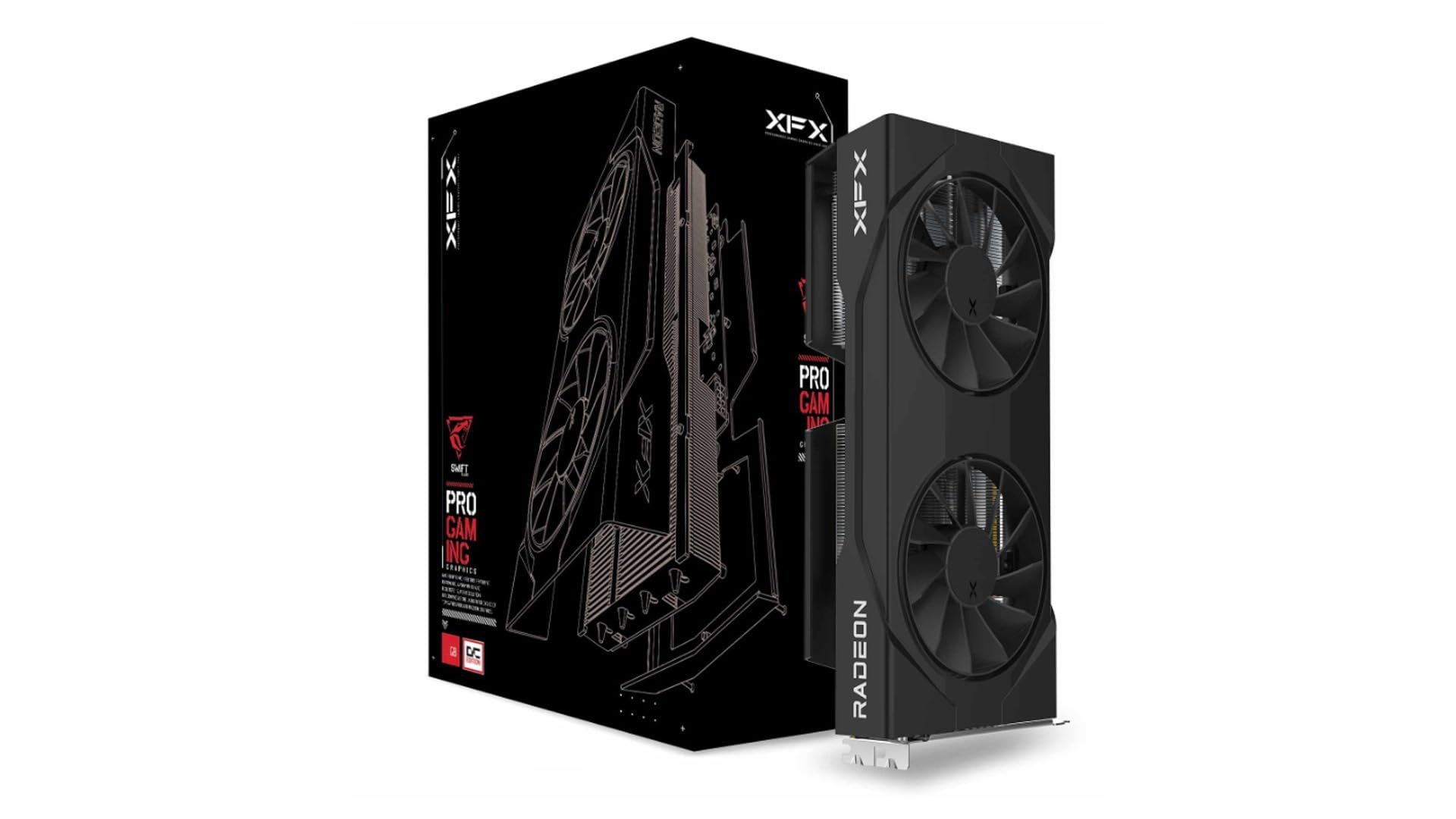
The XFX Swift RX 9060 XT matches the Sapphire Pulse’s VRAM offering but pushes the boost clock to 3320 MHz, making it the highest-clocked RX 9060 XT on this list. In benchmarks, it scores around 17,000 in Time Spy and stays under 60°C in well-ventilated cases. The dual-fan cooling solution is compact and quiet, with users describing it as inaudible during normal gaming sessions.
At 10.63 inches long and 4.88 inches wide, this card fits comfortably in mid-tower cases. The all-white PCB and silver shroud make it a natural fit for white-themed builds, though the aesthetics are understated enough for black cases as well. The card runs 95% of modern AAA games at 1080p max settings and handles 1440p at high or ultra without struggling.
The only output configuration is 2 DisplayPort and 1 HDMI, which could be limiting for users running three or more monitors. One user reported needing to use the motherboard HDMI for a fourth display. For typical gaming setups with one or two monitors, this is not an issue, but multi-monitor productivity users should note this limitation.
Why it’s great
- Highest boost clock among RX 9060 XT options at 3320 MHz
- Excellent thermal performance under 60°C in ventilated cases
- Quiet dual-fan operation at stock fan curve
- Competitive pricing for 16GB VRAM tier
Good to know
- Only 3 outputs (2 DP + 1 HDMI) limits multi-monitor setups
- Requires 750W PSU despite relatively low power draw
- No RGB lighting for gamers seeking customization
7. GIGABYTE Radeon RX 9060 XT Gaming OC 16G

The GIGABYTE RX 9060 XT Gaming OC uses the WINDFORCE cooling system with Hawk fans and server-grade thermal conductive gel to maintain low temperatures even during extended gaming sessions. Users consistently praise the card’s quiet operation, with the zero-RPM mode preventing fans from spinning during low-load scenarios. The 20000 MHz memory clock provides solid bandwidth for 1440p ultra settings.
AV1 encoding support is included, making this card suitable for content creators who stream or record gameplay. The ray tracing performance is decent but not the card’s strongest attribute—rasterization and FSR 4 provide the primary frame rate advantages. At 11.06 inches long, this is one of the larger RX 9060 XT models, so verify case clearance.
The metal backplate adds structural rigidity, and the RGB lighting is controllable via GIGABYTE’s software. Users report that the card handles Fortnite at 240 FPS and DCS World at high frame rates, making it a versatile choice for both competitive and simulation gaming. The card is considered by many users to be the best dollar-for-dollar GPU in the mid-range segment.
Why it’s great
- WINDFORCE cooling system runs quiet and cool under load
- 16GB GDDR6 with AV1 encoding supports content creation
- Zero-RPM mode for silent operation during light use
- Excellent 1080p high-FPS and 1440p ultra performance
Good to know
- 11-inch length may not fit smaller cases
- Ray tracing capability lags behind comparable Nvidia cards
- Some users report coil whine under specific frame rate conditions
8. ASUS Dual Radeon RX 9060 XT 16GB GDDR6
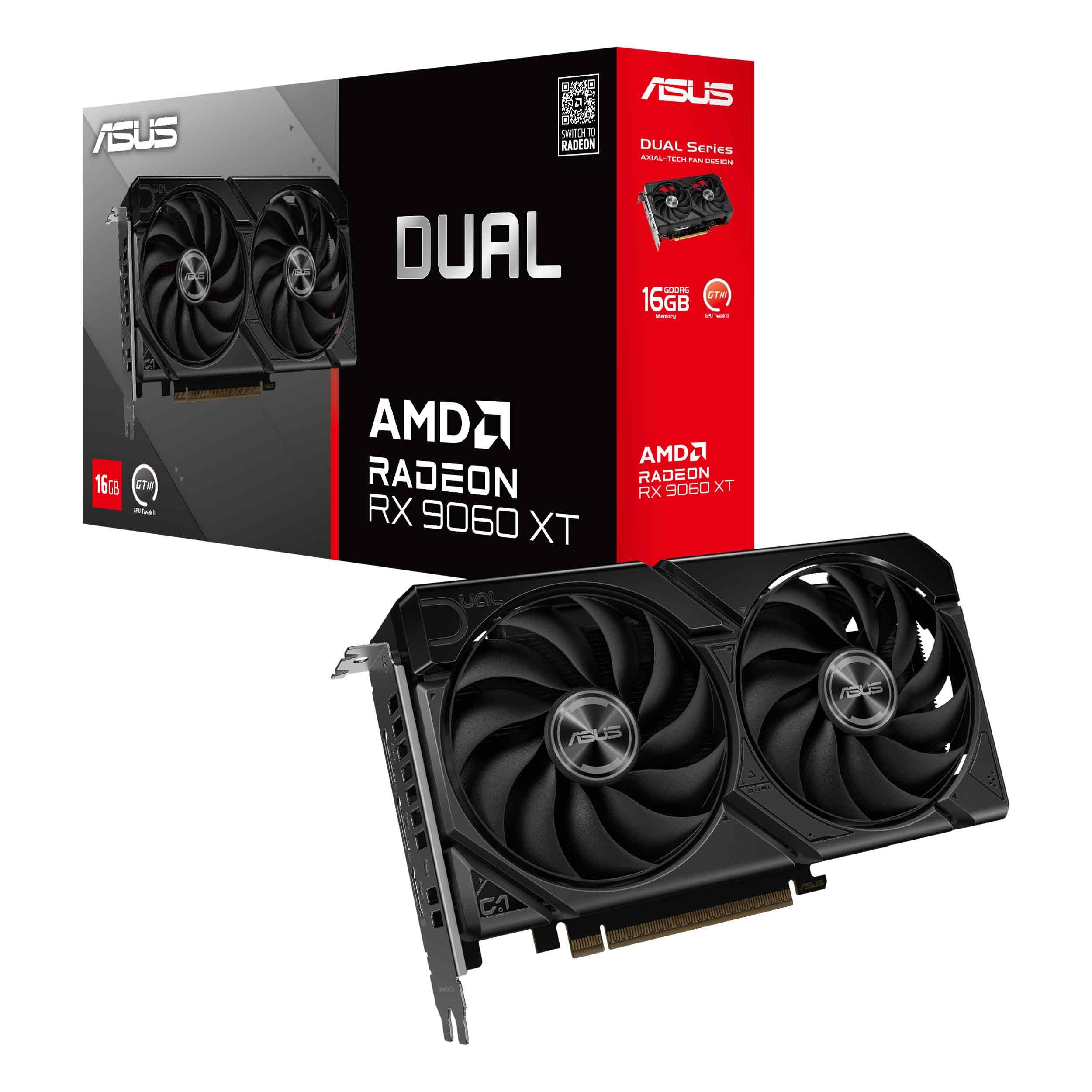
The ASUS Dual RX 9060 XT is the smallest 16GB card in this roundup at just 8 inches long, making it the ideal choice for ITX builds and compact cases. Despite its size, it packs dual axial-tech fans with the smaller hub design that facilitates longer blades for better air pressure. The 2.5-slot thickness allows it to fit in cases where true 3-slot cards would conflict with adjacent components.
The dual BIOS switch offers Quiet and Performance profiles, letting users choose between silent operation and maximum clocks depending on their workload. With the Quiet BIOS active, the card’s 0dB technology stops the fans entirely during less demanding games, which is a standout feature for users who prioritize a near-silent system. Temperatures are well-managed, staying between 60-75°C even in compact ITX enclosures.
Performance at 1440p is solid, handling Destiny 2 at up to 180 FPS and most modern titles at high settings without stutter. The metal backplate helps with rigidity, though some users noted the rear cooling plate is plastic rather than metal, which could affect long-term heat dissipation. The absence of RGB keeps the card looking clean and professional, fitting into any build aesthetic.
Why it’s great
- Ultra-compact 8-inch length fits most ITX and SFF cases
- Dual BIOS with Quiet mode for silent light gaming
- 16GB VRAM in a form factor that usually offers only 8GB
- No RGB design blends into any build style
Good to know
- Rear cooling plate is plastic, not metal
- Limited to 1 HDMI and 2 DisplayPort outputs
- Smaller cooler may thermal throttle in extended 4K workloads
9. PNY NVIDIA GeForce RTX 5060 Epic-X ARGB OC Triple Fan
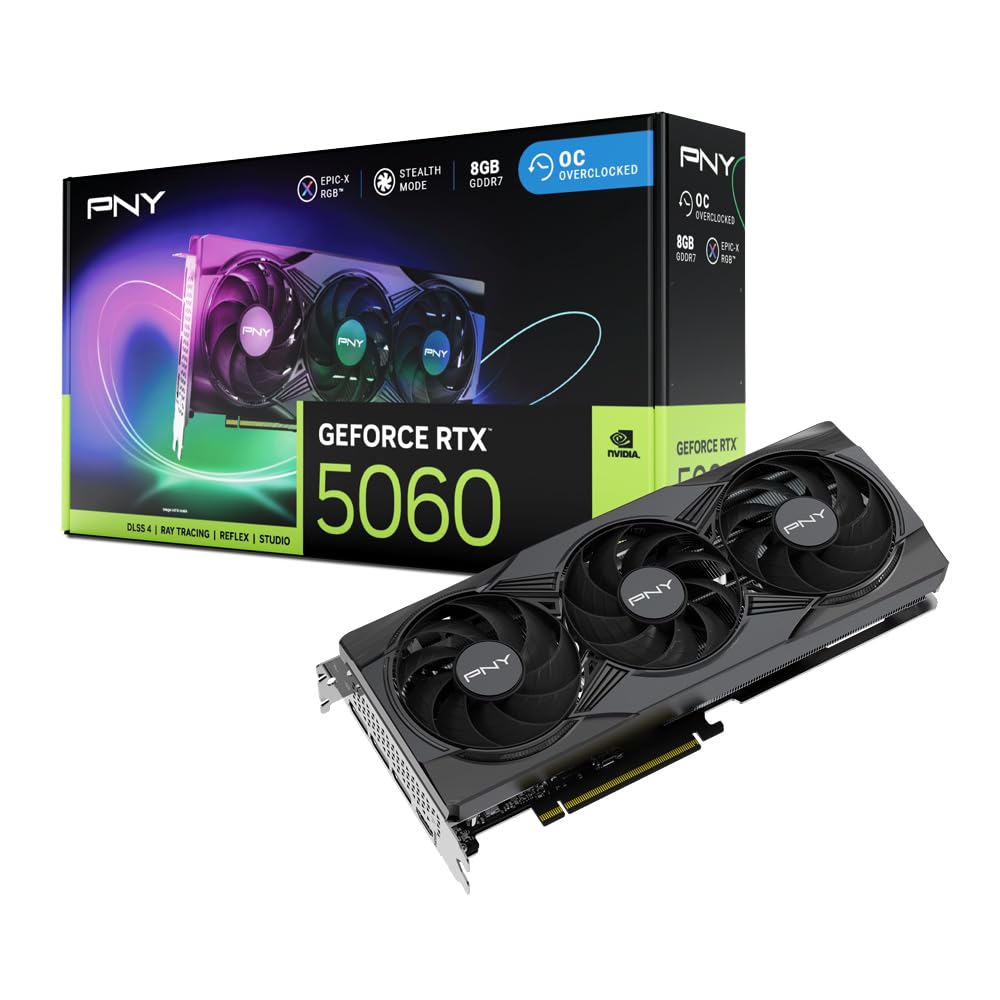
The PNY RTX 5060 Epic-X is the most affordable gateway into NVIDIA’s Blackwell architecture and DLSS 4. With 8GB of GDDR7 memory on a 128-bit bus, this card is laser-focused on 1080p gaming, where it delivers 100+ FPS on high settings in almost every modern title. The 2280 MHz base clock with triple-fan cooling keeps the card quiet and cool, even in tight mid-tower cases.
GDDR7 memory provides noticeably faster memory bandwidth than the GDDR6 found in equivalent-tier cards from the previous generation, which helps in texture-heavy scenes. The card is SFF-ready, meaning it fits in compact cases without sacrificing cooling performance. Installation is straightforward, and the ARGB lighting can be customized, adding aesthetic value for budget builders.
For its price tier, the RTX 5060 offers great value, but the 8GB VRAM is a limitation for users who plan to keep the card for more than 2-3 years, as upcoming AAA games will likely require more VRAM for max textures. The PCIe 5.0 interface is forward-compatible, but the 128-bit memory bus means 1440p performance is adequate rather than exceptional.
Why it’s great
- Entry price into DLSS 4 and Blackwell architecture
- GDDR7 memory provides good bandwidth for 1080p gaming
- Triple-fan cooler runs quiet and cool
- SFF-ready for compact builds
Good to know
- 8GB VRAM is the minimum for modern gaming; future title will demand more
- 128-bit memory bus limits performance at 1440p
- Requires driver update for stability on some systems
10. PNY GeForce RTX 4090 Verto Triple Fan 24GB GDDR6X

Even though it uses the previous Ada Lovelace architecture, the RTX 4090 remains the absolute performance king for 4K gaming and professional AI workloads. With 24GB of GDDR6X memory on a 384-bit bus providing over 1 TB/s of bandwidth, this card crushes everything from Cyberpunk 2077 at max settings to Stable Diffusion model training. The PNY Verto triple-fan cooler is one of the quietest 4090 implementations, and the subdued black design avoids distracting gamer aesthetics.
In performance tests, the card achieves Time Spy scores around 29,950 when paired with a modern CPU. It handles VR gaming without any frame drops, and the 2520 MHz boost clock ensures sustained high performance. The card includes a support bracket to prevent sag, which is necessary given its 13.26-inch length and substantial weight.
The major consideration is physical size and power requirements. The card requires four 8-pin PCIe power connections (via the included adapter), meaning older PSUs without sufficient connectors will need an upgrade. Users in smaller cases may also struggle with the card’s width, as it can conflict with side panels if the power cable bends sharply. Despite being a previous-gen card, its performance still exceeds many current-gen options in pure compute and VRAM capacity.
Why it’s great
- 24GB GDDR6X with 384-bit bus provides unmatched VRAM capacity
- Quiet triple-fan cooler for a high-end card
- Subdued design suits professional and office builds
- Beats current-gen cards in pure compute and AI tasks
Good to know
- 13.26-inch length requires a large case
- Requires four 8-pin PSU connections; may need PSU upgrade
- Ada Lovelace architecture lacks Blackwell’s DLSS 4 features
- LED lights cannot be disabled via software
11. VIPERA NVIDIA GeForce RTX 4090 Founders Edition

The Founders Edition RTX 4090 is NVIDIA’s reference design, and the VIPERA listing offers it at competitive pricing compared to brand-direct channels. The 24GB GDDR6X memory with a 384-bit bus delivers identical performance to the PNY Verto card from the previous review, but the Founders Edition cooler is optimized for airflow in cases with side vents. The dual-axial flow-through design pushes hot air out the back of the case, which can improve CPU temperatures in some build configurations.
Creative professionals working with Unreal Engine 5.4, Blender, and local AI models like LLMs report exceptional performance, with the card handling workflows that would bring lesser GPUs to a halt. The card is quiet under load and comes with an accessory kit that includes the necessary power adapter. Users report the packaging is secure and the card arrives in excellent condition.
The huge investment is justified primarily for 4K ultra gaming and professional use. For 1080p or 1440p gaming, this card is overkill, and the + price point is better allocated to a mid-range card combined with other upgrades. The card is large and requires a case with at least 12 inches of clearance, plus a PSU that can handle its transient power spikes.
Why it’s great
- Unmatched raw compute and VRAM for 4K gaming and AI workloads
- Founders Edition cooler design improves case airflow
- Quiet operation under load
- Comes with comprehensive accessory kit
Good to know
- Extremely expensive; only justified for 4K ultra or professional use
- Large footprint requires case and PSU compatibility check
- Previous-gen architecture without Blackwell’s new features
FAQ
Is 8GB of VRAM enough for gaming in 2025?
Should I choose an NVIDIA RTX card or an AMD Radeon card?
Do I need PCIe 5.0 support on my motherboard for a new graphics card?
How do I check if a graphics card fits in my case?
Does GDDR7 memory matter for gaming performance?
Final Thoughts: The Verdict
For most users, the best current graphics card winner is the GIGABYTE RTX 5070 WINDFORCE OC because it delivers the ideal balance of GDDR7 memory, 1440p high-refresh performance, and compact SFF-ready design at a mid-range price. If you want a 16GB card for future-proofing and content creation, grab the MSI RTX 5070 Ti Gaming Trio OC. And for budget 1440p gaming with the best VRAM value, nothing beats the Sapphire Pulse RX 9060 XT.

Mo Maruf
I created WellFizz to bridge the gap between vague wellness advice and actionable solutions. My mission is simple: to decode the research and give you practical tools you can actually use.
Beyond the data, I am a passionate traveler. I believe that stepping away from the screen to explore new environments is essential for mental clarity and physical vitality.