Our readers keep the lights on and my smoothie glass nicely filled. As an Amazon Associate, I earn from qualifying purchases.
The jump from bottle to cup is a messy milestone. You want your toddler to learn independent sipping without painting the kitchen floor, and you need a cup designed for tiny hands, tender gums, and the inevitable drops. The best options combine a soft, easy-flow spout with a leak-resistant seal and handles that give your child real control.
I’m Mohammad Maruf — the founder and writer behind WellFizz. I’ve analyzed dozens of transition cups by spec, customer feedback, and real-world use patterns to find the designs that actually make this phase easier.
After checking materials, spill ratings, and ease of cleaning across five leading models, I’ve narrowed the field to the cup to transition from bottle that parents and toddlers actually love.
How To Choose The Best Cup To Transition From Bottle
The right transition cup balances a gentle learning curve with a parent-proof cleanup process. You need a spout that feels familiar to a bottle nipple, a seal that survives the upside-down treatment, and a cup body a 12-month-old can actually palm. Here are the key factors to weigh.
Spout Material and Flow Control
Soft silicone spouts mimic the feel of a bottle nipple, making the switch less jarring for your baby. Look for a bite-resistant silicone that won’t collapse under pressure. A two-piece valve inside the cup controls the flow — too much flow means choking risk, too little means frustration. The sweet spot is a straw or spout that releases liquid when the baby actively sucks but stops immediately when they pause.
Leak-Proofing and Lid Design
A leak-proof cup has a silicone gasket or valve that seals the lid and spout cavity. Some cups use a simple snap-on lid that stays secure until the toddler learns to pull it off, while others add a hinged cap that covers the spout between drinks. Test the seal by tipping the closed cup upside down before buying — the best ones show zero drips even when shaken.
Handle Ergonomics and Cup Shape
Tiny hands need handles that are thick enough to grip but positioned low enough to reach. An hourglass cup body lets the child hold the cup directly while still offering handles as a backup. Cups with contoured sides reduce the need for handles altogether, which helps with the transition to an open cup later.
Material Safety and Cleaning Ease
Beyond BPA-free, look for cups made from PPSU or Tritan — these materials withstand high-temperature sterilization and repeated drops without clouding or cracking. Medical-grade platinum silicone is the gold standard for spouts because it resists bacterial growth better than standard silicone. Top-rack dishwasher-safe parts simplify daily cleaning, but a wide mouth opening is even more important so you can scrub inside with a brush.
Quick Comparison
On smaller screens, swipe sideways to see the full table.
| Model | Category | Best For | Key Spec | Amazon |
|---|---|---|---|---|
| Joypony Sippy Cup | Premium Straw Cup | Spill-proof 360° drinking | 9 oz capacity with PPSU body | Amazon |
| Tommee Tippee Transition Sippy | Soft Spout Cup | Bottle-to-cup beginners | 5 oz with leakage-proof valve | Amazon |
| Infantino My 1st Tumbler | Straw Training Cup | Experienced straw drinkers | 10 oz with textured grip handle | Amazon |
| Re-Play Transition Sippy | Spout Training Cup | Eco-conscious families | 8 oz with medical-grade silicone spout | Amazon |
| The First Years Take & Toss | Budget Party Pack | High-volume daycare use | 10 oz with snap-on spill-resistant lid | Amazon |
In‑Depth Reviews
1. Joypony Sippy Cups for Toddlers

The Joypony stands out for its PPSU construction — a material that resists cracking after high-temperature sterilization and survives multiple drops better than standard polypropylene. The 9-ounce capacity is generous for a toddler cup, and the gravity-weighted straw ball lets your child drink from any angle, including lying down. The four-layer anti-leak design means zero spills even when the cup is shaken upside down, which is the real test for any transition cup.
The straw uses a V-shaped valve that releases water only when your child bites and sucks, which helps control the flow rate and reduces choking risk. Parents report that the flow is better than many competing straw cups, though some toddlers need a few tries to find the right sipping point. The extra silicone straw included is a practical touch — replacements aren’t always easy to find for other brands. The dinosaur design is a bonus, but the real value is the leak-proof performance and durable build.
Cleaning is straightforward thanks to the wide neck, though the flexible weighted straw does have a small internal section that needs a thorough rinse. All parts are dishwasher safe, but hand washing the straw with a pipe cleaner ensures no milk residue lingers. The lid folds back 180 degrees and locks, so it won’t slide down and touch your child’s face during drinking.
Why it’s great
- PPSU body withstands heat and drops better than polypropylene
- Completely spill-proof during upside-down play
- Includes a spare silicone straw for long-term use
- Weighted straw works from any drinking angle
Good to know
- Straw requires a biting/sucking action, not ideal for absolute beginners
- Flexible straw has small crevices that need careful cleaning
2. Tommee Tippee Transition Baby Sippy Cup
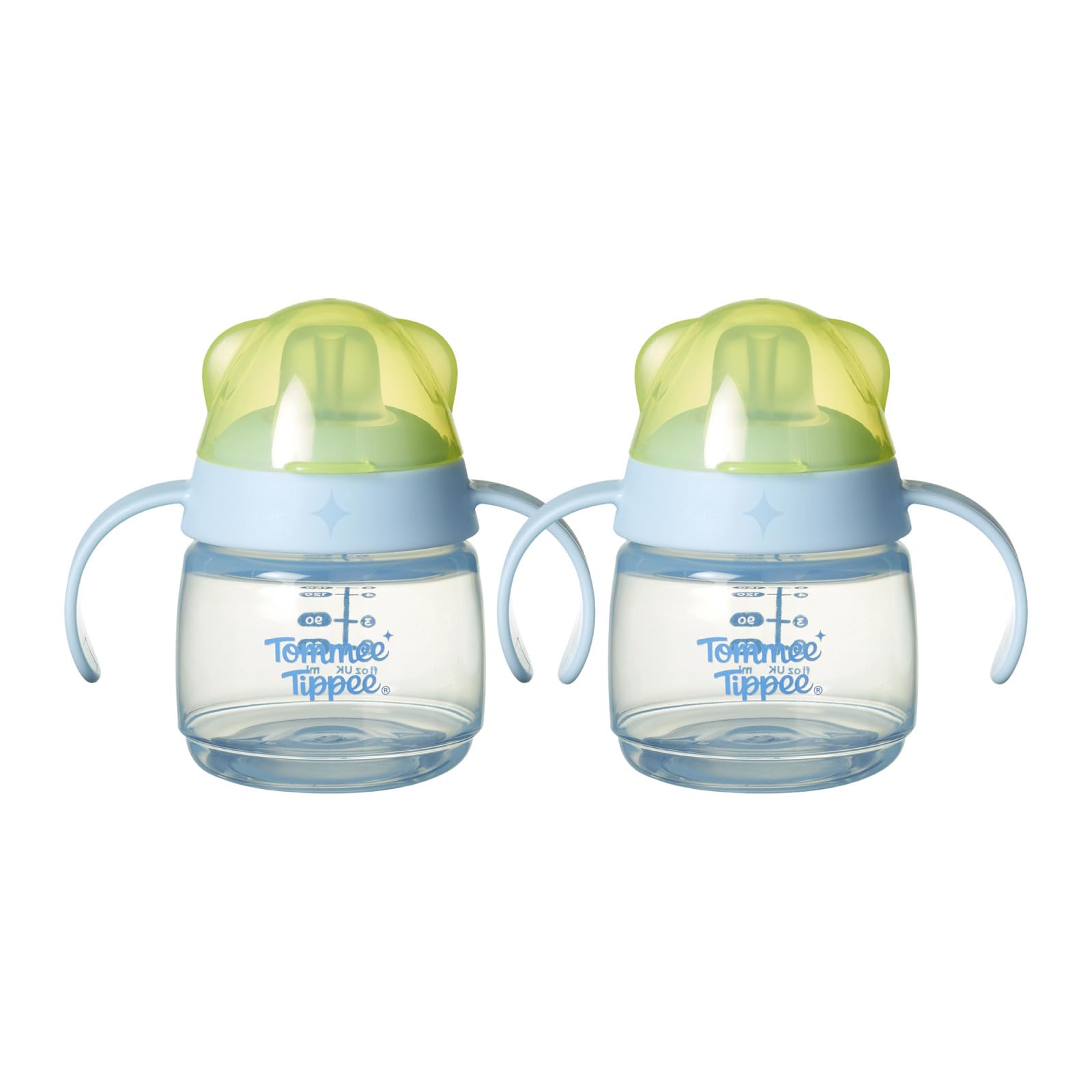
The Tommee Tippee Transition cup is designed for the earliest stage of bottle weaning, with a 5-ounce capacity that matches a small bottle serving. The spout is made from soft, bite-resistant silicone that feels gentle on gums but holds up to repeated chewing. The two-piece valve inside the lid creates a reliable leak-proof seal — parents consistently report zero spillage even when the cup is tossed around by an energetic toddler. The clear base lets you see how much liquid remains, which helps with portion tracking.
The hinged cap clicks into place when open, keeping the spout clean during drinks, and locks shut between sips to protect the spout in a diaper bag. The easy-grip handles are positioned low enough for a 4-month-old to grasp securely. Customer feedback highlights that the cup is simple to assemble and clean, with no hidden crevices where milk can sour. One reviewer noted the cup is toddler-approved after multiple drops, and the colors are appealing without being overstimulating.
A few users found the flow a bit slow for older toddlers who want faster drinking, but that same feature makes it perfect for the initial transition when you’re still controlling flow rate. The cup is dishwasher safe on the top rack. Overall, this is the best choice for parents starting the bottle-to-cup journey with a baby as young as 4 months.
Why it’s great
- Soft silicone spout closely mimics bottle nipple feel
- Hinged lid keeps spout clean and locks for travel
- Leak-proof valve survives drops and upside-down shaking
- Suitable for babies as young as 4 months
Good to know
- 5 oz capacity may be too small for older toddlers
- Flow rate is slower than straw-style transition cups
3. Infantino My 1st Tumbler

The Infantino My 1st Tumbler takes a tumbler-style approach to transition, using a built-in straw with a soft silicone tip and a smart valve that resists leaks even when the cup is flipped. The 10-ounce capacity is the largest in this lineup, making it suitable for older toddlers who need more hydration throughout the day. The textured surface on the cup body gives little fingers extra grip, and the contoured shape makes the handleless hold easier to master over time.
Parents note that this cup is best for toddlers who already understand straw drinking — the valve requires a steady suction that beginners may find challenging. Once the child has the hang of it, the cup performs excellently: spill-proof during throws, easy to disassemble, and dishwasher safe. The two-piece straw separates for thorough cleaning, and the wide opening lets you reach inside with a bottle brush. The seafoam and lavender color combination is subtle and modern.
Some users experienced minor leakage around the rim if the lid wasn’t fully seated, but this is an installation issue rather than a design defect. The cup fits most car seat and diaper bag cup holders, making it a practical on-the-go option. If your child is already comfortable with straws and you want a larger, lightweight cup that won’t leak in the stroller, this is the pick.
Why it’s great
- Large 10 oz capacity reduces refill frequency
- Textured body provides grip without needing handles
- Two-piece straw is easy to clean and replace
- Leak-resistant valve works upside down
Good to know
- Straw training is required before use — not for beginners
- Lid must be fully snapped to prevent rim leakage
4. Re-Play Transition Sippy Cup
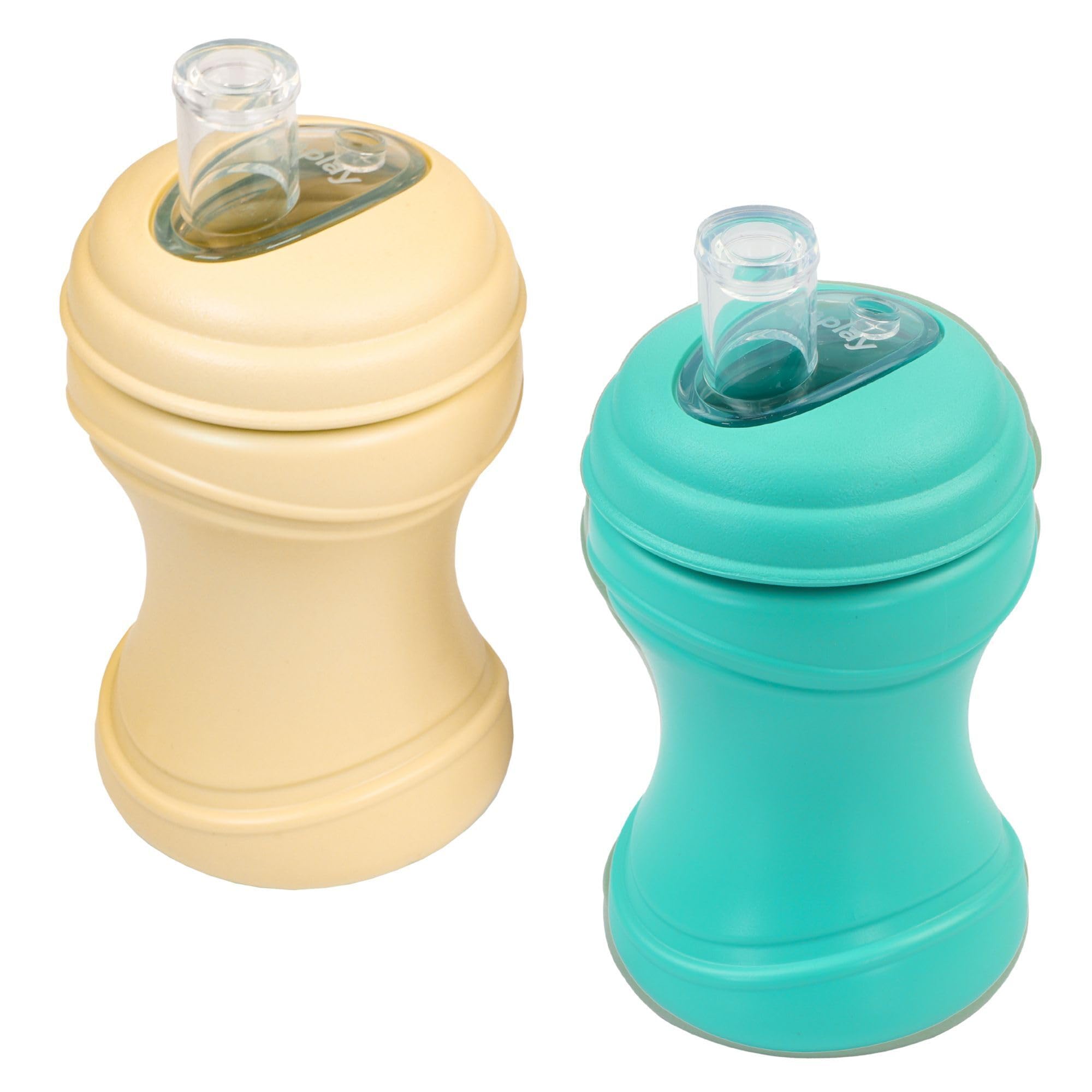
The Re-Play Transition cup distinguishes itself by being made from recycled milk jugs — an environmentally conscious choice that doesn’t sacrifice durability. The 8-ounce cup features an hourglass shape that helps young children grip the body directly, while the removable training handles offer a secure hold for newer drinkers. The spout is medical-grade platinum silicone, which resists bacterial growth better than standard food-grade silicone and stays flexible without tearing.
Parents appreciate that the cup is easy for toddlers to hold without handles, thanks to the narrow waist. The snap-on travel lid includes a protective seal that helps prevent leaks in the diaper bag. Customer feedback notes that the cup is not fully leak-proof — some spillage can occur if the spout is bent or the cup is shaken vigorously. The silicone spout is gentle on gums and feels similar to a bottle nipple, which makes it a solid option for babies transitioning from a bottle at around 12 months.
Cleaning is simple: the spout and lid are dishwasher safe, and the cup body is both dishwasher and microwave safe. One trade-off is that the plastic feels lighter and less premium than PPSU alternatives. Some users report air getting trapped in the spout, causing the baby to suck harder mid-drink. For environmentally minded parents who prioritize recycled materials and easy cleaning over absolute leak-proof performance, this is a worthy choice.
Why it’s great
- Made from recycled milk jug plastic — reduces plastic waste
- Hourglass shape allows handleless grip for advanced drinkers
- Medical-grade platinum silicone spout is gentle and hygienic
- Microwave and dishwasher safe for easy heating and cleaning
Good to know
- Not fully leak-proof — some spillage occurs if shaken
- Feels lighter and less durable than PPSU models
5. The First Years Take & Toss Sippy Cups

The Take & Toss is not a long-term investment in cup quality — it’s a high-volume solution for daycare, parties, or travel where losing or damaging cups is expected. This 20-count pack of 10-ounce cups uses a simple snap-on lid that resists spills during normal use but will leak if the cup is turned completely upside down or thrown. The lightweight plastic design keeps costs down while maintaining BPA-free safety.
Parents praise the sheer value: you get enough cups to stock a daycare cubby, pre-fill for the week, or hand out at a toddler party without worrying about returns. The cups are durable enough to reuse dozens of times and dishwasher safe for easy cleaning. If a cup gets lost at the playground or develops a crust, you can toss it without guilt. The lids stay on securely during side-tilting and car seat use, though they pop off if the cup hits the floor at the wrong angle.
The main limitation is the spill resistance — these are spill-resistant, not spill-proof. The lid design has no special valve or gasket, so turning the cup upside down will cause leakage. One customer noted that the plastic feels lightweight but has held up through months of toddler abuse. The pastel colors are pleasant, and the cups work with or without lids. This is the right option for budget-conscious families who need quantity over premium leak-proof engineering.
Why it’s great
- Excellent value for 20 cups at an entry-level price point
- Lightweight and dishwasher safe for repeated reuse
- Spill-resistant during normal drinking and side tilting
- Name-label friendly for daycare organization
Good to know
- Not leak-proof — liquid escapes when inverted
- Plastic feels less durable than premium material cups
FAQ
At what age should I introduce a transition cup?
How do I clean a weighted straw cup properly?
Why does my toddler’s cup leak after a few weeks of use?
Can I use a transition cup for milk, juice, and water interchangeably?
Final Thoughts: The Verdict
For most users, the cup to transition from bottle winner is the Joypony Sippy Cup because it combines true leak-proof performance with a durable PPSU body and a weighted straw that works at every angle. If you want a soft spout that mimics a bottle nipple for the earliest beginners, grab the Tommee Tippee Transition Cup. And for budget-conscious families who need quantity without sacrificing dishwasher safety, nothing beats the The First Years Take & Toss bulk pack.

Mo Maruf
I created WellFizz to bridge the gap between vague wellness advice and actionable solutions. My mission is simple: to decode the research and give you practical tools you can actually use.
Beyond the data, I am a passionate traveler. I believe that stepping away from the screen to explore new environments is essential for mental clarity and physical vitality.