Our readers keep the lights on and my smoothie glass nicely filled. As an Amazon Associate, I earn from qualifying purchases.
For anyone facing a lower leg injury, foot surgery, or a condition that forbids putting weight on one leg, the daily reality is a grueling trade-off between mobility and exhaustion. Traditional underarm crutches often become instruments of pain themselves, chafing underarms, straining wrists, and demanding constant upper-body tension that drains energy within minutes. The right mobility aid — whether a forearm crutch designed for stability or a knee scooter built for zero weight-bearing comfort — can transform that daily struggle into manageable independence.
I’m Mohammad Maruf — the founder and writer behind WellFizz. My research for this guide involved poring over dozens of engineering specifications, user reports, and clinical feedback on how different mobility devices handle the unique stress of non-weight-bearing recovery.
After analyzing load limits, adjustability ranges, folding mechanisms, and real-world durability reports, I’ve compiled this focused review of the best crutches for non weight bearing to help you find the right support for your recovery.
How To Choose The Best Crutches For Non Weight Bearing
When you cannot place any weight on one leg, the perfect mobility device must transfer your full body load to your arms, shoulders, or unaffected leg without causing new injuries. The choice between forearm crutches, underarm crutches, and knee scooters hinges on your specific recovery timeline, living environment, and physical strength.
Forearm Crutches vs. Knee Scooters for Zero Weight
Forearm crutches require you to support your entire body weight through your hands and forearms. They excel on stairs, in narrow hallways, and for users who need to stand still for long periods (e.g., cooking at the stove). Knee scooters let you rest your injured leg on a padded platform while your good leg does the pushing. Scooters are vastly more comfortable for all-day indoor mobility and eliminate hand/wrist strain entirely, but they struggle with stairs, tight turns, and uneven outdoor terrain.
Weight Capacity and Adjustability
Your device must support your full weight plus any gear you carry. Most forearm crutches max out around 275 to 350 pounds, while knee scooters typically support up to 300 pounds. The height range matters equally: a crutch that’s too long forces you to hunch, while one that’s too short collapses your posture. The best models offer 7 to 15 adjustment positions, accommodating users from roughly 5’4″ to over 7′ tall.
Comfort Features That Prevent Secondary Pain
Non-weight-bearing travel puts extreme stress on your upper body. Padded hand grips, cushioned forearm cuffs, and shock-absorbing mechanisms (spring-loaded lower posts or pneumatic tires) reduce the jarring impact that travels through your arms, wrists, and shoulders with every step or push. Articulating crutch tips that maintain full ground contact on uneven surfaces further reduce the risk of slipping and the need to brace yourself constantly.
Quick Comparison
On smaller screens, swipe sideways to see the full table.
| Model | Category | Best For | Key Spec | Amazon |
|---|---|---|---|---|
| in-Motion Pro Crutches | Forearm Crutch | All-day comfort + long-term recovery | Spring assist, 350 lb capacity | Amazon |
| KneeRover Economy Knee Scooter | Knee Scooter | Indoor zero-weight mobility | Steerable, 7.5″ wheels | Amazon |
| BodyMed Premium Knee Walker | Knee Scooter | Heavier users, outdoor stability | Alloy steel frame, dual brakes | Amazon |
| PEPE Mobility Folding Crutches | Forearm Crutch | Travel and compact storage | Foldable, 1.2 lb per crutch | Amazon |
| BlessReach Knee Scooter | Knee Scooter | Budget-friendly scooter alternative | 300 lb capacity, folding frame | Amazon |
| KMINA Forearm Crutches | Forearm Crutch | Mid-range all-rounder | 275 lb capacity, 11 adjustments | Amazon |
| Forearm Crutches with Elastic Padding | Forearm Crutch | Entry-level forearm crutch pair | Adjustable 58-72.8 inches | Amazon |
In‑Depth Reviews
1. in-Motion Pro Crutches
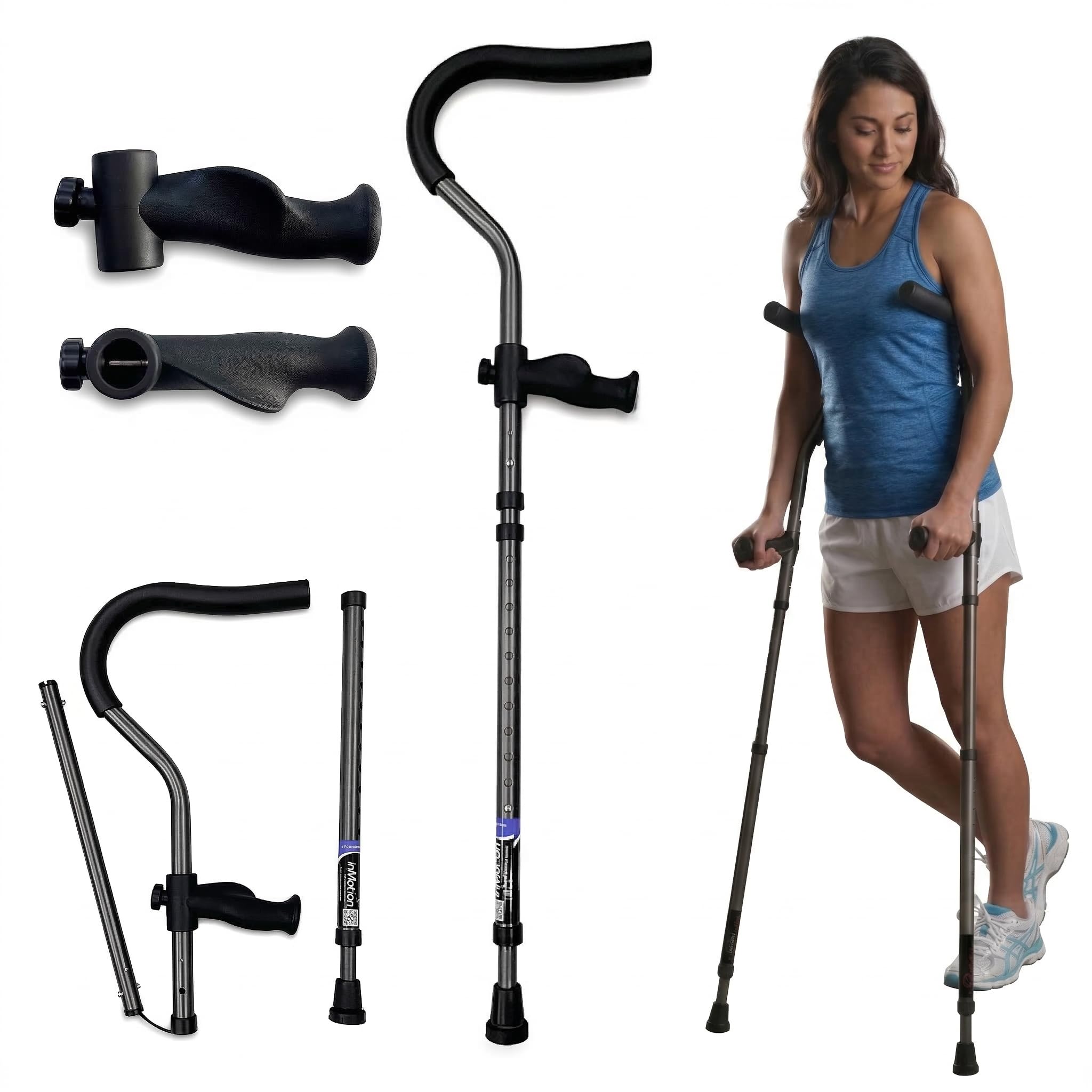
The in-Motion Pro stands apart from every other crutch on this list due to its spring assist technology, which absorbs the shock of each step and returns that energy to reduce fatigue during long recovery periods. The ergonomic left/right contoured grips keep your wrist in its natural angle, eliminating the kinking sensation that makes standard crutches cause numbness after a few hours. With a 350-pound weight capacity and 15-position underarm adjustment plus 5 independent hand grip positions, this crutch fits a remarkably wide user range from 5’10” to 7’1″.
The articulating crutch tips pivot to maintain full ground contact on hardwood, carpet, grass, and uneven outdoor terrain, preventing the tilt-and-slip failure of fixed rubber tips. The crutch folds in half in seconds without losing your height settings, making it easy to stash in an overhead bin or car backseat. Clinical backing from 34 studies and recommendations from physical therapists add credibility that few mobility aids can claim.
Some users report that the rubber stoppers at the top can catch and get lost over time, and after roughly one year of use squeaks may develop. The folding push-button mechanism requires a bit of finesse, and the crutch is slightly heavier than basic aluminum models. For anyone facing a multi-week or multi-month non-weight-bearing recovery, the reduction in wrist, armpit, and shoulder pain makes this a clear upgrade over hospital-issued crutches.
Why it’s great
- Spring assist absorbs impact and reduces energy drain during all-day use
- Articulating tips provide stable contact on every surface type
- Folds flat for travel without losing adjustment settings
Good to know
- Slightly heavier than basic aluminum forearm crutches
- Squeaks may develop after a year of daily use
- Tall size starts at 5’10” — shorter users need the Short size
2. KneeRover Economy Knee Scooter
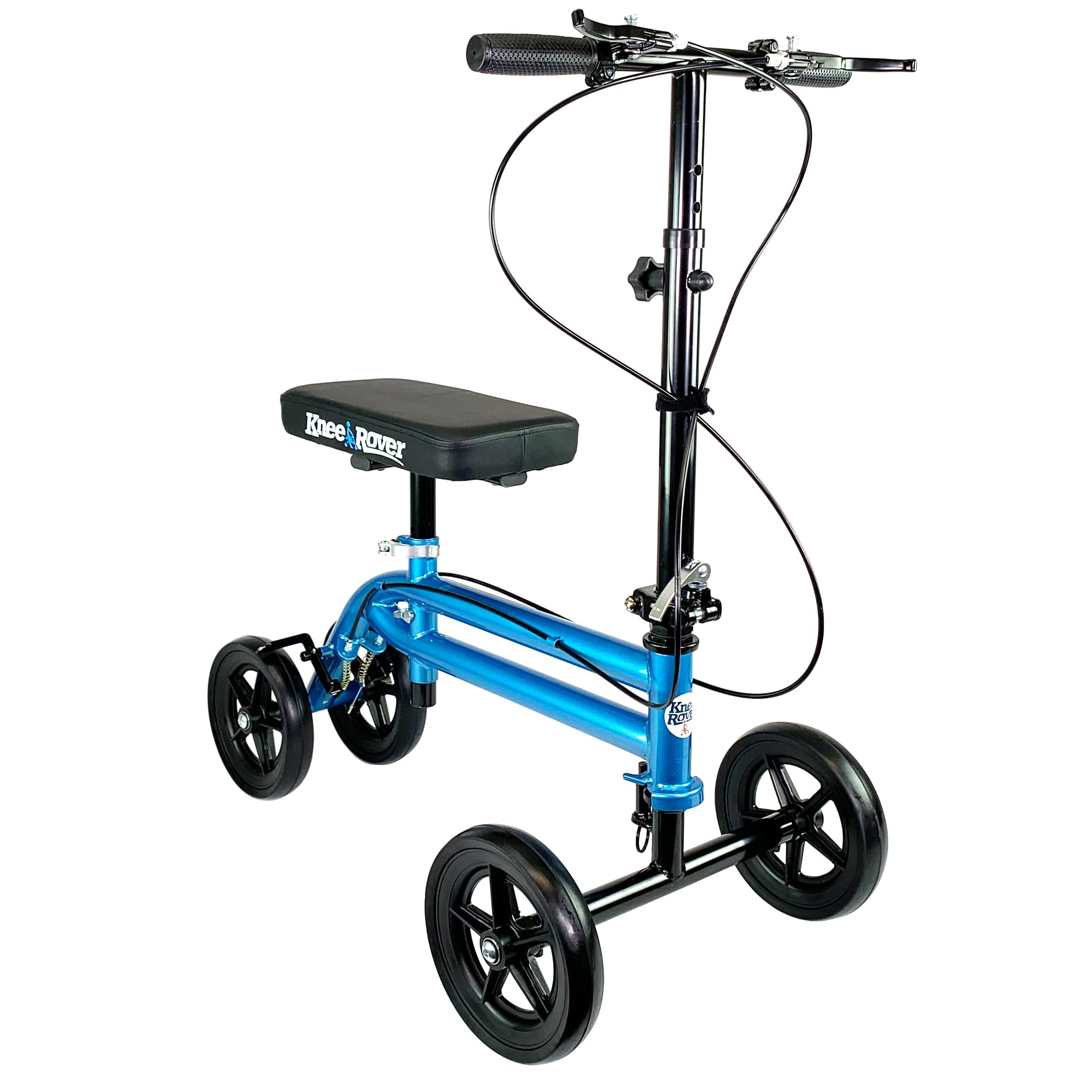
The KneeRover Economy offers the most straightforward path from crutches to zero-weight-bearing freedom for indoor recovery. Its steerable design with four 7.5-inch rubber wheels provides stable, wobble-free movement across tile, hardwood, carpet, and pavement (at slow speeds). The dual rear brakes and adjustable locking handbrake give you immediate stopping control, which is essential when navigating through tight kitchen spaces or around furniture.
Assembly requires no tools and takes only a few minutes — the frame arrives mostly pre-built with a thumb-release lever for folding. The padded knee platform supports either leg and adjusts to multiple heights, accommodating users of different statures. At roughly 20 pounds, it is light enough for most people to lift into a car trunk without help. Users consistently note that it is cheaper than renting a scooter for a few weeks.
The knee pad lacks serious cushioning for all-day use — many users add a gel knee cover for extended comfort. The turning radius is noticeably wide, which means you cannot pivot in tight bathroom spaces without backing up. The wheels transmit every bump and crack on sidewalks directly to your knee, so outdoor use on rough surfaces is not comfortable. For indoor recovery where stairs are not a daily obstacle, this scooter eliminates upper-body strain almost completely.
Why it’s great
- Zero upper-body strain — your hands and wrists never carry weight
- Tool-free assembly and foldable for simple transport
- More affordable than renting for most recovery periods
Good to know
- Knee pad is thin — plan to buy a padded cover for longer sessions
- Wide turning radius makes tight maneuvers difficult
- Not comfortable on uneven outdoor surfaces
3. BodyMed Premium Knee Walker

The BodyMed Premium Knee Walker is built around an alloy steel frame that feels noticeably more substantial than aluminum scooters, providing a planted, confidence-inspiring ride for users who need maximum stability. The dual rear braking system includes easy-grip handlebars for quick stops, and the scooter collapses for trunk-friendly transport despite its 29-pound heft. The padded knee platform and comfortable hand grips are designed to prevent the pressure points that develop during extended indoor use.
This scooter handles tile and cement floors with a smooth glide, though carpet slows momentum slightly. The included metal basket is a practical addition for carrying water bottles, phones, or small purchases while keeping both hands on the handlebars. Users recovering from foot surgery report that the scooter allows near-complete independence for household tasks like cooking, moving between rooms, and even light outdoor errands on level pavement.
The turning radius is wide in the name of stability — you will need to perform multi-point turns in tight corners. The parking brake is notoriously difficult to engage reliably; several users report it does not stay locked, creating a safety risk when you need the scooter to remain stationary. The knee pad can become slippery after extended use, and the memory foam seat cover is a recommended upgrade for all-day comfort.
Why it’s great
- Alloy steel frame offers exceptional stability for heavier users
- Collapsible design with metal basket for hands-free transport
- Dual braking system provides consistent speed control
Good to know
- Parking brake is unreliable and may not lock securely
- Wide turning radius makes tight indoor spaces challenging
- At 29 pounds, it is heavier than standard aluminum scooters
4. PEPE Mobility Folding Crutches

The PEPE Mobility Folding Crutches solve the single biggest logistical problem of forearm crutches: portability. Each crutch weighs only 1.2 pounds and folds into two parts with a total folded length of 22.4 inches, fitting inside a backpack or carry-on suitcase with ease. The aluminum construction keeps weight low while supporting up to 220 pounds, and the seven adjustment settings accommodate users from roughly 5’4″ to 6’3″. This makes the PEPE set the go-to choice for anyone who needs to commute, travel by plane, or store crutches in a small apartment.
The crutches feel sturdy during daily use, and regular users report that the folding mechanism shows no wear or loosening even after nearly a year of consistent use. The crutch tips provide solid grip on indoor flooring and dry outdoor pavement, giving adequate confidence for walking in urban environments. Users who also own non-folding crutches note that the PEPE set feels just as secure during normal walking, with no rattling or weakness at the fold joint.
The height range starts at 5’4″ — users shorter than that will find the minimum setting too tall for proper posture. The forearm cuffs and hand grips lack substantial padding, so many users add aftermarket gel pads for extended comfort. The 220-pound weight capacity also limits use for heavier individuals or those carrying gear while walking.
Why it’s great
- Extremely lightweight and folds compact for easy travel and storage
- Aluminum construction with strong, wear-resistant folding joint
- Covers a practical height range for most average-height adults
Good to know
- Not suitable for users under 5’4″ due to minimum height limitation
- Forearm and hand padding is minimal — aftermarket pads recommended
- 220-pound capacity may be limiting for taller or heavier users
5. BlessReach Knee Scooter
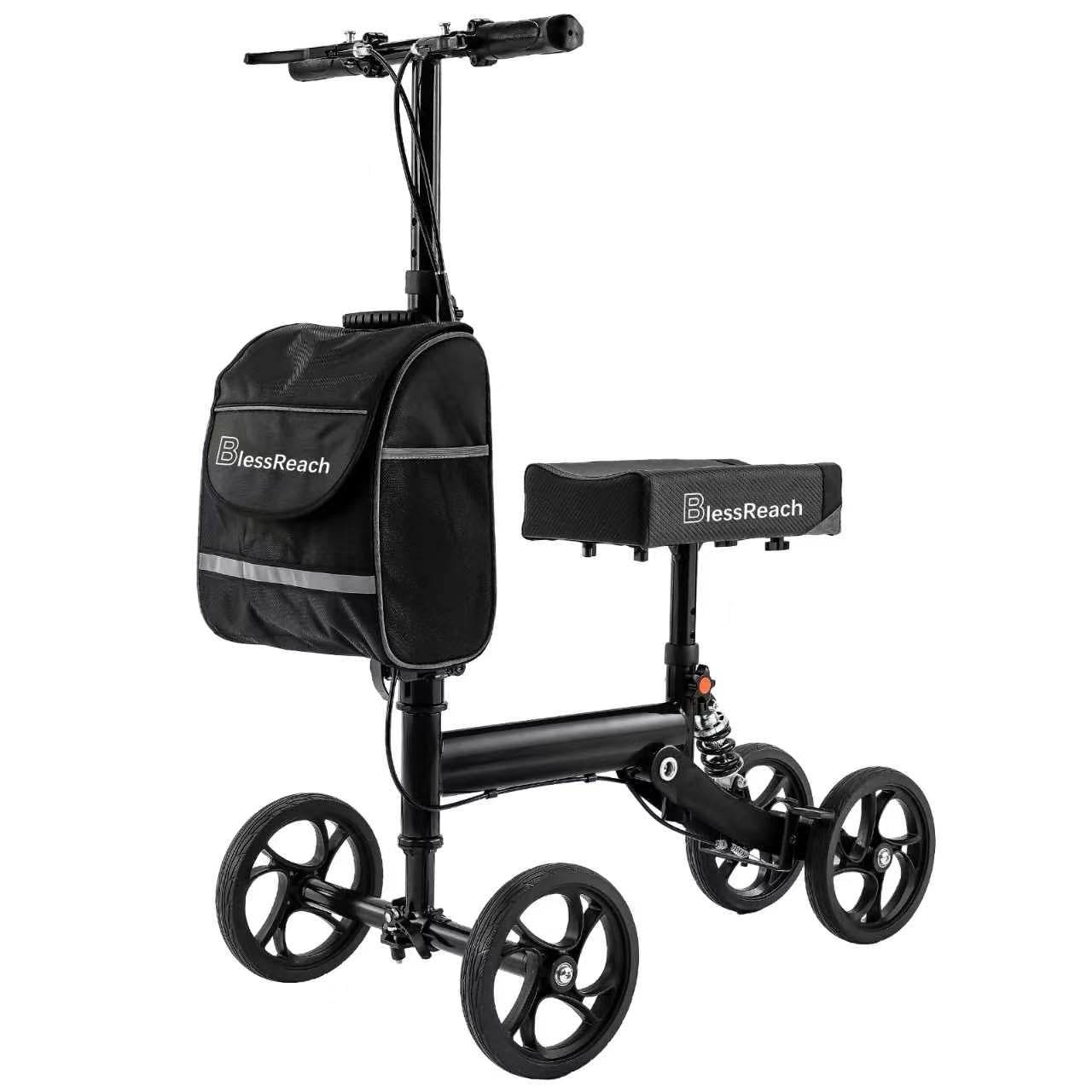
The BlessReach Knee Scooter offers an entry-level price point for anyone wanting to escape crutch-induced armpit and wrist pain without committing to a premium scooter. It supports users up to 300 pounds with a contoured, padded knee rest that cradles the leg more comfortably than many cheaper scooter platforms. The 8-inch front and rear wheels provide a smooth ride on indoor flooring, and the ergonomic adjustable locking handbrake gives you control over speed and stops.
Assembly takes minutes with no specialized tools, and both the rear wheel bracket and operating lever fold to reduce storage space for car transport. The detachable canvas bag with a double-layer structure offers practical storage for a phone, water bottle, and small personal items. Users recovering from foot or ankle surgery appreciate the shock absorption built into the curved bottom frame, which reduces jolts when rolling over minor floor transitions.
The brake lock mechanism is finicky — engaging the parking brake requires pressing both handles and buttons simultaneously, which can be difficult when trying to stand up from a seated position. The netting on the bag is too small for typical drink bottles, and the scooter is slightly tricky to fold for first-time users. The turning radius, while acceptable indoors, is not tight enough for sharp pivots in cramped bathrooms.
Why it’s great
- High 300-pound capacity for a budget-priced scooter
- Contoured knee platform with padding for extended use
- Folding frame with storage bag for practical daily use
Good to know
- Parking brake is difficult to engage from a seated position
- Storage bag netting is too small for standard water bottles
- Folding mechanism takes practice to operate smoothly
6. KMINA Forearm Crutches

The KMINA Forearm Crutches deliver a solid balance of comfort, durability, and adjustability for users who need dependable forearm support during non-weight-bearing recovery. Made in Spain from silver-colored aluminum, they feature 11 height adjustment positions to fit a wide range of user heights. The maximum user weight of 275 pounds covers most adults, and the open cuff design allows for easy on/off without fumbling with closures.
The padded hand grips are designed to reduce hand and wrist pain, which is the most common complaint among forearm crutch users. The handles are washable and interchangeable, adding a hygiene benefit that matters during weeks of daily use. Regular users report that the crutches hold up well over extended use, with one person using the same pair for nearly a year without issues. The polypropylene grip and elbow components feel resistant to wear, and the aluminum shaft keeps overall weight manageable.
The open cuff design, while convenient for entry and exit, does not include a strap to secure the forearm in place — some users add their own strap for extra stability. The hand grips could use more padding for all-day comfort, and several users recommend purchasing additional gel grip covers. The crutches are less stable than underarm crutches for users who need maximum lateral support, though they are significantly easier to use on stairs.
Why it’s great
- 11 height adjustments for a precise, personalized fit
- Padded, washable hand grips reduce wrist strain
- Durable aluminum construction holds up well over months of use
Good to know
- Open cuff lacks a strap for securing the forearm
- Hand grips could be thicker for full-day comfort
- Less stable than underarm crutches for extra-lateral support needs
7. Forearm Crutches with Elastic Padding

These forearm crutches focus on comfort value with elastic padding at both the elbow cradle and the hand grip, designed to reduce chafing and cushion the impact of each step. The double-layered inner padding avoids the bulkiness that can make some padded crutches feel oversized, and the adjustable arm straps prevent the crutches from falling to the floor when you need to free your hands briefly. With 10 adjustable buttons, the height range spans from 58 to 72.8 inches, covering most average-sized adults.
The aluminum shaft keeps the crutches fairly lightweight at roughly 1 pound each, and the orange rubber foot has a secure grip on most indoor surfaces. Users report that the crutches are sturdy enough for partial weight-bearing and provide good balance support. The crutches fold in half for storage in a car or closet, and the arm and hand pads are removable for washing. The threaded gold ring at the joint eliminates the metallic clink noise that cheap crutches often produce.
The forearm support is plastic rather than metal, which raises durability questions for long-term daily use. The wrist strap elastic may not last through months of constant use, and the supports themselves can feel stiff and require added padding for comfort on bare arms. Ground-level mold lines on the plastic parts may need filing if you plan to wear short sleeves. Some customers note that the size of the crutch varies by color, so the height chart may not be consistent across listings.
Why it’s great
- Elastic padding on elbow and hand reduces chafing out of the box
- 10 height adjustments for fine-tuning your fit
- Foldable design with removable, washable pads
Good to know
- Plastic forearm support may not hold up to very heavy daily use
- Wrist strap elastic may wear out with extended use
- Plastic mold lines can be rough against bare skin
FAQ
Can I use forearm crutches for total non-weight-bearing recovery?
How do I measure myself for correct crutch height?
Are knee scooters safe on stairs?
Why do some crutches have articulating tips?
Final Thoughts: The Verdict
For most users, the crutches for non weight bearing winner is the in-Motion Pro Crutches because the spring assist technology and articulating tips eliminate the jarring impact and wrist strain that make traditional crutches exhausting, while the foldable design and 350-pound capacity cover nearly every user scenario. If you want a zero-upper-body-strain experience, grab the KneeRover Economy Knee Scooter. And for travel-heavy recovery where you need crutches that fit in a backpack, nothing beats the PEPE Mobility Folding Crutches.

Mo Maruf
I created WellFizz to bridge the gap between vague wellness advice and actionable solutions. My mission is simple: to decode the research and give you practical tools you can actually use.
Beyond the data, I am a passionate traveler. I believe that stepping away from the screen to explore new environments is essential for mental clarity and physical vitality.