Our readers keep the lights on and my smoothie glass nicely filled. As an Amazon Associate, I earn from qualifying purchases.
Recovering from knee surgery presents a unique challenge: you need upper-body support to keep weight off the healing joint, but standard underarm crutches often create new pain points in the armpits, wrists, and palms. The right pair of walking aids can mean the difference between a smooth recovery and a cycle of secondary discomfort that stalls your rehab progress.
I’m Mohammad Maruf — the founder and writer behind WellFizz. For this guide, I’ve spent hours studying weight ratings, cuff designs, adjustment ranges, and real user feedback across seven leading models to identify which crutches actually deliver on their promise of stable, comfortable support after knee surgery.
Whether you need forearm-style crutches for better leverage or a foldable option for easy transport, this review of the best crutches for knee surgery breaks down the key specs that determine real-world performance.
How To Choose The Best Crutches For Knee Surgery
Knee surgery recovery demands a walking aid that shifts your full body weight from the operated leg to your arms and torso without creating new injuries. Focus on these three factors before making your choice.
Forearm vs. Underarm Design
Underarm (axillary) crutches are the traditional hospital standard, but they concentrate pressure on the armpit’s nerves and soft tissue—a common cause of brachial plexus irritation during prolonged use. Forearm (elbow) crutches distribute load through a cuff around the forearm, leaving your hands free and reducing the risk of nerve damage. For knee surgery patients who need weeks of continuous support, forearm crutches are almost always the better long-term choice.
Height Adjustment and Weight Capacity
A crutch that cannot extend to match your full height forces you to stoop, throwing your spine out of alignment and making balance harder. Look for at least 10 adjustment increments and a maximum height that accommodates your stature with shoes on. Equally important is the weight rating: a 300-pound limit provides a safety margin for most adults, while a 350-pound ceiling offers extra headroom for heavier users or those carrying items.
Grip and Cushioning
Your palms and wrists bear the brunt of every step. Standard hard plastic grips quickly cause fatigue and can aggravate carpal tunnel symptoms. Padded or ergonomic handles that absorb shock and spread pressure are essential. Some models also include removable and washable padding for the forearm cuff, which improves hygiene and comfort during long rehab sessions.
Quick Comparison
On smaller screens, swipe sideways to see the full table.
| Model | Category | Best For | Key Spec | Amazon |
|---|---|---|---|---|
| KMINA Forearm Crutches | Forearm | Long-term daily rehab | 275 lb capacity, 11 height settings | Amazon |
| PEPE Mobility Folding Crutches | Forearm / Foldable | Travel and portability | Folded length 22.4 in | Amazon |
| Forearm Crutches with Elbow+Hand Padding | Forearm | Impact absorption and wrist relief | 10 height settings, 58–72.8 in range | Amazon |
| VEVOR Forearm Crutches | Forearm | Petite to medium frames | 350 lb capacity, 11 levels | Amazon |
| Medline Aluminum Crutches | Underarm | Basic short-term underarm support | 300 lb capacity, 1-in increments | Amazon |
| McKesson Push Button Crutches | Underarm | Budget-friendly underarm option | 350 lb capacity, push-button adj. | Amazon |
| KneeSled Rehab Tool | Exercise Aid | Heel-slide PT at home | Universal size, adjustable rope | Amazon |
In‑Depth Reviews
1. KMINA Forearm Crutches for Adults (x2 Units)

KMINA’s forearm crutches hit the sweet spot between premium comfort and reasonable cost. The open cuff design makes it easy to slip your arm in and out without rethreading, which matters when you need to grab a water bottle or answer the phone mid-rehab. The aluminum frame keeps the pair light at roughly 2.5 pounds total, so carrying them from room to car feels manageable even with limited energy.
The padded hand grips reduce the palm pressure that typically builds after fifteen minutes of standard crutch use. Eleven height settings accommodate users across a wide stature range, and the weight ceiling of 275 pounds covers the majority of adults. Several reviewers noted these feel noticeably more stable on stairs than traditional underarm crutches, and the forearm support removes the armpit soreness that hospital-issue crutches create.
One practical consideration: the grips are washable and interchangeable, which extends the product’s life and maintains hygiene during weeks of daily sweat exposure. A few users added velcro straps to secure the forearm cuff if they wanted a tighter connection, though the open cuff already prevents accidental drops for most people.
Why it’s great
- Padded grips prevent hand fatigue during extended daily use
- Open cuff allows quick arm removal without adjusting straps
- Washable handle pads improve long-term hygiene
Good to know
- 275-pound weight limit is lower than some competitors
- Some users found the forearm cuff a bit loose without aftermarket straps
2. PEPE Mobility Folding Crutches for Adults (x2 Units)

PEPE’s folding crutches answer the single biggest complaint from active recovery patients: “I can’t fit crutches in my car.” Each crutch collapses into two segments with a folded length of just 22.4 inches—short enough to stow under a car seat, in a wardrobe, or even inside a large backpack. The locking mechanism feels solid in daily use, and reviewers who commuted through New York City reported no loosening after months of heavy wear.
The seven height settings suit users between about 5’4” and 6’3”, though shorter individuals will find the minimum height too tall—anyone under 5’4” should look at more petite-oriented options. At 1.2 pounds per crutch, these are among the lightest forearm crutches available, reducing the strain of lifting and repositioning with each step.
One thoughtful detail is the crutch tip design: large-diameter rubber feet provide strong traction on wet pavement and smooth floors alike. The 220-pound weight limit is lower than the category average, so heavier users should verify their needs before ordering. Overall, for someone who needs to move between the car, office, and home, the foldability alone makes these a standout choice.
Why it’s great
- Folds to 22.4 inches for easy storage and transport
- Extremely lightweight at 1.2 lb per crutch
- Large rubber tips offer reliable traction on varied surfaces
Good to know
- 220-pound rating is the lowest in this lineup
- Not suited for users shorter than about 5’4”
3. Forearm Crutches with Elastic Crutches Padding

Elbow and hand padding is the core differentiator here: this model includes elastic cushions for the forearm cuff plus removable pads for the handle. The double-layer cuff padding prevents chafing where the plastic edge would normally dig into the inner arm, and the handle pads absorb the repetitive shock that travels up through the wrist during each stride. For knee surgery patients who must stay on crutches for six weeks or more, this cushioning directly prevents tendinitis and soreness.
The ten-button height adjustment covers a range from 58 to 72.8 inches, making it one of the most inclusive options for taller users. A built-in anti-fall strap wraps around your wrist—if you let go to open a door or answer a call, the crutch dangles from your arm instead of clattering to the floor. This may sound like a small convenience, but during recovery every hand-free moment counts.
A few reviewers noted that the plastic forearm support feels sturdy rather than premium, and the reflective decals on the shaft are cosmetic rather than functional illumination. Despite these minor trade-offs, the padding package delivers what it promises: a noticeably less jarring walking experience compared to un-padded metal frames.
Why it’s great
- Elastic forearm and handle pads reduce wrist and elbow shock
- Adjustable height fits users up to 72.8 inches tall
- Wrist strap prevents drops when hands are occupied
Good to know
- Plastic forearm support may feel less premium than aluminum
- Padding on cuff can feel snug initially before it breaks in
4. VEVOR Forearm Crutches for Adults (1 Pair)

VEVOR packs serious weight capacity—350 pounds—into a budget-friendly forearm crutch set that weighs only 3 pounds total. The 4-level upper cuff adjustment and 11-level height system let you fine-tune the fit beyond what most entry-level crutches offer. For knee surgery patients who carry extra weight or simply want a high safety margin, this is the most reassuring option in the group.
The soft PVC handle provides a tacky, non-slip grip even when your palm gets sweaty during longer walks. Rubber foot pads create solid traction on tile, hardwood, and pavement, and the shock-absorbing quality of the tips reduces the jolt transmitted to your wrists with each landing. Multiple users at 5’5” to 5’8” reported that the maximum extension worked perfectly for them, though taller individuals found the longest setting barely sufficient.
The main limitation is sizing: this model is clearly built for petite-to-medium statures. Reviewers at 5’3” had the crutches nearly fully extended, and users over 5’9” will likely find them too short. If you fall within the 5’2” to 5’8” range, however, the combination of low cost and high weight capacity is difficult to beat.
Why it’s great
- 350-pound capacity offers a wide safety margin
- Soft PVC handle improves grip and comfort during long sessions
- Both cuff and height have multi-level adjustments for a precise fit
Good to know
- Best suited for users up to about 5’8”
- Arm cuffs feel petite for larger frames
5. Medline Medium Aluminum Crutches

Medline’s underarm crutches represent the hospital-standard design that many clinics dispense. The aluminum frame holds up to 300 pounds, and the push-button adjustment in 1-inch increments makes it easy to match the crutch length to your torso height between 5’2” and 5’10”. The stair deflectors—small protrusions that angle the crutch away from walls—are a nice safety touch for navigating narrow hallways.
The padded armpit cushions do help reduce underarm discomfort compared to bare metal, but after a full day of weight-bearing use, many users still report soreness in the brachial area. This is an inherent limitation of the underarm design rather than a flaw in this particular model. The crutches weigh about 3.5 pounds per pair, which feels noticeably heavier than forearm alternatives.
Where these excel is availability and reliability: Medline supplies thousands of hospitals, so parts and replacement tips are easy to find. If you need a quick, no-fuss underarm crutch for short-term recovery—perhaps just the first week after surgery before switching to a forearm style—these are a solid mid-range choice.
Why it’s great
- Trusted hospital-grade build from a major healthcare supplier
- Padded axillary cushions soften armpit pressure
- Stair deflectors improve stability on steps and against walls
Good to know
- Underarm design concentrates weight on armpit nerves
- One-inch increments may not allow micro-adjustments for some users
6. McKesson Aluminum Frame Push Button Underarm Crutches

McKesson’s underarm crutches match the Medline pair on height range (5’2” to 5’10”) but edge ahead on weight capacity at 350 pounds. The double-extruded aluminum center tube adds rigidity without adding noticeable weight—the pair comes in around 3.2 pounds. The contoured vinyl tips provide reliable grip on damp surfaces, and the push-button system allows quick swaps between users of different heights.
Several reviewers praised the value, noting that the crutches felt sturdy enough for a 275-pound person recovering from a knee injury. The main drawback reported is the underarm padding quality: multiple users described it as “firm” or “thin” and wrapped tape around the top to add extra cushioning. The lower section also has a tendency to rattle after a few weeks of use, though this doesn’t affect structural integrity.
Overall, the McKesson crutches offer the highest weight capacity in the underarm category at the lowest entry price point. If your recovery budget is tight and you need the support of a 350-pound rating without moving to a forearm design, this is the most economical path forward.
Why it’s great
- 350-pound weight limit exceeds most underarm competitors
- Lightweight aluminum frame at roughly 3.2 lb per pair
- Push-button height adjustment is simple and fast
Good to know
- Armpit pads feel thin and may need aftermarket cushioning
- Some units develop a rattle in the lower tube over time
7. KneeSled Knee Replacement Rehab Tool
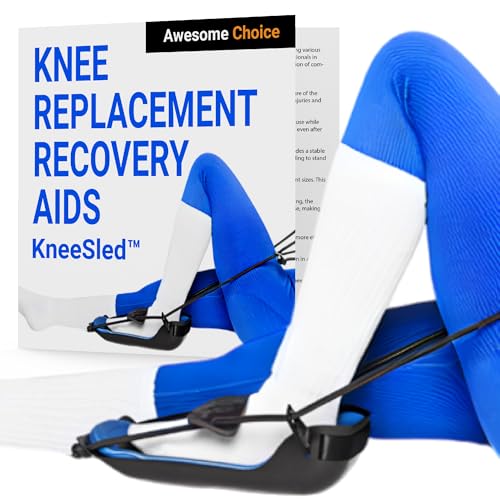
The KneeSled isn’t a crutch—it’s a dedicated physical therapy tool that solves the specific problem of heel-slide exercises after total knee replacement (TKR). After surgery, regaining knee flexion is one of the most painful and difficult exercises. Trying to slide a bare heel across a sheet or towel usually results in friction, inconsistent motion, and the leg jerking to a stop. The KneeSled’s adjustable rope and smooth-gliding base allow controlled, continuous heel movement through the full range of motion.
The universal design fits any adult leg length thanks to an adjustable rope that wraps around the foot. This eliminates the need for family members to manually push the leg—a common source of discomfort and unpredictable resistance. Reviewers who had TKR surgery consistently described this as essential for outpatient rehab, noting that it made heel slides both easier to perform and less intimidating.
This is not a walking aid; you’ll still need crutches from one of the other entries in this guide to move around. But if you pair the KneeSled with your primary crutches, you cover both the mobility phase and the active rehab phase of recovery. A few users felt the price was slightly high for a simple strap-and-slider design, but most concluded that the controlled motion justified the cost.
Why it’s great
- Provides smooth, controlled heel slides without friction jerks
- Universal rope adjustment fits all leg lengths
- Reduces the pain and anxiety of early post-surgery ROM exercises
Good to know
- Not a walking aid—you still need crutches for mobility
- Some users found the construction simple relative to the price
FAQ
How do I measure the correct crutch height after knee surgery?
Can I use underarm crutches for full non-weight-bearing recovery?
Should I buy folding crutches for knee surgery recovery?
Final Thoughts: The Verdict
For most users, the best crutches for knee surgery winner is the KMINA Forearm Crutches because the open cuff, padded grips, and washable pads deliver the right balance of comfort and durability for the weeks-long rehab period. If you need maximum portability, grab the PEPE Mobility Folding Crutches. And for active physical therapy at home, nothing beats the KneeSled as a companion tool to your primary crutches.

Mo Maruf
I created WellFizz to bridge the gap between vague wellness advice and actionable solutions. My mission is simple: to decode the research and give you practical tools you can actually use.
Beyond the data, I am a passionate traveler. I believe that stepping away from the screen to explore new environments is essential for mental clarity and physical vitality.