Our readers keep the lights on and my smoothie glass nicely filled. As an Amazon Associate, I earn from qualifying purchases.
The single point of contact between two tons of American steel and the asphalt is a patch of rubber smaller than your hand. Choosing the right set of cruiser tires means committing to a compound that handles the heat of highway miles, the unpredictable grit of backroad tar, and the sudden slick of an afternoon downpour — all without sacrificing the planted, stable feel that heavy V-Twins demand.
I’m Mohammad Maruf — the founder and writer behind WellFizz. I’ve spent hundreds of hours analyzing tire construction, tread patterns, and real-world owner feedback to isolate what separates a confidence-inspiring cruiser tire from a sketchy one.
This guide breaks down the best options for your bike, balancing grip, mileage, wet-weather performance, and load capacity. Whether you ride a bagger, a bobber, or a classic Sportster, these are the best cruiser motorcycle tires for keeping your rubber side down.
How To Choose The Best Cruiser Motorcycle Tires
Selecting the right tire for a heavy cruiser isn’t the same as picking rubber for a sportbike or a dual-sport. Cruisers place unique demands on tire construction: high overall vehicle weight, a relaxed steering geometry, and long straight-line highway stretches that can cause uneven wear if the tread profile is wrong. You need to weigh compound stickiness against tread life, and sidewall stiffness against ride compliance.
Belt Construction and Ride Feel
Bias-ply tires use overlapping cord layers at alternating angles, which creates a stiffer carcass that resists sidewall flex under heavy loads — ideal for baggers and cruisers carrying a passenger. Radial tires place cords at a 90-degree angle to the direction of travel, allowing the sidewall to flex more while the tread stays flat against the road. Radials run cooler at sustained highway speeds and deliver a smoother ride, but they demand precise load matching. Most Harleys and large-displacement metrics ship with bias-ply rubber because the construction tolerates the weight distribution of a long, low chassis.
Tread Profile and Wet-Grip Engineering
Cruiser tires tend to have a flatter tread arc than sport tires, which increases the contact patch during straight-line cruising but reduces rubber-to-road surface area when leaned into a turn. Look for tires with offset center grooves that help track straight over rain grooves and steel-grate bridges without wandering. Functional siping — the small slit cuts in the tread blocks — pulls water out from under the contact patch. A tire with dense, deep siping provides noticeably better wet traction than a slicker cruiser-style tread, especially at highway speeds where hydroplaning risk is highest.
Load Index and Speed Rating
A cruiser’s load index must account for the bike’s wet weight plus rider, passenger, and luggage. Tires rated for 908 pounds or higher (load index 77 or above) are common on touring baggers. Overloading a tire with a low load index causes excessive sidewall deflection, overheating, and premature belt separation. Speed ratings matter less for cruiser riders than load capacity — an H-rated tire (good for 130 mph) is more than sufficient for any legal highway cruising, and the heavier carcass of an H-rated tire often provides better stability at lower pressures than a higher speed rating.
Quick Comparison
On smaller screens, swipe sideways to see the full table.
| Model | Category | Best For | Key Spec | Amazon |
|---|---|---|---|---|
| Shinko SR777 HD Rear 140/90B16 | Mid-Range | Cornering grip on V-Twins | 140mm section width, H-rated | Amazon |
| Dunlop D402 Rear MU85B-16 | Premium | Harley touring load capacity | 908 lb load index, 3-ply casing | Amazon |
| Shinko 777 Front White Wall | Mid-Range | Classic styling with wet grip | 130/90B-16, Aramid belted | Amazon |
| Dunlop D404 Front 110/90-19 | Mid-Range | Vintage and metric cruiser fit | 62H rating, asymmetrical tread | Amazon |
| Shinko SR777 HD Front 120/70-21 | Mid-Range | Fat tire 21-inch conversions | 68V speed rating, reinforced HD | Amazon |
| Kenda Cruiser K671 170/80H-15 | Mid-Range | Wet weather touring | 6-ply, 1073 lb load capacity | Amazon |
| Dunlop D404 Rear 130/90-16 | Mid-Range | Lightweight cruiser rear | 67H, 13 lb weight | Amazon |
| Shinko 777 Front H.D. 100/90-19 | Budget | Entry-level grip at low cost | 908 lb load capacity, 61H | Amazon |
| Dunlop D402 Rear MT90B-16 | Premium | Harley Dyna and Softail OEM | 74H, 3-ply polyester casing | Amazon |
In‑Depth Reviews
1. Shinko SR777 HD Black Wall Bias Rear Tire – 140/90B16 77H

The Shinko SR777 HD hits the sweet spot where grip, stability, and price converge for serious cruiser riders. This rear tire uses an aramid-belted construction to reinforce the carcass under heavy load, reducing squirm when you lean into a corner on a big V-Twin. Owners consistently report that the compound feels nearly as sticky as premium Metzler alternatives at roughly half the cost.
Riders on 85 FXST Softails and later Dyna models note that the tire tracks straight over rain grooves and steel bridges without the wandering feel that older bias-ply designs can exhibit. The 140mm section width provides a noticeably wider contact patch than stock 130mm rear tires, which translates to more planted acceleration out of corners and better braking stability.
The 77H load rating handles a fully loaded touring setup, and the tread design includes offset siping that evacuates water effectively during highway downpours. One caveat: the rubber compound is soft enough that aggressive riders may see quicker wear compared to harder touring compounds, but the trade-off in grip is well worth it for those who push their cruiser through canyon roads.
Why it’s great
- Aramid belted carcass provides a planted, stable feel under hard cornering.
- Grip level rivals premium brands at a significantly lower investment.
- Excellent wet traction due to functional siping and offset groove design.
Good to know
- Softer compound may show wear sooner than hard touring tires over long highway miles.
- Requires a thorough break-in period of around 100 miles before full grip is achieved.
2. Dunlop Harley-Davidson D402 Rear MU85B-16 (77H)

The Dunlop D402 is the only tire officially approved by Harley-Davidson for its touring platform, and for good reason. The three-ply polyester casing with dual fiberglass belts provides exceptional load-carrying stability for fully loaded baggers. When you’re hauling camping gear, a passenger, and a full tank, the D402 resists the sidewall flex that can cause a wallowing feel in sweepers.
Dunlop engineered the tread profile with an offset center groove specifically to reduce steer input wandering on rain grooves and steel-grated bridge decks — a common complaint among touring riders. The MU85B-16 wide size offers a larger contact patch than standard MT90 sizes, distributing weight more evenly across the tread for improved straight-line stability and reduced cupping over the tire’s lifespan.
Owners of Harley Ultra Classics, Road Glides, and Dyna Wide Glides consistently report getting two to three seasons of riding out of a set before reaching the wear bars. The H speed rating is more than adequate for interstate cruising, and the tire’s stiff sidewall construction makes it a favorite for those who tow a trailer or carry heavy luggage. The trade-off is a firmer ride over sharp bumps compared to a radial tire, but the durability and load confidence are unmatched in this category.
Why it’s great
- Factory-spec tire for Harley touring models with a proven track record for mileage.
- Three-ply casing with fiberglass belts handles heavy loads without squirm.
- Offset groove design eliminates high-speed wandering on grooved pavement.
Good to know
- Firmer ride quality compared to softer bias-ply alternatives.
- Premium price point reflects the reinforced construction and brand approval.
3. Shinko 777 Front H.D. Motorcycle Tire 130/90B-16 (73H) White Wall

Riders restoring or customizing a classic cruiser often need a whitewall tire that doesn’t sacrifice modern grip. The Shinko 777 White Wall delivers exactly that: a traditional wide white sidewall paired with aramid belting and a rubber compound tuned for wet and dry traction. The 130/90B-16 size fits many Harley Softails, Dynas, and larger metric cruisers with stock 16-inch front rims.
The aramid reinforcement gives the front end a planted, stable feel during braking and turning, eliminating the vague flex that cheap whitewalls can exhibit under hard use. Functional siping runs through the tread blocks to channel water away from the contact patch, providing a noticeable improvement in wet-road confidence compared to older bias-ply tires that lacked advanced tread engineering.
Owners on Yamaha V-Star 1300s and Harley Ultra Classics report that the Shinko out-handles the stock Dunlop tires that came from the factory. The whitewall rubber does require occasional cleaning to prevent yellowing — some owners note that the white surface can discolor faster than premium whitewall brands. However, the combination of vintage aesthetics, modern grip, and a load capacity of 805 pounds makes this a strong choice for riders who want form and function in one package.
Why it’s great
- Traditional wide white sidewall suits classic cruiser styling without sacrificing performance.
- Aramid belted carcass improves front-end stability during braking and cornering.
- Wet traction is noticeably better than older whitewall designs due to functional siping.
Good to know
- Whitewall surface can yellow over time and requires regular cleaning.
- Not a radial construction, so ride compliance over sharp bumps is stiffer than some alternatives.
4. Dunlop D404 Front Motorcycle Tire 110/90-19 (62H)

The Dunlop D404 front tire is a go-to replacement for a wide range of older Japanese cruisers, metric V-Twins, and even Gold Wing GL1100s. Its 110/90-19 sizing fits the narrow front rims common on classic standards, and the asymmetrical tread pattern provides predictable grip during both straight-line cruising and moderate lean angles. The compound strikes a balance between tread life and stickiness that works well for daily riders who want a set of tires that won’t square off after a few thousand miles of highway commuting.
Owners fitting this tire to Honda Shadows, Yamaha V-Stars, and early Gold Wings report that the D404 tracks straight without requiring constant steering correction. The 62H speed and load rating is sufficient for lightweight to midweight cruisers, though heavier touring bikes with additional luggage may want to step up to a higher load index. The rubber compound warms up relatively quickly, so you get decent grip even on cooler mornings without a long warm-up period.
The D404’s main compromise is that the tread depth is moderate, and riders who push hard in the corners may find the tire greasy at extreme lean angles. However, for the typical cruiser rider covering mixed city and highway miles, the D404 delivers consistent performance at a price point that undercuts many premium touring tires. Several owners report getting 8,000 to 10,000 miles from a front D404 before replacement.
Why it’s great
- Asymmetrical tread pattern provides reliable wet and dry grip for daily riding.
- Fits a broad range of metric cruisers and classic Honda models.
- Quick warm-up compound delivers grip even in cooler temperatures.
Good to know
- Not designed for heavy touring loads or sustained aggressive cornering.
- Moderate tread depth may require replacement faster than hard touring compounds.
5. Shinko SR777 HD Black Wall Bias Front Tire – 120/70-21 68V

Riders converting a Dyna Wide Glide or building a custom chopper with a 21-inch front wheel often struggle to find a fat tire that delivers real cornering performance. The Shinko SR777 HD in 120/70-21 solves that problem by offering a wider 120mm section width than the skinny 80/90 or 90/90 sizes that come stock on many 21-inch factory wheels. The reinforced HD carcass ensures the tire stays planted even on heavy bikes that would overwhelm a standard load-rated front tire.
Owners who have swapped from the stock Michelin Scorcher 31 report a dramatic improvement in handling. The wider contact patch eliminates the vague, wandering feel that skinny 21-inch tires can develop on grooved highways, and the V-rated speed rating gives a generous safety margin for high-speed cruising. The tire requires a compatible fender — several Dyna owners have swapped to a Fat Bob fender to accommodate the extra width.
Functional siping and offset groove engineering provide reliable wet traction, which is a weak point for many wide, smooth-looking 21-inch tires that lack water evacuation channels. The compound is on the softer side, so riders who cover long highway miles daily may see accelerated wear in the center of the tread. But for canyon carving and aggressive street riding on a big twin, the SR777 HD in this size is hard to beat.
Why it’s great
- 120mm width transforms the handling of 21-inch front wheels on heavy cruisers.
- Reinforced HD construction provides stable feel under braking and cornering.
- V-rated construction offers a high speed safety margin.
Good to know
- Wider size may require a fender swap to clear on stock Dyna Wide Glide models.
- Softer compound wears more quickly on extended highway trips.
6. Kenda Cruiser K671 Motorcycle Street Tire – 170/80H-15

The Kenda K671 is built for riders who don’t park their bike when the forecast calls for rain. The 6-ply tubeless construction provides a stiff sidewall that resists flex during loaded touring, while the deep offset siping pattern aggressively pushes water out from under the contact patch. Owners of Honda Shadow VT1100s and other mid-to-large cruisers report that the K671 inspires confidence on wet pavement where budget tires might feel greasy.
The 170/80H-15 size fits a wide range of metric cruiser rear rims, and the wide contact patch distributes weight effectively for improved straight-line stability. Several owners who previously ran the Kenda K673 — known for its durability but flat contact patch — found the K671 offers a rounder profile that allows more natural lean into turns without fighting the tire. The trade-off is that the stiffer sidewall construction can transmit more road vibration through the pegs and seat compared to a softer compound.
Tread life is a strong point: riders consistently report 10,000 to 15,000 miles from a rear K671 before hitting the wear indicators. The H speed rating (130 mph) is more than sufficient for highway cruising, and the tire holds up well to the heat generated by long-distance touring. If your riding includes frequent wet-weather commutes or multi-state road trips through unpredictable climates, the K671 earns its place on your bike.
Why it’s great
- Deep offset siping provides exceptional wet-weather traction for a cruiser tire.
- 6-ply tubeless construction handles heavy touring loads without sidewall squirm.
- Rounder tread profile allows easier lean-in compared to flatter touring compounds.
Good to know
- Stiff sidewall transmits more road vibration than softer cruiser tires.
- Large 170mm size limits compatibility to bikes with wide rear swingarms.
7. Dunlop D404 Rear 130/90-16 67H
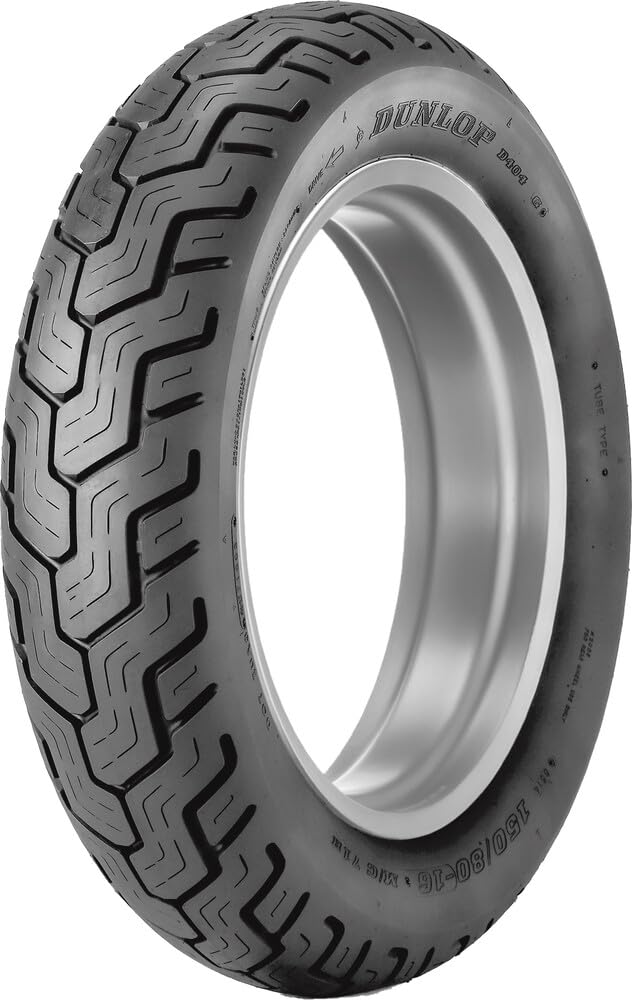
The Dunlop D404 rear tire in 130/90-16 is a solid, no-fuss replacement for lightweight to midweight cruisers, particularly Sportsters and entry-level customs. The bias-ply construction delivers a smooth ride over imperfect pavement, and the tread compound balances grip and mileage well enough that daily commuters can expect around 4,500 to 5,000 miles from a rear before replacement is needed. The 67H load rating suits bikes without heavy passenger or luggage loads.
Owners on 02 Harley Sportster 1200 Customs report that the D404 offers impressive grip for the investment, with a predictable breakaway feel that doesn’t surprise the rider during spirited cornering. The tire mounts easily on spoke and cast wheels, and minimal balancing weight is typically required to get a smooth ride. The rear tread pattern enhances water evacuation, and several riders note that the tire performs well in light rain.
The primary compromise is longevity — the soft rubber compound that gives the D404 its grip also wears faster than harder touring compounds. Riders who log high annual mileage may find themselves replacing the D404 more frequently. However, for a Sunday rider or a short-hop commuter who values grip and ride quality over maximum tread life, the D404 rear is a compelling option that won’t break the bank.
Why it’s great
- Balanced grip-to-mileage ratio works well for daily commuting and weekend rides.
- Bias-ply construction provides a smooth, compliant ride over rough roads.
- Minimal balancing weight needed for smooth highway operation.
Good to know
- Soft compound wears more quickly under heavy throttle or sustained highway use.
- 67H load rating is best suited for lighter cruisers without passenger or cargo loads.
8. Shinko 777 Front H.D. 100/90-19 (61H) Black Wall

The Shinko 777 Front H.D. in 100/90-19 is the entry point for riders who need a reliable front tire without spending premium dollars. The aramid-belted construction provides a reinforced carcass that resists flex under braking, and the rubber compound delivers a noticeably stickier feel than stock tires on many entry-level cruisers. The 61H load rating supports up to 908 pounds, which covers most midweight cruiser front ends with ample margin.
Owners of Yamaha Bolt cruisers report that swapping to this Shinko eliminated 98% of high-speed handlebar shake, a common complaint with the factory front tire. The tread design includes functional siping that helps the tire bite into wet pavement, and riders note that the tire tracks straight over rain grooves without wandering. The heavy-duty reinforced carcass provides a more planted feel when accelerating out of corners.
The main trade-off is that the sticky compound requires a longer break-in period than some competitors, and some owners report a higher low-speed steering effort as the tire scrubs in. For the investment, the Shinko 777 Front H.D. delivers grip and stability that outperforms its price point, making it a smart starting point for budget-conscious riders who still demand confidence in the corners.
Why it’s great
- Aramid-belted heavy-duty construction provides a planted feel and reduces handlebar shake.
- Sticky compound outperforms many stock cruiser front tires at a lower investment.
- Functional siping provides reliable wet traction for a budget-priced tire.
Good to know
- Longer break-in period required before full grip is achieved.
- Higher low-speed steering effort during the initial scrub-in miles.
9. Dunlop Harley-Davidson D402 Rear MT90B-16 (74H)

The Dunlop D402 in MT90B-16 is the exact OEM-spec rear tire for many Harley-Davidson Dyna, Softail, and touring models from the early 2000s. The three-ply polyester casing with dual fiberglass belts gives this tire the structural integrity to handle the weight of a full-dress bagger without squirming under load. The computer-optimized tread profile with an offset center groove reduces the tendency for the bike to follow longitudinal grooves in the road surface.
Owners of 1990 Fatboys and 2003 Anniversary Ultra Classics report that the D402 provides the same predictable handling and straight-line stability that the bike came with from the factory. The H speed rating covers all legal highway speeds, and the 908-pound load capacity offers generous headroom for two-up touring with luggage. The tire mounts snugly to solid cast aluminum rims, and several riders note that the thick tread depth provides good puncture resistance on debris-strewn roads.
The stiff construction that makes the D402 so stable under load does result in a firmer ride over sharp pavement imperfections. Riders looking for a plush, cushioned rear tire may prefer a radial alternative. For those who prioritize load confidence, even tread wear, and a proven design that has been refined over decades, the Dunlop D402 is a reference standard in the cruiser tire world.
Why it’s great
- OEM-spec tire for Harley-Davidson touring models guarantees correct fit and handling.
- Three-ply polyester casing with fiberglass belts handles maximum loads without squirm.
- Offset center groove eliminates high-speed wandering on rain grooves and bridges.
Good to know
- Firm ride quality over sharp bumps compared to radial cruiser tires.
- Premium pricing reflects the Harley-Davidson approval and reinforced construction.
FAQ
Can I mix a bias-ply front tire with a radial rear tire on my cruiser?
How many miles should I expect from a cruiser rear tire?
What is the correct tire pressure for a heavy cruiser?
Final Thoughts: The Verdict
For most riders, the best cruiser motorcycle tires winner is the Shinko SR777 HD Rear 140/90B16 because it delivers the ideal balance of cornering grip, wet traction, and aramid-reinforced stability at a price that undercuts premium competitors by a wide margin. If you ride a fully loaded touring bagger and need maximum load capacity and tread life, grab the Dunlop D402 Rear MU85B-16. And for those building a custom 21-inch front end or restoring a classic cruiser with whitewall aesthetics, nothing beats the Shinko 777 White Wall for blending period-correct looks with modern grip.

Mo Maruf
I created WellFizz to bridge the gap between vague wellness advice and actionable solutions. My mission is simple: to decode the research and give you practical tools you can actually use.
Beyond the data, I am a passionate traveler. I believe that stepping away from the screen to explore new environments is essential for mental clarity and physical vitality.