Our readers keep the lights on and my smoothie glass nicely filled. As an Amazon Associate, I earn from qualifying purchases.
Cutting crown molding without a jig means balancing the piece upside down against the saw fence while mentally calculating compound angles—one slip and an expensive length of trim becomes kindling. A purpose-built jig locks the molding at the correct spring angle, eliminates the guesswork, and turns a frustrating two-person chore into a repeatable one-person operation.
I’m Mohammad Maruf — the founder and writer behind WellFizz. After spending over 40 hours analyzing the hardware specs, build materials, mounting systems, and real-user feedback on seven of the most popular crown molding jigs on the market, I’ve separated the tools that deliver tight, gap-free miters from those that introduce more problems than they solve.
Whether you’re finishing a kitchen renovation or trimming out a new basement suite, this guide to the best crown molding jig will help you match the right tool to your saw and skill level.
How To Choose The Best Crown Molding Jig
The first buying mistake is ignoring your saw’s mounting system. Some jigs clamp awkwardly to the fence, others bolt directly into factory-threaded holes, and a few rely on gravity and manual stabilization. Each approach trades convenience for compatibility, and the wrong choice leads to a wobbly setup that ruins cuts before the blade even touches the wood.
Spring Angle Adjustment Range
Crown molding typically sits at a spring angle of 38°, 45°, or 52°. A quality jig lets you lock any of these positions firmly without relying on flimsy detents or flexing plastic. Look for a bed that rotates smoothly across at least 30 to 60 degrees and holds rigid when you apply downward pressure during the cut.
Molding Width Capacity
Most jigs cap out between 5.5 and 6 inches of molding height. If your project uses oversized or custom-profile crown, you will need a tool that accommodates at least a 7-inch width, or you will be forced to build a sacrificial fence on your saw. Check the spec before buying rather than discovering the limitation mid-project.
Fence Security & Base Stability
The jig must stay dead flat against the saw table. Plastic bases warp over time; aluminum or reinforced composite frames resist flexing. Screw-down mounts or T-nut tracks are far more reliable than spring clamps, especially when you are cutting long, heavy pieces that pull against the fence during the saw’s startup torque.
Quick Comparison
On smaller screens, swipe sideways to see the full table.
| Model | Category | Best For | Key Spec | Amazon |
|---|---|---|---|---|
| Festool 494369 Crown Stop | Premium | Kapex owners wanting factory integration | 1.87 lbs, T-nut crown stops | Amazon |
| Rockler Speed-Cope Jig | Premium | Inside cope cuts on crown & base | 7-1/4″ width capacity | Amazon |
| AltitudeCraft 2-in-1 Jig & Protractor | Mid-Range | Dewalt saw owners wanting metal stops | CNC aluminum protractor | Amazon |
| Kreg KMA2800 Crown-Pro | Mid-Range | DIYers wanting spring angle range | 30–60° adjustable bed | Amazon |
| Bench Dog Cut N Crown Jig | Mid-Range | Portable use on 10″ and larger saws | 6″ max molding width | Amazon |
| Milescraft 1405 Crown45 | Budget | Entry-level DIY on a budget | 3 preset spring angles | Amazon |
| Rockler Taper/Straight Line Jig | Specialty | Table saw taper cuts, not crown | 36″ miter bar | Amazon |
In‑Depth Reviews
1. Festool 494369 Kapex Crown Stop With Base Extension
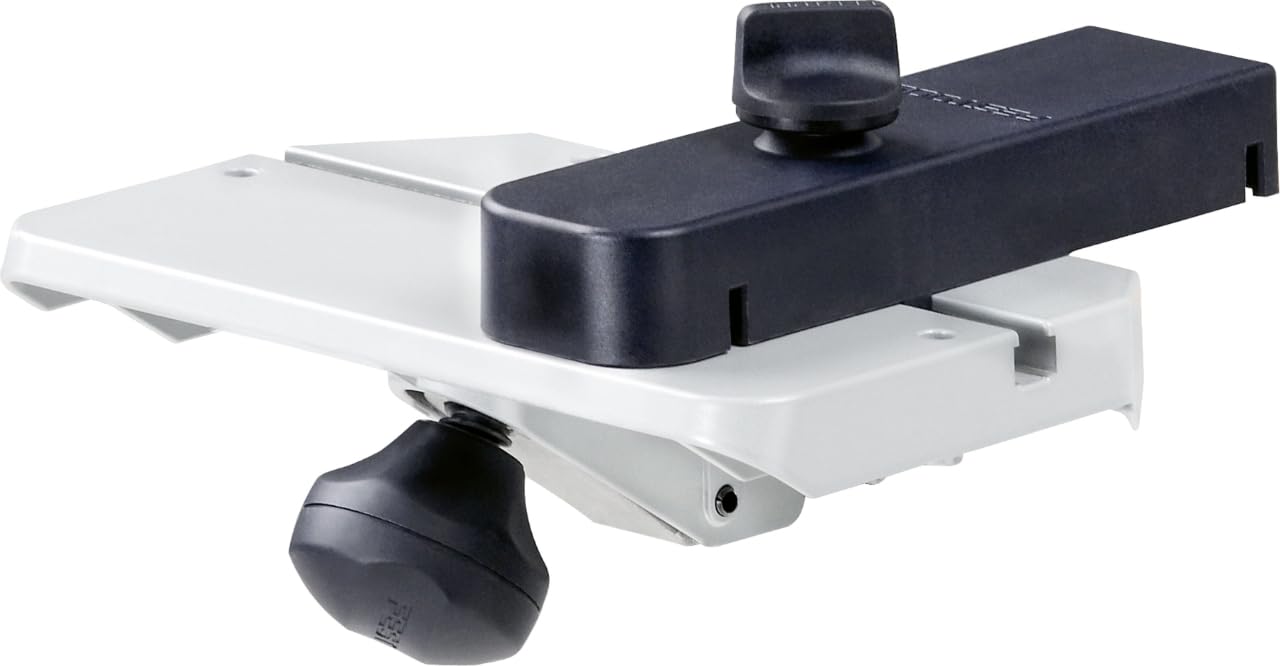
This is the factory crown stop system for the Kapex miter saw, not a universal add-on. The base extensions slide into the V-groove channel on either side of the saw table, and the crown stops lock via T-nut construction that glides smoothly between position changes. The castings are lightweight but precisely machined, flush with the table surface so long workpieces don’t catch on transitions.
Multiple users report that the left-side stop works well for nested crown positioning while the right-side stop can interfere on tight setups if not spaced properly.
One notable complaint centers on the newer Kapex models where the base extension sits slightly proud of the table, requiring shimming to achieve perfect flatness. For existing Kapex owners who cut crown regularly, the integration saves setup time, but the cost is high enough that it only makes sense if you already own the saw.
Why it’s great
- Factory-fit eliminates alignment guesswork
- T-nut stops move quickly between angle changes
- Integrated T-slots accept FS clamps for custom jigs
Good to know
- Kapex-specific; won’t fit other saw brands
- Premium price; some reported table height variance on newer saws
2. Rockler Speed-Cope Crown Molding Jig
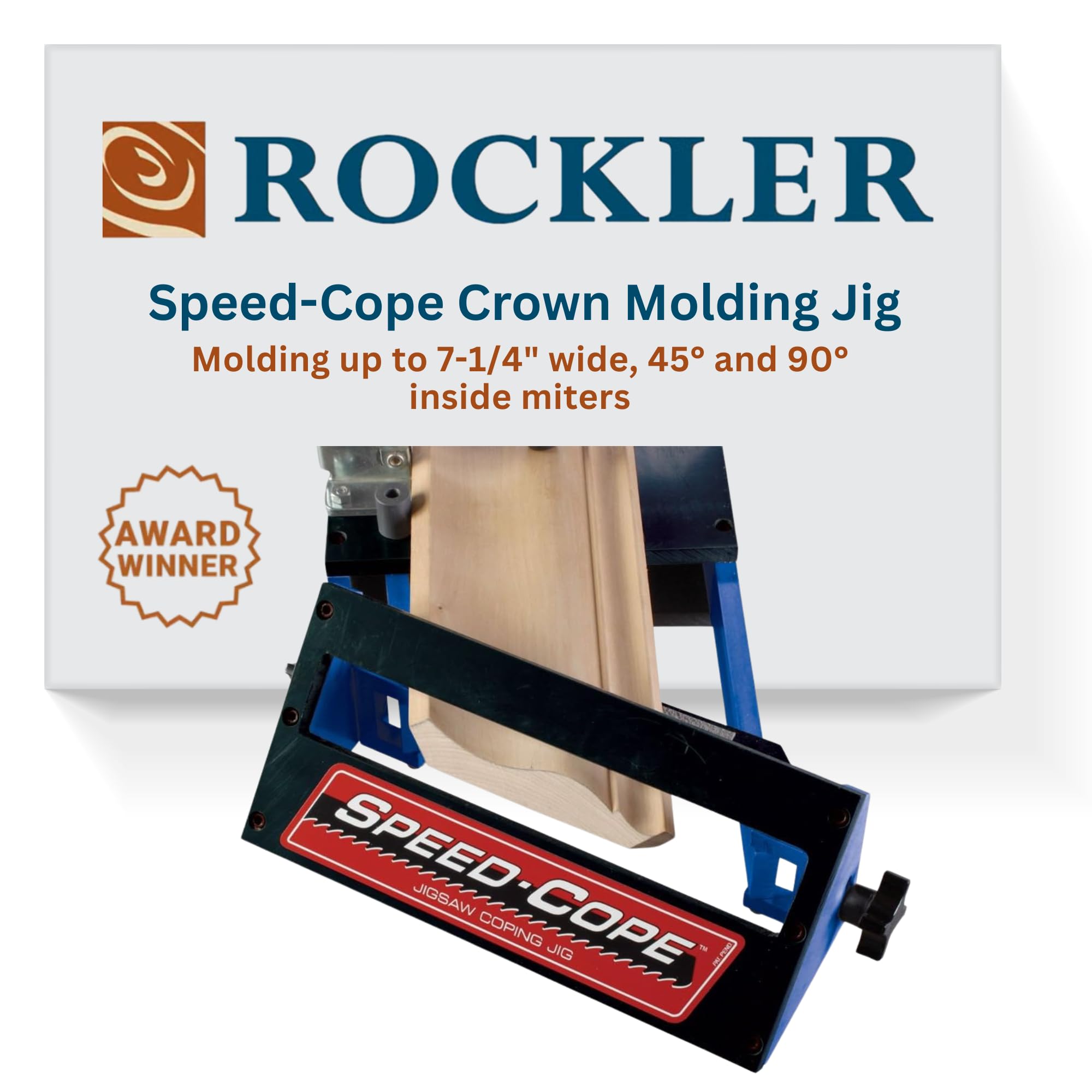
Unlike traditional jigs that only help with miter cuts, the Speed-Cope is built specifically for coping the back of crown molding to create tight inside corner joints without exposed miter gaps. The adjustable work table holds molding up to 7-1/4 inches wide at either 45 or 90 degrees, and the guide fence accepts a jigsaw to follow the profile of the mating piece.
Assembly is involved—multiple users note the lack of modern video instruction and a DVD that won’t play on current computers. Once assembled, the jig allows carpenters to cope left-hand or right-hand crown with repeatable accuracy after one or two practice cuts. The jigsaw blade runs exposed underneath, so awareness of blade position is critical.
For baseboard coping, the jig excels because the fence is square to the face of the board, making the cut simple and fast. The trade-off is that the jig requires a dedicated work surface and significant table space, making it a workshop fixture rather than a portable tool.
Why it’s great
- Handles crown up to 7-1/4″ wide, larger than most jigs
- Produces clean cope cuts faster than hand filing
- Adjusts for both 45° and 90° inside miters
Good to know
- Requires a jigsaw and a large workbench
- Assembly is complex; modern video instructions are lacking
3. AltitudeCraft 2-in-1 Crown Molding Jig & Protractor Set
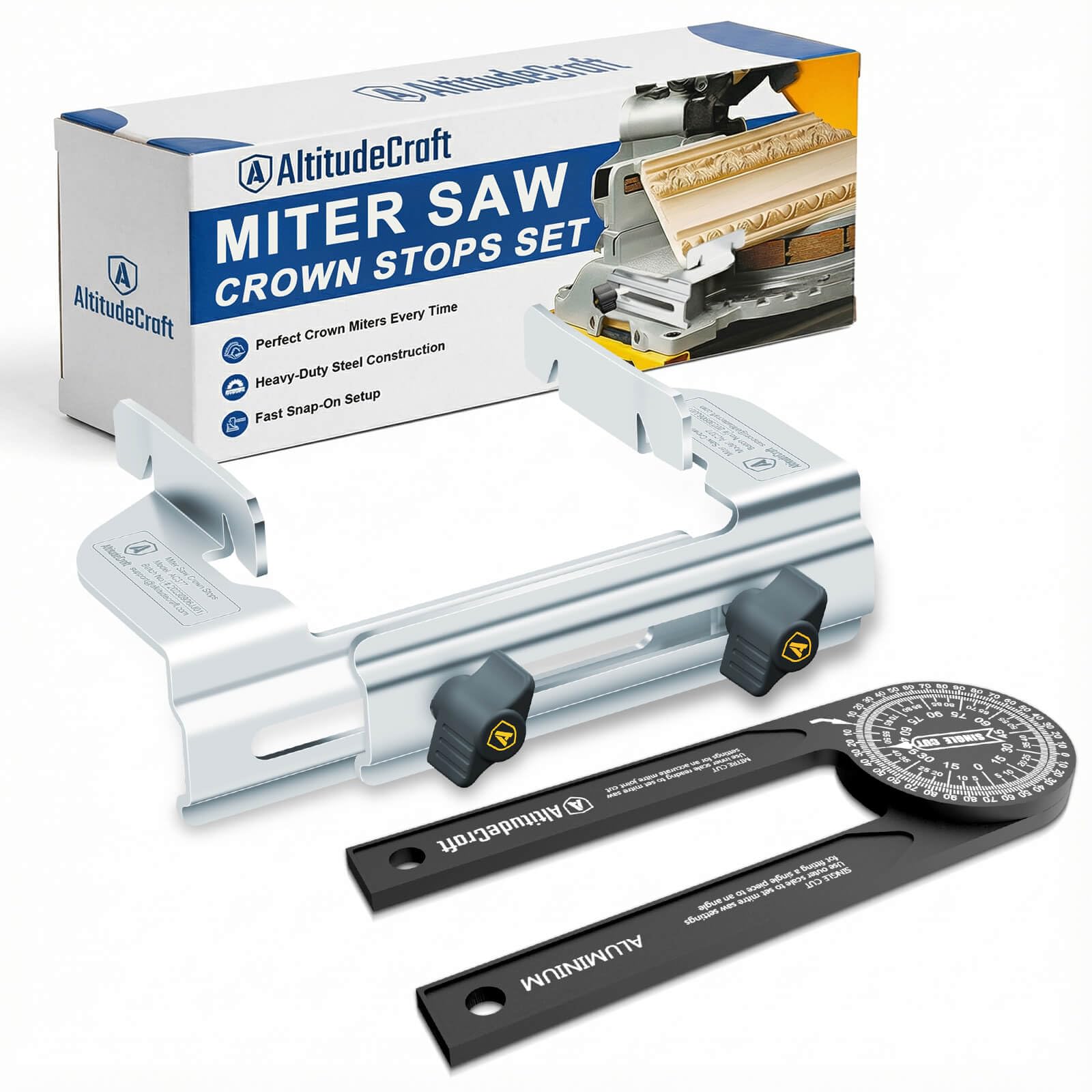
This set combines a CNC-machined aluminum protractor with dedicated metal crown stops designed to fit specific Dewalt miter saw models. The protractor eliminates the need for math by showing the exact miter saw setting for any corner angle, while the stops mechanically lock the crown in the nested position at the correct spring angle.
The protractor features laser-engraved scales and adjustable tension to hold the reading during transfer to the saw. The crown stops install using Clip Nuts and knobs, supporting both threaded and non-threaded mounting holes on the saw fence. The stamped steel guides provide rigid support that prevents the molding from rolling during the cut.
Reviewers consistently praise the speed this setup brings to production crown cutting—users report reducing a full-day job to a couple of hours. The catch is that the stops are Dewalt-specific; owners of other saw brands will need to drill custom mounting holes, which undermines the plug-and-play appeal.
Why it’s great
- Aluminum protractor with laser-engraved, fade-proof scales
- Metal crown stops prevent material shifting during cuts
- Includes angle chart for quick reference
Good to know
- Stops only fit select Dewalt models without modification
- Some reported missing parts on delivery
4. Kreg KMA2800 Crown-Pro Crown Molding Tool

The Crown-Pro uses a spring-loaded base that locks anywhere from 30 to 60 degrees, covering the three standard crown spring angles plus any custom angle in between. The tool clamps to the miter saw fence and uses a hinged bed that holds the molding upside down and backwards, eliminating the need for compound miter calculations.
Users who transitioned from the “upside-down-on-the-fence” method report dramatic time savings—one reviewer cut molding for a full kitchen in two hours rather than six. The integrated angle finder measures both wall corners and molding spring angles, reducing the number of separate tools required on site.
The primary drawback is the polymer construction. The protractor arm feels flimsy, and the numbered markings lack contrast, making them hard to read in dim job-site lighting. The bed does not slide smoothly; it moves in distinct detents that can make fine adjustments frustrating.
Why it’s great
- Wide spring angle range covers all standard crown profiles
- Greatly reduces project time for DIY users
- Built-in angle finder eliminates extra tools
Good to know
- Plastic construction; protractor scale is hard to read
- Bed movement uses detents, not a smooth glide
5. Bench Dog Cut N Crown Molding Jig
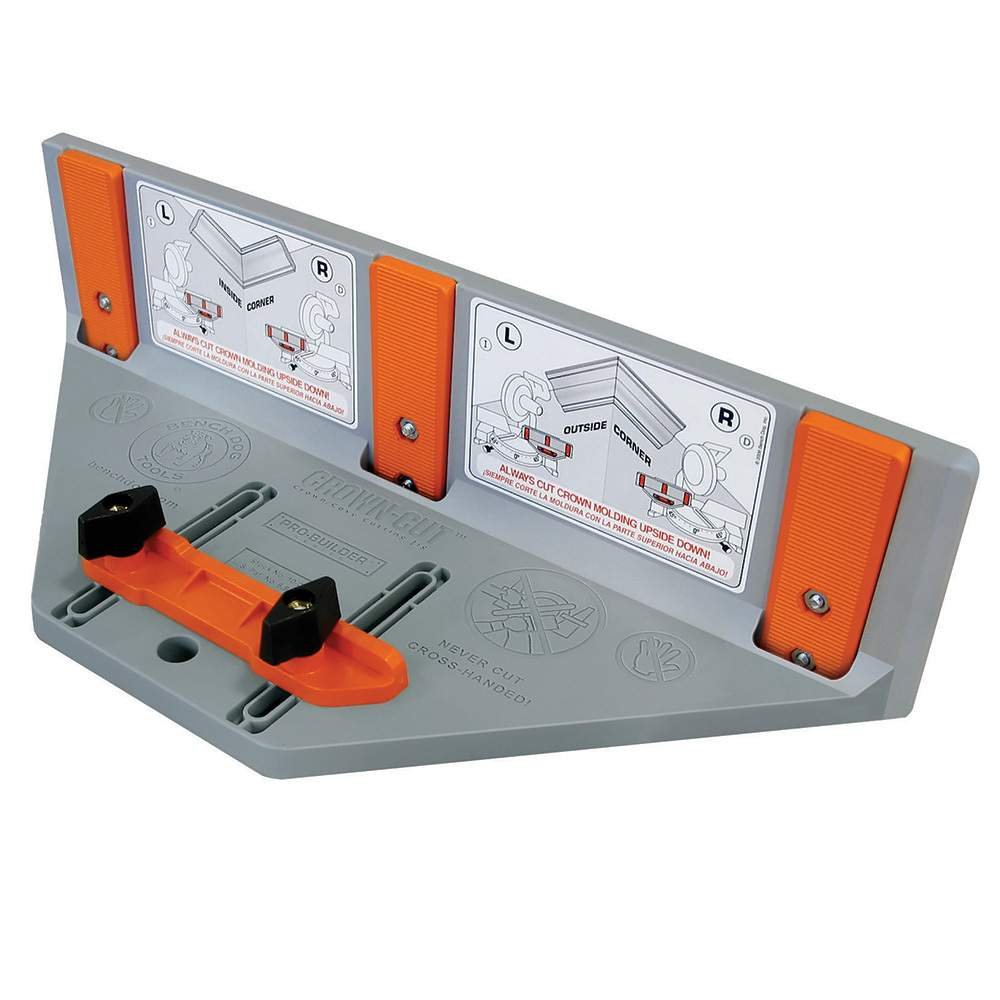
The Cut N Crown jig uses adjustable fence risers to hold crown molding up to 6 inches wide at the correct spring angle. It is designed for universal compatibility with any 10-inch or larger miter saw, including sliding compound models. The jig sits on the saw table without requiring permanent attachment, making it easy to move between saws or job sites.
Users consistently point out that the jig works well once you understand the orientation rule: the molding must be placed upside down in the jig, which flips the left and right cut direction. Without this knowledge, first-time users often cut pieces backwards and waste material. Creating labeled test pieces before production cutting is strongly recommended.
The base has crisscross plastic strips on the bottom that some users fill with epoxy and sand flat to create a solid surface for double-sided tape. The jig does not clamp to the saw fence, so a helper or supplementary clamps are needed to prevent the jig from shifting during the cut, especially on longer pieces.
Why it’s great
- Universal fit for 10″ and larger saws
- Portable; no permanent mounting required
- Built-in setup guide reduces miscuts
Good to know
- Not attached to saw; can shift without clamping
- Orientation rule is counterintuitive for beginners
6. Milescraft 1405 Crown45 Crown Molding Jig
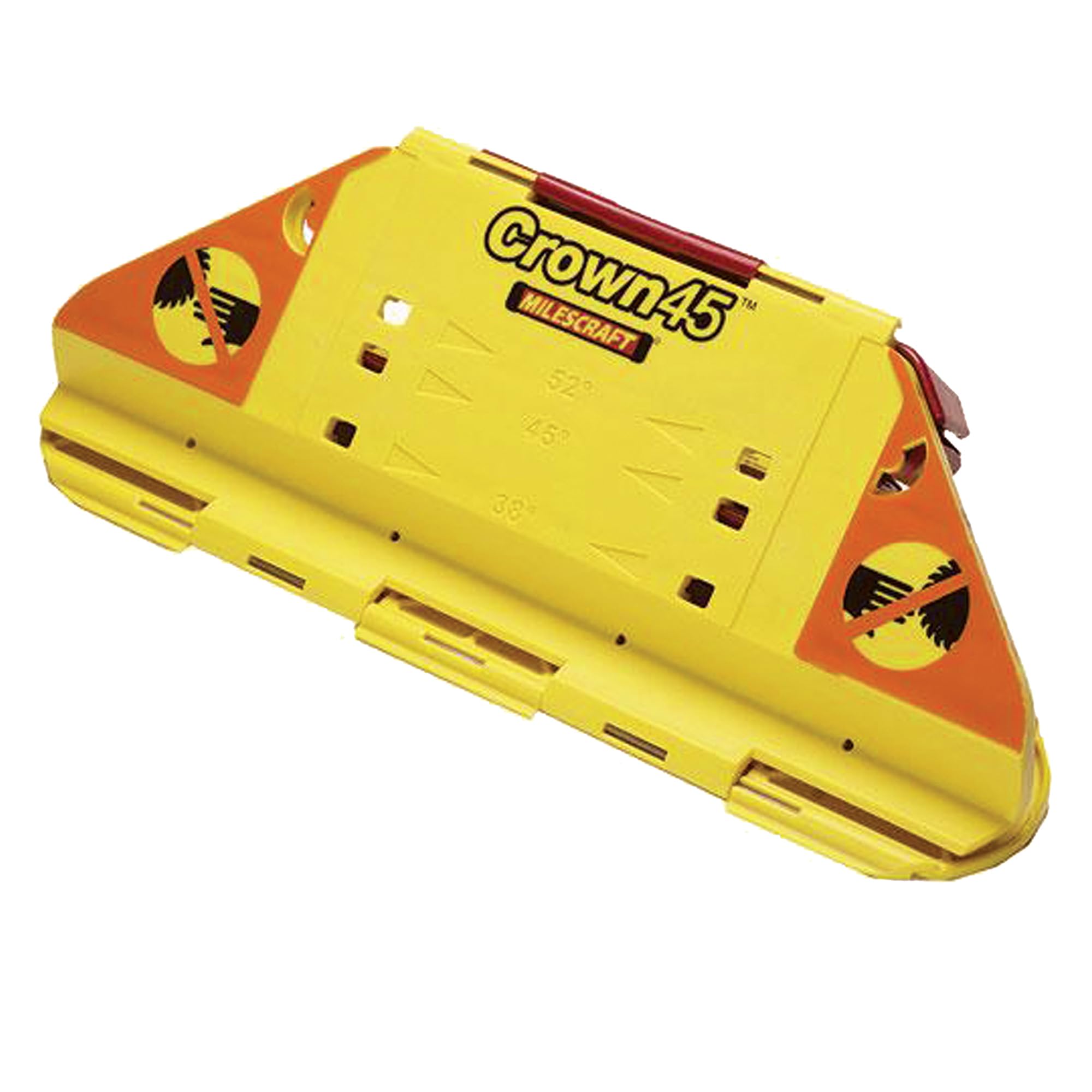
The Crown45 is a no-frills jig that supports the three most common spring angles—38, 45, and 52 degrees—and works with moldings from 2 to 5.5 inches tall. It comes with plastic spring angle setting triangles and a high-speed steel blade, though the blade is unrelated to the jig’s core function. A 10-inch or larger sliding miter saw is recommended for best results.
Customer feedback highlights that the jig produces accurate cuts once the user learns to stabilize the tool manually. The jig does not mount to the saw; it sits on the table and requires the user’s hand to hold it in place. Several reviewers noted that their first cut nicked the plastic jig body because the right-side position places it dangerously close to the blade path.
Long workpieces over 4 to 5 feet cause stability problems, and the angle selector lock has a tendency to fall out during adjustments. Users have improvised with tape to hold the lock in place. For small DIY projects with short molding runs, the Crown45 delivers acceptable results at a low cost, but it struggles under production pace or heavy material.
Why it’s great
- Covers all three standard spring angles
- Lightweight and simple to understand
- Budget-friendly entry into crown cutting
Good to know
- No mounting system; requires manual stabilization
- Plastic flexes under pressure; angle lock can fall out
7. Rockler Taper Jig/Straight Line Jig
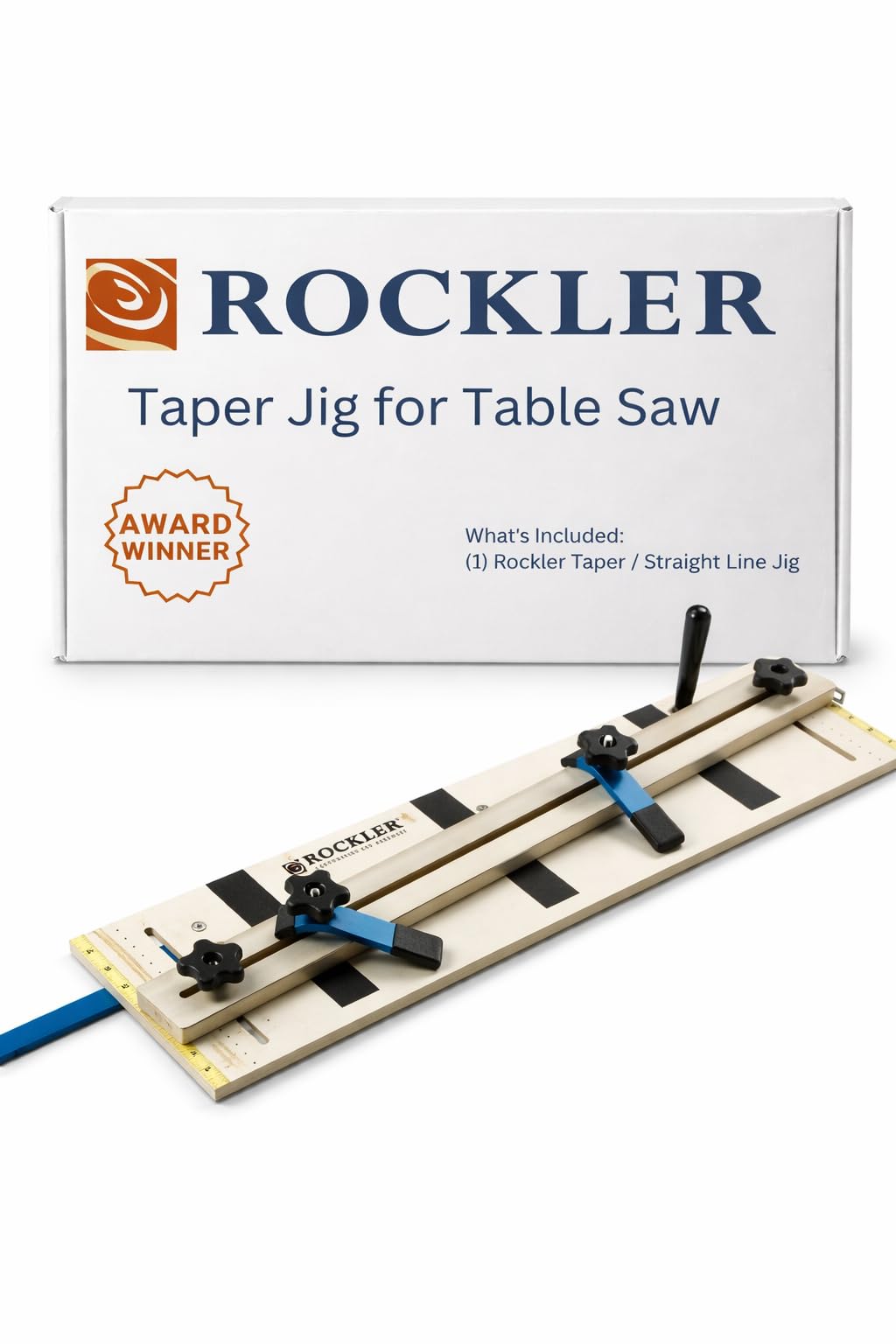
This jig is designed for table saw use, not miter saws. The 36-inch miter bar slides in a standard 3/8 x 3/4-inch slot and creates tapered cuts for chair legs, table legs, and straight-line ripping. It is not a crown molding jig in any traditional sense, and including it here serves as a caution: a product labeled “jig” does not automatically work for crown molding.
The clamp system uses heavy-duty hold-downs and an indexed angle setting system. Users report easy assembly and satisfaction with the smooth sliding action. The base is made from a composite material that one reviewer nearly broke when tightening the clamps, reinforcing the need for careful installation.
For crown molding work, this jig offers zero utility—it cannot hold a piece of trim at a spring angle or interface with a miter saw fence. If you found this product while searching for crown jigs, redirect your search to the purpose-built options above. It is a solid table saw accessory, but it belongs to a completely different category.
Why it’s great
- Precise tapered cuts on a table saw
- Heavy-duty hold-down clamps secure the workpiece
- Miter bar fits standard 3/8 x 3/4-inch slots
Good to know
- Not for crown molding; table saw only
- Composite base can crack if over-tightened
FAQ
Can I use a crown molding jig on any miter saw brand?
What is the nested cutting position for crown molding?
Why does my crown molding jig produce gaps at the corners?
Final Thoughts: The Verdict
For most users, the best crown molding jig winner is the AltitudeCraft 2-in-1 Jig and Protractor Set because the metal stops and CNC aluminum protractor deliver repeatable accuracy without guesswork. If you want a tool that handles cope cuts and wide molding up to 7.25 inches, grab the Rockler Speed-Cope Jig. And for a portable, quick-setup option that works on most saws without permanent mounting, nothing beats the Bench Dog Cut N Crown Jig.

Mo Maruf
I created WellFizz to bridge the gap between vague wellness advice and actionable solutions. My mission is simple: to decode the research and give you practical tools you can actually use.
Beyond the data, I am a passionate traveler. I believe that stepping away from the screen to explore new environments is essential for mental clarity and physical vitality.