Our readers keep the lights on and my smoothie glass nicely filled. As an Amazon Associate, I earn from qualifying purchases.
A crow call that sounds like a toy kazoo isn’t just useless—it actively warns every bird in the county that you’re a fraud. The difference between a call that brings crows in close and one that sends them scattering comes down to reed tuning, barrel material, and the precise air pressure the call demands. A cheap plastic whistle can’t replicate the guttural, rolling caw of a real crow, and trusting the wrong call means wasting entire mornings waiting on birds that never show.
I’m Mohammad Maruf — the founder and writer behind WellFizz. This guide is built from hours of cross-referencing customer field reports, listening to sound samples from dozens of calls, and analyzing the construction specs that separate a convincing locator from a hollow noisemaker.
Whether you need a shock call for spring turkeys or a dedicated crow call for a fall hunt, the best crow call is the one that sounds authentic, requires minimal wind to produce a deep tone, and holds up after a season in your vest pocket.
How To Choose The Best Crow Call
A crow call that sounds realistic doesn’t happen by accident. The barrel material, reed tuning, tip design, and air requirement all determine whether you get a convincing raspy caw or a thin, laughable squeak. Understanding these elements keeps you from buying a call that sounds like a duck or a kazoo once you start blowing.
Barrel Material: Walnut vs. Birch vs. Plastic
Walnut barrels produce a deeper, warmer tone that closely mimics an adult crow’s low caw, while birch barrels tend to be slightly brighter and cut through wind better. Plastic barrels are lighter and cheaper but almost always sound thinner—acceptable for a spare call but not a primary hunting tool. Serious hunters reach for wood when they need realism.
Reed Design and Tuning
A hand-tuned reed is the difference between a call that works out of the box and one that requires constant adjustment. Factory-tuned calls like the Faulk’s C-50 arrive ready to blow with minimal air, while calls with loose or poorly fitted reeds demand excessive air pressure and still sound off. The best calls use a reed-and-mouthpiece system that produces both adult and juvenile tones by varying tip pressure.
Air Requirement and Learning Curve
Some calls need you to force air like you’re clearing your throat, while others respond to a soft puff. Low-air calls are ideal for beginners or for hunters who want to call for extended periods without getting dizzy. High-air calls can produce louder, more aggressive patterns but require consistent diaphragm control. Listen to sound samples before buying if you can—air requirement is the number one reason new hunters abandon a call.
Quick Comparison
On smaller screens, swipe sideways to see the full table.
| Model | Category | Best For | Key Spec | Amazon |
|---|---|---|---|---|
| Woodhaven The Real Crow WH018 | Premium Birch | Realistic sound, easy blowing | Hand-tuned birch barrel | Amazon |
| Faulk’s Walnut Crow Call C-50 | Mid-Range Walnut | Adult crow tone, cherry tip | Hand-tuned walnut barrel | Amazon |
| ESH Pure Crow Locator Call | Premium Locator | Turkey hunting shock calls | Hand-assembled, all-weather | Amazon |
| Haydel’s PW-90 Woodpecker Call | Budget Locator | Pileated woodpecker sounds | Plastic barrel, loud output | Amazon |
| Acme Crow Sound Accent 4873 | Entry-Level Plastic | Compact carry, practice | Plastic decoy whistle | Amazon |
In‑Depth Reviews
1. Woodhaven Custom Calls The Real Crow WH018

The Woodhaven WH018 is the closest you’ll get to a live crow’s voice in a handheld call. The hand-turned birch barrel produces a bright, cutting tone that carries across open fields, and the tuned reed-and-mouthpiece system delivers that raspy, rolling caw that sounds absolutely natural. Hunters consistently report bringing crows in range within minutes of the first blow, and even a four-year-old can produce convincing sounds with minimal air—proof that the learning curve is nearly flat.
This call comes with a lanyard, which is a small but appreciated detail for hunters who need quick access while keeping both hands free. The barrel dimensions, roughly 10 inches long, give it a comfortable grip and enough resonance to project deeper tones than shorter calls. Users describe the sound as “incredible” and note it works well for triggering shock gobbles from turkeys during early morning hunts.
At roughly half an inch thick and weighing under three ounces, it won’t weigh down your vest. The birch finish is durable enough to handle moisture and pocket wear, though it’s not waterproof. If you want one call that covers both dedicated crow hunting and turkey locating duties with realistic sound, this is the benchmark.
Why it’s great
- Hand-tuned birch for bright, realistic caw sound
- Requires very little air—easy for beginners
- Comes with a practical lanyard
Good to know
- Birch may wear faster than walnut in wet conditions
- Premium pricing reflects hand-crafted construction
2. Faulk’s Game Calls Walnut Crow Call C-50
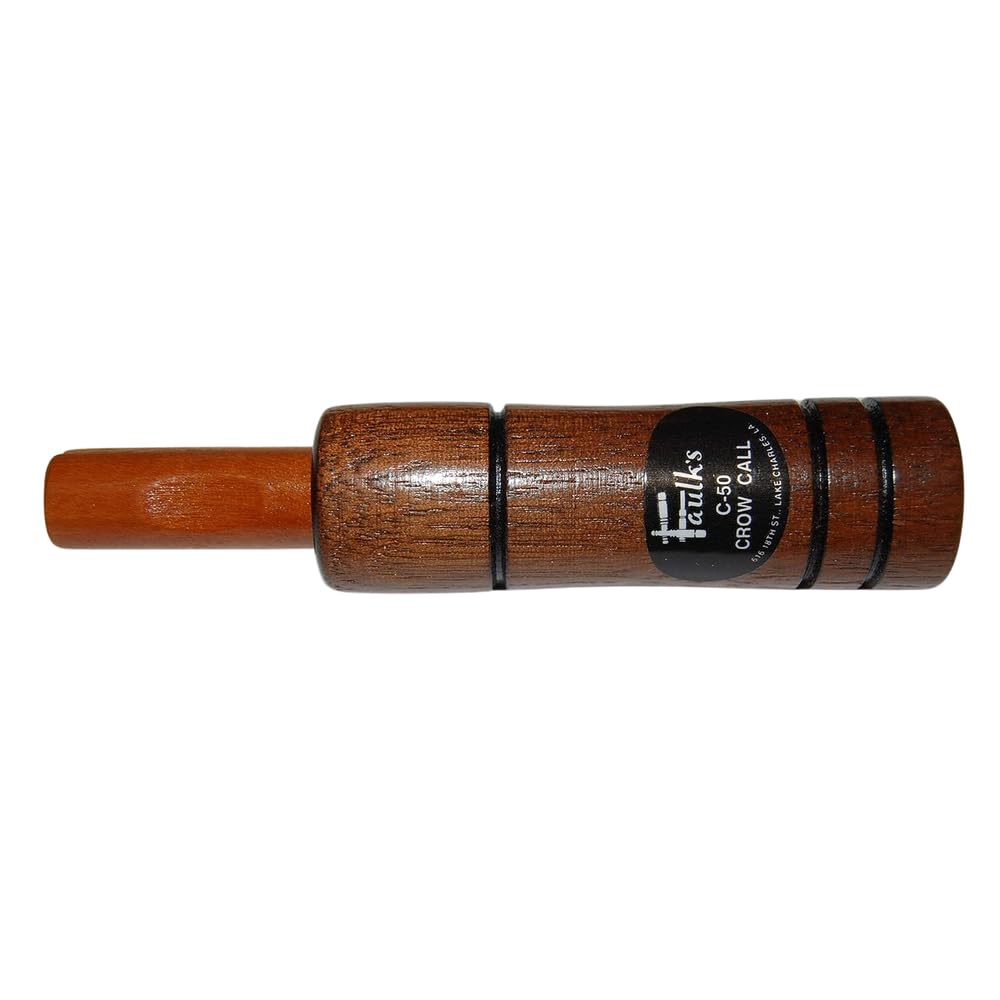
The Faulk’s C-50 has been a staple for decades because walnut produces a deeper, warmer tone than any plastic or birch alternative. The hand-tuned reed is factory-set to an adult crow’s low caw, and the cherry tip allows you to modulate pressure and shift to a higher-pitched juvenile sound—a feature that adds versatility when you need to simulate multiple birds. Experienced hunters call it the best they’ve used, and first-timers report calling in crows within five minutes of their first attempt.
At three inches long and barely two ounces, this call is genuinely pocket-sized. The compact walnut body fits easily into a vest pocket without bulging, and the finish holds up well against moisture and minor drops. A unique bonus: blowing through the side of the call produces a hawk-like scream, giving you an extra locator option without carrying a second call.
The only real drawback is the price—it sits above entry-level options but below the premium hand-turned birch calls. That mid-range positioning makes sense given the walnut construction and the factory tuning that eliminates guesswork. If you want a deep, authentic adult crow tone from a compact package, the C-50 delivers consistently.
Why it’s great
- Rich, deep walnut tone mimics adult crows perfectly
- Cherry tip enables both adult and juvenile calls
- Can double as a hawk locator sound
Good to know
- Smaller size means less resonance than longer calls
- Limited warranty—check seller policy
3. ESH Pure Crow Locator Call
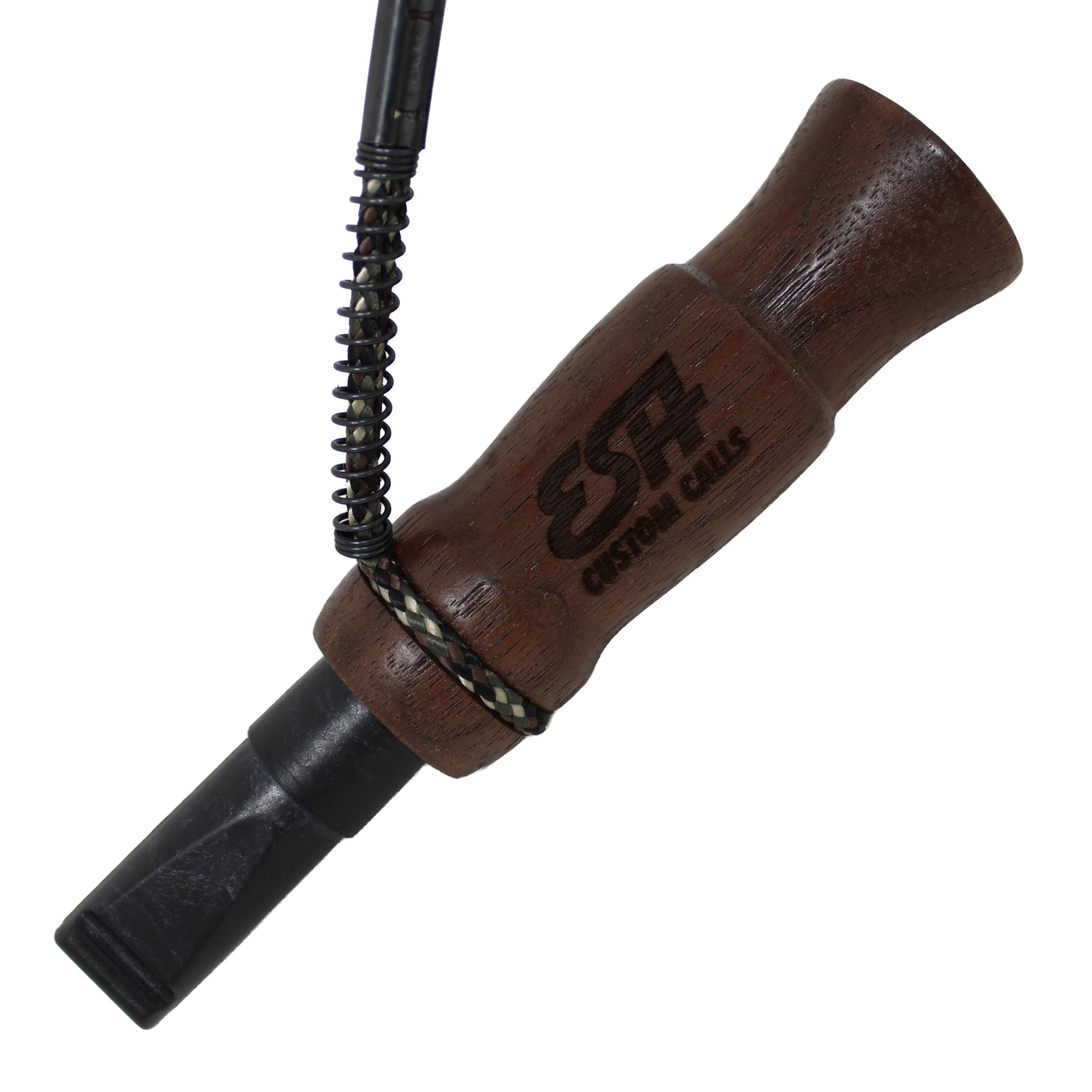
The ESH Pure Crow Call is designed specifically as a locator for turkey hunting, and its purpose-built design shows. The hand-assembled barrel and tuned reed produce a loud, clear crow sound that triggers shock gobbles from toms without requiring the hunter to switch to a turkey call prematurely. It delivers multiple crow patterns—from sharp single caws to excited sequences—giving you the flexibility to match the intensity of the situation.
Field reports confirm that the call works well for both beginners and pros, though some users note it takes a few minutes to find the sweet spot. The all-weather construction means it won’t warp or degrade after exposure to rain or humidity, a real advantage over untreated wood calls. At roughly 6.8 inches in package length, it’s longer than the Faulk’s but still fits comfortably in a vest pocket.
A minority of users report the sound leans closer to a duck than a crow, which suggests the reed may need slight adjustment or additional practice. That inconsistency makes it a solid second call rather than a primary option for dedicated crow hunters. But as a turkey locator that lives in your vest for spring season, it earns its place with reliable volume and durable build.
Why it’s great
- Loud, clear output designed for shock gobbles
- All-weather construction handles rain and humidity
- Multiple crow sound patterns from single unit
Good to know
- Some users need practice to avoid duck-like tones
- Best suited as a locator, not a dedicated crow call
4. Haydel’s Game Calls PW-90 Pileated Woodpecker Call

Strictly speaking, the Haydel’s PW-90 is a pileated woodpecker locator call, not a crow call—but it earns a spot on this list because it produces a loud, high-pitched sound that triggers shock gobbles in situations where a standard owl or crow call fails. In heavily pressured hunting areas where birds have learned to ignore common locators, this woodpecker call offers a fresh sound that sparks curiosity and responses.
The plastic barrel is lightweight, durable, and incredibly loud. Hunters consistently rate it five stars for volume and reliability, calling it “rock solid” compared to wooden calls that change pitch as they age. The sound replicates the distinctive pileated woodpecker call accurately, and the plastic construction means zero maintenance—no oiling, no swelling, no worry about moisture.
Because it’s a locator call rather than a crow-specific call, you won’t use it for direct crow hunting. But for turkey season, having a woodpecker call in your vest alongside a dedicated crow call gives you an extra card to play when birds ignore the standard routine. Budget-friendly and nearly indestructible, it’s a smart addition to any locator collection.
Why it’s great
- Extremely loud output carries across long distances
- Plastic barrel requires no maintenance
- Works when owl/crow calls fail in pressured areas
Good to know
- Not a crow call—woodpecker only
- Plastic tone lacks depth of wood
5. Acme Crow Sound Accent 4873

The Acme 4873 is the pocket-sized entry-level option for anyone who wants to try crow calling without investing in a wood call. This plastic decoy whistle is small enough to hang on a lanyard around your neck, and it produces a sound that can attract crows and ravens once you master the technique. The compact design, roughly 9 inches long and under an ounce, makes it the most portable option in this list.
Reviews are split—some hunters report that crows show interest immediately, while others struggle to get a realistic sound and describe the output as more like a kazoo than a crow. That inconsistency comes from the plastic construction and the lack of a tuned reed; this call relies entirely on the user’s breath control. Watching a few YouTube tutorials dramatically improves results, as the technique involves a specific throat-clearing grumble rather than a simple blow.
If you want a durable, low-stakes call to practice with or a backup that takes up no space, the Acme works. But for serious crow hunting where realism matters, a wood call with a tuned reed will produce more consistent and convincing results. Treat this as a training tool or a novelty—not a primary hunting call.
Why it’s great
- Extremely compact and lightweight
- Durable plastic construction
- Low-cost entry point for new hunters
Good to know
- Requires significant practice to sound realistic
- Plastic tone lacks depth of wood calls
- Some users report kazoo-like output
FAQ
Why does my crow call sound like a duck or a kazoo?
Can I use a crow call for turkey hunting?
What is the difference between a locator call and a dedicated crow call?
Final Thoughts: The Verdict
For most users, the best crow call winner is the Woodhaven The Real Crow WH018 because it combines a hand-tuned birch barrel with an incredibly easy blowing action that produces the most realistic crow caw in this lineup. If you want a deeper, walnut-driven tone in a compact package, grab the Faulk’s Walnut Crow Call C-50. And for turkey hunters who need a reliable shock call that works in all weather, nothing beats the ESH Pure Crow Locator Call.

Mo Maruf
I created WellFizz to bridge the gap between vague wellness advice and actionable solutions. My mission is simple: to decode the research and give you practical tools you can actually use.
Beyond the data, I am a passionate traveler. I believe that stepping away from the screen to explore new environments is essential for mental clarity and physical vitality.