Our readers keep the lights on and my smoothie glass nicely filled. As an Amazon Associate, I earn from qualifying purchases.
A weight vest that shifts, clanks, or digs into your shoulders during a WOD turns a productive training session into a frustrating battle with your gear. For CrossFit athletes, the margin between a personal record and a failed rep often comes down to how securely the vest stays locked to your torso under explosive movement — box jumps, burpees, and pull-ups punish any vest that doesn’t fit like a second skin. The best options use rigid weight systems, dense padding at stress points, and multi-point closure designs that eliminate vertical bounce entirely.
I’m Mohammad Maruf — the founder and writer behind WellFizz. I’ve spent hundreds of hours analyzing weight vest construction, weight distribution geometry, and real-world durability reviews from athletes who train in these vests daily across multiple fitness disciplines.
This guide isolates the models that survive the barbell, the rig, and the assault bike without compromise. If you’re looking for the best crossfit weight vest, you need a design that locks weight high on your back, uses removable plate systems instead of loose fill, and holds up to thousands of reps without structural failure.
How To Choose The Best CrossFit Weight Vest
Choosing the right weight vest for CrossFit means looking past the generic marketing and focusing on construction details that directly affect your performance under load. The wrong vest will restrict your breathing, shift during pull-ups, or limit your squat depth — the right one becomes invisible.
Weight Distribution and Center of Mass
In CrossFit, the vest’s center of mass must sit high on your back, between your shoulder blades, not on your lower back. A low-riding vest pulls your torso forward during running and makes the squat clean feel unstable. Look for a cropped or high-cut design that stops well above your waistline — this preserves your ability to hinge at the hips during deadlifts and kettlebell swings without the vest riding up or interfering with the barbell path.
Weight Material and Adjustment System
Removable iron weight blocks are the gold standard for this category. They stay rigid, don’t leak, and provide consistent resistance without the shifting that sand or steel shot pellets create. The best systems use individual bars or bricks that load into sealed pockets with hook-and-loop closures — this allows you to add or remove weight in precise 2–3 pound increments between rounds. Avoid vest designs that rely on zipper pouches with loose fill, as the weight migrates to the bottom of the pocket over time.
Closure and Retention During Dynamic Movement
CrossFit involves explosive movements like burpee box jumps, muscle-ups, and tire flips — all of which test the vest’s ability to stay locked in place. A single velcro strap across the chest will not hold. The most secure designs use a combination of adjustable shoulder straps, a front buckle or double-ring closure, and a secondary hip belt that wraps around your ribcage. The front closure type matters: metal buckles are more durable than plastic clips, and reinforced stitching at every stress point prevents the straps from tearing under heavy loads over months of use.
Shoulder Padding and Range of Motion
The shoulders bear the brunt of the vest’s weight during push-ups, handstand push-ups, and overhead presses. Look for TPE foam or neoprene padding that is at least a quarter-inch thick and wide enough to distribute load without sliding onto your neck or restricting your arm swing during double-unders. Some vests use narrow unpadded straps that cut into your trapezius — avoid these if you plan to wear the vest for more than twenty minutes at a time.
Quick Comparison
On smaller screens, swipe sideways to see the full table.
| Model | Category | Best For | Key Spec | Amazon |
|---|---|---|---|---|
| Gymnastics Power Weighted Vest | Premium | High-end training & rucking | 1000D nylon with TPE foam padding | Amazon |
| ONETWOFIT Silicone Vest | Premium | Comfort-focused daily wear | Zipper closure with silicone weight blocks | Amazon |
| HANZO BDRX Weighted Vest | Mid-Range | Heavy calisthenics & rucking | 1000D Oxford nylon with 2.2 lb bars | Amazon |
| MVRK Weighted Vest | Mid-Range | Progressive overload from 0 to full load | Neoprene-coated iron weights | Amazon |
| ZELUS 23/36/45lb Vest | Mid-Range | Running & HIIT with reflective safety | 900D fabric with 2.1 lb iron weights | Amazon |
| MSPORTS Adjustable Vest | Budget | Entry-level adjustable training | tear-resistant nylon with removable packs | Amazon |
In‑Depth Reviews
1. Gymnastics Power Weighted Vest
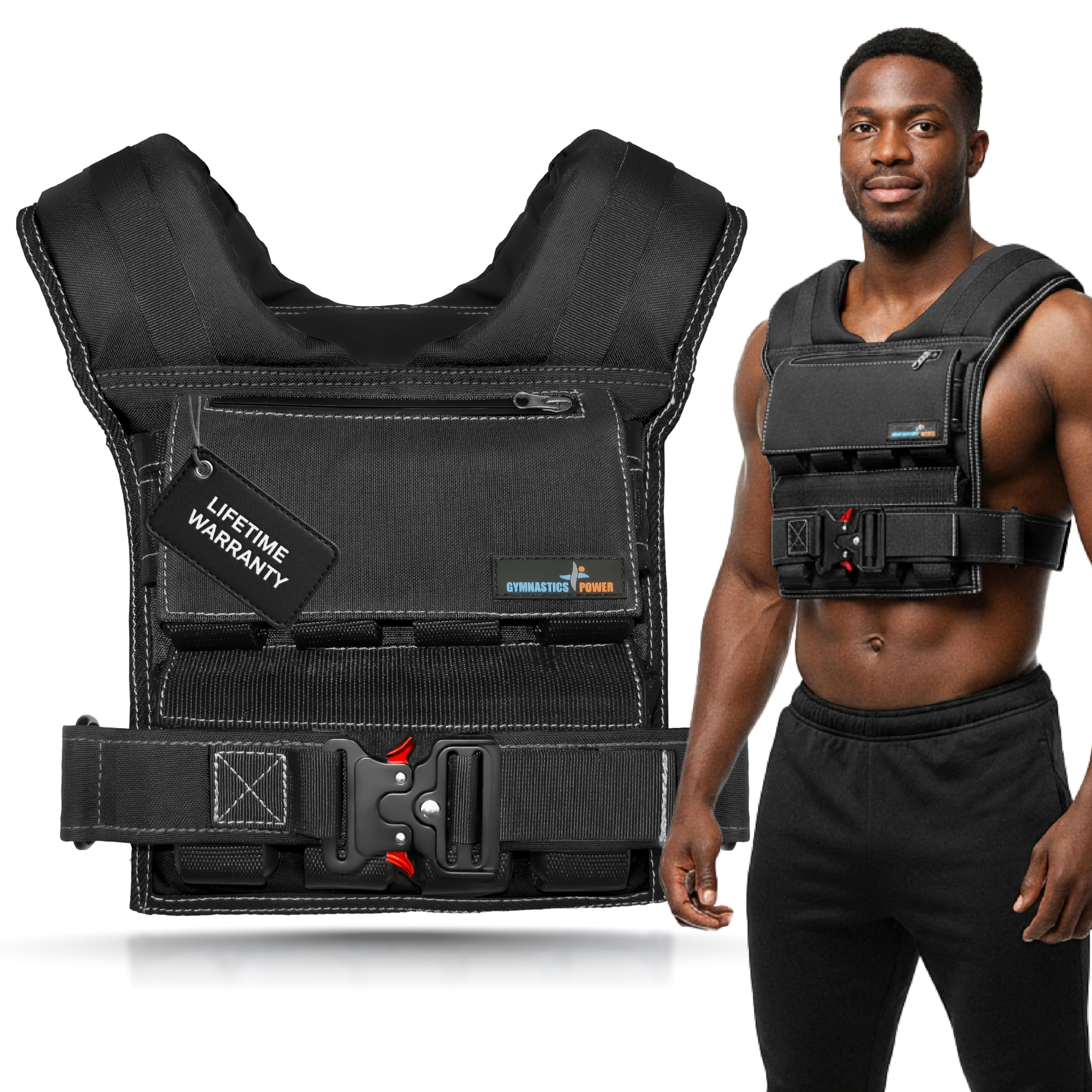
The Gymnastics Power vest uses 1000D nylon with reinforced double stitching at every stress point — a construction grade that handles repeated heavy loads without fraying or seam separation. The individual 2-pound alloy steel weight bars load into sealed pockets secured by heavy-duty hook-and-loop flaps, which prevents any shifting during high-velocity movements like box jumps or shuttle runs. Users consistently note the cropped design rides high on the torso, keeping the weight off the lower back and allowing unrestricted hip hinging during barbell cycling.
Shoulder padding uses TPE foam that is wide enough to distribute load without sliding onto the neck during overhead movements. The front closure uses a high-quality metal buckle combined with velcro overstraps, which provides redundant security — if the buckle loosens during a drop-ball clean complex, the velcro holds the vest in place. A front zippered pouch adds convenience for storing keys or a phone during outdoor rucking sessions.
Users at 5’3″ and 6’6″ both report the fit stays snug without ear rubbing or chafing, which is unusual for a one-size design. The vest is machine washable after removing the weight bars, and the reflective strip on the back improves visibility during early morning runs. This is the most versatile high-capacity vest for athletes who want one piece of gear that transitions between the gym, the trail, and the rig.
Why it’s great
- Ultra-durable 1000D nylon with double stitching handles years of hard use
- Cropped high-riding design preserves mobility for squats and deadlifts
- Metal buckle plus velcro overstrap provides redundant front closure security
Good to know
- Premium price point may feel steep for casual users training below 20 pounds
- The cropped cut leaves less fabric coverage on the lower back during cold-weather rucking
2. ONETWOFIT Silicone Weight Vest
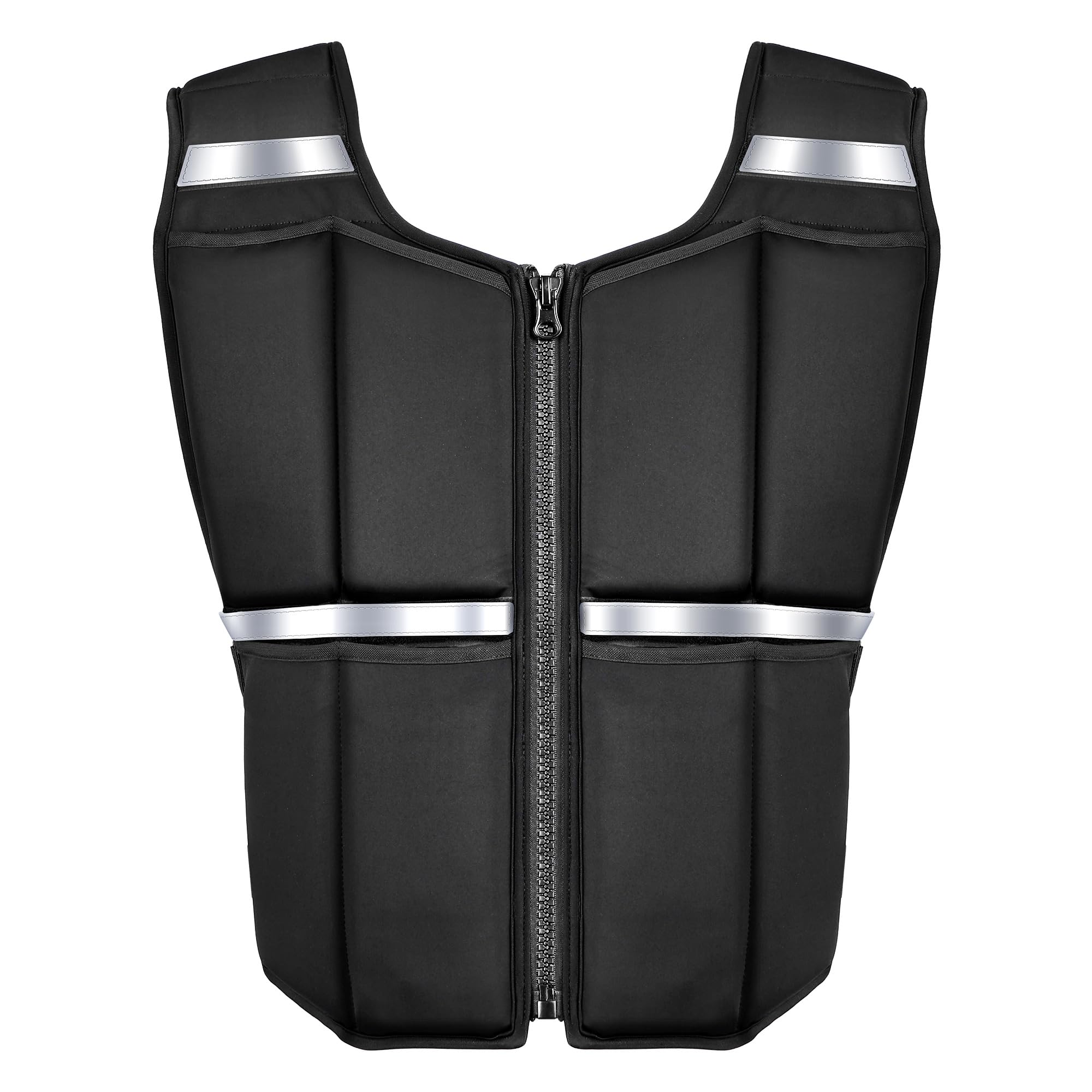
The ONETWOFIT vest takes a fundamentally different approach to weight distribution by using high-density polymer silicone blocks instead of iron bars or sand. The silicone material is flexible, skin-friendly, and conforms to the body’s natural curves, which eliminates the hard pressure points that iron blocks create during push-ups, burpees, or lying on a bench. The vest comes in 19, 35, and 45-pound configurations, each with 16 individual silicone blocks that load into front and back compartments for balanced distribution.
The zipper closure design is a standout feature for CrossFit athletes who want quick on-and-off between rounds — no threading velcro straps or adjusting buckles mid-session. The neoprene outer shell is sweat-absorbing and machine washable, which prevents odor build-up after frequent use. Detachable reflective strips on both the front and back add safety layers for early-morning or evening runs without looking bulky.
Users report the silicone weights conform better than iron alternatives for activities like hanging leg raises or pull-ups where the vest presses against the bar. The foam padding measures 0.2 inches thick at the shoulders, which is adequate for loads up to 35 pounds but thinner than some competitors. The polymer silicone does not rust, corrode, or leak — a real advantage if you train in humid environments or sweat heavily through your sessions.
Why it’s great
- Silicone weight blocks conform to body shape without creating hard pressure points
- Zipper closure enables rapid on-and-off between WOD rounds
- Machine washable neoprene shell resists odor and corrosion
Good to know
- Side adjustment straps may rub against arms during overhead exercises
- Foam padding is thinner than traditional iron-block vests at similar weight capacities
3. HANZO BDRX Weighted Vest
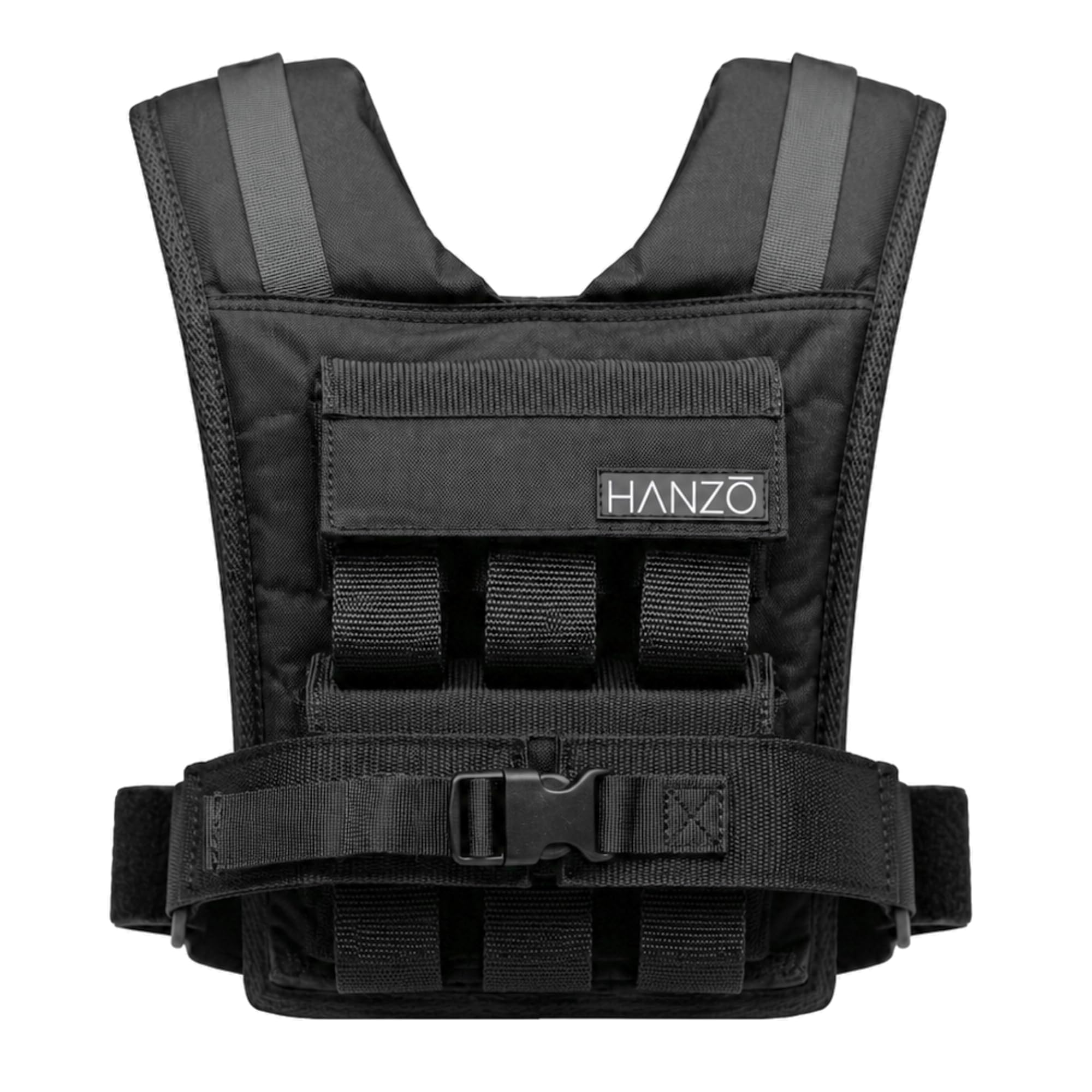
The HANZO BDRX vest is built from 1000D Oxford nylon with reinforced stitching at every seam, a fabric weight that withstands abrasive contact with concrete floors, knurled barbells, and chain rigs. The double-padded shoulder design uses foam inserts that are thick enough to prevent digging into the trapezius during loaded carries or farmer walks, while the hook-and-loop closure system wraps around the ribcage to keep the vest from creeping upward during pull-ups. The 45-pound version uses 20 removable bars, each weighing 2.2 pounds, which load into two rows for even weight distribution from front to back.
Users consistently highlight the vest’s stability during treadmill runs and rowing intervals — the weight does not shift laterally because the pocket system seals each bar individually with a tight compression fit. The design allows for side-to-side and front-to-back adjustment, which is critical for athletes between sizes who need to fine-tune the fit after loading a heavy squat clean. A front zippered compartment provides storage for small items during outdoor rucking sessions.
One limitation is the difficulty of removing and reinserting the weight bars, especially the bottom rows that sit closest to the torso — some users report needing to set the vest on a flat surface and push down firmly to seat the bars fully. The 25-pound base model comes with fewer bars and a single row layout, which simplifies loading but limits maximum weight for advanced athletes. Replacement parts are available through the manufacturer’s customer service.
Why it’s great
- Thick double-padded shoulder straps prevent digging during loaded carries
- Individual bar pocket system eliminates lateral weight shifting
- Side-to-side and front-to-back adjustment for a custom snug fit
Good to know
- Weight bars in the bottom row are difficult to remove without setting the vest down
- The 25-pound version caps progression for athletes training above moderate loads
4. MVRK Weighted Vest
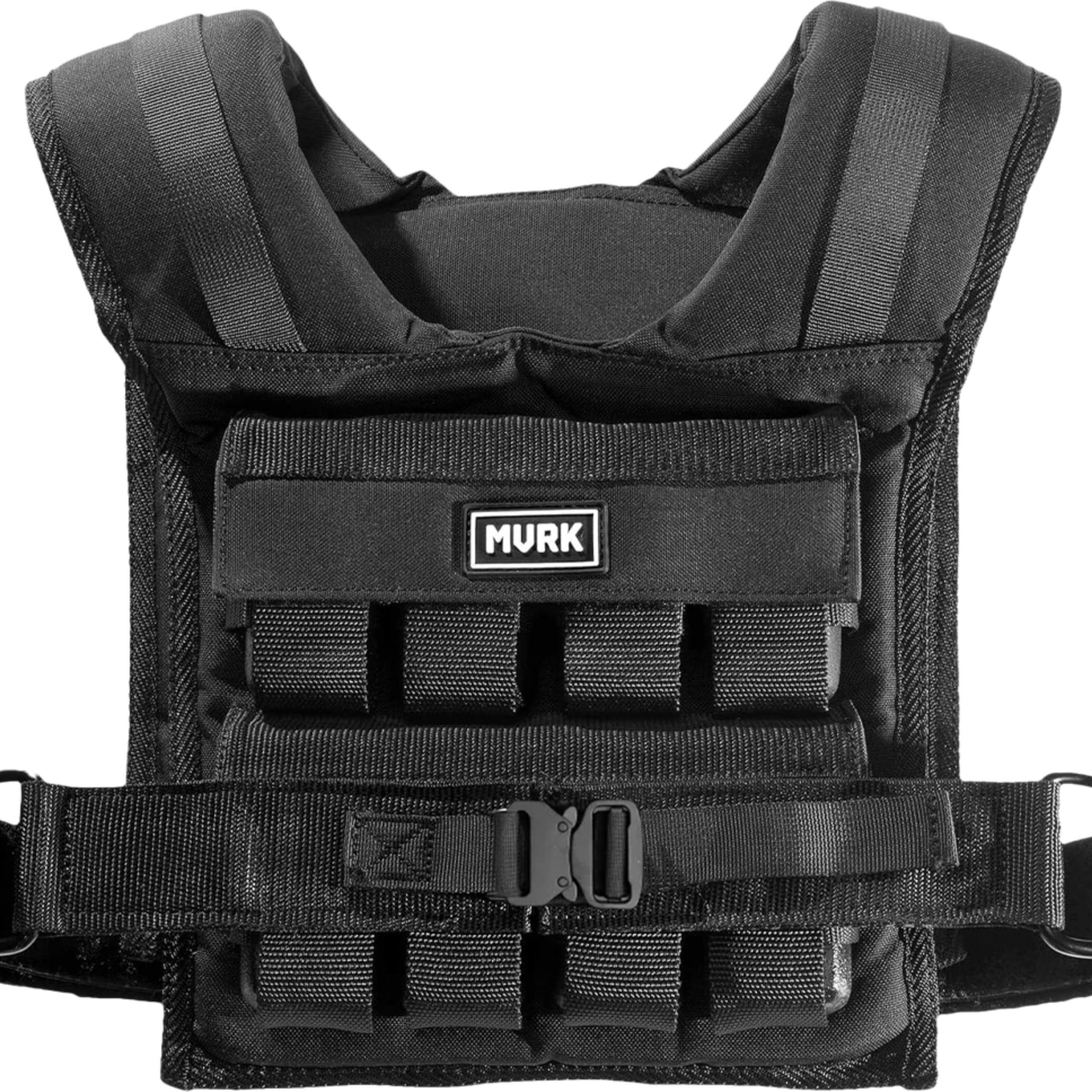
The MVRK vest offers a 35-pound maximum capacity with 16 neoprene-coated iron weight bars, each weighing approximately 2.18 pounds, that load into front and back pockets for even weight distribution. The neoprene coating on the weight bars serves a dual purpose: it prevents the iron from rusting in humid gym environments and reduces the metallic clanking noise that traditional bare iron blocks produce during dynamic movements. The compact design keeps the vest close to the body without adding unnecessary bulk, which is important for exercises that require a full range of motion like overhead squats or toes-to-bar.
Reinforced stitching at all stress points — the shoulder anchor points, the front closure buckles, and the pocket seams — means this vest can handle the torque generated during explosive movements like burpee box jumps or sprint intervals. The heavy-duty front buckle closure locks securely across the chest, and the adjustable side straps let you cinch the vest down to eliminate vertical bounce. Users note the shoulder padding is cushioned enough to wear for extended rucking sessions without bruising.
The one-size-fits-all design works well for athletes in the 5’5″ to 6’2″ range, but shorter users may find the shoulder straps sit too far out, causing the vest to hang lower on the torso than ideal. The vest can be hand washed with soap and hung to dry after removing all the weight bars. The side pockets are not designed for storage — they serve only as weight pockets — so you will need to carry phone or keys in a separate pouch.
Why it’s great
- Neoprene-coated iron weights prevent rust and reduce clanking noise
- Compact design preserves full range of motion for overhead and gymnastic movements
- Reinforced stitching at stress points handles high-torque dynamic loading
Good to know
- Side pockets only hold weight bars, not personal items or extra gear
- Taller athletes above 6’2″ may find the torso length too short for proper weight distribution
5. ZELUS Adjustable Weighted Vest
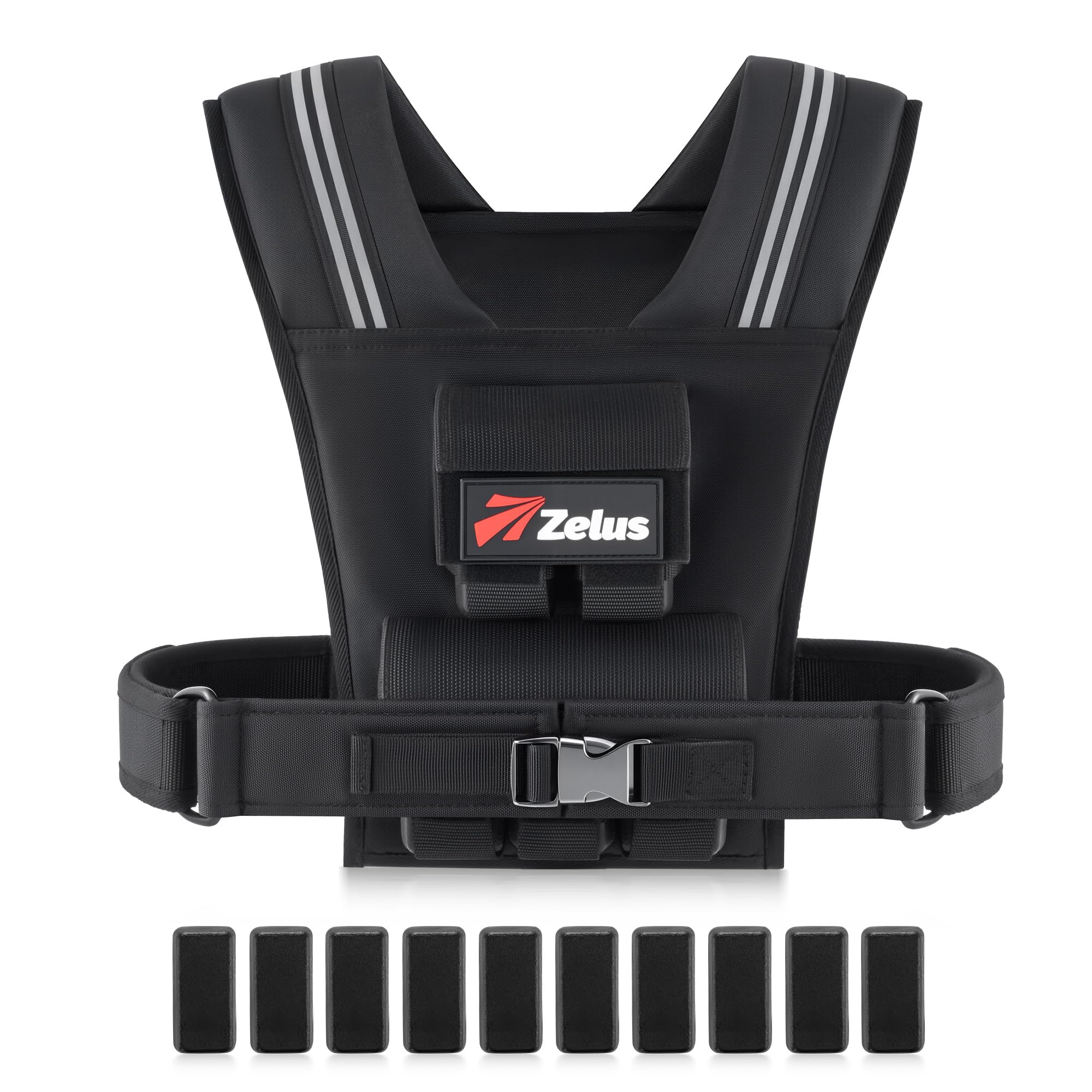
The ZELUS vest comes in 23, 36, and 45-pound configurations using 2.1-pound corrosion-proof iron weight bars that lock into individual modular pockets to prevent shifting during running or HIIT. The 1.2-inch thick foam padding on the shoulders and the extra-wide strap design distribute the load evenly across the trapezius, which reduces localized pressure that can cause early fatigue during long WODs. The 900D fabric shell is breathable and easy to clean after sweaty sessions — simply remove the iron bars, hand wash with soap, and hang dry.
Built-in reflective strips on the front and back improve visibility during low-light training sessions, which is useful for athletes who run outdoors before dawn or after sunset. The front clasp closure combined with hook-and-loop side straps allows for quick adjustment between rounds without fully removing the vest. Users report the vest stays snug against the chest during treadmill sprints and does not ride up during burpee transitions, thanks to the locking weight pocket design that prevents vertical migration of the bars.
The vest includes D-rings and patch-friendly panels on the shoulders for attaching gear or morale patches, a feature appreciated by tactical athletes or those coming from a military training background. Some users note the narrow shoulder straps can rub against the ears during overhead pressing movements, a common design trade-off when using an extra-wide strap layout. The ZELUS is machine washable, but the care tag recommends air drying to preserve the reflective strip adhesive over time.
Why it’s great
- Individual weight pockets lock bars in place to prevent vertical shift during running
- 1.2 inch thick foam padding provides excellent shoulder comfort under load
- Built-in reflective strips and D-rings add safety and customization options
Good to know
- Narrow shoulder straps may rub against ears during overhead pressing movements
- The weight bars have a distinct paint smell initially that fades after a few sessions
6. ZELUS Multi-Weight Vest (Desert Camo)

This ZELUS model is a more versatile version of the earlier design, available in 20, 23, 30, 45, and 60-pound configurations with a reinforced nylon fabric outer shell and foam-padded shoulder straps. The foam padding is thicker than the standard ZELUS vest, providing additional comfort for athletes who plan to wear the vest for extended rucking sessions or marathon-style WODs. The hook-and-loop fastener system on the chest and sides allows for a custom snug fit that adapts to changes in body composition as you progress through training cycles.
The high-visibility reflective strips are placed on the front, shoulders, and back, offering 360-degree visibility during outdoor training in low-light conditions. The weight adjustment system uses individual sand-filled pouches rather than iron bars, which makes the vest quieter during dynamic movements but introduces the risk of weight migration over time as the sand shifts within the pouches. The one-size-fits-most design works well for athletes between 5’6″ and 6’2″, with the 45-pound desert camo variant being the most popular configuration among CrossFit users.
Users report the vest fits snugly without jiggling even during high-speed treadmill work, and the foam padding prevents the shoulder straps from digging in during loaded carries. The sand pouches are easier to insert and remove than some iron bar systems, especially for users with limited hand strength or arthritis. The vest is not machine washable — ZELUS recommends spot cleaning with a damp cloth and hang drying to protect the reflective strips and hook-and-loop fasteners from deterioration.
Why it’s great
- Thick foam-padded shoulder straps provide all-day comfort for long rucking sessions
- Multiple weight configurations from 20 to 60 pounds scale with your progress
- 360-degree reflective strips offer excellent visibility in low-light conditions
Good to know
- Sand-filled pouches can shift over time, causing uneven weight distribution
- The back section is bulky enough to make sitting in a backed chair uncomfortable
7. MSPORTS Weighted Vest Premium
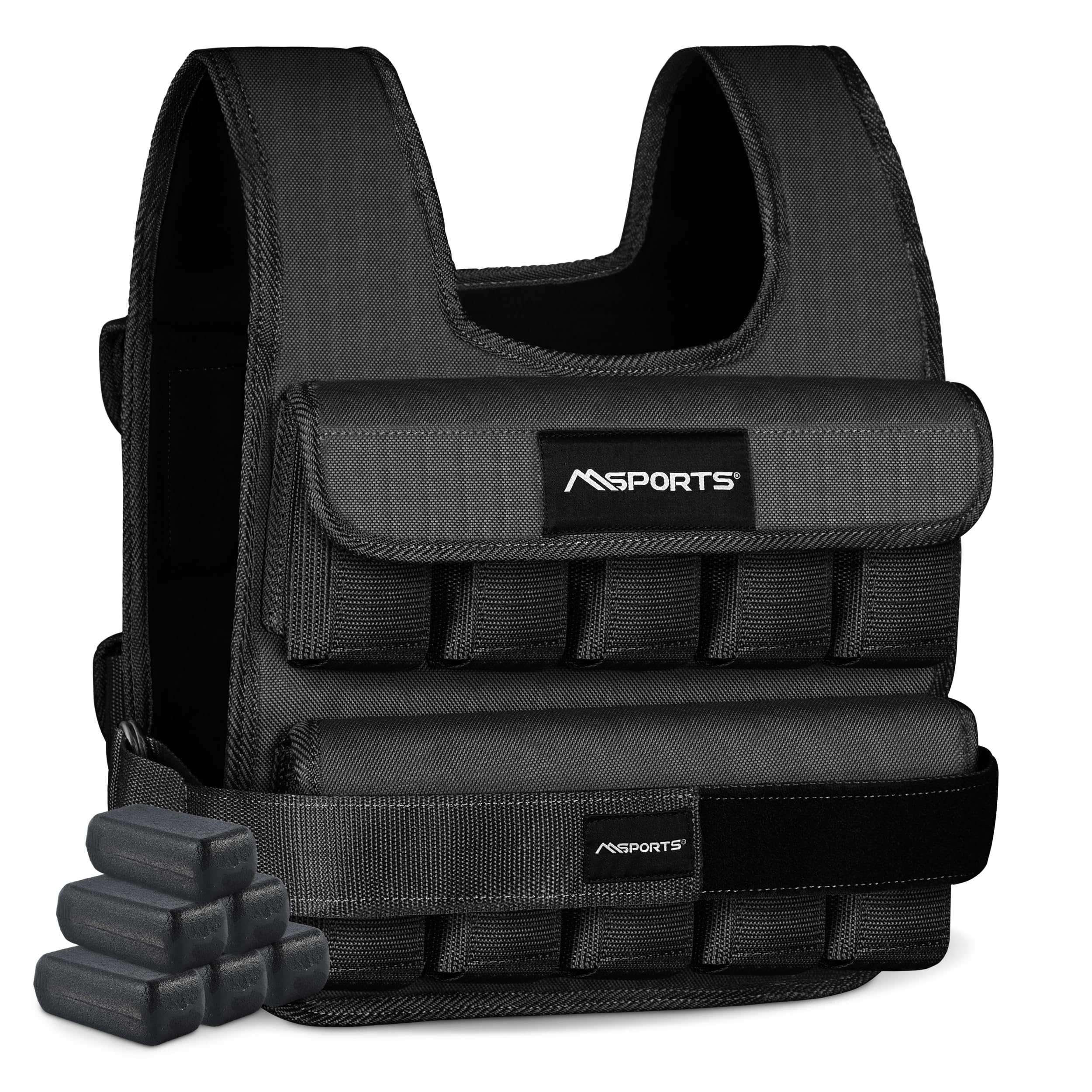
The MSPORTS vest uses a removable weight pack system made from cast iron and polyester, offering adjustable resistance from 11 to 65 pounds. The double-ring closure combined with wide velcro straps and an adjustable hip belt creates a multi-point retention system that keeps the vest secure during walking, jogging, and moderate-intensity calisthenics. The 35-pound base model ships with multiple weight packs that allow you to add or remove resistance in 2-3 pound increments, giving you fine control over your progressive overload.
The tear-resistant nylon fabric and reinforced stitching hold up well under regular use, and the sweat-resistant material prevents the vest from absorbing odor between wash cycles. A free digital workout e-book is included with purchase, providing full-body training programs for users starting at 20 pounds and progressing up to the full 65-pound capacity. The tactical-style design includes a low-profile silhouette that fits under a jacket for casual wear during outdoor walks or errands.
Users at shorter heights (5’0″ to 5’3″) report the vest does not tighten enough at the minimum adjustment, causing it to rest on the lower back rather than riding high on the torso. The removable weight packs are tight during movement but accessible when you need to adjust load between sets. The velcro closure can be difficult to fasten by yourself, especially at higher weight loads where the vest feels heavy to position before tightening.
Why it’s great
- Multi-point retention system with double-ring closure and hip belt
- Fine weight adjustment from 11 to 65 pounds for progressive overload
- Sweat-resistant material stays odor-free between wash cycles
Good to know
- Petite users under 5’4″ may find the minimum adjustment still too loose
- The front velcro closure is difficult to fasten independently at higher weight loads
FAQ
How much weight should I start with for CrossFit training?
Can I wear a weight vest during pull-ups and kipping movements?
How do I know if the vest fits properly for dynamic movement?
Are sand-filled or iron weight vests better for high-intensity work?
Final Thoughts: The Verdict
For most users, the best crossfit weight vest winner is the Gymnastics Power Weighted Vest because it combines the cropped high-riding design needed for barbell work with 1000D nylon construction and metal buckle security that lasts through years of high-intensity training. If you want a quieter, more comfortable fit that works well under clothes for all-day wear, grab the ONETWOFIT Silicone Weight Vest. And for athletes focused on rucking and long-duration conditioning who need heavy shoulder padding, nothing beats the HANZO BDRX Weighted Vest.

Mo Maruf
I created WellFizz to bridge the gap between vague wellness advice and actionable solutions. My mission is simple: to decode the research and give you practical tools you can actually use.
Beyond the data, I am a passionate traveler. I believe that stepping away from the screen to explore new environments is essential for mental clarity and physical vitality.