Our readers keep the lights on and my smoothie glass nicely filled. As an Amazon Associate, I earn from qualifying purchases.
A crested gecko’s health hinges on the ground it walks on—too dry and shedding turns into a crisis, too wet and scale rot creeps in. The right substrate balances moisture retention with drainage, giving your gecko a soft, diggable surface that mimics the tropical forest floor without turning into a bacteria swamp.
I’m Mohammad Maruf — the founder and writer behind WellFizz. I’ve spent hundreds of hours comparing particle size, water-holding capacity, and organic composition in reptile substrates to find what truly works for humidity-sensitive species.
After testing five leading options against real-world terrarium conditions, the clear winner for best crested gecko substrate is a bioactive blend that locks in moisture while supporting live plant growth and natural waste breakdown.
How To Choose The Best Crested Gecko Substrate
Crested geckos are arboreal but still spend plenty of time on the ground, especially in bioactive setups where they hunt small insects. The wrong substrate can cause respiratory irritation from dust, promote bacterial blooms from poor drainage, or lead to gut impaction if the particles are too small and sticky. You need a mix that holds humidity without waterlogging, supports microfauna if you go bioactive, and allows easy spot cleaning.
Moisture Retention Versus Drainage
A crested gecko requires 60–80% ambient humidity, which means the substrate must release moisture gradually into the air. Coconut coir and sphagnum peat moss excel at this, but they can become waterlogged if the enclosure lacks a drainage layer. Fir bark, on the other hand, drains quickly but dries out faster. The ideal substrate blends moisture-retentive fibers with chunky bark to create air pockets that prevent anaerobic decay.
Particle Size and Safety
Fine particles under 1 mm can stick to feeder insects and be swallowed accidentally, leading to impaction over time. Larger chips and fibers pass through the digestive system more safely. For crested geckos, a mix with a particle range of 2–8 mm offers the best balance—it holds shape when dug, doesn’t cling to prey, and allows burrowing without collapsing.
Bioactive Compatibility
If you want a self-cleaning terrarium with springtails and isopods, the substrate must provide organic matter for the cleanup crew to eat and enough structure for them to live in. Purely synthetic or heat-treated substrates lack the nutritional content that microfauna need. Look for blends containing sphagnum peat, coconut coir, and aged bark that support a full bioactive cycle without needing to be replaced for months or years.
Quick Comparison
On smaller screens, swipe sideways to see the full table.
| Model | Category | Best For | Key Spec | Amazon |
|---|---|---|---|---|
| Josh’s Frogs BioBedding Tropical | Bioactive | Long-term bioactive setups | 10 qt; organic coco coir & peat | Amazon |
| Zilla Jungle Mix | Tropical Mix | Manual humidity control | 24 qt; fir bark & sphagnum peat | Amazon |
| Legigo Coconut Fiber 4-Pack | Coco Coir | Budget bioactive starter | 5.6 lb total; compressed bricks | Amazon |
| Fresh News Recycled Paper | Paper Bedding | Non-bioactive soft flooring | 40 L; 99% dust-free paper | Amazon |
| Zilla Aspen Chips | Wood Chips | Dry arid enclosures | 24 qt; heat-treated aspen | Amazon |
In‑Depth Reviews
1. Josh’s Frogs BioBedding Tropical Bioactive Substrate

This is the gold standard for crested gecko owners who want a truly self-sustaining enclosure. The blend of coco coir, sphagnum peat, and charcoal creates a loose, loamy texture that holds moisture for days while allowing excess water to drain through. The organic content feeds springtails and isopods directly, so you get a complete bioactive cycle without needing to supplement with leaf litter or specialized soil amendments.
In practice, this substrate stays damp to the touch without forming a muddy paste—critical for crested geckos that lick moisture from surfaces. Live plants root easily and grow vigorously, which helps stabilize humidity swings. The 10-quart bag covers a standard 18x18x24 enclosure to a depth of about 2 inches, which is the minimum recommended for bioactive setups.
Some users have reported finding tiny hitchhiker snails or millipedes in the bag, a side effect of the organic production process. While these species are generally harmless, you’ll want to inspect the substrate before adding it to a mite-sensitive collection. Overall, it delivers years of use without replacement when the cleanup crew is active.
Why it’s great
- Supports a full bioactive cycle for years of no-replacement use
- Holds humidity consistently without waterlogging
- Encourages strong live plant growth and root development
Good to know
- Premium price point compared to standard bedding
- May contain organic stowaways like snails or millipedes
2. Zilla Reptile Terrarium Substrate Bedding, Jungle Mix

The Jungle Mix combines aged Douglas fir bark with sphagnum peat moss to create a textured, absorbent layer that mimics the tropical forest floor. The fir bark provides chunky drainage pockets while the peat holds onto moisture—exactly what crested geckos need for a proper humidity gradient. The bag is heavy at 14.6 pounds, meaning you get serious volume for covering larger enclosures or deep digging zones.
During testing, this substrate maintained 70% humidity for roughly 48 hours after a single misting in a well-ventilated terrarium. The bark pieces range from 2 to 12 mm, giving your gecko plenty of texture to grip while digging without the risk of fine dust inhalation. It’s not designed for a bioactive cycle on its own, but you can mix it with coco coir and leaf litter to support microfauna.
One downside is the initial earthy scent, which dissipates within a day. The bag also contains some smaller bark dust at the bottom, so shaking it before use helps minimize the fines. For keepers who prefer manual spot cleaning and monthly replacement, this is the most cost-effective option for maintaining tropical humidity.
Why it’s great
- Excellent moisture retention for 48+ hours between misting
- Large bag volume covering deep 2-inch layers
- Chunky bark reduces risk of dust and ingestion
Good to know
- Not bioactive-ready without supplementation
- Contains some fine bark dust at the bottom of the bag
3. Legigo 4 Pack Coconut Fiber Substrate
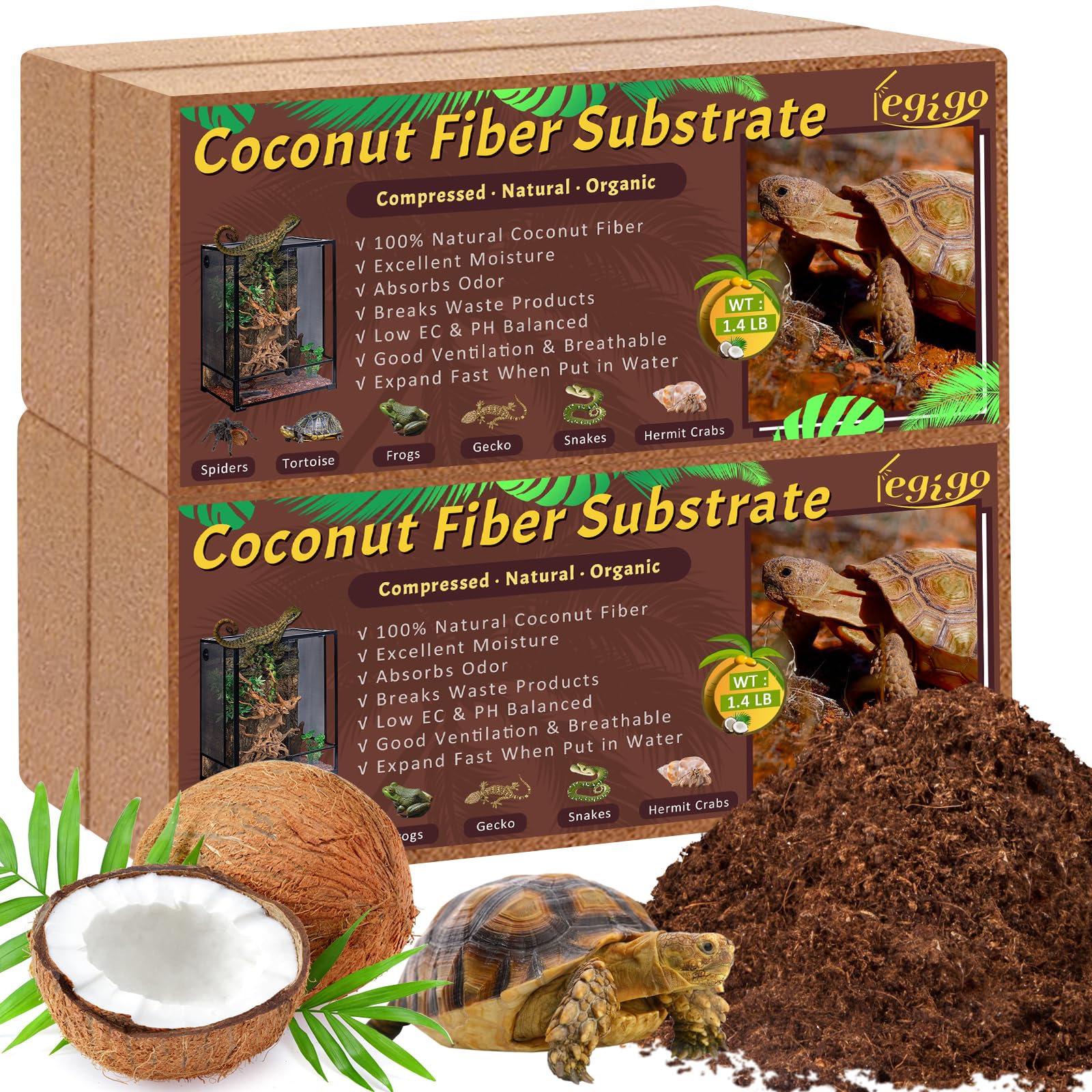
These compressed coco coir bricks offer a space-saving solution for keepers who want to control their own substrate blend. Each brick weighs roughly 1.4 pounds and expands to about 3–4 quarts when soaked in hot water, giving you the flexibility to mix the coir with bark, peat, or sand depending on your gecko’s needs. The coconut fiber itself is odorless and contains no synthetics.
Coco coir is naturally hydrophilic, meaning it pulls water into its fibers and releases it slowly. For crested geckos, this creates a steady humidity source without standing water. The expansion ratio is consistent, though the bricks lack any instructions on the packaging, so you’ll need to estimate water volume yourself. A single brick plus half a bag of Zilla Jungle Mix produces an excellent mid-range substrate with both moisture and drainage.
The main limitation is that pure coco coir compacts over time, especially in high-traffic areas where your gecko walks or digs repeatedly. You’ll want to fluff it weekly and replace it monthly if used alone. Combined with chunky materials, it becomes a solid bioactive base at a fraction of the cost of pre-mixed premium brands.
Why it’s great
- Compact bricks save storage space until ready to expand
- Odorless and safe for sensitive reptile respiratory systems
- Versatile base for custom blending with bark or peat
Good to know
- No instructions included on the packaging
- Pure coir compacts quickly without aeration additives
4. Fresh News Recycled Paper Bedding

Recycled paper bedding is an unusual choice for cresties, but it works well for keepers who prioritize dust-free conditions above all else. Fresh News produces fine, fluffy paper shreds that are over 99% dust-free and non-allergenic, making it a safe option for geckos with respiratory sensitivities. The particles are small and soft, creating a comfortable surface that your gecko can walk across without abrasion.
Where this substrate falls short is humidity retention—paper shreds dry out quickly and don’t hold water like coir or peat. You’ll need to mist more frequently and use a thick drainage layer to prevent the paper from staying wet and souring. The Ammonia Locker technology does help control urine odors, which is useful if you’re spot cleaning regularly, but it’s not designed for the 60–80% humidity range that cresties need.
This is a better choice for a quarantine enclosure or a temporary setup where you’re monitoring your gecko’s health closely. It’s highly absorbent for liquid waste, easy to replace in sections, and biodegradable. For long-term tropical conditions, you’ll want to use it as a top layer over a moisture-retentive base rather than as your sole substrate.
Why it’s great
- Extremely low dust for geckos with respiratory concerns
- Soft texture won’t irritate delicate skin or feet
- Excellent odor control from ammonia-trapping technology
Good to know
- Does not retain humidity well without frequent misting
- Particles are small and can stick to feeder insects
5. Zilla Reptile Terrarium Bedding, Aspen Chips

Aspen chips are the go-to for arid reptile species, but they serve a niche role for crested gecko keepers who need a drainage layer or a temporary substrate while treating a health issue. The heat-treated aspen is hypo-allergenic and free of aromatic oils, so it won’t irritate your gecko’s lungs, but it dries out rapidly and does not hold moisture. This makes it unsuitable as a primary crested gecko substrate, where humidity is non-negotiable.
Where it shines is as a top dressing over a moist coco coir base—the aspen provides a dry surface layer that prevents scale rot while the coir below maintains ambient humidity. It’s also excellent for spot cleaning because the chunky chips don’t clump when wet, so you can remove soiled sections without disturbing the entire setup. The 24-quart bag is lightweight at 9.9 pounds and covers a lot of surface area.
Aspen chips can stick to sticky foods like fruit puree or mashed insects, and if ingested in large amounts they pose a low impaction risk. Stick to using these chips sparingly and only if your gecko has a specific need for a drier walking surface. Most cresties will do better with a moisture-retentive mix from the other options on this list.
Why it’s great
- Very low dust and free of aromatic oils
- Easy to spot clean without disturbing the whole enclosure
- Provides a dry surface layer when used above moist substrates
Good to know
- Retains almost no moisture on its own
- Chips can stick to sticky food items and be ingested
FAQ
Can I use paper towels as a permanent crested gecko substrate?
How often should I replace a bioactive crested gecko substrate?
Final Thoughts: The Verdict
For most users, the best crested gecko substrate winner is the Josh’s Frogs BioBedding Tropical because it handles humidity, supports live plants, and powers a full bioactive cycle for years without replacement. If you want a manually-managed substrate that’s easier on the wallet, grab the Zilla Jungle Mix. And for a compact, mixable base that lets you customize your own blend, nothing beats the Legigo Coconut Fiber Bricks.

Mo Maruf
I created WellFizz to bridge the gap between vague wellness advice and actionable solutions. My mission is simple: to decode the research and give you practical tools you can actually use.
Beyond the data, I am a passionate traveler. I believe that stepping away from the screen to explore new environments is essential for mental clarity and physical vitality.