Our readers keep the lights on and my smoothie glass nicely filled. As an Amazon Associate, I earn from qualifying purchases.
Glazed creosote is the dense, tar-like layer that clings to flue walls after burning unseasoned wood — it is the leading cause of chimney fires and the reason your glass turns opaque within a single burn session. Standard sweeping tools struggle to chip it off, which is why chemical creosote removers have become the go-to defense for homeowners who burn wood or pellets every week during the heating season.
I’m Mohammad Maruf — the founder and writer behind WellFizz. I cut through the marketing fluff by analyzing chemical formulas, application methods, and real-world burn results to find which products actually convert that dangerous glaze into a light, brushable ash.
If you burn a stove or fireplace more than a few times a week, you need a reliable creosote remover that works with your fuel type without killing your fire — here are the five best options I found after digging through hundreds of verified customer experiences.
How To Choose The Best Creosote Remover
Not all creosote removers work the same way. Some are designed to be burned alongside your fuel to chemically alter the creosote, while others are sprayed directly onto glass or flue surfaces. Choosing the wrong form factor can mean wasted money — or worse, a fire that refuses to catch because the powder smothered your coals.
Match the Form Factor to Your Stove Type
Pellet stoves burn at different temperatures and airflow rates than wood stoves. A powder you sprinkle over coals in a wood stove may clump into a hard lump in a pellet stove’s burn pot. Conversely, pellet-form removers that are meant to mix with the fuel feed will not work if you toss them onto an open fire. Always check whether a product is specifically formulated for your appliance type before buying.
Consider Creosote Stage and Build-Up Thickness
Stage 1 creosote is flaky and brushes off easily — a mild powdered remover used weekly can keep it from progressing. Stage 3 creosote is a hard, glazed tar that requires a more aggressive catalytic treatment, often found in concentrated fire logs or heavy-duty powders. If your flue already has a thick shiny layer, you will need a higher-strength formula and likely a mechanical sweep afterward.
Ease of Application and Frequency of Use
Some removers require you to open the bag and toss a measured amount onto the fire every few days, while others are one-and-done logs that you burn once a month. If you are a daily burner during winter, a simple sprinkle-on-coals powder may be more practical. If you only light fires on weekends, a monthly treatment log might suit you better.
Quick Comparison
On smaller screens, swipe sideways to see the full table.
| Model | Category | Best For | Key Spec | Amazon |
|---|---|---|---|---|
| KABIN Kathite Chimney Sweep Cleaner 4LB | Powder | Pet-safe weekly treatment | 4 lb / 2-pack, biodegradable minerals | Amazon |
| Rutland Creosote Antidote Logs 2-Pack | Fire Log | Monthly deep treatment | 2.45 lbs per log, triple-concentrated | Amazon |
| MEECO’S RED DEVIL 702 Glass Cleaner Refill | Spray | Clearing stubborn glass soot | 64 fl oz, coconut-scented formula | Amazon |
| Rutland Pellet Stove Creosote Remover Pellets | Pellets | Pellet stove weekly maintenance | 4 lb bag, 8 treatments, 2-5% moisture | Amazon |
| Hotspot Flue Free Chimney Cleaner 750g | Powder | Entry-level occasional use | 750g, suitable for wood/pellet/gas | Amazon |
In‑Depth Reviews
1. KABIN Kathite Chimney Sweep Cleaner 4LB
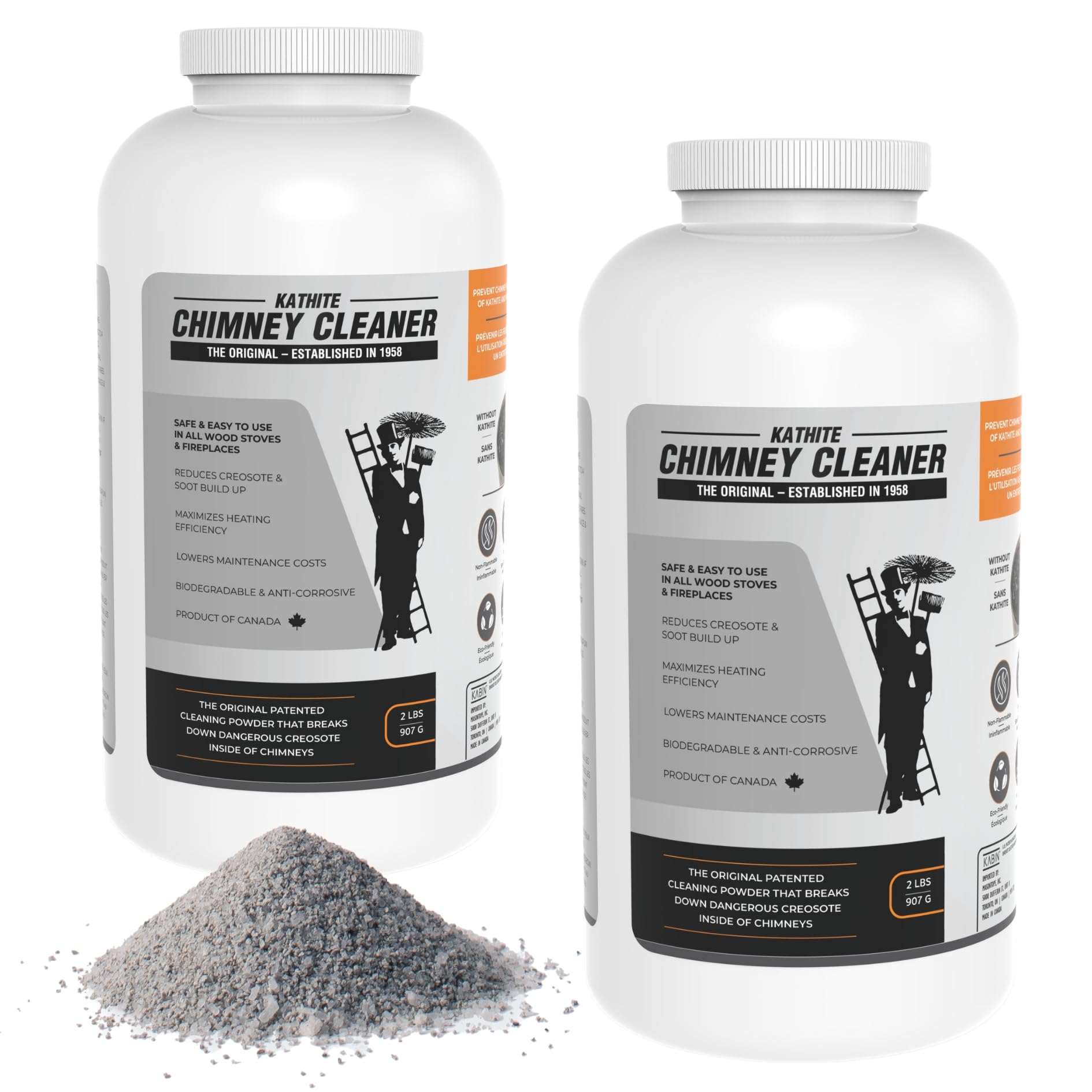
This 4-pound two-pack from KABIN uses a proprietary blend of non-toxic minerals and additives that are biodegradable and pet-safe — a crucial advantage if you have animals around the hearth. Unlike some powders that smother the flame, Kathite is designed as a non-flammable catalyst that works with the heat to break down Stage 2 and Stage 3 creosote into a dry, easily brushed ash.
Users consistently report that a single scoop tossed onto a log every other fire keeps the flue noticeably cleaner and reduces the soot that cakes onto stove glass. The Canadian-made formula is compatible with wood stoves, pellet stoves, and open fireplaces, making it one of the most versatile options in this roundup. Many reviewers switched to Kathite after finding that fire logs had become too pricey for regular use.
One minor friction point: the instruction text on the bag is printed very small, so you will likely need a magnifying glass or a bright light to read the dosage recommendations the first time. Once you get the rhythm down, though, it is as simple as sprinkling a couple of tablespoons onto hot coals.
Why it’s great
- Non-toxic and safe around pets and children
- Works across wood, pellet, and fireplace appliances
- Two 2-pound bags provide multiple seasons of treatment
Good to know
- Instructions are printed in extremely small font
- Best results require consistent use every other fire
2. Rutland Creosote Antidote Fire Logs 2-Pack
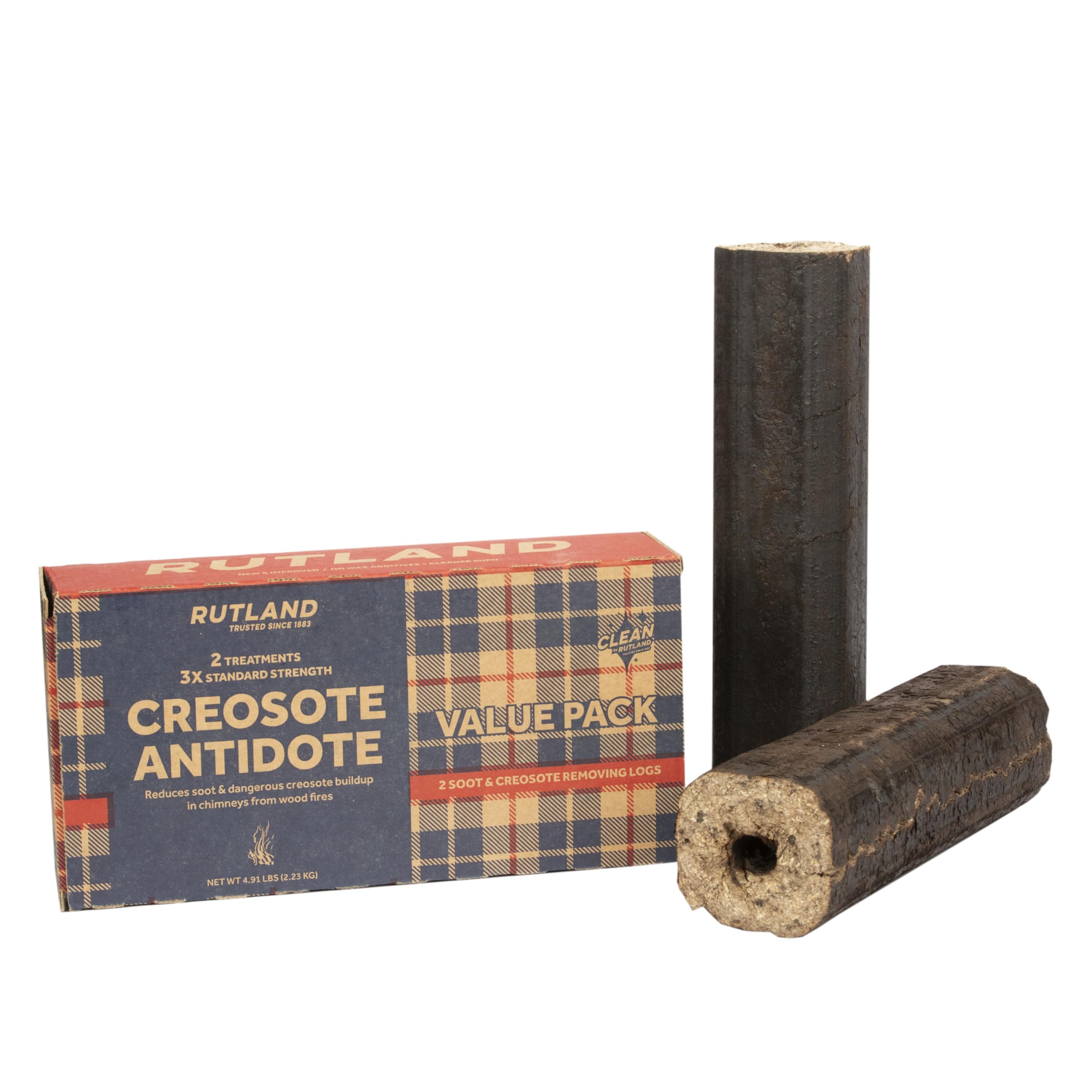
Rutland’s Creosote Antidote delivers a concentrated catalytic treatment packed into a 2.45-pound log — roughly double the active ingredient concentration of standard sweeping logs. These logs contain no wax additives, which means they burn cleaner and avoid leaving the sticky residue that wax-based logs can deposit on flue walls.
Users who burn one log per month leading up to their annual sweep report that the creosote comes out as a dry, brushable powder rather than the shiny tar that usually resists a mechanical brush. Several long-term reviewers note that after two years of seasonal use their stove interiors still look remarkably clean. The smell during burn is noticeable but temporary — one reviewer described it as “rhinoceros dung,” so you will want good ventilation.
The logs are slightly smaller in diameter than typical fireplace logs, which may be a surprise if you are used to chunky hardwood rounds. Effectiveness depends on how heavy your buildup is and how often you burn, but as a monthly deep-treatment option it is hard to beat for sheer chemical power.
Why it’s great
- Triple-concentrated catalytic action converts glazed creosote
- Wax-free construction avoids sticky residues
- Only one log needed per month for maintenance
Good to know
- Strong odor during burn requires extra ventilation
- Logs are shorter and denser than typical firewood
3. MEECO’S RED DEVIL 702 Wood Stove Glass Cleaner Refill

While not a flue treatment, this 64-ounce spray refill from MEECO’S RED DEVIL solves the companion problem that every wood and pellet stove owner faces: baked-on creosote and soot that turns your viewing glass opaque. The spray formula is strong enough to loosen heavy glazed deposits that have accumulated over multiple burn cycles, yet it is safe on tempered glass surfaces when used as directed.
Users who have tried half a dozen other glass cleaners consistently call this the best they have ever used. A few minutes of soak time allows the formula to penetrate the soot layer, after which even the blackest film wipes off with a soft cloth or non-scratch pad — no abrasive scrubbing required. The coconut scent helps mask the chemical odor, though it is still clearly a high-strength cleaner.
The 64-ounce refill jug is significantly more economical than buying multiple small spray bottles. One caveat: the product is formulated for wood and pellet stoves and should not be used on gas stove glass, which has different thermal properties. Keep a dedicated spray bottle handy and you will get dozens of cleanings from a single jug.
Why it’s great
- Instantly dissolves baked-on creosote and soot on glass
- Large refill size provides excellent per-use value
- Safe on tempered stove glass with no scratching
Good to know
- Strong chemical smell despite the coconut additive
- Not suitable for gas stove glass surfaces
4. Rutland Pellet Stove Creosote Remover Pellets 4LB
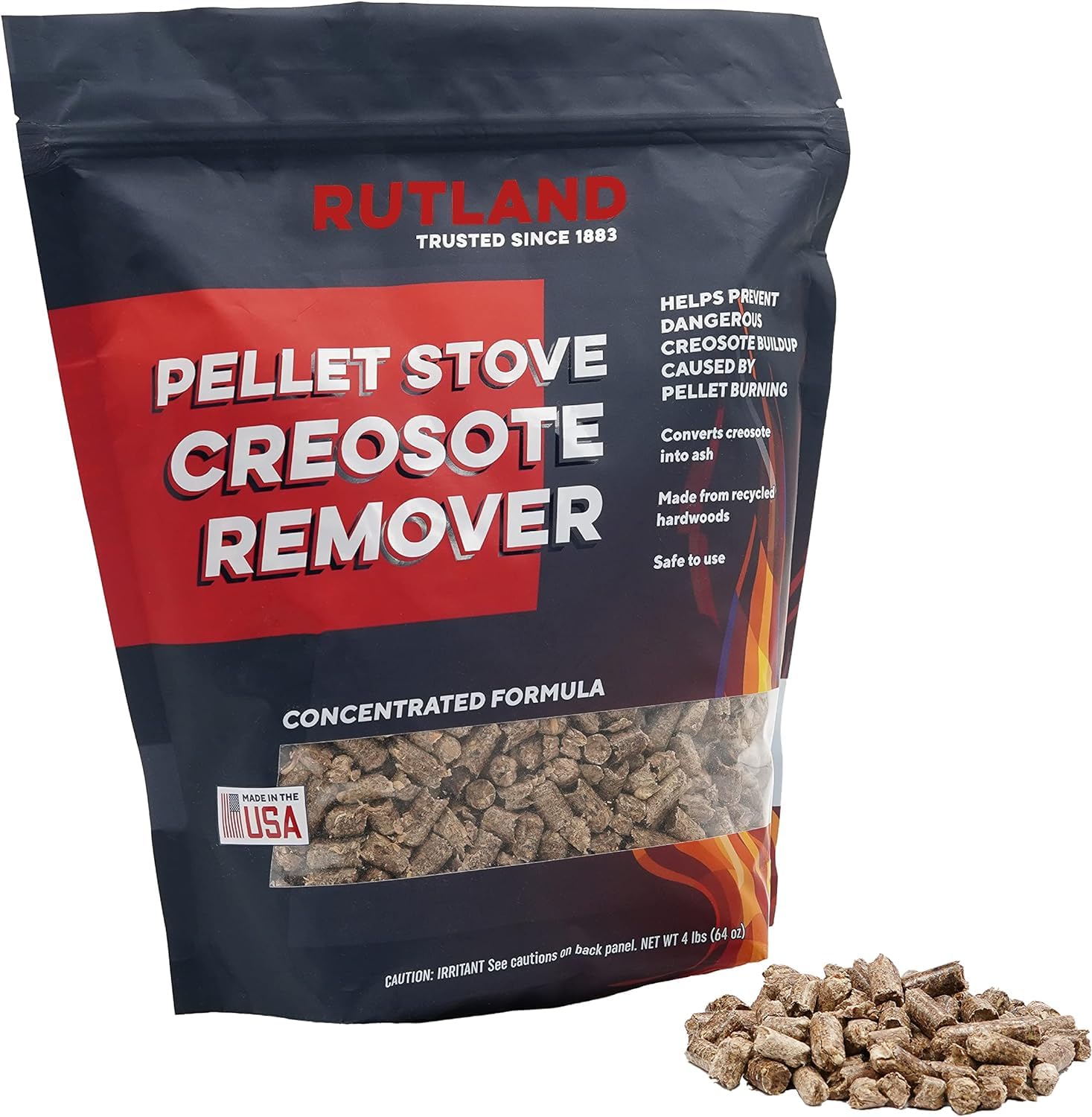
If you run a pellet stove, you already know that the small burn pot and air-fed combustion system behave very differently from a wood stove. Standard powders can clump and extinguish the fire in a pellet stove, which is why Rutland formulated this creosote remover as actual wood pellets dried to a 2-5% moisture content — essentially a drop-in additive that mixes right into your pellet hopper.
Each 4-pound bag contains eight 8-ounce treatments. Users who apply twice per week report that monthly cleanouts become noticeably easier — less dense soot in the burn pot and less buildup on the internal heat exchanger. Several long-term pellet stove owners say the pellets double the time between burn-pot cleanings and that the glass stays clearer between wipes compared to running untreated pellets.
The pellets are virtually odorless during combustion, which is a major plus for indoor air quality. The main drawback is that the per-treatment cost is slightly higher than bulk powders, but the targeted design for pellet appliances offsets that with reliable performance that general-purpose removers cannot match.
Why it’s great
- Designed specifically for pellet stove combustion dynamics
- No odor or smoke during burn
- Doubles time between burn-pot cleanings
Good to know
- Higher cost per treatment than bulk powder options
- Requires twice-weekly application for best results
5. Hotspot Flue Free Chimney Cleaner 750g
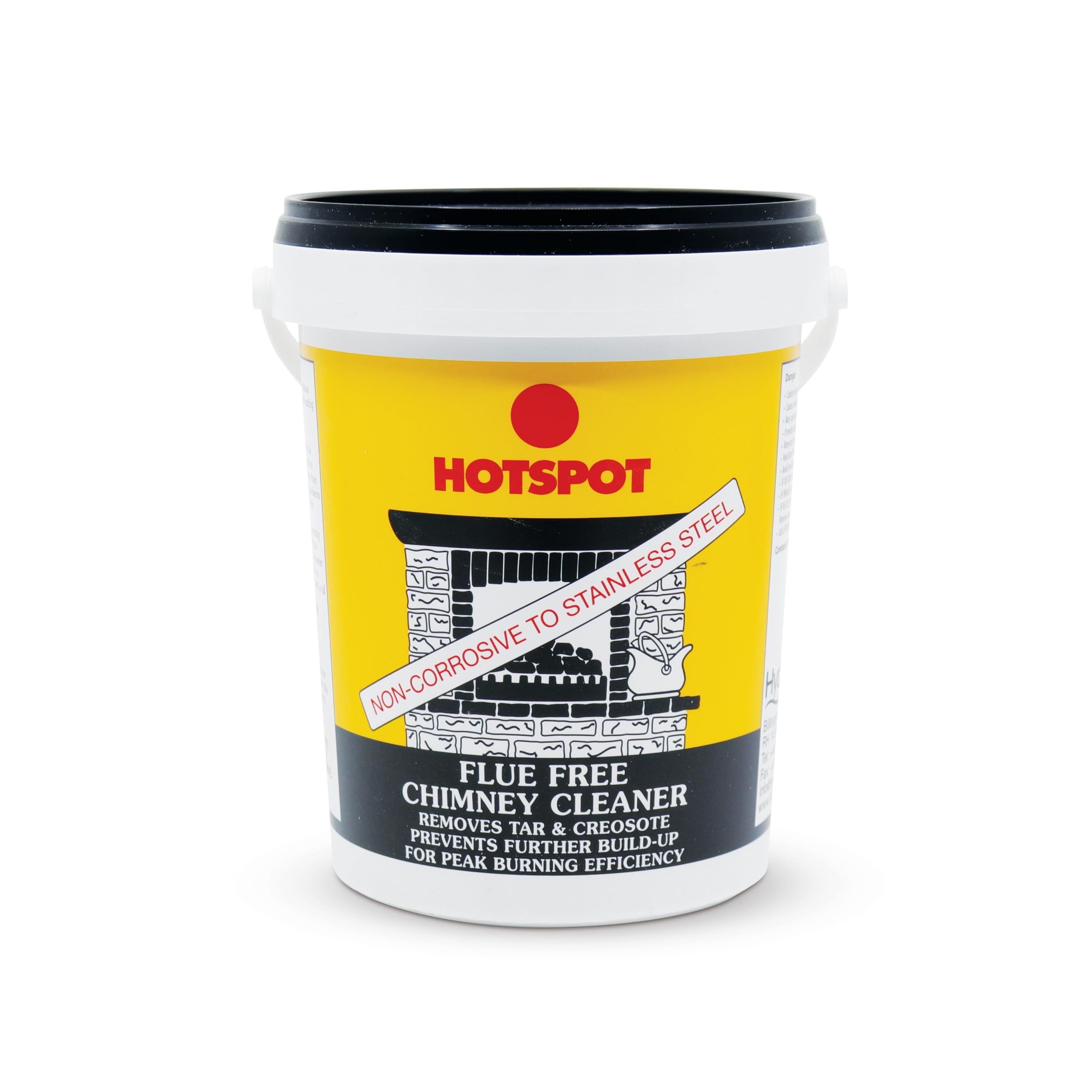
Hotspot Flue Free is positioned as a budget-friendly powder that works across wood-burning, pellet, and gas chimney types. The 750-gram container claims to remove creosote and lingering odors, and it carries the advantage of a single product that you can use regardless of which appliance you own.
In practice, the user feedback is sharply divided. Several buyers report that the powder does not burn or smolder — instead it clumps into a hard lump on top of hot coals and can actually smother the fire, which defeats the purpose of a creosote remover that needs heat to activate. Others found it ineffective at reducing soot buildup even after following the directions exactly.
A smaller subset of users had an acceptable experience, noting that it did the job when combined with an annual professional sweep. The inconsistency in burn behavior suggests the powder formulation may be sensitive to fire temperature and airflow — it works well in some setups and fails completely in others. Given the availability of more reliable alternatives at similar cost, this one is best suited as a last-resort option for occasional use in a well-established, hot-burning fire.
Why it’s great
- Advertised as compatible with wood, pellet, and gas flues
- Low initial investment for a single container
Good to know
- Inconsistent burn behavior — often clumps and extinguishes fire
- Mixed user reports on actual creosote reduction
FAQ
Can a creosote remover replace a professional chimney sweep?
Will a creosote remover damage my catalytic combustor?
How often should I apply a creosote remover during the heating season?
Final Thoughts: The Verdict
For most users, the creosote remover winner is the KABIN Kathite Chimney Sweep Cleaner because it combines a non-toxic, pet-safe mineral formula with reliable catalytic action across wood stoves, pellet stoves, and fireplaces at a price that makes weekly treatment sustainable. If you want a powerful monthly deep-clean without the hassle of measuring doses, grab the Rutland Creosote Antidote Logs. And for restoring a blackened stove glass to crystal clarity, nothing beats the MEECO’S RED DEVIL 702 Glass Cleaner.

Mo Maruf
I created WellFizz to bridge the gap between vague wellness advice and actionable solutions. My mission is simple: to decode the research and give you practical tools you can actually use.
Beyond the data, I am a passionate traveler. I believe that stepping away from the screen to explore new environments is essential for mental clarity and physical vitality.