Our readers keep the lights on and my smoothie glass nicely filled. As an Amazon Associate, I earn from qualifying purchases.
A bare patch of soil is an invitation for weeds, erosion, and endless maintenance. The right creeping plant transforms that empty space into a living carpet that suppresses weeds, holds moisture, and provides season-long color without the constant mowing or replanting of annuals.
I’m Mohammad Maruf — the founder and writer behind WellFizz. I’ve spent countless hours analyzing seed germination rates, live plant survival statistics, and the specific USDA hardiness zone data that separate thriving ground cover from a disappointing bare patch.
This guide cuts through the marketing to compare five proven options for filling your landscape. Whether you need a fragrant thyme mat between pavers or a fast-spreading jenny on a slope, the best creeping plants deliver dense coverage with minimal effort once established.
How To Choose The Best Creeping Plants
Selecting the right creeping plant depends on your specific site conditions, the look you want, and how quickly you need coverage. Mismatching a plant to your sun exposure, soil type, or hardiness zone is the most common mistake that leads to disappointment.
Seed vs Live Plant: The Time vs Cost Trade-off
Seeds offer the lowest upfront cost per square foot, but they demand precise germination conditions — consistent moisture, controlled temperature, and patience. Customer reviews for creeping thyme seeds show that 70% germination is considered a success after careful trial and error, while a direct-to-ground planting can yield zero sprouts. Live plants cost more per unit but deliver immediate visual impact and a much higher survival rate, especially for beginners. For small areas or quick results, live plants are the smarter investment.
Growth Habit and Spread Rate
Not all creeping plants spread at the same speed. Creeping Jenny can cover 18 inches per plant in a single season under good conditions, while creeping thyme forms a slower, denser mat. Consider how much bare ground you need to fill and how long you’re willing to wait. Fast spreaders like Creeping Jenny also require more aggressive management to prevent them from overtaking neighboring plants — the species is known for its aggressive nature, so plan your spacing and borders accordingly.
Sunlight and Soil Requirements
Most creeping plants labeled for ground cover demand full sun — defined as at least six hours of direct light. Creeping thyme struggles in shade and prefers sandy, well-drained soil. Creeping Jenny, on the other hand, handles part shade and consistently moist soil, making it ideal for woodland edges or stream banks. Matching the plant to your actual site conditions is non-negotiable; planting a sun-lover in shade produces leggy, sparse coverage that invites weeds.
Quick Comparison
On smaller screens, swipe sideways to see the full table.
| Model | Category | Best For | Key Spec | Amazon |
|---|---|---|---|---|
| Creeping Jenny (Perennial Farm Marketplace) | Live Plant | Immediate impact, containers, slopes | 1 Quart pot, hardy Zones 3-8 | Amazon |
| Purslane Portulaca 4-Pack | Live Plant | Heat-tolerant, instant color, hanging baskets | 4 live plants in 1-quart pots | Amazon |
| Creeping Jenny 4-Pack (The Three Company) | Live Plant | Erosion control, larger area coverage | 4 plants per pack, 18-inch spread each | Amazon |
| UtopiaSeeds Creeping Thyme | Seed | Budget-friendly large area, walkway gaps | ~8,000 seeds, 2-4 inch height | Amazon |
| Marde Ross Creeping Thyme | Seed | Entry-level, filler for large plots | ~8,000 seeds, 6 inch height | Amazon |
In‑Depth Reviews
1. Perennial Farm Marketplace Creeping Jenny

This Creeping Jenny arrives as a live, fully rooted plant in a 1-quart nursery pot — not a tiny plug or a bag of seeds. Customers consistently praise the exceptional packaging, with ventilated boxes and internal supports that prevent soil spillage even during rough delivery in hot weather. One gardener reported the dark green foliage arrived larger than expected and was thriving in a hanging basket after just three weeks.
The species Lysimachia nummularia handles a range of lighting conditions from full sun to part shade, making it unusually versatile. Its small round leaves form root nodes between them, which is why it fills in so aggressively around steps, rocks, and pathways. The fragrant yellow flowers appear in May, adding seasonal interest while the 3-4 inch mat continues to spread outward.
Keep in mind that this plant’s aggressiveness is both its greatest strength and a potential drawback. It’s perfect for filling bare areas quickly, but you’ll need to manage its boundaries around less vigorous perennials. The plant ships in seasonal condition, meaning it may arrive dormant and trimmed if ordered between November and March — but reviews show it rebounds strongly each spring in USDA Zones 3 through 8.
Why it’s great
- Live, fully rooted plant arrives healthy and much larger than typical mail-order plugs
- Versatile lighting tolerance — thrives in full sun to part shade
- Fast aggressive spread quickly fills gaps and suppresses weeds
Good to know
- Does not ship to AK, AZ, CA, CO, ID, MT, NV, OR, UT, WA, or HI due to agricultural regulations
- Can overwhelm slower-growing neighboring plants without boundary management
- May arrive dormant and trimmed if shipped during winter months
2. Plants for Pets Purslane Portulaca 4-Pack
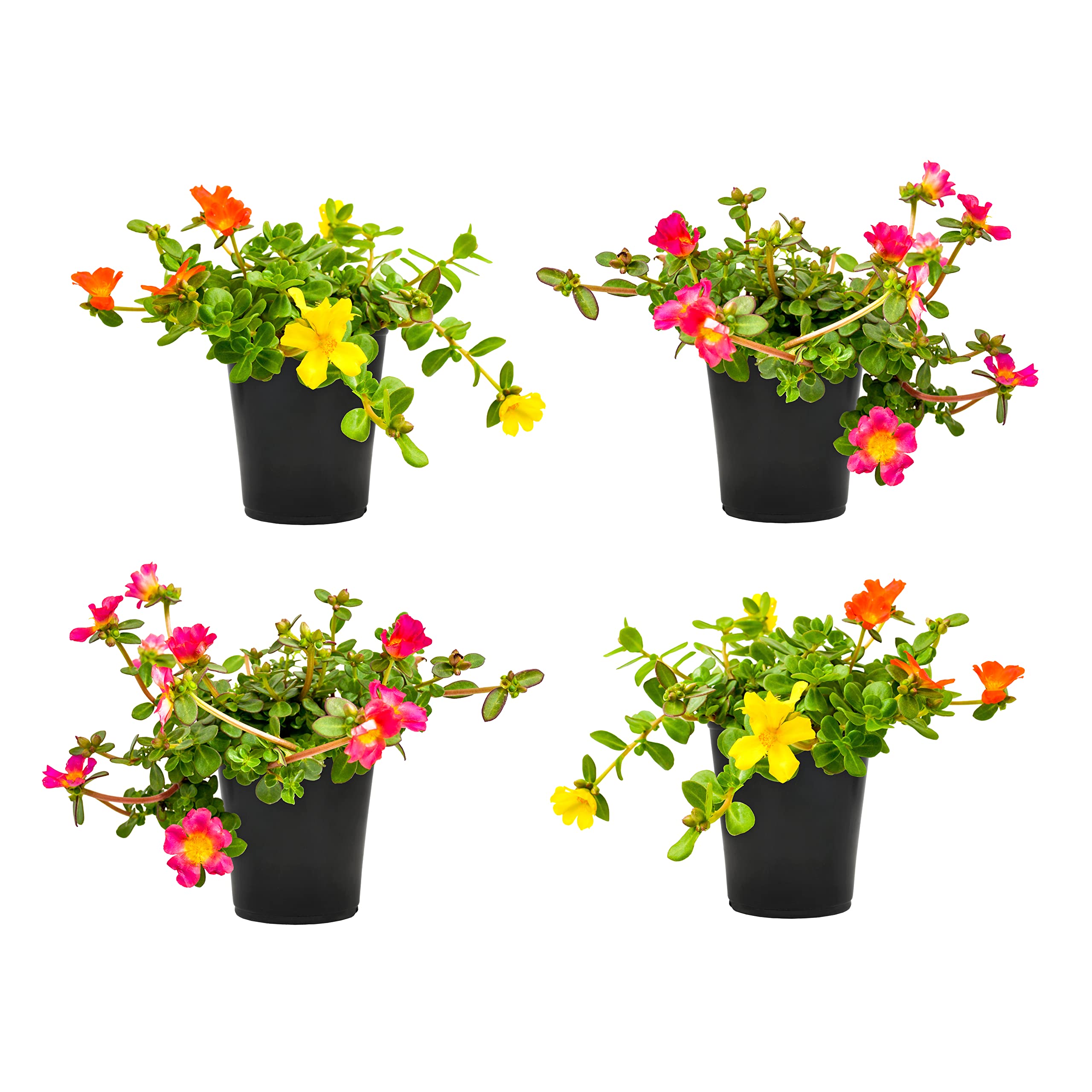
If you need a heat-defiant ground cover that delivers near-instant color, this 4-pack of Purslane Portulaca is a standout choice. Each plant arrives in a 1-quart nursery pot, well-established and ready for transplant. Customers repeatedly note that the plants are larger than expected, with one reviewer saying the purple and yellow flowers appeared almost immediately after potting. The succulent-like foliage stores water, allowing these plants to thrive in full sun conditions where other creeping species would scorch.
The trailing growth habit makes Portulaca a strong candidate for hanging baskets, window boxes, and raised garden beds. Unlike Creeping Jenny’s ground-hugging mat, Purportulaca cascades over container edges while sending out low runners that fill bare soil. The variety of flower colors — included in each 4-pack — creates a vibrant quilted effect that continues blooming through the hottest months of summer.
One important shipping note: the seller advises against ordering when daytime temperatures exceed 95°F, as the plants may arrive wilted or damaged. Reviewers who followed this guideline received plants in excellent condition, individually packed with care. The company also donates a portion of every purchase to shelter animal placement, which is a meaningful bonus for mission-driven gardeners.
Why it’s great
- Succulent-like foliage tolerates intense heat and drought better than most creeping plants
- Established live plants produce flowers within days, not weeks
- Vibrant color variety in each pack adds visual interest to containers and edging
Good to know
- Requires full sun — struggles in any shade
- Shipping risk in temperatures over 95°F; check forecast before ordering
- Not winter-hardy in zones below 9; treated as annual in colder climates
3. The Three Company Creeping Jenny 4-Pack
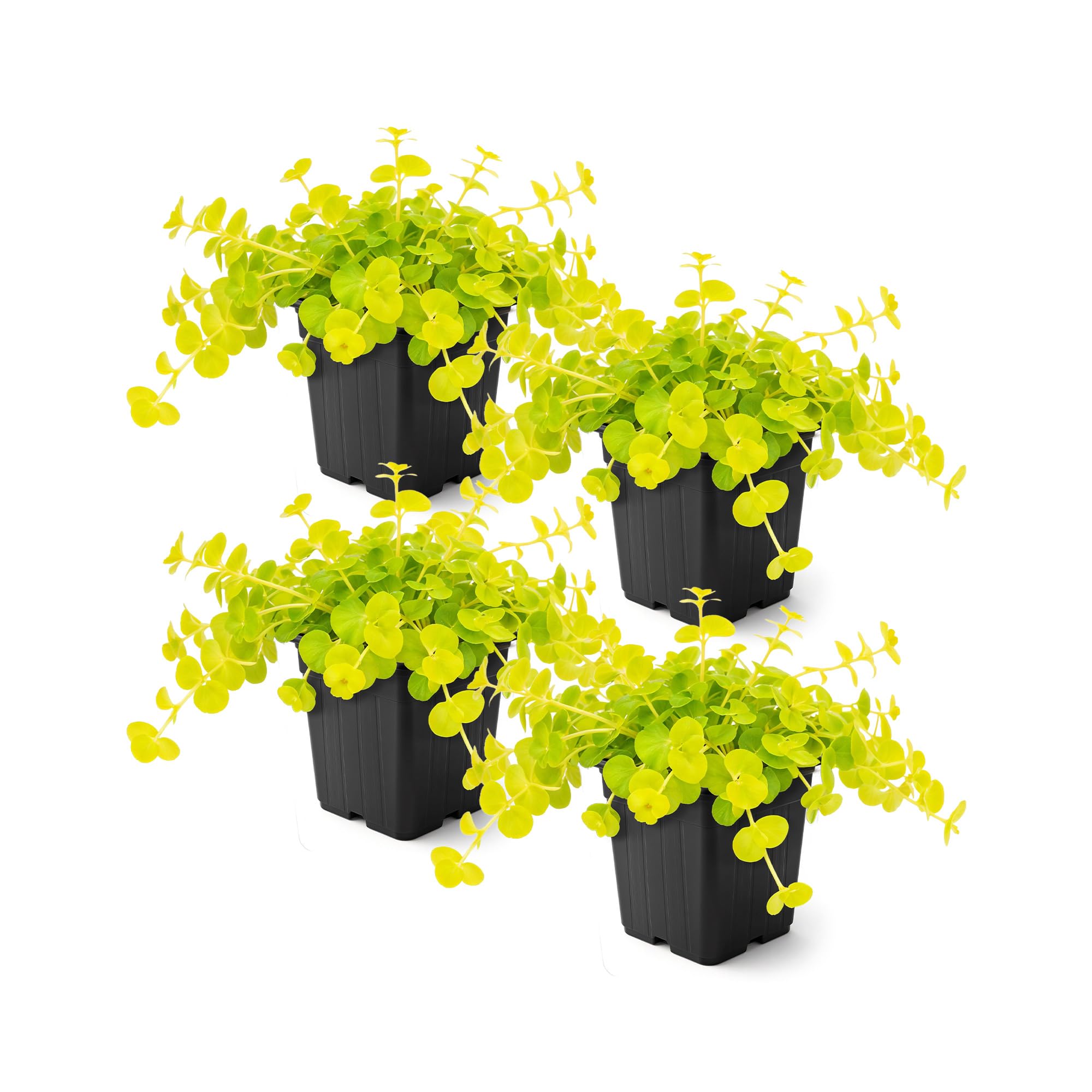
This 4-pack of Creeping Jenny from The Three Company is designed for gardeners who need to cover a larger area without waiting for a single plant to spread. Each of the four pots contains a healthy 6-inch-tall plant with a 4-inch-wide rosette, and at maturity each individual plant spreads up to 18 inches. The chartreuse-green, coin-shaped leaves create a dense mat that effectively suppresses weeds on slopes, around ponds, and along pathways.
Shipping quality varies in customer reports, with some reviewers receiving plants in excellent condition that thrived within a week, while one reported poor packaging that led to mangled stems. The positive reviews heavily outweigh the negatives, and many customers emphasize that even slightly wilted plants revived quickly after being placed in moist soil. The species is notably resilient to transplantation stress, bouncing back faster than most perennials when given consistent moisture.
One unique advantage of this pack is the “moneywort” fun fact included by the seller — these coin-shaped leaves are the reason for the nickname. The plants are shipped fresh from a greenhouse, and the seller recommends planting immediately upon arrival. For zone-specific timing, check your local frost dates, as Creeping Jenny is hardy in Zones 3-8 but should be planted after the last spring frost.
Why it’s great
- Four separate plants provide immediate wider coverage for bigger spaces
- Fast-growing trailing habit fills 18 inches per plant per season in good conditions
- Resilient species recovers well from shipping stress when watered promptly
Good to know
- Packaging reported as inconsistent — some arrive in bulb-style boxes without internal support
- Initial plant size is small; patience required for full visual impact
- Needs consistently moist soil; not as drought-tolerant as Creeping Thyme
4. UtopiaSeeds Creeping Thyme Seeds

UtopiaSeeds markets this Creeping Thyme as a low-growing, drought-tolerant ground cover perfect for filling gaps between stepping stones and creating a living lawn alternative. The seed quantity is advertised as approximately 8,000 seeds per packet, though several customers report receiving significantly fewer — one counted closer to 1,200 seeds. This is a common issue with bulk seed packs, and it’s worth factoring in that the count may not match the label.
Germination results are mixed in customer feedback. Some gardeners reported sprouts appearing within 3-4 weeks of proper planting, while others saw nothing emerge after months of care. One detailed reviewer who tracked germination rates noted that maintaining soil temperature between 75-80°F yielded 70% germination, while temperatures above 90°F dropped that rate to 10%. This temperature sensitivity means indoor starting with a heat mat is almost mandatory for reliable results.
The plant grows to 2-4 inches tall under ideal conditions, forming a dense mat of purple flowers. Customer photos show that the flower color leans toward light lavender rather than the deep purple shown in marketing images, and one reviewer noted the plants reached 12 inches tall — significantly taller than the advertised dwarf habit. Despite these inconsistencies, for budget-minded gardeners willing to experiment with germination techniques, this seed pack offers the lowest per-square-foot cost for covering large areas.
Why it’s great
- Lowest cost per square foot for large-area coverage when seeds germinate successfully
- Fragrant purple flowers attract bees and butterflies throughout summer
- Drought-tolerant once established, thrives in poor sandy soil
Good to know
- Germination is temperature-sensitive and inconsistent — indoor starting is strongly recommended
- Seed count often lower than advertised 8,000; value varies per batch
- Flower color may be lighter than marketing images, and plant height may exceed 4 inches
5. Marde Ross & Company Creeping Thyme Seeds
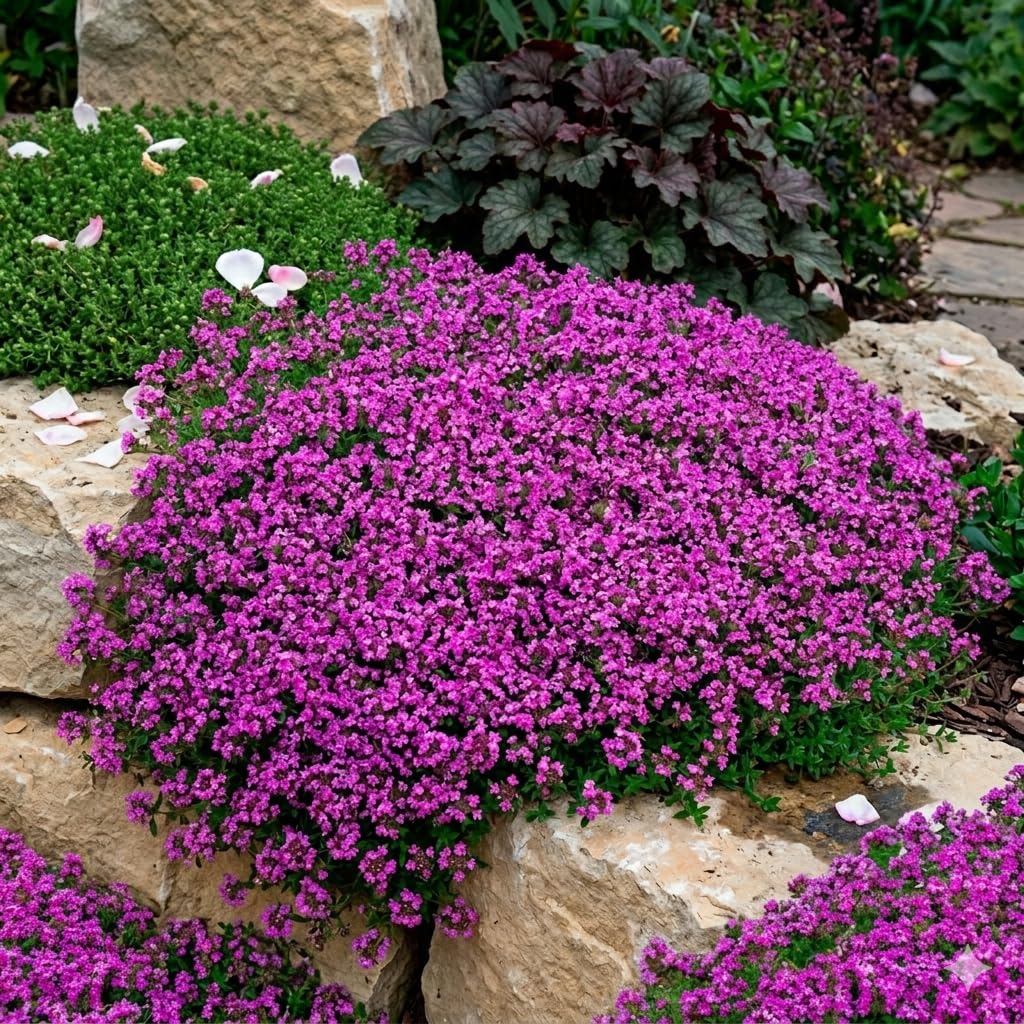
This Creeping Thyme seed pack from Marde Ross & Company offers 8,000 GMO-free seeds for an entry-level price point, making it the most accessible option for gardeners who want to experiment with ground cover seeds. The plant is described as a 6-inch dwarf ground cover that handles moderate foot traffic between pavers and along flower bed borders. The purple blooms are expected in summer, with a spring-to-fall planting window.
Customer reviews are sharply divided. Approximately half of reviewers report no germination at all, with comments like “Didn’t sprout anywhere I placed it” and “Waste of money.” The other half report eventual success, with one customer who initially left a 1-star review returning to upgrade to 5 stars after the seeds finally sprouted explosively. This delayed germination pattern is a hallmark of creeping thyme — it can sit dormant for extended periods before establishing, which frustrates impatient gardeners.
The key takeaway from the review data is that germination success requires very specific conditions. One detailed review documented 70% germination after removing a heating pad and maintaining 75-80°F soil temperature. The reviewer noted the seeds count was lower than advertised but the plants eventually grew to 3-5 inches long, though no blooms appeared within six months. For patient gardeners willing to follow precise germination protocols, this seed pack can deliver a dense thyme mat at the lowest possible investment.
Why it’s great
- Most affordable entry point for covering very large areas with ground cover
- GMO-free seeds from a U.S.-grown source
- Plants that do establish can handle moderate foot traffic between pavers
Good to know
- Germination failure rate is very high based on customer feedback — expect to reseed
- Seeds may take months to sprout; not a quick-fix ground cover
- Advertising 8,000 seeds, but actual count may be lower based on multiple reports
FAQ
Can I walk on creeping thyme?
How long does it take for creeping plants to fill in?
Will creeping plants choke out weeds permanently?
Final Thoughts: The Verdict
For most users, the best creeping plants winner is the Perennial Farm Marketplace Creeping Jenny because it combines the high survival rate of a live plant with the fastest coverage and the most forgiving light requirements. If you need a heat-tolerant option for full sun spots, grab the Plants for Pets Purslane Portulaca 4-Pack. And for covering a large area on a tight budget, nothing beats the low per-square-foot cost of the UtopiaSeeds Creeping Thyme seeds, provided you have the patience for controlled germination.

Mo Maruf
I created WellFizz to bridge the gap between vague wellness advice and actionable solutions. My mission is simple: to decode the research and give you practical tools you can actually use.
Beyond the data, I am a passionate traveler. I believe that stepping away from the screen to explore new environments is essential for mental clarity and physical vitality.