Our readers keep the lights on and my smoothie glass nicely filled. As an Amazon Associate, I earn from qualifying purchases.
A good mechanic’s creeper makes the difference between finishing a job feeling fresh and crawling out with a stiff neck and sore back. The wrong one leaves you fighting squeaky wheels, digging into hard plastic, or struggling to squeeze under a car with minimal clearance. Choosing the right design—from low-profile decks to padded headrests and durable casters—directly impacts how effectively you work on brakes, oil changes, or exhaust repairs.
I’m Mohammad Maruf — the founder and writer behind WellFizz. I’ve spent many hours researching the latest engineering across hundreds of models, analyzing foam padding density, wheel materials, frame construction, and weight limits to understand what separates a creeper that lasts from one that gets shelved after a few weekends.
This guide breaks down the specific specs and real-world performance factors that matter most so you can confidently choose the right best creeper for mechanics for your garage or professional shop.
How To Choose The Best Creeper For Mechanics
A creeper is a simple tool until you’re lying on it for two hours. Then the small details—wheel size, padding thickness, frame stiffness—become everything. Focus on the specs that directly affect your daily work, not flashy extras.
Deck Profile and Ground Clearance
The lower the deck sits, the more room you have to slide under low-slung cars. Low-profile creepers often sit around four inches tall, giving you extra inches of working space above your chest. Standard creepers are taller but may feel more stable. Measure your typical clearance before choosing—if you work on lowered cars or sedans, prioritize a low-profile design.
Wheel Diameter and Material
Standard creepers use two-inch casters that roll fine on smooth garage concrete. If your floor has cracks, expansion joints, or you work on asphalt, larger three-inch or five-inch wheels roll much easier without catching. Hard urethane wheels are durable and resist chemicals, while softer rubber wheels grip better on rough surfaces but wear faster. Always check if replacement wheels are available—some brands offer pop-in rollers for easy swapping.
Weight Capacity and Frame Construction
Most creepers handle 250 to 350 pounds, but the frame material determines long-term rigidity. All-steel frames with cross-bracing feel solid under heavier users and resist flexing. High-density polyethylene (HDPE) blow-molded bodies are lightweight and won’t rust, but thicker walls and reinforced ribs matter for durability. Avoid thin plastic shells that can crack after repeated use.
Padding and Headrest Support
Contoured foam padding with a padded headrest relieves pressure on your back, neck, and shoulder blades during extended sessions. Some designs include built-in lumbar support or a molded recess for the shoulders. If you spend more than an hour at a time under a vehicle, skip bare plastic creepers—they cause fatigue and discomfort that slow down your work.
Quick Comparison
On smaller screens, swipe sideways to see the full table.
| Model | Category | Best For | Key Spec | Amazon |
|---|---|---|---|---|
| Traxion ProGear Wide Body | Premium | Rough floors and larger users | 5-inch all-terrain casters | Amazon |
| Lisle 97102 Low Profile | Premium | Back support and durability | 38-inch length, 300 lbs capacity | Amazon |
| Lisle 92062 Red Plastic | Premium | Simple, proven plastic design | 2 inches longer body | Amazon |
| Powerbuilt ZAG 2-in-1 | Mid-Range | Convertible creeper and seat | 36-inch length, 250 lbs capacity | Amazon |
| Magshion 40-Inch Padded | Mid-Range | Comfort and tool storage | 330 lbs capacity, built-in trays | Amazon |
| WORKPRO Foldable Mesh | Budget | Compact storage and portability | Folded size 19.7 x 18.9 x 6.5 inches | Amazon |
| Pro-LifT 2-in-1 Creeper/Seat | Budget | Versatility on a tight budget | 300 lbs capacity, 6 casters | Amazon |
In‑Depth Reviews
1. Traxion 1-100 ProGear Wide Body Low Profile Creeper

The Traxion ProGear stands apart because of its massive five-inch all-terrain casters made from hard TPR synthetic rubber. Those wheels roll effortlessly over cracked concrete, expansion joints, asphalt, and even light gravel—surfaces that stop standard two-inch casters cold. The wide contoured deck eliminates pinch points and gives you room to shift positions without catching your hips on a narrow frame. At 400 pounds capacity, it handles larger users with no flex.
The body sits at a low profile while maintaining a wide, stable footprint. Users report spending over four hours on the pad without developing pressure points, thanks to dense foam padding that doesn’t bottom out. The deck measures around 19 inches wide, which is noticeably broader than typical creepers, giving you room to kneel or sit cross-legged on the board itself during tricky jobs.
Assembly is straightforward, and the frame includes a plywood back that adds rigidity without adding excess weight. Some owners replace the stock five-inch casters with aftermarket stem casters for even better off-road performance, but the factory wheels already outperform everything else in this list on rough terrain. If your work space is anything but perfect smooth concrete, this is the creeper that keeps rolling.
Why it’s great
- Five-inch casters roll over debris and rough surfaces easily
- Wide, contoured deck with thick padding for all-day comfort
- 400-pound weight capacity with a rigid frame
- No pinch points and excellent stability
Good to know
- Stock wheels are plastic; some users upgrade to rubber casters
- Higher off-ground height than ultra-low-profile models
- Heavier than basic plastic creepers, but stays planted
2. Lisle 97102 Black Low Profile Plastic Creeper
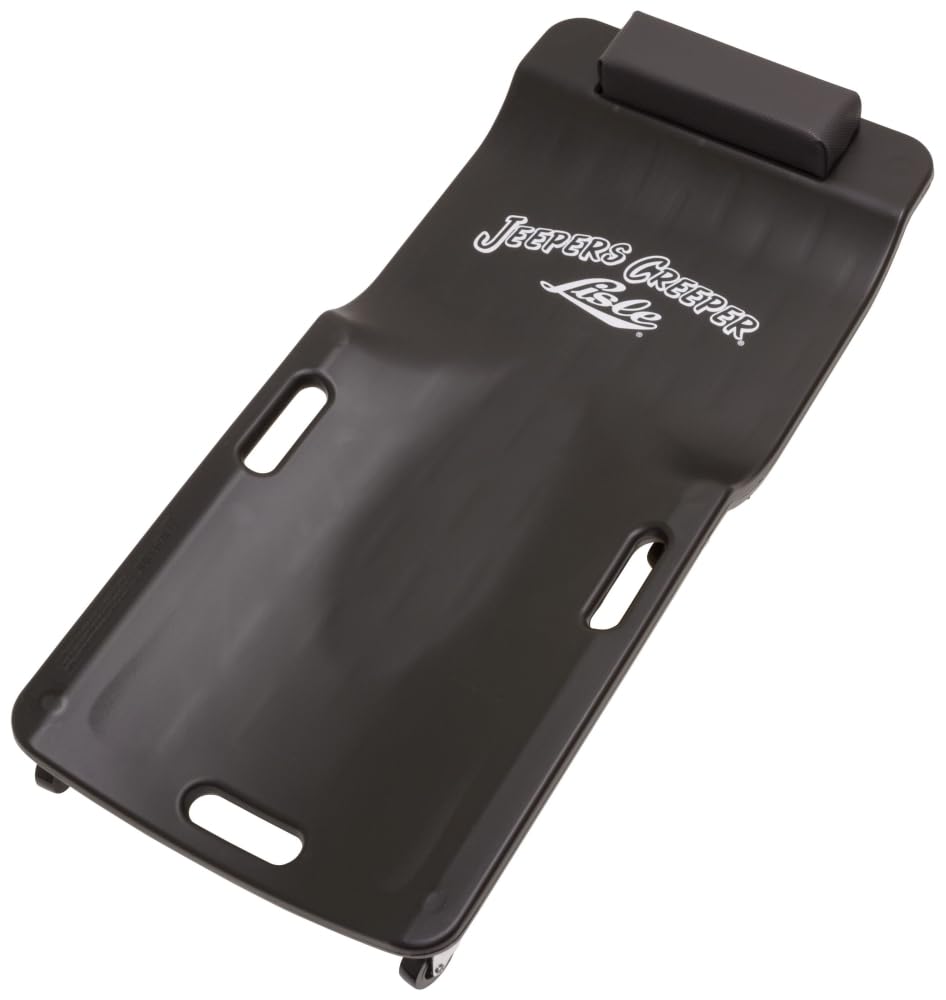
The Lisle 97102 is a benchmark for blow-molded plastic creepers, featuring a one-piece high-density polyethylene body bonded with internal ribs for strength. It weighs only about 11.5 pounds but supports up to 300 pounds without creaking or flexing. The ergonomic shape includes molded lumbar support and a padded headrest that keeps your spine aligned while reaching up into the undercarriage.
A defining feature is the pop-in roller system—six two-inch ball-bearing swivel casters that snap out and back in for easy replacement. That means when a wheel wears out after years of abuse, you don’t trash the whole creeper. The urethane wheels resist oil and solvent damage, and the low-profile design provides seven-eighths of an inch of floor clearance to glide over air hoses and cords.
Users consistently praise how smoothly it rolls on shop concrete, even after months of daily use. The black color hides grease and grime, and the surface wipes clean easily. The only common complaint is wheel squeaking after extended use, but that’s typical of many creepers and can be addressed with a drop of lubricant. For a durable, lightweight, American-made creeper that just works, this is a top contender.
Why it’s great
- Replaceable pop-in rollers extend the life of the creeper
- Lumbar support and padded headrest for back comfort
- Low profile clears hoses and cords easily
- Impact-resistant HDPE body is lightweight and solvent-resistant
Good to know
- Wheels may begin squeaking after several months
- Two-inch casters can catch on rough concrete cracks
- Wheels have no warranty; only the body is lifetime
3. Lisle 92062 Red Plastic Creeper

Lisle updated its classic red plastic creeper by adding two extra inches of length for a better fit across different body heights. The easy-to-clean surface resists grease and solvents, and the fully enclosed wheel design prevents clothing and hair from catching while you roll. At around 11.5 pounds with a strong, impact-resistant body, it supports over 200 pounds without flexing—users in heavy diesel shops report beating on it for a year with no failures.
The wheels roll smoothly on flat concrete, and the cushioned headrest provides decent neck support for a basic plastic frame. Reviewers mention using these in professional shops where they get abused daily, and they almost never fail. The straightforward design means there are few moving parts to break, and the enclosed casters keep debris out of the bearing races.
One downside noted is wheel squeaking after a few months, which can become annoying on quiet jobs. However, the overall build quality and low-maintenance design make this a reliable workhorse. If you want a no-nonsense plastic creeper from a trusted brand without paying for extra features you don’t need, this is a strong pick.
Why it’s great
- Enclosed wheels prevent snags on clothing or hair
- Longer body accommodates taller users better
- Proven durability in heavy shop environments
- Easy to clean surface resists chemicals
Good to know
- Wheels may develop squeaks over time
- No integrated tool trays or storage
- Basic padding compared to foam-filled models
4. Powerbuilt 36 in. ZAG 2-in-1 Floor Creeper and Rolling Seat
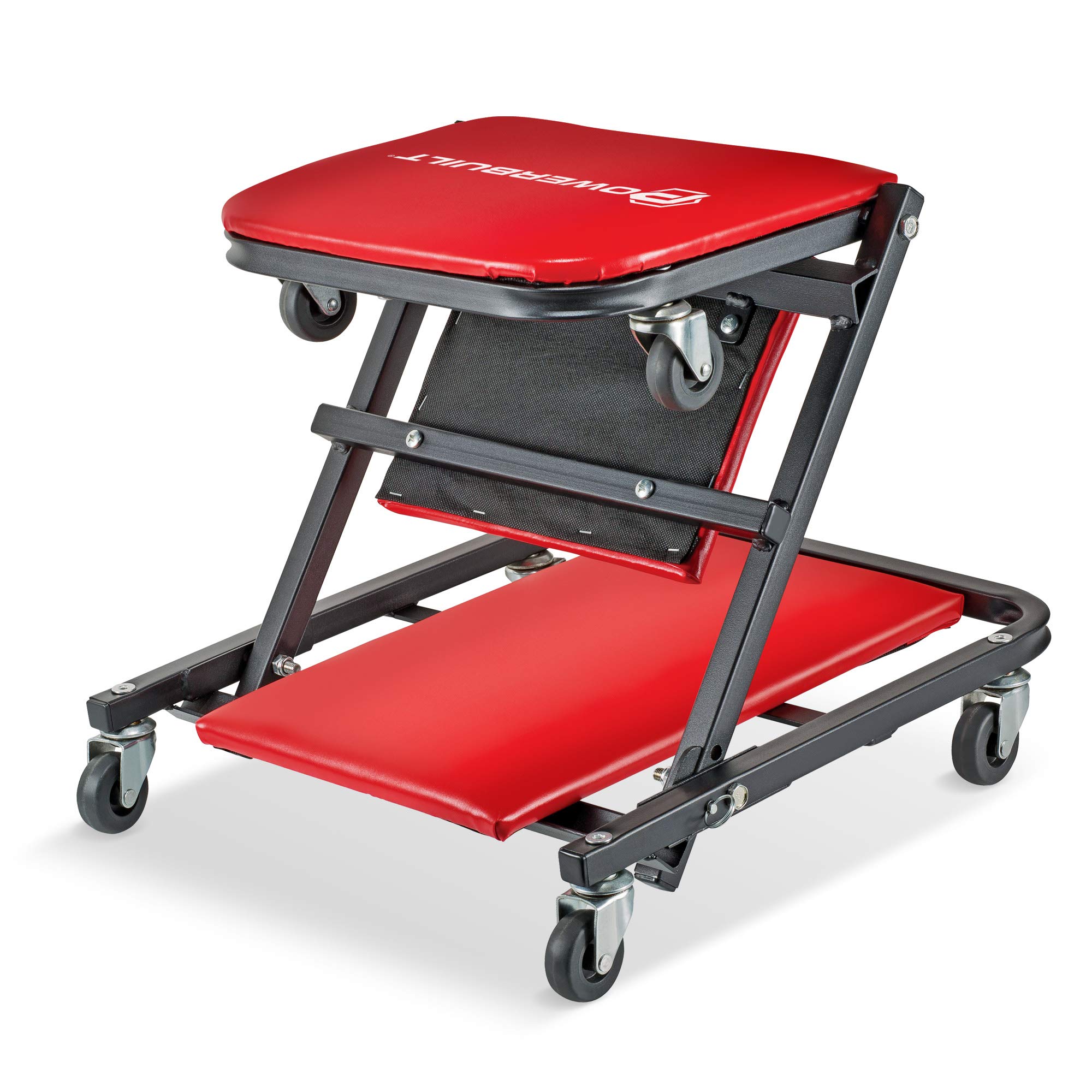
The Powerbuilt ZAG switches between a lay-down creeper and a rolling mechanic seat with a single spring-loaded pin—no tools required. Pull the pin, fold the deck, and you have a comfortable seat for brake work or engine bay access. The heavy-duty steel frame supports up to 250 pounds, and the red vinyl-covered foam padding is durable and easy to wipe down after a messy job.
Six precision two-inch swivel casters provide smooth maneuverability in tight shop spaces. Assembly takes about five minutes with the included tool, and the vinyl surface resists staining from fluids. Users say the seat is firm yet comfortable for short sessions, and the creeper mode works well for standard under-vehicle work like oil changes and exhaust repairs.
The main trade-off is length—at 36 inches, it is shorter than full-length creepers, so mechanics over six feet tall may find their legs hanging off the end. The two-inch wheels also limit performance on rough surfaces. But for a home mechanic who needs both a creeper and a rolling seat without buying two separate tools, the ZAG delivers real versatility at a reasonable price.
Why it’s great
- Converts between creeper and seat in seconds without tools
- Steel frame feels solid and durable
- Vinyl padding is easy to clean after messy jobs
- Compact storage when folded
Good to know
- 36-inch length is short for tall users
- Two-inch casters can get stuck on debris
- Creeper mode sits higher than low-profile models
5. Magshion Automotive Creeper 40 Inch Low Profile with Padded Headrest
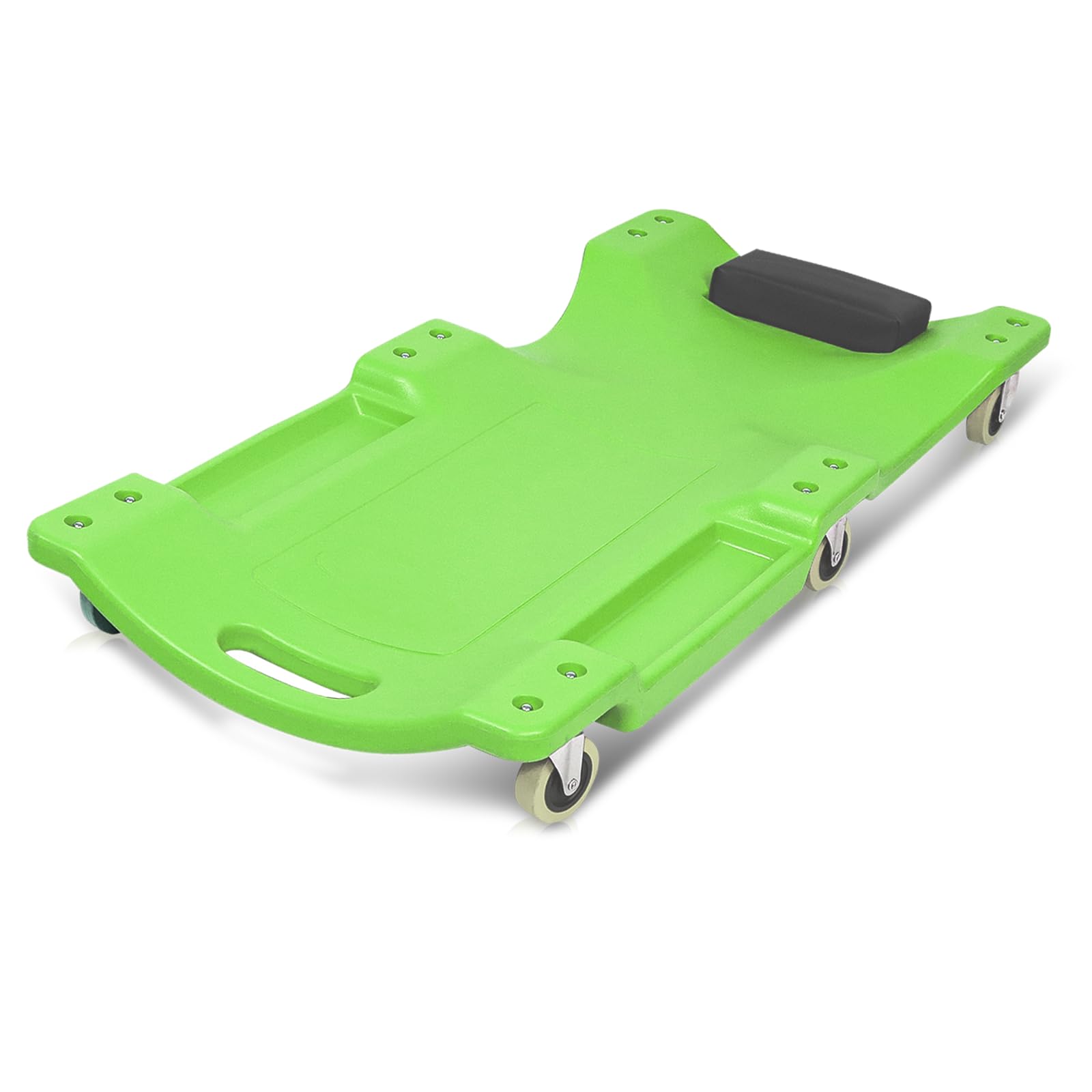
The Magshion creeper combines ergonomic contouring with practical workspace integration. The deck includes built-in shoulder recesses and a padded headrest that reduce neck and back strain during long repair sessions, while two integrated side trays keep wrenches, sockets, and bolts within easy reach. The high-strength impact-resistant plastic supports up to 330 pounds but keeps the total weight at just 11 pounds for easy carrying.
Six 2.5-inch 360-degree swivel casters provide smooth rolling across concrete and shop floors. Users report it works great for both professional diesel shops and home garages, with one reviewer noting they beat on it daily in a diesel shop for about a year and it still rolls fine. The built-in carrying handles make it easy to grab and go, and the low-profile design stores compactly when not in use.
Some units have arrived with wheels missing due to shipping damage, though that is a packaging issue rather than a design flaw. The contoured shape offers noticeably better support than flat plastic decks, and the tool trays are genuinely useful for keeping small parts organized. For the price, this is an excellent balance of comfort, capacity, and convenience features.
Why it’s great
- Integrated side tool trays keep parts accessible
- Contoured deck with shoulder recesses reduces strain
- Lightweight at 11 pounds with 330-pound capacity
- Six swivel casters provide smooth maneuverability
Good to know
- Shipping damage can cause missing components
- Plastic construction may not be as rigid as steel frames
- Padded headrest is firm, not plush
6. WORKPRO 40-Inch Foldable Automotive Creeper
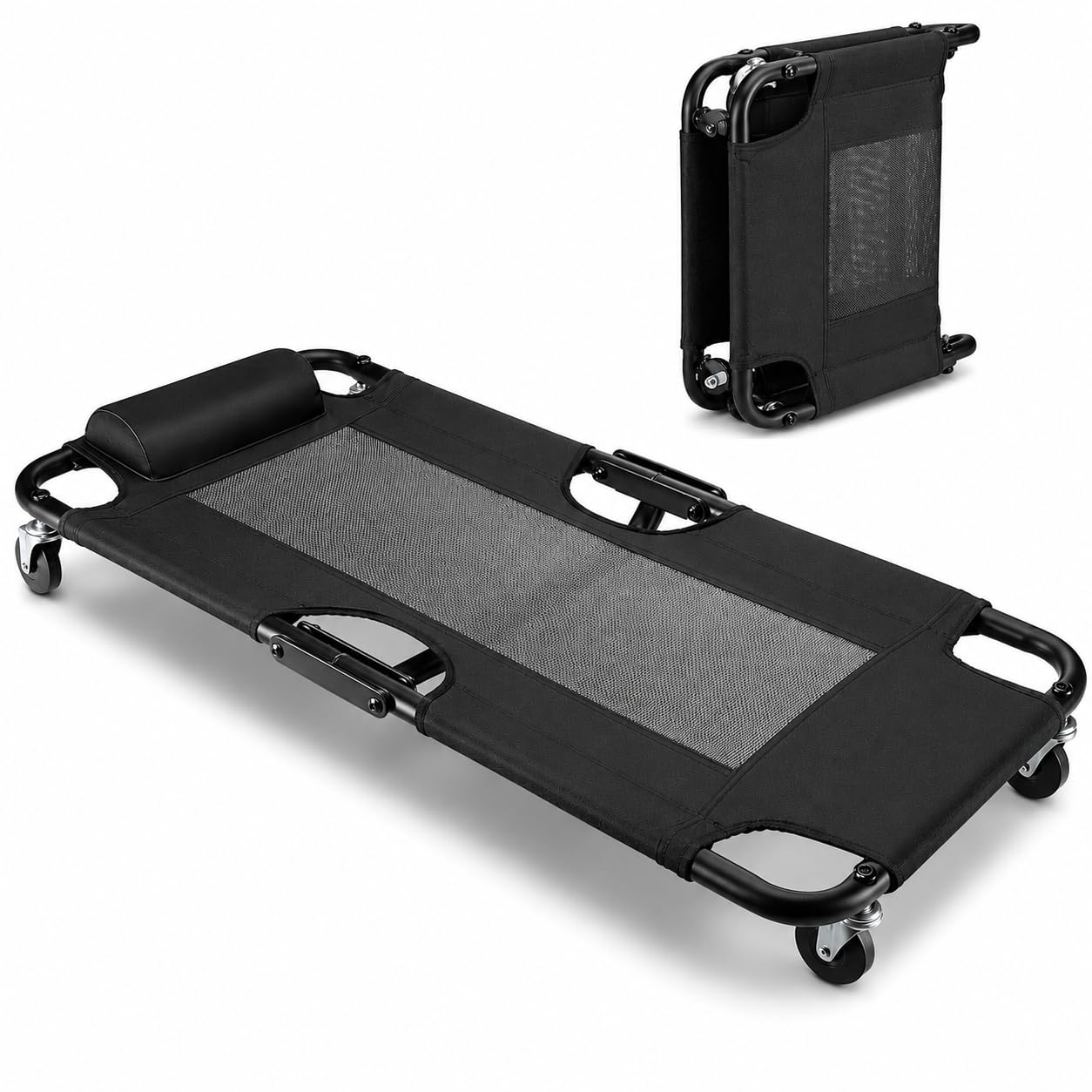
The WORKPRO creeper solves the storage problem that plagues many garage owners. It folds down to 19.7 by 18.9 by 6.5 inches, fitting under shelves, behind tool chests, or in the back of a truck without taking up floor space. The frame is made from high-quality iron tubing with an anti-rust coating, and a sturdy load-bearing shaft in the middle provides stable support for up to 350 pounds.
Instead of traditional plastic, the deck uses breathable polyester mesh that is more flexible and softer than hard shells. This mesh construction reduces pressure points and allows airflow, which helps during longer sessions in warmer climates. Four 2.5-inch swivel casters with full steel ball bearings deliver smooth movement, even on crumbling driveways according to user reports.
The foldable design does introduce a spring mechanism that some users say tends to close unexpectedly, though this can be modified with heat or sun exposure to relax the tension. It is best suited for DIY use rather than continuous professional abuse, and the mesh material is not safe around welding sparks. For home mechanics with limited space who need a comfortable, portable creeper, this is a smart solution.
Why it’s great
- Folds flat for easy storage in tight garage spaces
- Breathable mesh deck reduces sweat and pressure points
- Lightweight design at under 9 pounds
- Rolls well on rough concrete and driveways
Good to know
- Mesh is flammable and not safe near welding
- Spring mechanism can cause the frame to snap closed
- Only four wheels instead of six, less stable on uneven ground
7. Pro-LifT C-2036DG Black/Green Mechanic Creeper

The Pro-LifT creeper offers a convertible 2-in-1 design at a budget-friendly price point. A retractable pin lets you switch between a flat lay-down creeper and a rolling seat, giving you flexibility for both under-vehicle and side work. The thick padded cushions on the deck and headrest provide reasonable comfort, and six swivel casters make it easy to maneuver around the shop.
The metal frame is sturdy enough to support up to 300 pounds, and assembly takes about 20 minutes. Users report it works well for both automotive repairs and even construction layout tasks where they kneel on the larger section and roll to measure distances. The convertible feature is genuinely useful, and the green and black color scheme stands out in a busy garage.
The main downsides include wheels that tend to loosen over time and require periodic tightening, and the design does not sit as low to the ground as dedicated low-profile creepers, so it may not work under extremely low cars. The folding mechanism can pinch fingers if you are not careful during conversion. Despite these quirks, it delivers solid value for someone who wants two tools in one without a big investment.
Why it’s great
- Converts between creeper and seat with a retractable pin
- Thick padded cushions for comfort
- Sturdy metal frame with 300-pound capacity
- Versatile for automotive and workshop tasks
Good to know
- Wheels loosen frequently and need re-tightening
- Higher profile does not fit under very low cars
- Folding hinge can pinch fingers during conversion
FAQ
How much weight should a mechanic’s creeper support?
Are convertible creeper-seat designs durable enough for daily use?
Why do some creepers have six wheels instead of four?
Can I replace the wheels on my creeper when they wear out?
Is a low-profile creeper always better than a standard one?
Final Thoughts: The Verdict
For most users, the best creeper for mechanics winner is the Traxion ProGear Wide Body because its five-inch all-terrain casters and wide padded deck handle the worst shop floors without sacrificing comfort. If you want shop-tested durability with replaceable wheels and built-in lumbar support, grab the Lisle 97102 Low Profile. And for home mechanics who need a compact, foldable creeper that stores away easily, nothing beats the WORKPRO Foldable Mesh Creeper.

Mo Maruf
I created WellFizz to bridge the gap between vague wellness advice and actionable solutions. My mission is simple: to decode the research and give you practical tools you can actually use.
Beyond the data, I am a passionate traveler. I believe that stepping away from the screen to explore new environments is essential for mental clarity and physical vitality.