Our readers keep the lights on and my smoothie glass nicely filled. As an Amazon Associate, I earn from qualifying purchases.
Dealing with the raw, stinging burn of a sore bottom after diarrhea is a specific kind of misery that interrupts sleep, work, and basic daily comfort. A cream that does more than just coat the skin — one that actively protects, soothes, and repairs damaged tissue — is the difference between hours of suffering and quick relief.
I’m Mohammad Maruf — the founder and writer behind WellFizz. After reviewing hundreds of customer reports and clinical ingredient lists, I’ve mapped exactly which barrier agents and soothing compounds matter most when the skin barrier is already compromised.
Whether you need something thick enough for overnight protection or light enough for daytime wear, this guide walks through the five best options to find the right cream for sore bottom after diarrhea that matches your specific sensitivity and routine.
How To Choose The Best Cream For Sore Bottom After Diarrhea
Not all skin creams are built for the specific challenge of diarrhea-related irritation. The high moisture content, acidity, and frequency of bowel movements demand a formula that creates a true protective seal, not just a temporary layer of moisture.
Active Ingredients: Zinc Oxide vs. Petrolatum vs. Dimethicone
Zinc oxide is the gold standard for treating existing rash because it actively dries out moisture and has mild astringent properties. Petrolatum forms an impenetrable barrier against wetness, making it ideal for prevention and protecting raw skin. Dimethicone offers a lighter, non-greasy barrier that works well for mild irritation and daytime use when thick paste feels uncomfortable.
Texture and Spreadability
Thick pastes like those with 20% zinc oxide provide maximum protection but can be difficult to apply on very sore skin and harder to wipe off. Creamier ointments spread more comfortably but may need more frequent reapplication after each bowel movement. Balance your need for staying power against the comfort of application on tender skin.
Fragrance and Additive Sensitivity
When skin is broken or inflamed, added fragrances, alcohol, and preservatives cause stinging and delay healing. Stick to fragrance-free, hypoallergenic formulas that explicitly list no parabens, phthalates, or dyes. Ingredients like aloe vera, allantoin, and oat extract can add a soothing benefit without irritation.
Quick Comparison
On smaller screens, swipe sideways to see the full table.
| Model | Category | Best For | Key Spec | Amazon |
|---|---|---|---|---|
| Triple Paste Adult Incontinence Rash Treatment | Zinc Oxide Cream | Moderate to severe irritation | 12.8% non-nano zinc oxide | Amazon |
| Medline Remedy Essentials Zinc Oxide Paste | Barrier Paste | Overnight and hospital-grade protection | 20% zinc oxide + 75% petrolatum | Amazon |
| TriDerma Protect & Heal Barrier Cream | Non-Greasy Cream | Daytime wear and mild chafing | Dimethicone + Aloe Vera Complex | Amazon |
| Aquaphor Healing Ointment | Petrolatum Ointment | Protecting raw, cracked skin | Petrolatum-based water-free barrier | Amazon |
| Zinc and Castor Oil Cream | Natural Barrier Cream | Clean ingredient preference | Non-nano zinc + cold-pressed castor oil | Amazon |
In‑Depth Reviews
1. Triple Paste Adult Incontinence Rash Treatment
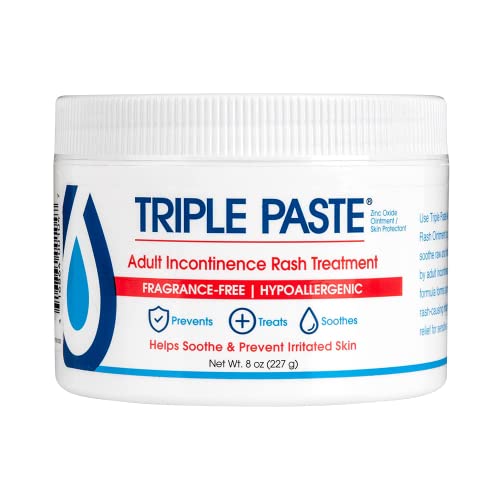
Triple Paste balances a high enough zinc oxide concentration (12.8%) to actively treat existing sores and rashes without the extreme thickness of a 20% paste that can be uncomfortable on already tender skin. The dermatologist-tested formula uses non-nano zinc oxide, meaning the particles are large enough to stay on the skin surface and not get absorbed, maximizing the protective barrier. Users report it clears irritation within days, even for cases where other over-the-counter creams have failed.
The 8-ounce jar offers generous volume for frequent application, which is essential when you need to reapply after each episode of diarrhea to maintain protection. The cream spreads easily and leaves no fragrance, so it won’t sting sensitive, broken skin. Many caregivers and adults managing incontinence rely on this as their go-to for both prevention and treatment of persistent rashes.
One important detail: because the zinc content is moderate rather than maximal, this formula works best when applied consistently after every cleanup. For very severe cases where the skin is already broken and weeping, you may want a thicker paste for overnight, but for daily management, this hits the sweet spot between protection and comfort.
Why it’s great
- Effective on moderate to severe rash within days
- Non-greasy formula that washes off easily
- Fragrance-free and hypoallergenic for sensitive skin
Good to know
- Lower zinc concentration than hospital-grade pastes
- Jar format requires scooping, less hygienic than a tube
2. Medline Remedy Essentials Zinc Oxide Skin Protectant Paste
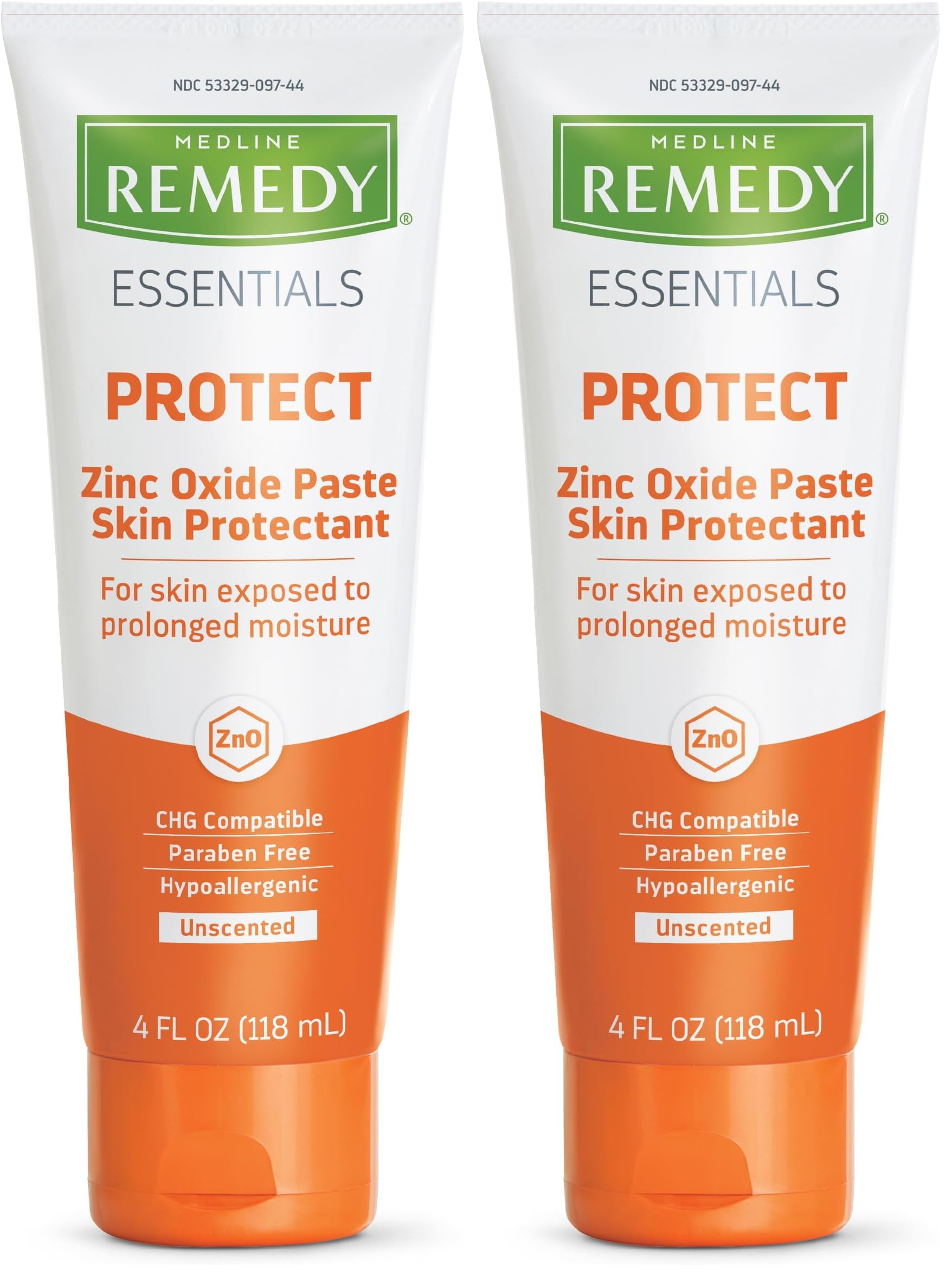
When the skin is raw, cracked, and extremely painful, a standard cream won’t cut it — you need the maximum barrier density that only a paste with 20% zinc oxide and 75% petrolatum can deliver. Medline’s formula is exactly what hospitals and long-term care facilities use for bedridden patients and severe incontinence-related skin breakdown. The thick, dense layer it creates physically prevents fresh stool and moisture from reaching the damaged skin surface.
This two-pack of 4-ounce tubes gives good value, and each tube is easy to squeeze without contaminating the remaining product. Because it contains no alcohol, dyes, parabens, or fragrances, even the most reactive skin tolerates it well. Users specifically mention it works for serious rashes that other products couldn’t touch, including rashes from sweat trapped in skin folds.
The trade-off is that this paste is very thick and takes more effort to apply and remove. You’ll need to use a soft cloth and gentle wiping, and it can stain fabric. But for severe episodes of diarrhea-related irritation where you need the skin to fully dry out and heal underneath a protective shell, this is the most reliable option.
Why it’s great
- Maximum zinc oxide concentration for active treatment
- Proven in hospital and long-term care settings
- Hypoallergenic and free of common irritants
Good to know
- Very thick consistency, difficult to spread on raw skin
- Can stain clothing and bedding
3. TriDerma Protect & Heal Non-Greasy Moisture Barrier Cream

Not everyone needs a thick zinc paste. For mild to moderate irritation where the main goal is preventing chafing and protecting fragile skin between episodes, TriDerma’s non-greasy cream offers a completely different experience. It relies on dimethicone as the primary barrier agent, which creates a flexible, breathable seal that doesn’t feel heavy or sticky. Users with sensitive skin specifically praise it for not causing further irritation in skin folds.
The formula includes an AP4 Aloe Vera Complex, allantoin, oat extract, and shea butter — ingredients selected for their soothing and healing properties rather than just occlusion. It’s also compatible with incontinence wipes and doesn’t ball up or leave a white residue. For daytime wear when you need to move freely, this cream absorbs enough that clothing doesn’t stick.
However, because dimethicone-based barriers are less robust than zinc or petrolatum, this cream needs more frequent reapplication after each cleanup. It’s ideal as a preventive daily cream but may not be enough for existing broken skin or severe, weeping rashes where maximum protection is required.
Why it’s great
- Non-greasy texture that won’t stain clothing
- Contains soothing aloe, allantoin, and oat extract
- Compatible with sensitive, fragile skin
Good to know
- Requires frequent reapplication after bowel movements
- Not strong enough for severe, broken skin
4. Aquaphor Healing Ointment Advanced Therapy
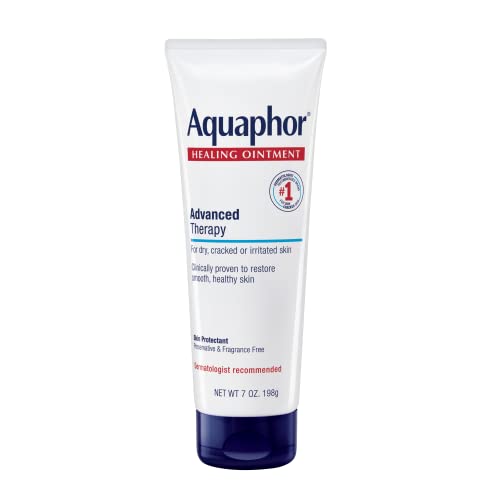
Aquaphor is the classic dermatologist-recommended ointment for a reason: its petrolatum base forms a water-free occlusive barrier that allows oxygen to flow to the skin while preventing moisture loss and external irritants from penetrating. For sore bottoms, this means applying a thin layer creates an invisible shield that keeps diarrhea moisture from contacting the raw skin. The 7-ounce tube provides plenty of product for frequent applications over several weeks.
Unlike zinc-based products, Aquaphor does not actively dry out moisture — it simply blocks it. This makes it better suited for protecting already healing skin than for treating an active wet rash. Users report it works exceptionally well for cracked, fissured skin and as a final seal over another medicated cream. It has no fragrance and contains bisabolol (chamomile-derived) for mild soothing.
The main limitation is that petrolatum is greasy and can transfer to underwear or bedding. It also does not contain any active drying or astringent ingredients, so if you have an actively weepy rash, you’ll want to pair it with a zinc product or use it only as a maintenance layer once the skin has started to heal.
Why it’s great
- Creates an excellent breathable protective barrier
- Soothing on cracked, dry skin without stinging
- Versatile for multiple uses beyond diaper area
Good to know
- Greasy texture that transfers to clothing
- No active treatment ingredients for active rash
5. Zinc and Castor Oil Cream by TD Naturals

If you prefer to avoid petroleum, synthetic fragrances, and chemical preservatives entirely, this zinc and castor oil cream provides a genuinely natural alternative. Made with non-nano zinc oxide and cold-pressed, hexane-free castor oil, the formula is free from gluten, lanolin, peanut oil, parabens, and phthalates. Castor oil has natural antimicrobial and anti-inflammatory properties that complement zinc’s protective and drying action.
Users describe the texture as slightly messy but effective, and many use it for bed sore protection and baby eczema with success. It’s unscented and contains no petrochemicals, making it a good choice for those with multiple chemical sensitivities. The 4.5-ounce jar offers a decent amount for its price point in the natural skincare space.
The downside is that this cream is less rigorously tested for incontinence-specific use compared to the Medline or Triple Paste options. It lacks the petrolatum content that gives hospital-grade pastes their long-lasting adhesion. You’ll need to reapply it more frequently, and it may not hold up as well during prolonged periods between diaper or pad changes.
Why it’s great
- 100% natural ingredients with no petroleum
- Non-nano zinc stays on skin surface
- Free from common allergens and irritants
Good to know
- Less lasting power than petrolatum-based pastes
- Slightly messy consistency can be hard to apply
FAQ
Can I use a regular moisturizer on a sore bottom from diarrhea?
Should I use a cream or a paste for severe rawness?
How often should I reapply the cream after diarrhea episodes?
Final Thoughts: The Verdict
For most users, the cream for sore bottom after diarrhea winner is the Triple Paste Adult Incontinence Rash Treatment because it perfectly balances active zinc oxide treatment with comfortable texture for everyday use. If you need the maximum hospital-grade barrier for severe, unrelenting irritation, grab the Medline Remedy Essentials Zinc Oxide Paste. And for a non-greasy daytime option that won’t interfere with clothing or movement, nothing beats the TriDerma Protect & Heal Barrier Cream.

Mo Maruf
I created WellFizz to bridge the gap between vague wellness advice and actionable solutions. My mission is simple: to decode the research and give you practical tools you can actually use.
Beyond the data, I am a passionate traveler. I believe that stepping away from the screen to explore new environments is essential for mental clarity and physical vitality.