Our readers keep the lights on and my smoothie glass nicely filled. As an Amazon Associate, I earn from qualifying purchases.
A burn scar isn’t just a mark on the skin — it’s a constant reminder of the injury, often accompanied by tightness, discoloration, and lingering sensitivity. The right treatment can dramatically flatten, soften, and fade that tissue, but the market is flooded with lotions that promise more than they deliver, forcing buyers to sift through empty claims for a formula that actually penetrates damaged dermis and remodels collagen. That process requires specific active ingredients — silicone, growth factors, SPF protection — not generic moisturizers.
I’m Mohammad Maruf — the founder and writer behind WellFizz. My process for this guide involved cross-referencing clinical ingredient data, customer-reported results on burn-specific trauma, and physician-backed formulations to separate genuine scar therapy from basic skin softeners.
After weeks of analysis comparing silicone concentration, occlusion strength, SPF integration, and real-world healing timelines for thermal and contact burns, I’ve narrowed the field to a focused set of top contenders for the best cream for scars from burns.
How To Choose The Best Cream For Scars From Burns
Not all scar creams are created equal when the skin has been thermally damaged. A standard stretch-mark lotion won’t cut it for a second-degree burn site that is prone to hypertrophic growth. You need to match the formula’s mechanism to the scar’s specific stage — fresh, healing, or mature — and its physical texture.
Silicone or Growth Factor — Which Mechanism Matches Your Burn
Silicone-based products create a semi-occlusive barrier that hydrates the stratum corneum, reducing collagen overproduction and flattening raised scars. This is the gold standard for hypertrophic and keloid-prone burn scars. Growth factor creams, by contrast, stimulate fibroblast activity and remodeling at the cellular level, making them ideal for deeper tissue trauma where the skin needs active regeneration signals rather than just occlusion.
SPF Is Non-Negotiable for New Burn Scars
Fresh burn tissue lacks melanin protection and is extremely vulnerable to UV damage. Without daily broad-spectrum coverage, the scar will darken permanently — even after the initial redness subsides. If your chosen formula lacks built-in SPF, you must layer a physical sunscreen on top. Built-in SPF simplifies compliance and ensures the scar is protected every time you apply the treatment.
Texture and Occlusiveness Based on Body Location
Facial burn scars need a non-comedogenic, fast-absorbing formula that won’t block pores or appear greasy. Body scars, especially over joints like the knee or elbow, can handle a thicker, more tenacious barrier that stays in place through movement. A thin oil may be perfect for a small forehead mark but will rub off immediately on a knuckle or ankle burn site. Consider where you are applying before choosing the consistency.
Quick Comparison
On smaller screens, swipe sideways to see the full table.
| Model | Category | Best For | Key Spec | Amazon |
|---|---|---|---|---|
| RejuvaSil Silicone Scar Gel | Silicone Gel | Hypertrophic & Keloid Scars | Medical-grade silicone forming a semi-occlusive barrier | Amazon |
| Mederma Scar Cream Plus SPF 30 | Sunscreen + Treatment | Sun-Exposed Burn Scars | Triple action with SPF 30, moisture retention, collagen production | Amazon |
| Amish Burn Salve | Ointment | Active Healing & Fresh Burns | Beeswax, Aloe Vera — forms a thick protective layer | Amazon |
| Bio-Oil Skincare Oil | Oil Serum | Flat, Mature Scars & Discoloration | Vitamin E, Chamomile, Lavender — lightweight, non-greasy | Amazon |
| Skinuva Scar Cream | Growth Factor Cream | Deep Tissue & Surgical Burn Scars | Formulated with selective Growth Factors and hyaluronic acid | Amazon |
In‑Depth Reviews
1. RejuvaSil Silicone Scar Gel
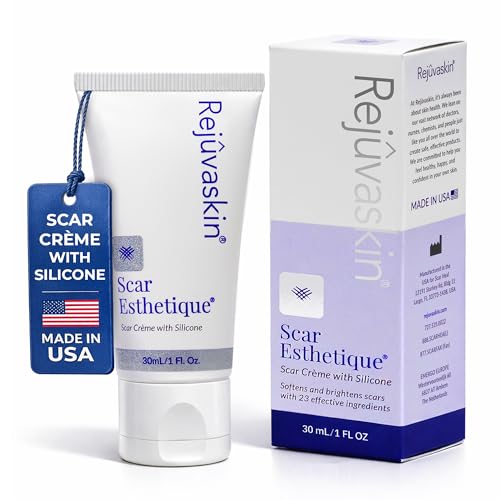
This formula uses medical-grade silicone to form a semi-occlusive barrier over the burn scar — the exact mechanism dermatologists and plastic surgeons recommend for flattening hypertrophic tissue and preventing keloid formation. Unlike silicone sheets that can slip off a curved knee or knuckle, this gel dries into a clear, flexible film that stays put through movement and clothing friction, making it ideal for burn scars located over joints.
Users consistently report noticeable softening and flattening of surgical and thermal burn scars within five weeks of twice-daily application. The botanicals in the formulation (Centella Asiatica derivatives) complement the silicone by soothing inflammation and improving elasticity in the surrounding skin. The 30ml tube is enough for a 4-inch scar used twice daily for roughly two months — a solid return on investment for a targeted treatment.
Because it works by occlusion, this gel is best applied to clean, dry, intact skin. It will not help an open wound. Older scars respond well but require longer continuous use — expect three to six months before the texture change becomes obvious. For deep burns requiring cellular remodeling rather than just flattening, consider pairing this with a growth factor product at a different time of day.
Why it’s great
- Medical-grade silicone targets hypertrophic and keloid-prone burn scars directly
- Dries clear and flexible — stays on during movement without residue
- Works on both new and mature burn scars with consistent use
Good to know
- Requires twice-daily application for at least 8 weeks to see flattening
- Not formulated for open wounds or actively blistering burns
- Does not contain SPF — must layer sunscreen on top for UV protection
2. Mederma Scar Cream Plus SPF 30

Mederma addresses the two biggest threats to a healing burn scar simultaneously: collagen disorganization and UV hyperpigmentation. The triple-action formula penetrates the dermis to influence collagen synthesis while the built-in SPF 30 stops the sun from baking permanent darkness into immature tissue. For burn scars on the face, neck, hands, or shins — areas that catch consistent daylight — this integrated sun protection is a massive compliance advantage over separate sunscreen layers.
The cream dries to a matte, non-greasy finish within a minute of application, which is rare for a scar treatment that also contains sunscreen actives. Knee replacement patients reported significant fading of their surgical scars within four to eight weeks of three-times-daily use, noting that the scar brightness dropped noticeably while the surrounding skin tone remained even. The two-tube pack (20g each) makes it easy to keep one in a bag for mid-day reapplication as required for SPF efficacy.
Three-times-daily application is the recommended cadence, which is higher than most silicone gels, and the bottle size is modest. SPF 30 is adequate for incidental sun exposure but should be upgraded to SPF 50 under direct sunlight or during prolonged outdoor activity.
Why it’s great
- Built-in SPF 30 prevents UV darkening of fresh burn tissue — no extra sunscreen needed
- Clinically shown to reduce scar visibility and improve skin texture
- Non-greasy formula disappears into skin quickly, suitable for face
Good to know
- Requires three applications daily for best results — higher frequency than silicone gels
- Tubes are small (20g each); large scars will consume them rapidly
- Not a silicone-based occlusive; primarily focuses on collagen and UV protection
3. Amish Burn Salve

This salve takes an entirely different approach from the silicone and growth-factor competitors — it is a thick, beeswax-and-aloe-based ointment designed for active wound healing, not just remodeling mature scar tissue. Users have reported applying it to fresh second-degree burns from hot soup or barbecue grills and seeing redness subside within 30 minutes. The beeswax forms a breathable barrier that locks in moisture while the aloe vera delivers cooling anti-inflammatory relief directly to damaged skin.
The 8-ounce jar is generous, especially compared to the tiny tubes common in the scar treatment category. Many users report combining this salve with medical-grade Manuka honey for deep burns, alternating dressings twice daily, and achieving surprisingly minimal scarring after one month. The formulation is simple — no synthetic silicones, no growth factors — which appeals to buyers who want a plant-based, old-fashioned approach for burns that are still in the acute healing phase.
The trade-off is texture and smell. The salve is thick and oily; it will not disappear into the skin like a silicone gel. It also has a distinct botanical/beeswax aroma that some find medicinal. Because it is designed for open healing, it must be stored in a cool place to maintain consistency. For scars that have already closed and need flattening, a silicone-based product will deliver more targeted remodeling.
Why it’s great
- Effective on fresh burns — cools pain and speeds closing of damaged skin
- Beeswax and aloe formulation is simple, natural, and deeply moisturizing
- Large 8oz jar offers exceptional value for covering extensive body burns
Good to know
- Thick, oily consistency — not suitable for greasy-sensitive face use
- Strong herbal/beeswax smell may be unpleasant for some users
- Primarily a wound healer, not a dedicated scar-flattening silicone treatment
4. Bio-Oil Skincare Oil

Bio-Oil is a lightweight, non-comedogenic oil serum that works best on flat, mature burn scars where the primary concern is uneven pigment and rough texture rather than raised tissue. The vitamin E, chamomile, and lavender oil combination hydrates the epidermis without clogging pores, making it the safest choice for facial burn scars that have already closed and need evening out. The oil absorbs within a minute and leaves a subtle, pleasant scent behind.
Users report visible fading of cat-claw marks, shaving irritation, and sun spots, with burn-specific improvements in terms of reduced redness and smoother texture after several weeks of twice-daily massage. The 4.2-ounce bottle is generous and the pump dispenser allows controlled application — a little goes a long way, so this product lasts significantly longer than silicone gels of comparable volume. It is also dermatologist-recommended for sensitive skin and safe for use during pregnancy if stretch marks are a secondary concern.
The formulation lacks any occlusive or cellular-remodeling mechanism. It will not flatten a raised keloid scar or provide the collagen-signaling power of a growth factor cream. For a burn scar that is still red, raised, or less than three months old, a silicone gel or SPF combo should be the primary treatment, with Bio-Oil as a supplementary moisturizing massage layer.
Why it’s great
- Extremely lightweight and non-greasy — ideal for facial scar care
- Non-comedogenic formula won’t clog pores around healing tissue
- Large bottle with pump offers strong value for all-over body use
Good to know
- Not occlusive — cannot flatten raised hypertrophic or keloid burn scars
- No SPF, no growth factors, no silicone — purely a moisturizing oil
- Primarily effective on discoloration and texture, not on structural remodeling
5. Skinuva Scar Cream
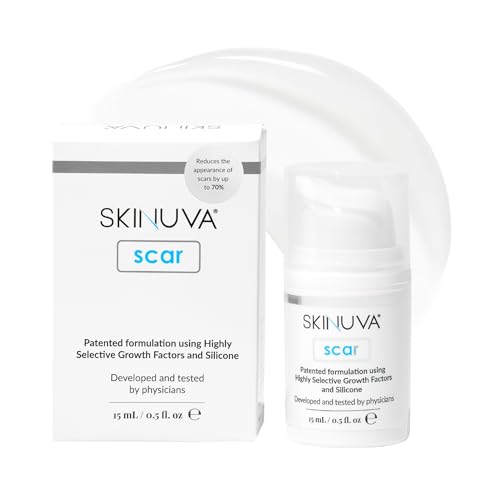
Skinuva is the only product in this guide that incorporates selective growth factors — signaling proteins that communicate with fibroblasts and keratinocytes to orchestrate dermal matrix remodeling at the cellular level. Developed by a board-certified plastic surgeon, this cream is designed for burn scars that involve deeper tissue trauma where simple occlusion is insufficient to correct the texture. The manufacturer’s clinical data claims up to a 70% reduction in scar appearance.
In addition to growth factors, the formula contains hyaluronic acid for deep hydration, Centella Asiatica (a well-researched wound-healing botanical), and vitamin C for antioxidant protection. Users with a three-year-old shingles scar on the forehead reported the mark nearly disappeared after six months of disciplined twice-daily use.
The pricing is significantly higher than any other product here, and the 0.5-ounce tube is small. For a burn scar larger than an inch, you will need to purchase multiple tubes, which drives the cost up considerably. The growth factor mechanism also means the cream is biologically active; it must be stored properly and used consistently to maintain efficacy. For small, stubborn, or old burn scars that have resisted silicone treatment, however, this is the most scientifically advanced option available.
Why it’s great
- Selective growth factors provide cellular-level dermal remodeling beyond simple occlusion
- Developed and tested by a board-certified plastic surgeon
- Blended with hyaluronic acid, Centella Asiatica, and vitamin C for comprehensive support
Good to know
- Small 0.5-ounce tube limits use to tiny scars — large burns will need multiple purchases
- Premium price point significantly higher than silicone-based alternatives
- Requires 3-6 months of twice-daily application for optimal results
FAQ
How soon after a burn can I start applying scar cream?
Can I use silicone gel and a growth factor cream together?
Why is my burn scar still red after 6 months of treatment?
Final Thoughts: The Verdict
For most users, the best cream for scars from burns winner is the RejuvaSil Silicone Scar Gel because it targets the primary structural problem of burn scars — hypertrophic tissue — with medical-grade silicone occlusion and stays flexible over joints. If you want integrated sun protection without an extra layer, grab the Mederma Scar Cream Plus SPF 30. And for a small, stubborn, deep old burn scar that hasn’t responded to silicone, nothing beats the Skinuva Scar Cream for its cellular remodeling power.

Mo Maruf
I created WellFizz to bridge the gap between vague wellness advice and actionable solutions. My mission is simple: to decode the research and give you practical tools you can actually use.
Beyond the data, I am a passionate traveler. I believe that stepping away from the screen to explore new environments is essential for mental clarity and physical vitality.