Our readers keep the lights on and my smoothie glass nicely filled. As an Amazon Associate, I earn from qualifying purchases.
Cracked feet are not a cosmetic inconvenience; they are a dermatological condition where the stratum corneum has lost its flexibility, often due to a lack of natural moisturizing factors and prolonged pressure. The right treatment doesn’t just mask the dryness — it delivers active ingredients like urea or lactic acid at concentrations high enough to actually exfoliate and rehydrate the thickened, fissured tissue.
I’m Mohammad Maruf — the founder and writer behind WellFizz. For this guide, I spent dozens of hours cross-referencing ingredient decks, parsing clinical trials on keratolytic agents, and analyzing real user feedback to isolate which formulations genuinely reverse plantar dryness rather than simply coating the surface.
Whether you’re dealing with seasonal calluses or chronic heel splits that bleed, finding the best cream for cracked feet means understanding which active percentage and delivery base will actually penetrate the thick skin of your soles without leaving you slipping on the bathroom tile.
How To Choose The Best Cream For Cracked Feet
Not every thick lotion is built to break down the dense, layered callus that forms on the weight-bearing edges of your heels. You need a formula that combines a keratolytic agent (to dissolve the dead, hardened skin) with an emollient base (to restore flexibility). Here are the specific specs that separate a true therapeutic cream from a glorified hand lotion.
Urea Concentration: 5% vs. 10% vs. 20%
Urea is the gold-standard active for cracked feet because it both hydrates and gently dissolves the intercellular matrix that binds dead skin cells together. A 5% urea cream is a maintenance moisturizer for mildly dry skin; a 10% urea cream can tackle moderate calluses and shallow fissures. Prescription-strength 20% formulas are reserved for severe, deep cracks and should be used under medical guidance. For the majority of heel fissures, a 10% concentration provides the best therapeutic effect without stinging.
Alpha-Hydroxy Acids (AHAs) vs. Urea
Lactic acid (an AHA) works by loosening the bonds between dead skin cells on the surface, making it excellent for smoothing rough texture and softening thick calluses. AmLactin Foot Cream uses a 12% lactic acid formulation. Urea, on the other hand, is a humectant that draws moisture into the skin while also gently exfoliating. If your cracks are accompanied by significant flaking, an AHA-base may be your best bet. If the skin feels tight and brittle rather than scaly, urea often yields faster relief.
Occlusive Barrier Power
A cream that evaporates within an hour will never seal a deep crack. You need a formulation that leaves a protective lipid film — petrolatum, dimethicone, or lanolin — over the fissure to prevent transepidermal water loss while the active ingredients work. Aquaphor Healing Ointment is essentially pure occlusive barrier therapy, which is why cosmetic professionals use it to restore severely compromised skin on hands and feet. If you can tolerate a thicker consistency, an ointment base is almost always more effective than a lotion for fissured heels.
Fragrance and Dye Sensitivity
Cracked skin is often inflamed and more reactive than healthy skin. Fragrance, alcohol, and artificial dyes can cause a stinging sensation that discourages consistent application. The most reliable products for chronic heel fissures are labeled fragrance-free, colorant-free, and hypoallergenic. Eucerin UreaRepair and O’Keeffe’s for Healthy Feet both explicitly avoid these irritants, which is why they are frequently recommended for diabetic foot care routines.
Quick Comparison
On smaller screens, swipe sideways to see the full table.
| Model | Category | Best For | Key Spec | Amazon |
|---|---|---|---|---|
| Eucerin UreaRepair Plus | Mid-Range | Deep moisturization with 5% urea | 10% Urea concentration | Amazon |
| Avon Foot Works Maximum Strength | Mid-Range | Overnight heel softening | Bonus 2.5 oz tubes (pair) | Amazon |
| O’Keeffe’s for Healthy Feet | Mid-Range | Extremely dry, cracked feet | 6.4 oz concentrated jar | Amazon |
| Aquaphor Healing Ointment | Premium | Protective barrier for deep fissures | 14 oz value jar, water-free | Amazon |
| AmLactin Foot Cream Therapy | Premium | Callus exfoliation with AHA | 12% Lactic acid (ULTRAPLEX) | Amazon |
In‑Depth Reviews
1. Eucerin UreaRepair Plus Foot Cream 10% Urea 100ml
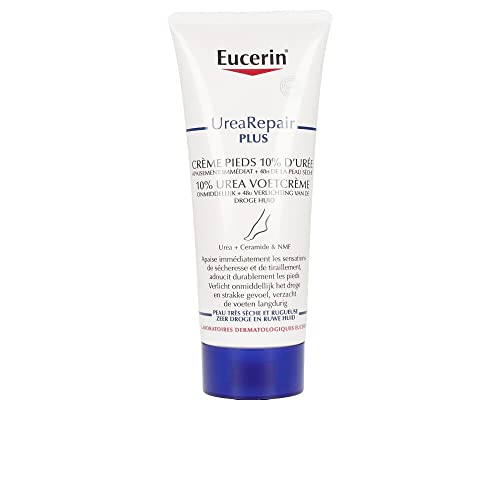
Eucerin’s UreaRepair Plus leverages a 10% urea concentration in an oil-in-water emulsion that delivers deep hydration without the tacky drag typical of heavy foot creams. The inclusion of 5% natural moisturizing factors helps reinforce the skin’s own barrier, specifically targeting the loss of flexibility that causes fissures. Clinical studies back the efficacy claim, which is rare in this price tier — most competitors rely on anecdotal evidence alone.
Users report that the cream absorbs quickly enough to wear under socks within minutes, leaving no greasy residue. Multiple verified reviews from pregnant women and chemotherapy patients highlight its ability to relieve severe itching and roughness within a single night. The 100ml tube is small enough to travel with but lasts several weeks with nightly application on both heels.
Because it is completely fragrance-free and colorant-free, it is safe for diabetic foot care routines where chemical irritation can lead to serious complications. This is the most reliable all-rounder for anyone moving from a generic lotion to a targeted therapeutic cream for medium-depth heel cracks.
Why it’s great
- Clinically tested 10% urea formulation with proven efficacy
- Non-greasy oil-in-water emulsion absorbs quickly
- Fragrance-free and colorant-free for sensitive, compromised skin
Good to know
- Urea concentration is fixed at 10% — not adjustable for extreme fissures
- Small 100ml tube may require reordering for two-foot daily use
2. Avon Foot Works Maximum Strength Cracked Heel Cream – Lot of 2
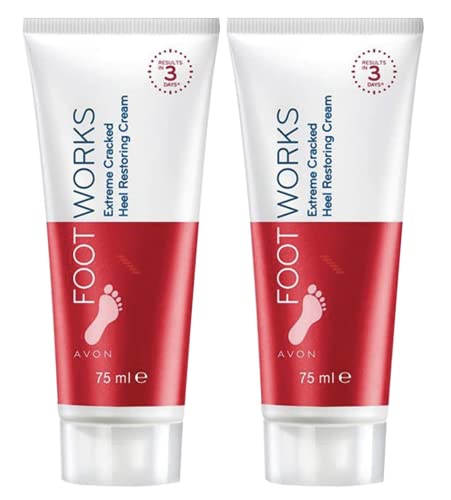
Avon’s Maximum Strength Cracked Heel Cream comes in a bonus-size 2.5 oz tube per pair, offering two full units that make it easy to keep one at work and one bedside. Multiple verified reviewers with 30-year histories of cracked heels describe this as the only cream that produced visible softening within a single application — a claim few overnight creams can substantiate.
The cream has a smooth, medicinal texture that reviewers compare favorably against thicker formulas like Gold Bond, noting that it spreads evenly and absorbs without leaving a white film. Users who apply it nightly with socks report that calluses soften noticeably within two to three days, and deep splits begin to close within a week. The formula appears to include a keratolytic agent that actively exfoliates while it moisturizes, though Avon does not publish the full active percentage on the label.
For the price of a two-pack, this represents strong value for anyone who needs to treat both feet aggressively. The only limitation is the lack of published active-ingredient transparency — you are trusting the brand’s historical reputation rather than a specific chemical concentration.
Why it’s great
- Two bonus-size tubes for layered treatment or travel
- Users report visible softening in one to two applications
- Smooth, non-thick texture spreads without drgging
Good to know
- Active ingredient percentages are not disclosed on packaging
- 2.5 oz tubes are small — frequent reordering likely for daily use
3. O’Keeffe’s for Healthy Feet Foot Cream – 6.4 oz Jar

O’Keeffe’s for Healthy Feet is the best-selling foot cream in America for a reason: its unusual concentrated formula is a solid balm at room temperature that liquefies on contact with skin, delivering a high dose of glycerin and petrolatum without the need for water-based fillers. A single 6.4 oz jar can last several months even with nightly application, because a pea-sized amount covers one entire heel.
Verified users with severely cracked, bleeding heels report that O’Keeffe’s closed their fissures within 48 hours, eliminating the pain that required crutches. The cream is fragrance-free, hypoallergenic, and safe for diabetics — a critical feature because diabetics need to avoid any product that could mask an infection with fragrance or cause chemical irritation. Multiple long-term users note that the cream also softened their dry elbows and even improved their facial skin texture when used sparingly.
Its only practical drawback is the jar format, which requires scooping with clean fingers and may introduce bacteria if used over many months. The solid consistency also means it does not spread as easily as a lotion on cold skin, though friction from application quickly warms it into a smooth film.
Why it’s great
- Concentrated formula — a tiny amount covers both heels
- Fragrance-free and hypoallergenic, safe for diabetic skin
- Verified reports of healing bleeding fissures within 48 hours
Good to know
- Jar format requires clean fingers — potential hygiene concern over months of use
- Solid balm consistency can feel stiff until warmed by friction
4. Aquaphor Healing Ointment, Advanced Therapy Skin Protectant, 14 OZ Value Size Jar
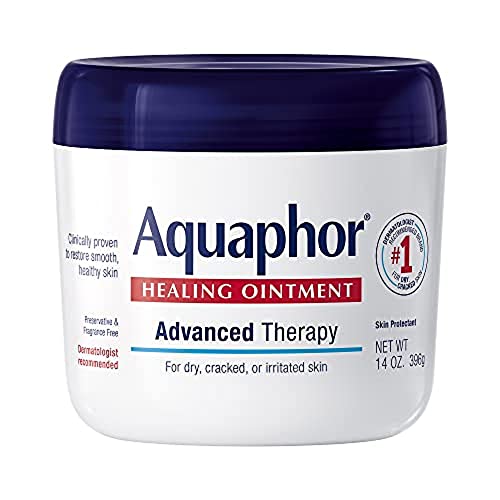
Aquaphor Healing Ointment is not a traditional foot cream — it is a water-free, semi-occlusive ointment that creates a breathable barrier over the fissure, allowing the skin’s natural repair mechanisms to work without losing moisture to the air. The 14 oz value jar is the largest container on this list and is ideal for families or for users who want to treat cracked feet, dry elbows, cuticles, and chapped lips with one product.
Licensed cosmetologists in the verified reviews specifically recommend Aquaphor for nightly foot care: they apply a thick layer over heels and calluses, cover with socks, and wake up to dramatically softer skin. Because the ointment contains no water, preservatives, or fragrance, it is clinically non-irritating even on post-surgical incisions and post-cryotherapy skin — a level of safety that makes it appropriate for deep fissures that are inflamed or at risk of infection.
The trade-off is texture: Aquaphor is thick and stays greasy on the surface. You cannot put socks on immediately without some transfer, and the stickiness takes adjustment if you are used to quick-absorb lotions. But for users whose heels are so dry that standard creams evaporate within an hour, this occlusive power is what finally allows the skin to rehydrate overnight.
Why it’s great
- Water-free formula creates a protective barrier that seals moisture overnight
- Clinically proven to be safe on compromised, inflamed, and post-surgical skin
- 14 oz jar is extremely economical for whole-body use
Good to know
- Thick, greasy texture — requires socks or stays slippery for 10–15 minutes
- Jar format can be less hygienic over long-term use without a spatula
5. AmLactin Foot Cream Therapy, 3 Ounce (Pack of 2)
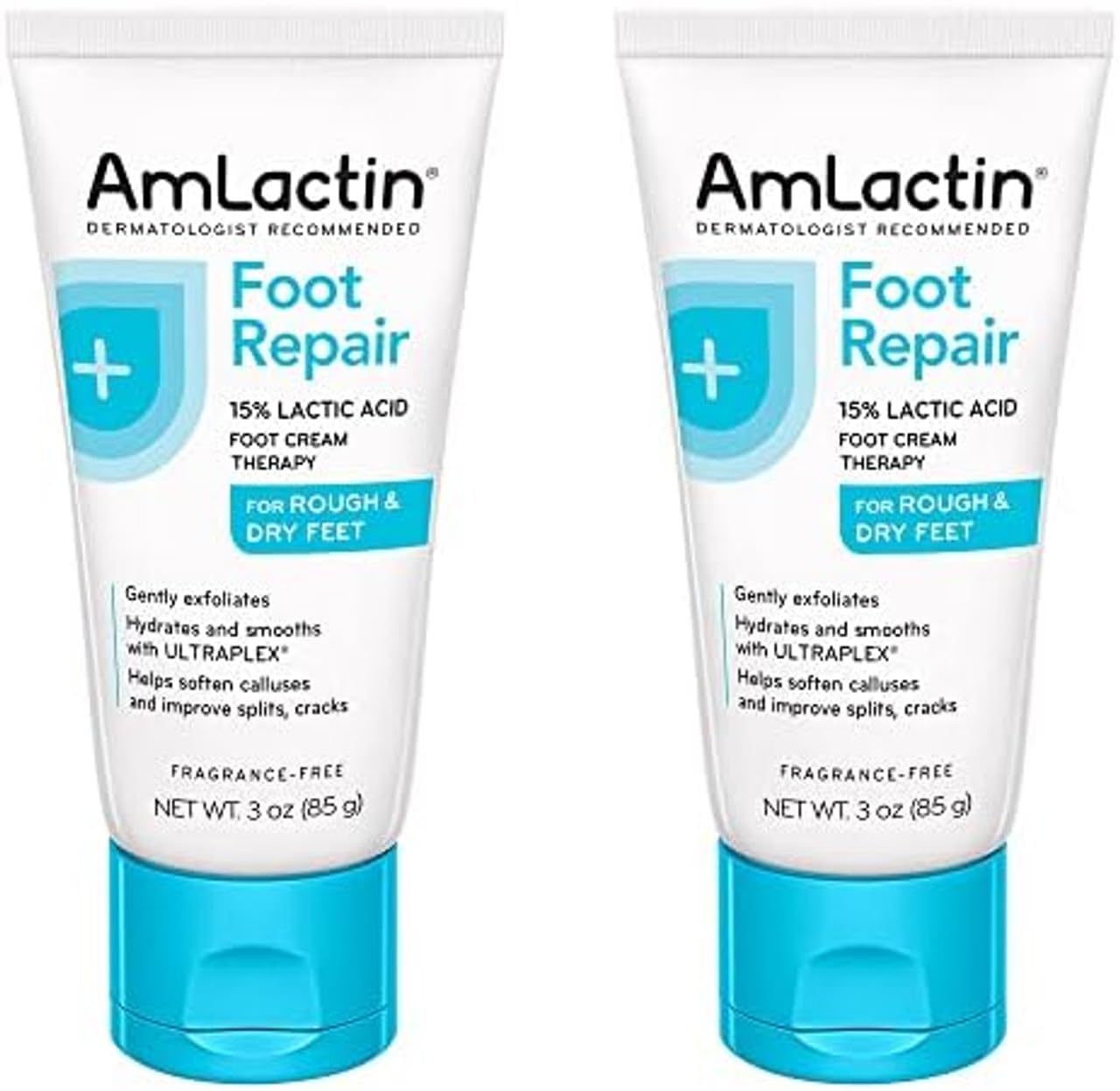
AmLactin Foot Cream Therapy uses a 12% lactic acid (AHA) formulation rather than urea, making it the best option on this list for users whose primary issue is thick, hardened calluses rather than brittle, cracked skin. Lactic acid gently dissolves the intercellular cement that binds dead skin cells to the surface, revealing smoother tissue underneath with consistent use over several days.
Verified users note that the cream is thick enough to stay put on the heel without dripping, and that it soaks in fairly quickly — faster than Aquaphor but slower than the Eucerin emulsion. The two-pack configuration (3 oz each) is convenient for stashing one tube in a travel bag and keeping one by the bedside. Multiple long-term users with chronic callus buildup report that twice-daily application plus socks keeps their feet smooth throughout the year, preventing new fissures from forming.
Because AHAs can cause a mild stinging sensation on broken skin, users with actively bleeding cracks should start with a lower-frequency application (every other night) until the fissure begins to close. The fragrance-free formula is appropriate for sensitive skin, but the acids mean it should not be applied to open wounds or infected areas.
Why it’s great
- 12% lactic acid effectively exfoliates thick calluses and prevents new buildup
- Thick consistency stays on the heel without running off during application
- Two-tube pack offers good value and portability
Good to know
- Lactic acid may sting on skin with active, bleeding fissures
- Small 3 oz tubes require reordering sooner than jar formats
FAQ
How long does a 10% urea cream take to heal cracked heels?
Can I use lactic acid cream if my heel cracks are bleeding?
Is O’Keeffe’s for Healthy Feet safe for diabetic neuropathy?
Final Thoughts: The Verdict
For most users, the best cream for cracked feet winner is the Eucerin UreaRepair Plus Foot Cream because its 10% urea concentration hits the therapeutic sweet spot — potent enough to dissolve moderate callus but mild enough for nightly use without stinging. If you want a concentrated value pick that fits in a bathroom shelf and lasts for months, grab the O’Keeffe’s for Healthy Feet. And for deep, inflamed fissures that need an overnight seal to finally start healing, nothing beats the Aquaphor Healing Ointment.

Mo Maruf
I created WellFizz to bridge the gap between vague wellness advice and actionable solutions. My mission is simple: to decode the research and give you practical tools you can actually use.
Beyond the data, I am a passionate traveler. I believe that stepping away from the screen to explore new environments is essential for mental clarity and physical vitality.