Our readers keep the lights on and my smoothie glass nicely filled. As an Amazon Associate, I earn from qualifying purchases.
Choosing a crape myrtle means balancing the promise of summer-long blooms against the real-world risk of receiving a dormant twig that may or may not leaf out. The difference between a thriving showpiece and a dead stick in the ground often comes down to root system health, soil compatibility, and planting timing — three factors that vary wildly between sellers and growing zones.
I’m Mohammad Maruf — the founder and writer behind WellFizz. I’ve spent countless hours analyzing grower shipping practices, live plant return policies, and real customer outcomes across dozens of crape myrtle cultivars to build this guide on hard data rather than marketing claims.
Whether you need a compact shrub for a patio border or a tall specimen tree for a privacy screen, finding the best crape myrtle for your garden starts with matching variety to your hardiness zone and sun exposure, not just the prettiest nursery photo.
How To Choose The Best Crape Myrtle
The wrong crape myrtle choice often stems from ignoring two variables: the seller’s shipping window relative to your local frost date, and the mature size printed in the nursery spec, not the pot size. A plant that reaches 25 feet tall cannot be pruned into a 6-foot shrub without sacrificing its natural form and bloom production.
Match Mature Height to Your Space
Crape myrtles range from dwarf cultivars topping out at 4 feet to standard trees exceeding 25 feet. The label on the pot usually reports the height at planting, not the mature height. Always check the expected plant height spec — the Muskogee cultivar, for example, can reach 25 feet, while the Center Stage Red shrub stays closer to 8 feet. Planting a 25-footer under a low eave guarantees future pruning headaches.
Understand Dormancy vs. Dead
Deciduous crape myrtles lose all leaves in winter and arrive as bare twigs. Buyers who panic and discard a dormant plant are the most common source of negative reviews. A live dormant twig has green tissue under the bark when scratched, while a dead plant feels brittle and snaps clean. Give a dormant plant at least one full growing season before concluding it failed.
Fertilizer Matters More Than You Think
Many crape myrtles arrive in nursery soil that has already been depleted of nutrients. A dedicated granular fertilizer formulated for flowering trees, such as the Nelson Plant Food NutriStar, can accelerate leaf growth and encourage blooms within weeks — even on trees that failed to flower the previous season. Buyers in poor or sandy soil types see the biggest improvement.
Quick Comparison
On smaller screens, swipe sideways to see the full table.
| Model | Category | Best For | Key Spec | Amazon |
|---|---|---|---|---|
| Proven Winners Center Stage Red | Shrub | Compact deer-resistant borders | Mature Height 72-144 in | Amazon |
| Das Farms Rhapsody in Pink | Tree | Extended bloom time in heat | Shipped 1 ft in 1-gal pot | Amazon |
| Nelson NutriStar Fertilizer | Fertilizer | Boosting bloom on weak trees | 4 lb Granules, 64 oz | Amazon |
| Purely Purple Black Diamond | Tree | Unique dark foliage color | 12-18 in tree height | Amazon |
| Crape Myrtle Guy Muskogee 4-Pack | Tree | Long-term hedging or grove | Expected Height 25 ft | Amazon |
In‑Depth Reviews
1. Proven Winners Center Stage Red Crape Myrtle

This 2-gallon shrub ships with a mature height range of 72 to 144 inches, putting it firmly in medium-sized territory for borders or foundation planting. The cherry-red flowers debut in spring and continue through fall, giving you one of the longest bloom windows among compact crape myrtles. Organic material certification and deer resistance make it a low-fuss pick for suburban yards where wildlife browsing is a real concern.
Buyers in South Carolina and similar warm climates report the plant arrived well-boxed, healthy, and blooming within days of transplant. The variety’s unusual color progression — white buds that mature into vivid red — adds visual interest through the bloom cycle. Expect the plant to grow quickly after being placed in the ground, with multiple reviewers noting significant size increases within a single season.
Northern buyers should note that this deciduous shrub may not survive harsh winters outside zone 7 without protective measures. Several buyers in Illinois reported the plant did not survive despite using a plant bag over the winter. Consider patio container culture or treat it as an annual north of zone 7 if you want the vibrant red blooms.
Why it’s great
- Long bloom window from spring through fall
- Deer resistant for unprotected yards
- Unique white-to-red flower color shift
Good to know
- May not survive winter below zone 7
- Packaging can cause broken limbs in transit
- Some units arrive smaller than expected
2. Das Farms Rhapsody in Pink Crape Myrtle
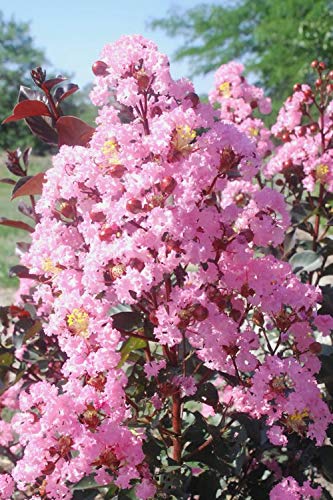
This light-pink flowering tree ships at 1 foot tall in a trade gallon container, double-boxed to protect the root zone during transit. The Rhapsody in Pink cultivar is prized for its extended bloom time, producing soft pink panicles through the hottest summer weeks in zones 7 through 10. Das Farms includes a 30-day transplant success guarantee provided you follow the included planting instructions — an unusual safety net for live plant purchases.
Buyers in Arizona desert conditions reported the tree thrived after being repotted into a 5-gallon container with moss mulch, blooming again after initial establishment. The recommended watering schedule of 8 to 10 cups twice weekly until drainage mimics the deep, infrequent irrigation that crape myrtles prefer. Multiple reviews noted the plant arrived as bare twigs in winter and leafed out normally in spring, confirming that dormant shipping is standard, not a defect.
Some customers were disappointed by the plant’s initial size, with one describing it as an inch tall upon arrival. The trade gallon container’s 1-foot height is accurate per the listing, but buyers expecting a bushier specimen may feel underwhelmed during the first season. Place it in full sun and the growth rate will accelerate quickly in warm soil.
Why it’s great
- Extended bloom time through hot summers
- 30-day transplant success guarantee
- Double-boxed packaging for safe transit
Good to know
- Initial size may be smaller than expected
- Dormant winter twigs can worry new buyers
- Flopping branches may need staking in wind
3. Nelson NutriStar Crape Myrtle & Flowering Trees Fertilizer

This granular fertilizer, sold under the NutriStar label by Nelson Plant Food, is formulated specifically for crape myrtles and other flowering trees including desert willow, mimosa, and orchid trees. The 4-pound bag covers approximately five small trees with a light application, making it a targeted solution rather than a general-purpose lawn feed. Buyers report visible results within two weeks, with one customer seeing first blooms on a previously stubborn orchid tree after years of no flowers.
The 4.6-star average across over 700 reviews reflects consistent results for bloom induction on trees that had stopped flowering. A master gardener recommended this product for a 25-foot crape myrtle that had struggled with foliage and bloom density for years — after application, the tree filled out and flowered heavily. The granular form allows slow nutrient release, reducing the risk of fertilizer burn compared to liquid concentrates.
The cost per bag is higher than generic fertilizers, and light applications on larger trees require multiple bags to achieve coverage. For a mature 25-foot tree, one reviewer used nearly a full bag and needed several more for full root-zone treatment. If you have multiple large trees, budget for additional units to get meaningful results.
Why it’s great
- Induces blooms on trees that stopped flowering
- Granular slow-release reduces burn risk
- Works on multiple flowering tree species
Good to know
- Expensive relative to bag size
- Large trees need multiple bags
- Light application covers only 5 small trees
4. Purely Purple Black Diamond Crape Myrtle
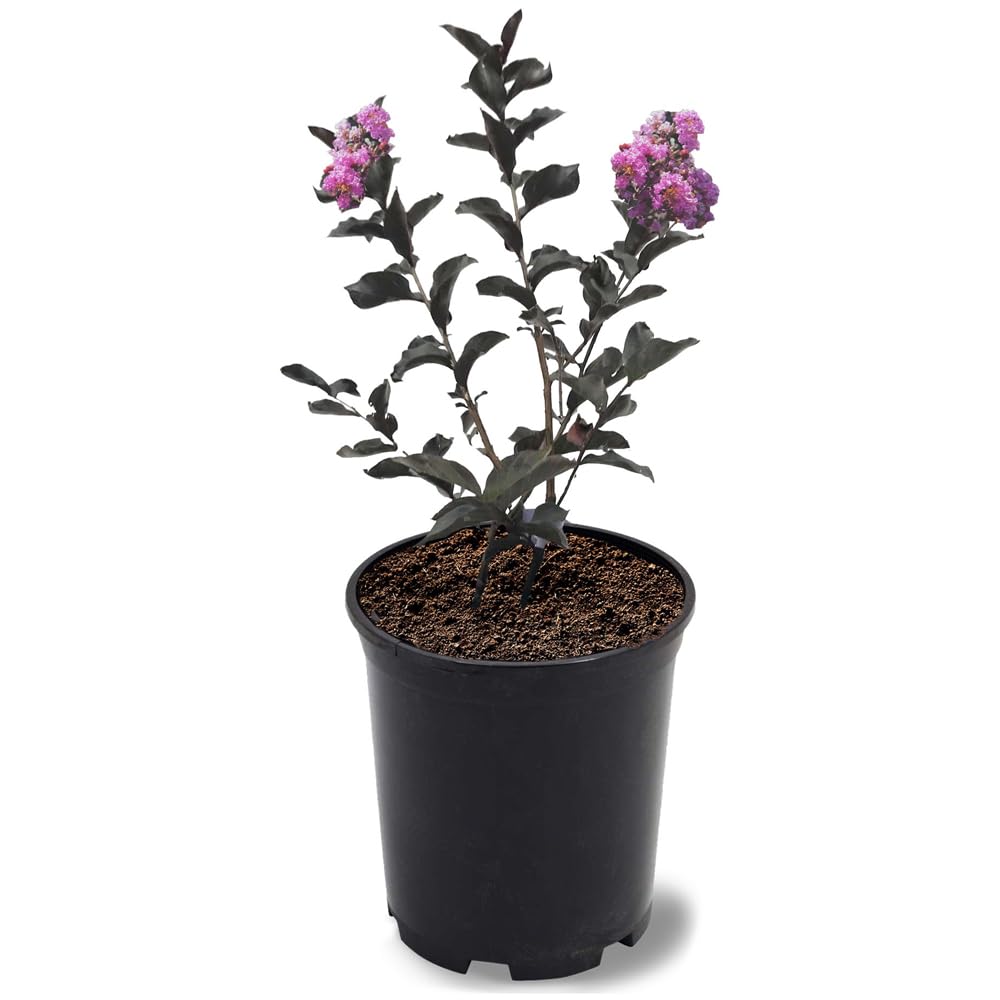
The Black Diamond series is known for its near-black foliage that provides dramatic contrast against the bright purple flowers. This 1-gallon pot ships a tree 12 to 18 inches tall, and the dark leaves retain their color through the growing season, creating visual interest even before the flowers emerge. The mature size and hardiness zone range are not specified in the listing, so this variety is best suited for buyers who already have suitable growing conditions and are seeking a unique color palette.
Buyers reported mixed results on plant condition upon arrival. Several received trees with healthy foliage that grew 6 inches quickly after planting, while others received dead or dying specimens with loose soil that crumbled away from the root ball during transplant. The variability suggests the grower’s pre-shipment handling and storage conditions fluctuate more than larger nurseries.
Note the shipping restriction: due to agricultural laws, this plant cannot be shipped to California, Arizona, Alaska, or Hawaii. The 1-gallon pot size means the root system is relatively small, so soil preparation and careful transplant are critical. Work the existing nursery soil gently and water deeply for the first two weeks to help the roots establish in your native ground.
Why it’s great
- Unique near-black foliage for dramatic contrast
- Bright purple flowers stand out against dark leaves
- Some units arrive with healthy, fast-growing roots
Good to know
- Cannot ship to CA, AZ, AK, or HI
- Inconsistent plant condition upon arrival
- Loose soil in pot can damage root ball
5. Crape Myrtle Guy Muskogee 4-Pack Lavender Trees
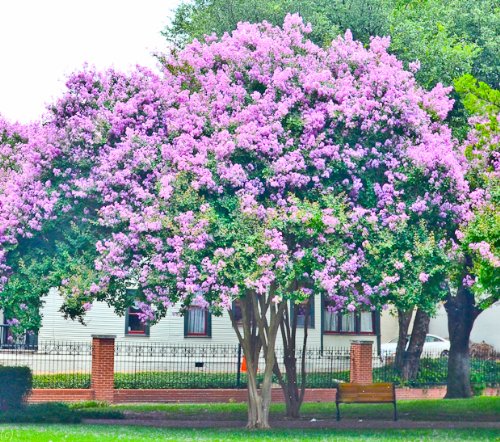
This 4-pack of Muskogee lavender trees is a long-term investment for creating a privacy grove or a full-scale landscape feature. The cultivar’s expected height of 25 feet means these are standard-sized trees, not compact shrubs — they need space to reach their natural form. The lavender blooms appear in summer, and the drought tolerance rating makes them suitable for sandy soil types and moderate watering schedules common in the southern and southwestern growing zones.
The initial shipping size is small, with multiple buyers describing the plants as 5- to 8-inch twigs with fragile stems. Over two growing seasons, reviewers reported these twigs grew to 3 feet or taller, with one tree blooming within its first summer. The roots establish quickly when the plants are placed directly in the ground — note that these are deciduous and will lose their leaves in winter, then re-sprout in spring.
Customer satisfaction varies significantly. While the seller received high marks for customer service and replacement shipping, several buyers lost plants within the first year, with one reporting all four trees died. The quarter-container size makes them more vulnerable to transplant shock and extreme weather than larger pot options. If you have the patience for a two- to three-year establishment period and want an economical per-tree price point, this pack delivers high upside with moderate risk.
Why it’s great
- Low per-tree cost for establishing multiple trees
- Fast growth after establishment — 3 ft in 2 months
- Excellent customer service for replacements
Good to know
- Initial size is very small — 5 to 8 inch twigs
- Some plants may not survive first winter
- Requires 2-3 years to reach landscape presence
FAQ
How do I tell if my crape myrtle arrived dormant or dead?
Can I plant a crape myrtle shipped in winter when it has no leaves?
What causes a crape myrtle to not bloom?
Final Thoughts: The Verdict
For most users, the best crape myrtle winner is the Proven Winners Center Stage Red because it balances a long bloom period, deer resistance, and a manageable mature height for most suburban landscapes. If you want extended bloom time and a 30-day survival guarantee, grab the Das Farms Rhapsody in Pink. And for reviving a tree that has stopped flowering, nothing beats the Nelson NutriStar Fertilizer.

Mo Maruf
I created WellFizz to bridge the gap between vague wellness advice and actionable solutions. My mission is simple: to decode the research and give you practical tools you can actually use.
Beyond the data, I am a passionate traveler. I believe that stepping away from the screen to explore new environments is essential for mental clarity and physical vitality.