Our readers keep the lights on and my smoothie glass nicely filled. As an Amazon Associate, I earn from qualifying purchases.
Stepping out of the lodge in ski boots onto a frozen parking lot is a gamble you shouldn’t have to take. Traditional microspikes designed for running shoes often fail to grip the stiff, thick soles of alpine boots, making the walk from car to chairlift a hazardous shuffle. The real challenge is finding a traction system that locks onto rigid boot shells without slipping off or damaging the boot, while providing enough bite for packed snow, glare ice, and the occasional muddy patch.
I’m Mohammad Maruf — the founder and writer behind WellFizz. I’ve spent dozens of hours analyzing the design, materials, and real-world user reports for the most popular traction cleats to find the models that actually hold fast to a ski boot’s unique geometry.
From heavy-duty work cleats tested in sub-zero temperatures to lightweight systems designed for hiking, this guide covers the top options to keep you upright all winter. Read on to find the best crampons for ski boots that match your specific needs.
How To Choose The Best Crampons For Ski Boots
Not all traction cleats are built for the rigid, thick-sole profile of a ski boot. A design that works perfectly on a flexible running shoe may slide off your boot’s heel or fail to distribute weight across the stiff sole. Here are the three most critical factors to focus on.
Harness and Binding System
Look for a system that uses a combination of a stretchy elastomer base and adjustable Velcro straps. A pure rubber harness, like those on lighter models, can work for short walks but may not stay cinched during an all-day hike in ski boots. A toe bar, heel plate, or full-sole binding with multiple straps ensures the crampon moves as one unit with the boot.
Spike Material and Configuration
Ski boots are heavy, and you need spikes that can handle repeated impact on hard surfaces. Stainless steel spikes resist rust and hold an edge longer than coated steel. Pay attention to spike count and placement: a configuration with a dedicated heel spike plate provides superior braking on downhill slopes, while a dense pattern under the forefoot helps on flat, icy terrain.
Durability in Sub-Zero Temps
The rubber or elastomer in your traction device must stay flexible in temperatures well below freezing. Cheap materials become brittle and crack. Check for specs that mention cold-resistance testing down to 30 below zero or lower. Similarly, the metal links and cable system should be thick enough that they won’t snap under the torque of a ski boot stride.
Quick Comparison
On smaller screens, swipe sideways to see the full table.
| Model | Category | Best For | Key Spec | Amazon |
|---|---|---|---|---|
| Kahtoola K 10 | Hiking Crampon | All-day winter hiking & non-technical mountaineering | 10 spikes per foot (3/4-inch length) | Amazon |
| BLACK DIAMOND Access Spike | Trail Spike | Trail running & variable winter terrain | 14 stainless steel spikes per foot | Amazon |
| STABILicers Maxx 2 | Work Cleat | Heavy-duty job site safety & extreme ice | 15 heat-treated steel cleats, replaceable | Amazon |
| Hillsound Trail Crampon | Trail Crampon | Backcountry hiking on steep, icy trails | 11 carbon steel spikes, 17mm length | Amazon |
| Hillsound FreeSteps6 | All-Purpose Crampon | Downhill anti-slip & mixed terrain | 21 stainless steel 7mm spikes | Amazon |
| Yaktrax Diamond Grip | Full-Foot Cleat | Urban walking on ice & packed snow | Case-hardened steel alloy diamond beads | Amazon |
| Trail Spikes Crampons | Budget Cleat | Casual snow shoveling & light hiking | 14 stainless steel spikes, silicone base | Amazon |
In‑Depth Reviews
1. Kahtoola K 10 Hiking Crampon

The Kahtoola K10 is a serious step up from simple strap-on cleats, engineered specifically for flexible footwear like hiking boots and the stiff shells of ski boots. Its patented dual-layer stainless steel LeafSpring Flex Bar is designed to move naturally with the boot’s flex, preventing the crampon from detaching on steep, uneven terrain. Each foot carries 10 aggressive 3/4-inch spikes that deliver reliable bite on hard ice and packed snow, making it ideal for all-day treks or non-technical ascents.
The Quick-Fit Binding system uses independent front and rear buckles, allowing you to dial in tension separately for the toe and heel. This is a huge advantage for ski boots, which have a distinct heel pocket that many harnesses can’t secure. Users report that the K10 stays locked on during over 10 mountainous miles, even when transitioning from snow to rock. The rubber pads over the spikes need a bit of force to seat initially, but once in place, the fit is precise and confidence-inspiring.
For serious winter hikers and mountaineers who already own ski boots, the K10 bridges the gap between a microspike and a full technical crampon. It’s not the lightest option, but its secure fit and robust spike design justify the investment for those who need reliable traction on technical terrain. The 3-year warranty from Kahtoola adds peace of mind for a product meant to survive harsh conditions.
Why it’s great
- Patented flex bar moves naturally with boot sole
- Independent front/rear buckles for a custom fit on ski boots
- Aggressive 3/4-inch spikes excel on hard ice and steep slopes
Good to know
- Fit is sensitive to sizing; check chart carefully for boot size
- Buckle adjustments can be tricky with cold or gloved hands
2. STABILicers Maxx 2 Heavy-Duty Traction Cleats

If you park at the far end of the lot or work outdoors in winter, the STABILicers Maxx 2 are built to take a beating. This is not a lightweight hiking accessory; it’s a rugged industrial traction system used by postal carriers and construction crews. The full-sole thermoplastic elastomer binding is reinforced with a series of hook-and-loop straps that fasten from heel to toe, creating a secure wrap even on bulky insulated boots and rigid ski boot shells.
The key differentiator here is the 15 heat-treated steel cleats that are fully replaceable. Each cleat is screwed into the binding, meaning you can swap out worn points or install anti-spark brass cleats (sold separately) for sensitive environments. The traction system remains flexible down to -45°F, so the rubber won’t crack or stiffen in the coldest conditions. Users consistently praise its stability on pure glare ice, noting that it handles the heavy torque of a ski boot stride without slipping.
Be aware that this model fits snugly and some users with very wide or oversized insulated boots (size 13 neoprene) found the rubber sides too narrow. The size chart is critical here. For most ski boot sizes in the standard range, the Maxx 2 provides the most secure, rattle-free fit available. It’s overbuilt for casual walks, but if your winter routine demands maximum reliability on pure ice, this is the gear.
Why it’s great
- Replaceable heat-treated steel cleats for long-term use
- Stays flexible down to -45°F, no cold-cracking
- Multiple Velcro straps create a fully secure, non-slip fit on ski boots
Good to know
- Fit can be too narrow for oversized or very wide insulated boots
- Cleats are slippery on smooth indoor floors like linoleum
3. Black Diamond Access Spike Traction Device
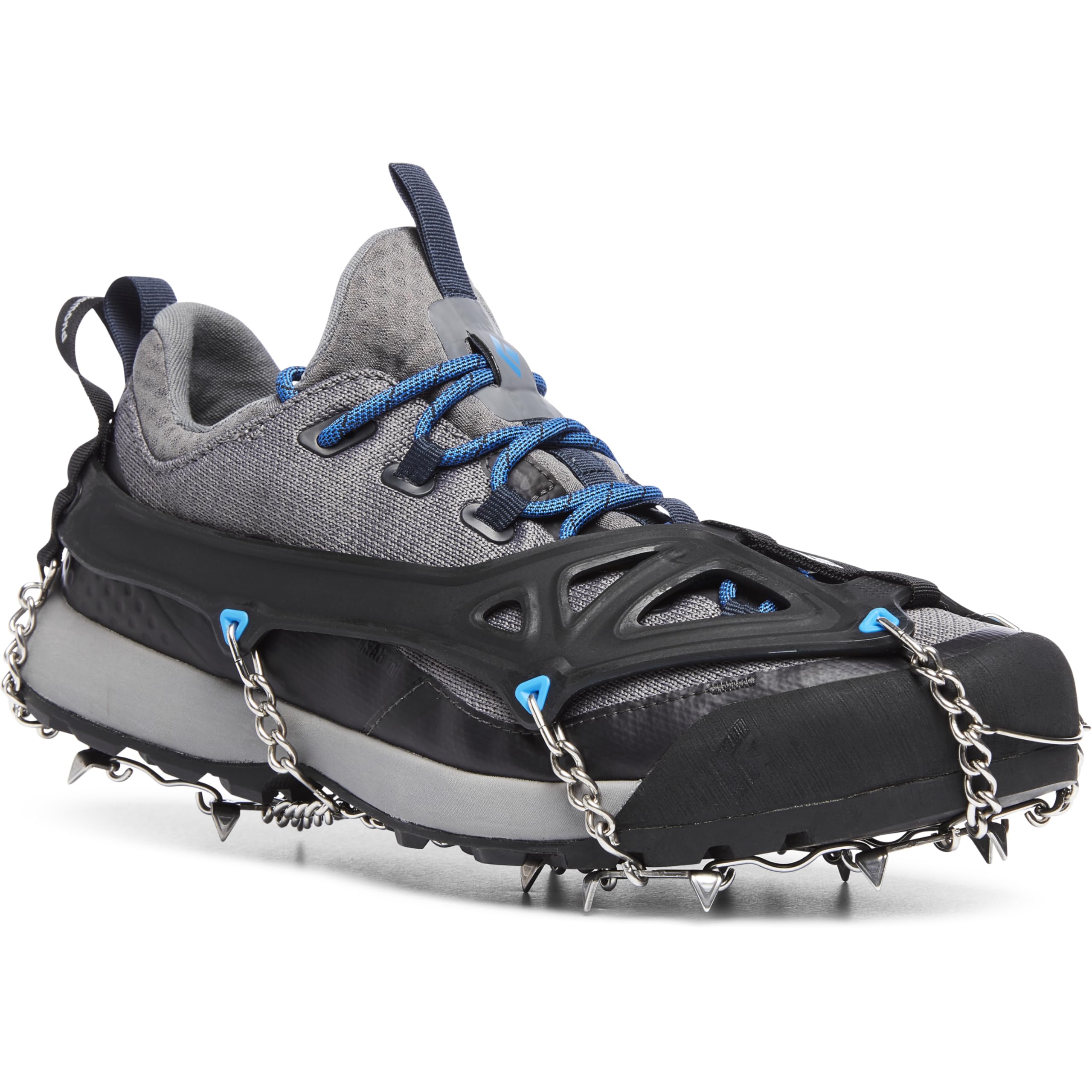
The Black Diamond Access Spike is a lightweight, low-profile option that punches above its weight class for trail runners and hikers who need to transition between snow, ice, and bare rock. Equipped with 14 stainless steel spikes per foot, it delivers aggressive traction on packed snow and icy trails without the bulk of a full industrial cleat. The durable elastomer harness stretches easily over ski boots and stays snug without shifting during dynamic movement like a jog downhill.
Users report excellent performance on steep, icy ascents with a heavy pack, noting zero slipping. The compact design packs down small enough to stash in a jacket pocket for quick deployment when the trail ices up. However, there is a known durability issue: some users experienced a link slipping out of its hole after the first few uses, requiring pliers to reseat. This seems to affect a small fraction of units, but it’s worth inspecting the hardware before relying on them for a long backcountry trip.
For those who prioritize weight savings and multi-surface agility over extreme ice-grip, the Access Spike is a fantastic choice. It works well for ski boot users who also plan to hike or run in them. Just be sure to size up if you’re between sizes — a 9.5 boot often requires a Large for a comfortable, secure fit without excessive pressure on the boot shell.
Why it’s great
- Very lightweight and compact for easy packing
- 14 stainless steel spikes provide aggressive bite on mixed terrain
- Smooth transition from snow to rock without losing traction
Good to know
- Some units have had link breakage issues requiring maintenance
- Runs small; order one size up for ski boots
4. Hillsound Trail Crampon

The Hillsound Trail Crampon is a dedicated winter hiking system that bridges the gap between a simple chain cleat and a full mountaineering crampon. It features a large carbon steel plate system with 11 spikes, each extending 17mm — significantly longer than the average microspike. This extra bite depth makes a massive difference on steep, icy slopes and uneven terrain where standard spikes skitter. The hinged front plate adds flexibility, allowing the crampon to articulate naturally with the boot’s stride.
Fit is a standout feature: a toe bar, double chain system, and an adjustable Velcro strap across the foot work together to keep the crampon locked in place. The textured elastomer harness inside grips the boot sole securely, even in deep snow. Users consistently note that this model is “more aggressive” than Yaktrax or Kahtoola micro spikes, providing effortless traction on wet hard ice and rocky inclines. It’s also surprisingly transparent to your stride — you hardly feel it underfoot unless you’re on bare pavement.
The main trade-off is that the steel components can rust quickly if not dried after use. A few seasons of wet snow and salt can leave the hardware looking rough unless you wipe it down. For the price, it’s a rugged performer that works beautifully with ski boots, offering the stability needed for backcountry approaches and glacier walks. The included heavy-duty carry bag is a nice touch for storage.
Why it’s great
- Long 17mm carbon steel spikes for superior bite on hard ice
- Hinged front plate and double chain system for a natural stride
- Toe bar and Velcro strap keep it secure on stiff ski boots
Good to know
- Steel components rust if not dried thoroughly after wet use
- Initial fit may be snug; requires effort to put on the first time
5. Hillsound FreeSteps6 Crampon
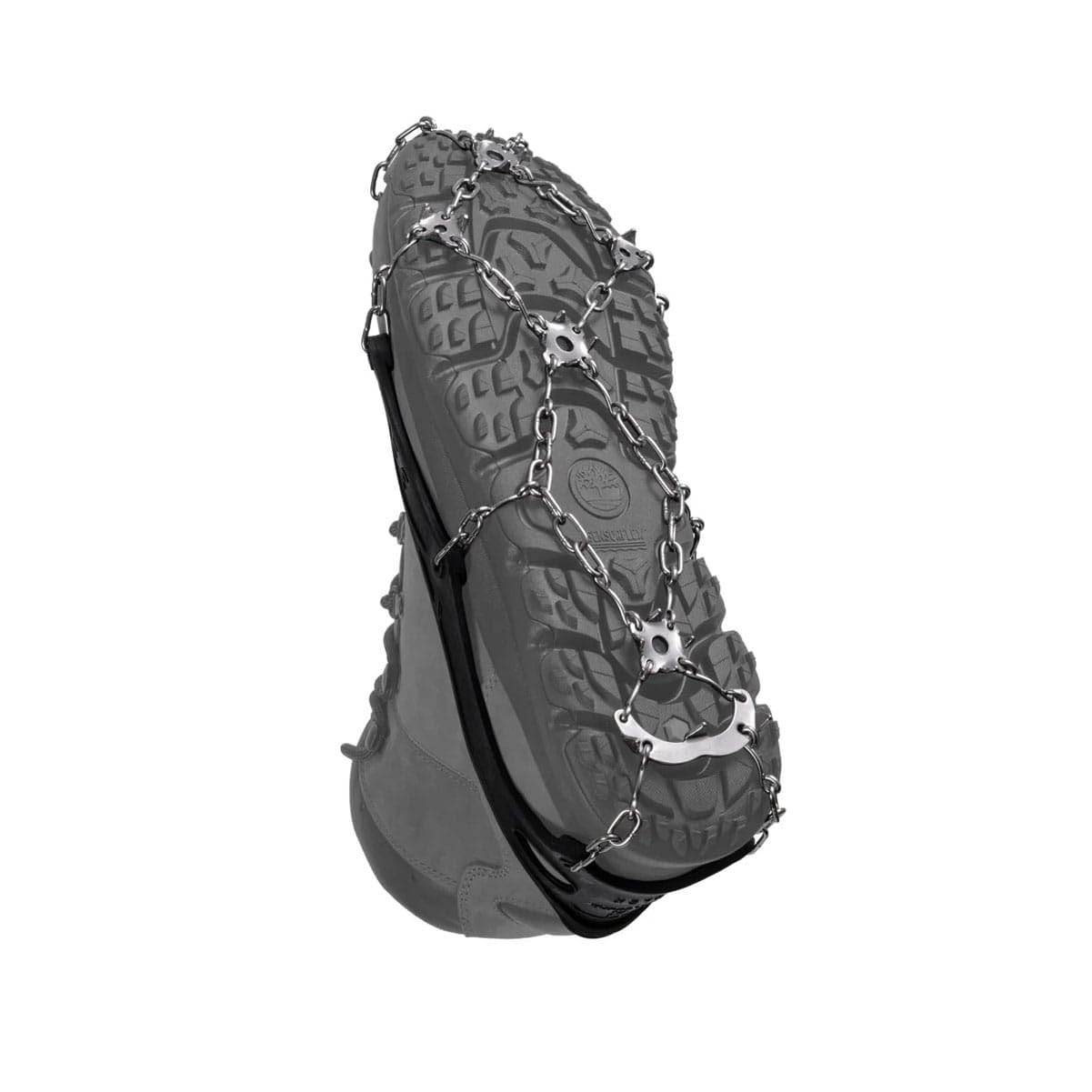
The Hillsound FreeSteps6 is an ultra-lightweight traction system that packs an impressive 21 stainless steel 7mm spikes per foot, dispersed from heel to toe for even weight distribution. The large spike plate at the heel is a standout feature, providing premiere all-purpose traction for downhill slopes — perfect for the controlled descents you encounter in ski boots. The heat-molded elastomer harness is stretchable in sub-zero temperatures, so you won’t fight frozen rubber when trying to get them on.
Customer reports highlight the exceptional longevity of this model, with one user logging 100-200 miles over 9.5 years before replacing them. Another user noted 4+ years of heavy use on snow, ice, mud, and even asphalt. The rubber stays intact while the metal links eventually wear out, but the replacement cost is low for that kind of lifespan. The FreeSteps6 works well on a range of footwear, from running shoes to insulated boots, but specifically fits ski boots well due to the generous elastomer stretch.
One recurring complaint is the formation of ice balls under the metal plates during certain snow conditions. The packed snow can accumulate under the foot, creating uncomfortable lumps that need to be kicked off. Despite this minor nuisance, the FreeSteps6 offers outstanding value for skiers who need a reliable, long-lasting cleat for mixed terrain without breaking the bank.
Why it’s great
- Remarkable durability with reports of 4-10 years of use
- 21 spikes with a dedicated heel plate for downhill braking
- Lightweight at 12oz per medium pair
Good to know
- Ice balls can form under the metal plates in sticky snow
- Rubber may wear out before the metal links fail
6. Yaktrax Diamond Grip

The Yaktrax Diamond Grip is a well-known classic in the winter traction space, designed for urban and suburban use on ice, snow, and transitional surfaces. Instead of fixed spikes, it uses patented swiveling diamond beads made from case-hardened steel alloy, strung on aircraft-grade steel cables. This design prevents snow and ice from accumulating underfoot, allowing you to walk naturally without the clumping that plagues some spike-based designs. The cold-resistant natural rubber upper band stays flexible in sub-zero temps without cracking.
For ski boots, the Diamond Grip works best when you need reliable traction for short walks across parking lots or to the lodge. The full-foot coverage with traction points extending across the entire length of the foot provides exceptional stability on icy surfaces. Users with size 13 insulated boots praised the XXL size for a perfect fit, noting that the rubber construction is robust and doesn’t impair traction on clean surfaces. The low profile of the diamond beads means you can walk on concrete or gravel without feeling like you’re wearing stilts.
Durability is the biggest concern here. Multiple users report that the metal parts rust quickly after exposure to salt and moisture, and the cables can break sooner than expected. The Yaktrax Diamond Grip is best viewed as a seasonal consumable — especially if you walk on salted sidewalks daily. When they’re working, they’re excellent. But if you need a system to last multiple winters with heavy use, you may want to look at a sturdier option.
Why it’s great
- Swiveling beads prevent snow buildup underfoot
- Low-profile design works well on concrete and asphalt
- Easy on/off with stretchy rubber harness
Good to know
- Metal components rust quickly in salty conditions
- Cables can break sooner than expected with heavy use
7. Trail Spikes Crampons by Yatta Life

The Trail Spikes from Yatta Life offer an entry-level priced solution for casual winter walking and light hiking. They feature 14 stainless steel spikes set into a durable silicone base, with an adjustable Velcro strap system for a secure fit. The full-sole coverage with cleats on both the heel and forefoot provides balanced traction on icy roads, damp grass, and snow-covered driveways. The silicone harness is more pliable than rubber alternatives, making them easier to put on and take off.
While the build quality is decent for the price point, there are some important caveats. The sizing runs very small, so you may need to go up one or even two sizes compared to your normal boot size. One user reported that the product arrived missing the Velcro straps, though the seller (Yatta Life) was responsive and replaced the defective unit. The spikes themselves are solid and don’t bend easily, lasting over a year of heavy use on concrete and ice before a single link broke.
For skiers who only need cleats for occasional parking lot walks or light snow shoveling, the Trail Spikes are a functional and affordable choice. They won’t survive the abuse of a backcountry winter hiking season, but they handle casual use well. Just be prepared to double-check the fit and hardware out of the box. If you’re looking to save money and don’t plan to push them hard, these will get the job done.
Why it’s great
- Affordable entry point for basic winter traction needs
- Easy on/off with flexible silicone base and Velcro strap
- Stainless steel spikes resist bending better than budget alternatives
Good to know
- Sizing runs very small; order up significantly
- Quality control issues reported with missing strap components
FAQ
Will crampons damage the sole of my ski boots?
Can I use running-shoe microspikes on ski boots?
How do I prevent ice balls from forming under my crampons?
What’s the difference between a hiking crampon and a technical mountaineering crampon?
Final Thoughts: The Verdict
For most users, the best crampons for ski boots are the STABILicers Maxx 2 because they provide the most secure, rattle-free fit on rigid boot shells and feature replaceable cleats for long-term durability. If you want an ultralight system for trail running and variable terrain, grab the Black Diamond Access Spike. And for serious backcountry hiking on steep ice where bite depth matters, nothing beats the Kahtoola K 10.

Mo Maruf
I created WellFizz to bridge the gap between vague wellness advice and actionable solutions. My mission is simple: to decode the research and give you practical tools you can actually use.
Beyond the data, I am a passionate traveler. I believe that stepping away from the screen to explore new environments is essential for mental clarity and physical vitality.