Our readers keep the lights on and my smoothie glass nicely filled. As an Amazon Associate, I earn from qualifying purchases.
The pile of rope at the base of the climb, the gear spread across a damp tarp, and the awkward walk back to the car with a handful of loose quickdraws—a dedicated pack for the crag solves each of these frustrations before you even tie in. A good crag backpack is engineered to handle the specific weight distribution of coiled rope, sharp hardware, and chalky shoes, all while surviving abrasion against granite and gritstone.
I’m Mohammad Maruf — the founder and writer behind WellFizz. My focus is on market research and analyzing the materials, volume specs, and carry systems that define whether a pack performs at the wall or just gets in the way.
After diving deep into the details of rope tarps, closure types, and carrying harnesses, I’ve sorted through the options to bring you a guide to identifying the best crag backpack for your day at the cliff.
How To Choose The Best Crag Backpack
A crag backpack is not a hiking pack with climbing gear stuffed inside. The difference is in the details: a dedicated rope compartment or integrated tarp, reinforced stitching at stress points where metal gear sits, and a shape that keeps the load centered even when your rope sits at the bottom. Choosing the wrong design means fighting your pack every time you pull gear out.
Volume and Rope Length
The most important spec is how much rope the pack can hold. A 36-liter bag typically fits a 60-meter rope plus shoes, harness, and a set of draws. A 27-liter pack works for a single climber with a short rope. Anything larger than 45 liters is overkill for a day at the crag unless you are carrying gear for two people.
Rope Tarp Integration
A built-in rope tarp saves time and keeps your rope clean. When you arrive, you pull the tarp out, place the rope on it, and the tarp stays behind while you climb. Without a tarp, the rope sits on dirt and gravel, which accelerates sheath wear. Some packs attach the tarp permanently; others let you remove it, giving flexibility for non-climbing use.
Closure and Access
Look closely at how the pack opens. A full-length zipper lets you access everything at the bottom of the bag without unloading. A cinch-top design is simpler and lighter but makes you dig through the entire load to reach a rope that has settled. Side-access zippers offer a middle ground, letting you grab a jacket or snack without untying the main closure.
Quick Comparison
On smaller screens, swipe sideways to see the full table.
| Model | Category | Best For | Key Spec | Amazon |
|---|---|---|---|---|
| Petzl Kliff | Mid-Range | Day cragging with rope tarp | 36L / 454g / removable tarp | Amazon |
| YETI Cayo 35L | Premium | Weather-exposed crag days | 35L / RF welded seams / PU zipper | Amazon |
| Breakwater Supply Fogland 25L | Premium | Wet approaches and submersible protection | 25L / IP68 / 500D Cordura TPU | Amazon |
| Maxpedition Gyrfalcon 36L | Premium | Heavy carry with detachable waist pack | 36L / 1000D ballistic nylon / MOLLE | Amazon |
| Granite Gear Blaze 60L | Premium | Multi-day climbing approaches | 60L / adjustable hip belt / 2.8 lbs | Amazon |
| YETI Ranchero 27L | Premium | Quick access sport climbing | 27L / RipZip opening / GroundControl base | Amazon |
| 5.11 Tactical RUSH 72 55L | Mid-Range | Large gear haul with Molle system | 55L / 1050D nylon / hydration sleeve | Amazon |
In‑Depth Reviews
1. Petzl Kliff 36L

The Kliff is the closest thing to a purpose-built crag backpack on this list. Its 36-liter volume stows a 60-meter rope easily, and the removable tarp gives you a 140 by 140 centimeter clean area to lay out coils at the base. The zippered front pocket keeps your topo, phone, and keys accessible without opening the main compartment.
At 454 grams, the Kliff is remarkably light for a pack with a built-in tarp. The adjustable foam shoulder straps and sternum strap keep the load stable on short approaches. Two internal handles inside the main compartment make it easy to lift the rope out without dumping the rest of the gear.
There is no hip belt, so the full load sits on your shoulders. For approaches longer than 30 minutes, the weight distribution becomes noticeable. The zipper location also makes it slightly awkward to tie the tarp corners after extracting the rope, but the trade-off in packability and low weight is worth it for day cragging.
Why it’s great
- Integrated removable tarp is genuinely useful at the crag
- Light enough to not feel like extra gear
- Fits a full sport rack plus rope, shoes, and harness
Good to know
- No hip belt for long approaches
- Zipper placement can make tarp tie-out awkward
2. YETI Cayo 35L

The Cayo takes a different approach to crag carry: it prioritizes weather resistance over a dedicated tarp. The DryHide shell, RF welded seams, and PU-coated zipper keep your gear dry even when the approach turns into a rain shower or if you set the pack down in a puddle at the base.
With 35 liters of capacity, the Cayo fits a 60-meter rope and a full day rack, though the lack of a dedicated rope compartment means you will need a separate rope bag or stuff sack to keep coils organized. The removable waist and chest straps balance the load well, and the ComfortComb mesh back panel breathes during steep approaches.
The HitchPoint Grid on the outside lets you attach a dry gear case or bottle sling, which is useful for keeping a small first-aid kit or phone dry. The materials make this pack heavier than a minimalist rope bag, but the construction quality means it will endure seasons of abuse from rough rock and sandstone.
Why it’s great
- Fully weather-sealed against rain and puddles
- Ergonomic back panel breathes on warm approaches
- HitchPoint Grid adds modular attachment options
Good to know
- No integrated rope tarp
- Heavier than a dedicated rope bag
3. Breakwater Supply Fogland 25L
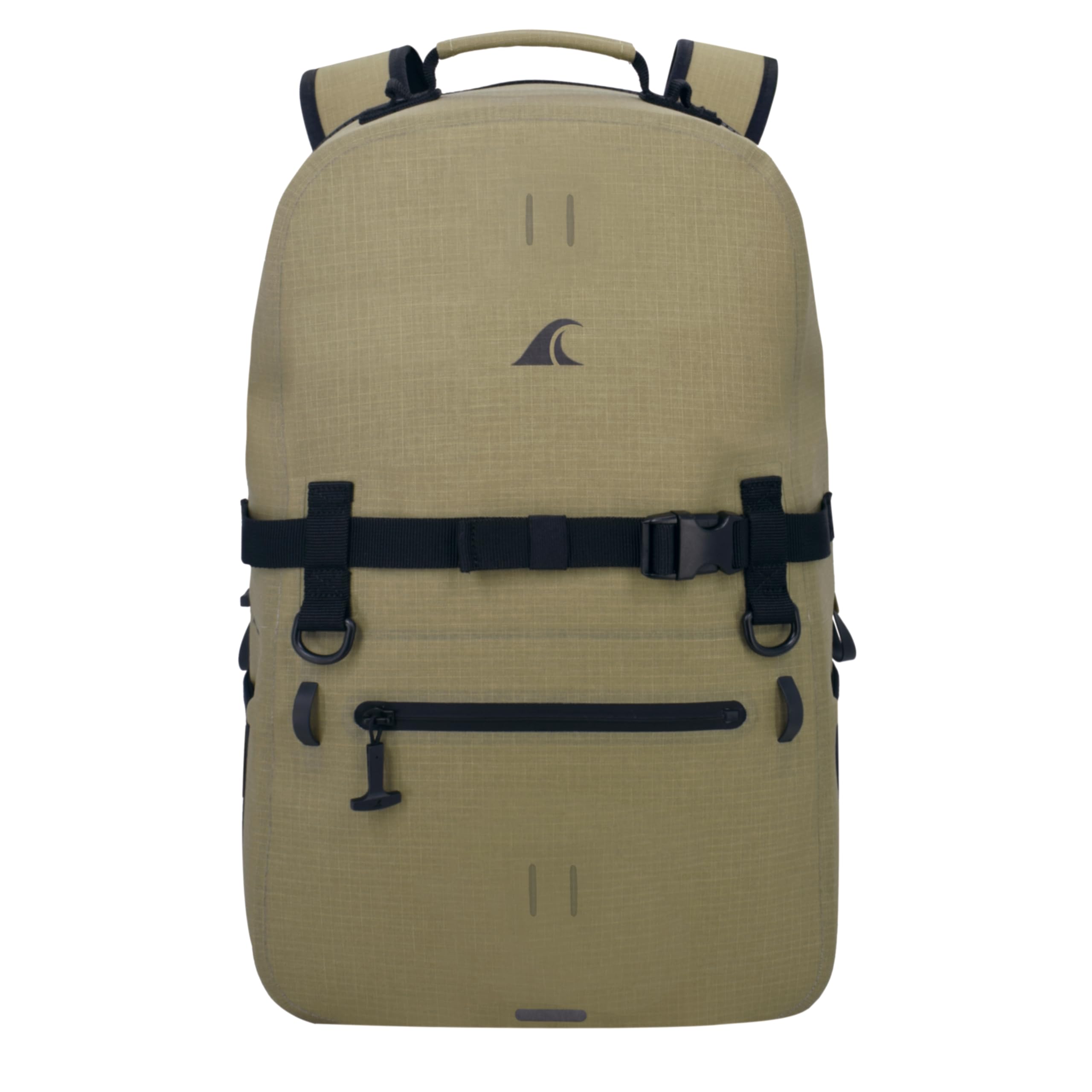
The Fogland is a fully submersible pack built from 500D Cordura TPU-coated ripstop nylon. If your crag requires a kayak or a boat approach, or if you climb in consistently wet environments, this bag keeps every item bone-dry even if it goes into the water. Airtight zippers and welded seams mean no moisture gets inside.
At 25 liters, the volume is tight for a 60-meter rope and a full rack. This pack works best for a single climber with a shorter rope, or as a dry bag to carry electronics and layers while a separate rope bag holds the rope and hardware. The two airtight compartments give you separate access to a 16-inch laptop and smaller items, which is useful if the pack doubles for travel.
The S-curved shoulder straps and ergonomic fit are comfortable for its size, but the compact capacity limits how much gear you can bring. Customer feedback noted the zippers can wear over time, though the company warranty and customer service are responsive. For wet approaches, the trade-off is clear.
Why it’s great
- 100% waterproof and floats if dropped in water
- Separate front pocket keeps phone accessible
- Cordura TPU fabric resists abrasion
Good to know
- 25L may be too small for a full rack plus 60m rope
- Zippers require wax to seal smoothly over time
4. Maxpedition Gyrfalcon 36L

The Gyrfalcon is built from 1000D ballistic nylon with a Teflon coating, making it one of the most abrasion-resistant packs in the lineup. The 36-liter main compartment fits a rope and rack, and the lower 6-liter pouch detaches to become a waist pack for quick summit missions or carrying essentials while your partner leads a pitch.
The internal frame and padded, contoured shoulder straps distribute a heavy load well, and the waist belt helps shift weight off the shoulders. Genuine YKK zippers run smoothly even after exposure to dust and sand. The MOLLE/PALS webbing lets you attach extra pouches for quickdraws, a first aid kit, or a hydration tube.
This pack is heavier than other 36-liter options due to the ballistic nylon and internal frame. It also lacks a built-in rope tarp, so you will need a separate rope bag or tarp. For crag days where the approach is long and the rock is rough, the Gyrfalcon offers a carry confidence that lighter packs cannot match.
Why it’s great
- 1000D ballistic nylon resists abrasion from sharp rock
- Detachable waist pack serves as a summit pack
- Internal frame carries heavy loads comfortably
Good to know
- No integrated rope tarp
- Heavier than other 36L packs
5. Granite Gear Blaze 60L

The Blaze is a hiking backpack first, but its 60-liter capacity and adjustable torso make it a strong choice for multi-day climbing approaches where you need to carry camping gear alongside your rack and rope. The removable top lid converts into a summit pack, giving you a lightweight option for the final approach to the wall.
Customer feedback consistently praises the comfort of the hip belt and the way the pack carries 35 to 45 pounds over long distances. The large mesh back pocket is useful for shoving a wet tarp or jacket, but the side pocket stretch strap can be too loose to secure a Nalgene bottle while walking.
The Blaze does not have a rope tarp or a dedicated rope compartment. For a climber who needs a single pack for the entire trip—hike in, climb all day, hike out—the versatility is worth the trade-off. The adjustable hip belt means you can fine-tune the fit to your torso length, which is a feature missing from most crag-specific packs.
Why it’s great
- Adjustable torso fit for long, loaded approaches
- Converts into a smaller summit pack
- Carries heavy loads with noticeable comfort
Good to know
- No integrated rope tarp
- Side pockets struggle to hold wide water bottles
6. YETI Ranchero 27L

The Ranchero is the smallest pack in the YETI pair, and its 27-liter capacity makes it suitable for single-pitch sport climbing where you carry only draws, shoes, and a short rope. The RipZip opening lets you unzip the entire front panel to see every item at once, which is a massive time-saver compared to hunting through a cinch-top tunnel.
The GroundControl base keeps the pack standing upright when you set it down at the crag, so the rope does not shift to the bottom and tip the bag over. The TuffSkin nylon exterior resists abrasion, and the contoured shoulder straps sweep away from the lumbar to give your lower back freedom during movement.
At 27 liters, the Ranchero cannot fit a 70-meter rope and a full multi-pitch rack. You will need to pack judiciously. The lack of a dedicated rope tarp means the rope sits directly against the interior. For quick sport sessions close to the car, the convenience of the RipZip opening outweighs the volume limitations.
Why it’s great
- Full front zip gives instant access to everything
- Stands upright on its own at the crag
- Laptop sleeve doubles for work-to-crag versatility
Good to know
- 27L limits rope and rack capacity
- No integrated rope tarp
7. 5.11 Tactical RUSH 72 55L
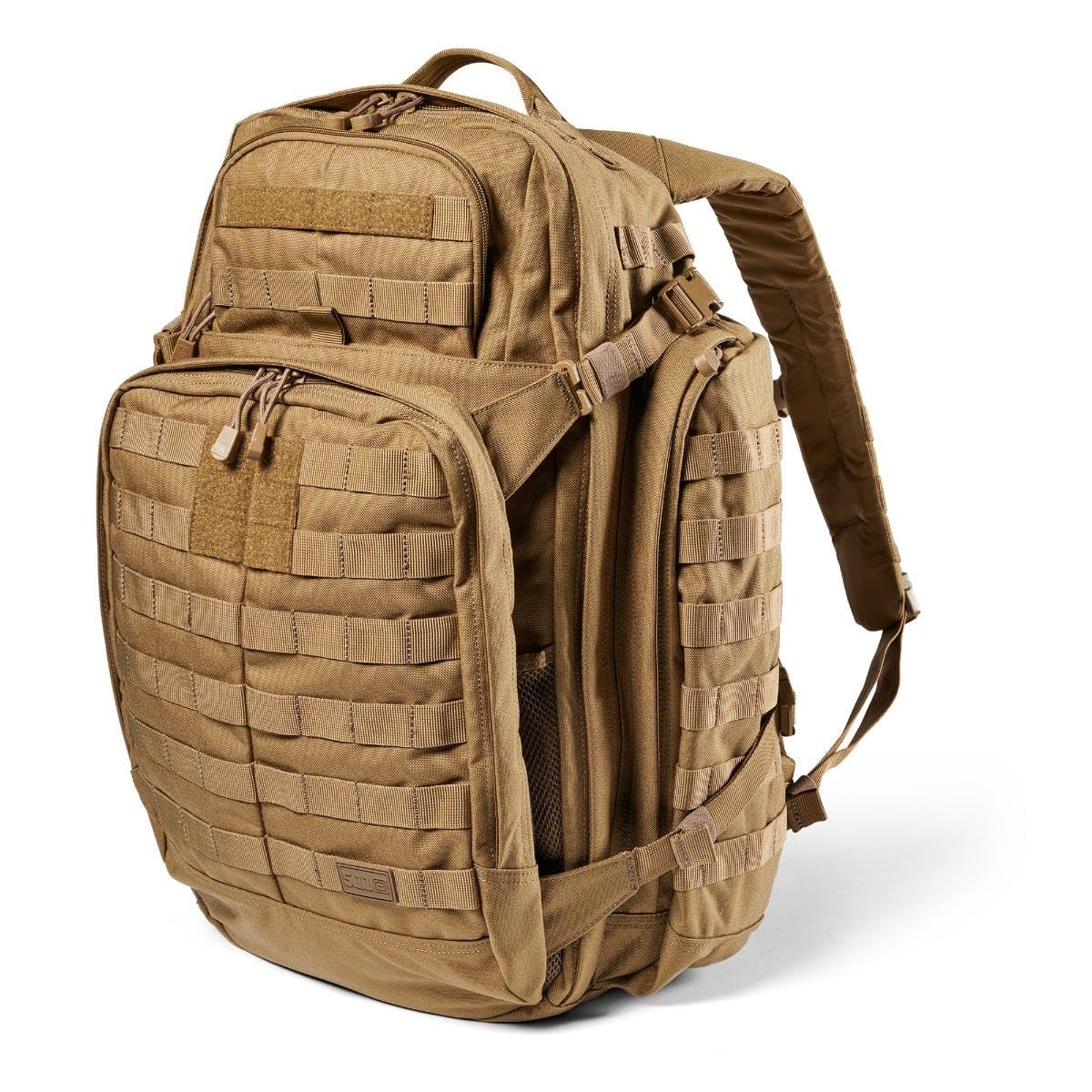
The RUSH 72 is a 55-liter tactical pack built from 1050D nylon. At this size, it is meant for climbers who carry gear for multiple people, or who use the same pack for climbing, camping, and travel. The padded laptop sleeve and hydration compartment make it functional beyond the crag, and the Molle system allows you to attach external pouches for quickdraws or a rope bag.
The contoured yoke shoulder system and reinforced back panel are designed for heavy loads. Customer feedback confirms the pack can handle a 50-pound ruck for hours without discomfort. The multiple compartments—including a large main section and organized pockets—help separate wet ropes from dry clothes, though the tactical layout requires some adaptation for climbing-specific packing.
The RUSH 72 does not have a rope tarp, and its large size means the rope will slide to the bottom unless you pack strategically. It is also heavy at roughly 5 pounds, which is noticeable on the approach. For climbers who want one pack for everything—from the gym to the crag to the airport—the durability and capacity earn their place.
Why it’s great
- Massive 55L capacity for group gear hauls
- 1050D nylon survives harsh environments
- Hydration sleeve and laptop compartment add versatility
Good to know
- No integrated rope tarp
- Heavy for day-to-day cragging
FAQ
Can I use a hiking backpack for climbing instead of a crag pack?
What size crag pack do I need for a 70 meter rope?
Are waterproof crag packs worth the extra cost?
How do I clean a rope tarp after a muddy day at the crag?
Final Thoughts: The Verdict
For most users, the best crag backpack winner is the Petzl Kliff because it combines a built-in rope tarp, lightweight construction, and a price that makes it accessible. If you want weather-sealed protection for wet days, grab the YETI Cayo 35L. And for long multi-day approaches where comfort and capacity matter most, nothing beats the Granite Gear Blaze 60L.

Mo Maruf
I created WellFizz to bridge the gap between vague wellness advice and actionable solutions. My mission is simple: to decode the research and give you practical tools you can actually use.
Beyond the data, I am a passionate traveler. I believe that stepping away from the screen to explore new environments is essential for mental clarity and physical vitality.