Our readers keep the lights on and my smoothie glass nicely filled. As an Amazon Associate, I earn from qualifying purchases.
The right filler stops that cascade cold, but the market is split between squeeze-tube liquids, peel-and-stick rubber strips, and dry powders that reactivate with water. Choosing the wrong format means watching your repair fail before the next season.
I’m Mohammad Maruf — the founder and writer behind WellFizz. I’ve spent hundreds of hours analyzing concrete repair formulations, comparing material science specs like EPDM rubber density, elastomeric emulsion viscosity, and granular self-leveling behavior to separate permanent fixes from temporary band-aids.
After testing the most common formats against freeze-thaw cycles, UV exposure, and foot traffic, I’ve narrowed the field to five tested performers. Whether you’re sealing a hairline fracture or a wide expansion joint, this guide to the best crack filler for concrete will match the right material to your specific damage.
How To Choose The Best Crack Filler For Concrete
Concrete crack fillers fall into three structural categories: liquid elastomers, solid rubber strips, and dry granular powders. Matching the format to your crack type is the single most important decision you will make. Hairline fractures need a low-viscosity liquid that wicks deep; wide expansion joints demand a compressible strip that moves with the slab; and irregular, jagged gaps respond best to a self-leveling powder that fills every crevice without voids.
Assess the crack width and depth
Fillers that excel on thin, superficial cracks will slump or sink in gaps wider than half an inch. Micron-sized liquid formulas penetrate hairline fractures effectively but require multiple passes for deeper voids. EPDM rubber strips work best when the gap measures between half an inch and one inch — too narrow and they won’t seat; too wide and they lack lateral support. Granular powder fillers handle variable-width cracks well because they settle into irregular shapes before being activated with water.
Prioritize freeze-thaw flexibility
Concrete expands and contracts with temperature swings. Rigid fillers that dry hard will crack again within one or two seasons, especially in northern climates. Look for synthetic rubber bases — EPDM, SBR, or polyurethane — that maintain elasticity below freezing and do not become brittle. The product’s Shore hardness or durometer rating, if listed, gives an indirect measure of flexibility: lower numbers mean more give.
Evaluate application method and cleanup
No-mix squeeze tubes offer the fastest repair for small jobs but produce waste from half-used containers. EPDM strips require no curing time but demand precise width measurement before cutting. Dry granular formulas involve a multi-step process — sprinkle, mist, tamp, and repeat — but produce the most seamless finish on large, irregular cracks. Consider your tolerance for cleanup: liquid fillers often drip, rubber strips leave no residue, and powder fillers require only water for activation and rinsing.
Quick Comparison
On smaller screens, swipe sideways to see the full table.
| Model | Category | Best For | Key Spec | Amazon |
|---|---|---|---|---|
| Magic Crack Filler 2.5LB | Granular Powder | Irregular jagged cracks | Self-leveling dry powder formula | Amazon |
| Henry Driveway Elastomeric Emulsion | Liquid Emulsion | Large surface cracks | 8 lb elastomeric emulsion formula | Amazon |
| RTHIEAI EPDM Rubber Strip | Rubber Strip | Standard expansion joints | 10 ft x 3/4 inch EPDM strip | Amazon |
| Kingdder EPDM Rubber Strip | Rubber Strip | Budget-friendly joint sealing | 15 ft x 1/2 inch flexible strip | Amazon |
| BlueStar Hairline Crack Filler | Squeeze Liquid | Thin hairline fractures | 7 oz synthetic rubber liquid | Amazon |
In‑Depth Reviews
1. Magic Crack Filler 2.5LB Concrete Slab Gray
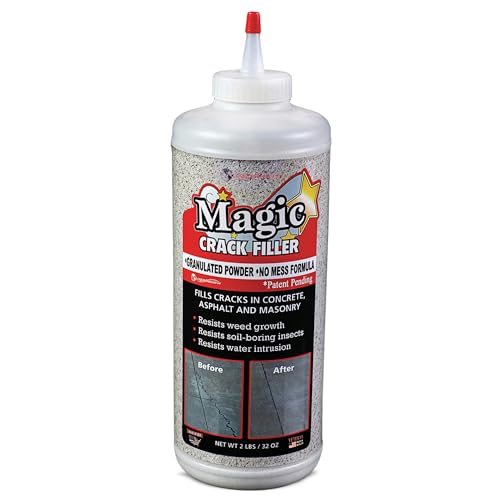
The Magic Crack Filler is a dry granular powder that activates with nothing more than water — no mixing, no measuring, no messy buckets. Its self-leveling behavior means it settles into irregular cracks, from hairline scribbles to half-inch-wide chasms, without leaving high ridges or air pockets. The powder bonds to damp concrete and cures into a firm, slightly rubbery mass that flexes with seasonal slab movement rather than fracturing.
In real-world use, users report filling large driveway cracks by first packing the deep void with sand, then topping with the granular filler and misting repeatedly over an hour. The final surface blends closely with raw concrete gray, making the repair nearly invisible from a few feet away. The 2.5-pound container covers a surprising area because the powder is lightweight — a single pass uses very little material relative to the volume filled.
One limitation: the cured color won’t match dyed or stained concrete perfectly, and very large gaps require a sand base layer to avoid excessive product usage. But for the most seamless, durable, and user-friendly filler across variable crack types, this powder formula stands alone at the top of the category.
Why it’s great
- Self-leveling granular formula fills irregular shapes without voids
- No mixing tools or cleanup chemicals required
- Cures flexible to resist freeze-thaw cracking
Good to know
- Cure requires multiple misting cycles over an hour
- Large cracks need a sand pre-fill to reduce material cost
2. Henry Driveway Elastomeric Emulsion Crack Filler

The Henry Driveway Elastomeric Emulsion is a heavyweight liquid filler that dries to a flexible, rubber-like film capable of bridging cracks up to half an inch wide. Its 8-pound tub provides enough material to cover long linear cracks across an entire driveway or patio in a single purchase. The elastomeric base stays pliable in cold weather, flexing with the slab rather than cracking apart during freeze-thaw cycles.
Application is straightforward: sweep the crack clean, cut the nozzle to match the gap width, and squeeze the thick emulsion directly into the void. The material skins over in roughly 15 minutes at 60°F and cures to a matte black finish that blends well with aged asphalt and dark concrete. Users report that it binds well even to slightly damp surfaces, though standing water will compromise adhesion — timing the application to a dry 72-hour window is recommended.
The main trade-off is drying time: deep cracks require multiple passes spaced hours apart, and rain within 24 hours can dilute the uncured emulsion. The packaging also has a tendency to leak during shipping if the nozzle isn’t sealed. But for bulk coverage of wide, straight driveways cracks, this emulsion delivers the most square footage per dollar of any liquid option.
Why it’s great
- Large 8-pound tub covers extensive linear cracking
- Elastomeric formula flexes in freeze-thaw conditions
- Dries to a durable matte black finish in 15 minutes
Good to know
- Requires 3-4 days of dry weather for full cure
- Packaging may leak during shipping
3. RTHIEAI Flexible EPDM Rubber Strip (10 ft x 3/4 inch)
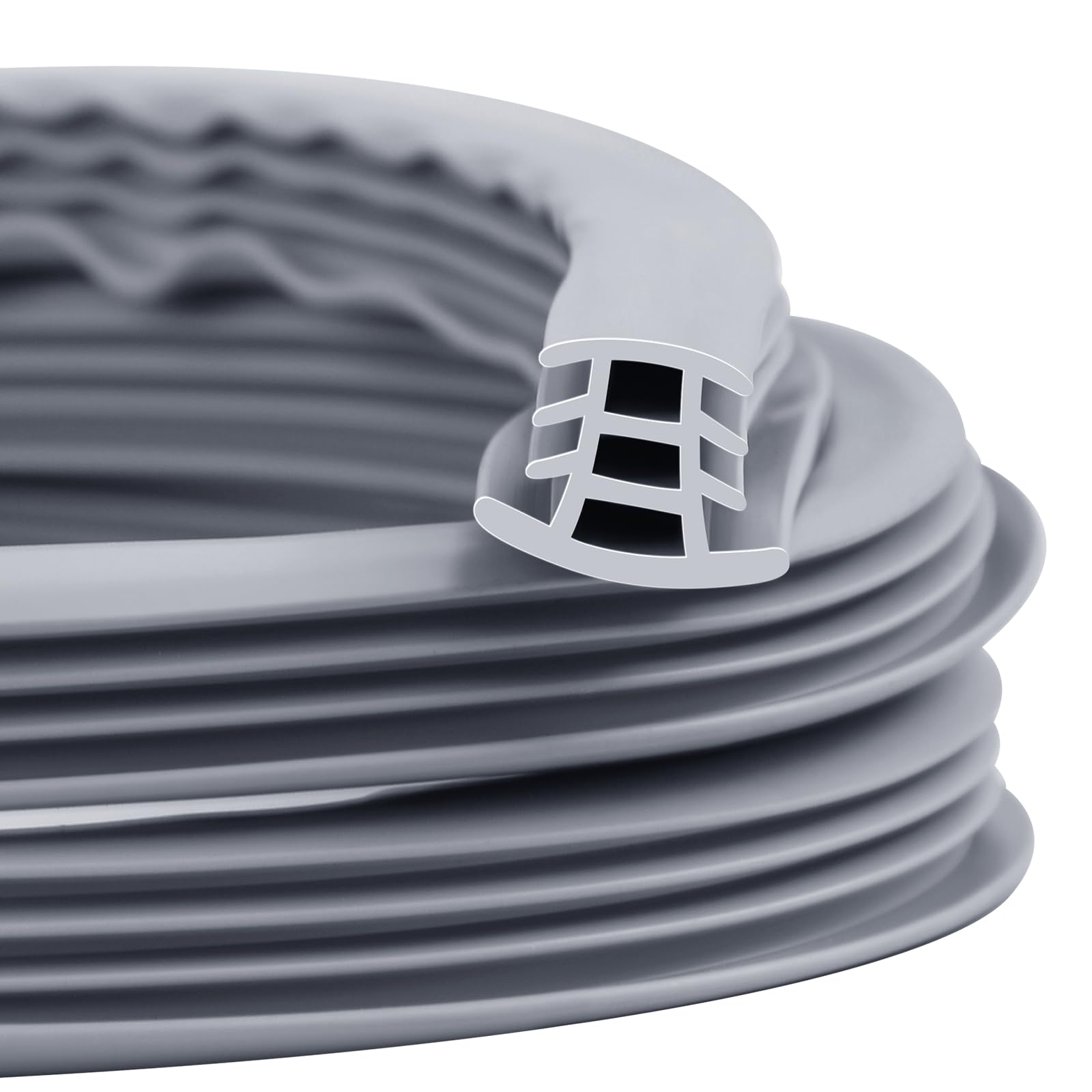
The RTHIEAI EPDM Rubber Strip takes a completely different approach to crack repair — instead of pouring or squeezing, you simply press a pre-formed rubber length into the gap. The 3/4-inch width is ideal for standard residential expansion joints, and the EPDM material is engineered to resist UV degradation, ozone cracking, and temperature extremes from -40°F to 250°F. This is a set-and-forget solution with no curing time and no mess.
Installation requires only a rubber mallet and a pair of shears. Users report that the strip sits slightly below driveway height after tamping, which prevents tire scuff marks and snow plow damage. The material is substantially denser than foam backer rod, meaning it won’t compress permanently under vehicle weight. Some users pair it with a dab of silicone adhesive to hold the strip in place on vertical or sloped sections.
A small but notable inconsistency: some batches arrive noticeably softer than others, which can cause the strip to twist or sit unevenly in the gap. The gray color also doesn’t match all concrete shades perfectly, though it fades to a more natural tone after a few weeks of sun exposure. For a clean, permanent, zero-cure-time joint repair, this EPDM strip is the most straightforward choice.
Why it’s great
- Zero drying or curing time — immediate full-strength seal
- UV and ozone resistant for long outdoor life
- Sits below grade to avoid tire wear
Good to know
- Material firmness varies between batches
- Gray color may not match all concrete finishes
4. Kingdder Concrete Expansion Joint Filler (1/2 inch, 15 ft)

The Kingdder EPDM Rubber Strip is the budget-tier workhorse for homeowners with long, straight expansion joints. At 15 feet of material in a single roll, it provides enough length to seal two standard car-width driveway gaps in one purchase. The 1/2-inch width fits narrow to medium joints, and the EPDM composition offers the same weather and aging resistance found in more expensive rubber fillers.
Installation mirrors the RTHIEAI strip — measure, cut with shears, and press into the clean gap using a rubber mallet. Users note that the strip fits tighter than expected in dry conditions, which is actually beneficial because summer heat causes the rubber to expand slightly, locking it firmly in place. After a full year of exposure, reports indicate no visible degradation, weed intrusion, or settling. The biggest selling point is the cost per linear foot, which undercuts most competing rubber strips significantly.
The main compromise is aesthetic: car tires leave visible marks on the exposed surface of the strip, though this is purely cosmetic and does not affect function. The 1/2-inch width also limits its application to narrower gaps — if your joint measures over 5/8 inch, you will need to size up to the 3/4 or 1-inch version. For a reliable, long-term joint seal at the lowest entry price, this strip delivers.
Why it’s great
- Lowest cost per linear foot of any rubber strip option
- Flexible EPDM withstands freeze-thaw cycling
- Simple press-in installation with no drying period
Good to know
- Car tires leave cosmetic surface marks
- Only available in 1/2-inch width for narrower joints
5. BlueStar Flexible Concrete Hairline Crack Filler (Light Gray, 7 oz)

The BlueStar Hairline Crack Filler is formulated specifically for the sub-millimeter fractures that other fillers struggle to penetrate. Its micron-sized liquid base wicks deep into hairline cracks without requiring a nozzle modification — just squeeze and let capillary action pull the material into the void. The synthetic rubber formula remains flexible after curing, expanding and contracting with the slab during temperature swings rather than debonding.
Application is exceptionally clean: the liquid flows thin enough to self-level but thick enough not to run down vertical surfaces. Users report that a single application fills cracks up to 1/16 inch wide, though deeper fractures may require a second pass after the first layer skins over. The light gray shade blends well with fresh concrete and accepts paint after drying, making it a strong candidate for porch and patio refinishing projects. Drying time is fast enough that you can paint over the repair within a few hours.
The primary limitation is narrow use-case flexibility — this product simply will not bridge gaps wider than 1/8 inch without sagging or shrinking. Some users also report shrinkage after a year of freeze-thaw exposure, requiring reapplication on particularly active cracks. But for the specific job of sealing thin, spiderweb-like fractures before they widen, this squeeze tube is the most targeted and effective tool available.
Why it’s great
- Micron-sized formula penetrates hairline cracks effortlessly
- Flexible synthetic rubber resists seasonal cracking
- Fast drying time allows same-day painting
Good to know
- Not designed for cracks wider than 1/8 inch
- May shrink after one freeze-thaw cycle in active gaps
FAQ
Can I apply crack filler over old, failed sealant?
How long should I wait before driving on a freshly filled crack?
Why does my liquid crack filler keep sinking or shrinking after application?
Will rubber strips prevent weed growth in expansion joints?
Final Thoughts: The Verdict
For most users, the best crack filler for concrete winner is the Magic Crack Filler 2.5LB because its dry granular formula handles every crack width from hairline to one inch with no mixing, no mess, and no special tools. If you want a zero-cure-time, walk-on-immediately solution for expansion joints, grab the RTHIEAI EPDM Rubber Strip. And for targeting thin, spiderweb fractures before they widen, nothing beats the BlueStar Hairline Crack Filler.

Mo Maruf
I created WellFizz to bridge the gap between vague wellness advice and actionable solutions. My mission is simple: to decode the research and give you practical tools you can actually use.
Beyond the data, I am a passionate traveler. I believe that stepping away from the screen to explore new environments is essential for mental clarity and physical vitality.