Choosing between a mid-range workhorse and a high-end gaming CPU means weighing core counts against clock speeds, cache sizes against power draw, and platform longevity against immediate desktop performance. The right processor delivers the raw throughput you need without leaving money on the table for features your workflow will never use.
I’m Mohammad Maruf — the founder and writer behind WellFizz. I’ve spent hundreds of hours analyzing benchmark results, core architectures, and thermal data across the latest desktop processor lineups to isolate which chips genuinely justify their sticker price.
This guide breaks down the top contenders across AMD and Intel to help you find the strongest cpu value for your build, whether you are gaming at 1440p, running virtual machines, or editing video on a strict budget.
How To Choose The Best CPU Value
Value in a desktop processor isn’t just the lowest list price — it is the ratio of real-world performance to the total cost of the platform, including the motherboard, memory, and cooling solution. A chip that requires a premium Z-series board and an expensive liquid cooler may cost more in practice than its sticker suggests, while a power-efficient AM4 chip can run on an affordable B550 board with a air cooler.
Core Count vs. Clock Speed
For gaming, single-core clock speed and IPC (instructions per clock) matter more than raw core count. A 6-core chip like the Ryzen 5 5600X with a high boost clock will outperform an 8-core chip in most current game titles, especially at 1080p. For video editing, 3D rendering, or hosting virtual machines, additional cores and threads scale performance directly. Know your primary workload before choosing between a 6-core and a 16-core processor.
Platform Longevity and Memory Support
AM4 boards support DDR4 memory and offer a massive upgrade path from Ryzen 1000 through Ryzen 5000 series, making them a budget-friendly choice for users who want to reuse an existing board. AM5 and Intel LGA1700/LGA1851 platforms require DDR5 and more expensive motherboards, but they unlock faster memory bandwidth and future upgrade paths. A processor like the Ryzen 5 7600X on AM5 may cost more upfront but allows a drop-in CPU upgrade three years from now without swapping the motherboard.
Thermal Design Power (TDP) and Hidden Cooling Costs
A 65W TDP chip such as the Ryzen 5 5600X can run cool and quiet on the included Wraith Stealth cooler. A 125W+ chip like the i5-14600KF needs an aftermarket tower cooler or a 240mm AIO to avoid thermal throttling under sustained loads. Factor the cooling solution into your total budget. A CPU that requires a cooler may offer less real value than a CPU that runs fine with the boxed cooler.
Quick Comparison
On smaller screens, swipe sideways to see the full table.
| Model | Category | Best For | Key Spec | Amazon |
|---|---|---|---|---|
| AMD Ryzen 5 7600X | AM5 Mid-Range | Future-proof gaming & productivity | 6 Cores / 12 Threads, 5.3 GHz Boost | Amazon |
| Intel i5-14600KF | LGA1700 Premium | High-FPS gaming & multitasking | 14 Cores (6P+8E), 5.3 GHz Turbo | Amazon |
| AMD Ryzen 7 5800X | AM4 High-End | Legacy AM4 upgrade, 8-core tasks | 8 Cores / 16 Threads, 4.7 GHz Boost | Amazon |
| AMD Ryzen 9 5900XT | AM4 Workstation | Heavy multi-threaded workloads | 16 Cores / 32 Threads, 72MB Cache | Amazon |
| AMD Ryzen 7 9850X3D | AM5 Gaming Flagship | Ultimate gaming & content creation | 8 Cores / 16 Threads, 104MB Cache | Amazon |
| Intel i5-14400F | LGA1700 Mid-Range | Budget gaming & office productivity | 10 Cores (6P+4E), 4.7 GHz Turbo | Amazon |
| AMD Ryzen 5 5600X | AM4 Value | 1080p/1440p gaming on limited budget | 6 Cores / 12 Threads, 35MB Cache | Amazon |
| AMD Ryzen 7 5700 | AM4 Entry | Low-power AM4 upgrade | 8 Cores / 16 Threads, 65W TDP | Amazon |
| Intel Core Ultra 5 245K | LGA1851 Efficiency | Media server & office builds | 14 Cores (6P+8E), 5.2 GHz Turbo | Amazon |
In‑Depth Reviews
1. AMD Ryzen 5 7600X

The Ryzen 5 7600X bridges the gap between affordable mid-range and next-gen performance through its Zen 4 architecture on the AM5 socket. With a 5.3 GHz boost clock and 6MB L2 plus 32MB L3 cache, it delivers outstanding single-core throughput that translates directly to high frame rates in titles like Cyberpunk 2077 and Baldur’s Gate 3 without needing an expensive GPU to keep up. The integrated Radeon Graphics controller provides a useful display output for troubleshooting or basic desktop use until a dedicated GPU is installed.
Users report sustained all-core loads between 80-85°C with a standard air cooler, which is within spec but confirms that a capable aftermarket cooler is a necessary investment. The AM5 platform unlocks DDR5 memory and PCIe 5.0 support, giving this chip a future-proofing edge that the AM4 alternatives cannot match. Overclocking headroom exists through the unlocked multiplier, though the 5.3 GHz boost already covers most performance needs out of the box.
Pairing this processor with a B650 motherboard and 32GB of DDR5 6000MHz memory creates a balanced system that handles modern games, streaming, and productivity tasks without bottlenecking a mid-range GPU like the RTX 4070 Super. The 7600X strikes the best balance between upfront cost and platform longevity for builders who want to upgrade the CPU in three years without replacing the motherboard.
Why it’s great
- Highest single-core clocks in its tier for competitive gaming
- AM5 platform supports DDR5 and PCIe 5.0 for future upgrades
- Strong 100+ FPS performance with a mid-range dedicated GPU
Good to know
- Runs hot under load; aftermarket cooler strongly recommended
- No bundled cooler included in the box
- Requires AM5 motherboard and DDR5 memory, raising platform cost
2. Intel Core i5-14600KF

The Core i5-14600KF packs 14 cores (6 Performance-cores and 8 Efficient-cores) into an LGA1700 package, delivering a massive multi-threaded advantage over similarly priced 6-core chips. With a 5.3 GHz max turbo frequency and 20 threads, this processor handles simultaneous gaming, streaming, and background tasks without stuttering, making it a strong choice for content creators who also game heavily. The unlocked multiplier allows aggressive overclocking for users willing to push voltage and thermal limits.
Users report that this chip pairs exceptionally well with an RTX 3080 or 4070-class GPU at 1440p, delivering stable high-refresh gameplay in titles like Cyberpunk and Unreal Engine-based games. The hybrid architecture efficiently distributes background workloads to the E-cores while the P-cores handle gaming, reducing perceived lag during multi-tasking. A 240mm AIO liquid cooler is recommended to keep temperatures in check under sustained all-core loads, as the 125W base power can spike higher during turbo boost.
Compatibility with both DDR4 and DDR5 memory on Intel 600 and 700 series boards gives builders flexibility to reuse older memory or invest in faster kits for future-proofing. The lack of integrated graphics means a discrete GPU is mandatory, but for users already planning a dedicated card, this isn’t a drawback. The 14600KF offers the highest multi-core throughput in the mid-range segment for those who prioritize productivity alongside gaming.
Why it’s great
- 14-core hybrid design excels at multi-threaded workloads
- DDR4 and DDR5 support offers flexible memory options
- 5.3 GHz turbo delivers strong gaming performance
Good to know
- Requires a 240mm AIO or better for sustained loads
- No integrated graphics; dedicated GPU required
- LGA1700 platform may require BIOS update for compatibility
3. AMD Ryzen 7 5800X

The Ryzen 7 5800X remains a compelling option for existing AM4 users who want to maximize their platform investment without migrating to AM5. With 8 cores and 16 threads based on the Zen 3 architecture, this chip delivers a noticeable uplift in both gaming and workstation tasks compared to earlier Ryzen 3000 series processors. The 36MB total cache and 4.7 GHz max boost allow it to keep pace with modern titles at 1440p, especially when paired with a GPU like the RTX 2070 Super or RX 6700 XT.
User reports show that enabling Precision Boost Overdrive can push single-core speeds to around 5.1 GHz, and all-core loads sit comfortably at 4.75 GHz with a decent dual-tower air cooler. The chip runs warmer than its lower-TDP siblings — expect low 80s under Prime95 — so a high-performance cooler is mandatory. Despite the heat, the 5800X does not throttle and delivers smooth frame rates in CPU-intensive games while also handling video editing and 3D modeling without hiccups.
It competes well against newer chips in gaming performance while offering the multi-threaded headroom needed for streaming and light rendering. If you are not ready for DDR5, this is the highest-core-count upgrade that makes financial sense.
Why it’s great
- Drop-in upgrade for existing AM4 B550/X570 boards
- Excellent gaming performance with high single-core boost
- 8 cores handle streaming and productivity alongside gaming
Good to know
- No cooler included; high-performance cooler required
- Runs warm under load; needs good case airflow
- NOT compatible with older A320 or B350 boards
4. AMD Ryzen 9 5900XT
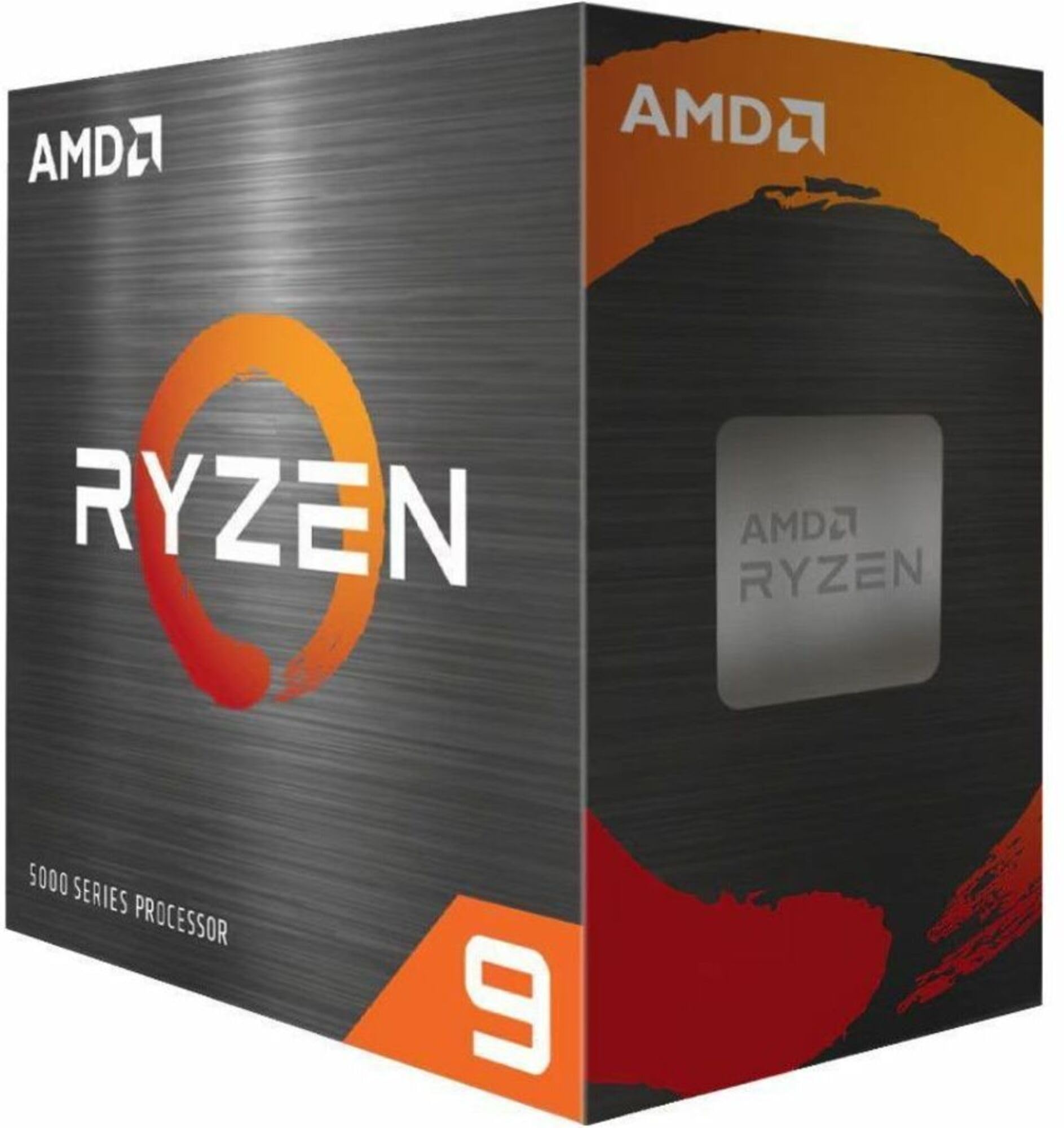
The Ryzen 9 5900XT is effectively a 16-core Zen 3 processor aimed at users who need serious multi-threaded performance without jumping to the AM5 platform and DDR5 memory. With 72MB of total cache and a 4.8 GHz max boost, this chip excels at video transcoding, compression workloads, 3D rendering, and running multiple virtual machines simultaneously. The 130W TDP is notably power-efficient for a 16-core part, running cooler than the 5950X under sustained loads.
Users report all-core boost speeds around 4.1 GHz under SSE workloads and 3.3-3.6 GHz under AVX2, which is lower than the theoretical 4.8 GHz single-core peak. This is typical for high-core-count chips and does not diminish its workstation prowess. For AutoCAD, Premiere Pro, and CPU-bound applications, the 5900XT delivers excellent price-to-performance, though gamers may notice slightly higher latency due to the split CCD design. Disabling the second CCD can mitigate this for gaming-specific builds.
This processor keeps the AM4 platform viable for users who want to maximize their existing motherboard and DDR4 investment. A 360mm AIO is recommended to manage temperatures under sustained all-core loads, and pairing it with a strong GPU like the RTX 4070 or RX 7800 XT ensures balanced performance. For content creators who multi-task heavily and game on the side, the 5900XT offers workstation-level core counts at a mid-range price point.
Why it’s great
- 16 cores / 32 threads for heavy productivity workloads
- Lower power draw and cooler than Ryzen 5950X
- Keeps AM4/DDR4 platform viable for upgrades
Good to know
- All-core boost speeds lower than single-core peak
- Split CCD design adds latency for gaming
- Requires high-end AIO cooler for sustained loads
5. AMD Ryzen 7 9850X3D
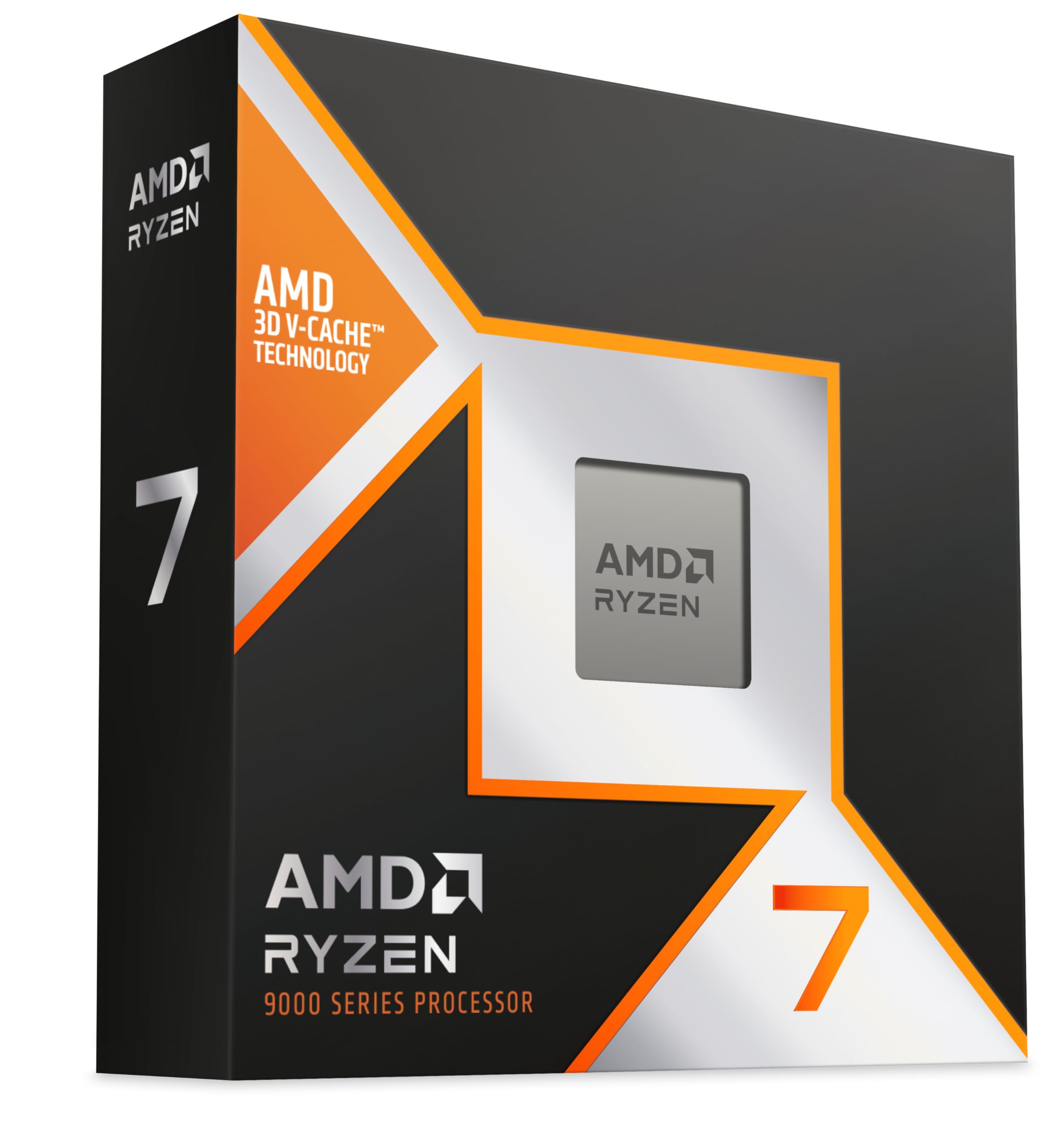
The Ryzen 7 9850X3D is the current pinnacle of gaming-focused desktop processors, featuring 104MB of total cache and 8 Zen 5 cores on the AM5 socket. The massive L3 cache dramatically reduces memory latency and allows the chip to maintain higher frame rates in cache-sensitive titles like Factorio, CS2, and sim games. Users upgrading from older generations report frame rate increases of 3x in some CPU-bottlenecked scenarios, with a 360mm AIO keeping temperatures around 60-70°C under gaming loads.
Pairing this processor with a Gigabyte X870 or similar high-end AM5 board and 6000MHz CL30 DDR5 memory unlocks its full potential. The chip runs cool enough that undervolting can further reduce power draw while maintaining boost clocks. For competitive gaming at high refresh rates, the 9850X3D delivers the smoothest experience available, with users reporting 140-160+ FPS in demanding titles when paired with a Radeon RX 7800 XT or GeForce RTX 5070.
This is not a budget play — the platform cost is high, and the chip itself commands a premium. But for users whose primary use case is gaming and who want every possible frame, the 9850X3D justifies its position as the top-tier gaming CPU. Content creation performance is strong too, but the value proposition leans heavily toward gamers who will actually feel the cache advantage in their daily sessions.
Why it’s great
- 104MB total cache crushes cache-sensitive gaming workloads
- Excellent thermal performance with good cooling
- Future-proof AM5 platform with PCIe 5.0 and DDR5
Good to know
- Highest platform cost in this guide
- Requires 360mm AIO and quality DDR5 for best results
- Gaming-focused; non-gaming workloads see less benefit from extra cache
6. AMD Ryzen 5 5600X

The Ryzen 5 5600X has been a benchmark for affordable gaming performance since its launch, and it continues to deliver excellent frame rates for 1080p and 1440p gaming thanks to its strong single-core IPC and 4.6 GHz max boost. With 6 cores and 12 threads, it handles modern game engines and light productivity tasks without breaking a sweat. The bundled Wraith Stealth cooler is adequate for stock operation, keeping temperatures in the mid-70s during gaming sessions.
Users report Cinebench R23 scores around 1600 for single-core and 11,000 for multi-core, which places it ahead of Intel’s 10th-gen i7 and competitive with the i5-12600K while drawing only 65W. In real-world gaming, paired with an RTX 3060 Ti, the 5600X delivers ~90 FPS in Cyberpunk 2077 at 1080p Ultra and ~140 FPS in Shadow of the Tomb Raider. The low power draw means a budget air cooler is all you need, keeping the total system cost low.
For builders on a tight budget who want a reliable gaming machine without overspending, the 5600X on a B550 board with DDR4 memory offers tremendous value. It is a mature, well-tested platform with years of BIOS stability behind it. The lack of integrated graphics requires a discrete GPU, but most gaming builds already include one. If you want the lowest total cost for solid gaming performance, this is the chip to beat.
Why it’s great
- Excellent single-core performance for gaming
- 65W TDP runs cool on the included cooler
- Low platform cost with AM4 and DDR4
Good to know
- 6 cores may feel limited for heavy multitasking
- No integrated graphics; dedicated GPU required
- AM4 platform has no future CPU upgrade path
7. Intel Core i5-14400F

The Core i5-14400F provides a hybrid architecture with 10 cores (6 P-cores and 4 E-cores) at a budget-friendly price point, making it a strong entry-level option for gamers and office users. With a 4.7 GHz turbo frequency and 20MB of L3 cache, it handles modern games at 1080p and 1440p with ease, especially when paired with a mid-range GPU. The included RM1 thermal solution keeps the chip cool under typical gaming loads, reaching around 60°C during extended play sessions.
Users upgrading from older 9th-gen i7 processors report a noticeable 25+ FPS boost in games, along with smoother overall system responsiveness for multitasking. The hybrid architecture allows the E-cores to handle background tasks like Discord and browser tabs while the P-cores focus on gaming, reducing stutter. Temperature tops out around 67°C with a cheap air cooler, meaning no expensive cooling solution is needed.
Compatibility with both Intel 600 and 700 series motherboards, as well as DDR4 and DDR5 memory, gives builders maximum flexibility to reuse older components. The discrete graphics requirement is standard for this tier, and the chip pairs well with GPUs like the RTX 3060 or Radeon RX 6600. For a cost-conscious builder who wants solid 1080p gaming performance and the option to upgrade to DDR5 later, the i5-14400F is a smart choice.
Why it’s great
- Hybrid 10-core design improves multitasking
- Runs cool on budget air coolers
- Compatible with DDR4 and DDR5
Good to know
- No integrated graphics; dedicated GPU required
- Locked multiplier limits overclocking potential
- Lower single-core boost than higher-tier chips
8. AMD Ryzen 7 5700

The Ryzen 7 5700 offers 8 cores and 16 threads in the same 65W TDP envelope as a 6-core chip, making it an efficient upgrade for AM4 users who want more multi-threaded headroom without upgrading their power supply or cooling. With a base clock of 3.7 GHz and a boost clock of 4.6 GHz, it handles productivity tasks like video encoding and spreadsheet-heavy workflows while sipping power. The bundled Wraith Stealth cooler is sufficient for stock operation, keeping noise levels low.
Users upgrading from the Ryzen 7 2700X report a noticeable performance uplift across the board, with lower power draw and better thermal behavior. The 20MB total cache is modest compared to the 5800X, but for office work, light content creation, and moderate gaming, the chip delivers smooth performance. It is also a popular choice for home server builds where low idle power consumption and adequate compute density are priorities.
While not the fastest gaming chip in this list, the Ryzen 7 5700 offers the best watts-per-core ratio for users who leave their PCs on 24/7 or run virtualized environments. Pair it with a B550 board and 16GB of DDR4-3200 for a balanced, energy-conscious build. The lack of PCIe 4.0 support on some older boards is worth checking, but for most workloads, PCIe 3.0 is not a bottleneck.
Why it’s great
- 8 cores at only 65W TDP for maximum efficiency
- Bundled Wraith Stealth cooler saves money
- Great for low-power home servers and office builds
Good to know
- Lower boost clock and cache than 5700X
- Not ideal for high-refresh-rate gaming
- Limited to DDR4 and PCIe 3.0/4.0 depending on board
9. Intel Core Ultra 5 245K

The Core Ultra 5 245K is Intel’s most energy-efficient desktop processor in this lineup, using a performance hybrid architecture with 6 P-cores and 8 E-cores on the new LGA1851 socket. With a 5.2 GHz turbo boost and 26MB of cache, it offers solid all-around performance for everyday tasks, media serving, and moderate gaming while running notably cooler and quieter than previous Intel generations. The built-in AV1 encoding capability is a standout feature for media server builds, eliminating the need for a discrete GPU in transcoding workloads.
Users deploying this chip in home server configurations report flawless operation with over 20 Docker containers, multiple VMs, and extensive disk arrays, all while maintaining low power draw and minimal fan noise. The chip is slightly slower than competing Ryzen 5 and Intel 14th-gen parts in raw gaming benchmarks, but the performance-per-watt is among the best in its class. For office productivity and file server duties, it is overkill — and that overkill comes at a reasonable power cost.
Compatibility with Intel 800 series chipset boards means users need a new motherboard, and the platform currently only supports DDR5. This raises the entry cost compared to AM4 options, but the energy savings can offset that for always-on builds. If your priority is a cool, quiet, efficient system that can handle media transcoding, virtualization, and light gaming without breaking a sweat, the 245K is a compelling niche pick.
Why it’s great
- Excellent performance-per-watt for always-on systems
- Hardware AV1 encoding eliminates need for discrete GPU in media servers
- Runs cool and quiet even under moderate load
Good to know
- Requires new Intel 800 series motherboard and DDR5
- Gaming performance lags behind similarly priced Ryzen alternatives
- No integrated graphics included (though AV1 encoding is on-chip)
FAQ
Is it worth buying an AM5 CPU now or should I stick with AM4 for value?
How do I decide between Intel and AMD for a value gaming build?
Does a higher TDP always mean better performance?
Final Thoughts: The Verdict
For most users, the cpu value winner is the AMD Ryzen 5 7600X because it delivers excellent gaming performance on the future-proof AM5 platform without requiring a premium motherboard. If you want maximum multi-threaded productivity at a mid-range price, grab the Intel Core i5-14600KF for its 14-core hybrid design and flexible memory support. And for the absolute best gaming performance on a budget, nothing beats the AMD Ryzen 5 5600X on a mature AM4 platform with affordable DDR4 memory.

Mo Maruf
I created WellFizz to bridge the gap between vague wellness advice and actionable solutions. My mission is simple: to decode the research and give you practical tools you can actually use.
Beyond the data, I am a passionate traveler. I believe that stepping away from the screen to explore new environments is essential for mental clarity and physical vitality.