Our readers keep the lights on and my smoothie glass nicely filled. As an Amazon Associate, I earn from qualifying purchases.
Finding a processor that balances raw compute power with a tight budget often feels like searching for a unicorn — you want modern features like high core counts and fast boost clocks without emptying your wallet. The market between and is crowded with older-gen flagships, value-oriented modern chips, and pre-built office PCs, each offering a very different ratio of performance to longevity.
I’m Mohammad Maruf — the founder and writer behind WellFizz. I’ve spent countless hours cross-referencing benchmark data, platform compatibility tables, and real-world thermal performance to separate the genuine deals from the traps in this specific price bracket.
After analyzing dozens of specifications and customer experiences, I’ve built this guide to the best cpu under 200 to help you navigate socket types, integrated graphics requirements, and the hidden cost of DDR5 memory adoption.
How To Choose The Best CPU Under 200
Selecting a processor in this budget range requires a trade-off between raw multi-core performance and platform modernity. You must weigh the benefits of a newer socket like AM5 or LGA1700 against the proven value of mature AM4 or older Intel platforms. Your decision should be guided by your primary use case — gaming, productivity, or a general-purpose media machine.
Core Count vs. Instructions Per Clock (IPC)
Not all cores are created equal. A 6-core modern chip from AMD’s Zen 3 or Zen 4 lineup can outperform an older 8-core flagship in gaming due to superior single-threaded performance and lower memory latency. For gaming, prioritize IPC improvements and boost clock speed over a raw core count. For heavy multitasking or encoding, six cores remain the sweet spot in this price range.
Platform and Memory Investability
Choosing a CPU today determines your upgrade path for the next few years. AM5 motherboards support DDR5 and promise long-term socket support, but the premium on RAM can push your total build cost higher. LGA1700 boards support both DDR4 and DDR5, offering flexibility. If you are building on a strict budget, an AM4 board paired with a Zen 3 chip gives you excellent performance with cheap DDR4 memory, but future upgrades will require a new motherboard.
Integrated Graphics — A Critical Decision
If you are building without a dedicated graphics card, an Intel non-F processor (like the i5-6400/6500) or an AMD G-series APU is essential. However, many of the best CPU under 200 options, such as the Intel i3-14100F or the AMD Ryzen 5 7600X, lack integrated graphics. Skipping this check can lead to a system with no display output. Always verify the model number suffix: “F” means no graphics, while “G” (AMD) or no suffix (Intel) means integrated graphics are present.
Quick Comparison
On smaller screens, swipe sideways to see the full table.
| Model | Category | Best For | Key Spec | Amazon |
|---|---|---|---|---|
| AMD Ryzen 5 5600X | Mid-Range | High-FPS Gaming | 6-Core / 35MB Cache | Amazon |
| Intel Core i5-12600KF | Mid-Range | Multitasking & Gaming | 10-Core (6P+4E) / 16MB L3 | Amazon |
| AMD Ryzen 5 7600X | Mid-Range | Future-Proof Builds | 6-Core / 5.3GHz Boost | Amazon |
| Intel Core i7-6700 | Value | Silent Workstations | 4-Core / 65W TDP | Amazon |
| Intel Core i3-14100F | Value | Entry-Level Gaming | 4-Core / 4.7GHz Turbo | Amazon |
| HP ProDesk 600 G3 Mini | Budget PC | Office & Media Server | i5-6500 / 8GB RAM | Amazon |
| Dell Optiplex 3050 SFF | Budget PC | Dual-Monitor Work | i5-6500 / 16GB RAM | Amazon |
| INLAND Ryzen 5 5500 Bundle | Budget Value | First Gaming PC | 6-Core / 19MB Cache | Amazon |
| Micro Center Ryzen 5 5500 Bundle | Budget Value | WiFi Gaming Build | 6-Core / ASUS A520M | Amazon |
In‑Depth Reviews
1. AMD Ryzen 5 5600X

The AMD Ryzen 5 5600X continues to punch above its weight, delivering elite 100+ FPS gaming performance in titles like Cyberpunk 2077 and Shadow of the Tomb Raider when paired with a capable GPU. Its 6-core, 12-thread configuration with a 4.6 GHz max boost clock and 35MB of total cache makes it a formidable choice for both gaming and light productivity, all while sipping just 65 watts under load.
What truly sets this chip apart is its thermal efficiency. With a decent aftermarket cooler, idle temperatures hover around 30-35°C, and under sustained Cinebench R23 loads, it rarely exceeds 75°C. The bundled Wraith Stealth cooler is adequate for stock operation, but upgrading to a tower cooler unlocks near-silent operation and headroom for overclocking to 4.65 GHz.
Owners consistently praise its rock-solid stability and effortless AM4 compatibility, noting that a simple BIOS update on most B550 or X570 boards is all that is needed. The lack of integrated graphics is its only real limitation, forcing you to pair it with a discrete GPU from day one. For pure gaming value under the threshold, this remains the benchmark to beat.
Why it’s great
- Superb single-core IPC outperforms many newer budget chips
- Low 65W TDP makes it easy to cool quietly
- Proven AM4 platform with mature BIOS support
Good to know
- No integrated graphics — a dedicated GPU is mandatory
- Stock cooler can be loud under full load for some users
2. Intel Core i5-12600KF

The Intel Core i5-12600KF represents a unique value proposition in this price bracket: a 10-core hybrid architecture (6 performance cores + 4 efficiency cores) that can turbo up to 4.9 GHz. This configuration excels in multitasking scenarios, allowing you to game on the P-cores while streaming or running background tasks on the E-cores without hiccuping.
Thermally, this chip runs surprisingly cool for a 125W base part. With an inexpensive tower cooler, it maxes out at around 63°C in Cinebench, making it an excellent candidate for builds where you want strong performance without investing in a high-end liquid cooling loop. The LGA1700 socket also gives you flexibility, supporting both affordable DDR4 and performance DDR5 memory.
Reviewers consistently highlight its stability as a proven upgrade from older 12th-gen i3 and i5 models, especially for competitive shooters where higher frame rates matter. The main drawback is that LGA1700 is a dead-end socket with no future CPU upgrades beyond the 13th and 14th gen, so you are buying into a platform at the end of its lifecycle. It still offers tremendous day-one value for this budget.
Why it’s great
- Hybrid 10-core design crushes multitasking workloads
- Very low temperatures with even a modest aftermarket cooler
- DDR4 and DDR5 motherboard options provide build flexibility
Good to know
- No integrated graphics — requires a discrete GPU
- LGA1700 platform is a dead socket with no upgrade path
3. AMD Ryzen 5 7600X

The AMD Ryzen 5 7600X is the most forward-looking entry in this guide, introducing buyers to the AM5 platform with its 5nm Zen 4 architecture. With a 5.3 GHz max boost clock and 38MB of total cache, this 6-core processor delivers excellent single-core performance that keeps pace with much pricier CPUs, especially when gaming at 1080p or 1440p with a mid-range GPU.
However, it is important to note that this chip runs hot. Under full load with a standard air cooler, temperatures can reach 80-85°C, which is within spec but requires confidence in your cooling solution. An AIO liquid cooler is recommended for those who want to maintain lower noise levels and peak boost clocks. The platform advantage is clear: AM5 offers DDR5 and PCIe 5.0 support with a promised upgrade path for future Ryzen generations.
Long-term users report that after a year of use, performance and temperatures remain stable, with the chip easily handling heavy gaming and multitasking without throttling. The lack of a bundled cooler means your total cost goes up slightly, but the investment in the AM5 ecosystem pays off if you plan to upgrade your CPU in three to four years without replacing the motherboard.
Why it’s great
- Industry-leading single-core boost clock at 5.3 GHz
- AM5 socket provides a future upgrade path
- Supports fast DDR5 memory and PCIe 5.0
Good to know
- High thermal output requires a good aftermarket cooler
- No cooler included in the box, raising total build cost
4. Intel Core i7-6700
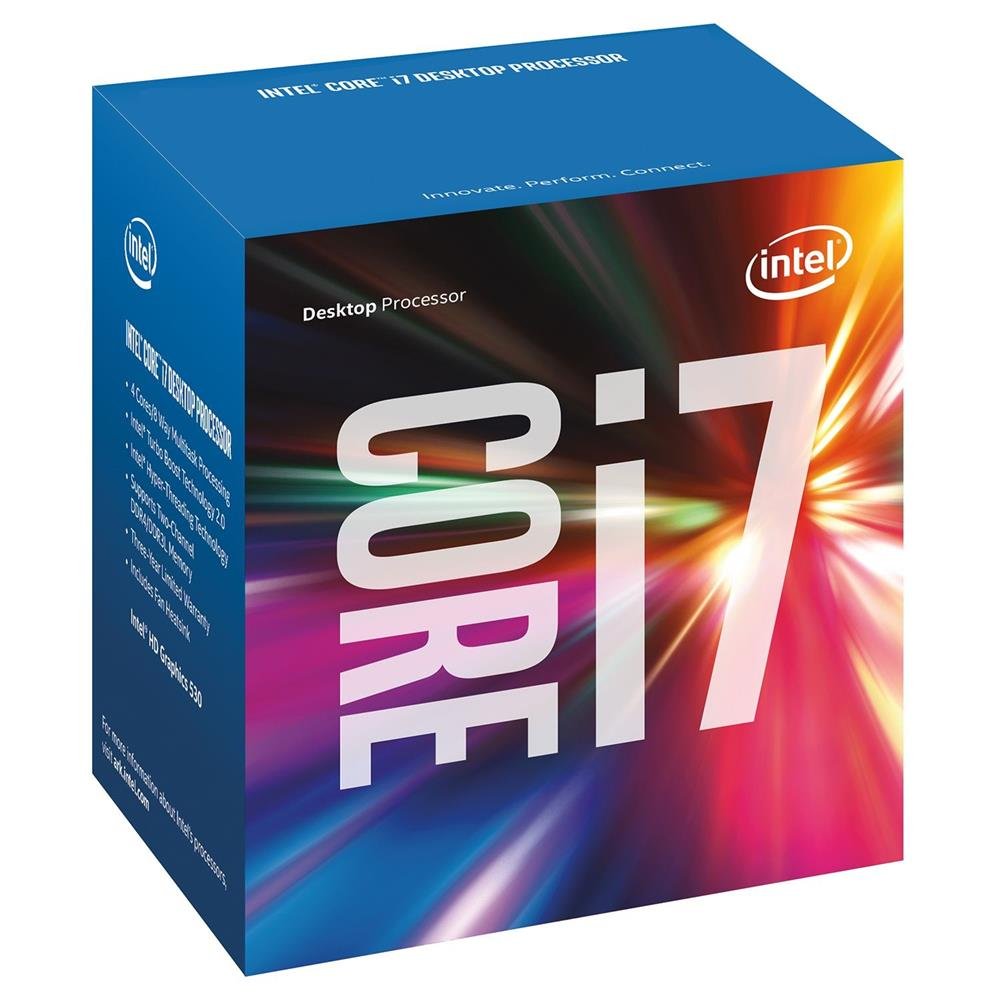
The Intel Core i7-6700 is a 6th-gen Skylake processor that has aged gracefully into a niche as a cool-running, reliable workhorse. With 4 cores and 8 threads clocking up to 4.0 GHz via Turbo Boost, it does not compete with modern 6-core chips in raw multi-threaded performance, but its exceptional thermal characteristics make it a favorite for silent builds and Linux workstations that run 24/7.
Its 65W TDP allows for near-passive cooling in the right chassis; users report idle temperatures of 28-30°C and load temperatures around 40°C with a large air cooler like the Noctua D15. The bundled stock cooler is adequate for standard use, though it can become audible under sustained load. Broad Z170/Z270 motherboard availability means building a system is very cheap, especially with cheap DDR3L or DDR4 memory.
This is a value play for users who already own a compatible motherboard or need integrated Intel HD 530 graphics for basic tasks. It is not a gaming CPU by modern standards — its quad-core design will bottleneck newer titles. But for office productivity, audio processing, or as a home media server, it offers remarkable stability and power efficiency at a very low entry cost.
Why it’s great
- Extremely cool operation enables quiet, passive builds
- Includes integrated Intel HD 530 graphics
- Very cheap platform with broad used motherboard support
Good to know
- Quad-core design limits modern gaming performance
- Stock cooler noise is noticeable under heavy load
5. Intel Core i3-14100F

The Intel Core i3-14100F is a testament to how far budget processors have come. Despite being a quad-core part, its Raptor Cove architecture and 4.7 GHz turbo boost deliver gaming performance that outstrips many older 6-core and 8-core chips. Paired with a modest GPU like an RX 580 or Arc A580, it easily maintains 60 FPS in modern titles at 1080p high settings.
A standout feature is its dual memory support — the i3-14100F works with both DDR4 and DDR5 on compatible 600-series or 700-series motherboards, giving budget builders the option to reuse cheap DDR4 sticks or invest in faster memory. The included RM1 stock cooler is sufficient for stock operation, though upgrading to a tower cooler makes it whisper-quiet. It also supports PCIe 5.0 for fast SSDs.
User reports consistently highlight its incredible price-to-performance ratio, with many upgrading from decade-old chips like the i7-2600 and describing the difference as “insane”. Its main limitation is the lack of integrated graphics, which means you must have a discrete GPU. For entry-level gaming rigs, this chip offers the best blend of modern features, compatibility, and low cost in the under- bracket.
Why it’s great
- Excellent gaming performance for the price, hitting 60+ FPS easily
- Supports both DDR4 and DDR5 for flexible builds
- Supports PCIe 5.0 for next-gen storage speeds
Good to know
- No integrated graphics — requires a dedicated GPU
- Stock cooler can be louder than aftermarket options
6. HP ProDesk 600 G3 Mini

The HP ProDesk 600 G3 Mini is not a standalone CPU — it is a complete pre-built system that bundles an Intel Core i5-6500, 8GB of DDR4 RAM, and a 256GB PCIe SSD. This small form factor PC is designed for office productivity, web browsing, and media consumption, offering 4K dual display support via integrated Intel HD Graphics 530. Its compact size makes it ideal for cramped desks or as a home server.
Performance is more than adequate for everyday tasks. The quad-core i5-6500, with a 3.1 GHz boost clock, handles spreadsheets, email, and streaming without breaking a sweat. The included USB WiFi adapter and Bluetooth connectivity make it ready to go out of the box. Users report that it works great as a Linux webserver, cutting page load times from 10-15 seconds to near-instant loading.
The main trade-off is limited upgradeability — the mini form factor restricts you to the integrated graphics and pre-installed RAM. You cannot add a dedicated GPU. Some units have also been noted to require a VGA-to-DP adapter for older monitors. For a low-cost, turnkey solution for web work or a backup PC, this is a compelling package that eliminates the need to assemble your own system.
Why it’s great
- Ultra-compact design saves significant desk space
- Includes keyboard, mouse, WiFi, and Bluetooth
- Supports 4K dual display for increased productivity
Good to know
- No dedicated GPU slot for gaming or heavy graphics work
- Upgrade options are very limited due to the small form factor
7. Dell Optiplex 3050 SFF

The Dell Optiplex 3050 SFF offers a similar proposition to the HP mini, but with double the RAM (16GB DDR4) and a slightly larger small form factor chassis. Powered by the same Intel Core i5-6500 (up to 3.6 GHz), this certified refurbished PC is built for dual-monitor productivity with DisplayPort and HDMI outputs supporting 4K resolution. The 256GB SSD ensures snappy application loading.
This system really shines as a budget home or office workstation. The expanded memory capacity allows for comfortable multitasking between multiple browser tabs, office suites, and media playback. It includes a USB keyboard and mouse along with a WiFi adapter. Users report that it handles Roblox and Minecraft for kids, making it a versatile family computer.
The primary risk with refurbished hardware is consistency. While many customers report receiving units in “great condition”, there have been isolated reports of faulty WiFi adapters or, in rare cases, severe hardware conflicts causing black screen crashes. Ensure you have a solid return policy. For the price, it offers an exceptional amount of RAM and a ready-to-use Windows 11 Pro experience for anyone who values convenience over raw performance.
Why it’s great
- 16GB of RAM provides great headroom for multitasking
- Supports dual 4K monitors via DP and HDMI
- Includes keyboard, mouse, and WiFi adapter out of the box
Good to know
- Refurbished units can have inconsistent quality control
- No room for a dedicated graphics card upgrade
8. INLAND Ryzen 5 5500 + MSI A520M-A PRO

The INLAND Ryzen 5 5500 bundle pairs the 6-core, 12-thread Ryzen 5 5500 processor (4.2 GHz boost) with an MSI A520M-A PRO motherboard, giving first-time builders a ready-to-go platform. The Ryzen 5 5500 is based on the Zen 3 architecture, offering strong single-core performance for gaming and everyday tasks, while the MSI board provides essential features like DDR4 support, PCIe 3.0 M.2 slot, and Core Boost digital power design.
Installation is straightforward for a beginner. The bundle comes with the CPU pre-mounted with thermal paste, and the Wraith Stealth cooler is included. The motherboard includes helpful diagnostic LEDs and BIOS Flashback, making troubleshooting easier. Most users report that the system boots Windows 11 without any BIOS tweaks required, providing a truly plug-and-play experience. The combo supports fast 100+ FPS gaming in popular titles when paired with a discrete GPU.
The main concern is the potential for motherboard defects. A small number of users have reported units that fail to POST, highlighting the risk of buying a bundled economy part. The A520 chipset also lacks PCIe 4.0 support, limiting future SSD speeds. For the price, however, it is an unbeatable entry point into the AM4 ecosystem for those building their very first PC and who want an all-in-one solution.
Why it’s great
- Complete CPU and motherboard combo saves the hassle of compatibility checks
- CPU performance is within 5% of much more expensive builds
- Easy plug-and-play installation with pre-applied thermal paste
Good to know
- A520 chipset lacks PCIe 4.0 support for faster SSDs
- Risk of defective units in economy bundles
9. Micro Center AMD Ryzen 5 5500 + ASUS TUF Gaming A520M-PLUS WiFi

The Micro Center bundle elevates the Ryzen 5 5500 experience by pairing it with the ASUS TUF Gaming A520M-PLUS WiFi motherboard. This board adds valuable features including 802.11ac WiFi, TUF LANGuard, comprehensive cooling with Fan Xpert 2+, and Aura Sync RGB lighting headers. The Ryzen 5 5500 processor remains the same 6-core, 12-thread chip with a 65W TDP, designed to deliver smooth 100+ FPS gaming.
What makes this bundle attractive for gamers is the integrated WiFi and sturdy build quality of the ASUS TUF series. The motherboard supports up to 128GB of DDR4 memory and includes an M.2 slot for fast NVMe SSDs. Users report that the board often arrives with a BIOS already compatible with Ryzen 5000 series CPUs, simplifying setup. The Wraith Stealth cooler is included, though most reviewers recommend upgrading to a tower cooler for quieter and cooler operation.
There are two notable caveats. First, the stock cooler is considered by many to be inadequate, making a budget aftermarket cooler a wise investment. Second, the motherboard’s Bluetooth connectivity can be unreliable, with some users experiencing disconnects with headsets. For the price, this combo offers a premium-feeling motherboard with excellent features that make it a solid foundation for a budget gaming or media server PC.
Why it’s great
- ASUS TUF motherboard adds robust WiFi, LANGuard, and RGB support
- Combo is ready to go with a compatible BIOS out of the box
- 6-core CPU handles gaming and multitasking with ease
Good to know
- Stock cooler is far from ideal — budget for a tower cooler
- Bluetooth connectivity can be unreliable for some users
FAQ
Will a quad-core CPU bottleneck my modern GPU?
What does the F suffix mean on Intel processors and why does it matter?
Is the AM5 platform worth the extra cost for a CPU under ?
Can I use a stock cooler included with my CPU for gaming?
Final Thoughts: The Verdict
For most users, the best cpu under 200 winner is the AMD Ryzen 5 5600X because it strikes the perfect balance of gaming performance, thermal efficiency, and mature platform support for the price. If you want a hybrid workhorse for multitasking, grab the Intel Core i5-12600KF. And for a future-proof build with an upgrade path to next-generation CPUs, nothing beats the AMD Ryzen 5 7600X.

Mo Maruf
I created WellFizz to bridge the gap between vague wellness advice and actionable solutions. My mission is simple: to decode the research and give you practical tools you can actually use.
Beyond the data, I am a passionate traveler. I believe that stepping away from the screen to explore new environments is essential for mental clarity and physical vitality.