A photo editing workflow that stutters every time you layer a mask or stack a healing brush isn’t a creative block — it’s a hardware bottleneck. Exporting a 50-megapixel file shouldn’t force you to grab coffee. The processor inside your workstation determines how fast your raw files load, how fluid your brushstrokes feel, and how long you wait for a final TIFF to render. Picking the right CPU means understanding the balance between single-core burst speed and multi-core stamina for batch processing.
I’m Mohammad Maruf — the founder and writer behind WellFizz. My research for this guide involved analyzing benchmark data, cross-referencing real-world Lightroom and Photoshop latency tests, and mapping each processor’s architecture to the specific edit-export workflows photo editors actually use.
Whether you are building a dedicated workstation or upgrading an existing rig, the right choice depends on how you edit, not just how much you spend. This guide cuts through the core-count hype to help you find the best cpu for photo editing that matches your actual pipeline — from single-image retouching to multi-file batch exports.
How To Choose The Best CPU For Photo Editing
Selecting a processor for photo editing is different from choosing one for gaming or 3D rendering. Most photo editing applications — specifically Adobe Lightroom, Capture One, and DxO PhotoLab — lean heavily on single-core performance for real-time slider moves, masking, and brush work. Exporting and batch processing favor multi-core threading, but the bottleneck is often the speed at which each individual core can process a single instruction stream.
Single-Core Clock Speed and IPC
The raw adjustment sliders in Lightroom Classic — exposure, contrast, clarity — change the image in real time as you drag. Each slider move triggers a single-threaded calculation. A processor with a higher boost clock and better instructions-per-clock (IPC) makes those sliders feel instant. Chips that hit 5.0 GHz and above on their performance cores produce noticeably snappier response in develop mode.
Cache Size and Memory Bandwidth
Photo editors handle huge data blocks — a single 45-megapixel raw file can be 50 MB or more. A large L3 cache (40 MB or higher) reduces how often the CPU has to reach out to system memory, speeding up repeated operations like healing brush strokes across the same image. Combined with DDR5 memory bandwidth, a generous cache lets the processor hold more working data close to the cores.
Power Draw and Sustained Load
Batch exporting hundreds of files pushes the CPU to its thermal limit for minutes or hours. A processor that boosts high for five seconds then throttles back due to heat will slow your export queue. Chips with lower base power (65W to 125W) that maintain all-core boost under a quality air or liquid cooler deliver more consistent batch performance.
Quick Comparison
On smaller screens, swipe sideways to see the full table.
| Model | Category | Best For | Key Spec | Amazon |
|---|---|---|---|---|
| AMD Ryzen 7 9800X3D | Premium | Fastest single-slider response | 104 MB total cache, 5.2 GHz boost | Amazon |
| Intel Core i9-13900KF | Premium | Batch export and multitasking | 24 cores / 32 threads, 5.8 GHz boost | Amazon |
| Intel Core Ultra 9 285K | Premium | Stable professional workstation | 24 cores / 24 threads, 5.7 GHz boost | Amazon |
| AMD Ryzen 7 7800X3D | Mid-Range | Efficient editing with 3D V-Cache | 104 MB total cache, 75W gaming load | Amazon |
| AMD Ryzen 7 7700 | Mid-Range | Value build with included cooler | 8 cores, 65W power draw, DDR5 | Amazon |
| AMD Ryzen 9 5900XT | Mid-Range | Multi-tasking on AM4 platform | 16 cores, 72 MB cache, DDR4 | Amazon |
| Intel Core Ultra 7 265KF | Mid-Range | Modern platform on a budget | 20 cores / 20 threads, 5.5 GHz | Amazon |
| Intel Core i5-14600KF | Mid-Range | Entry-level DDR5 photo editing | 14 cores, 5.3 GHz boost, 152 MB cache | Amazon |
| Intel Core i7-10700F | Budget | Low-cost upgrade path | 8 cores, 65W, cooler included | Amazon |
In‑Depth Reviews
1. AMD Ryzen 7 9800X3D
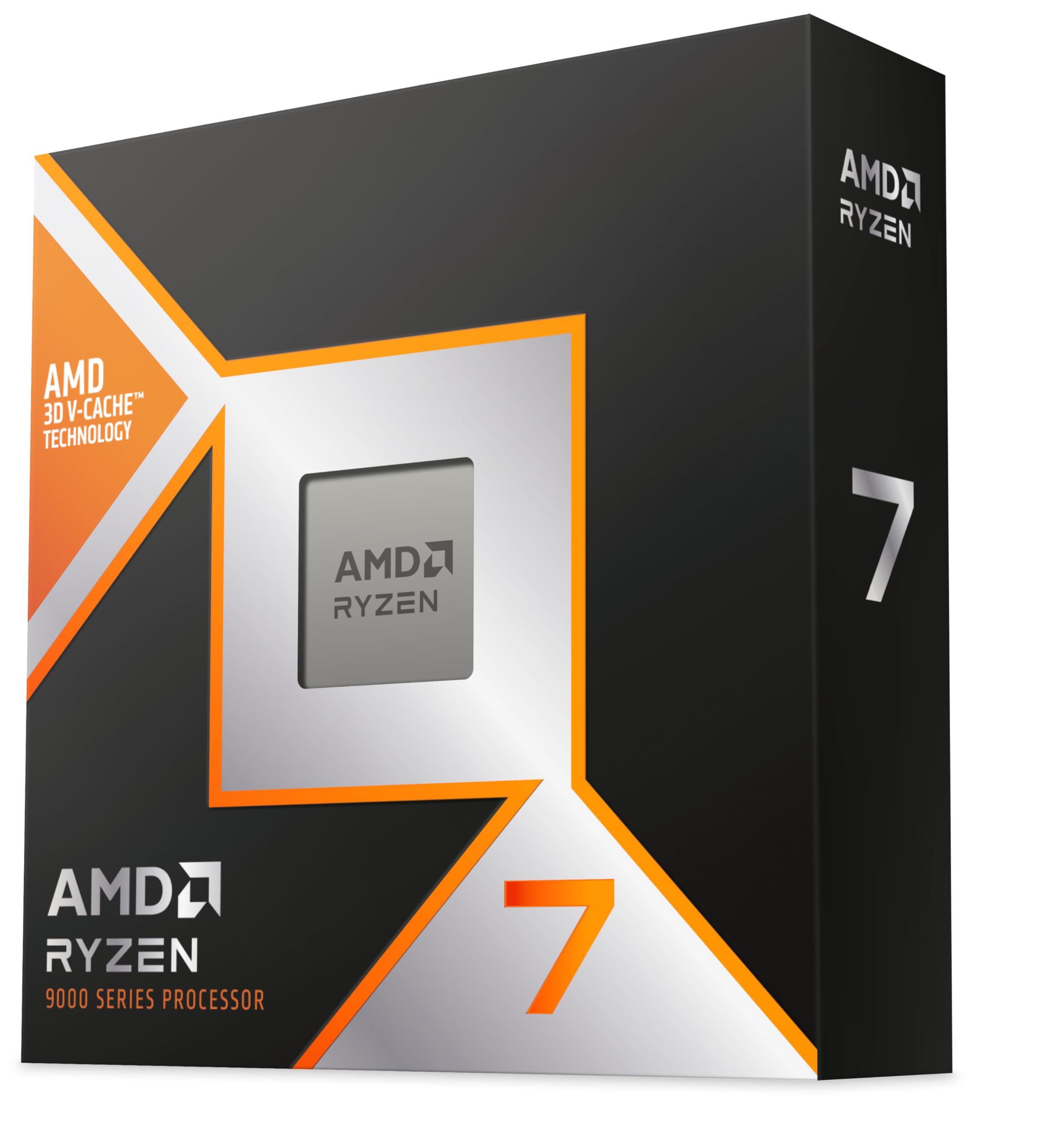
Built on the Zen5 architecture with a second-generation 3D V-Cache design, the 9800X3D delivers a 16% IPC uplift over its predecessor. For photo editors, this means every single-threaded operation — dragging the texture slider, applying a local adjustment mask, or loading a 50-megapixel raw file — feels near-instantaneous. The 96 MB of stacked L3 cache keeps huge image data blocks close to the cores, reducing reliance on system memory speed.
During batch exports in Lightroom Classic, the 9800X3D maintains consistent all-core boost thanks to improved thermal characteristics compared to previous 3D V-Cache chips. It runs cooler than expected for a processor in this tier, meaning a solid air tower cooler is often sufficient. The drop-in compatibility with existing AM5 motherboards makes it an attractive upgrade path.
The only drawback is the premium required to get this level of single-core and cache performance. It does not include a cooler, so factor a high-quality unit into your build. For editors who refuse to tolerate lag in Develop mode and want the fastest possible brush response, this is the current peak.
Why it’s great
- Industry-best single-core responsiveness for real-time slider adjustments.
- Massive L3 cache reduces memory access latency during complex edits.
- Drop-in AM5 upgrade without replacing motherboard or RAM.
Good to know
- No cooler included — budget for a quality air or liquid cooler.
- Premium pricing places it outside entry-level or mid-range budgets.
2. Intel Core i9-13900KF

The 13900KF brings 24 cores (8 P-cores and 16 E-cores) with a blistering 5.8 GHz max turbo frequency. That single-core speed makes Lightroom Develop module adjustments snappy, while the 32 threads crush multi-file export queues. In practice, exporting a folder of 100 edited raw files to JPEG completes significantly faster on this chip than on any 14-core or 16-core competitor without the same peak clock.
This processor thrives in hybrid workflows where you edit a batch, run a Photoshop script, and then stream a tutorial all at once. The Performance Hybrid Architecture intelligently routes background tasks to the E-cores, keeping the P-cores free for your active edit. It requires a discrete GPU and a robust cooling solution — a 360mm AIO or a high-end air cooler like the Noctua NH-D15 is recommended.
The trade-off is power draw. Under all-core load, the 13900KF can pull over 250W, generating significant heat. If your editing sessions involve continuous full-throttle export for hours, the motherboard VRM and case airflow need to be up to the task. It also requires an LGA 1700 motherboard with a recent BIOS update.
Why it’s great
- Highest single-core boost clock in its class for real-time editing.
- 32 threads accelerate batch export and Photoshop multi-tasking.
- Hybrid architecture keeps system responsive under heavy load.
Good to know
- Requires premium cooling to maintain peak performance.
- High power draw may necessitate a strong PSU and case airflow.
3. Intel Core Ultra 9 285K

The Core Ultra 9 285K represents a shift in Intel’s desktop strategy, emphasizing efficiency alongside brute performance. Its 24 cores (8 P-cores and 16 E-cores) and 5.7 GHz boost deliver single-core performance that keeps Lightroom’s Develop module fluid, while the redesigned architecture runs cooler and quieter than the 13th and 14th Gen flagships during sustained loads.
Professional editors who leave Lightroom open for days at a time will appreciate the stability. Reviews from CAD and SolidWorks professionals indicate this chip pair exceptionally well with workstation motherboards, passing multi-hour burn-in tests without stability issues. The integrated Intel Graphics provides a display output for troubleshooting and secondary monitors without a dedicated GPU.
The major consideration is platform cost. The 285K requires an Intel 800-series chipset on an LGA 1851 socket, meaning a new motherboard and likely DDR5 memory. While the efficiency gains are real, the total platform investment is higher than a drop-in AM5 upgrade. It also performs best with CUDIMM RAM for maximum memory speeds.
Why it’s great
- Runs cooler and quieter than previous Intel flagship generations under load.
- Excellent stability for mission-critical professional editing workstations.
- High single-core boost ensures responsive brush and slider performance.
Good to know
- Requires a new LGA 1851 motherboard and platform investment.
- Integrated graphics present, but a dedicated GPU is still needed for heavy work.
4. AMD Ryzen 7 7800X3D

The 7800X3D makes a compelling case for photo editors who prioritize efficiency. Its 3D V-Cache technology stacks an extra 64 MB of L3 cache on top of the standard 32 MB, giving it 96 MB total L3. For photo editing, this means the processor can hold an entire high-resolution raw file’s working data in ultra-fast cache, reducing the need to access system RAM during complex healing brush and clone stamp operations.
Power draw is remarkably low — around 75W during gaming loads and even less during photo editing tasks. This allows for smaller, quieter cooling solutions. The 7800X3D runs cool even with a budget air cooler, making it ideal for a silent editing workstation. The AM5 platform also gives you access to DDR5 memory and a clear upgrade path to future Ryzen chips.
The 8-core, 16-thread configuration handles single-image editing flawlessly, but batch exports are slower than the 16-core or 24-core competitors. If your workflow involves exporting hundreds of images at once, the higher core count chips will finish faster. However, for the actual editing session, the 7800X3D is among the most responsive chips available.
Why it’s great
- 3D V-Cache provides exceptional real-time responsiveness for brush work.
- Very low power draw and thermal output for a quiet PC build.
- AM5 platform offers long-term upgrade potential.
Good to know
- 8 cores limit batch export speed compared to higher-core alternatives.
- Premium cache technology comes at a higher price than the standard 7700.
5. AMD Ryzen 7 7700

The Ryzen 7 7700 strikes an impressive balance between performance and cost, making it an ideal entry point for a photo editing build. With 8 Zen4 cores, 16 threads, and a 65W TDP, it delivers near-7700X performance at a fraction of the power draw and heat output. The included Wraith Prism RGB cooler is sufficient for normal editing loads, reducing the upfront cost.
In real-world Lightroom use, the 7700’s single-core boost up to 5.3 GHz provides smooth Develop module operation. The 40 MB total cache helps with mask and brush operations, though it does not match the 3D V-Cache chips for extremely large raw files. The lower power draw means it stays cool and quiet even in compact cases, perfect for a discreet editing desk setup.
Batch export performance is solid for an 8-core chip, handling moderate queues without issue. The AM5 platform provides DDR5 support, which is a meaningful step up from DDR4 in bandwidth-sensitive photo editing tasks. The included cooler is serviceable, but aftermarket cooling or a curve optimizer undervolt can unlock near-7700X performance with even lower temperatures.
Why it’s great
- Excellent price-to-performance ratio for a modern AM5 build.
- Included RGB cooler reduces total build cost.
- Very low power draw enables quiet, compact workstation designs.
Good to know
- 8-core limit shows during very large batch exports.
- Smaller cache means more reliance on system memory speed than X3D chips.
6. AMD Ryzen 9 5900XT

The Ryzen 9 5900XT breathes new life into the AM4 platform, offering 16 Zen3 cores and 32 threads for editors who already own a B550 or X570 motherboard. The 72 MB of total cache helps with photo editing responsiveness, and the 4.8 GHz boost provides satisfactory single-core performance for Develop module adjustments.
Where this chip truly shines is in multi-threaded batch processing. With 32 threads, exporting a large wedding or event gallery is significantly faster than on any 8-core chip. It also excels when running multiple Adobe apps simultaneously — for example, exporting from Lightroom while Photoshop applies a batch action in the background. The 130W power draw is manageable with a good mid-range air cooler.
The main limitation is the Zen3 architecture, which lacks the IPC improvements of Zen4 and Zen5. Single-core responsiveness, while good, is not on par with the Ryzen 7000 or 9000 series. If you are building a new system from scratch and do not already own an AM4 motherboard, the newer AM5 platforms offer better performance per dollar for photo editing.
Why it’s great
- 16 cores and 32 threads provide excellent multi-threaded export speed.
- Drop-in upgrade for existing AM4 system owners extending their build’s life.
- Large cache improves responsiveness in complex editing operations.
Good to know
- Zen3 IPC is not competitive with Zen4 or Zen5 for single-thread work.
- Not the best choice for new builds — AM5 offers better future-proofing.
7. Intel Core Ultra 7 265KF

The Core Ultra 7 265KF brings Intel’s latest architecture to a more accessible price point. With 20 cores (8 P-cores and 12 E-cores) and a 5.5 GHz max boost, it provides strong single-core performance for Lightroom Develop module use. The 36 MB of L3 cache is adequate for photo editing tasks, though it does not match the cache-rich AMD X3D chips.
This processor is a good fit for editors who want access to the Intel 800-series platform without paying the Core Ultra 9 premium. The 20 threads handle multitasking well, allowing you to keep multiple Lightroom catalogs, Photoshop, and a browser open simultaneously without slowdown. It is also notably stable after proper BIOS updates, addressing concerns from previous Intel generations.
The drawback is that it requires a new LGA 1851 motherboard, which limits its appeal as an upgrade option. Additionally, like the Ultra 9, it performs best with CUDIMM RAM for optimal memory speeds. For a new build where budget is a primary concern but modern platform features are desired, this is a strong contender.
Why it’s great
- Strong single-core boost at a mid-range price point.
- Modern LGA 1851 platform with DDR5 and PCIe 5.0 support.
- Good multitasking performance for mixed photo editing workflows.
Good to know
- Requires a new motherboard platform — not for existing system upgrades.
- CUDIMM RAM recommended for best memory performance.
8. Intel Core i5-14600KF

The 14600KF proves that you do not need a top-tier chip for a responsive photo editing experience. Its 14 cores (6 P-cores and 8 E-cores) and 5.3 GHz boost provide snappy slider response in Lightroom, while the 20 threads handle batch exports and multi-tasking competently. It is compatible with both DDR4 and DDR5 memory, letting you choose your platform cost.
This processor is an excellent entry point for photo editors building their first dedicated editing PC. The unlocked multiplier allows for overclocking if you want to squeeze extra performance later. The 125W base power requires a decent cooler — a 240mm AIO is recommended for sustained all-core loads during export.
The main trade-off is the core count. Heavy multi-tasking with multiple Adobe apps running complex scripts will show the strain faster than on a Core i9 or Ryzen 9. However, for the majority of photo editors who work on one image at a time and export in smaller batches, the 14600KF delivers outstanding performance for its position in the lineup.
Why it’s great
- Excellent value for modern single-core photo editing performance.
- Compatible with both DDR4 and DDR5, reducing platform entry cost.
- Unlocked for overclocking to extend its usable lifespan.
Good to know
- 14-core limit shows in heavy multi-app batch workflows.
- Discrete GPU required — no integrated graphics for troubleshooting.
9. Intel Core i7-10700F

The i7-10700F is a budget-friendly option for photo editors on a tight budget who are upgrading an older system. With 8 cores, 16 threads, and a 4.8 GHz boost, it provides acceptable Lightroom Develop module performance. The included cooler and 65W power draw make it a straightforward, low-heat drop-in upgrade for LGA 1200 motherboards.
For basic photo editing — working with 24-megapixel raw files, applying global adjustments, and occasional masking — this processor is still capable. It eliminates stutter and lag compared to older 4-core and 6-core processors. The 16 MB of L3 cache is modest by modern standards, so complex healing brush work on large files will not feel as instant as on newer chips.
The major limitation is platform age. The LGA 1200 socket does not support DDR5 or PCIe 4.0 SSDs. This is a viable option only if you already own a compatible motherboard and want to maximize the life of your existing build without spending on a new platform. For a new system, the budget-friendly investment in an entry-level AM5 or LGA 1700 chip offers much better long-term value and editing performance.
Why it’s great
- Extremely low-cost drop-in upgrade for LGA 1200 system owners.
- Low power draw and included cooler make installation simple.
- Eliminates lag for basic photo editing workflows.
Good to know
- Limited to DDR4 and PCIe 3.0, which bottlenecks modern SSDs.
- Single-core performance is generations behind current offerings.
FAQ
How many cores do I actually need for Lightroom Classic?
Is an Intel or AMD processor better for Photoshop?
Will a faster CPU speed up my batch exports?
Do I need a discrete GPU if I choose a CPU with integrated graphics?
Final Thoughts: The Verdict
For most users, the best cpu for photo editing winner is the AMD Ryzen 7 9800X3D because its combination of the fastest single-core performance and massive L3 cache makes every slider movement feel instant. If you want maximum multi-core throughput for batch exports and heavy multitasking, grab the Intel Core i9-13900KF. And for the best value that does not compromise on editing responsiveness, nothing beats the AMD Ryzen 7 7700.

Mo Maruf
I created WellFizz to bridge the gap between vague wellness advice and actionable solutions. My mission is simple: to decode the research and give you practical tools you can actually use.
Beyond the data, I am a passionate traveler. I believe that stepping away from the screen to explore new environments is essential for mental clarity and physical vitality.