Our readers keep the lights on and my smoothie glass nicely filled. As an Amazon Associate, I earn from qualifying purchases.
Choosing a processor that excels at both high-refresh-rate gaming and heavy multitasking means looking past simple core counts and clock speeds. The architecture, cache design, and platform longevity each play a decisive role in how fluidly a CPU handles a game running alongside a dozen browser tabs, a live stream, and a video encode.
I’m Mohammad Maruf — the founder and writer behind WellFizz. This guide is the result of cross-referencing real-world benchmark data, hundreds of verified buyer reports, and architectural deep-dives to isolate the processors that actually deliver on the dual promise of gaming smoothness and productivity throughput.
Whether you are building fresh or upgrading a mature platform, matching your motherboard socket and cooling budget to the right chip is the single most important decision you will make. Below, you will find the best cpu for multitasking and gaming ranked by real-world performance balance and platform value.
How To Choose The Best CPU For Multitasking And Gaming
A processor that truly serves both gaming and multitasking needs must balance single-threaded boost performance for game engines with sufficient core/thread resources to keep background tasks from causing stutters. The right chip also fits your motherboard platform, cooling capability, and power supply budget.
Core Count vs. Core Architecture
Eight high-performance cores are the baseline for modern AAA gaming while simultaneously running Discord, a browser, and streaming software. Chips with 12 to 16 cores split across performance and efficiency clusters (Intel) or unified Zen CCDs (AMD) provide the headroom for video encoding, compilation, or virtual machine workloads without sacrificing game responsiveness. The key distinction is whether the cores share a large L3 cache or rely on fast interconnects — larger pools of cache reduce latency in gaming scenarios.
Cache Design and Latency
AMD’s 3D V-Cache technology stacks additional L3 cache directly on the die, dramatically reducing memory access times in cache-sensitive game titles. Processors like the 7800X3D and 9900X3D leverage this to deliver frame rates that often surpass higher-clock-count alternatives. For multitasking, the larger cache also helps when rapid context switching happens between applications. Traditional large L3 caches on Intel chips serve a similar purpose, though the latency profile differs due to the ring-bus interconnect.
Platform and Upgrade Path
Socket compatibility and memory support influence long-term value. AMD’s AM4 platform (Ryzen 5000 series) allows a budget-friendly drop-in upgrade for existing users, while AM5 (Ryzen 7000/9000 series) offers DDR5 and PCIe 5.0. Intel’s LGA1700 supports both DDR4 and DDR5, whereas the newer LGA1851 (Core Ultra 200 series) requires DDR5 exclusively. Choosing a chip that fits your current platform or planned upgrade cycle avoids costly motherboard swaps.
Thermal and Power Requirements
High core-count processors and chips with aggressive boost algorithms generate significant heat under sustained loads. A 16-core CPU running at peak boost can draw over 200W, demanding a 240mm or larger liquid cooler for stable performance. Lower-power options like the 7800X3D (typically under 100W during gaming) can run effectively on quality air coolers. Always verify that your power supply has sufficient headroom on the +12V rail, especially with high-end GPUs in the same system.
Quick Comparison
On smaller screens, swipe sideways to see the full table.
| Model | Category | Best For | Key Spec | Amazon |
|---|---|---|---|---|
| Ryzen 7 7800X3D | Gaming/Streaming | Pure gaming + light streaming | 104 MB total cache (96 MB L3) | Amazon |
| Ryzen 9 9900X3D | Content Creator | Gaming + heavy multitasking | 140 MB total cache (12-core 3D V-Cache) | Amazon |
| Core i9-14900KF | Multi-App | Max multi-threaded productivity | 6.0 GHz max boost (24 cores) | Amazon |
| Core i7-14700KF | Workstation | Solid productivity + gaming value | 33 MB L3 cache (20 cores) | Amazon |
| Core Ultra 9 285K | Pro Simulation | CAD/rendering + gaming | 5.7 GHz boost (LGA1851) | Amazon |
| Ryzen 9 5900XT | Home Server | Budget 16-core AM4 build | 72 MB cache (16-core Zen 3) | Amazon |
| Skytech Archangel 5 (R7 7700) | Prebuilt 1080p | Out-of-box 1080p gaming PC | 32 GB DDR5 + RTX 5060 | Amazon |
| CyberPowerPC (R7 8700F) | Mid-Range Build | Value prebuilt with upgrade room | 8-core Zen 4 + RTX 5060 Ti | Amazon |
| abytespark i7-4770 Prebuilt | Entry Level | Budget gaming on decade-old hardware | 3.9 GHz boost (4-core 8-thread) | Amazon |
In‑Depth Reviews
1. AMD Ryzen 7 7800X3D

The 7800X3D is the definitive gaming-focused processor that still holds its own in multitasking scenarios. Its 3D V-Cache stacks 96 MB of L3 cache on top of the standard 8 MB L2, which dramatically reduces memory latency in cache-sensitive titles. Verified buyers report massive frame rate gains in games like CS2 and Fortnite, often surpassing chips with higher clock speeds or more cores. The 8-core/16-thread design is sufficient for streaming, Discord, and background tasks without introducing stutters.
Thermal behavior is a standout advantage. Real-world testing shows the chip consuming around 75W during gaming sessions, keeping temperatures between 65-70°C with standard air coolers. Even under sustained load, it rarely exceeds 80°C. This low power draw means compatibility with budget-friendly cooling solutions and 650W power supplies. Users moving from older platforms like the i7-4770K report FPS doubling at 1440p resolution.
The platform requirement is the main consideration — the 7800X3D fits exclusively on AM5 motherboards with DDR5 memory. While this increases initial build cost, the AM5 socket is slated to support multiple future CPU generations. The chip also lacks integrated graphics, so a discrete GPU is mandatory. For pure gaming with light multitasking, this is the most efficient option available at this performance tier.
Why it’s great
- Exceptional gaming frame rates due to 3D V-Cache
- Runs cool and quiet on affordable coolers
- Low power draw (approx 75W gaming)
- AM5 platform with upgrade path
Good to know
- Requires DDR5 and discrete GPU
- Not ideal for heavy all-core productivity workloads
- Limited overclocking headroom
2. AMD Ryzen 9 9900X3D

The 9900X3D bridges the gap between pure gaming performance and heavy multitasking better than any other single-chip solution on the market right now. With 12 Zen 5 cores, 24 threads, and a massive 140 MB total cache (including 3D V-Cache on one CCD), it delivers snappy responsiveness in cache-sensitive games while offering real multi-threaded throughput for video editing, compilation, and running multiple VMs. Verified owners describe it as tearing through heavy workloads and gaming simultaneously without thermal throttling when paired with a 360mm AIO cooler.
Installation is straightforward on the AM5 platform, and the chip runs cooler than previous-generation high-core-count parts. Buyers using a Peerless Assassin air cooler report stable gaming temperatures with no issues, though sustained all-core loads absolutely benefit from liquid cooling. The 12-core count avoids the CCD-to-CCD latency penalties that sometimes affect 16-core Zen designs in specific gaming scenarios.
Pricing positions this as a premium mid-range option that competes directly with Intel’s 14th Gen i9 series but with better power efficiency and a more modern platform. The only real trade-off is that for pure gaming without multitasking, the 8-core 9800X3D offers slightly higher frame rates for less money. For users who need both high FPS and real content creation throughput, the 9900X3D is a balanced sweet spot.
Why it’s great
- Excellent blend of gaming and productivity performance
- 140 MB total cache for low-latency workloads
- Cooler running than Intel i9 counterparts
- AM5 platform longevity
Good to know
- Requires strong cooling for all-core loads
- Premium pricing tier
- DDR5 needed (no DDR4 support)
3. Intel Core i9-14900KF

The i9-14900KF is Intel’s 14th Gen flagship unlocked processor, packing 24 cores (8 Performance-cores and 16 Efficient-cores) and 32 threads. Its maximum turbo frequency of 6.0 GHz makes it the fastest clocked consumer CPU available, delivering extremely high single-threaded performance for gaming and low-latency applications. Verified buyers running Fortnite report stable 240 FPS at 1080p without manual overclocking, and the chip excels at simultaneous streaming, rendering, and gaming with zero perceptible slowdown.
Owners consistently note that the 14900KF is a productivity beast. Those using it for professional workstation tasks — database management, high-resolution image editing, AI generation — describe it as snappy and responsive even with dozens of applications open. The 36 MB of L3 cache and DDR5 support ensure fast data throughput. However, the chip generates substantial heat, with multi-core loads pushing temperatures to 70-80°C even with high-end 360mm AIO coolers.
The primary concern reported by multiple users is the known stability issue affecting 13th and 14th Gen K-series processors. Intel has released microcode updates (0x12F) to address Vmin shift instability, requiring a compatible motherboard BIOS update. Potential buyers should ensure their board has the latest BIOS to avoid crashes. The chip also demands a robust power supply — peak draw can exceed 250W under turbo. For those willing to manage the cooling and BIOS requirements, it is an absurdly powerful do-everything chip.
Why it’s great
- Highest boost clock (6.0 GHz) for snappy single-thread tasks
- 24 cores deliver class-leading multi-thread throughput
- DDR4 and DDR5 motherboard compatibility
- Unlocked for enthusiast overclocking
Good to know
- Needs latest BIOS microcode for stability
- Runs hot — 360mm AIO recommended
- High power draw (>250W peak)
- LGA1700 is a dead-end platform
4. Intel Core i7-14700KF

The i7-14700KF offers 20 cores (8 P-cores plus 12 E-cores) and 28 threads, striking a very compelling balance between price and performance for users who split their time between gaming and serious productivity. The 5.6 GHz max boost ensures snappy single-threaded behavior in games, while the high core count handles video editing, 3D rendering, and database work with authority. Verified professional users running massive database and inventory systems report zero lag even with point-of-sale software, spreadsheets, and high-resolution images open simultaneously.
This chip is considered the best value in the 14th Gen lineup for those needing productivity power without reaching the i9 price point. Users upgrading from older i5 K-series processors describe it as a night-and-day difference, especially when paired with a 4080 Super GPU for AI generation and CPU-intensive gaming. It requires a good tower cooler (Noctua or Thermalright air coolers) or a 360mm AIO to manage all-core loads, but it runs cool enough without aggressive overclocking.
Like the i9-14900KF, the i7-14700KF benefits from the latest BIOS microcode update for stability. It also lacks integrated graphics, so a discrete GPU is required. The LGA1700 platform supports both DDR4 and DDR5 memory, allowing builders to reuse existing DDR4 kits and save money. For the money-conscious prosumer who wants robust multitasking with strong gaming performance, this is a highly practical option.
Why it’s great
- Excellent productivity-to-cost ratio
- High core count for heavy multitasking
- DDR4/DDR5 flexibility saves build cost
- Strong single-thread performance for gaming
Good to know
- Needs BIOS update for stability fixes
- Requires robust CPU cooler
- No integrated graphics
5. Intel Core Ultra 9 285K

The Core Ultra 9 285K represents Intel’s shift to the LGA1851 platform with a performance hybrid architecture that prioritizes efficiency and thermal behavior. With 24 cores (8 P-cores plus 16 E-cores) and a 5.7 GHz boost, it delivers competitive gaming performance while drawing less peak power than the 14th Gen i9. Verified professional buyers building SolidWorks workstations report rock-solid stability at 73-78°C under Cinebench stress testing with 24-hour burn-in passes, a marked improvement over the previous generation’s thermal and voltage issues.
The chip excels in professional simulation and CAD environments. Engineering teams using SolidWorks describe it as super fast and stable for modeling work when paired with Asus ProArt Z890 Creator motherboards and 128 GB of RAM. The integrated memory controller handles four sticks of DDR5 at 4000 MHz stable, though reaching higher speeds requires CUDIMM RAM. For gaming, the 285K performs well across all modern titles, though enthusiasts note that the Ryzen X3D chips still hold a slight edge in cache-sensitive scenarios.
The major platform caveat is that the 285K requires an Intel 800 series motherboard with the LGA1851 socket and DDR5 memory exclusively. Cooler compatibility is thankfully retained from LGA1700. It also includes integrated graphics, which is useful for troubleshooting and office use. For users who need a stable, heat-resilient platform for professional simulation workloads plus solid gaming, this is the safest Intel choice.
Why it’s great
- More efficient and thermally stable than 14th Gen
- Excellent for CAD and professional simulation
- 24 cores handle heavy multitasking easily
- Integrated graphics included
Good to know
- Requires LGA1851 motherboard and DDR5
- Gaming not class-leading vs. 3D V-Cache
- Relatively new platform with limited motherboard stock
6. AMD Ryzen 9 5900XT
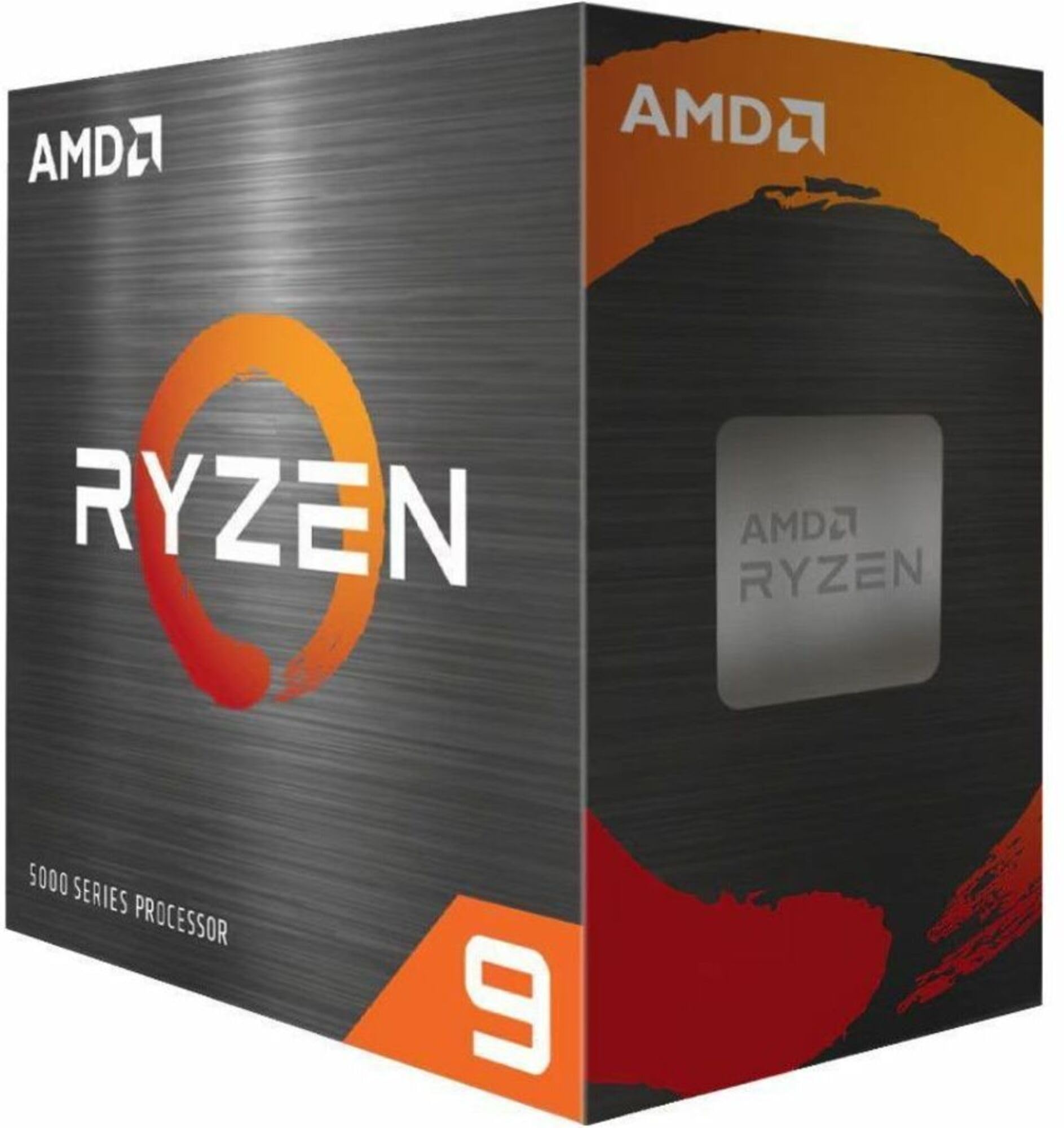
The Ryzen 9 5900XT is a 16-core, 32-thread processor built on AMD’s Zen 3 architecture for the AM4 platform. It offers a massive core count at an entry-level price point, making it an exceptional value for users who need heavy multi-threaded performance — video transcoding, compression, virtualization — and are willing to stay on DDR4. Verified buyers running home servers and AutoCAD workstations praise its ability to handle multi-core processes like OBS recording while gaming, all without thermal throttling.
The chip runs cooler than the 5950X thanks to improved binning, and it keeps the DDR4 platform viable for users not ready to jump to AM5/DDR5. However, gaming performance is a mixed bag. The dual-CCD design introduces inter-core latency that hurts performance in cache-sensitive titles. Some users note that disabling the second CCD in BIOS improves game frame rates at the cost of losing half the cores. The chip also fails to reach its advertised 4.8 GHz boost in all-core scenarios, settling at around 4.1 GHz under SSE loads.
The 5900XT requires an aftermarket cooler — a 360mm AIO is recommended to handle sustained all-core workloads. It draws 130W at stock, which is reasonable for 16 cores. The main limitation is the lack of 3D V-Cache, meaning it will fall behind the X3D parts in gaming. For a mixed-use system where productivity is the priority but gaming is still on the table, it remains a powerfully cost-effective choice on a mature platform.
Why it’s great
- 16 cores for incredible multi-threaded value
- Keeps AM4/DDR4 ecosystem alive
- Runs cooler than 5950X
- Great for content creation and virtualization
Good to know
- Gaming hampered by CCD latency vs. X3D parts
- Does not hit advertised boost across all cores
- Requires strong cooling for full utilization
7. Skytech Gaming Archangel 5 (R7 7700 + RTX 5060)
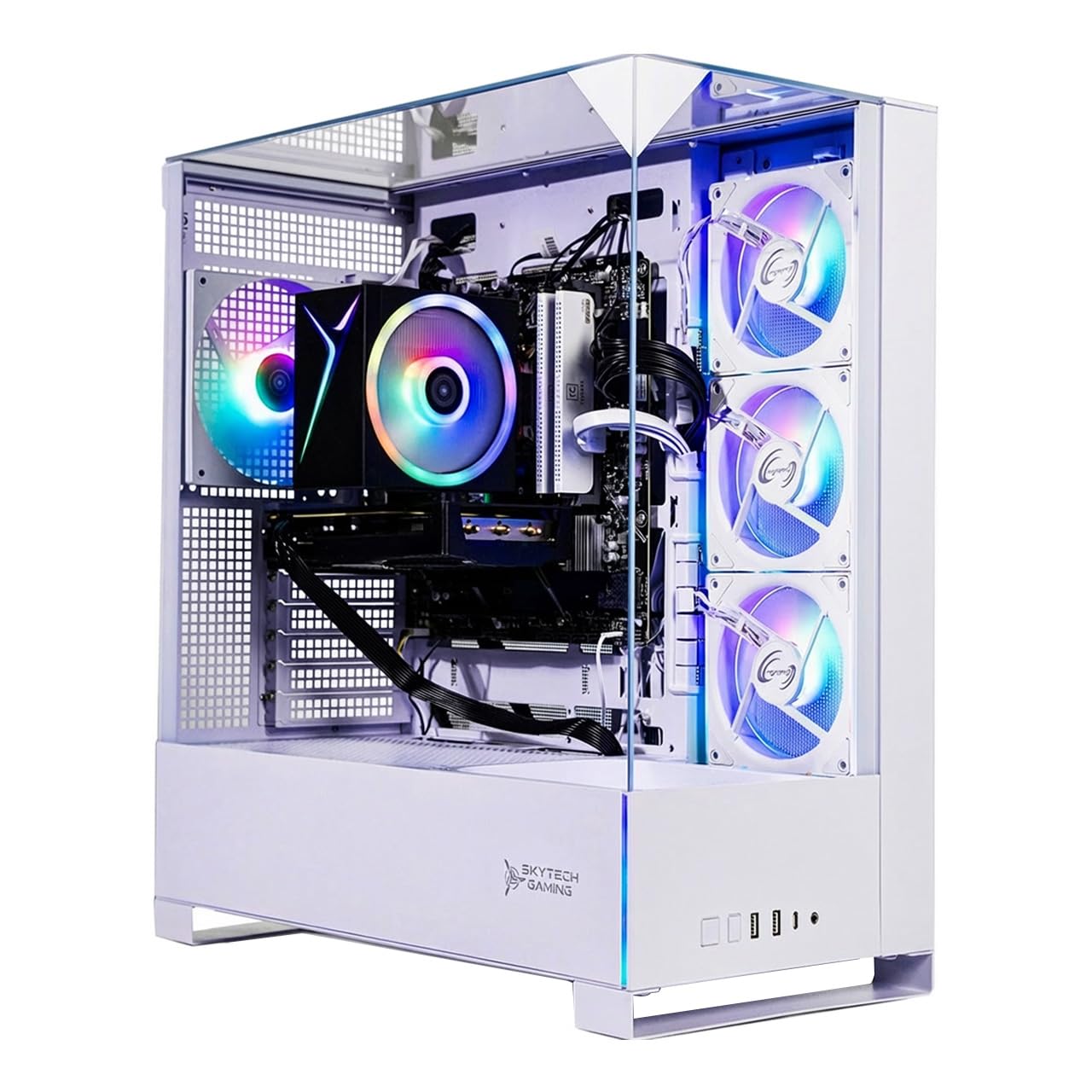
The Skytech Archangel 5 is a prebuilt gaming PC featuring an AMD Ryzen 7 7700 (8 cores, 5.3 GHz boost) and an NVIDIA RTX 5060 8 GB GPU, backed by a generous 32 GB of DDR5-6000 RAM and a 1 TB NVMe SSD. This configuration is specifically designed to run modern AAA games at 1080p Ultra settings with smooth 60+ FPS, and the 8-core CPU provides enough headroom for casual multitasking with streaming, Discord, and browser tabs open.
Verified buyers report excellent out-of-box performance in demanding titles like Cyberpunk 2077, Hell Divers 2, and Planet Zoo at Ultra settings without lag. The system stays quiet and cool even during extended 6-hour gaming sessions, attributed to the high-performance air cooler and five ARGB fans. The 750W Gold-rated power supply provides sufficient headroom for future GPU upgrades. Owners also value the lack of bloatware and the inclusion of a decent gaming keyboard and mouse.
Some users note that the 32 GB RAM is a significant upgrade over the 16 GB typically found in this price tier, and the AM5 platform allows for future CPU upgrades without changing the motherboard. The main considerations are that the RTX 5060 is primarily a 1080p card, and the case is somewhat large. Overall, this prebuilt delivers strong multitasking capability thanks to the Ryzen 7 7700, making it an excellent choice for gamers who want a ready-to-use system with no build hassle.
Why it’s great
- 32 GB DDR5 RAM handles heavy multitasking
- Ryzen 7 7700 provides strong 8-core performance
- Ready to play at 1080p Ultra settings
- AM5 platform allows future CPU upgrades
Good to know
- RTX 5060 limited to 1080p gaming
- Large case footprint
- Some assembly and cable management needed
8. CyberPowerPC Gamer Master (R7 8700F + RTX 5060 Ti)
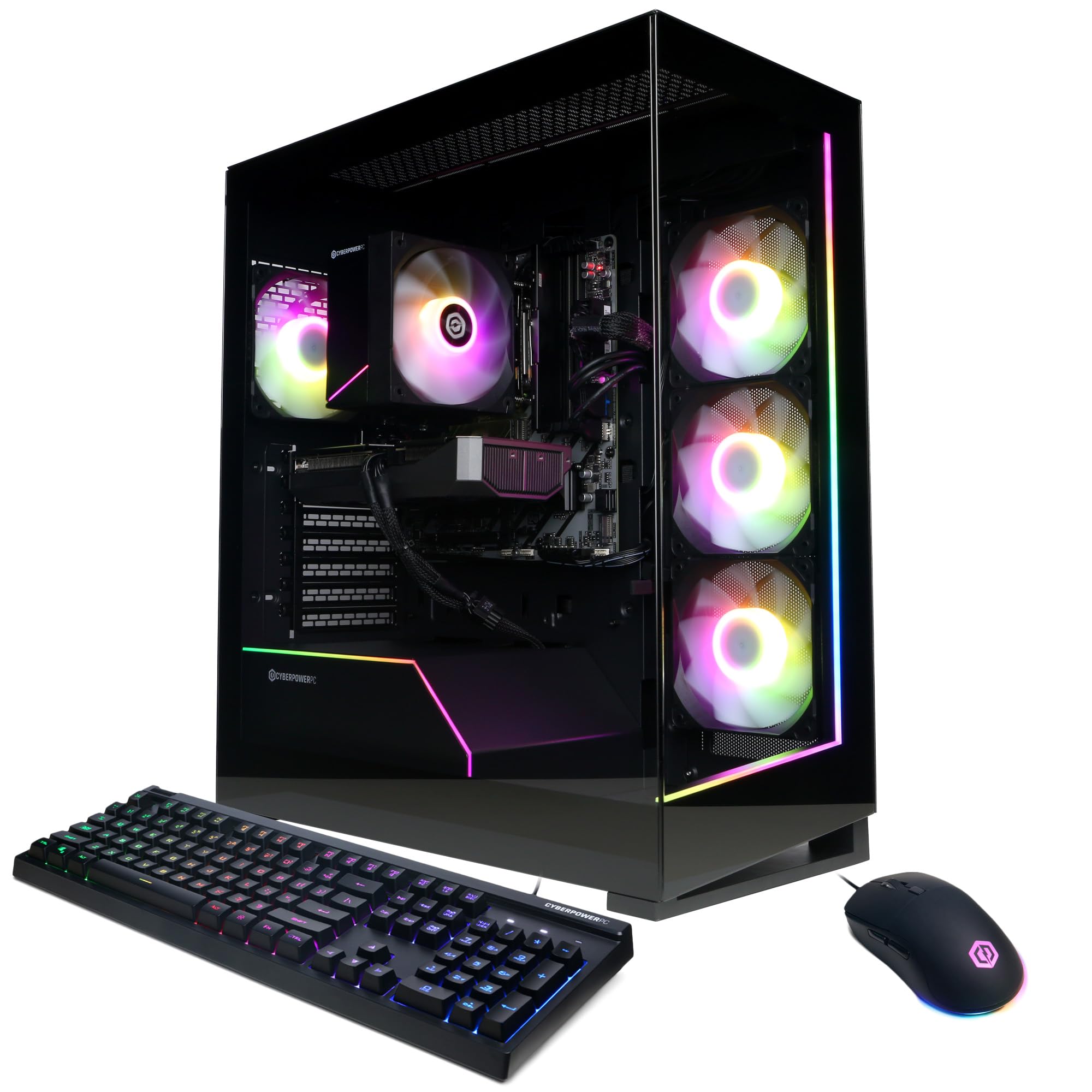
The CyberPowerPC Gamer Master is a prebuilt system anchored by an AMD Ryzen 7 8700F processor (8 cores, 4.1 GHz base, Zen 4 architecture) and an NVIDIA GeForce RTX 5060 Ti 8 GB graphics card. This combination targets upper-mid-level 1080p and entry-level 1440p gaming, with the Ryzen 7 8700F offering strong single-threaded performance for modern game engines and enough cores to handle streaming and background apps. Verified buyers note that it runs the latest Call of Duty at 60+ FPS on Ultra settings.
The system includes 16 GB of DDR5 RAM and a 1 TB PCIe 4.0 NVMe SSD, providing fast load times and sufficient storage. The AMD B850 chipset motherboard offers Wi-Fi 6 and Bluetooth 5.3, and the 650W Gold PSU leaves modest room for upgrades. Users praise the quiet cooling, sturdy case, and the fact that all components are non-proprietary, allowing easy replacement of the GPU, RAM, or PSU down the line.
A few users reported initial issues with random restarts and USB power, resolved by enabling BIOS Deep Sleep mode. Customer support response was limited, so some troubleshooting knowledge is helpful. The 16 GB RAM is adequate for gaming but may feel constrained if multitasking with heavy productivity applications. For the price, it provides an excellent balance of modern CPU performance and GPU capability for mixed-use gaming and daily multitasking.
Why it’s great
- Modern Zen 4 CPU with strong single-thread performance
- RTX 5060 Ti handles 1080p Ultra and 1440p Medium
- Non-proprietary parts for easy upgrades
- Includes Wi-Fi 6 and Bluetooth 5.3
Good to know
- 16 GB RAM may need upgrade for heavy multitasking
- Some users report USB/restart issues (BIOS fixable)
- Customer support response can be slow
9. abytespark Prebuilt Gaming PC (i7-4770 + RX 590)
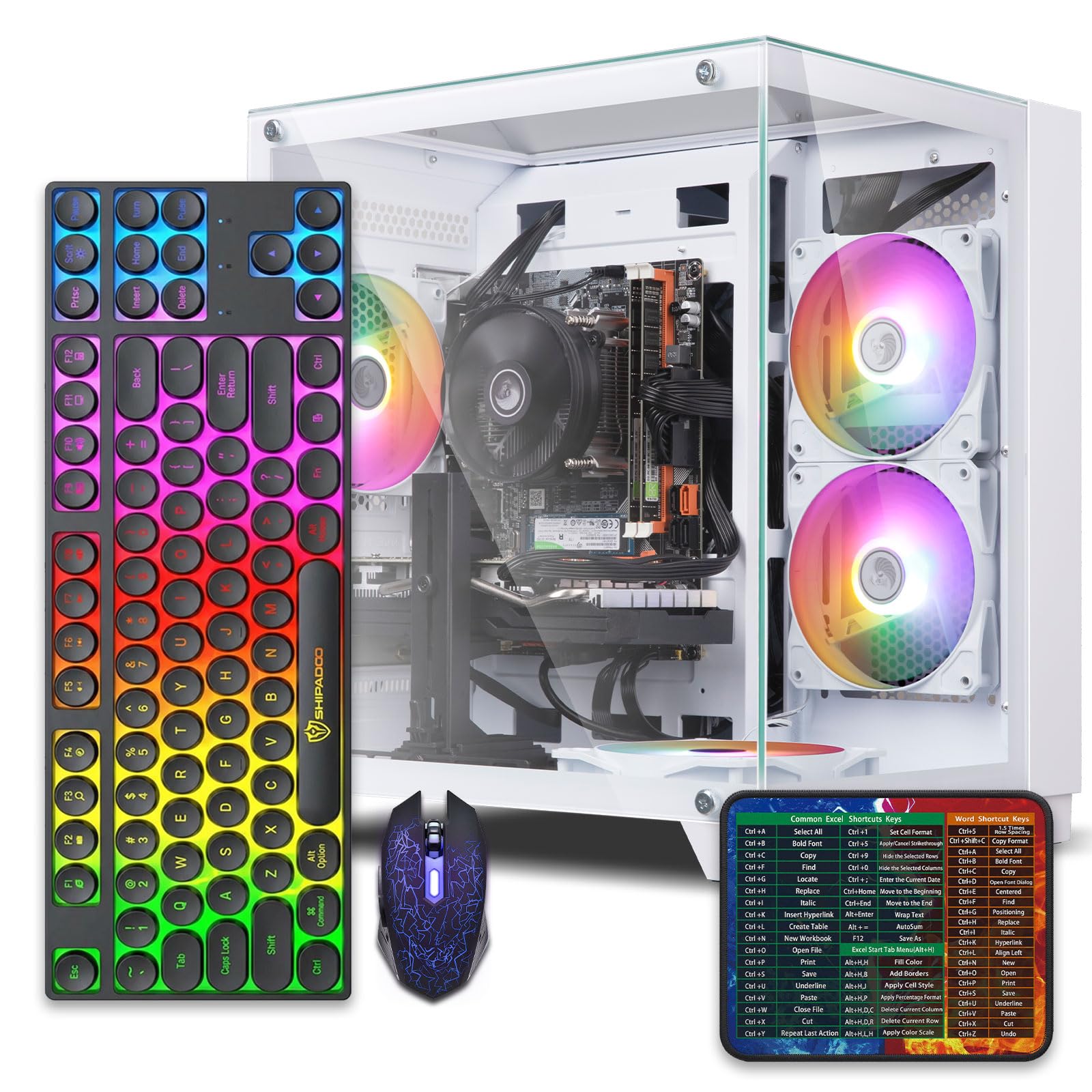
This prebuilt system from abytespark uses an Intel Core i7-4770 processor — a 4-core, 8-thread CPU originally launched in 2013 — paired with an AMD Radeon RX 590 8 GB graphics card, 16 GB of DDR3 RAM, and a 512 GB SSD. It is positioned as an entry-level gaming PC capable of running popular titles like Fortnite, GTA V, and Minecraft at 60+ FPS on lower settings. The system also includes a keyboard, mouse, mouse pad, and four RGB fans.
Verified buyers who are new to PC gaming report a positive experience, describing the system as smooth for games like Poppy Playtime and BONEWORKS in VR. The setup process is quick, and the hardware is reliable out of the box. The upgradeability is noted as a plus, with the case and PSU supporting standard component swaps. For someone on a very tight budget, it offers a functional entry point into PC gaming.
A critical concern raised by a verified buyer is product misrepresentation. The listing claims Windows 11 compatibility, but the i7-4770 does not support TPM 2.0 or Secure Boot, and the motherboard is incompatible with official Windows 11 requirements. The operating system appears to be installed via an unsupported bypass, which prevents security updates and future Windows updates. Additionally, the SATA SSD is slower than the advertised NVMe. This makes the system unsuitable for users who need a fully supported, modern OS environment. It works for casual, offline gaming but carries significant long-term support risks.
Why it’s great
- Very low entry cost for basic gaming
- 16 GB RAM and dedicated GPU included
- RGB lighting and peripherals in box
- Easy to upgrade individual components
Good to know
- Decade-old CPU with no official Windows 11 support
- Slow SATA SSD, not NVMe
- Will struggle with modern AAA titles at higher settings
- Long-term stability and support are questionable
FAQ
How many cores do I actually need for gaming and multitasking together?
What is the difference between AMD 3D V-Cache and Intel’s approach?
Should I invest in a high-end cooler for a multitasking/gaming CPU?
Is it worth buying a used or older-generation CPU for multitasking and gaming?
Will a faster CPU improve my FPS in games while multitasking?
Final Thoughts: The Verdict
For most users, the best cpu for multitasking and gaming winner is the AMD Ryzen 9 9900X3D because it combines the game-crushing cache performance of 3D V-Cache with 12 full Zen 5 cores for genuine productivity throughput, all on a future-proof AM5 platform. If you want the absolute best pure gaming frame rates with light multitasking, grab the AMD Ryzen 7 7800X3D — it runs cool, draws far less power, and still handles streaming and Discord effortlessly. And for heavy content creation workloads where max multi-threaded speed is the priority, nothing beats the Intel Core i9-14900KF if you are comfortable with its cooling and BIOS requirements. Match your choice to your actual workload mix, and either way, you will have a system that handles everything you throw at it.

Mo Maruf
I created WellFizz to bridge the gap between vague wellness advice and actionable solutions. My mission is simple: to decode the research and give you practical tools you can actually use.
Beyond the data, I am a passionate traveler. I believe that stepping away from the screen to explore new environments is essential for mental clarity and physical vitality.