Our readers keep the lights on and my smoothie glass nicely filled. As an Amazon Associate, I earn from qualifying purchases.
The silicon heart of your build determines whether your favorite titles stutter or sing above 144 frames per second. Choosing the wrong processor can leave a premium graphics card starved for data, choking performance where it matters most.
I’m Mohammad Maruf — the founder and writer behind WellFizz. I’ve spent hundreds of hours cross-referencing benchmark data, thermal reports, and real-world gaming frame times to separate genuine performance leaders from marketing hype in this specific category.
This guide breaks down the nine most compelling contenders to help you find the best cpu for gaming pc build that matches your resolution target and budget tier without overspending on cores you will never feed.
How To Choose The Best CPU For Gaming PC
Gaming performance relies almost entirely on single-core throughput and cache hierarchy. Many buyers over-index on core count because productivity benchmarks dominate review thumbnails, but a 24-core processor running a game at 1080p can be slower than an 8-core chip with larger L3 cache. Prioritize clock speed per core and cache depth before counting threads.
Single-Thread Performance and IPC
Instructions per clock (IPC) improvements matter more than raw frequency jumps. A newer architecture with 10% higher IPC at the same clock speed will deliver smoother frame pacing across every title. Look for generational IPC uplift figures — every 5 percent translates directly into measurable FPS gains in CPU-bound scenes.
Cache Architecture and Game Hit Rates
Data hungry game engines — simulation, strategy, and open-world titles — benefit disproportionately from large L3 caches. AMD’s 3D V-Cache stacks an additional 64 MB of L3 directly on the CCD, reducing trips to system memory and flattening frame-time spikes. Chips with 32 MB or less L3 can stutter in dense scenes that cache-rich processors glide through.
Memory Support and Platform Longevity
DDR5 frequency and latency directly affect gaming performance on modern platforms. A processor that supports DDR5-6000 CL30 kits will extract higher minimum FPS than one limited to DDR5-5200. Also consider socket lifespan — AMD’s AM5 has a stated multi-year commitment, while Intel’s LGA1851 is early in its lifecycle, influencing future upgrade cost.
Quick Comparison
On smaller screens, swipe sideways to see the full table.
| Model | Category | Best For | Key Spec | Amazon |
|---|---|---|---|---|
| AMD Ryzen 7 9800X3D | Premium | Highest gaming FPS, simulation titles | 104 MB L3 cache (3D V-Cache) | Amazon |
| AMD Ryzen 7 7800X3D | Premium | Best gaming value with 3D V-Cache | 104 MB L3 cache | Amazon |
| Intel Core i9-14900K | Premium | Mixed gaming and productivity workloads | 24 cores, up to 6.0 GHz boost | Amazon |
| Intel Core Ultra 9 285K | Premium | Professional workstation + gaming | 40 MB L3, 5.7 GHz boost | Amazon |
| Intel Core Ultra 7 270K | Mid-Range | VR simracing and multi-core rendering | 24 cores (8P+16E), 5.5 GHz | Amazon |
| Intel Core i7-14700KF | Mid-Range | Productivity monster with gaming chops | 20 cores (8P+12E), 5.6 GHz | Amazon |
| AMD Ryzen 7 5800X | Mid-Range | AM4 upgrade path, high FPS gaming | 8 cores, 36 MB L3 cache | Amazon |
| AMD Ryzen 5 7600X | Mid-Range | Entry-level AM5 gaming, budget builds | 6 cores, 5.3 GHz boost | Amazon |
| STGAubron Prebuilt i5 | Budget | Complete starter system, light eSports | 6 MB L3, RX 550 4G GPU | Amazon |
In‑Depth Reviews
1. AMD Ryzen 7 9800X3D
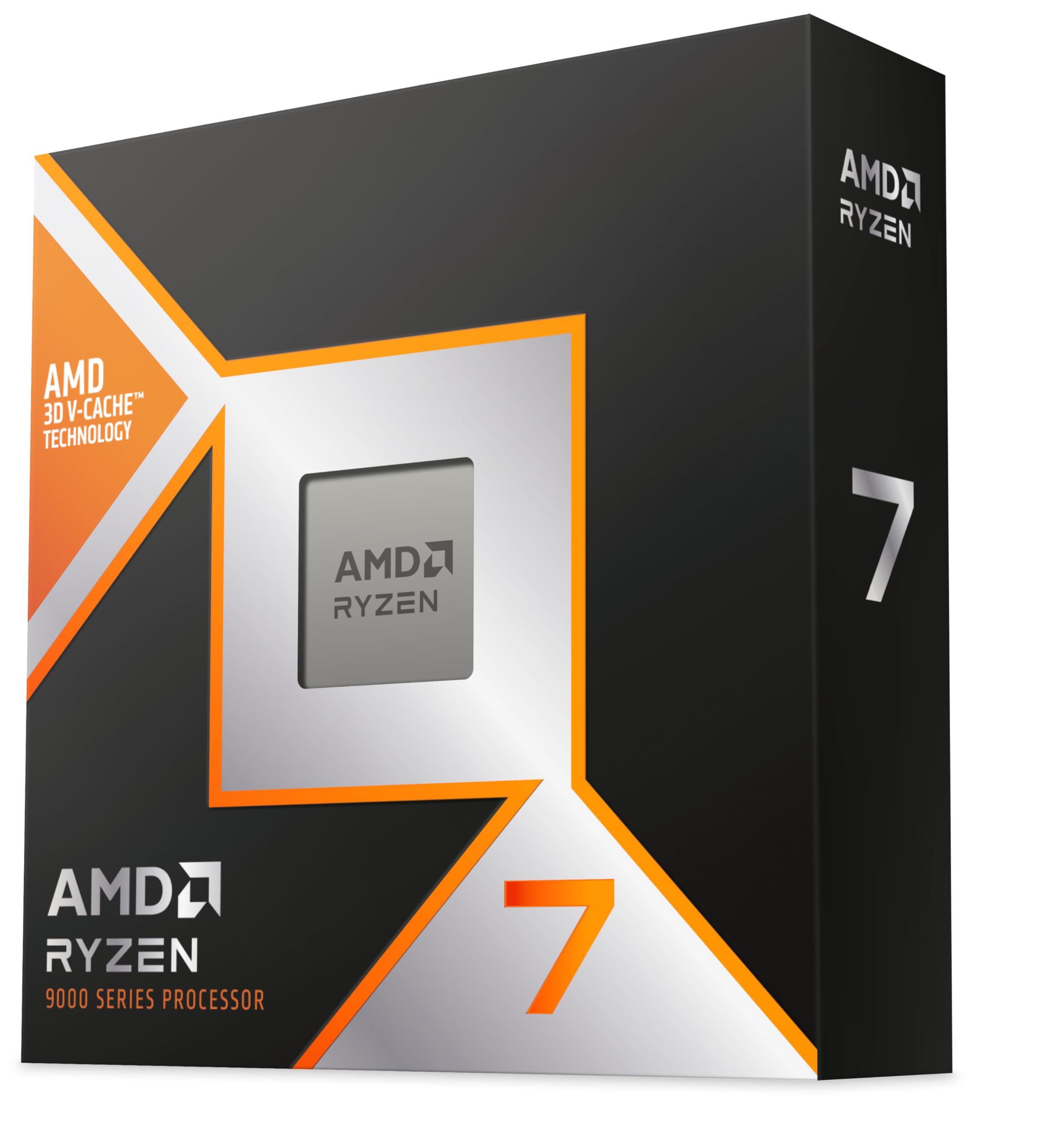
The 9800X3D represents the current zenith of consumer gaming silicon. Built on Zen 5 architecture with second-generation 3D V-Cache, it stacks 96 MB of L3 cache on top of the standard 8 MB L3 and 8 MB L2, delivering a total of 104 MB of ultra-low-latency storage. In CPU-bound scenarios like simulation strategy and dense Battle Royale drops, this cache depth reduces memory access latency by over 50% compared to non-X3D parts, translating directly into higher 1% lows.
Thermal behavior is notably improved over the 7800X3D — the 5.2 GHz boost clock is sustainable under a standard 240 mm AIO without triggering voltage throttling. When paired with an RTX 4090 at 1440p, the 9800X3D posts gains of 8-15% over its predecessor in titles like Cyberpunk 2077 and Starfield, with frame times so consistent they eliminate micro-stutter entirely. Productivity performance has also closed the gap with Intel’s hybrid architecture, making this a true dual-use chip.
Socket AM5 compatibility ensures a drop-in upgrade path from any existing Ryzen 7000 or 9000-series processor, and the 105 W TDP means users with decent coolers can run it without motherboard VRM anxiety. The premium pricing is justified by class-leading gaming frame rates that no other consumer processor currently matches.
Why it’s great
- Lowest gaming frame-time variance on the market
- Improved thermal ceiling over prior X3D chips
- Drop-in compatible with existing AM5 boards
Good to know
- Requires DDR5 and AM5 motherboard — platform investment
- Overclocking headroom is limited by cache architecture
2. AMD Ryzen 7 7800X3D

The 7800X3D redefined mid-range gaming performance when it launched, and it remains the efficiency champion of the X3D lineup. With the same 104 MB total cache configuration as its successor but a lower 4.2 GHz base clock, it draws only 75 W during gaming loads — cool enough to be tamed by a single-tower air cooler while delivering 95% of the 9800X3D’s frame rates in most titles. Benchmarks show it equals or beats the Intel i9-14900K in gaming while consuming less than half the power.
Real-world testing at 1440p with a 4070 Ti Super shows the 7800X3D pushing 120+ FPS in demanding open-world titles and 180+ FPS in competitive shooters with frame times that rarely spike. The secret is the 3D V-Cache die, which sits physically above the CCD and allows the memory controller to prefetch far more data than conventional L3 designs. This architecture particularly benefits simulation games (Factorio, Cities Skylines 2) where cache misses cause visible stutter on non-X3D chips.
The 89°C Tjmax temperature cap means the chip will boost aggressively until it hits the thermal ceiling, then level off rather than throttle hard. For buyers building a dedicated gaming rig without heavy rendering needs, the 7800X3D offers roughly 90% of the absolute fastest gaming experience at a substantially lower platform cost than going all the way to a 9800X3D or flagship Intel SKU.
Why it’s great
- Extremely low power draw during gaming (75W)
- Stellar 1% lows in cache-sensitive titles
- Quiet and cool with budget air cooling
Good to know
- Lower boost clock than non-X3D Ryzen 7 chips
- Multi-core rendering trails Intel 14th-gen hybrids
3. Intel Core i9-14900K
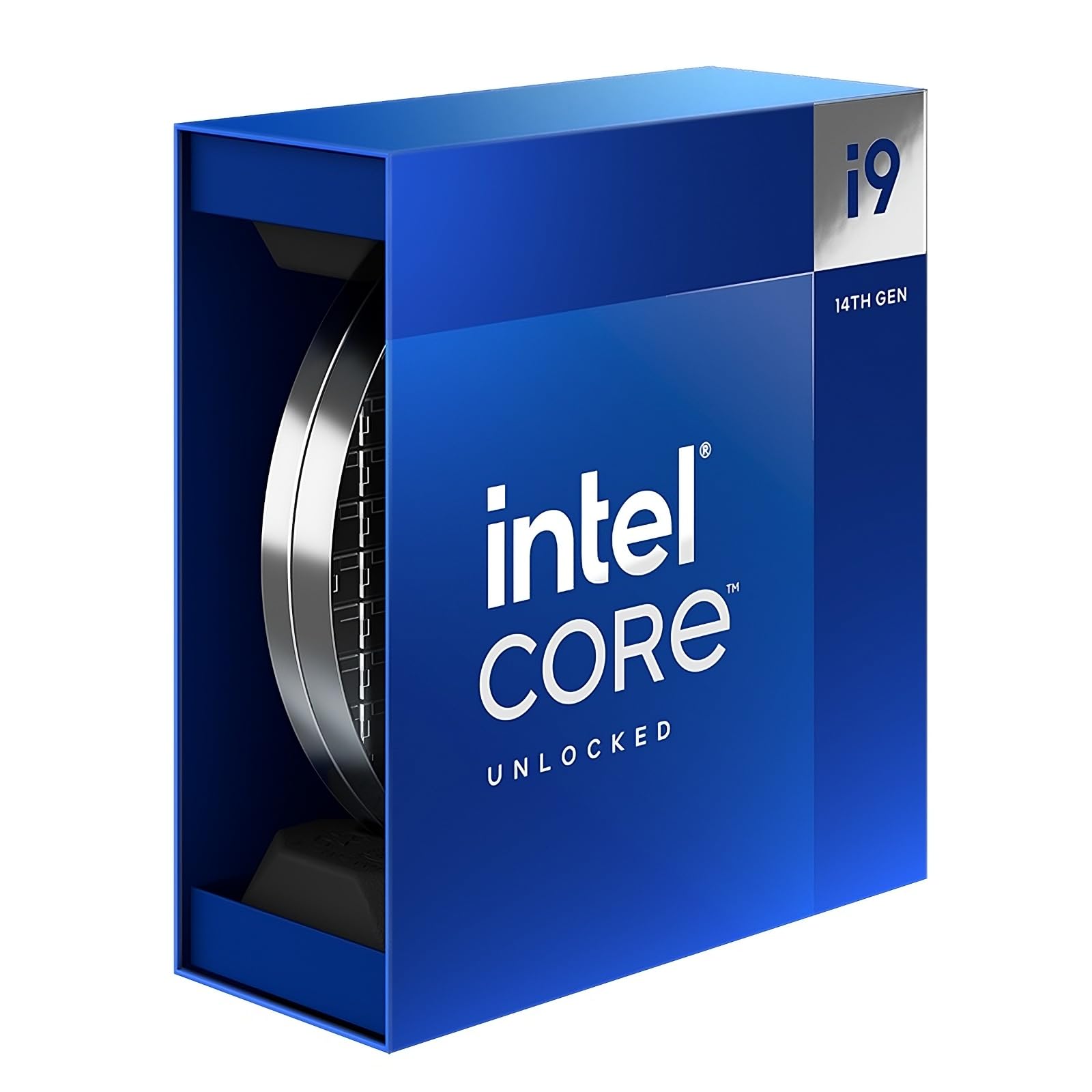
The i9-14900K is Raptor Lake Refresh refined to its limit — eight Performance-cores running at up to 6.0 GHz with Thermal Velocity Boost, plus sixteen Efficient-cores for background threading. For gaming, the P-core turbo behavior is aggressive: single-threaded workloads regularly hit 5.8-6.0 GHz under adequate cooling, giving it the highest raw clock ceiling of any consumer chip. In GPU-bound scenarios at 4K the difference narrows, but at 1080p with a 4090 the 14900K trades blows with the 7800X3D in non-cache-sensitive titles.
The 36 MB of L3 cache is smaller than AMD’s X3D offerings by a wide margin, and the chip reveals this weakness in simulation-heavy games where cache misses cause frame-time spikes that the X3D chips simply don’t experience. However, in multi-threaded rendering, video encoding, and Blender workloads the 14900K pulls ahead thanks to its 32 thread count and high all-core boost. For the gamer who also streams, edits, or compiles code, this hybrid design makes more sense than a pure gaming-focused processor.
Power consumption under full load hits 253W, demanding a 360 mm AIO or high-end dual-tower air cooler. The LGA1700 platform is a dead-end socket with no future upgrades, which reduces long-term value. Stability issues from earlier microcode versions have been addressed with the 0x12F update, but buyers should verify motherboard BIOS is current before installation. For users who need one chip to game and work without compromise, the 14900K remains a compelling, albeit power-hungry, choice.
Why it’s great
- Highest single-core turbo frequency available (6.0 GHz)
- Excellent multi-threaded rendering performance
- DDR4 and DDR5 motherboard compatibility
Good to know
- Very high 253W peak power draw under load
- LGA1700 socket has no upgrade path
4. Intel Core Ultra 9 285K

The Core Ultra 9 285K is Intel’s first desktop processor built on the Arrow Lake architecture, moving to the LGA1851 socket and Intel 800-series chipsets. The 24-core configuration (8 P-cores + 16 E-cores) prioritizes efficiency alongside performance — the new E-cores are significantly faster than previous generation Gracemont cores, allowing the 285K to match or beat the 14900K in multi-threaded workloads while drawing less power under sustained all-core loads. The 40 MB L3 cache is the largest ever on a desktop Intel chip.
Gaming performance is competitive with the 14900K in most titles, and the improved memory controller handles high-speed DDR5 kits up to 7200 MT/s without stability issues. In VR applications and simulation setups, the 285K demonstrates consistent frame times that match the 7800X3D. The integrated graphics — though not suitable for serious gaming — allow a headless workstation or troubleshooting without a discrete GPU installed.
The platform requires entirely new boards and DDR5 memory, making it a full-system upgrade. Thermal behavior is improved over the 14900K — peak power hovers around 250W but the thermal density is lower, making it easier to cool with a high-end 360mm AIO. For professional content creators who also game, the 285K offers a balanced blend of workstation throughput and gaming fluidity, with the peace of mind of a fresh socket generation that will support at least one more CPU iteration.
Why it’s great
- Better efficiency than Raptor Lake under sustained loads
- LGA1851 socket supports future CPU upgrades
- Excellent memory controller for high-speed DDR5
Good to know
- Requires new Z890 motherboard and CUDIMM RAM for full speed
- Gaming edge over 14900K is marginal in most titles
5. Intel Core Ultra 7 270K
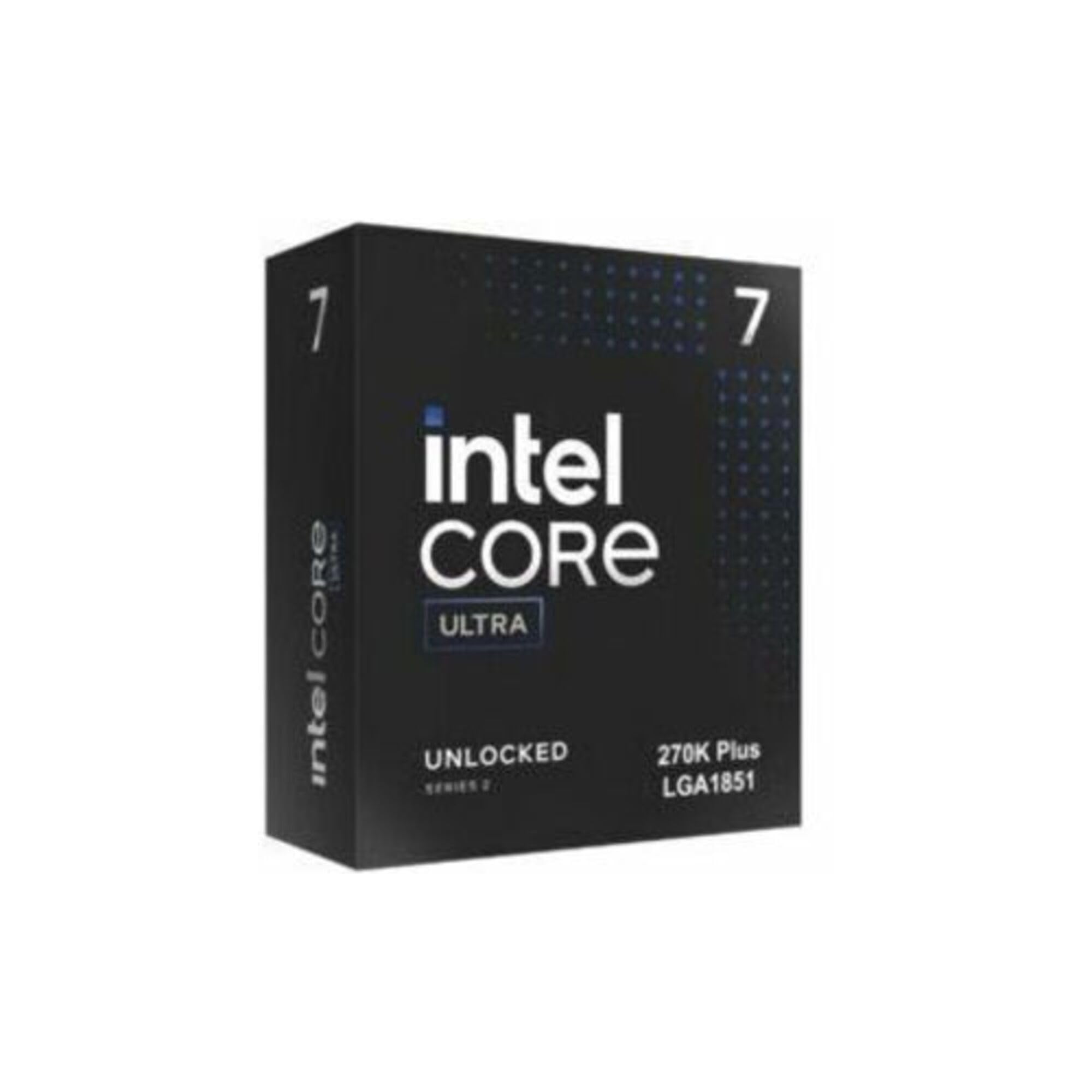
The Core Ultra 7 270K occupies a fascinating niche — it shares the same 8 P-core + 16 E-core configuration as the 285K but with slightly lower boost clocks (5.5 GHz vs 5.7 GHz) and a lower price point. In gaming benchmarks, the difference between the 270K and its bigger sibling is often within 2-3%, making the 270K the smarter pick for builders who want Arrow Lake performance without paying the flagship tax. User reports confirm it outperforms the 285K in several single-threaded tests due to better binning yields.
For VR simracing at ultra-wide resolutions, the 270K demonstrates outstanding frame pacing. Paired with an RTX 5090 and a Pimax Crystal Super headset, users report GPU timings under 9ms at 3560×3560 per eye — performance that previously required a 9800X3D. The 40 MB L3 cache and improved IMC allow the chip to feed data to the GPU faster than Raptor Lake, reducing bottleneck in high-resolution VR where every millisecond of draw call latency matters.
The LGA1851 platform means the 270K requires a new Z890 board, but the platform will support future Intel Core Ultra generations. Thermal output is still significant at 250W turbo, but the chip responds well to a 360mm AIO or large dual-tower air cooler. For enthusiasts who want Intel’s latest architecture and are willing to invest in a new platform, the 270K delivers almost all of the 285K’s gaming performance for a noticeable savings.
Why it’s great
- Nearly identical gaming FPS to 285K at lower cost
- Excellent VR and simulation performance
- Future-proof LGA1851 socket with upgrade path
Good to know
- Platform cost (board + DDR5) adds up quickly
- Requires high-end cooling for sustained turbo
6. Intel Core i7-14700KF

The 14700KF is the value anchor of Intel’s 14th-gen lineup — 20 cores (8 P-cores + 12 E-cores) and 28 threads with a 5.6 GHz turbo boost, but without integrated graphics, which lowers cost and power draw slightly. In gaming, the 8 P-cores dominate single-threaded workloads, delivering frame rates within 5% of the i9-14900K at 1440p while costing substantially less. The 12 E-cores handle background tasks, streaming encoding, and Discord overlays without stealing cycles from the game.
Productivity benchmarks show the 14700KF punching well above its weight class — video encoding, database server workloads, and AI model inference all benefit from the high thread count. Users running SolidWorks, Premiere Pro, or Visual Studio report significant multitasking improvements over 6- and 8-core chips, making this a strong choice for gamers who also do professional work. The 33 MB L3 cache is adequate but not exceptional for cache-sensitive games.
The KF suffix requires a discrete GPU, so this is not suitable for troubleshooting or light desktop use without one. Power draw under all-core load reaches 220W, requiring a capable tower cooler like the Noctua NH-D15 or a 280mm AIO. The LGA1700 platform is mature and affordable, with budget Z690/Z790 boards available for good prices. For a mixed-use build that prioritizes both gaming FPS and workstation throughput, the 14700KF delivers outstanding performance per dollar.
Why it’s great
- Excellent multi-core for video editing and rendering
- Near-i9 gaming performance at a lower price
- Compatible with affordable LGA1700 motherboards
Good to know
- No integrated graphics — troubleshooting requires dGPU
- Requires BIOS update for stability microcode
7. AMD Ryzen 7 5800X

The 5800X remains the premier upgrade for anyone still on an AM4 platform with a 2000-series or 3000-series Ryzen chip. Eight Zen 3 cores with SMT delivering 16 threads at up to 4.7 GHz boost, paired with 36 MB of total cache (4 MB L2 + 32 MB L3), represents a massive generational IPC uplift over earlier Zen parts. Users upgrading from a Ryzen 2600 report 30-40% higher FPS at 1440p and significantly smoother frame times in CPU-bound titles.
Gaming performance is still strong by modern standards — the 5800X matches entry-level Zen 4 chips in most titles when paired with DDR4-3600 memory. The 105W TDP means it runs hotter than newer parts, but a solid dual-tower air cooler keeps it under 80°C during extended gaming sessions. Precision Boost Overdrive (PBO) can push single-core clocks above 5.0 GHz on well-cooled samples, closing the gap with the 7600X in single-threaded workloads.
The trade-off is that AM4 is a dead socket — there is no CPU upgrade beyond the 5800X without buying a new motherboard and DDR5 RAM. However, for users who already own a capable B550 or X570 board and want to maximize their existing platform, the 5800X injects new life into a system without a full rebuild. PCIe 4.0 support means it does not bottleneck modern GPUs, making it a perfectly viable gaming chip for the next 3-4 years.
Why it’s great
- Massive performance gain for AM4 platform users
- Strong single-core with PBO enabled
- PCIe 4.0 support for modern GPUs and drives
Good to know
- No included cooler — requires aftermarket solution
- AM4 socket offers no future CPU upgrade
8. AMD Ryzen 5 7600X

The Ryzen 5 7600X is the gateway to the AM5 platform — a 6-core Zen 4 processor with 5.3 GHz boost that brings DDR5 and PCIe 5.0 support to budget builders. Single-threaded performance is excellent, matching the 5800X in gaming while offering a clean upgrade path to future 3D V-Cache parts. Paired with a RTX 4070 Super, the 7600X delivers 1440p gaming without bottlenecking — users report smooth 80-90 FPS in Cyberpunk and 150+ FPS in Warzone.
The 6-core configuration is the limiting factor in heavily threaded games like Battlefield 2042 or console ports that utilize 8+ threads efficiently. In those titles, the 7600X can show higher CPU utilization and occasional stutter compared to an 8-core part. However, for the vast majority of competitive shooters and action RPGs, 6 fast cores still handily beat 8 slower cores, and the Zen 4 IPC advantage ensures the 7600X stays competitive.
Thermals are higher than expected — the chip runs at 80-85°C under load with a standard air cooler, though AMD rates this as safe. The included Wraith Stealth cooler is insufficient for gaming loads, so factor in a budget tower cooler. The AM5 platform investment (board + DDR5) is the real cost, but it secures access to Zen 5 and future Zen 6 upgrades. For builders starting fresh on a budget, the 7600X offers an unbeatable entry point into a long-lived platform.
Why it’s great
- Strong single-core performance for gaming
- AM5 platform with multi-year upgrade path
- PCIe 5.0 for future GPU and SSD compatibility
Good to know
- 6 cores can bottleneck in heavily threaded games
- Runs hot — aftermarket cooler required
- DDR5 and board cost add to total build price
9. STGAubron Prebuilt Gaming PC (i5 + RX 550)
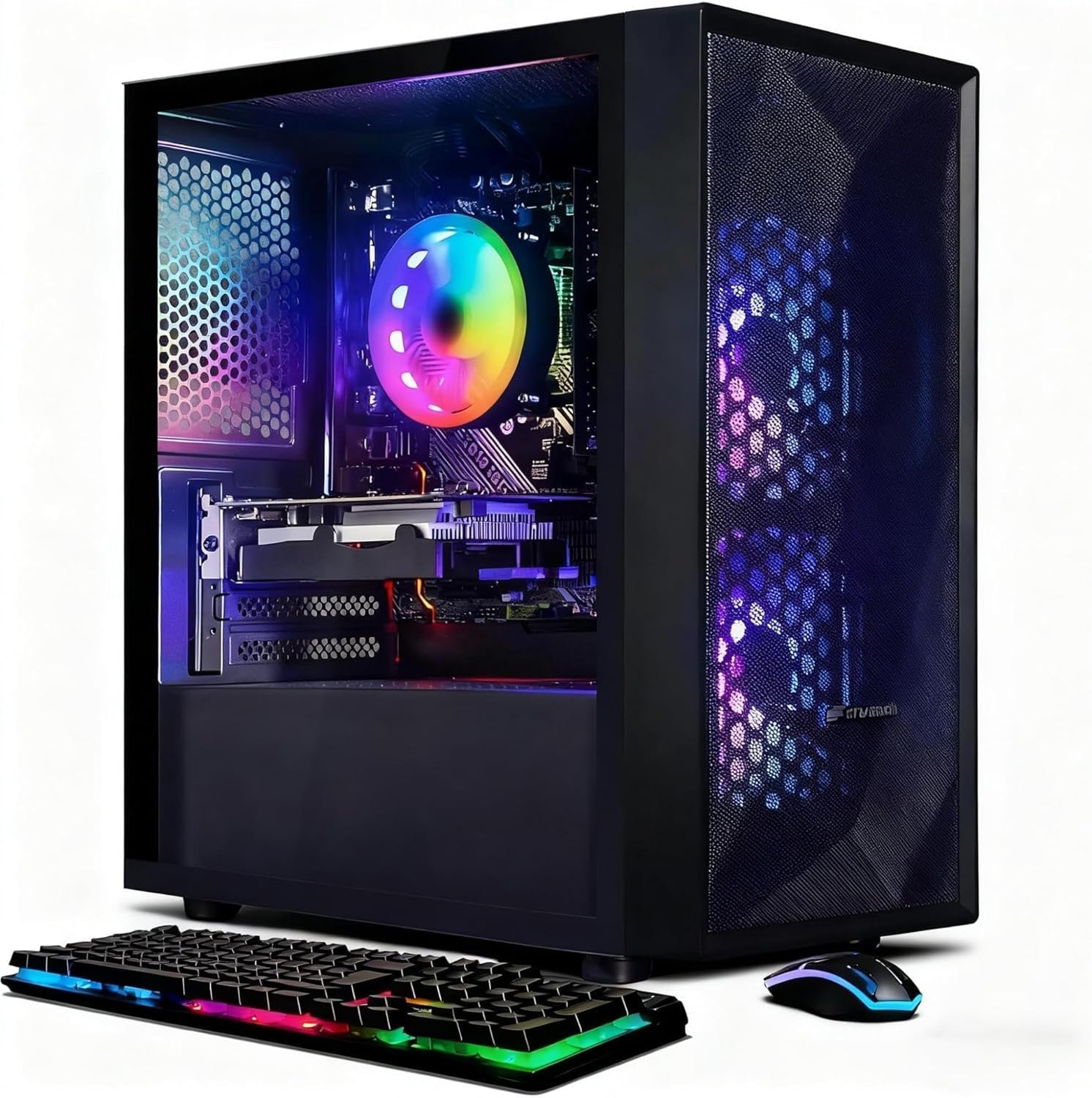
The STGAubron prebuilt is a complete entry-level gaming system centered around an Intel Core i5 processor (up to 3.6 GHz) and an AMD Radeon RX 550 with 4 GB of GDDR5 memory. With 16 GB of DDR4 RAM and a 512 GB SSD, this system is targeted at users who want a turnkey solution for light eSports gaming, homework, and media consumption. The RX 550 is comparable to a GTX 1030, enough for Fortnite at medium settings, Valorant at high settings, and Minecraft with moderate shaders.
The Core i5 CPU at the heart of this system is adequate for basic multitasking — web browsing, Office applications, and streaming video run without issue. The inclusion of Wi-Fi 6 and Bluetooth 5.0 means this PC can connect wirelessly without additional dongles, and the two RGB fans provide enough airflow for the moderate heat output of the i5 and RX 550. The package includes an RGB keyboard and mouse, reducing the total cost of ownership for a first-time PC buyer.
Long-term reliability is a concern — user reports indicate that after 12+ months, cheap generic components can fail, with power supply and motherboard issues appearing. The RX 550 GPU is too weak for modern AAA gaming at playable frame rates, and the i5 CPU lacks the headroom for competitive 144 Hz gaming. This system is best viewed as a functional computer for light gaming and productivity, not a serious gaming rig. For absolute beginners on a tight budget who need everything in one box, it fills a narrow niche.
Why it’s great
- Complete system ready out of the box
- Includes Wi-Fi 6, Bluetooth, keyboard and mouse
- Sufficient for eSports and light productivity
Good to know
- RX 550 cannot run modern AAA titles at playable FPS
- Long-term reliability of generic components is uncertain
FAQ
Is 3D V-Cache worth the premium over standard Ryzen CPUs?
How many cores do I actually need for gaming in 2025?
Should I upgrade my AM4 system or switch to AM5?
Final Thoughts: The Verdict
For most users, the best cpu for gaming pc winner is the AMD Ryzen 7 9800X3D because its 104 MB of 3D V-Cache delivers the lowest frame-time variance and highest 1% lows in any gaming scenario. If you want the best performance-per-dollar, grab the AMD Ryzen 7 7800X3D. And for a build that splits evenly between gaming and professional workloads, nothing beats the Intel Core i9-14900K.

Mo Maruf
I created WellFizz to bridge the gap between vague wellness advice and actionable solutions. My mission is simple: to decode the research and give you practical tools you can actually use.
Beyond the data, I am a passionate traveler. I believe that stepping away from the screen to explore new environments is essential for mental clarity and physical vitality.