Our readers keep the lights on and my smoothie glass nicely filled. As an Amazon Associate, I earn from qualifying purchases.
Building a gaming rig on a strict budget means every dollar spent on the CPU has to earn a frame. The processor you choose determines your maximum framerate, how smoothly your desktop feels, and how long you can wait before your next upgrade, making that single purchase the most critical decision in your entire build. Choosing a chip that balances single-thread speed, core count, and platform cost separates a balanced system from a frustrating bottleneck.
I’m Mohammad Maruf — the founder and writer behind WellFizz. I’ve dug through hundreds of benchmark runs, socket compatibility charts, and real owner experiences to find the processors that deliver genuine gaming value without wasting a cent on features you will never use.
Whether you are upgrading an ageing socket or building fresh from scratch, this guide cuts through the marketing noise to reveal the best cpu for budget gaming pc builders can trust right now.
How To Choose The Best CPU For Budget Gaming PC
Selecting a gaming CPU on a budget isn’t just about the sticker price. You are buying into an entire ecosystem of motherboards, memory, coolers, and upgrade paths. A cheap chip on a dead socket can cost you more in the long run than a slightly pricier chip on a modern platform.
Benchmarks Over Core Count
Gaming performance is dominated by single-thread and lightly-threaded workloads. Eight slow cores will lose to four fast ones in most titles. Look at PassMark single-thread scores and Cinebench R23 single-core numbers as your primary comparison tools — not the box’s “4K Ready” sticker.
Socket and Platform Cost
A great CPU deal can be ruined by an expensive motherboard requirement. For AMD, AM4 offers incredible value with a huge library of cheap B450 and B550 boards. For Intel, LGA 1700 motherboards are now heavily discounted. Always factor in the cost of a board that supports the features you actually need—like PCIe 4.0 for future GPUs—and never buy an LGA 1200 or earlier board just to save a few dollars today.
Thermal Solution Included or Required?
Budget builds often blow a chunk of cash on an aftermarket cooler that a mid-range chip didn’t need. The AMD Ryzen 5 5600X comes with a capable Wraith Stealth cooler. The Intel Core i5-6600K and AMD Ryzen 5 9600X ship without any cooler at all. Factor that – cooler into your total budget before you click “Add to Cart.”
Unlocked Multipliers and Overclocking
“K” (Intel) and “X” (AMD) SKUs allow manual overclocking, but that requires a pricier motherboard and a beefier cooler. For a budget builder, a locked chip that turbos to 4.6GHz out of the box often gives you 95% of the performance of an overclocked chip without the added cost, complexity, or risk.
Quick Comparison
On smaller screens, swipe sideways to see the full table.
| Model | Category | Best For | Key Spec | Amazon |
|---|---|---|---|---|
| AMD Ryzen 5 5600X | Mid-Range | Best Overall Gaming Value | 6C/12T, 4.6 GHz Boost, 65W TDP | Amazon |
| AMD Ryzen 5 9600X | Mid-Range | AM5 Future-Proofing | 6C/12T, 5.4 GHz Boost, Zen 5 | Amazon |
| AMD Ryzen 9 5900XT | Premium | Heavy Multitasking + Gaming | 16C/32T, 4.8 GHz Boost, 72MB Cache | Amazon |
| Intel Core Ultra 9 285K | Premium | High-End Workstation | 24C (8P+16E), 5.7 GHz, 40MB Cache | Amazon |
| Intel Core i5-6600K | Budget | Low-Cost LGA 1151 Upgrade | 4C/4T, 3.9 GHz Boost, Unlocked | Amazon |
| Intel Core i7-3770 | Budget | DDR3 Platform Refresh | 4C/8T, 3.9 GHz, 8MB Cache | Amazon |
| Intel Core i5-4570 | Budget | Entry-Level Basic PC | 4C/4T, 3.6 GHz Boost, HD 4600 Graphics | Amazon |
| Beelink SER5 Pro Mini PC | Pre-built | Space-Saving 4K Media/Gaming | Ryzen 5 5625U, 16GB RAM, 480GB SSD | Amazon |
| STGAubron Prebuilt PC | Pre-built | Starter Gaming Desktop | i5-3.6GHz, RX 550 4G, 16GB RAM | Amazon |
In‑Depth Reviews
1. AMD Ryzen 5 5600X

The Ryzen 5 5600X is the chip against which all budget gaming CPUs are measured. Built on the Zen 3 architecture, its six cores and twelve threads deliver a Cinebench R23 single-core score around 1600, which translates directly into high and consistent framerates in competitive shooters and AAA titles alike. Owners report running Cyberpunk 2077 at around 90 FPS on 1080p Ultra settings, proving that this 65W processor punches far above its thermal class.
Power efficiency is a standout trait. The 7nm process keeps the chip cool enough that the bundled Wraith Stealth cooler is adequate for stock operation, though an inexpensive tower cooler unlocks quieter sustained loads. The 35MB total cache (32MB L3) reduces memory latency significantly, giving the 5600X a measurable edge over Intel competitors in CPU-bound scenarios like simulation games and real-time strategy titles.
Wide compatibility with AM4 motherboards is a major advantage — a BIOS update on a budget B450 board is all it takes. The lack of integrated graphics means you must pair it with a dedicated GPU from day one, but for a gaming build, that’s standard practice. Reviewers consistently note the 5600X’s ability to deliver “100+ FPS” in popular e-sports titles without breaking a sweat, making it the gold standard for balanced, cost-effective gaming performance.
Why it’s great
- Class-leading single-thread speed for gaming
- Very low 65W TDP runs cool on stock cooler
- Massive AM4 motherboard ecosystem at low prices
Good to know
- No integrated graphics — dedicated GPU required
- Stock cooler gets noisy under heavy load
- PCIe 4.0 support requires B550/X570 board
2. AMD Ryzen 5 9600X

The Ryzen 5 9600X brings AMD’s latest Zen 5 architecture to the budget conversation, offering a 5.4 GHz max boost clock on a 65W TDP. This six-core, twelve-thread processor demonstrates a meaningful IPC uplift over Zen 4, translating to snappier system response and higher minimum framerates in CPU-bound situations. Owners report it running under 50°C under typical gaming loads with a decent aftermarket cooler, and it handles 6400MT/s DDR5 memory without instability.
Moving to the AM5 platform is the real story here. You gain access to DDR5 memory and PCIe 5.0 support on compatible B650 and X670 motherboards, creating a clear upgrade path to future Ryzen 9000-series chips. The cooler is not included, so factor in the cost of a solid air cooler or an entry-level AIO — a thermalright Phantom Spirit or similar will keep the 9600X well within its comfort zone.
At 1440p and 4K, gaming performance is nearly indistinguishable from much pricier chips, as the GPU becomes the primary bottleneck. Reviewers use words like “perfect CPU” for pure gaming builds, and note that it never exceeds 65°C even under sustained loads. This chip is an excellent choice if you want a modern platform with long-term upgradeability without overpaying for cores you won’t use.
Why it’s great
- Strong IPC gains over Zen 4 for snappier gaming
- AM5 platform with DDR5 and PCIe 5.0 support
- Runs cool and power-efficient on a 65W TDP
Good to know
- Requires expensive DDR5 RAM and AM5 motherboard
- No cooler included in the box
- Gaming FPS gains over 5600X are modest at 1440p
3. AMD Ryzen 9 5900XT
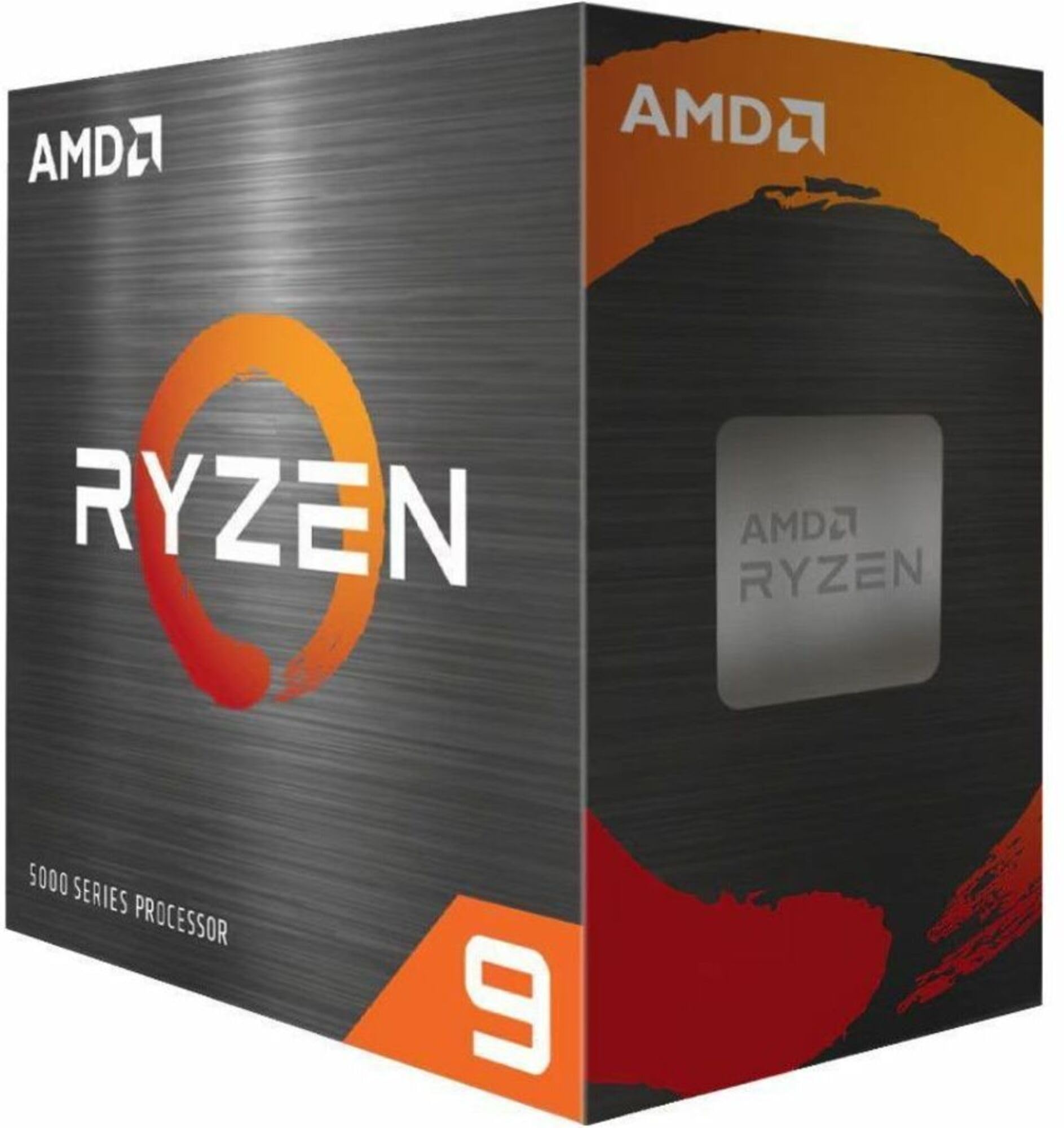
The Ryzen 9 5900XT is a 16-core, 32-thread monster that stays on the AM4 platform, offering exceptional multithreaded performance for users who game and encode, compile, or stream simultaneously. With 72MB of total cache and a 4.8 GHz max boost, it benches faster multi-core than the 5950X in some scenarios because it runs cooler and throttles less aggressively under sustained all-core loads.
Gaming performance is excellent, though not as specialized as the X3D parts for cache-sensitive titles. The two-chiplet design can introduce inter-CCD latency that slightly penalizes games like CS2 or Valorant in certain scenarios, but the raw core speed keeps it competitive. Owners recommend an AIO liquid cooler — a 360mm unit keeps peak temperatures around 80°C during Cinebench runs — and note that the chip is a perfect home server CPU for transcoding and virtualization workloads.
This CPU makes sense if your budget gaming PC also doubles as a productivity workstation. The ability to run OBS, a game, and Discord without frame drops is real. It also extends the life of any AM4 system, allowing a drop-in upgrade without swapping motherboard or RAM, making it one of the best value propositions for users who want high core counts without moving to AM5.
Why it’s great
- 16 cores for heavy multitasking and streaming
- Drop-in upgrade for existing AM4 builds
- Runs cooler than 5950X under sustained load
Good to know
- Gaming latency on dual CCDs can be higher
- Requires a strong AIO cooler — no boxed fan
- Overkill if you only play games
4. Intel Core Ultra 9 285K

Intel’s Core Ultra 9 285K represents a massive architectural shift, moving to a hybrid design with 8 performance cores and 16 efficiency cores. The 5.7 GHz boost clock on the P-cores makes it a brute for gaming, while the 16 E-cores handle background tasks, encoding, and compiling with exceptional efficiency. Owners building SolidWorks workstations report rock-solid stability after 24-hour burn-in tests at around 205W draw with temperatures between 73°C and 78°C under a 360mm AIO.
The LGA 1851 socket and Intel 800-series chipset requirement mean this is a new platform investment. You will need DDR5 memory, and the chip benefits significantly from CUDIMM RAM to hit its rated memory speeds. The integrated graphics are functional for basic display output but not for gaming — you will still need a dedicated GPU for that, making this a pure enthusiast or professional choice.
For a budget gaming PC, the 285K sits at the premium end of the spectrum. It makes sense if you need blazing single-thread speed for competitive gaming at high refresh rates, plus the core count for video editing or 3D rendering on the same machine. Reviewers note it runs easier to cool than previous Intel generations and that the memory controller is stable, even with four sticks populated.
Why it’s great
- Extremely fast single-thread and multi-thread performance
- Stable memory controller with DDR5 support
- Integrated P-core + E-core design for efficient multitasking
Good to know
- Requires new LGA 1851 motherboard and DDR5 RAM
- No cooler included — needs strong 360mm AIO
- Expensive for a pure gaming budget build
5. Intel Core i5-6600K

The i5-6600K was the go-to gaming CPU of its generation. Its four cores lack hyper-threading, but the 3.9 GHz boost clock (easily overclocked to 4.5 GHz with a decent cooler) delivers strong single-thread performance that still keeps up with modern e-sports titles at 1080p. Reviewers running it with a GTX 970 report playing all recent games at the time of review, many at Ultra settings, and note its idle temperatures sit around 40°C without any overclocking.
Platform cost is the i5-6600K’s biggest liability. Skylake requires an LGA 1151 motherboard with a Z170 or Z270 chipset to unlock the overclocking potential, and these boards are now old enough that finding a clean unit is harder. DDR4 support is standard, but the platform is dead-end — there is no upgrade path beyond the 7th-gen chips. The 60W TDP is low, but the chip does not include a stock cooler, forcing you to budget for an aftermarket solution.
This chip is best for users who already own a Z170/Z270 motherboard and want to squeeze every drop of performance from a system built around DDR4. It is also a decent choice for a secondary gaming PC or a LAN box where you want low heat output and don’t mind having only four threads for modern multitasking.
Why it’s great
- Strong overclocking potential for single-thread gaming
- Low power draw generates minimal heat
- High compatibility with DDR4 memory kits
Good to know
- No hyper-threading — limits multitasking
- Requires Z170/Z270 board for overclocking
- Dead-end platform with no upgrade path
6. Intel Core i7-3770

The i7-3770 is a legendary 22nm Ivy Bridge chip that refuses to die. With four cores and eight threads via hyper-threading, it punches above its core count in modern workloads like photo editing and virtualization. Owners upgrading from an i3-2100 report a night-and-day difference in multitasking smoothness, and those running multiple VMs with folding@home note the stock cooler keeps it stable, though load temperatures can hit 80–95°C on a stress test.
DDR3 memory is the key differentiator here. If you already have a pile of DDR3 RAM from an old build, the i7-3770 lets you build a usable gaming PC for very little money. You need an LGA 1155 motherboard — ideally a B75 or Z77 chipset for decent features. The integrated Intel HD 4000 graphics can handle basic desktop use and older games, giving you time before adding a dedicated GPU.
In a pure budget gaming context, the i7-3770 is strictly for ultra-low-cost builds or nostalgia projects. It will bottleneck modern GPUs at resolutions above 1080p, and the single-thread performance is roughly equivalent to a modern entry-level chip. It is a perfectly serviceable chip for older AAA games (pre-2019) and any e-sport title, but do not expect high framerates in Cyberpunk 2077 or Baldur’s Gate 3.
Why it’s great
- Hyper-threading helps with multitasking
- Uses cheap DDR3 RAM on LGA 1155
- Integrated graphics for temporary no-GPU use
Good to know
- Shows its age in modern CPU-bound games
- Runs hot with stock cooler under sustained load
- No PCIe 4.0 or DDR4 support
7. Intel Core i5-4570

The i5-4570 is a Haswell quad-core chip with a 3.6 GHz boost clock and onboard Intel HD 4600 graphics. It has no hyper-threading and no unlocked multiplier, but its single-thread performance is competitive for its generation, with a PassMark score around 7500. Owners running it on ASRock boards report rock-solid stability over six years of heavy use, handling semi-pro photo processing and light CAD work without complaint.
For a pure budget gaming build, the i5-4570 works best as a placeholder chip. It pairs well with something like an RX 580 or GTX 1650 Super, delivering playable 1080p performance in most games, though CPU-bound titles may drop below 60 FPS in crowded scenes. The integrated graphics are useful for a troubleshooting fallback or a very basic multimedia PC, but do not expect to run any modern 3D game smoothly without a dedicated GPU.
The LGA 1150 socket is old and the platform is dead, but motherboards are dirt cheap on the used market. If you are building a PC for a child or using it as a secondary system for indie games and emulation, the i5-4570 offers respectable value. It is not the chip for competitive Fortnite or Warzone at high refresh rates, but it gets the job done for casual gaming on a shoestring budget.
Why it’s great
- Proven long-term reliability over many years
- Integrated HD 4600 graphics for basic desktop use
- Very cheap used motherboards available
Good to know
- Four threads limit modern multitasking
- No overclocking support
- Struggles with CPU-heavy games
8. Beelink SER5 Pro Mini PC

The Beelink SER5 Pro is a complete pre-built mini PC powered by the AMD Ryzen 5 5625U, a 7nm 6-core/12-thread mobile processor. This is not a DIY CPU purchase — it is a turnkey solution that comes with 16GB of DDR4 RAM, a 480GB NVMe SSD, and Windows 11 pre-installed. The integrated AMD Radeon Graphics (7 CUs at 1800 MHz) can handle 4K video playback and light e-sports gaming, with owners reporting smooth League of Legends, DOTA 2, and even some Overwatch at medium settings.
The form factor is the star here. At a tiny footprint that mounts behind a monitor via VESA, it frees up desk space completely. Triple display output via HDMI, DP, and USB-C, plus WiFi 6 and Bluetooth 5.2, make this a versatile HTPC or general-use machine. Many reviewers use it as a bedroom media center connected to a smart TV, praising its fast boot times and silent operation under normal workloads.
As a gaming machine, the SER5 Pro is limited to light titles and emulation. The mobile processor lacks the raw single-thread grunt of a desktop chip, and the integrated graphics will not run AAA games at acceptable framerates. Some users note that changing the BIOS fan settings is necessary to prevent overheating during extended use, and one report mentions the unit dying just after the one-year warranty expired. It is best viewed as a convenient, quiet desktop that can play older games, not a gaming rig.
Why it’s great
- Ultra-compact form factor saves significant desk space
- Ready to use out of the box with RAM, SSD, and OS
- Triple 4K display output for productivity setups
Good to know
- Cannot match desktop CPU/GPU gaming performance
- Requires BIOS tweaking for adequate fan curve
- Limited upgrade and repair options compared to a full PC
9. STGAubron Prebuilt Gaming PC
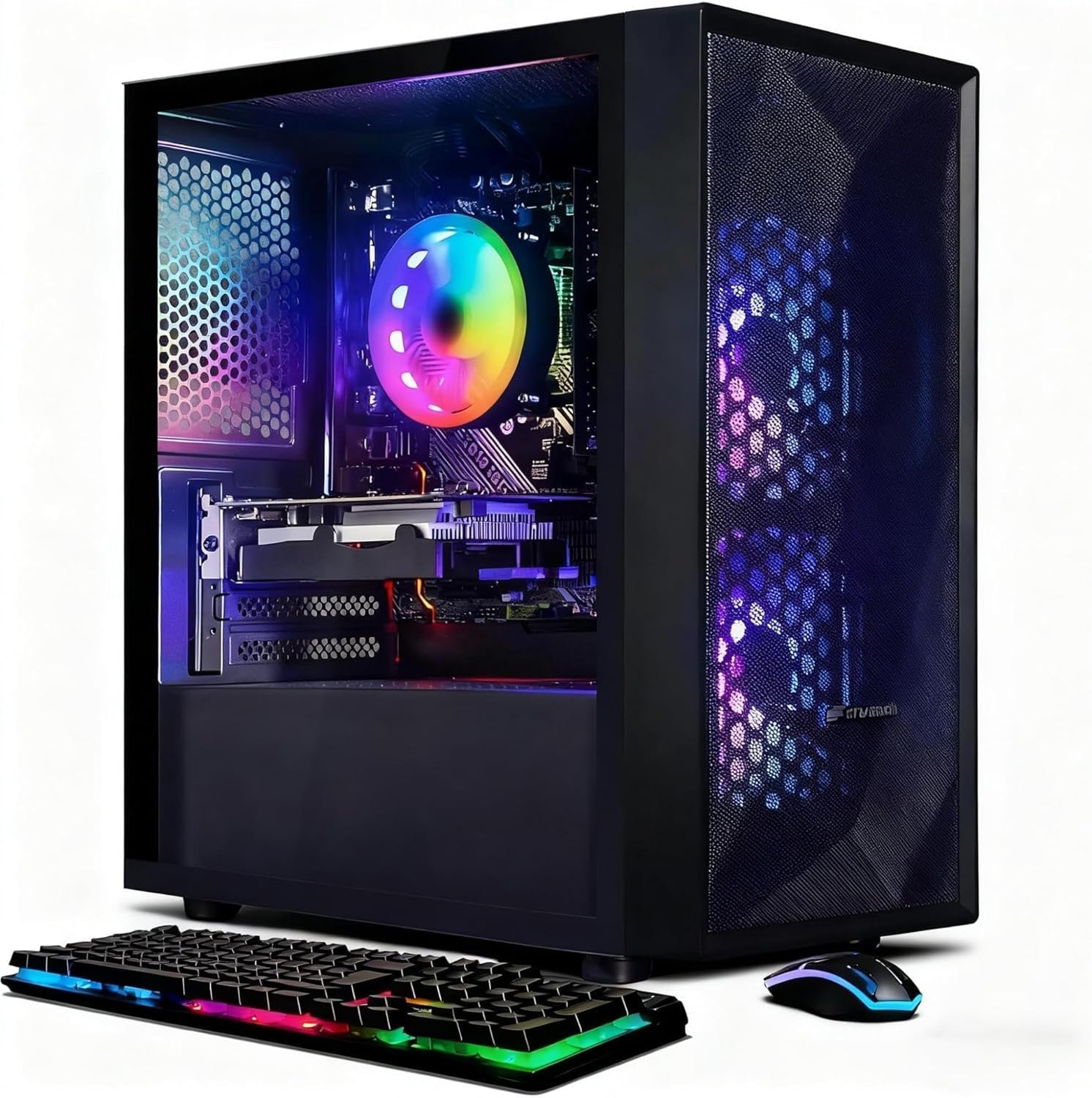
The STGAubron Gaming PC is a complete pre-built system featuring a quad-core Intel Core i5 (up to 3.6 GHz), 16GB of DDR4 memory, a 512GB SSD, and an AMD Radeon RX 550 with 4GB of GDDR5 VRAM. It comes bundled with an RGB keyboard and mouse, making it a true plug-and-play package for beginners. Owners report that it runs Fortnite and Call of Duty at playable framerates, and the included RGB fans add a touch of visual flair.
Reliability is a recurring theme in customer feedback. Several reviewers report that their unit failed within months of purchase, citing issues like graphics card failure, LED malfunction, and sound problems. The customer service team appears responsive, offering replacements in many cases, but the pattern suggests component quality and assembly consistency are major concerns. The RX 550 is a very low-end GPU by modern standards — it is fine for MOBAs and older shooters but will struggle with any AAA title released after 2020.
This system is best viewed as a starter PC for a young gamer or someone who wants to play low-demand games like Roblox, Minecraft, and Valorant without any building effort. The CPU itself is adequate for these tasks, but the overall build quality and the weak GPU limit its long-term viability. Enthusiasts should note that the motherboard and PSU are generic, making future upgrades potentially problematic if proprietary connectors are used.
Why it’s great
- Fully pre-built with RAM, storage, and peripherals included
- Responsive customer service for replacement requests
- Sufficient for lightweight e-sports and indie games
Good to know
- RX 550 GPU is underpowered for modern AAA games
- Multiple reports of component failure within months
- Uses generic parts that complicate future upgrades
FAQ
How many cores do I need for a budget gaming PC?
Should I buy a CPU with integrated graphics for a gaming build?
Is it worth buying an old i7 instead of a new i5 for gaming?
What does the “K” or “X” suffix mean on Intel and AMD CPUs?
Final Thoughts: The Verdict
For most users, the best cpu for budget gaming pc winner is the AMD Ryzen 5 5600X because it delivers outstanding single-thread performance at a low TDP, comes with a usable stock cooler, and slots into the vast, inexpensive AM4 ecosystem. If you want modern platform features like DDR5 and PCIe 5.0 with an eye on future upgrades, grab the AMD Ryzen 5 9600X. And for a drop-in core-count upgrade on an existing AM4 board — especially if you stream or do productivity work — nothing beats the AMD Ryzen 9 5900XT.

Mo Maruf
I created WellFizz to bridge the gap between vague wellness advice and actionable solutions. My mission is simple: to decode the research and give you practical tools you can actually use.
Beyond the data, I am a passionate traveler. I believe that stepping away from the screen to explore new environments is essential for mental clarity and physical vitality.