Building a rig around the new Radeon RX 9060 XT with 16GB of VRAM means your processor choice directly dictates whether that frame buffer gets fed or starved. Pairing a budget quad-core with this GPU leaves serious performance on the table, while an overpowered workstation chip can inflate your build cost without real gaming gains. The balance is narrower than most builders expect.
I’m Mohammad Maruf — the founder and writer behind WellFizz. I’ve spent many hours cross-referencing core architectures, cache hierarchies, and real-world gaming benchmarks to isolate which processors actually unlock the full potential of the 9060 XT 16GB without wasting budget on unused cores.
This guide breaks down nine CPUs ranging from value-focused eight-core parts to 24-thread beasts, each evaluated specifically for how it handles the demands of a modern mid-to-high-end GPU. Finding the right cpu for 9060 xt 16gb depends on matching core count, clock speed, and platform longevity to your exact gaming and productivity needs.
How To Choose The Best CPU For 9060 XT 16GB
The 9060 XT 16GB is a strong mid-to-high-end card that shines at 1440p and handles 4K with adjusted settings. Your CPU choice needs to keep its PCIe lanes fed and its frame buffer full without creating a bottleneck. Three specs dominate this decision.
Single-Threaded Boost Clock
The 9060 XT relies on the CPU to issue draw calls quickly. A processor with a 5.0 GHz or higher boost clock ensures the GPU never waits for instructions, especially in esports and older titles where the CPU is the limiting factor. Lower-clocked multi-core chips often leave 20-30% GPU performance unused in those scenarios.
Cache Architecture and Size
L3 cache acts as a high-speed holding area for game data. AMD’s 3D V-Cache technology stacks additional L3, reducing memory latency and improving frame-time consistency in simulation and open-world titles. For a 16GB VRAM card, larger cache helps when the game auto-switches textures—the CPU has data ready without waiting for system memory.
Platform and PCIe Version
The 9060 XT uses PCIe 5.0 x16 for the full 128 GB/s bandwidth. Pairing it with a PCIe 4.0 CPU and board still works but caps theoretical bandwidth. More importantly, choosing AM5 (Ryzen 7000/9000) or LGA1851 (Intel Core Ultra 200) gives you a path to drop in a future GPU—while an LGA1700 board is a dead end after 14th-gen.
Quick Comparison
On smaller screens, swipe sideways to see the full table.
| Model | Category | Best For | Key Spec | Amazon |
|---|---|---|---|---|
| Ryzen 7 7800X3D | Mid-Range | Pure gaming / 1440p | 104 MB L3 Cache | Amazon |
| Ryzen 7 9800X3D | Premium | High-refresh eSports | 5.2 GHz, 3D V-Cache | Amazon |
| Ryzen 9 9900X3D | Premium | Streaming + gaming | 12 Cores / 24 Threads | Amazon |
| Intel Core Ultra 9 285K | Premium | Workstation + gaming | 24 Cores, 5.7 GHz | Amazon |
| Intel Core i5-14600KF | Mid-Range | Budget 1440p build | 14 Cores / 20 Threads | Amazon |
| Intel Core Ultra 7 265KF | Mid-Range | Moderate gaming | 5.5 GHz Boost Clock | Amazon |
| GIGABYTE RX 9060 XT (GPU) | GPU | Reference pairing | PCIe 5.0, 16GB GDDR6 | Amazon |
| Sapphire RX 9060 XT (GPU) | GPU | Compact 1440p build | 3290 MHz Core Clock | Amazon |
| XFX Swift RX 9060 XT (GPU) | GPU | Budget 1080p / 1440p | 3320 MHz Boost Clock | Amazon |
In‑Depth Reviews
1. AMD Ryzen 7 7800X3D

The Ryzen 7 7800X3D hits the sweet spot for the 9060 XT 16GB. Its 96MB of stacked L3 cache drastically reduces memory latency, which directly translates to tighter frame pacing and higher 1% lows in CPU-bound titles. Gamers at 1440p see the GPU hover near 95-99% utilization consistently.
Thermal behavior is remarkably tame for a high-performance chip. Users report gaming loads between 65-75°C even with a modest tower air cooler. The 120W TDP means you save on both the cooler and the monthly power bill compared to Intel’s 250W flagship parts.
On the AM5 platform, you get PCIe 5.0 support and a confirmed upgrade path to future Ryzen 9000-series CPUs. That makes the 7800X3D a long-term investment rather than a dead-end socket. The integrated Radeon Graphics controller also handles basic display output during troubleshooting.
Why it’s great
- 3D V-Cache eliminates CPU bottlenecks in simulation and open-world games
- Runs cool on affordable air coolers, saving build budget
- AM5 platform allows future CPU upgrades without replacing the motherboard
Good to know
- Not the best for heavy productivity workloads like 8K video encoding
- Requires BIOS update on some older AM5 boards before installation
2. AMD Ryzen 7 9800X3D
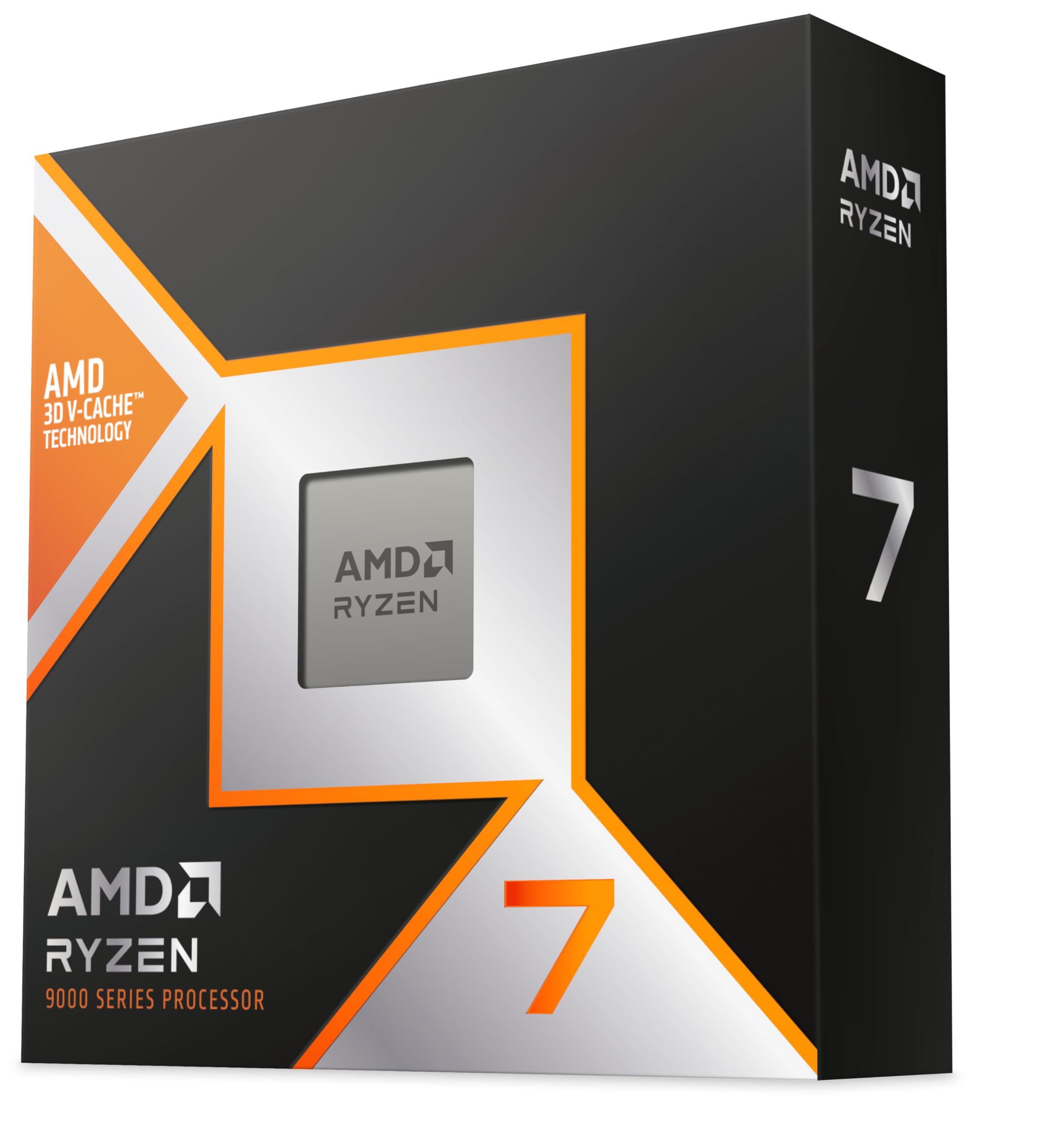
The 9800X3D represents peak gaming performance on the AM5 socket. Its Zen 5 architecture delivers roughly 16% IPC uplift over Zen 4, and the second-generation 3D V-Cache improves thermal transfer so the chip sustains higher clocks during long gaming sessions. Paired with the 9060 XT, it pushes well beyond 200 FPS in esports titles.
Real-world reviews confirm that the 9800X3D runs cooler than the outgoing 7950X3D, with many users reporting high-50s to low-70s Celsius under gaming loads with a 240mm AIO. The drop-in compatibility with existing AM5 boards makes it a simple upgrade for anyone already on the platform.
For a pure gaming rig where the 9060 XT is the only graphics card, the 9800X3D leaves nothing on the table. Its 96MB L3 cache combined with the GPU’s 16GB VRAM creates a massive data pipeline that handles 4K texture streaming without micro-stutter.
Why it’s great
- World’s fastest gaming processor with second-gen 3D V-Cache
- Drop-in upgrade on existing AM5 boards with BIOS update
- Excellent power efficiency relative to gaming performance delivered
Good to know
- No integrated graphics—requires dedicated GPU for display output
- Premium pricing places it above budget-friendly options
3. AMD Ryzen 9 9900X3D

The 9900X3D splits the difference between gaming and content creation. Twelve Zen 5 cores with simultaneous multithreading deliver 24 threads for video encoding, 3D rendering, and live streaming, while the 140MB total cache keeps the 9060 XT fed during high-resolution texture loads. Users report it tears through Blender renders and Unreal Engine compiles.
Thermal performance benefits from the same improved 3D V-Cache stacking as the 9800X3D, so the chip stays within mid-70s under sustained all-core loads with a quality 240mm AIO. The 120W TDP is easy to manage and doesn’t require exotic cooling solutions.
For builders who game at 1440p but also edit video or run VMs, the 9900X3D offers the best of both worlds. It pairs naturally with the 9060 XT’s 16GB VRAM for tasks like local LLM inference or photo editing where both CPU and GPU memory matter.
Why it’s great
- 12 cores handle productivity without sacrificing gaming performance
- Massive 140MB cache reduces draw-call bottlenecks with large textures
- AM5 platform ensures future CPU and GPU upgrade options
Good to know
- Not significantly faster than 9800X3D for pure gaming
- Availability can be inconsistent at launch
4. Intel Core Ultra 9 285K

The Core Ultra 9 285K is Intel’s flagship for the LGA1851 platform, featuring 24 cores (8 P-cores and 16 E-cores) with a 5.7 GHz boost clock. Its performance hybrid architecture excels in heavily threaded workloads like CAD, video transcoding, and software compilation. Users running SolidWorks or Blender report stable operation with AIO cooling in the 70-80°C range under sustained load.
PCIe 5.0 support is native on the 800-series chipset, giving the 9060 XT full bandwidth. The 40MB cache helps in gaming but doesn’t match the 3D V-Cache advantage in cache-sensitive titles. Paired with the 16GB VRAM GPU, the 285K handles 4K gaming well but truly shines in simultaneous gaming + streaming scenarios.
One notable advantage is the Arrow Lake architecture’s memory controller stability—users report successful 4-DIMM DDR5 configurations at 6000 MHz without crashes. The LGA1851 socket also supports future Core Ultra 300-series CPUs.
Why it’s great
- 24 cores handle professional workloads with ease
- Up to 5.7 GHz boost for single-threaded gaming performance
- Stable memory controller supports high-capacity DDR5
Good to know
- Requires LGA1851 motherboard—no backward compatibility
- Draws up to 250W under full turbo load
5. Intel Core i5-14600KF

The 14600KF offers the best price-to-performance ratio for builders pairing a 9060 XT. Its six P-cores hit 5.3 GHz, providing enough single-threaded speed to avoid GPU bottlenecks in most titles, while the eight E-cores handle background tasks like Discord and OBS without stealing gaming resources. Users report smooth 1440p gaming with an RTX 3080 or similar-tier card.
Memory flexibility is a major advantage here—the 14600KF supports both DDR4 and DDR5, letting budget builders reuse existing RAM kits. The 125W base power and 181W turbo draw require at least a 240mm AIO for sustained loads, but a quality air cooler suffices for gaming.
The LGA1700 platform is a dead end for CPU upgrades beyond 14th-gen, so this choice makes the most sense for builders who plan to keep the motherboard for 4-5 years. Contact frames are recommended to prevent LGA1700 socket bending issues described in user reviews.
Why it’s great
- Best value for 1440p gaming—strong single-threaded performance
- DDR4 and DDR5 support saves money on memory
- 14 cores handle multitasking without stutter
Good to know
- LGA1700 platform has no future CPU upgrade path
- Requires BIOS update on 600-series boards
6. Intel Core Ultra 7 265KF

The Core Ultra 7 265KF sits in a sweet spot between the i5 and i9, offering eight P-cores and twelve E-cores with a 5.5 GHz boost. Its 36MB cache and 20 threads deliver solid gaming performance while leaving headroom for light encoding tasks. User reviews note stable performance in CoD and Battlefield titles after BIOS updates.
Thermal behavior is much improved over Intel’s 13th and 14th-gen chips—users report stable temperatures in the mid-60s gaming, with light desktop use staying under 50°C even with an air cooler. The 125W base power means it doesn’t require an expensive cooling setup.
Like the 285K, the 265KF needs an Intel 800-series motherboard with LGA1851 socket. That’s a strict requirement—no backward compatibility with LGA1700 boards. For those building fresh, the platform cost is comparable to AM5.
Why it’s great
- Good balance of gaming and productivity performance
- Runs cool on affordable cooling solutions
- Native PCIe 5.0 support for full GPU bandwidth
Good to know
- Requires brand-new LGA1851 motherboard—no legacy support
- Limited user reviews available compared to established chips
7. GIGABYTE Radeon RX 9060 XT Gaming OC 16G

The GIGABYTE RX 9060 XT Gaming OC is the GPU reference for this buying guide. Its WINDFORCE cooling system with Hawk fans and server-grade thermal gel keeps GDDR6 memory temperatures under 75°C even during extended gaming sessions. Users report rock-solid stability in Battlefield 6 at ultra settings with smooth frame pacing.
PCIe 5.0 x16 support ensures full bandwidth with modern CPUs, and the dual-slot design fits most ATX cases. The 16GB VRAM handles 1440p texture packs and 4K medium settings without running out of memory, making it a natural pair with any of the CPUs listed here.
RGB lighting adds aesthetic flexibility for themed builds, but the real selling point is the quiet fan curve—fans remain off under low load and ramp gradually, keeping noise below 35 dB during gaming. The card is larger than expected (11 inches), so case compatibility should be checked.
Why it’s great
- Quiet zero-RPM fan mode for desktop use
- PCIe 5.0 support future-proofs the GPU
- Excellent 1440p performance across modern titles
Good to know
- Large 11-inch length—verify case clearance
- Ray tracing performance is decent but not class-leading
8. Sapphire Pulse AMD Radeon RX 9060 XT Gaming OC

The Sapphire Pulse version of the 9060 XT maxes out at 3290 MHz core clock, making it the fastest factory-clocked option in this roundup. Its compact size fits smaller mATX or ITX cases where larger cards won’t go. Users report edge temperatures in the mid-50s Celsius, with memory staying under 70°C under load.
Linux support is rock solid according to user reviews—no driver issues with Devuan or Ubuntu for Blender and local LLM workloads. The 16GB VRAM is particularly useful for AI inference tasks that require loading large models into memory. The card uses a single 6+2-pin power connector, keeping cable management clean.
The 128-bit memory interface is the limiting factor here—bandwidth at 20 GHz effective is 320 GB/s, enough for 1440p gaming but not as future-proof as wider interfaces. Paired with a fast CPU like the 7800X3D, the combination delivers smooth 1440p and solid 4K medium settings.
Why it’s great
- Highest core clock among 9060 XT variants at 3290 MHz
- Compact size fits small form factor builds
- Excellent Linux compatibility for productivity
Good to know
- 128-bit memory interface limits high-resolution bandwidth
- Thick back bracket can make installation tight in some cases
9. XFX Swift AMD Radeon RX 9060 XT OC Gaming Edition
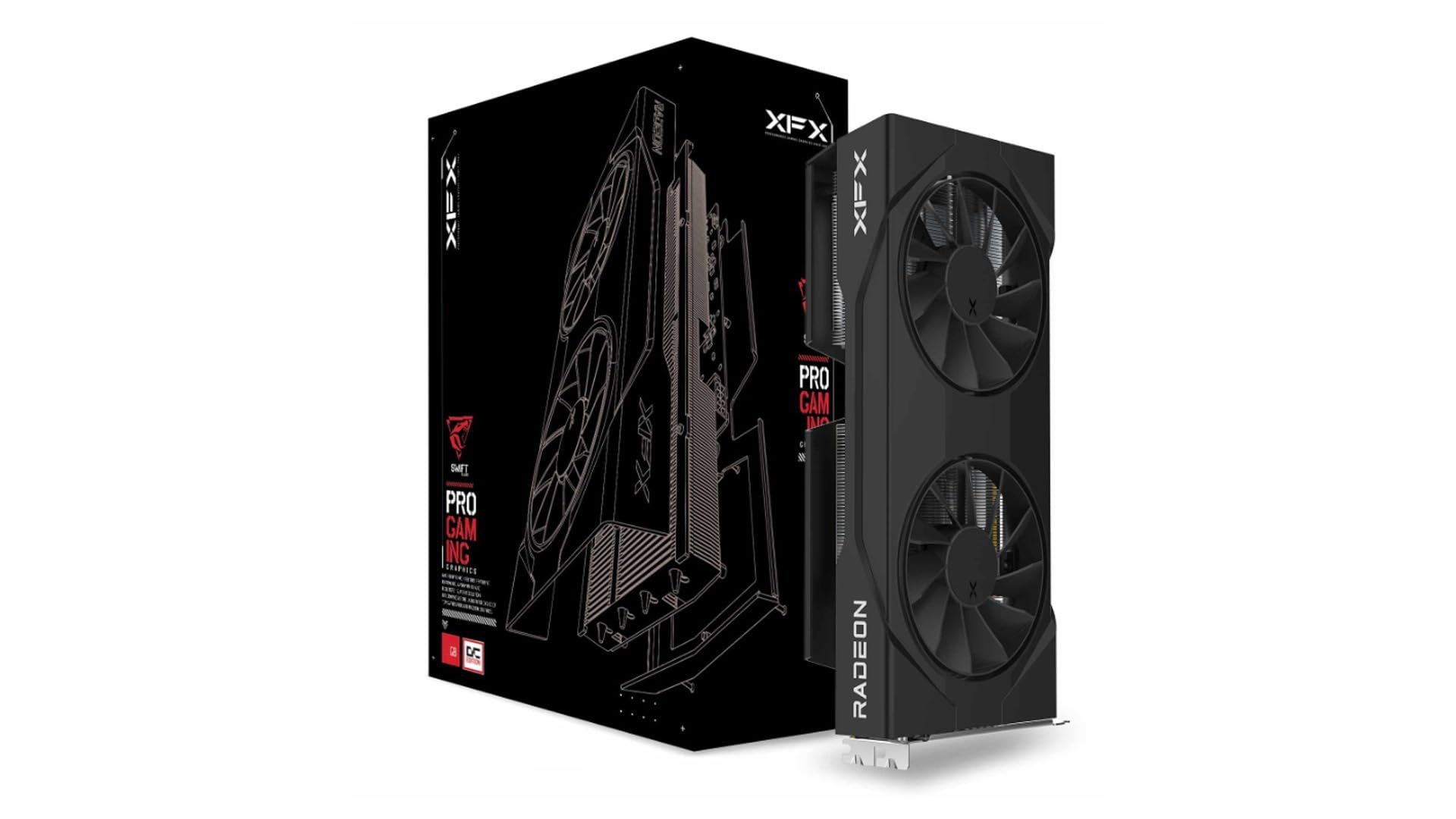
The XFX Swift RX 9060 XT brings the boost clock up to 3320 MHz, slightly edging out the Sapphire variant. Its dual-fan cooling solution keeps temps around 60°C under gaming load according to user reviews, and the card runs silently. Timespy scores around 17,000 put it solidly in upper-mid-range territory.
The Swift is optimized for 1080p and entry-level 1440p gaming. It handles 95% of modern AAA titles at max settings in 1080p without overheating, and maintains playable 60+ FPS in 1440p with high settings. The 16GB VRAM is overkill for 1080p today but future-proofs against texture-heavy upcoming titles.
Output ports are limited to 2 DisplayPort and 1 HDMI, which may be a constraint for multi-monitor setups. Users running stock trading or productivity with four monitors needed to use motherboard HDMI for the fourth display. For gaming-focused builds, this isn’t an issue.
Why it’s great
- Highest boost clock in this roundup at 3320 MHz
- Runs cool and quiet even under gaming load
- Excellent price-to-performance for 1080p gaming
Good to know
- Only 3 display outputs (2 DP + 1 HDMI)
- Not ideal for ultra settings 4K gaming
FAQ
Will a PCIe 4.0 CPU bottleneck the 9060 XT PCIe 5.0 GPU?
Do I need 3D V-Cache for a 16GB VRAM GPU?
Final Thoughts: The Verdict
For most users, the cpu for 9060 xt 16gb winner is the AMD Ryzen 7 7800X3D because its 3D V-Cache eliminates CPU bottlenecks at 1440p while keeping platform cost reasonable with AM5. If you want higher gaming framerates for competitive eSports, grab the Ryzen 7 9800X3D. And for a productivity-first build that still games well, nothing beats the Ryzen 9 9900X3D.

Mo Maruf
I created WellFizz to bridge the gap between vague wellness advice and actionable solutions. My mission is simple: to decode the research and give you practical tools you can actually use.
Beyond the data, I am a passionate traveler. I believe that stepping away from the screen to explore new environments is essential for mental clarity and physical vitality.