Our readers keep the lights on and my smoothie glass nicely filled. As an Amazon Associate, I earn from qualifying purchases.
Pairing an RTX 5090 with a weak CPU creates a bottleneck that wastes the most powerful consumer GPU ever built. The 5090 demands raw single-core speed, generous cache, and PCIe 5.0 support to feed its 32GB of GDDR7 memory at 4K resolution. Choosing the wrong processor leaves performance on the table every single frame.
I’m Mohammad Maruf — the founder and writer behind WellFizz. I’ve spent hundreds of hours analyzing benchmark data, customer feedback, and architectural differences between AMD’s 3D V-Cache lineup and Intel’s latest Core Ultra platform to find which CPUs actually keep a 5090 fed at 4K and high-refresh gaming.
This guide identifies the processors that eliminate GPU starvation and deliver the smoothest, highest-frame-rate experience possible. You’ll learn exactly why core count alone doesn’t matter, why cache size can double your 1% lows, and how platform longevity affects your upgrade path. Read on for the definitive breakdown of the best cpu for 5090 across every budget and use case.
How To Choose The Best CPU For 5090
Selecting a processor for the RTX 5090 is different from pairing a mid-range card. The 5090’s raw compute power means any CPU that stalls — even for milliseconds — becomes a visible frame-time spike. You need architecture that minimizes latency, not just one that advertises high core counts.
Cache Architecture Matters More Than Clock Speed
AMD’s 3D V-Cache technology stacks additional L3 cache on top of the CPU die, dramatically reducing the number of trips to system memory. For the 5090, this translates to significantly higher 1% and 0.1% lows in CPU-bound scenes. Intel’s approach uses a larger L2 cache per P-core and relies on faster DDR5 memory to compensate. In gaming workloads, the extra cache from AMD’s X3D chips consistently delivers smoother frame delivery.
PCIe Generation and Lane Count
The RTX 5090 uses PCIe 5.0 x16 for maximum bandwidth. While PCIe 4.0 x16 still works with minimal loss at 4K, future games and higher-resolution VR headsets will benefit from the full Gen5 pipeline. CPUs and motherboards that support PCIe 5.0 on the primary x16 slot future-proof your investment. Check that your chosen processor exposes at least 20 PCIe 5.0 lanes to avoid sharing bandwidth with storage.
Single-Core Boost and Thermal Headroom
Even at 4K, certain game engines and simulation workloads remain single-thread bound. A processor that sustains boosts above 5.5 GHz under load — without thermal throttling — will extract every frame from the 5090. Look for unlocked chips paired with a capable liquid cooler. Intel’s 14900K and the Core Ultra 9 285K hit high boost clocks, while AMD’s 9800X3D runs cooler under load due to its lower power draw, allowing sustained boosts without aggressive fan curves.
Platform Longevity and Upgrade Path
AMD’s AM5 socket is confirmed to support future CPU generations, making a mid-range X3D chip today an excellent starting point for upgrading the processor later without replacing the motherboard. Intel’s LGA1851 socket is new with the Core Ultra 200 series, and future support remains uncertain. If you plan to keep your system for four or more years, the AM5 platform offers a clearer upgrade path.
Quick Comparison
On smaller screens, swipe sideways to see the full table.
| Model | Category | Best For | Key Spec | Amazon |
|---|---|---|---|---|
| AMD Ryzen 7 9800X3D | Premium | Pure gaming performance | 104MB total cache, 5.2GHz boost | Amazon |
| Skytech Legacy 4 (9950X3D) | Pre-built | Ultimate pre-built with 5090 | 64GB DDR5, 4TB NVMe Gen4 | Amazon |
| HP OMEN 45L (285K) | Pre-built | High-end pre-built with 5090 | 64GB DDR5, 2TB Gen4 SSD | Amazon |
| Panorama XL (7800X3D) | Pre-built | 4K gaming pre-built with 5090 | 32GB DDR5, 2TB Gen4 SSD | Amazon |
| Intel Core i9-14900K | Premium | Multi-threaded creator workloads | 24 cores, 6.0GHz boost | Amazon |
| Corsair Vengeance i7500 (14900KF) | Pre-built | Pre-built with liquid cooling | 32GB DDR5, 2TB Gen4 SSD | Amazon |
| AMD Ryzen 7 7800X3D | Mid-Range | Best value gaming CPU | 104MB total cache, 5.0GHz boost | Amazon |
| Micro Center 9900X Bundle | Mid-Range | CPU + motherboard bundle | 12 cores, 5.6GHz boost | Amazon |
| Intel Core Ultra 7 270K | Budget | Cost-effective with high core count | 24 cores, 5.5GHz boost | Amazon |
| Alienware Aurora (285) | Pre-built | Pre-built with RTX 5080 | 32GB DDR5, 1TB Gen4 SSD | Amazon |
In‑Depth Reviews
1. AMD Ryzen 7 9800X3D
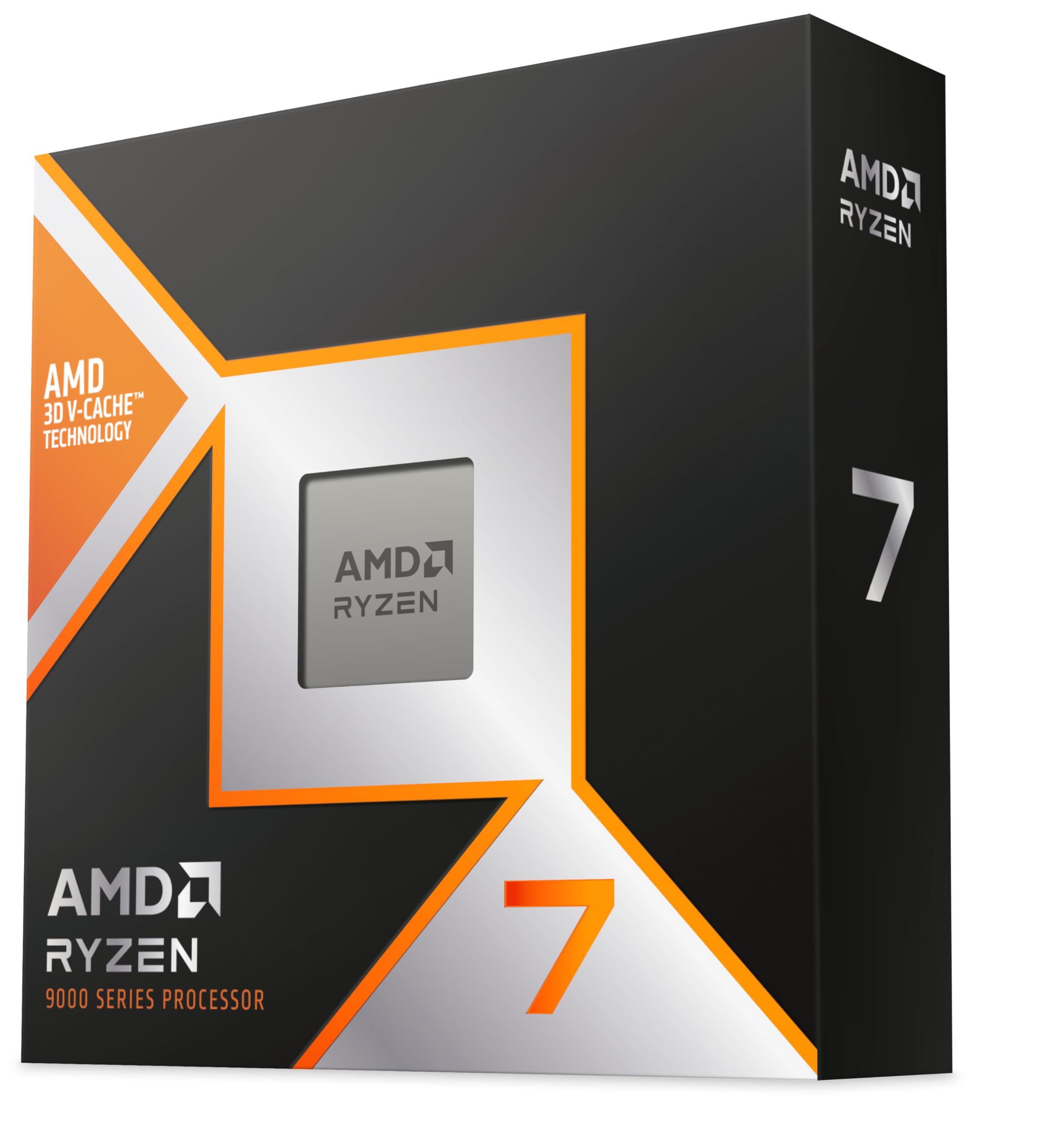
The 9800X3D represents the pinnacle of gaming CPU design for the RTX 5090. Built on Zen 5 architecture with second-generation 3D V-Cache, it offers 96MB of L3 cache stacked vertically, which drastically reduces memory latency. This directly translates to higher 1% lows in CPU-bound scenarios — exactly where the 5090’s raw compute power can expose a weaker processor. Users report consistent frame times in demanding titles like Cyberpunk 2077 at 4K with ray tracing, with negligible CPU bottlenecking even at high frame rates.
Thermal performance is a standout feature. Despite its gaming dominance, the 9800X3D draws less power under load than Intel’s flagship parts, keeping temperatures manageable with a standard 240mm AIO liquid cooler. Reviewers note idle temps around 40°C and gaming loads staying in the mid-60s°C, even with modest airflow. The drop-in compatibility with existing AM5 motherboards means you can upgrade from a 7000-series chip without a platform swap.
For pure gaming with the 5090, this chip is unmatched. The only trade-off is that productivity tasks like video rendering don’t benefit from the extra cache as much as gaming does. If you need a workstation that also games, a higher-core-count non-X3D chip might serve better. But for frame-rate-focused gamers, this is the definitive choice.
Why it’s great
- Best-in-class gaming 1% low frame rates
- Runs cooler than competitor high-end chips
- Drop-in upgrade on AM5 platform
Good to know
- Not the best for multi-threaded productivity
- Premium pricing reflects gaming focus
2. Skytech Gaming Legacy 4 (9950X3D + RTX 5090)

Skytech’s Legacy 4 pairs the flagship AMD Ryzen 9 9950X3D with a full RTX 5090, creating a pre-built that matches the performance of a custom build. The 9950X3D combines 16 Zen 5 cores with 3D V-Cache on one CCD, giving it both gaming prowess and serious multi-threaded capability. With 64GB of DDR5-6000 RAM and a 4TB Gen4 NVMe SSD, this system is ready for heavy content creation, AI workloads, and 4K gaming without compromise.
The cooling solution uses a 420mm AIO liquid cooler, which keeps the 9950X3D well below thermal throttle thresholds even during sustained all-core loads. Users report that the system handles games like Black Myth Wukong and Cyberpunk 2077 at max settings with frame rates that saturate high-refresh 4K monitors. The 1200W Gold ATX 3.0 PSU provides clean power delivery for the 5090’s transient spikes.
Build quality and cable management are noted as excellent, with no bloatware pre-installed. The only consideration is the size of the chassis — the 420mm radiator requires a full-tower case with significant desk space. For buyers who want a turnkey solution with top-tier components, this is the most balanced pre-built available.
Why it’s great
- Flagship CPU + GPU in one system
- Massive 64GB RAM and 4TB storage
- 420mm liquid cooling for quiet operation
Good to know
- Large case requires ample desk space
- Premium price tag reflects top-end parts
3. HP OMEN 45L (Core Ultra 9 285K + RTX 5090)

HP’s OMEN 45L integrates Intel’s new Core Ultra 9 285K processor — built on the Arrow Lake architecture with the LGA1851 socket — with an RTX 5090 for a high-performance pre-built. The 285K provides 24 cores (8 P-cores + 16 E-cores) with a boost clock up to 5.7 GHz. The proprietary OMEN CRYO CHAMBER cooling system routes fresh air directly to the liquid cooler radiator, keeping temperatures stable during extended gaming sessions.
With 64GB of DDR5 RAM and a 2TB PCIe Gen4 NVMe SSD, the system handles large game libraries and multitasking without storage bottlenecks. The 360mm LCD liquid cooler adds visual customization through the OMEN Gaming Hub software. Users report that the system runs all modern titles at max settings with smooth frame delivery, and the tool-less chassis design simplifies future upgrades.
One reported issue involves component accuracy — some units shipped with different parts than ordered, though HP customer service resolved the discrepancies. The platform’s LGA1851 socket is new, so upgrade options are currently limited to the Core Ultra 200 series. For buyers who prefer Intel’s ecosystem and want a robust pre-built with liquid cooling, this is a strong contender.
Why it’s great
- Unique CRYO CHAMBER cooling design
- 64GB DDR5 and 2TB storage out of the box
- Tool-less chassis for easy upgrades
Good to know
- New LGA1851 socket has limited upgrade path
- Some reports of component discrepancies
4. Empowered PC Panorama XL (7800X3D + RTX 5090)

Empowered PC’s Panorama XL pairs the venerable AMD Ryzen 7 7800X3D with an RTX 5090, creating a pre-built that prioritizes gaming frame rates over raw core count. The 7800X3D’s 96MB of L3 cache continues to deliver excellent 1% low performance in modern titles, and the 5090 ensures 4K ray-traced gaming is fluid. The system includes 32GB of DDR5 RAM and a 2TB Gen4 SSD, which is adequate for gaming but less generous than top-tier pre-builts.
Cooling is handled by 11 ARGB PWM fans that provide substantial airflow. Users report GPU temperatures between 50-53°C under load and CPU temps around 36°C at idle. The Panorama XL case offers a full tempered glass panoramic view. Build quality and cable management are praised, and the system ships with a 3-year warranty and lifetime tech support.
The main limitation is the 32GB RAM — some modern titles and productivity workloads benefit from 64GB. Storage is also at the lower end for a 5090 build. However, for gamers who want a 5090 in a pre-built without spending on unnecessary RAM capacity, this represents a solid value. The 7800X3D remains a gaming beast, and the 5090 will stretch its legs fully.
Why it’s great
- 7800X3D provides excellent gaming frame times
- Great thermals with 11 fan setup
- 3-year warranty and lifetime support
Good to know
- 32GB RAM may limit heavy multitasking
- 2TB storage fills quickly with modern games
5. Intel Core i9-14900K
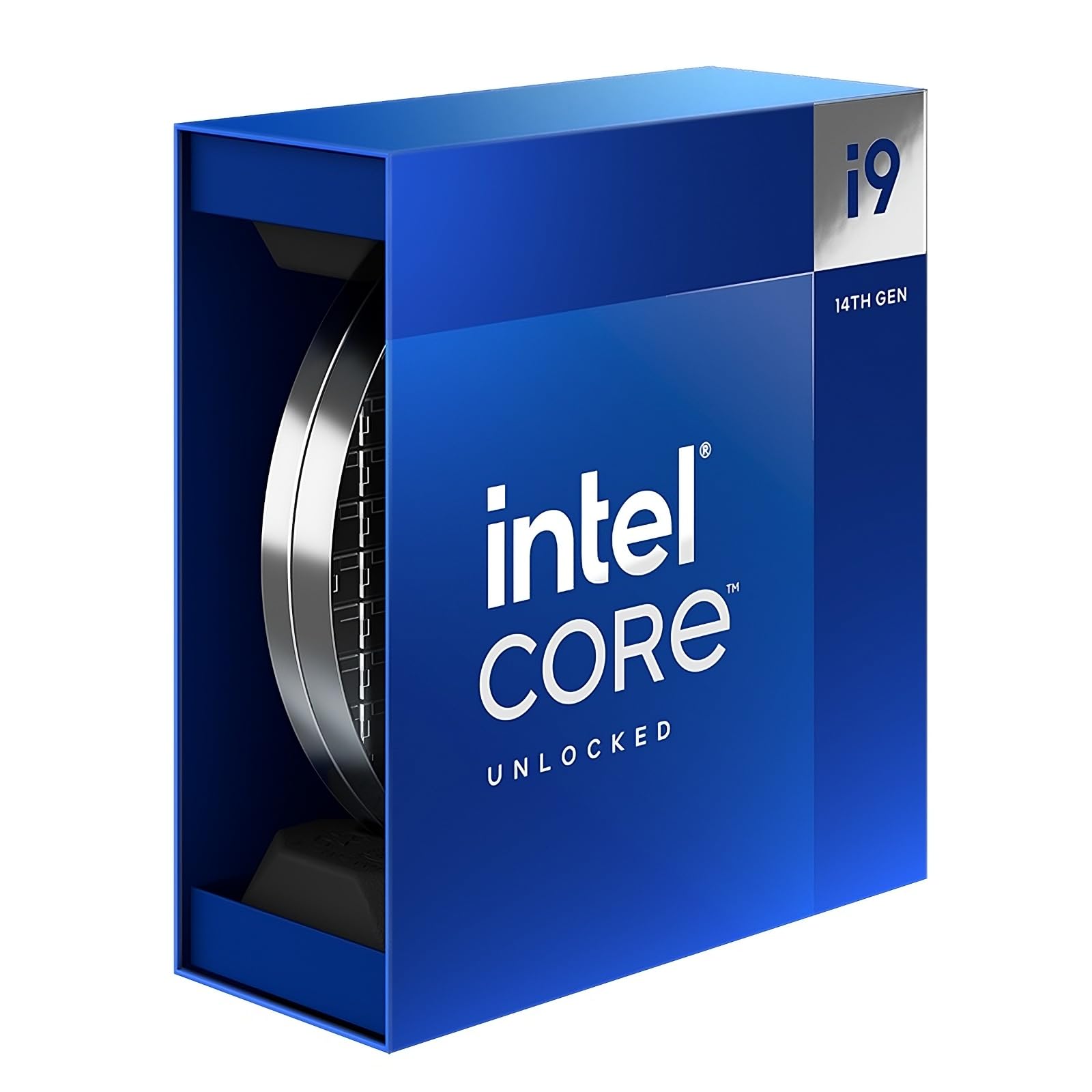
The 14900K remains Intel’s most powerful hybrid-architecture processor for the LGA1700 platform. With 8 P-cores capable of boosting to 6.0 GHz and 16 E-cores for background tasks, it offers exceptional single-threaded performance that benefits both gaming and productivity. When paired with an RTX 5090, the 14900K can drive high frame rates in CPU-bound scenarios like simulation titles and esports games.
For content creators who also game, the 14900K’s 24 cores provide strong multi-threaded rendering performance in applications like Blender, Premiere Pro, and HandBrake. The chip supports both DDR4 and DDR5 memory, though DDR5-7200 is recommended to feed the 5090 effectively. Power draw is significant — base 125W with turbo up to 253W — requiring a robust 360mm AIO cooler to maintain boost clocks under sustained load.
Potential buyers should be aware of stability issues reported with 13th and 14th gen Intel processors under certain conditions. Intel has released microcode updates to address these, but some users still report instability in specific workloads. Ensure your motherboard BIOS is updated to the latest version. For those willing to manage these considerations, the 14900K delivers raw speed that the 5090 can exploit.
Why it’s great
- 6.0 GHz boost for maximum single-thread speed
- Excellent multi-threaded productivity performance
- Broad motherboard compatibility with LGA1700
Good to know
- Requires powerful cooling and stable power delivery
- Known stability issues require latest BIOS update
6. Corsair Vengeance i7500 (14900KF + RTX 5080)
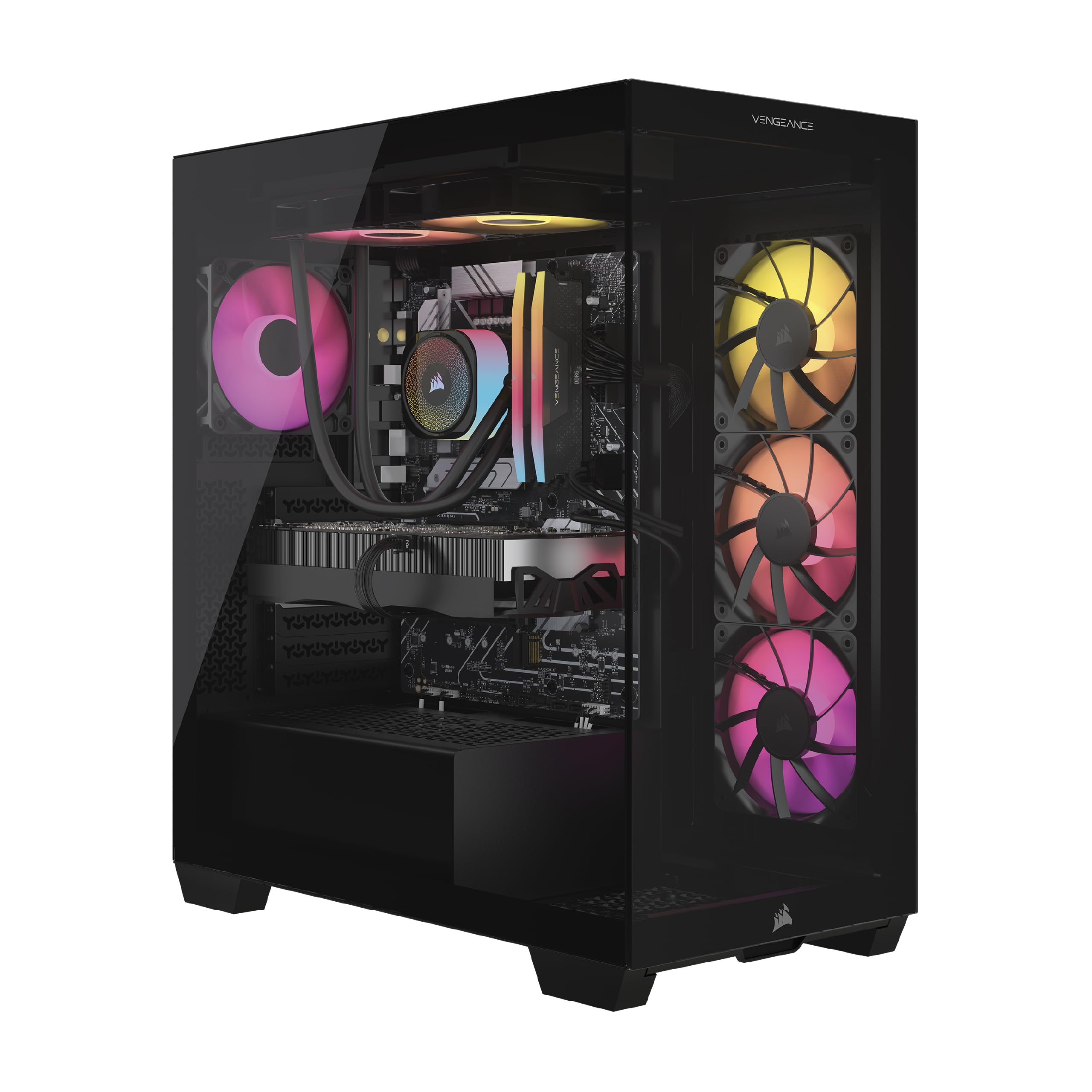
Corsair’s Vengeance i7500 combines the i9-14900KF (the 14900K without integrated graphics) with an RTX 5080 in a purpose-built pre-built system. The liquid-cooled CPU uses Corsair’s own NAUTILUS 240mm AIO, and the 3500X mid-tower case provides excellent airflow through wraparound tempered glass panels. The 14900KF’s 24 cores and 5.8 GHz boost clock feed the 5080 effectively, delivering high frame rates at 1440p and 4K.
Memory is 32GB of Corsair Vengeance RGB DDR5, and storage is a fast 2TB M.2 NVMe SSD. The system is designed for gamers who want a polished, integrated experience with Corsair’s iCUE ecosystem for lighting and fan control. Users praise the clean cable management and the quality of the components.
The 14900KF inherits the same stability considerations as the 14900K. Some users reported DOA units or fan issues, though Corsair’s customer service resolved replacements quickly. USB port count is limited on the rear I/O. For those who want a pre-built with high-end Intel performance and a cohesive aesthetic, this is a solid choice.
Why it’s great
- Integrated Corsair cooling and RGB ecosystem
- Wraparound glass design for component visibility
- Strong gaming and creator performance
Good to know
- 14900KF shares stability concerns with 14900K
- Limited USB ports on rear panel
7. AMD Ryzen 7 7800X3D

The 7800X3D is the processor that changed the gaming CPU landscape. By stacking an additional 64MB of L3 cache on top of the standard 32MB, AMD created a chip that often beats Intel’s flagship parts in gaming while drawing significantly less power. Its 120W TDP means it runs cool with even a mid-range air cooler, and it feeds the RTX 5090 well in gaming loads, especially at 4K where the GPU does most of the work.
Owners report exceptional value, with performance that rivals the newer 9800X3D in many titles at a lower price point. The chip works on any AM5 motherboard, and its thermal characteristics mean you can use a more affordable cooling solution. Users coming from older platforms see massive frame rate gains in CPU-bound games like Counter-Strike 2 and simulation titles.
The main trade-off is that the 7800X3D is not ideal for productivity work that scales with core count — its eight cores are gaming-focused. For a pure gaming build with a 5090, this is the smartest financial choice. It leaves budget for a better GPU or faster memory without sacrificing gaming performance.
Why it’s great
- Outstanding gaming performance per dollar
- Low power draw and easy to cool
- Full AM5 platform compatibility
Good to know
- Not suited for heavy multi-threaded workloads
- Older architecture than 9800X3D
8. Micro Center AMD Ryzen 9 9900X + ASUS ROG Strix B650-A

Micro Center’s bundle pairs the AMD Ryzen 9 9900X — a 12-core, 24-thread Zen 5 processor — with an ASUS ROG Strix B650-A Gaming WiFi motherboard. The 9900X boosts up to 5.6 GHz and includes 76MB of total cache (L2+L3), positioning it as a strong performer in both gaming and productivity. For the RTX 5090, the 12 cores ensure the GPU stays fed, especially in games that use more than eight threads.
The included ASUS ROG Strix B650-A motherboard features PCIe 5.0 support for both the GPU and one M.2 slot, Wi-Fi 6E, Bluetooth 5.2, and robust power delivery with 12+2 phases. Users report easy installation and stable performance. The bundle is particularly attractive for builders who want a complete platform upgrade without selecting parts separately.
One consideration is that the B650 chipset, while capable, lacks some premium features of X870 boards like additional PCIe 5.0 lanes and faster USB4 support. For most gamers, the B650 is sufficient. This bundle offers strong multi-threaded performance that complements the 5090 for streaming, recording, or light rendering while gaming.
Why it’s great
- 12 Zen 5 cores for balanced gaming and productivity
- Bundled motherboard simplifies platform choice
- PCIe 5.0 support on GPU and one M.2 slot
Good to know
- B650 chipset lacks premium features of X870
- Requires separate purchase of cooler
9. Intel Core Ultra 7 270K
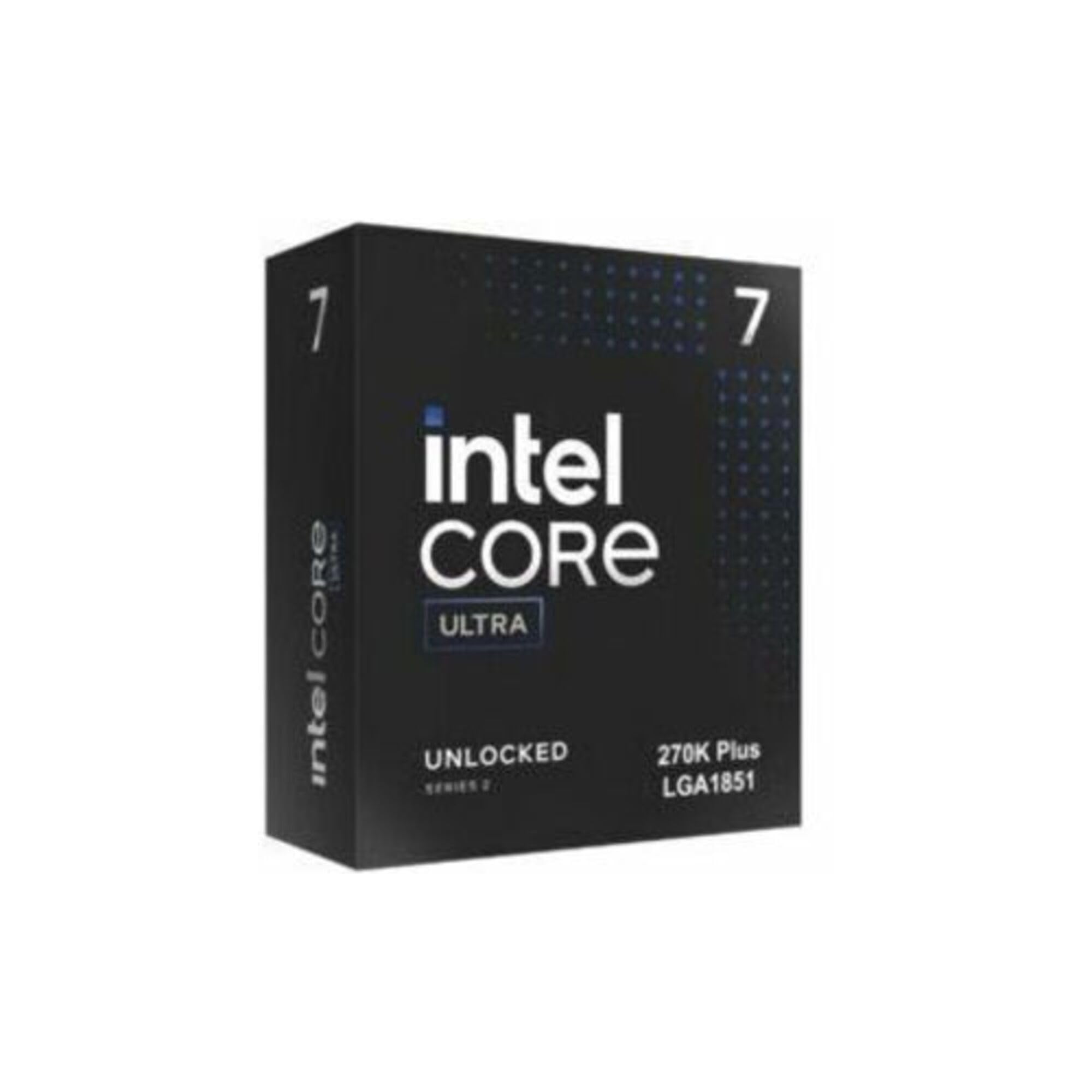
The Core Ultra 7 270K is Intel’s most compelling mid-range offering for the LGA1851 platform. It matches the Core Ultra 9 285K in core count (24 cores) with slightly lower boost clocks at 5.5 GHz, making it a surprisingly capable partner for the RTX 5090 at a much lower cost. Users report that in gaming scenarios, the 270K often performs close to the 285K, especially at 4K where GPU load dominates.
Owners highlight the chip’s strong memory controller, which supports DDR5-7200 MT/s, and its ability to maintain stable overclocks using Intel’s AI OC tuning. In VR sim racing with the 5090, one user recorded smooth 90 FPS at 3560×3560 resolution per eye. The chip draws 125W base and 250W peak, requiring a decent AIO cooler for sustained loads.
The key advantage is the LGA1851 platform’s support for PCIe 5.0 and DDR5. However, platform longevity is less certain than AM5. For budget-conscious builders who want Intel’s latest architecture and a high core count for the 5090, the 270K is a smart choice. It allows allocating more of the budget to the GPU without compromising gaming performance.
Why it’s great
- 24 cores at a budget-friendly price point
- Competitive gaming performance near flagship Intel
- Strong IMC supports fast DDR5 memory
Good to know
- LGA1851 platform upgrade path uncertain
- Requires AIO cooler for optimal boost
10. Alienware Aurora ACT1250 (Core Ultra 9 285 + RTX 5080)

The Alienware Aurora ACT1250 pairs Intel’s Core Ultra 9 285 processor with an RTX 5080, making it a high-end pre-built for those who want immediate performance without building. The Core Ultra 9 285 provides strong multi-threaded capability, and the RTX 5080 delivers excellent 4K gaming. The system includes 32GB of DDR5 RAM, a 1TB SSD, and a liquid cooling solution with a 240mm radiator.
The chassis features Alienware’s redesigned basalt black finish with customizable AlienFX stadium lighting zones. Users report the system runs quietly even under load, and the RTX 5080 can be overclocked to achieve some of the highest 3D Mark scores. The 1000W Platinum-rated PSU provides clean power for sustained operation.
Reliability concerns appear in reviews, with some units experiencing motherboard failures within weeks. Dell’s onsite service is included for the first year, but replacement parts can face backorders. The proprietary motherboard limits upgrade flexibility. For buyers who value Alienware’s ecosystem and are comfortable with the service risk, this is a powerful pre-built option.
Why it’s great
- Premium basalt black design with RGB lighting
- 1000W Platinum PSU for clean power delivery
- 1-year Dell onsite service included
Good to know
- Proprietary parts limit upgrade flexibility
- Mixed reliability reports from users
FAQ
Will a CPU bottleneck an RTX 5090 at 4K?
Is PCIe 5.0 necessary for the RTX 5090?
Should I wait for the Ryzen 9950X3D or buy the 9800X3D now?
How does Intel’s Core Ultra 7 270K compare to the 7800X3D for the 5090?
What cooler do I need for a 5090-compatible CPU?
Final Thoughts: The Verdict
For most users, the best cpu for 5090 winner is the AMD Ryzen 7 9800X3D because it delivers unmatched gaming frame-time consistency with lower power draw and an established AM5 upgrade path. If you want maximum multi-threaded productivity alongside gaming, grab the Skytech Gaming Legacy 4 pre-built with the 9950X3D. And for a budget-friendly DIY build that still feeds the 5090 effectively, nothing beats the AMD Ryzen 7 7800X3D.

Mo Maruf
I created WellFizz to bridge the gap between vague wellness advice and actionable solutions. My mission is simple: to decode the research and give you practical tools you can actually use.
Beyond the data, I am a passionate traveler. I believe that stepping away from the screen to explore new environments is essential for mental clarity and physical vitality.