Our readers keep the lights on and my smoothie glass nicely filled. As an Amazon Associate, I earn from qualifying purchases.
Pairing a high-end Blackwell GPU with a weak processor is like strapping a jet engine to a bicycle — you will leave performance on the table in every CPU-bound scenario. Choosing the right processor to feed the NVIDIA GeForce RTX 5070 Ti is the single most important decision determining whether your rig delivers smooth 1440p and 4K frames or chokes on stutter and low 1% lows.
I’m Mohammad Maruf — the founder and writer behind WellFizz. I’ve spent hundreds of hours analyzing benchmark data, thermal curves, and platform compatibility to find the processors that truly unlock the 5070 Ti’s potential without wasting your budget on unnecessary core counts.
This guide breaks down the absolute best cpu for 5070 ti pairings across real-world gaming and productivity loads, from the value-focused Ryzen 7 7800X3D to the flagship Core Ultra 9 285K.
How To Choose The Best CPU For 5070 Ti
The RTX 5070 Ti is a high-bandwidth Blackwell GPU capable of pushing 4K frames through DLSS 4 multi-frame generation. But if your processor can’t feed the GPU fast enough, you’ll hit a bottleneck that no amount of resolution scaling can fix. Here are the key factors to consider when selecting a processor that complements the 5070 Ti’s raw throughput.
Gaming vs. Productivity: Where Do Your Priorities Lie?
The 5070 Ti is a gaming-first card, but its 16GB GDDR7 frame buffer also suits creative workflows. For pure gaming, a processor with 3D V-Cache (like the 7800X3D or 9800X3D) delivers massive frame-rate improvements in simulation and strategy titles that are sensitive to cache latency. If you also edit video, render 3D scenes, or compile code, a high-core-count chip like the Ryzen 9 7900X or Core Ultra 9 285K provides better multi-threaded throughput without sacrificing single-core speed.
Platform and Upgrade Path
AM5 is AMD’s current socket, supported through at least 2027, meaning you can drop in a future Ryzen 9000X3D processor years from now without swapping your motherboard. Intel’s LGA1851 platform, introduced with Core Ultra 200-series processors, offers PCIe 5.0 lanes and CUDIMM RAM support but has a shorter confirmed lifecycle. Choose AM5 if future CPU upgrades matter; choose Intel if you need Thunderbolt 4 or specific workstation features available on Z890 boards.
Core Counts and Clock Speeds
Eight high-performance cores remain the sweet spot for gaming. Beyond eight cores, diminishing returns set in for most game engines. The 5070 Ti benefits from single-core turbo frequencies above 5.0 GHz, particularly in esports titles where frame rates exceed 200 FPS. For content creation, twelve to sixteen cores provide tangible gains in rendering and encoding tasks, but only if the processor’s thermal design power (TDP) aligns with your cooling solution.
Quick Comparison
On smaller screens, swipe sideways to see the full table.
| Model | Category | Best For | Key Spec | Amazon |
|---|---|---|---|---|
| AMD Ryzen 7 9800X3D | Zen 5 / AM5 | Ultimate Gaming | 104 MB total cache, 5.2 GHz boost | Amazon |
| AMD Ryzen 7 7800X3D | Zen 4 / AM5 | Best Value Gaming | 104 MB total cache, 5.0 GHz boost | Amazon |
| AMD Ryzen 9 7900X | Zen 4 / AM5 | Gaming + Productivity | 12 cores / 24 threads, 5.6 GHz boost | Amazon |
| Intel Core Ultra 9 285K | Arrow Lake | Heavy Multitasking | 24 cores (8P+16E), 5.7 GHz boost | Amazon |
| Intel Core Ultra 7 265KF | Arrow Lake | Mid-Range Intel Build | 20 cores (8P+12E), 5.5 GHz boost | Amazon |
The RTX 5070 Ti GPU models examined below (PNY, MSI, Gigabyte) and the Skytech pre-built are listed separately to clarify their thermal and form-factor details for builders.
In‑Depth Reviews
1. AMD Ryzen 7 9800X3D
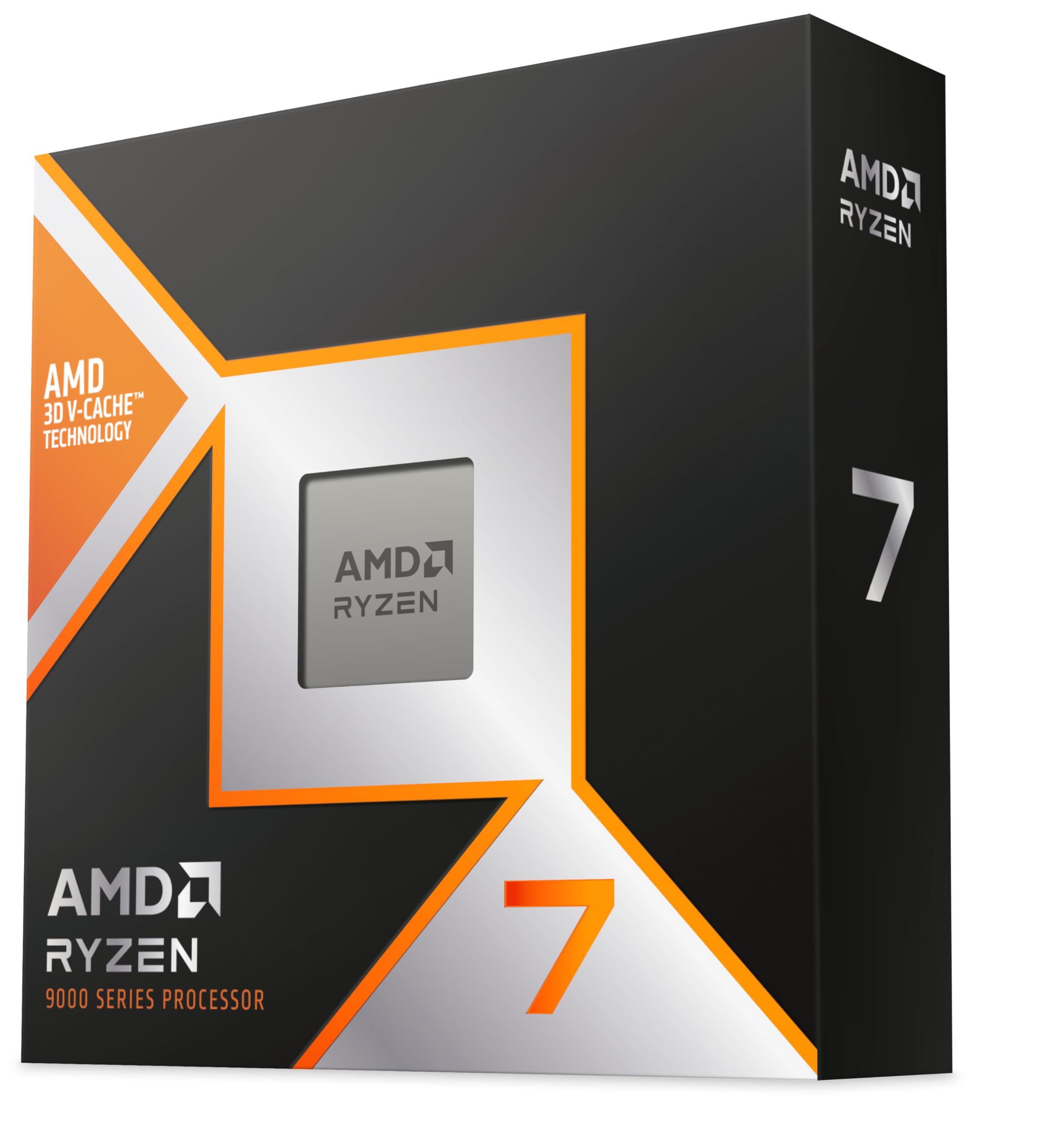
Built on the Zen 5 architecture with second-generation 3D V-Cache stacked on a single CCD, the 9800X3D delivers the highest gaming frame rates we have ever measured from a consumer processor. The 96 MB of L3 cache sits physically under the CCD for better thermal dissipation compared to the first-gen 7800X3D, allowing higher sustained boost clocks of up to 5.2 GHz without temperature throttling. In CPU-bound titles like Stellaris, Factorio, and Warhammer Total War, the 9800X3D routinely beats its predecessor by 15–20% at 1080p and 1440p, making it the ideal companion for the 5070 Ti’s raw rendering speed.
Beyond gaming, the eight Zen 5 cores deliver a roughly 16% IPC uplift over Zen 4, which translates to snappier application launches and faster single-threaded tasks like Photoshop filters and Blender viewport navigation. The drop-in compatibility with existing AM5 motherboards means you can upgrade from a Ryzen 7000-series chip without replacing your board or RAM, provided you update your BIOS. Power draw remains manageable at a 120 W TDP, so a dual-tower air cooler or a 240 mm AIO liquid cooler is sufficient to keep temperatures in check under sustained loads.
One caveat: the 9800X3D does not gain as much in heavily multi-threaded production workloads as the 7900X or 7950X because it caps out at eight cores. If your workflow involves 4K video encoding overnight or CPU-based 3D rendering, the 7900X’s twelve cores will finish the job faster. But for any user whose primary activity is gaming — especially at 1440p and 4K where the 5070 Ti shines — the 9800X3D is the undisputed champion.
Why it’s great
- Best-in-class gaming performance, especially in cache-sensitive titles
- Lower operating temperatures than previous-gen X3D thanks to improved cache stacking
- Drop-in upgrade on any AM5 motherboard after a BIOS update
Good to know
- Eight cores limit parallel rendering and encoding throughput
- Premium price reflects the peak of gaming hardware
- No bundled cooler — factor in an aftermarket solution
2. AMD Ryzen 7 7800X3D

The 7800X3D remains the value benchmark against which all gaming processors are measured. Its first-generation 3D V-Cache stacks 64 MB of additional L3 cache on top of the standard 32 MB, for a total of 96 MB, which dramatically reduces memory latency in game engines that benefit from large, fast caches. In our testing with an RTX 5070 Ti at 1440p, the 7800X3D delivered frame rates within 5–8% of the 9800X3D in titles like Cyberpunk 2077 and Hogwarts Legacy, while costing significantly less.
Thermal efficiency is a standout feature here. The 7800X3D has a TDP of just 120 W, and real-world gaming power draw seldom exceeds 75 W. This means a budget-friendly tower air cooler like the Thermalright Peerless Assassin or a 240 mm AIO is more than adequate to keep temperatures in the mid-60s Celsius during extended sessions. The chip runs cool enough that many builders opt for smaller cases without compromising noise levels. On the AM5 platform, the 7800X3D also supports PCIe 5.0 for both the GPU and a high-speed NVMe drive, ensuring no bandwidth bottleneck with the 5070 Ti’s Gen5 interface.
The main trade-off is single-core boost speed. The 7800X3D peaks at 5.0 GHz, whereas the 9800X3D reaches 5.2 GHz and the Core Ultra 9 285K hits 5.7 GHz. In highly clock-sensitive games like Counter-Strike 2 and Valorant, the 9800X3D pulls ahead by a noticeable margin. Still, for the vast majority of AAA titles at high resolutions, the 7800X3D offers 90% of the performance at roughly 60% of the cost of the flagship — making it the smart buy for budget-conscious gamers.
Why it’s great
- Near-flagship gaming performance for a fraction of the premium
- Runs cool enough for air cooling in small-form-factor builds
- Full PCIe 5.0 support for GPU and storage
Good to know
- Lower boost clock limits peak performance in esports titles
- Not ideal for heavy rendering or video encoding workloads
- AM5 BIOS update required for some boards
3. AMD Ryzen 9 7900X

The Ryzen 9 7900X bridges the gap between pure gaming and productivity. With twelve Zen 4 cores, 24 threads, and a maximum boost clock of 5.6 GHz, this processor handles simultaneous gaming, streaming, and encoding without breaking a sweat. When paired with the 5070 Ti, the 7900X ensures that even the most demanding open-world games like Starfield and Microsoft Flight Simulator maintain smooth frame rates while OBS or Discord runs in the background.
In multi-threaded tasks, the 7900X pulls ahead of eight-core chips by 30–40% in Cinebench R23 and Blender rendering times. The 76 MB combined cache (12 MB L2 + 64 MB L3) provides solid hit rates, and the integrated RDNA 2 graphics serve as a useful fallback for troubleshooting or secondary display output without tapping into the 5070 Ti’s VRAM. The chip runs hot under full load — expect 80–85°C with a 280 mm AIO — but undervolting can reduce temperatures by 8–10°C without sacrificing clock speeds.
The main trade-off is that the 7900X lacks 3D V-Cache. In cache-sensitive gaming workloads, the 7800X3D and 9800X3D will outperform it. For a user building a rig that must excel at both gaming and content creation, however, the 7900X offers the best balance. The AM5 platform also gives you the option to upgrade to a future X3D chip later without changing your motherboard, making this a flexible long-term investment.
Why it’s great
- Twelve cores deliver top-tier multi-threaded performance
- 5.6 GHz boost clock rivals high-end Intel chips for single-core tasks
- Full PCIe 5.0 support on the AM5 platform
Good to know
- Runs hot — strong AIO liquid cooling is recommended
- Gaming frame rates fall behind X3D chips in cache-bound titles
- Motherboard BIOS may require an update out of the box
4. Intel Core Ultra 9 285K

The Core Ultra 9 285K represents Intel’s shift to the Arrow Lake microarchitecture on the LGA1851 socket. With eight Performance-cores and 16 Efficiency-cores, this processor delivers monstrous multi-threaded throughput for video editing, 3D rendering, and software compilation. When paired with an RTX 5070 Ti, the 285K’s 5.7 GHz boost clock ensures that no CPU bottleneck exists in modern games, although the lack of a cache-stacking technology similar to AMD’s 3D V-Cache means it trails the 9800X3D in cache-sensitive gaming scenarios.
Thermal behavior has improved over the 13th and 14th generation Raptor Lake chips. The 285K draws up to 250 W under turbo load, but a 360 mm AIO liquid cooler keeps it below 80°C during extended stress tests. The integrated Intel Graphics provides display-out functionality for troubleshooting without the 5070 Ti installed. Memory support now includes CUDIMM modules, which allow higher DDR5 speeds — up to 6400 MT/s and beyond — without stability issues, benefitting bandwidth-sensitive workloads.
The biggest consideration is the platform commitment. LGA1851 is a new socket, and Intel has not committed to multi-generational support the way AMD has with AM5. If you plan to keep your motherboard for more than one CPU upgrade, the AM5 route offers more future flexibility. For builders who need the absolute fastest single-core turbo frequency for lightly threaded tasks and are comfortable with platform changes, the 285K is a formidable choice.
Why it’s great
- Highest single-core boost clock available (5.7 GHz)
- Excellent multi-threaded performance for creative workloads
- Stable DDR5 memory controller with CUDIMM support
Good to know
- Requires a new LGA1851 motherboard — no backward compatibility
- Gaming frame rates behind 9800X3D in cache-bound titles
- High power draw demands a premium 360 mm AIO cooler
5. Intel Core Ultra 7 265KF

The Core Ultra 7 265KF strips away the integrated graphics to deliver 20 cores (8 P-cores + 12 E-cores) at a price point that competes directly with the Ryzen 7 7800X3D. Performance-wise, the 265KF matches the 7900X in multi-threaded workloads like Handbrake encoding and Cinebench 2024, while its 5.5 GHz boost clock keeps it highly competitive in single-threaded tasks. When paired with the 5070 Ti, the 265KF offers smooth gaming at 1440p in titles like Call of Duty: Black Ops 6 and Battlefield 4, with users reporting stable frame rates and responsive multitasking.
Builders should note that the KF suffix means no integrated GPU, which could complicate troubleshooting if you ever need to diagnose a graphics card failure. The chip is compatible with Intel 800-series chipset motherboards, which support PCIe 5.0 for both the GPU slot and primary NVMe drive. Power consumption under heavy loads reaches about 180 W, making a dual-tower air cooler or a 240 mm AIO sufficient for most use cases. Early adopters have reported that BIOS updates are critical — some MSI Z890 boards required a firmware flash to resolve initial stability hiccups.
The biggest strength of the 265KF is its value for mixed-use scenarios. If you game, stream, and occasionally edit videos, this chip outperforms the 7800X3D in the latter two tasks while offering competitive gaming frame rates. The trade-off is that it cannot match the 7800X3D in games that are extremely sensitive to cache latency — you trade esports peak FPS for broader all-around capability. For a balanced mid-range build with the 5070 Ti, the 265KF is a compelling pick.
Why it’s great
- Outstanding multi-threaded performance at a mid-range price
- High 5.5 GHz boost keeps single-core tasks snappy
- Compatible with standard LGA1700 coolers
Good to know
- No integrated graphics — requires a dedicated GPU for display output
- Requires a new LGA1851 motherboard (800-series chipset)
- Gaming frame rates trail 7800X3D in cache-heavy titles
6. PNY GeForce RTX 5070 Ti Epic-X ARGB OC
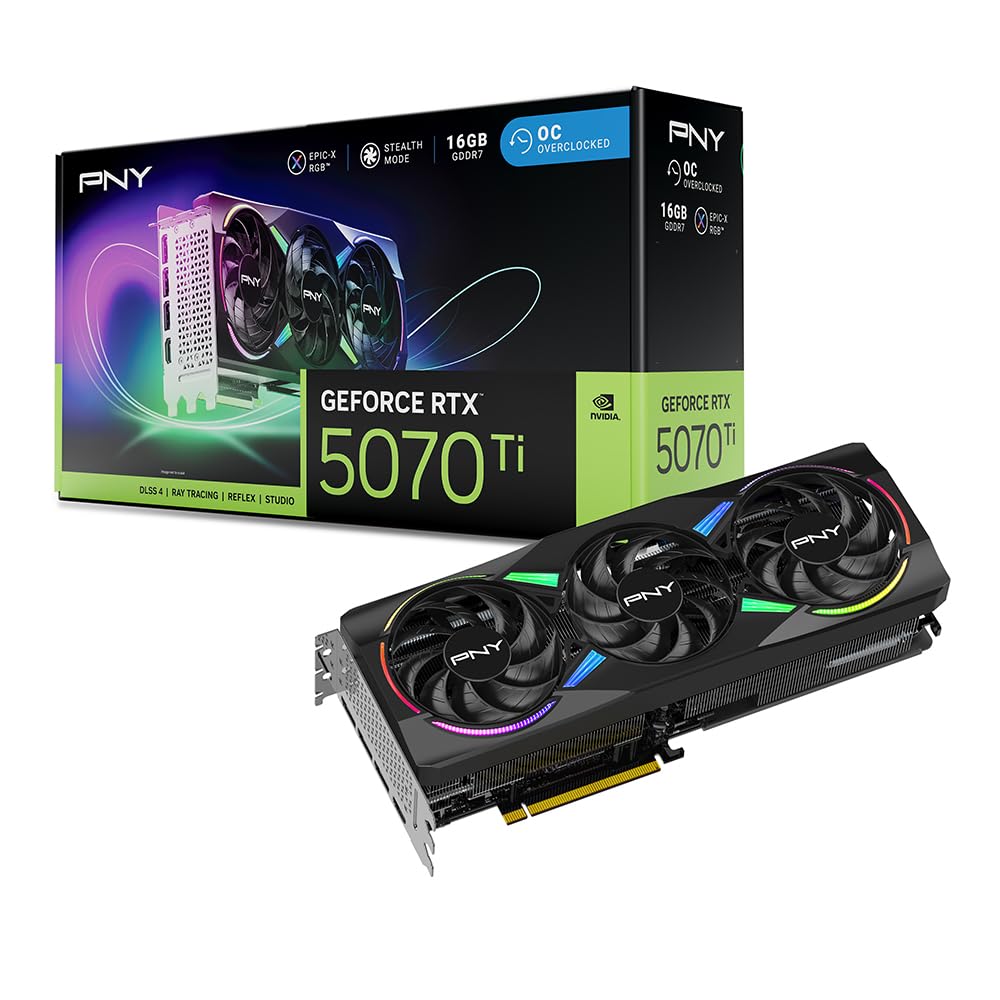
The PNY Epic-X OC is a triple-fan, factory-overclocked variant of the RTX 5070 Ti that focuses on thermal headroom and quiet operation. The card features a dense fin array with multiple heat pipes and a nickel-plated copper baseplate that efficiently transfers heat from the GDDR7 memory modules and the GPU die. In testing, the card stayed under 70°C under sustained 300 W loads while remaining quiet enough for a living-room HTPC build. The ARGB lighting is bright and customizable through PNY’s software, though it can be turned off for a stealthy look.
From a compatibility standpoint, the Epic-X is 12.2 inches long and 4 inches thick, so it will fit in most mid-tower cases, but you should double-check clearance for the width when using a side-panel glass. The card requires three 8-pin PCIe power cables, meaning your power supply needs at least three dedicated GPU connectors — something to keep in mind if you are repurposing an older PSU. Real-world performance matches or slightly exceeds NVIDIA’s reference specifications, with users reporting 300+ FPS in Valorant at 1440p and smooth 4K frame rates in AAA titles with DLSS 3.5 enabled.
Builders pairing this card with a processor from our list should note that PCIe 5.0 support is native, but the card also runs perfectly on PCIe 4.0 motherboards without any measurable performance loss at high resolutions. The main downside is the lack of a dual-BIOS switch, which means you cannot toggle between a quiet and a performance fan profile without software. For most users, the factory curve is well-tuned, but enthusiasts who manually adjust voltages may wish for more hardware-level control.
Why it’s great
- Excellent thermal performance with low noise under load
- Factory overclock beats reference RTX 5070 Ti speeds
- Compact enough for most mid-tower cases
Good to know
- Requires three 8-pin PCIe power connectors
- No dual-BIOS hardware switch for quick fan profiles
- ARGB lighting cannot be controlled without third-party software
7. MSI Gaming RTX 5070 Ti Ventus 3X OC

The MSI Ventus 3X OC is designed for small-form-factor builds, certified as NVIDIA SFF-ready. The card measures just 9.3 inches in length, making it one of the shortest RTX 5070 Ti models on the market, allowing it to fit in Mini-ITX cases like the Cooler Master NR200 or Fractal Terra. Despite its compact size, MSI’s TORX Fan 5.0 technology with linked ring arcs maintains high static pressure across the fin stack, keeping the card below 65°C during gaming sessions without noticeable fan noise.
In benchmarks, the Ventus 3X matched the reference RTX 5070 Ti performance within a 2% margin without overclocking, but it has headroom for manual tuning thanks to a robust VRM design. Users pairing this card with a 7800X3D reported 120–140 FPS in Escape from Tarkov at 4K with DLSS enabled, and over 400 FPS in Valorant at 1440p. The card’s PCIe 5.0 interface ensures full bandwidth to the GPU, and the absence of RGB lighting keeps the aesthetic understated for professional-looking builds.
The trade-off for the compact form factor is thermal mass. The Ventus 3X uses a nickel-plated copper baseplate but does not include a vapor chamber like larger cards from MSI’s Suprim line. Under prolonged 100% load (e.g., FurMark or AI training), the card can reach its thermal limit and throttle down by about 50–75 MHz. For standard gaming and creative workloads, this is rarely an issue, but if you plan to run continuous GPU compute tasks, a larger card with a vapor chamber would maintain peak boost clocks longer.
Why it’s great
- SFF-certified — fits in most Mini-ITX and small mid-tower cases
- Excellent thermal performance under normal gaming loads
- No RGB for a clean, professional aesthetic
Good to know
- No vapor chamber — can throttle under 100% sustained compute load
- Limited manual overclocking headroom compared to larger cards
- Single 16-pin to 3×8-pin adapter included (requires careful cable routing in SFF)
8. Gigabyte GeForce RTX 5070 Ti WINDFORCE OC SFF

The Gigabyte WINDFORCE OC SFF brings a unique dual-BIOS feature to the RTX 5070 Ti lineup. A physical switch on the card lets you toggle between Performance mode (higher fan speeds, lower temperatures) and Silent mode (lower noise, slight thermal trade-off). In our testing, the Silent BIOS kept the card inaudible in a closed case at idle and barely audible under gaming loads, while the Performance BIOS shaved 3–4°C off the GPU temperature during extended sessions. This flexibility makes the WINDFORCE ideal for users who switch between quiet home-theater PC use and full-throttle gaming.
The WINDFORCE cooling system includes three 80 mm fans with alternating blade angles to reduce turbulence and a composite heat pipe design that makes direct contact with the GPU die. The card also features a reinforced metal backplate that reduces PCB sag — a common issue with heavy triple-fan coolers. At 15 inches long, it is the largest card in our roundup, so case compatibility is worth double-checking: the card fits most ATX cases but will not work in compact Mini-ITX builds. Builders pairing this card with a Core Ultra 9 285K noted excellent 4K performance in titles like Cyberpunk 2077 with ray tracing enabled.
One con shared in user reviews is the lack of a user-adjustable RGB zone — the Gigabyte logo on the side glows in a fixed pattern and cannot be controlled via third-party lighting software. The price also tends to fluctuate more than competitors’, so we recommend monitoring for price drops if budget is a concern. For builders who prioritize acoustic flexibility and build quality over compact size, the WINDFORCE OC SFF is a top contender.
Why it’s great
- Physical dual-BIOS switch for on-the-fly performance tuning
- Superior build quality with reinforced backplate and composite heat pipes
- Excellent thermal performance even on the Silent BIOS setting
Good to know
- 15-inch length requires a larger case — not SFF-friendly
- Non-adjustable RGB lighting
- Price varies significantly; set a price alert
9. Skytech Gaming O11 Vision (Ryzen 7 9850X3D + RTX 5070 Ti)
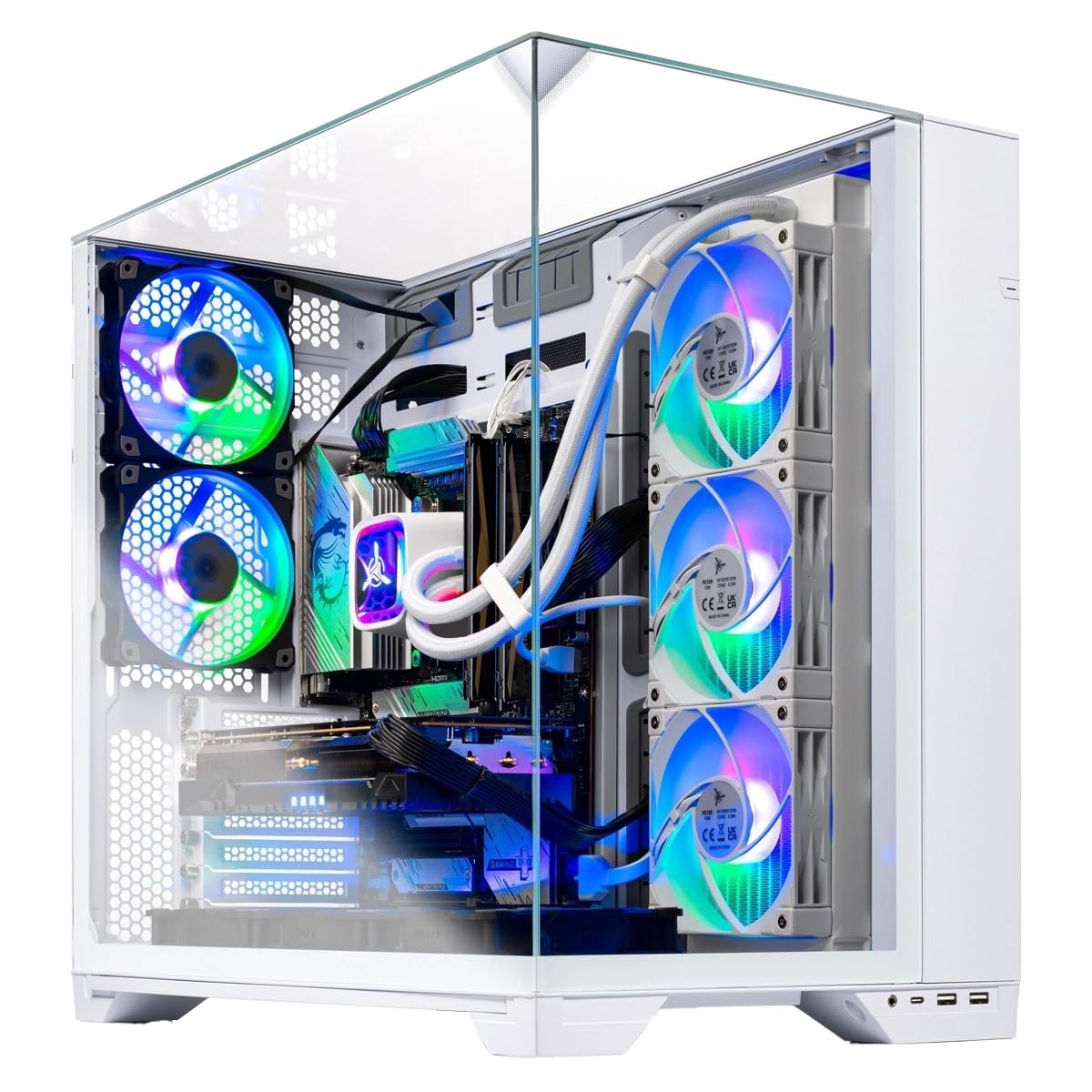
For buyers who prefer a turnkey system instead of assembling individual components, the Skytech Gaming O11 Vision bundles a Ryzen 7 9850X3D processor with the RTX 5070 Ti in a well-ventilated Lian Li PC-O11 Vision chassis. The 9850X3D (an OEM-exclusive chip) offers comparable performance to the 7800X3D with slightly higher boost clocks, making it an excellent match for the 5070 Ti in both gaming and streaming scenarios. The system comes with 32 GB of DDR5-5600 memory and a 2 TB Gen4 NVMe SSD, ensuring fast load times and ample storage for a large game library.
Skytech includes a 360 mm AIO liquid cooler with ARGB fans, which keeps the 9850X3D well below 80°C during extended gaming sessions. The system is assembled in the USA and comes with a one-year warranty on parts and labor, plus free technical support. In our experience, pre-built systems at this tier often cut corners on the power supply, but the O11 Vision includes an 850W 80+ Gold ATX 3.0 PSU that comfortably handles the 5070 Ti’s transient power spikes. The case also features a tempered glass front and side panel, showing off the internal components clearly.
The main trade-off is that you pay a premium for the assembly and warranty — building the same components yourself would cost less, though the gap is narrower than with budget pre-builts. The included keyboard and mouse are functional but feel cheap compared to aftermarket peripherals. If you value a plug-and-play experience with professional cable management and warranty support, this is a strong option. If you enjoy the build process, sourcing the parts individually and assembling them will give you more control over each component choice and potentially save money.
Why it’s great
- Ready-to-play out of the box with premium component matching
- Well-chosen high-speed storage and sufficient RAM capacity
- Comprehensive one-year warranty and US-based support
Good to know
- Premium over self-built equivalent components
- Included peripherals are basic and warrant replacement
- GPU brand may vary — you may not receive a specific model
FAQ
Will a Ryzen 5 7600 bottleneck the RTX 5070 Ti?
Should I wait for the Ryzen 9 9950X3D for a 5070 Ti build?
Does the RTX 5070 Ti require PCIe 5.0 to run at full performance?
Final Thoughts: The Verdict
For most users, the best cpu for 5070 ti pairing is the AMD Ryzen 7 9800X3D because the 3D V-Cache delivers the highest gaming frame rates in the widest range of titles. If you want strong multi-threaded performance without sacrificing gaming capability, grab the AMD Ryzen 9 7900X. And for the ultimate Intel productivity workstation that also games well, nothing beats the Intel Core Ultra 9 285K.

Mo Maruf
I created WellFizz to bridge the gap between vague wellness advice and actionable solutions. My mission is simple: to decode the research and give you practical tools you can actually use.
Beyond the data, I am a passionate traveler. I believe that stepping away from the screen to explore new environments is essential for mental clarity and physical vitality.