Our readers keep the lights on and my smoothie glass nicely filled. As an Amazon Associate, I earn from qualifying purchases.
Owning an RTX 3080 Ti means you’ve already invested in one of the most powerful graphics cards on the market, but a weak or mismatched processor can leave that performance untapped, causing frustrating frame drops and stuttering at the exact moment you need smooth playback. The right CPU doesn’t just feed the GPU data—it eliminates the bottleneck that keeps your expensive hardware from flexing its full muscle in demanding titles.
I’m Mohammad Maruf — the founder and writer behind WellFizz. Over hundreds of hours of research, I’ve pored through benchmark data, thermal reports, and real-world user feedback to identify exactly which processors unlock the full potential of the RTX 3080 Ti at different build tiers.
This guide cuts through the marketing noise to help you find the best cpu for 3080 ti whether you’re building a budget-conscious AM4 rig or a cutting-edge Zen 5 powerhouse.
How To Choose The Best CPU For 3080 Ti
Pairing a processor with the RTX 3080 Ti requires balancing IPC performance, cache architecture, and platform features to ensure the GPU never waits on the CPU for data. Here are the critical factors to weigh before buying.
Core Count and Single-Thread Performance
While the 3080 Ti can drive high frame rates at 1080p and 1440p, most modern games still rely heavily on single-core performance. A processor with strong IPC—like AMD’s Zen 4 or Zen 5 cores or Intel’s Raptor Cove architecture—will deliver smoother frametimes than a many-core chip with weaker per-core throughput. Aim for at least 6 powerful cores; 8 cores provide headroom for streaming or background tasks without impacting game performance.
Cache Architecture and 3D V-Cache
AMD’s 3D V-Cache technology stacks extra L3 cache directly onto the processor die, significantly reducing memory latency for CPU-bound gaming scenarios. With the 3080 Ti, this translates to massive gains in simulation titles, open-world games, and competitive shooters where the CPU frequently accesses repeated data. Chips like the 7800X3D and 9800X3D can outperform more expensive non-X3D alternatives in gaming-specific workloads, making them uniquely suited for high-end GPU pairings.
Platform and PCIe Support
The RTX 3080 Ti runs on PCIe 4.0 x16, which is fully supported by AMD’s AM4 and AM5 platforms as well as Intel’s LGA1700 and LGA1851 platforms. PCIe 5.0 support is backward-compatible but not necessary for this GPU. However, the platform’s upgrade path matters: AM5 offers long-term support through at least 2027, while Intel’s LGA1851 is new for the Core Ultra 200 series. Budget builders can still get great performance from mature AM4 boards with DDR4 memory, saving money that can be redirected toward the GPU.
Quick Comparison
On smaller screens, swipe sideways to see the full table.
| Model | Category | Best For | Key Spec | Amazon |
|---|---|---|---|---|
| AMD Ryzen 7 9800X3D | Premium Gaming | Ultimate gaming performance at any resolution | 104 MB Total Cache / 5.2 GHz Boost | Amazon |
| AMD Ryzen 7 7800X3D | Mid-Range Gaming | High FPS without breaking the bank | 104 MB Total Cache / 5.0 GHz Boost | Amazon |
| Intel Core i7-12700KF | Value Hybrid | Multitasking and gaming on a budget | 12 Cores (8P+4E) / 5.0 GHz Boost | Amazon |
| Intel Core Ultra 9 285K | Creator Enthusiast | Heavy productivity and gaming combo | 24 Cores (8P+16E) / 5.7 GHz Boost | Amazon |
| AMD Ryzen 7 5800XT | Budget AM4 | Maximizing value on existing AM4 builds | 8 Cores / 16 Threads / 4.8 GHz Boost | Amazon |
| Thermaltake LCGS View i570 (i9-14900KF) | Pre-Built System | Out-of-the-box 3080 Ti ready PC | i9-14900KF / Liquid Cooled / 32GB DDR5 | Amazon |
| GIGABYTE RTX 3080 Ti (Pairing Reference) | GPU Reference | Understanding the GPU’s power requirements | 12GB GDDR6X / 384-bit / 912 GB/s BW | Amazon |
| MSI RTX 3080 Ti Gaming X Trio (Pairing Reference) | GPU Reference | High-end thermal and acoustic performance | 12GB GDDR6X / 320-bit / TRI FROZR 2 | Amazon |
| ASUS TUF RTX 3080 Ti OC (Pairing Reference) | GPU Reference | Durable military-grade build quality | 12GB GDDR6X / Dual Ball Fan Bearings | Amazon |
In‑Depth Reviews
1. AMD Ryzen 7 9800X3D
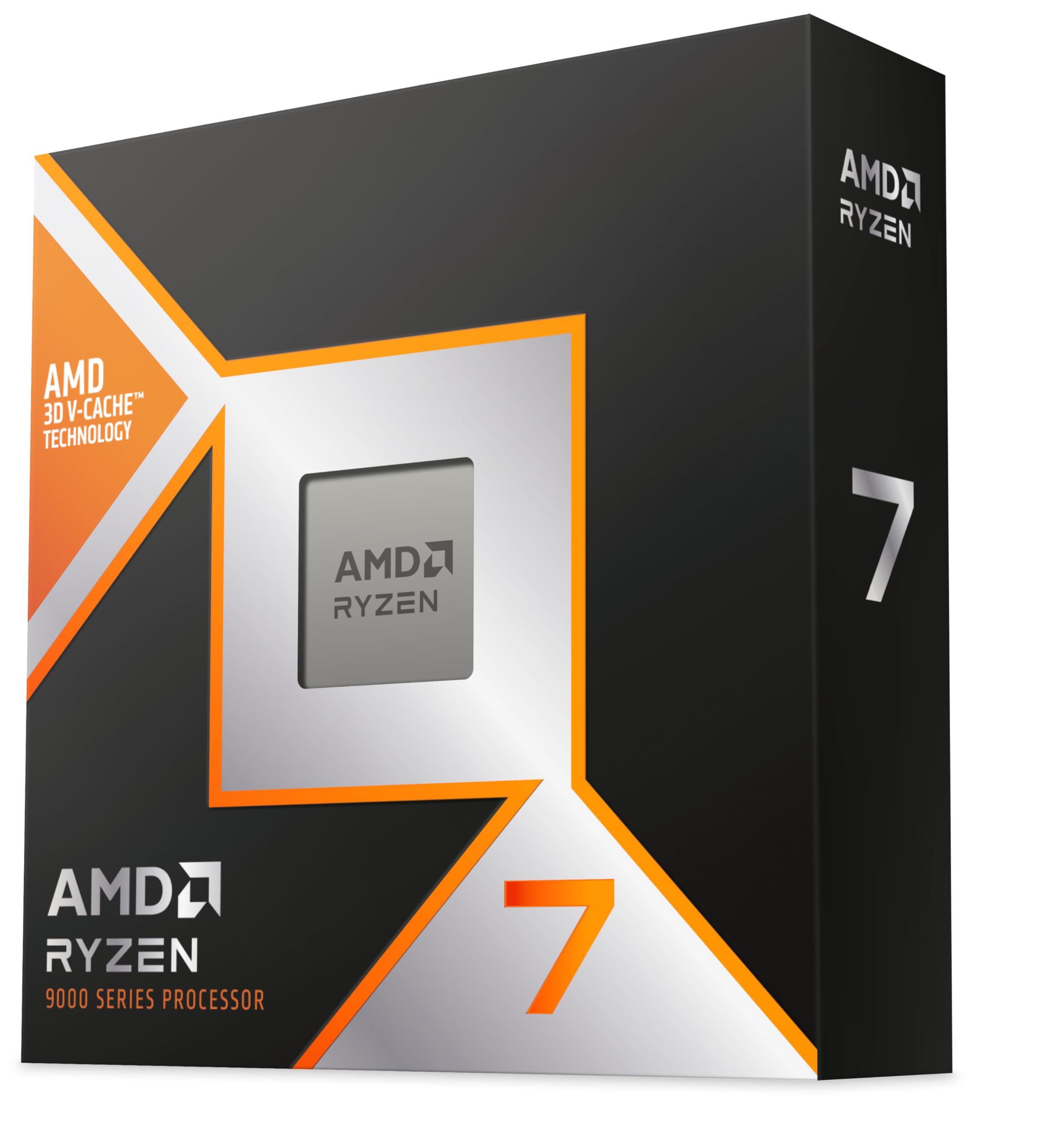
The AMD Ryzen 7 9800X3D is widely regarded as the world’s fastest gaming processor, and for good reason. Built on the Zen 5 architecture, it offers a significant IPC uplift—around 16% over the previous generation—paired with the latest iteration of 3D V-Cache technology. Its 96MB of L3 cache combined with 8MB of L2 brings the total cache to 104 MB, dramatically reducing memory latency in CPU-bound gaming scenarios.
For RTX 3080 Ti owners, this chip is the ultimate partner. Gamers report consistent frame times even in the most demanding titles, with minimal CPU bottlenecks at 1440p and 4K resolutions. The 5.2 GHz boost clock allows it to keep pace with the 3080 Ti’s data appetite, and its thermal performance is surprisingly manageable—users are running it with standard air coolers and seeing temps around 70°C under load.
The chip is a drop-in upgrade for existing AM5 motherboards, meaning you can pair it with a B650 or X670 board without needing a new platform. While it doesn’t include a cooler, its power efficiency at 120W TDP means a high-end air cooler or 240mm AIO will suffice.
Why it’s great
- Unmatched gaming performance with 3D V-Cache eliminates CPU bottlenecks for the 3080 Ti
- Manageable thermals even with mid-range coolers
- Drop-in compatible with existing AM5 motherboards
Good to know
- No cooler included in the box
- Premium price point reflecting its flagship status
- Productivity performance is solid but not class-leading compared to higher-core-count alternatives
2. AMD Ryzen 7 7800X3D

The AMD Ryzen 7 7800X3D is the chip that redefined what gaming CPUs could do at a mid-range price. With 96MB of 3D V-Cache stacked on top of Zen 4 cores, it delivers frame rates that frequently beat more expensive non-X3D processors, especially in games like CS2, Cyberpunk 2077, and simulation-heavy titles. Its 5.0 GHz boost clock is more than sufficient to keep the RTX 3080 Ti fed at 1440p and 4K.
One of the standout features of the 7800X3D is its incredible power efficiency. With a default TDP of just 120W and typical gaming power draw around 75W, it runs significantly cooler than Intel’s competing options. Users report idle temperatures around 40°C and gaming temps between 65-70°C, even with the stock air cooler. This makes it an excellent choice for compact builds where thermal management is tight.
The chip is socket-compatible with AM5 boards, offering a clear upgrade path to future Zen 5 and beyond processors. While it occasionally shows slight performance regressions in productivity tasks due to lower clock speeds than non-3D chips, for gaming with the 3080 Ti, it is nearly unmatched in its price bracket.
Why it’s great
- Incredible gaming performance per dollar, often beating more expensive chips
- Very cool and power-efficient even with stock coolers
- AM5 platform ensures future upgrade compatibility
Good to know
- Productivity performance slightly behind non-X3D Ryzen 7000 chips
- May show occasional frame-time spikes in very specific game scenarios
- No integrated graphics on the X3D variant
3. Intel Core Ultra 9 285K

The Intel Core Ultra 9 285K represents Intel’s latest architecture shift with the Arrow Lake design, featuring 8 Performance-cores and 16 Efficient-cores for a total of 24 cores. This hybrid approach allows the processor to intelligently distribute workloads—P-cores handle gaming and heavy single-threaded tasks while E-cores manage background processes and multithreaded productivity workloads. The 5.7 GHz boost clock is among the highest available.
For an RTX 3080 Ti build that pulls double duty as a gaming rig and a workstation, the 285K excels. Engineers and creators using SolidWorks, Premiere Pro, or After Effects report stable performance even under sustained 24-hour stress tests, with the chip drawing around 205W under Cinebench loads. Its improved memory controller handles four sticks of DDR5 at high frequencies, a common pain point for previous Intel generations.
The processor requires a new LGA1851 motherboard with the Intel 800 series chipset, so you are committing to a new platform. It does not include a cooler, and while its thermal characteristics are improved over 13th/14th gen, a 360mm AIO is recommended for heavy multithreaded loads. For pure gaming, the 285K is fast, but the X3D AMD chips deliver slightly better frame times at a lower price.
Why it’s great
- Exceptional multithreaded performance for video editing, CAD, and rendering
- Stable memory controller handles high-frequency DDR5 well
- Integrated graphics for troubleshooting and basic display tasks
Good to know
- Requires a new LGA1851 motherboard platform
- Gaming performance lags behind the 9800X3D in CPU-bound titles
- High power draw under full load requires robust cooling
4. Intel Core i7-12700KF

The Intel Core i7-12700KF is a testament to how well previous-generation hardware can still perform. With 8 Performance-cores and 4 Efficient-cores, this 12-core processor offers exceptional multitasking capability at a price that leaves more room in your budget for the RTX 3080 Ti. Its 5.0 GHz boost clock on the P-cores ensures strong single-threaded performance in modern games.
Users who have built systems around the 12700KF with the 3080 Ti report excellent results in competitive titles like Fortnite and DCS, where frame rates remain consistently high even with background applications running. The hybrid architecture allows the E-cores to handle streaming encoding or Discord while the P-cores focus on game logic, preventing stuttering during intense scenes. Compatibility with both DDR4 and DDR5 memory means you can reuse existing RAM to save additional money.
One critical note: the 12700KF requires a discrete graphics card—it has no integrated graphics, which is why it lacks the “F” suffix. It runs hot under load, especially when unlocking power limits for overclocking. A 240mm AIO liquid cooler is recommended for sustained gaming sessions, and a 360mm AIO is advisable for content creators pushing all cores.
Why it’s great
- Excellent value proposition for high-performance gaming with the 3080 Ti
- Hybrid architecture improves multitasking during gaming
- Supports both DDR4 and DDR5 for flexible building
Good to know
- No integrated graphics, requires a dedicated GPU for display output
- Runs hot, especially when overclocked; aftermarket cooling is a must
- LGA1700 platform is end-of-life with no future CPU upgrades
5. AMD Ryzen 7 5800XT

The AMD Ryzen 7 5800XT is the refresh of the legendary 5800X, offering 8 cores and 16 threads based on the mature Zen 3 architecture. With a 4.8 GHz boost clock and 36MB of total cache, it remains a formidable gaming processor that pairs well with the RTX 3080 Ti, especially at 1440p where the GPU is the primary bottleneck in most scenarios.
This chip is the ideal choice for anyone upgrading an existing AM4 build. Owners of B450, B550, or X570 motherboards can drop in the 5800XT with a simple BIOS update, getting significant performance gains without the expense of a new platform and DDR5 memory. Users upgrading from the Ryzen 5 5600X report massive performance jumps in both gaming and heavy multitasking, with improved boot times and application responsiveness.
The 5800XT includes the AMD Wraith Prism cooler with RGB lighting, which is adequate for standard operation but insufficient for sustained all-core loads or when Precision Boost Overdrive is enabled. The chip runs hot—users report that the stock cooler is insufficient for maximizing performance. Investing in a good aftermarket air cooler like the Noctua NH-D15 or a 240mm AIO will unlock the chip’s full potential with the 3080 Ti.
Why it’s great
- Best upgrade path for existing AM4 builders wanting to pair with 3080 Ti
- Includes RGB cooler, saving initial build cost
- Strong gaming performance, especially at 1440p and 4K
Good to know
- Runs hot with the included stock cooler; aftermarket cooling recommended
- Older AM4 platform limits PCIe to 4.0 and DDR4 memory speeds
- Not as future-proof as AM5 or LGA1851 options
6. Thermaltake LCGS View i570 (i9-14900KF + RTX 5070)
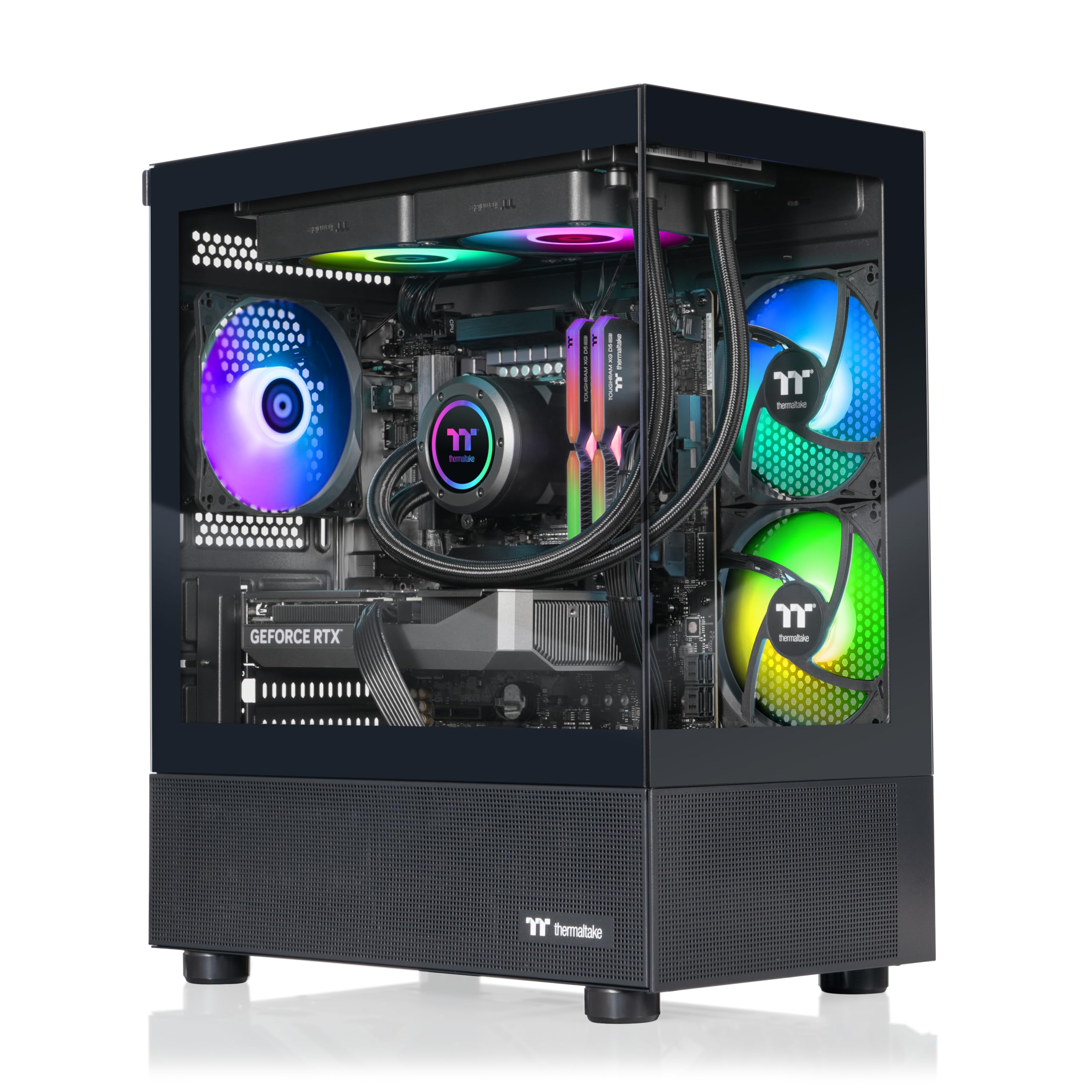
The Thermaltake LCGS View i570 is a pre-built gaming desktop that combines an Intel Core i9-14900KF processor with an NVIDIA GeForce RTX 5070 graphics card. While the RTX 5070 is technically a different GPU from the 3080 Ti, this system demonstrates the performance level achievable with a high-end Intel CPU paired with a powerful NVIDIA GPU. The i9-14900KF features 24 cores and 32 threads with a turbo boost up to 6.0 GHz.
For buyers who want a plug-and-play solution rather than building from scratch, this system handles modern titles flawlessly. Users report playing Cyberpunk 2077, Rust, Baldur’s Gate 3, and Helldivers at high settings without issues, and the closed-loop liquid cooling with a 240mm radiator keeps the CPU temperatures manageable under load. The 32GB of DDR5 6000MT/s RGB memory and 1TB NVMe M.2 drive provide a solid foundation for both gaming and productivity.
The system is notably quiet for a pre-built, with only minor fan noise reported during extended gaming sessions. It comes with Windows 11 pre-installed and has no bloatware, which is a welcome change from many pre-built manufacturers. However, as a pre-built, upgrade flexibility is more limited than a custom build, and the i9-14900KF generation is on a platform that may not see future CPU releases.
Why it’s great
- Out-of-the-box performance with no assembly required
- Liquid cooling keeps CPU temps under control even under sustained loads
- Clean build with no bloatware and quiet operation
Good to know
- Pre-built limits customization and future upgrade paths
- RTX 5070 is a different tier than the 3080 Ti for raw rendering power
- i9-14900KF generation is on a motherboard platform with limited future support
7. GIGABYTE GeForce RTX 3080 Ti Gaming OC 12G

The GIGABYTE GeForce RTX 3080 Ti Gaming OC 12G is a reference-quality implementation of NVIDIA’s Ampere architecture. With 12GB of GDDR6X memory on a 384-bit bus delivering 912 GB/s of memory bandwidth, this card is built to handle 4K gaming at high frame rates. Its WINDFORCE 3X cooling system keeps thermals in check even during extended gaming sessions.
Users who have paired this card with various CPUs report that undervolting via MSI Afterburner can significantly reduce power consumption and temperatures with minimal performance loss—targeting around 0.875mV at 1905MHz core clock. The card obliterates 2K games at ultra settings and handles 4K gaming well, though it may require some settings adjustments in the most demanding titles. Cyberpunk 2077 runs smoothly at 2K ultra settings.
One important consideration: the card is physically large at over 12 inches long, so ensure your case can accommodate it. The recommended power supply is 750W, though a quality 850W unit provides headroom for overclocking. Verify the yellow GIGABYTE factory seal upon arrival to ensure the card is new and register for the 4-year warranty for peace of mind.
Why it’s great
- Excellent 4K gaming capability with 12GB GDDR6X memory
- WINDFORCE 3X cooling keeps temperatures low during extended sessions
- Undervolting potential allows for significant power savings
Good to know
- Card is over 12 inches long; may not fit in smaller cases
- Requires a robust power supply of at least 750W
- Some reports of shipping issues; verify factory seal on arrival
8. MSI Gaming GeForce RTX 3080 Ti Gaming X Trio 12G

The MSI Gaming GeForce RTX 3080 Ti Gaming X Trio 12G is renowned for its exceptional thermal and acoustic performance. The TRI FROZR 2 thermal design, featuring three Torx 4.0 fans, keeps the card cool while maintaining very low noise levels. Users report that fans are virtually silent even under full load, with the card running below 78°C and fans at only 30-35% speed during gaming.
In terms of performance, this card is a beast. Users report over 100 FPS in Forza Horizon at Extreme++ 4K settings and 3DMark Time Spy scores exceeding 21,000 with overclocking. The card has significant overclocking headroom—users have achieved stable +500 MHz on memory and +100 MHz on the core. For the RTX 3080 Ti, this translates to exceptional 4K gaming capability across all modern titles.
One notable feature is the zero-fan mode, which keeps fans completely off until the GPU reaches 55°C, making the card completely silent during light workloads. However, the card is large at 32 cm (12.6 inches) long and requires 3x 8-pin power connectors. The included support bracket is described as poor by some users, so an aftermarket bracket may be advisable for long-term sag prevention.
Why it’s great
- Industry-leading quiet operation with zero-fan mode for silent light loads
- Excellent overclocking headroom for extra performance
- TRI FROZR 2 cooling keeps temps low even at low fan speeds
Good to know
- Large card at 32 cm may not fit in all cases
- Requires 3x 8-pin power connectors
- Included support bracket is of poor quality; aftermarket recommended
9. ASUS TUF Gaming RTX 3080 Ti OC Edition

The ASUS TUF Gaming GeForce RTX 3080 Ti OC Edition is built around durability and reliability, featuring military-grade capacitors and dual ball fan bearings rated to last up to twice as long as sleeve bearing designs. Its Axial-Tech fan design features a reversed rotational direction for the center fan to reduce turbulence, resulting in excellent cooling performance with very low noise levels.
Users report that this card runs significantly cooler than many competitors, with load temperatures around 55-60°C under gaming loads while maintaining near-silent operation. The card is a massive upgrade from previous-generation GPUs, with users upgrading from GTX 1070 reporting 50+ FPS gains at 2K resolution in titles like Overwatch and Warzone. The non-RGB design features a single illuminated logo, appealing to those who prefer a cleaner aesthetic.
The TUF card has a 350W power limit, which is slightly lower than some other 3080 Ti variants. This results in 3DMark Timespy scores around 20,000 versus 21,000+ for higher-power cards, representing roughly a 5% performance gap at the top end. For most users, this difference is imperceptible in gaming, and the card offers excellent value if you prioritize quiet operation and long-term reliability over absolute maximum overclocking headroom.
Why it’s great
- Exceptional build quality with military-grade capacitors and dual ball bearings
- Very quiet operation even under sustained gaming loads
- Low operating temperatures (55-60°C) under load
Good to know
- 350W power limit limits overclocking potential compared to some competitors
- ASUS software suite is reported as poor by some users
- Long card may require careful case measurement
FAQ
Will an AMD Ryzen 5 5600X bottleneck the RTX 3080 Ti at 1440p?
Is DDR5 memory worth the extra cost for gaming with the 3080 Ti?
How much L3 cache do I need for smooth gaming with the 3080 Ti?
Final Thoughts: The Verdict
For most users, the best cpu for 3080 ti winner is the AMD Ryzen 7 9800X3D because its 3D V-Cache technology and Zen 5 architecture deliver the highest and most consistent frame rates in CPU-bound gaming scenarios while maintaining manageable thermals. If you want incredible value and nearly identical gaming performance, grab the AMD Ryzen 7 7800X3D. And for a hybrid gaming and productivity build, nothing beats the Intel Core Ultra 9 285K.

Mo Maruf
I created WellFizz to bridge the gap between vague wellness advice and actionable solutions. My mission is simple: to decode the research and give you practical tools you can actually use.
Beyond the data, I am a passionate traveler. I believe that stepping away from the screen to explore new environments is essential for mental clarity and physical vitality.