Our readers keep the lights on and my smoothie glass nicely filled. As an Amazon Associate, I earn from qualifying purchases.
Choosing the right processor for a 1440p gaming build is about finding the balance between raw core count and single-threaded gaming performance that directly influences your frame rates. The GPU handles much of the heavy lifting at this resolution, but a weak or mismatched CPU can introduce stutter and bottleneck your graphics card, leaving performance on the table.
I’m Mohammad Maruf — the founder and writer behind WellFizz. I’ve spent years analyzing hardware specifications, synthetic benchmarks, and real-world gaming data to help you cut through the marketing noise and pick the exact component that fits your 1440p rig.
Whether you are starting a fresh build or looking to upgrade your existing system, this guide walks you through the top contenders to help you find the best cpu for 1440p gaming that matches your budget and performance expectations.
How To Choose The Best CPU For 1440p
At 1440p, the graphics card is typically the primary bottleneck in most gaming scenarios. However, the CPU still determines the ceiling for your maximum frame rates and dictates how well your system handles background tasks, streaming, and decompression. Choosing wisely means balancing core architecture, cache size, and platform longevity against your specific gaming habits.
Core Architecture and Cache Size
Cache size directly impacts how quickly the CPU can access frequently used data. AMD’s 3D V-Cache technology, found on the 7800X3D and 9800X3D, stacks additional L3 cache on top of the standard die, drastically reducing memory latency in gaming workloads. This translates into higher and more consistent 1% low frame rates, which directly impacts the smoothness you feel at 1440p.
Single-Core Boost vs Multi-Core Performance
Most modern games still rely heavily on single-threaded performance. A processor with a high boost clock (5.2 GHz or above) will generally outperform a chip with more cores but lower clock speeds in pure gaming. The Intel i5-14600KF and i9-14900K offer high frequency, while the AMD Ryzen 7 9800X3D delivers exceptional single-threaded performance thanks to its Zen 5 architecture and large cache.
Platform and Upgrade Path
Socket AM5 (AMD) supports DDR5 memory and PCIe 5.0, and AMD has committed to supporting the platform for multiple generations. This means a B650 or X670 motherboard bought today can likely accept future Ryzen processors. Intel’s LGA1700 platform supports both DDR4 and DDR5, but it is a dead-end socket, meaning any CPU upgrade will require a new motherboard. For a forward-looking 1440p build, the AM5 platform offers better longevity.
Quick Comparison
On smaller screens, swipe sideways to see the full table.
| Model | Category | Best For | Key Spec | Amazon |
|---|---|---|---|---|
| AMD Ryzen 7 9800X3D | Premium | Ultimate gaming smoothness | 8 cores / 16 threads, 104MB cache | Amazon |
| AMD Ryzen 7 7800X3D | Mid-Range | Best value gaming CPU | 8 cores / 16 threads, 104MB cache | Amazon |
| Intel i5-14600KF | Mid-Range | Productivity + gaming balance | 14 cores / 20 threads, 5.3 GHz boost | Amazon |
| AMD Ryzen 7 7700X | Mid-Range | Entry-level AM5 gaming | 8 cores / 16 threads, 5.4 GHz boost | Amazon |
| Intel Core Ultra 7 265KF | Premium | Multi-tasking and encoding | 20 cores / 20 threads, 5.5 GHz boost | Amazon |
| Intel i9-14900K | Premium | Heavy content creation + gaming | 24 cores / 32 threads, 6.0 GHz boost | Amazon |
| CyberPowerPC Gamer Master | Prebuilt | Out-of-box 1440p gaming | AMD Ryzen 7 8700F, RTX 5060 Ti | Amazon |
| Skytech Gaming O11 Vision | Prebuilt | High-end 1440p max settings | AMD Ryzen 7 9850X3D, RTX 5070 Ti | Amazon |
In‑Depth Reviews
1. AMD Ryzen 7 9800X3D
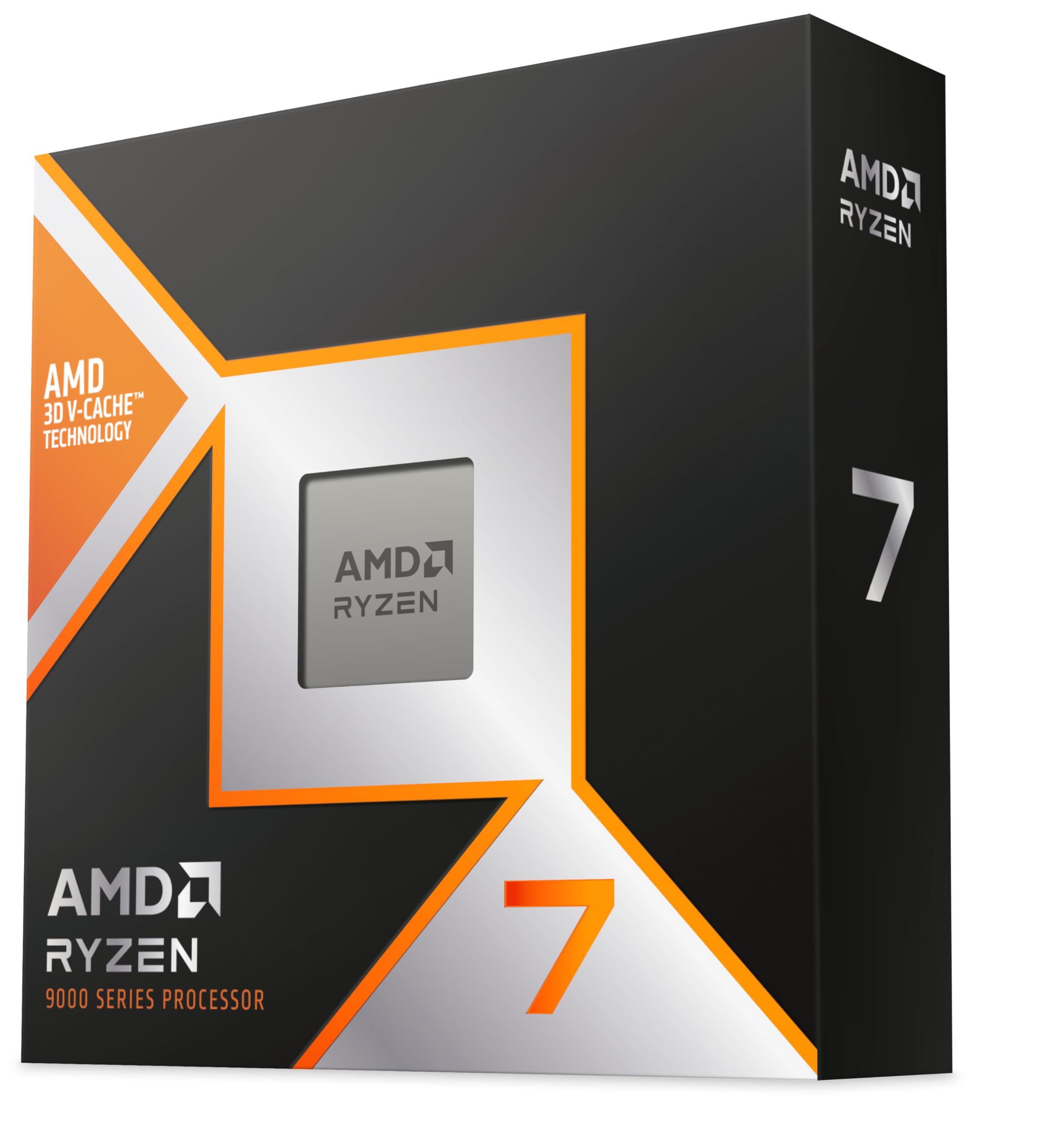
The AMD Ryzen 7 9800X3D is the current king of gaming processors, built on the Zen 5 architecture with a massive 96MB of L3 cache plus an additional 8MB of L2 cache for a total of 104MB. This stacked cache design dramatically reduces memory latency, which translates into higher 1% low frame rates that make 1440p gaming feel incredibly smooth even during demanding action sequences. With a base clock of 4.7 GHz and a boost of 5.2 GHz, it delivers an estimated 16% IPC uplift over its predecessor, the 7800X3D.
Thermal performance is notably better than previous X3D chips, with the processor running comfortably in the 50-60 degree Celsius range under full gaming load when paired with a standard 240mm AIO liquid cooler. The 8-core, 16-thread configuration is more than enough for modern games, and the drop-in compatibility with existing Socket AM5 motherboards makes it a straightforward upgrade for anyone already on the Ryzen 7000 series platform.
For pure 1440p gaming performance, this chip offers the highest and most consistent frame rates available on the consumer market today. It outpaces even the Ryzen 9 9950X3D in gaming-specific workloads due to its lower core-to-core latency, making it the definitive choice for enthusiasts who want zero compromise on frame times.
Why it’s great
- World-class gaming frame consistency thanks to 3D V-Cache
- Excellent thermal efficiency compared to previous X3D gen
- Future-proof AM5 platform with PCIe 5.0 and DDR5 support
Good to know
- Requires a discrete GPU as it has no integrated graphics
- Premium pricing places it at the top of the budget range
- Cooler not included in the box
2. AMD Ryzen 7 7800X3D

The AMD Ryzen 7 7800X3D has become the benchmark for price-to-performance in 1440p gaming, and for good reason. It packs the same 8-core, 16-thread configuration as its more expensive sibling but uses the previous Zen 4 architecture with 3D V-Cache technology that stacks 64MB of additional L3 cache on top of the standard 32MB, totaling 96MB of L3 cache plus 8MB of L2 cache. The result is exceptional gaming performance that often rivals or beats far more expensive Intel offerings.
One of the most compelling aspects of the 7800X3D is its power efficiency. Under gaming loads, the chip draws around 75 watts, which means it runs cool and quiet with even a budget air cooler like a Peerless Assassin. Users report temperatures in the 65-70 degree Celsius range during extended gaming sessions, far lower than the high-wattage Intel competing chips. This efficiency makes it an excellent choice for small form factor builds where thermal headroom is limited.
In real-world 1440p testing, the 7800X3D delivers 80-100+ FPS in CPU-demanding titles like Counter-Strike 2 and Call of Duty, with frame times that feel buttery smooth thanks to the enormous cache. It pairs exceptionally well with mid-range to high-end GPUs like the RTX 4070 Ti or RX 7900 XT, making it the sweet spot for gamers who want top-tier performance without breaking the bank.
Why it’s great
- Unmatched gaming value with 3D V-Cache technology
- Low power draw allows quiet cooling solutions
- AM5 platform ensures future upgrade path
Good to know
- Performance in productivity tasks is average compared to multi-core chips
- Cooler not included in the box
- Can run warm under heavy loads without adequate airflow
3. Intel Core i5-14600KF

The Intel Core i5-14600KF strikes an excellent balance between gaming performance and multi-threaded productivity, making it a versatile choice for gamers who also stream, edit video, or run virtual machines. With 6 performance cores and 8 efficiency cores totaling 14 cores and 20 threads, it offers impressive multi-core muscle alongside a max boost clock of 5.3 GHz. The lack of integrated graphics (KF suffix) keeps the price lower while assuming you already own a dedicated GPU.
In 1440p gaming scenarios, the 14600KF pairs exceptionally well with a high-end GPU like the RTX 3080 or RTX 4070 Super, delivering strong frame rates in both CPU-light and CPU-heavy titles. Users report excellent stability when paired with a 240mm AIO cooler, with temperatures remaining manageable even under sustained loads. The processor supports both DDR4 and DDR5 memory, giving builders flexibility to reuse older RAM or invest in the latest standard.
One important consideration for Intel 14th-gen users is a mandatory BIOS update to the latest microcode to address stability issues reported on earlier revisions. Additionally, a contact frame is recommended to ensure even pressure distribution across the IHS, which improves thermal transfer. Overall, the 14600KF offers compelling value for builders who want a single chip that handles both gaming and creation tasks without compromise.
Why it’s great
- Strong multi-core performance for streaming and encoding
- Supports both DDR4 and DDR5 memory platforms
- High boost clock delivers snappy single-threaded response
Good to know
- LGA1700 is a dead-end platform with no future upgrades
- BIOS update required for stability fixes
- Requires a discrete GPU, no integrated graphics
4. AMD Ryzen 7 7700X

The AMD Ryzen 7 7700X is the gateway to the AM5 platform for budget-conscious gamers who want to build a future-proof system without spending premium money on X3D chips. It features 8 cores and 16 threads based on the Zen 4 architecture, with a max boost clock of 5.4 GHz and a total cache of 40MB (32MB L3 plus 8MB L2). While it lacks the stacked cache of its X3D siblings, it still delivers excellent gaming performance at 1440p, especially when paired with a mid-range GPU.
One of the standout features of the 7700X is its integrated RDNA 2 graphics, which provides functional display output without a discrete GPU. This can be a lifesaver for troubleshooting or for very lightweight gaming, though it is not designed for serious AAA gaming. The chip supports PCIe 5.0 and DDR5 memory, giving builders access to the fastest storage and memory technologies available on the AM5 platform.
Thermal performance is a consideration with the 7700X — the X-series chips tend to run hot under load, especially with the stock boost behavior that pushes voltage aggressively. A capable aftermarket air cooler or a 240mm AIO is strongly recommended to keep temperatures under 70 degrees Celsius during extended gaming. Despite this, the 7700X offers a compelling entry into the AM5 ecosystem at a price point that leaves room in the budget for a stronger GPU, which is often the smarter play for 1440p gaming.
Why it’s great
- Integrated graphics provide backup display output
- AM5 platform offers upgrade path to future Ryzen CPUs
- Strong single-threaded performance at high boost clocks
Good to know
- Runs hot under load; needs good cooling solution
- No 3D V-Cache for maximum gaming gains
- Cooler not included in the box
5. Intel Core Ultra 7 265KF

The Intel Core Ultra 7 265KF represents Intel’s new architecture direction with 20 total cores composed of 8 performance cores and 12 efficiency cores, all running simultaneously on the LGA1851 socket. It offers a max turbo frequency of 5.5 GHz and a total cache of 36MB L3, which is competitive for gaming and productivity tasks. This processor is designed for the Intel 800 Series chipset motherboards, making it a fresh platform that offers better power management and connectivity.
In 1440p gaming, the 265KF delivers strong performance, particularly in games that can leverage multiple cores like Battlefield 4, Call of Duty Black Ops 7, and modern simulation titles. Users report that it handles light graphics encoding and streaming without stutter, making it a solid choice for content creators who game on the side. The P-cores handle gaming latency while the E-cores manage background tasks, resulting in smooth multitasking performance.
Motherboard compatibility has been a point of attention — some MSI boards required BIOS updates to achieve full stability, so checking your motherboard’s support page before purchase is wise. The chip runs cooler and more efficiently than previous Intel generations, and users with a decent air cooler like the Peerless Assassin report excellent temperatures. The 265KF is a strong contender for those who want a modern Intel platform with good performance today and potential for future Arrow Lake-S upgrades.
Why it’s great
- Modern LGA1851 platform with future upgrade potential
- Strong multi-threaded performance for encoding and multitasking
- Good thermal efficiency compared to prior Intel generations
Good to know
- Requires a discrete GPU, no integrated graphics
- New platform may require BIOS updates for full stability
- Limited availability of motherboards compared to AM5
6. Intel Core i9-14900K
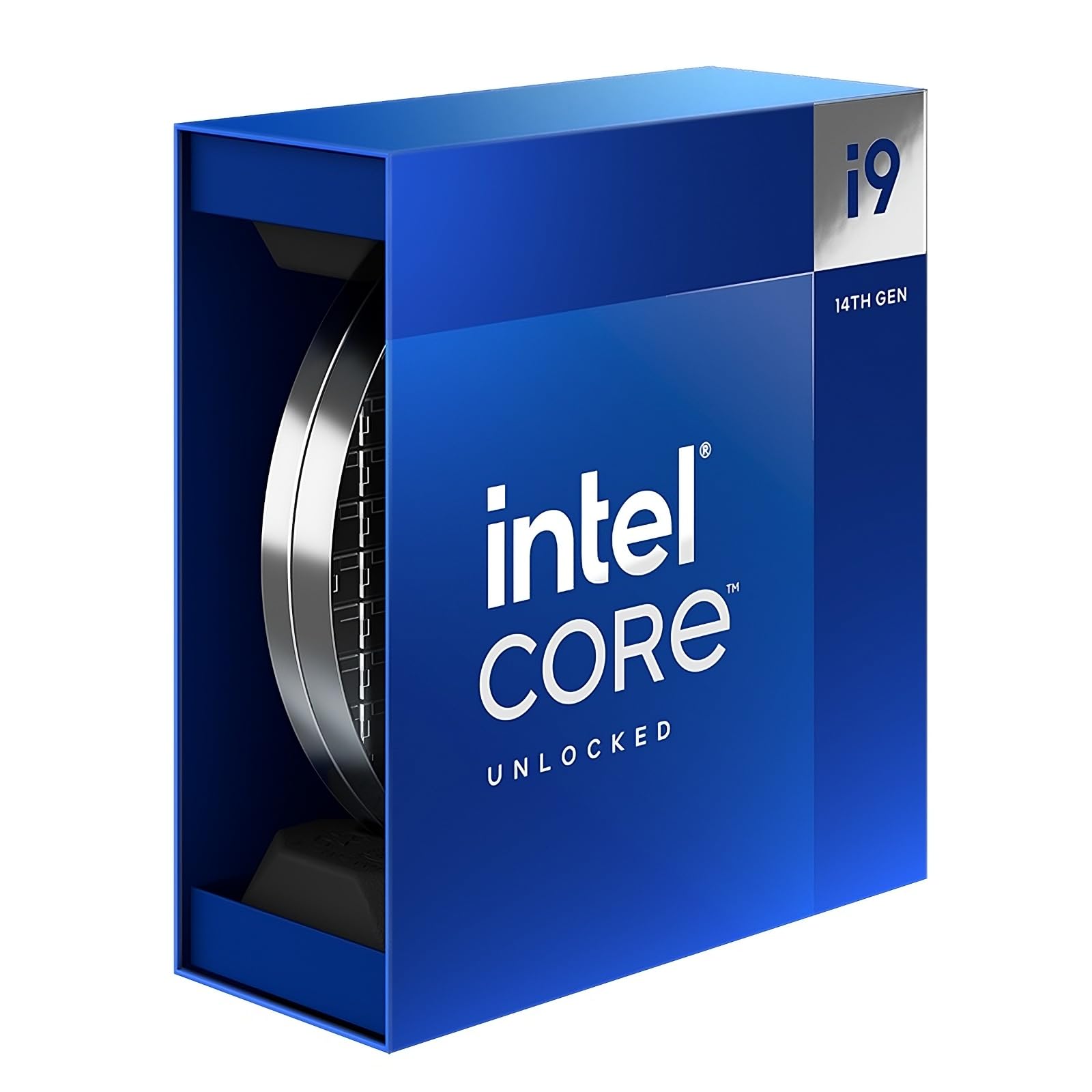
The Intel Core i9-14900K is the flagship of the 14th-gen Raptor Lake Refresh lineup, offering an incredible 24 cores (8 P-cores and 16 E-cores) with 32 threads and a max turbo frequency of 6.0 GHz. This processor is a monster for content creation workloads like video editing, 3D rendering, and software compilation, where its massive multi-core throughput can cut render times dramatically compared to any 8-core part. For 1440p gaming, it still delivers top-tier frame rates, though the difference versus a much cheaper 14600KF or 7800X3D is marginal in most titles.
Thermal management is a serious consideration with the 14900K. Under full load, it can draw over 250 watts, requiring a high-end 360mm AIO liquid cooler to keep temperatures in check. Users report that with proper cooling and a contact frame to address IHS bending, the chip can stay below 85 degrees Celsius during sustained all-core workloads. The platform supports both DDR5 and DDR4, though maximizing performance requires fast DDR5 memory and a Z790 motherboard that can handle the power delivery demands.
There have been reported stability issues with the 13th and 14th-gen Intel chips, including degradation over time. Intel has released extended warranties and microcode updates to address these problems, and most users who update their BIOS and follow power guidelines report stable operation. Despite the extra thermal and stability considerations, the 14900K remains the best choice for someone who needs absolute maximum multi-threaded performance alongside strong gaming capability.
Why it’s great
- Unmatched multi-core performance for heavy productivity
- 6.0 GHz boost clock for ultra-fast single-threaded tasks
- Supports both DDR4 and DDR5 memory platforms
Good to know
- Very high power draw requires premium cooling solution
- LGA1700 platform has no further CPU upgrade path
- Stability issues reported; ensure latest BIOS updates applied
7. CyberPowerPC Gamer Master
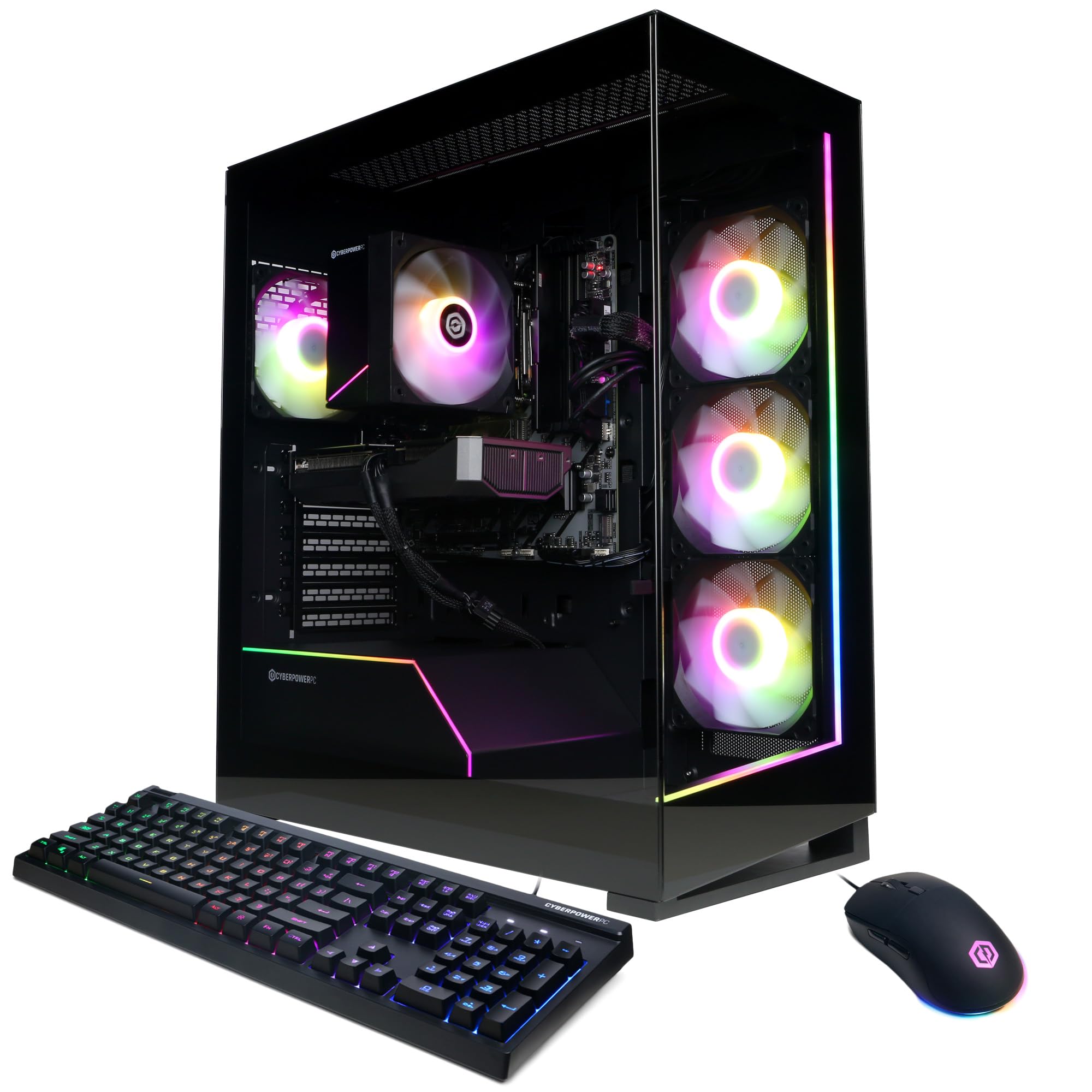
The CyberPowerPC Gamer Master is a well-rounded prebuilt gaming PC that combines an AMD Ryzen 7 8700F processor with an NVIDIA GeForce RTX 5060 Ti 8GB graphics card. The Ryzen 7 8700F is an 8-core, 16-thread processor based on the Zen 4 architecture running at a base clock of 4.1 GHz, which provides solid CPU performance for 1440p gaming without being a bottleneck for the RTX 5060 Ti. The inclusion of 16GB of DDR5 memory and a 1TB PCIe 4.0 NVMe SSD ensures fast load times and adequate capacity for a modern game library.
The case features a tempered glass side panel and customizable RGB lighting, giving it a clean, modern aesthetic. Cooling is handled by standard case fans that run quietly even under gaming load, with users reporting that the system stays cool and quiet during extended gaming sessions. The system also includes Wi-Fi 6 and Bluetooth 5.3 connectivity, making it easy to connect to wireless networks and peripherals without adding dongles.
Some users have reported random restarts or USB power issues which were resolved by enabling Deep Sleep in the BIOS and installing the latest chipset drivers. CyberPowerPC offers a 1-year parts and labor warranty along with free lifetime tech support, which provides peace of mind for buyers who are not comfortable troubleshooting hardware issues. Overall, this prebuilt offers a good entry point into 1440p gaming without requiring any assembly or component selection.
Why it’s great
- Ready-to-play out of the box with Windows 11 pre-installed
- Good balance of Ryzen 7 CPU and RTX 5060 Ti GPU for 1440p
- Non-proprietary components allow easy future upgrades
Good to know
- Some users experienced stability issues requiring BIOS updates
- Only 8GB of VRAM on the RTX 5060 Ti may limit ultra textures at 1440p
- Customer support responsiveness has been inconsistent
8. Skytech Gaming O11 Vision
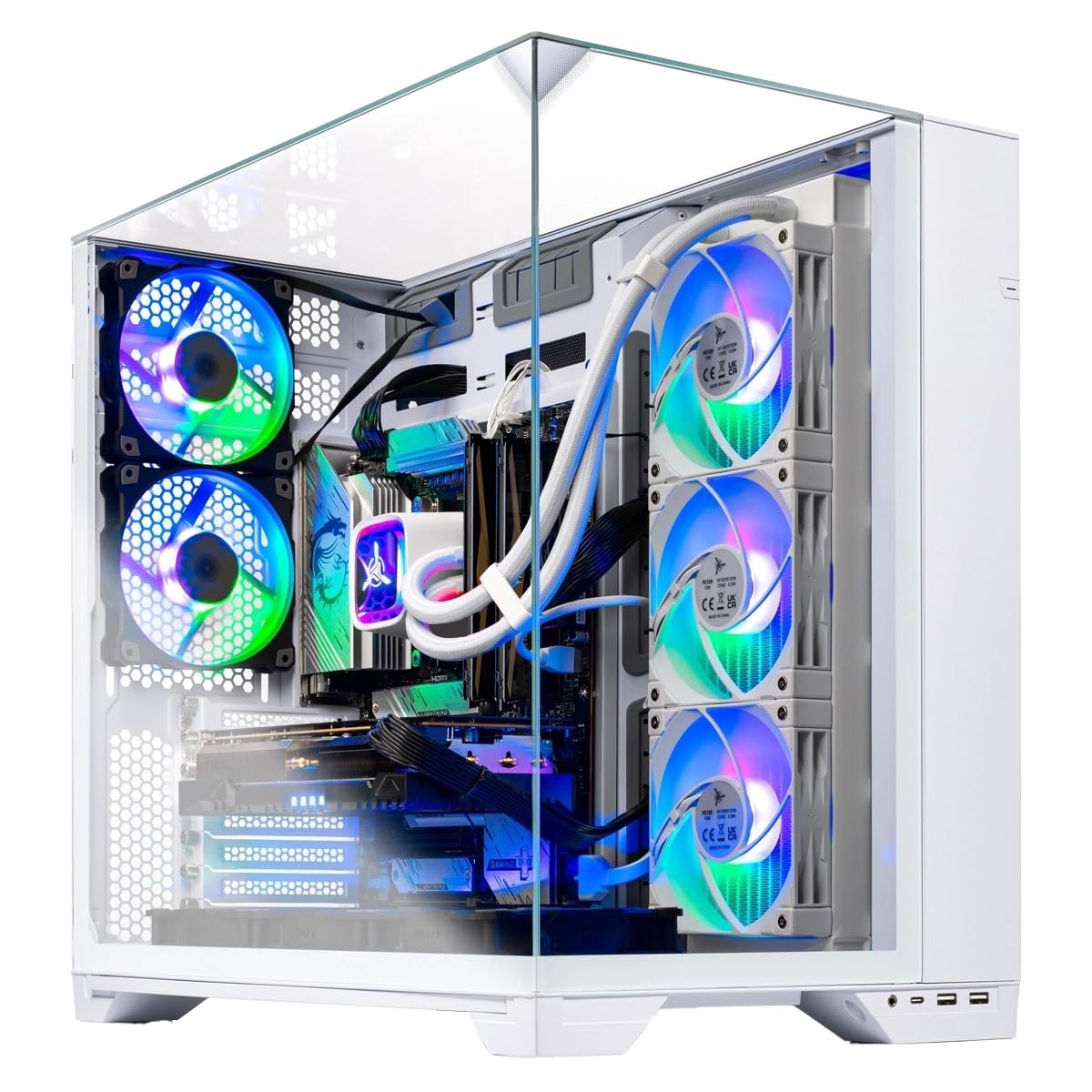
The Skytech Gaming O11 Vision is a high-end prebuilt gaming PC built around the AMD Ryzen 7 9850X3D processor, which features 8 cores and 16 threads with 3D V-Cache technology for exceptional gaming performance. Paired with an NVIDIA GeForce RTX 5070 Ti with 16GB of GDDR7 VRAM and 32GB of DDR5 memory running at 5600 MT/s, this system is designed to crush 1440p gaming at ultra settings with smooth 60+ FPS frame rates in the most demanding titles like Cyberpunk 2077 and Hogwarts Legacy.
The system uses a Lian Li PC-O11 Vision case finished in white, which is known for its excellent airflow and clean dual-chamber design. Cooling is handled by a 360mm ARGB AIO liquid cooler, which keeps the 9850X3D at optimal temperatures even during extended gaming sessions. The system includes a 2TB Gen4 NVMe SSD for fast load times and ample storage, along with an 850W Gold-rated ATX 3.0 power supply that supports the latest GPU power demands.
Skytech Gaming assembles these systems in the USA and includes a 1-year warranty on parts and labor along with free technical support. The Windows 11 installation is clean with no bloatware, and the system ships with a gaming keyboard and mouse. For gamers who want a premium, high-performance 1440p system without building it themselves, the O11 Vision delivers a well-integrated, high-quality experience that should remain relevant for several years.
Why it’s great
- Top-tier 9850X3D processor with 3D V-Cache for gaming
- 16GB RTX 5070 Ti handles heavy 1440p textures with ease
- 360mm AIO liquid cooling ensures quiet, cool operation
Good to know
- Premium pricing places it at the upper end of the market
- Some units have shipped with varied component brands (GPU, RAM)
- Wi-Fi 5 is dated; Wi-Fi 6 would be expected at this price
FAQ
Is the CPU or GPU more important for 1440p gaming?
What is 3D V-Cache and why does it matter for gaming?
Can I use DDR4 memory with an Intel Core i5-14600KF?
Final Thoughts: The Verdict
For most users, the best cpu for 1440p gaming is the AMD Ryzen 7 7800X3D because it delivers near-flagship gaming performance with excellent power efficiency at a price that leaves room for a stronger GPU. If you want the absolute highest frame rates and smoothest frame times, grab the AMD Ryzen 7 9800X3D. And for a prebuilt that combines a top-tier CPU with balanced components, nothing beats the Skytech Gaming O11 Vision.

Mo Maruf
I created WellFizz to bridge the gap between vague wellness advice and actionable solutions. My mission is simple: to decode the research and give you practical tools you can actually use.
Beyond the data, I am a passionate traveler. I believe that stepping away from the screen to explore new environments is essential for mental clarity and physical vitality.