Our readers keep the lights on and my smoothie glass nicely filled. As an Amazon Associate, I earn from qualifying purchases.
Back sleeping with CPAP therapy presents a unique challenge: your standard pillow pushes the mask against the mattress, creating disruptive air leaks that compromise your treatment and disturb your sleep. A dedicated solution uses specific cutouts and contoured support to keep the mask seal intact, allowing your therapy to work exactly as intended.
I’m Mohammad Maruf — the founder and writer behind WellFizz. I’ve spent hundreds of hours analyzing CPAP pillow specifications, studying customer feedback on mask compatibility and neck alignment, and comparing contour designs to identify the features that actually reduce leaks and morning stiffness.
This guide evaluates the top contenders to help you find the best cpap pillow for back sleepers.
How To Choose The Best CPAP Pillow For Back Sleepers
Selecting the right CPAP pillow for back sleeping requires a shift in thinking. A pillow that feels great for side sleepers can wreck your mask seal when you’re on your back. Focus on features that keep your head stable and your mask undisturbed.
Mask Cutout Design
The defining feature of any CPAP pillow is the cutout area that creates a pocket for your mask. For back sleepers, these cutouts must be positioned centrally or symmetrically so the mask face doesn’t press into the surface. A poorly placed cutout causes the frame to shift, breaking the seal and triggering leaks.
Adjustable Loft for Neck Alignment
Back sleepers typically need a lower loft than side sleepers — usually between 3 and 4.5 inches. A pillow that is too high forces your chin toward your chest, restricting airflow and causing neck strain. Removable inserts or adjustable fill allow you to dial in the exact height that keeps your spine neutral while your CPAP mask does its job.
Fill Material and Firmness
Memory foam provides excellent contouring and pressure relief but can retain heat. Down alternative fill offers a plush, familiar feel and is fully adjustable. Cooling gel layers or breathable covers help manage temperature regulation, which matters more for back sleepers who don’t shift positions as frequently during the night.
Quick Comparison
On smaller screens, swipe sideways to see the full table.
| Model | Category | Best For | Key Spec | Amazon |
|---|---|---|---|---|
| Lunderg Parkin | Down Alternative | Back sleepers wanting a plush, adjustable fill | Adjustable fill bag + memory foam base | Amazon |
| Contour CPAPMax Cooling Gel | Memory Foam Cooling | Back sleepers needing active temperature control | Built-in gel layer + 3 adjustable layers | Amazon |
| NextSleep Back Sleeper Pillow | Memory Foam | Back sleepers wanting dedicated neck support | Patent-pending curved neck nook | Amazon |
| Elviros Cervical Neck Pillow | Cervical Memory Foam | Back sleepers needing four height options | 4 adjustable heights + two inserts | Amazon |
| IKSTAR Adjustable CPAP Pillow | Memory Foam | Back sleepers on a budget needing cervical support | 2cm removable insert + ice-silk cover | Amazon |
| HOMCA CPAP Pillow | Memory Foam | Back sleepers wanting dual contour heights | High roll 4.3″ / Low roll 3.5″ | Amazon |
| HOMEPAC Wedge Pillow | Wedge Foam | Back sleepers needing angled elevation support | 27-degree angled support 11.8″ tall | Amazon |
In‑Depth Reviews
1. Lunderg Parkin CPAP Pillow
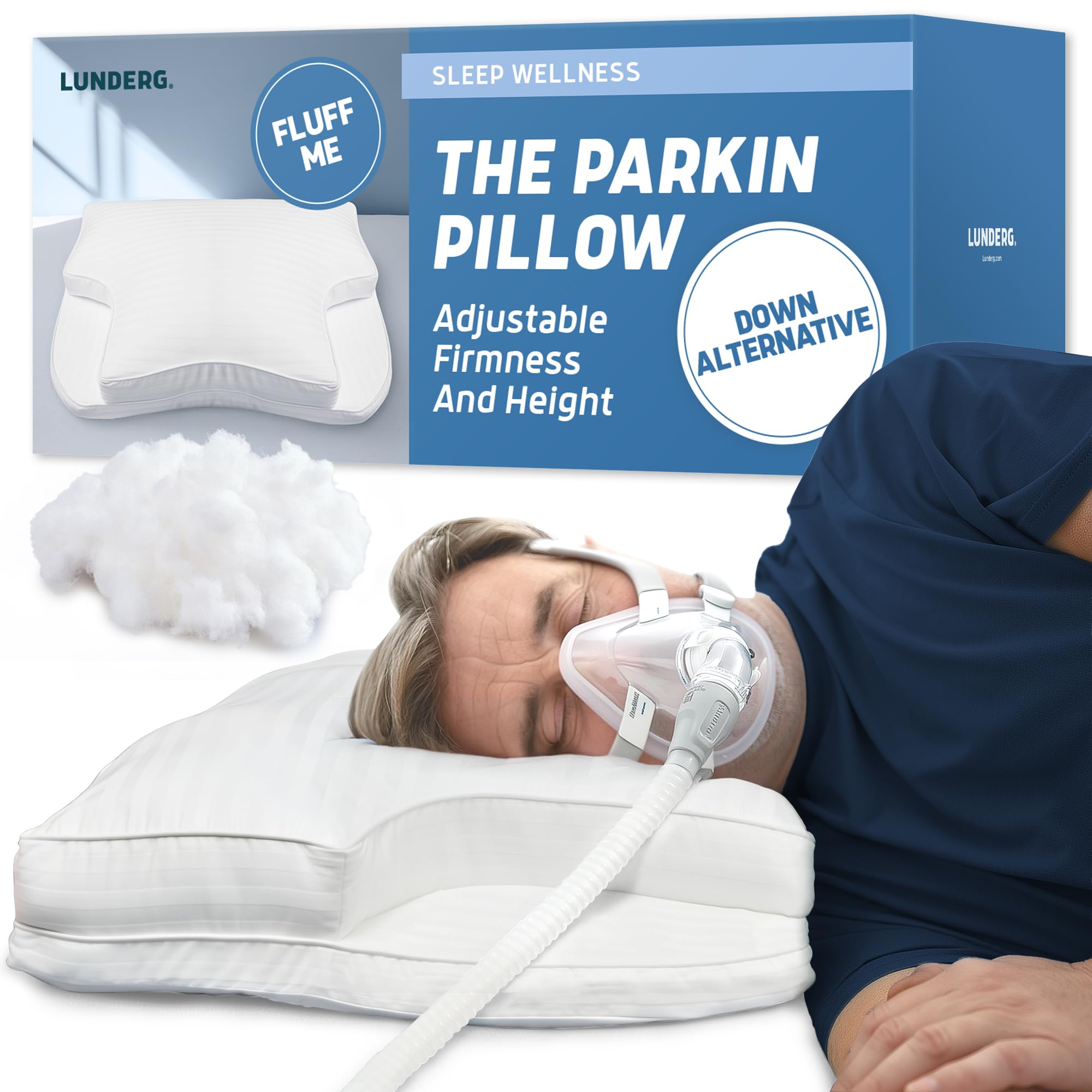
The Lunderg Parkin stands apart from the crowded memory foam field by using a down-alternative fill with a thin memory foam base layer. The gusseted shape creates dedicated cutouts for full-face, nasal, and nasal pillow masks, and the fill is fully adjustable thanks to an included bag of extra stuffing. This makes it possible to fine-tune the loft precisely for back sleeping, where a lower, neutral height is critical.
User reports show this pillow cut AHI scores by half and eliminated persistent mask leaks for restless sleepers. The 100 percent cotton cover is machine washable, and the down-alternative fill bounces back with a quick fluff rather than retaining permanent compression like pure memory foam. The adjustable filling also extends the usable lifespan compared to fixed-height foam pillows.
For back sleepers who dislike the dense feel of memory foam, this is the most versatile and customizable option available. The down-alternative fill provides a cloud-like surface without sacrificing the cutout geometry needed for mask stability. It also qualifies for FSA/HSA purchase.
Why it’s great
- Adjustable fill lets you dial in exact loft for back sleeping
- Machine-washable cotton cover is easy to maintain
- Works with all mask types including full-face and nasal
Good to know
- Some users report it can flatten over time without regular fluffing
- Extra pillowcase not included; must purchase separately
2. Contour CPAPMax Cooling Gel
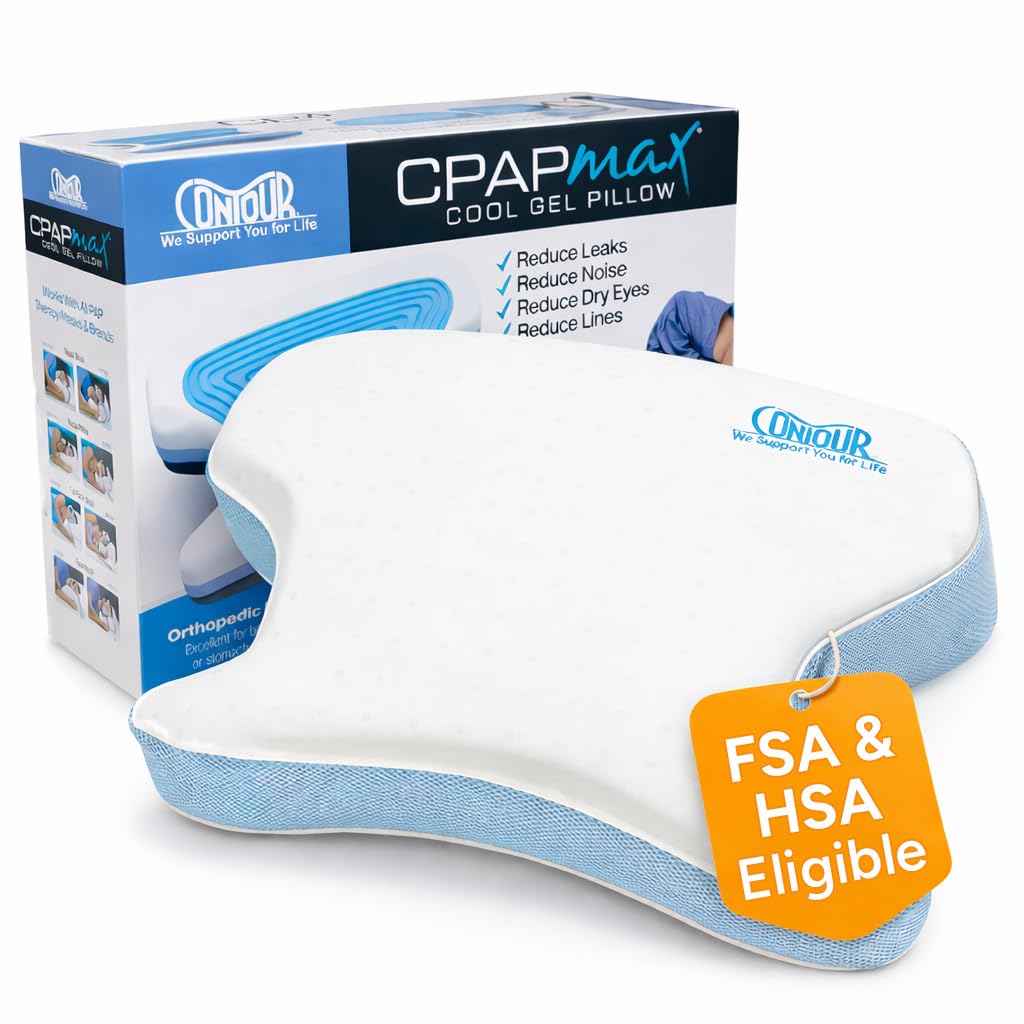
The Contour CPAPMax uses a three-layer adjustable system with a built-in cooling gel layer on one side and a fiber-fill surface on the other. The ventilated memory foam base promotes airflow, and the gel layer actively wicks heat away from the face — critical for back sleepers who stay in one position and trap body heat against the pillow surface.
The cutout design accommodates full-face and nasal masks alike, and the adjustable layers let you remove or swap foam inserts to reach a comfortable loft for back sleeping. Users who previously struggled with neck and shoulder pain reported immediate relief, with some sleeping nine hours pain-free after a single night. The cool side is particularly helpful for those who wake up sweaty.
Back sleepers should note that this pillow runs slightly thicker than average, so removing the fiber-fill top layer may be necessary to achieve a low enough profile. The break-in period lasts about a week, during which the foam softens noticeably. It is not compatible with standard pillowcases — the included cover must be used.
Why it’s great
- Built-in cooling gel layer actively reduces heat buildup
- Three adjustable layers allow customized loft and firmness
- Ergonomic cutouts prevent mask shifting for all positions
Good to know
- Foam is quite firm during the first week of use
- Still quite thick even on thinnest setting for some back sleepers
3. NextSleep The Back Sleeper Pillow

This pillow is purpose-built for back sleeping, featuring a patent-pending curved design that wraps into the neck and shoulder nook. The memory foam construction cradles the head while keeping the neck in a neutral position, which helps prevent the chin-tucking that restricts airflow during CPAP therapy. A removable height insert allows adjustment to different user preferences.
Users recovering from surgery or managing nerve pain have found this pillow invaluable for sleeping upright or semi-reclined. The included satin cover reduces friction, which helps minimize sleep wrinkles and keeps the pillow cool. CertiPUR-US certification confirms the foam is free from formaldehyde, heavy metals, and phthalates — important for close-contact use night after night.
The 100-night sleep trial provides a risk-free period to test whether the curved shape works with your specific mask. Some back sleepers may find the central depression too deep if their mask has a bulky front frame, but the overall design is exceptionally well-targeted at the back-sleeping position.
Why it’s great
- Curved neck nook specifically designed for back sleeping posture
- CertiPUR-US certified memory foam with no harmful chemicals
- Includes satin and machine-washable covers plus height insert
Good to know
- Not specifically designed with CPAP mask cutouts
- Satin case can be slippery for some users
4. Elviros Cervical Neck Pillow
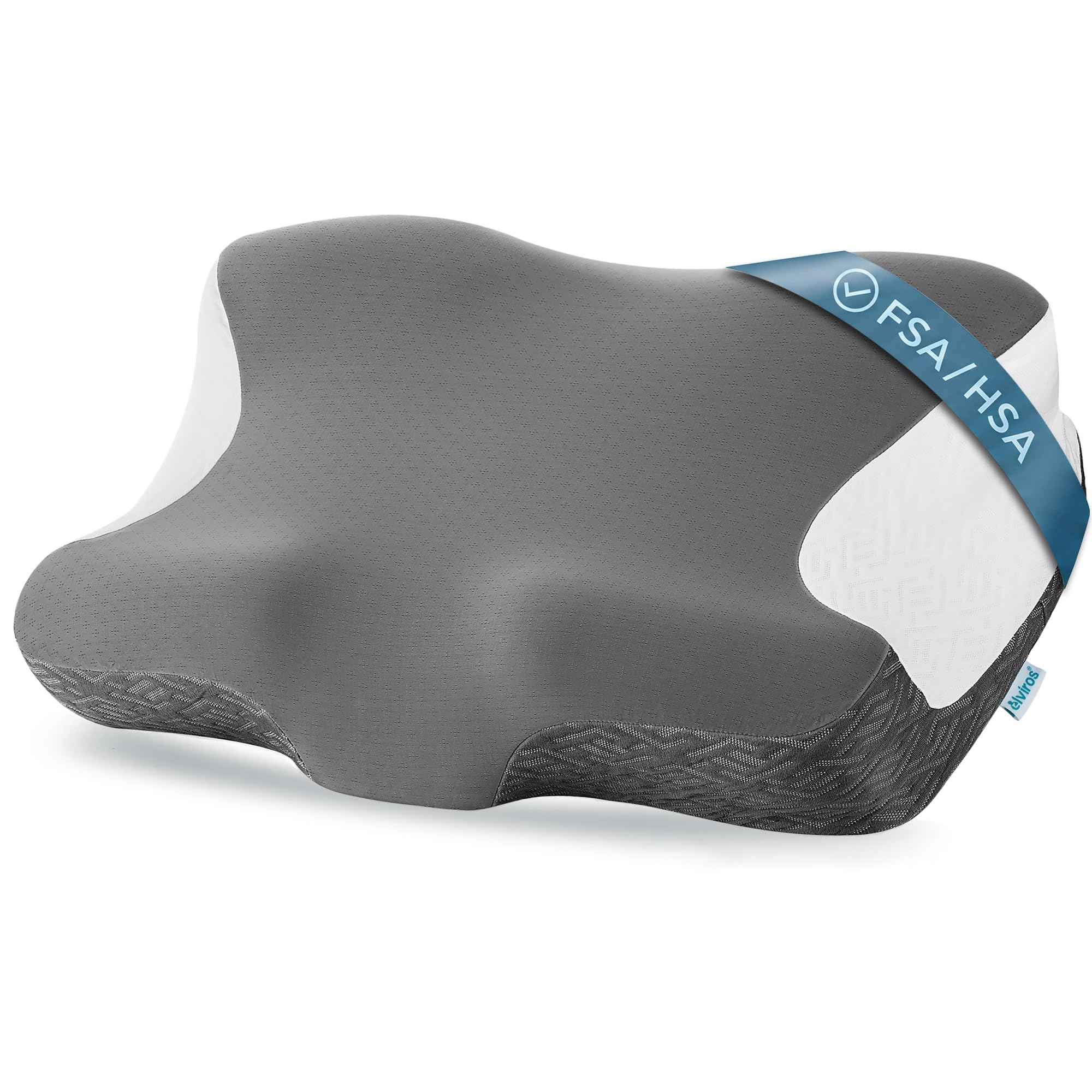
The Elviros pillow offers four distinct height configurations through two removable spacer inserts — one softer and one firmer — allowing back sleepers to fine-tune both loft and feel. The high-density memory foam is CertiPUR-US certified and uses a slow-rebound formula that conforms to the cervical curve without sagging. The nylon-spandex cover is smooth and breathable, reducing heat retention.
User feedback highlights a significant reduction in upper back pain after just two nights of use, with some CPAP users reporting their AHI score dropped from 55 to under 13 within three weeks. The cutout design accommodates full-face and nasal masks, and the removable cover zips off for cleaning. The medium firmness rating appeals to sleepers who want support without a rock-hard surface.
The main concern for back sleepers is that the effective height ranges from 2.4 inches (without inserts) to 4.3 inches (with both inserts), which is on the lower end for side sleepers but ideal for back sleeping. Those who need a taller pillow can request an additional 0.8-inch insert from the manufacturer at no extra cost.
Why it’s great
- Four adjustable heights cover the ideal back-sleeping range
- CertiPUR-US certified zero-odor memory foam after airing
- High-density foam retains shape without sagging
Good to know
- Foam has a light smell that requires 3-5 days to dissipate
- Some users find it too low and firm despite adjustability
5. IKSTAR Adjustable CPAP Pillow

The IKSTAR pillow provides a budget-friendly entry point without cutting corners on cutout geometry. The precision side cutouts reduce mask pressure and minimize air leaks, while the 2-centimeter removable insert allows back sleepers to adjust the loft between approximately 4.1 and 4.7 inches. The high-density memory foam supports the cervical curve and distributes pressure evenly across the head and neck.
Users report significant reduction in neck and back pain within three days of switching to this pillow, with particular praise for its ability to prevent full-face mask leaks during back sleeping. The ice-silk cover is removable and machine washable, and the cotton-based inner fabric promotes breathability. The dark gray color hides stains better than lighter pillows.
The pillow measures 25.2 by 15 inches, which is slightly narrower than some competitors. Taller users or those who toss frequently may want a wider surface. The soft firmness rating works well for lightweight to average-weight sleepers but may feel insufficient for heavier users who need more resistance.
Why it’s great
- Precision cutouts effectively reduce full-face mask air leaks
- Removable 2cm insert provides meaningful loft adjustability
- Machine-washable ice-silk cover stays cool during use
Good to know
- Narrower width may not suit restless sleepers
- Soft firmness may lack support for heavier users
6. HOMCA CPAP Pillow

The HOMCA pillow features two defined contour sides: a high roll at 4.3 inches for side sleeping and a low roll at 3.5 inches for back sleeping. The cutout notches on both sides create a pressure-free zone for the mask frame, preventing the shifts that cause air leaks during the night. The high-density memory foam uses temperature-responsive slow rebound to mold to the head and neck shape.
Back sleepers specifically benefit from the lower 3.5-inch side, which keeps the head and neck aligned without tilting the chin forward. The stretch nylon cover is soft, dust-resistant, and breathable, with a hidden zipper for easy removal. Users with full-face CPAP masks report that the curved cutout design prevents the tubing from pulling the mask out of alignment during position changes.
If the 3.5-inch height feels too low, the manufacturer provides a free 0.8-inch booster pad upon request. This is a minor inconvenience compared to having the pad included in the box. The 25.6 by 15.7 inch surface area is generous, accommodating most head sizes without feeling restrictive.
Why it’s great
- Separate low contour side specifically for back sleeping
- Curved cutouts prevent CPAP tubing from pulling mask
- Soft nylon cover is breathable and machine washable
Good to know
- Booster pad not included; must contact manufacturer separately
- Ear holes may not align with ear position for all users
7. HOMEPAC Wedge Pillow
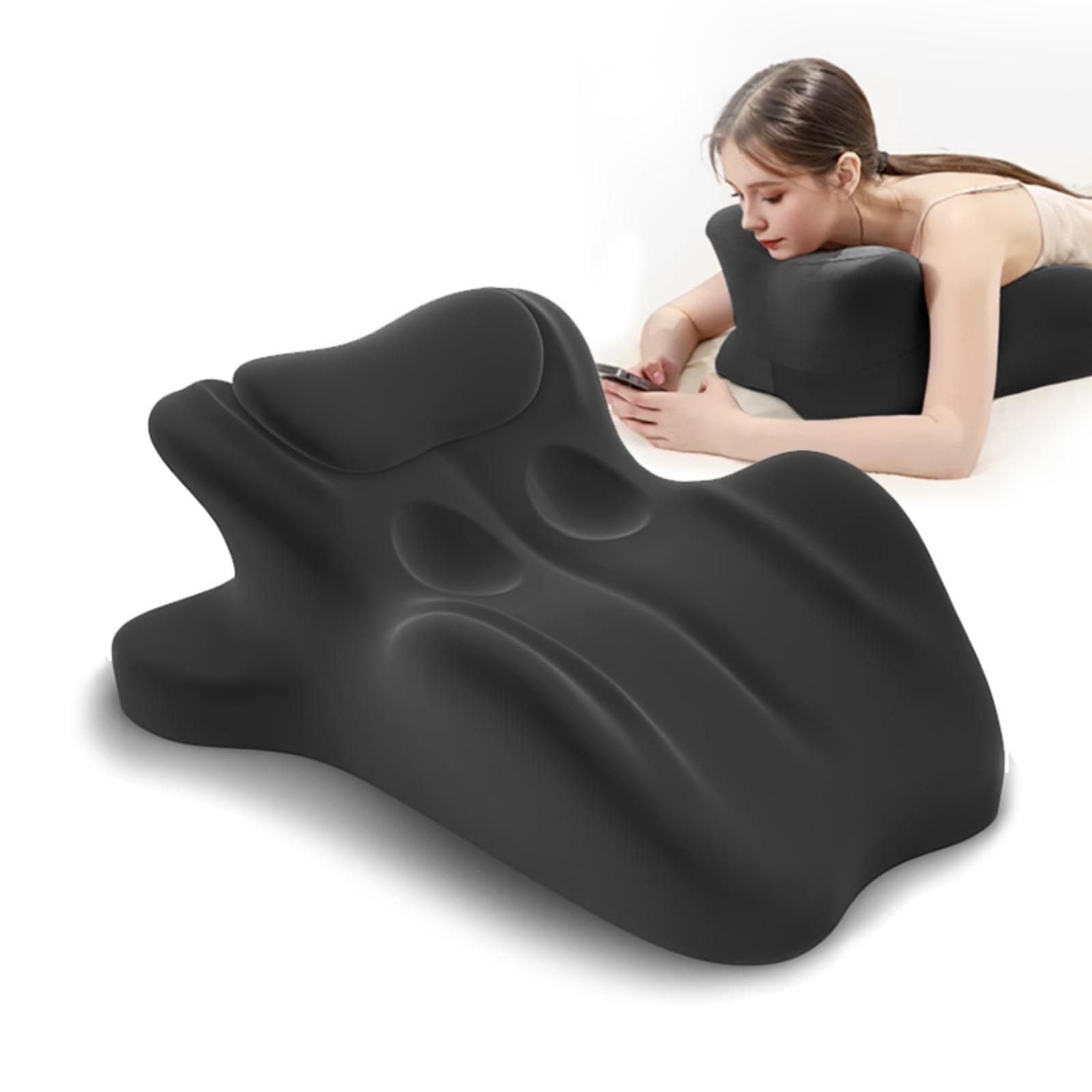
The HOMEPAC wedge pillow takes a fundamentally different approach from the contoured cutout designs. Its 27-degree angled surface elevates the upper body, which can help reduce airway resistance and improve CPAP therapy effectiveness by promoting a more open airway posture. The plus-size dimensions of 25.5 by 21.5 inches provide ample surface area for back sleeping.
The high-density polyurethane foam is firm and maintains its shape without sagging, making it suitable for users who need a solid, non-deforming support surface. The removable villus fabric cover is machine washable, and the versatile shape works for sleeping, reading, or leg elevation. Some back sleepers find the elevation helpful for reducing snoring intensity even without CPAP.
The wedge design lacks cutouts for CPAP masks, so users must position their mask carefully to avoid pressure against the angled surface. The foam comes vacuum-compressed and requires up to 48 hours to fully expand, and some initial odor is expected. The firm feel is not for everyone — back sleepers who prefer a soft surface may find it too rigid.
Why it’s great
- Angled elevation supports open airway posture for CPAP therapy
- Plus-size surface accommodates larger body frames
- Versatile for sleeping, reading, and leg elevation
Good to know
- No mask cutouts — CPAP seal depends on careful positioning
- Firm foam may be uncomfortable for soft-surface preference users
FAQ
Can I use a regular pillow as a CPAP pillow for back sleeping?
What height is best for a CPAP pillow when sleeping on my back?
Will a CPAP pillow stop all mask leaks?
How long does memory foam CPAP pillow last before needing replacement?
Final Thoughts: The Verdict
For most users, the best cpap pillow for back sleepers is the Lunderg Parkin because its down-alternative fill is fully adjustable for loft and firmness, it works with all mask types, and it includes a machine-washable cotton cover. If you need active cooling to prevent night sweats, grab the Contour CPAPMax Cooling Gel. And for a dedicated back-sleeping shape with curved neck support that helps train you to stay on your back, nothing beats the NextSleep The Back Sleeper Pillow.

Mo Maruf
I created WellFizz to bridge the gap between vague wellness advice and actionable solutions. My mission is simple: to decode the research and give you practical tools you can actually use.
Beyond the data, I am a passionate traveler. I believe that stepping away from the screen to explore new environments is essential for mental clarity and physical vitality.