Our readers keep the lights on and my smoothie glass nicely filled. As an Amazon Associate, I earn from qualifying purchases.
If you have temporomandibular joint (TMJ) dysfunction, every gram of pressure on your jaw and cheekbones feels like a threat to a good night’s sleep. Standard CPAP masks, with their rigid frames and bulky forehead supports, can trigger clenching, aggravate joint pain, and leave you waking up sorer than before you slept. The core conflict is real: sleep apnea therapy depends on a solid seal, but TMJ flare-ups demand a feather-light, almost invisible interface. Resolving that trade-off defines the search for a compliant, joint-friendly setup.
I’m Mohammad Maruf — the founder and writer behind WellFizz. I’ve spent hundreds of hours dissecting CPAP mask designs, analyzing pressure-point distribution, and matching material profiles to the needs of users with craniofacial pain disorders. This guide reflects that deep dive into the intersection of apnea therapy and TMJ management.
After comparing frame geometry, cushion density, and headgear tension across seven leading models, the right cpap mask for tmj comes down to minimizing rigid contact points around the jaw hinge while maintaining a stable seal throughout the night.
How To Choose The Best CPAP Mask For TMJ
Selecting a CPAP mask when you have TMJ dysfunction requires shifting your attention from the usual metrics of leak rate and comfort toward specific design elements that interact with the jaw joint. The wrong frame can force you to tighten the lower straps excessively, transferring strain directly to the temporomandibular joint.
Frame Geometry and Jaw Clearance
The most important physical factor is how the mask frame relates to the mandibular angle and cheekbones. Full-face masks with tall lower flanges or stiff side panels often apply pressure directly over the joint, especially when you sleep on your side. Look for frames that taper away from the jawline or offer a cutout around the TMJ area. Nasal pillow and under-the-nose cushion styles are inherently less threatening because they have no contact with the lower third of the face.
Headgear Tension and Strap Design
TMJ-sufferers need headgear that achieves a seal without requiring high tightening torque. Soft, wide, stretchy straps distribute force across a larger area, reducing focal pressure on the jaw. Clip-on magnetic buckles help avoid the yanking motion that can jar the joint during nighttime adjustments. V-shaped strap patterns that pull upward rather than backward help keep the mask stable without cinching the lower face.
Cushion Material and Density
The cushion is where the mask meets your skin and soft tissue. For TMJ, the ideal cushion is pliable enough to conform to facial contours without transmitting reactive force. A silicone cushion that is too dense can press upward against the nose, causing the jaw to drop open or clench. Hybrid designs that combine a gel or foam inner layer with a silicone outer contact surface offer better shock absorption. Cloth masks effectively eliminate surface tension altogether since they inflate entirely from internal air pressure.
Quick Comparison
On smaller screens, swipe sideways to see the full table.
| Model | Category | Best For | Key Spec | Amazon |
|---|---|---|---|---|
| Sleepweaver Sleep Mask | Cloth Mask | Zero jaw pressure | All-cloth inflatable frame | Amazon |
| ResMed AirFit F20 Frame System | Full-Face Frame | Stable mid-face seal | InfinitySeal silicone cushion | Amazon |
| Gbbazu Nasal Frame for DreamWear | Nasal Pillow | Side-sleepers with TMJ | Soft silicone + cloth cushion | Amazon |
| Nasal Frame for DreamWear (Nimisa) | Nasal Pillow | Budget-conscious upgrade | 3-size nasal pillow set | Amazon |
| ResMed Mirage Quattro Frame System | Full-Face Frame | Long-time Quattro users | Thinner cushion profile | Amazon |
| Legend M.D. DreamWear Pillows | Nasal Pillow | Top-of-head hose routing | Slip-resistant headgear | Amazon |
| Nasal Pillow Frame for AirFit N20 | Nasal Frame | Quiet magnetic disconnect | Ultra-soft elastic headgear | Amazon |
In‑Depth Reviews
1. Sleepweaver Sleep Mask

The Sleepweaver is the only CPAP mask on this list that completely eliminates rigid frame contact. The entire interface is cloth — it inflates from the positive air pressure inside, forming a balloon-like seal that pushes gently against the skin. For a TMJ sufferer, this is revolutionary. There is no plastic bridge pressing on the cheekbones, no stiff lower flange resting on the mandible. The cloth construction also reduces exhalation valve noise, which helps avoid the auditory triggers that can cause clenching during light sleep stages.
Multiple reviewers confirm they can sleep on their stomach, side, and back without rigid buckles digging in. Because the mask relies on internal air pressure rather than strap tension to seal, you don’t have to cinch the headgear tight around the jaw hinge. The small exhalation holes eliminate the “whooshing” sound that can wake you mid-cycle. The only trade-off is durability — the cloth hose connector can tear after a few months of regular use, and some users report the Velcro straps loosen over time, requiring periodic re-securing.
If you have TMJ and your top priority is eliminating every single gram of structural pressure on your face, the Sleepweaver is the purest solution available. The learning curve involves finding the right sleeping position so the inflated balloon doesn’t shift, but users who adapt report a dramatic reduction in morning jaw soreness compared to traditional silicone masks. It is not a budget option in terms of ongoing cost due to shorter lifespan, but the comfort payoff for joint pain is unmatched.
Why it’s great
- No rigid frame parts contact the skin — ideal for TMJ pressure sensitivity
- Requires very low headgear tension since air pressure creates the seal
- Works for stomach, back, and side sleepers without digging in
Good to know
- Hose connector can tear after 2–4 months of nightly use
- Cloth nose bridge may not fit very small or narrow noses out of the box
- Some users need to hand-sew a custom nose cover for optimal fit
2. Resmed AirFit F20 Frame System
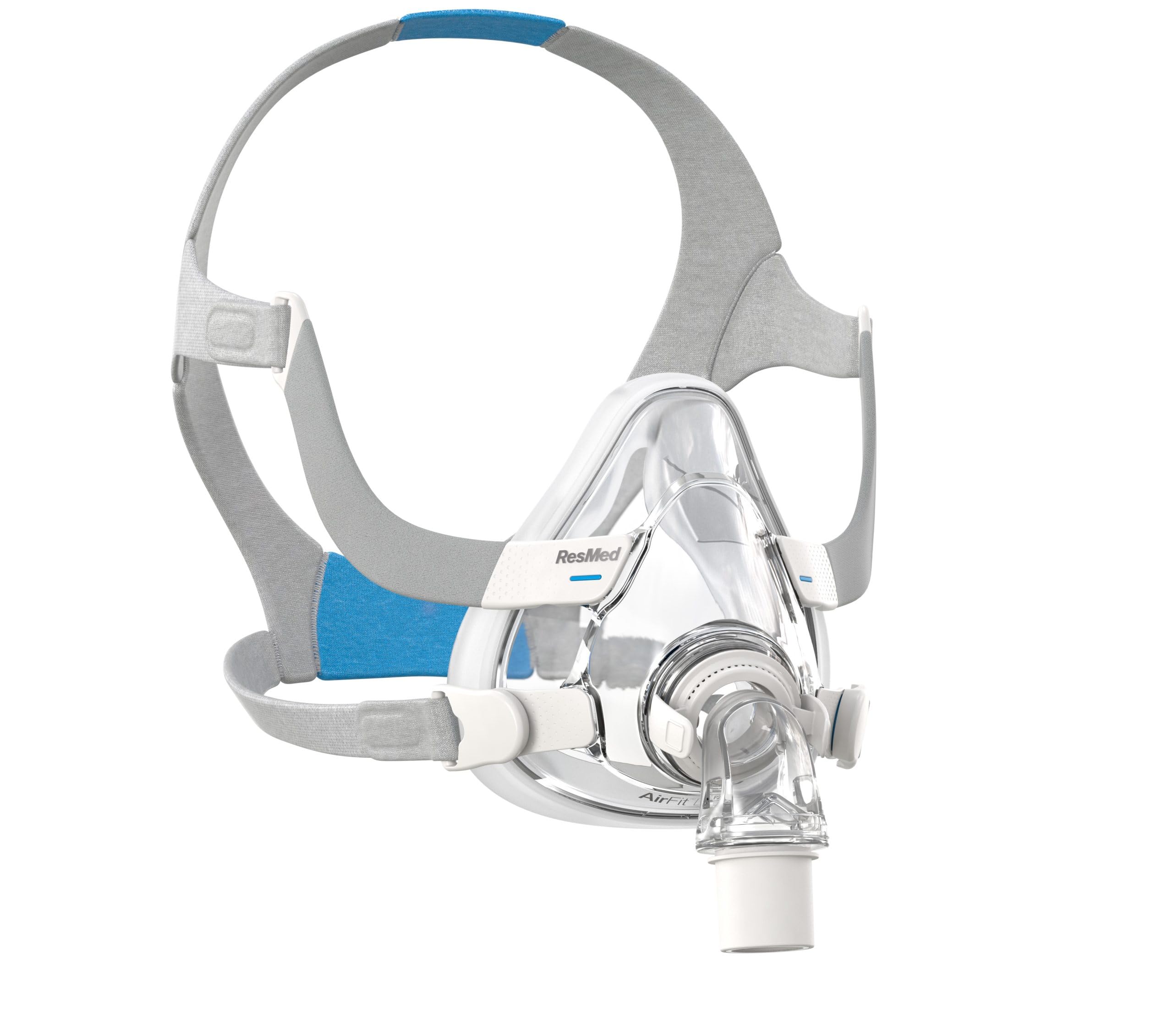
The ResMed AirFit F20 frame system is a full-face mask frame that uses the InfinitySeal cushion technology to maintain a secure seal even as CPAP pressure fluctuates during exhalation. This is a mid-range premium option that addresses TMJ concerns through the cushion’s ability to conform to facial contours without the user needing to over-tighten the lower straps. The frame itself is lightweight at just 4 ounces, and the magnetic clips allow for one-handed removal without the jerking motion that can aggravate the jaw joint.
Reviewers consistently note that this frame is noticeably quieter than other full-face alternatives, and that it seals well on smaller face sizes without gaping at the chin. For TMJ users who require a full-face mask due to mouth breathing, this design is one of the better compromises because the cushion’s flexibility reduces reactive pressure on the mandible. The headgear is not included in this frame system purchase, so you’ll need to source that separately — but that also gives you the freedom to choose wider, softer straps that better suit joint pain.
Where the AirFit F20 loses points for TMJ is that it’s still a full-face frame with a rigid plastic outer structure. Side-sleepers may feel the lower edge of the frame pressing against the jaw hinge if they roll onto the mask side. The InfinitySeal cushion does a good job of distributing force, but it cannot eliminate the fact that the frame occupies space over the TMJ region. For those who can tolerate a full-face frame with careful strap adjustment, this is the most comfortable option in that category.
Why it’s great
- InfinitySeal cushion adapts to pressure changes, reducing need for tight straps
- Magnetic quick-release clips prevent jarring removal motions
- Very quiet operation — minimal whistling from exhalation ports
Good to know
- Headgear not included — must purchase separately
- Full-frame design still places some pressure over TMJ area when side-sleeping
- Hose connector can produce brief whistling after cleaning until it dries fully
3. Gbbazu Nasal Frame Assembly for DreamWear

The Gbbazu Nasal Frame Assembly is designed specifically for the DreamWear platform, offering a complete system with a top-of-the-head hose connection. For TMJ sufferers, this routing geometry is a major advantage — the hose goes straight over your pillow rather than draping across your chest, which eliminates the pulling motion on the mask frame that can translate into jaw tugging. The frame includes soft cloth fabric protectors that sit between the silicone cushion and your skin, reducing the tacky feeling that causes facial tension.
User reviews highlight two critical benefits for TMJ. First, the nasal pillow cushion sits under the nose without contacting the upper lip or lower jaw, so there is no leverage point to force the mandible into a clenching position. Second, the combination of a lightweight silicone frame and cloth protectors eliminates the rash and nostril soreness that often plagues nasal pillow users. Several reviewers report this is the first mask they can wear all night without waking up due to facial discomfort or joint ache.
The main reported issue involves the back straps slipping during the night, which can cause subtle mask shift that disrupts the seal. Some users have addressed this by adding anchor straps that loop over the ears for extra security. The package comes with three different pillow sizes (small, medium, large), allowing you to dial in the minimum pressure needed to seal — a key factor when trying to avoid the reflexive jaw tension that comes from fighting against a mask.
Why it’s great
- Top-of-head hose eliminates frame tugging that irritates the jaw joint
- Cloth cushion protectors prevent silicone stickiness and skin tension
- Includes three pillow sizes to find the minimal sealing pressure
Good to know
- Back strap can loosen during the night, requiring occasional readjustment
- Some users need to add ear anchor straps for a fully secure fit
- Frame is specific to DreamWear platform — not cross-compatible
4. Nasal Frame Assembly for Philips Respironics DreamWear (Nimisa)

The Nimisa Nasal Frame Assembly is a direct replacement for the Philips Respironics DreamWear system, incorporating the top-of-head tube routing that keeps the main frame structure away from the jawline. For TMJ management, this serves the same critical function as the Gbbazu — the hose connection point is well above the ear level, so there is no downward or sideways pull on the mask components near the temporomandibular joint. The upgrade includes three nasal pillow sizes so you can match the minimal insertion depth that creates a seal without upward pressure on the nose.
Multiple reviewers describe this as the most comfortable and least obtrusive mask they have ever worn. One user switched from the Respironics Wisp and immediately noticed the difference in morning jaw tension. The assembly takes about two minutes to put together, and the frame design keeps the user’s field of vision completely open for reading or watching TV before sleep — a small detail, but one that reduces the psychological feeling of being trapped under a mask, which can itself lead to jaw clenching. The package includes an absorbent cloth to manage moisture around the nose.
The main complaint is that the side covers — small plastic caps that seal the frame’s side channels — are sometimes missing from the package. This is a common occurrence with aftermarket CPAP assemblies and doesn’t affect function for most users since the frame relies on the main channel path anyway. The back strap can slip on some head shapes, similar to the Gbbazu, but this is generally manageable with minor adjustment. At a value price point, this frame delivers nearly identical performance to the name-brand DreamWear for a fraction of the cost, making it a strong choice for TMJ-conscious buyers watching their budget.
Why it’s great
- Top-of-head tube routing eliminates all frame pull on the TMJ area
- Three nasal pillow sizes allow precise pressure optimization
- Very low assembly time and unobstructed field of view
Good to know
- Side covers can be missing from the package (does not affect core function)
- Back strap may need replacement elastic for a truly secure fit
- Not compatible with non-DreamWear CPAP machines without adapter
5. ResMed Mirage Quattro Replacement Frame System

This replacement frame system (without headgear) offers TMJ users a specific advantage: the thinner cushion profile that some long-term users explicitly prefer over bulkier gel alternatives. The frame itself is designed with a relatively low-profile lower flange that sits below the cheekbones rather than pressing against them, which can help reduce direct TMJ irritation compared to taller full-face designs.
Veteran users who have worn the Quattro for 10+ years consistently report that the medium cushion fits well without requiring excessive strap tension. The frame system includes both the hard outer shell and the silicone cushion, but note that this listing is the frame system only — headgear must be purchased separately. One clever adjustment for TMJ is that you can pair this frame with a soft fabric headgear that uses a V-strap pattern, distributing pull forces away from the jaw hinge and toward the crown of the head.
The main limitation for TMJ is the same one that applies to any full-face mask: the frame has to span from the bridge of the nose to below the chin, which means components pass directly across the TMJ zone. Side sleepers will find that the frame’s side struts can push against the jaw joint when lying on the mask side. This frame is best suited for TMJ users who sleep primarily on their back and need the reliability of a full-face seal. It also lacks the top-of-head hose routing that modern designs offer, so the front-mounted hose can cause some drag on the lower part of the frame.
Why it’s great
- Thinner cushion profile reduces bulk around the jawline
- Proven reliable seal across a decade of user feedback
- Low-pressure seal capability when matched with the right headgear
Good to know
- Full-face frame inherently places components near the TMJ area
- Front hose routing can pull on the mask when turning over
- Headgear not included — must buy separately for proper strap adjustment
6. Legend M.D. DreamWear Nasal Silicone Pillows Fitpack
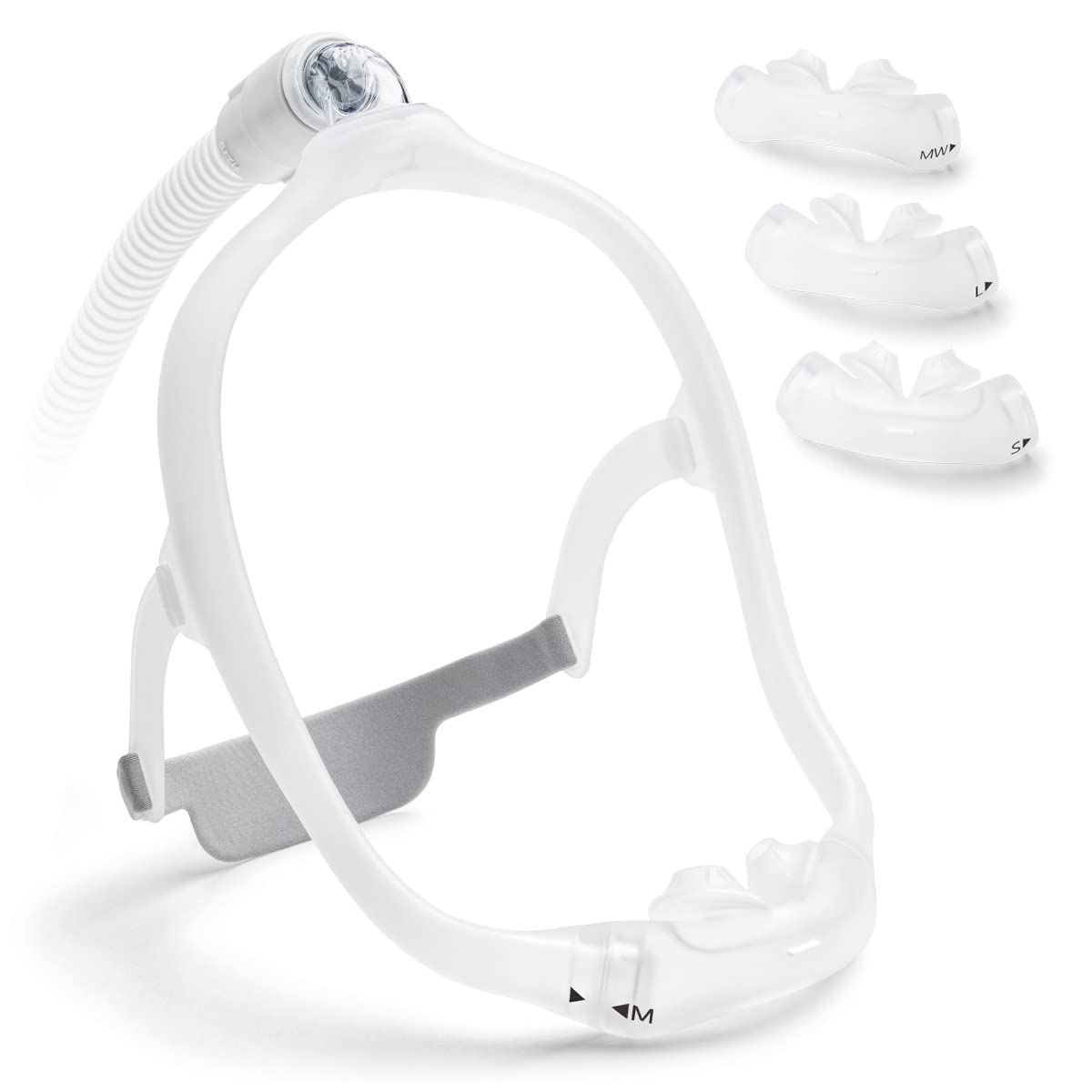
The Legend M.D. DreamWear Nasal Pillow Fitpack is a complete replacement kit that includes the frame, a medium frame, and four pillow sizes (Small, Medium, Medium Wide, and Large). This is the most generous size-inclusive option on the list, which matters for TMJ sufferers because the correct pillow size directly determines how much upward pressure the cushion places on the nose. A pillow that is too large pushes the entire upper lip and nose bridge upward, which in turn can cause the jaw to drop open or clench in response.
The top-of-head hose connection with a 360-degree elbow swivel is the standout feature for TMJ. The swivel allows the hose to rotate freely as you turn over, preventing torque from building up in the frame and transmitting to your jaw. Users who have tried both traditional front-hose and top-hose designs report a noticeable reduction in morning jaw tension after switching to this configuration. The slip-resistant headgear material prevents the mask from migrating during the night, which is critical because even small shifts in a nasal pillow mask can break the seal and force you to re-tighten straps.
Reviewers emphasize that this version feels lighter than the original Respironics DreamWear, and the 360-degree swivel works smoothly without catching. The Medium Wide pillow size is specifically called out by one user as the key to eliminating air leakage and allowing sleep in any position. For TMJ, the ability to find that just-right pillow size is the difference between a mask that fights against your natural sleeping position and one that adapts to it. The only downside is that this unit is an aftermarket design, so some users report that the frame clips can feel slightly less secure than the OEM version, though none report actual failure during use.
Why it’s great
- Four nasal pillow sizes for precise fit optimization
- 360-degree elbow swivel prevents torque transfer to the jaw
- Slip-resistant headgear keeps the mask stable through overnight movement
Good to know
- Aftermarket quality — frame clips may feel less robust than OEM
- Medium frame may not accommodate very wide or very narrow faces
- No cloth protectors included for silicone-to-skin contact areas
7. Nasal Pillow Tube Frame for AirFit N20

This upgrade nasal frame assembly is designed for the AirFit N20 platform and introduces two features that directly benefit TMJ sufferers. First, the magnetic buckle at the frame disconnect point allows you to separate the tube from the mask instantly and silently — a huge relief if you need to get up in the middle of the night and don’t want to jar your jaw by fumbling with plastic clips. Second, the headgear is made from an ultra-soft elastic material that distributes pressure broadly across the crown and high cheek area, keeping tension away from the jaw hinge.
The pneumatic rebound silicone cushion described in the product specs suggests a dual-layer design — a soft inner silicone that inflates slightly under pressure combined with a more conforming outer layer. This cushion geometry helps maintain a seal without needing to crank down on the lower straps. The frame weighs just 6.74 ounces and sits predominantly above the mouth, with the cushion entering the nares without pressing against the upper lip or philtrum area. Users confirm a perfect fit and comfortable wear for the full sleep cycle with no leakage issues.
The main drawback reported by users is that the medium headgear, while very comfortable, may be too large for some face shapes, and the adjustment range does not allow for enough tightening on the smallest settings. This can cause the magnetic clips to separate during side-sleeping if the headgear isn’t snug enough against the back of the head. The solution is either to order a smaller headgear size separately or to add a small strap extender. For TMJ users with average to larger head circumferences, this is not an issue, but those with smaller features should measure carefully.
Why it’s great
- Magnetic buckle allows instant, vibration-free mask disconnection
- Ultra-soft elastic headgear distributes tension away from the TMJ area
- Pneumatic rebound cushion seals without requiring high strap force
Good to know
- Medium headgear may be too large for smaller face shapes
- Magnetic clips can separate during side-sleeping if headgear is not snug
- Hand-wash only — machine cleaning will degrade the cushion material
FAQ
Does a CPAP mask make TMJ worse even with a soft cushion?
Can nasal pillows actually reduce clenching compared to full-face masks?
How often should I replace the cushion on a TMJ-friendly CPAP mask?
Final Thoughts: The Verdict
For most users, the best overall cpap mask for tmj is the Sleepweaver Sleep Mask because its all-cloth inflatable design eliminates all rigid frame contact with the jaw joint — the single most important feature for TMJ relief. If you need the reliability of a nasal pillow with top-of-head hose routing for side-sleeping stability, the Nimisa Nasal Frame Assembly for DreamWear offers outstanding value with its multi-size pillow set. And for those who must use a full-face mask due to mouth breathing, the ResMed AirFit F20 Frame System paired with wide, soft headgear provides the best balance of leak control and TMJ-safe strap tension.

Mo Maruf
I created WellFizz to bridge the gap between vague wellness advice and actionable solutions. My mission is simple: to decode the research and give you practical tools you can actually use.
Beyond the data, I am a passionate traveler. I believe that stepping away from the screen to explore new environments is essential for mental clarity and physical vitality.