Our readers keep the lights on and my smoothie glass nicely filled. As an Amazon Associate, I earn from qualifying purchases.
The silence of a remote campsite is supposed to be restorative, but for millions with sleep apnea, that quiet is sharply broken by the hum of an AC-powered machine with nowhere to plug in. Running extension cords to a site’s lone power pedestal or draining your car battery overnight are stopgap measures that fail when you need them most. A dedicated portable power solution is the only way to keep your therapy consistent without sacrificing the freedom of off-grid travel.
I’m Mohammad Maruf — the founder and writer behind WellFizz. This guide is built from hundreds of hours of cross-referencing battery chemistries, output port configurations, cable compatibility lists, and real-world runtime claims across the most popular camping-capable power stations and dedicated CPAP batteries on the market today.
Whether you need a lightweight unit for a weekend backpack trip or a high-capacity station for a week-long RV excursion, finding the right cpap for camping depends on matching your machine’s voltage and power draw to a battery that can sustain it through the night.
How To Choose The Best CPAP For Camping Battery
Selecting a portable power source for CPAP therapy while camping is not about picking the biggest number on the box. It is about matching your specific PAP device’s voltage requirements, your nightly pressure settings, and your tolerance for weight and recharge time. A wrong choice leaves you either tethered to a heavy brick you didn’t need or stranded half-way through the night with a dead battery.
Battery Capacity and Your Machine’s Power Draw
The single most important metric is watt-hours (Wh), which tells you how much energy the battery holds. A typical CPAP without humidification or heated tubing draws between 30 and 60 watts per hour. A machine with a heated humidifier at mid-level can pull 80 to 120 watts per hour. If your machine uses 60W and you sleep eight hours, you need at least 480Wh for one night — more if you want a multi-night buffer. Always test your own setup at home with the battery before relying on it in the field.
DC Direct Power vs. AC Inverter
Running your CPAP through the AC outlet of a power station forces the battery to convert DC to AC and then your CPAP’s power brick converts it back to DC. This double conversion wastes roughly 15 to 20 percent of your stored energy. Using a direct DC cable that matches your CPAP’s input voltage (usually 12V, 24V, or a variable range) bypasses the inverter and dramatically extends runtime. The best dedicated CPAP batteries and universal power stations with regulated 12V/24V DC ports are far superior for camping use.
Battery Chemistry: LiFePO₄ vs. Lithium-Ion
Lithium Iron Phosphate (LiFePO₄) batteries offer 3,000 to 6,000 charge cycles before significant degradation, making them ideal for frequent campers and emergency preparedness. They are heavier and bulkier for the same capacity compared to standard Lithium-Ion. Standard Lithium-Ion packs (like those using LG or Panasonic cells) are lighter and more compact per watt-hour, making them the better choice for backpacking or air travel, but their cycle life is typically 500 to 1,000 cycles. For a unit that lives in your car or RV and gets used a few times a month, LiFePO₄ is the smarter investment.
Portability and Weight Constraints
Camping type dictates your weight budget. Car campers and RV users can easily accommodate a 14-pound power station with 500Wh or more. Backpackers or cyclists need a sub-2-pound dedicated CPAP battery like the Zopec Explorer Mini. Air travelers have an additional hard constraint: any battery over 100Wh is not allowed in carry-on luggage. For flights, you need a TSA-approved 95-99Wh unit. A massive 297Wh or 512Wh station must be left at home or checked — and most airlines prohibit large lithium batteries in checked baggage entirely.
Pass-Through Charging and Recharge Speed
Pass-through charging allows the battery to power your CPAP and simultaneously recharge from an AC wall outlet or solar panel. This is critical during extended power outages or when you return to an RV with shore power in the morning and want to top off the battery while you sleep the next night. Recharge speed also matters: units that can go from 0 to 80 percent in under an hour, like the BLUETTI Elite 200 V2, mean less downtime during a road trip. Solar recharge capability is a huge advantage for multi-day off-grid trips, as long as the battery has a built-in MPPT charge controller.
Quick Comparison
On smaller screens, swipe sideways to see the full table.
| Model | Category | Best For | Key Spec | Amazon |
|---|---|---|---|---|
| Jackery Explorer 500 v2 | Power Station | Multi-night car camping | 512Wh, 500W AC, 6,000 cycles LiFePO₄ | Amazon |
| BLUETTI Elite 200 V2 | Power Station | Extended RV trips & power outages | 2073.6Wh, 2600W AC, 6,000 cycles LiFePO₄ | Amazon |
| EASYLONGER ES960 | CPAP Battery | Multi-night use with many machine brands | 297.6Wh LiFePO₄, 6 output ports | Amazon |
| BLUETTI X30 | CPAP Battery | Ultra-light 5-7 night camping | 297Wh, 3.9 lbs, 3 DC ports | Amazon |
| EASYLONGER ES720 | CPAP Battery | Budget-friendly backup with LED flashlight | 266.4Wh Li-Ion, 4 DC cables included | Amazon |
| Zopec Explore 5700 | CPAP Battery | Universal compatibility for 3 nights | 5700mAh, universal 110-240V AC inverter | Amazon |
| Medistrom Pilot-24 Lite | CPAP Battery | TSA-friendly air travel backup | 95Wh, LG cells, aluminum case, 2-3hr recharge | Amazon |
| Pilot Flex 98Wh | CPAP Battery | Compact TSA-friendly for 12V/24V machines | 98Wh, 1.2 lbs, 12V & 24V auto-detect | Amazon |
| Zopec Explore Mini | CPAP Battery | Absolute lightest travel & flight use | 1.1 lbs, 65W USB-C recharge, Panasonic cells | Amazon |
In‑Depth Reviews
1. Jackery Explorer 500 v2
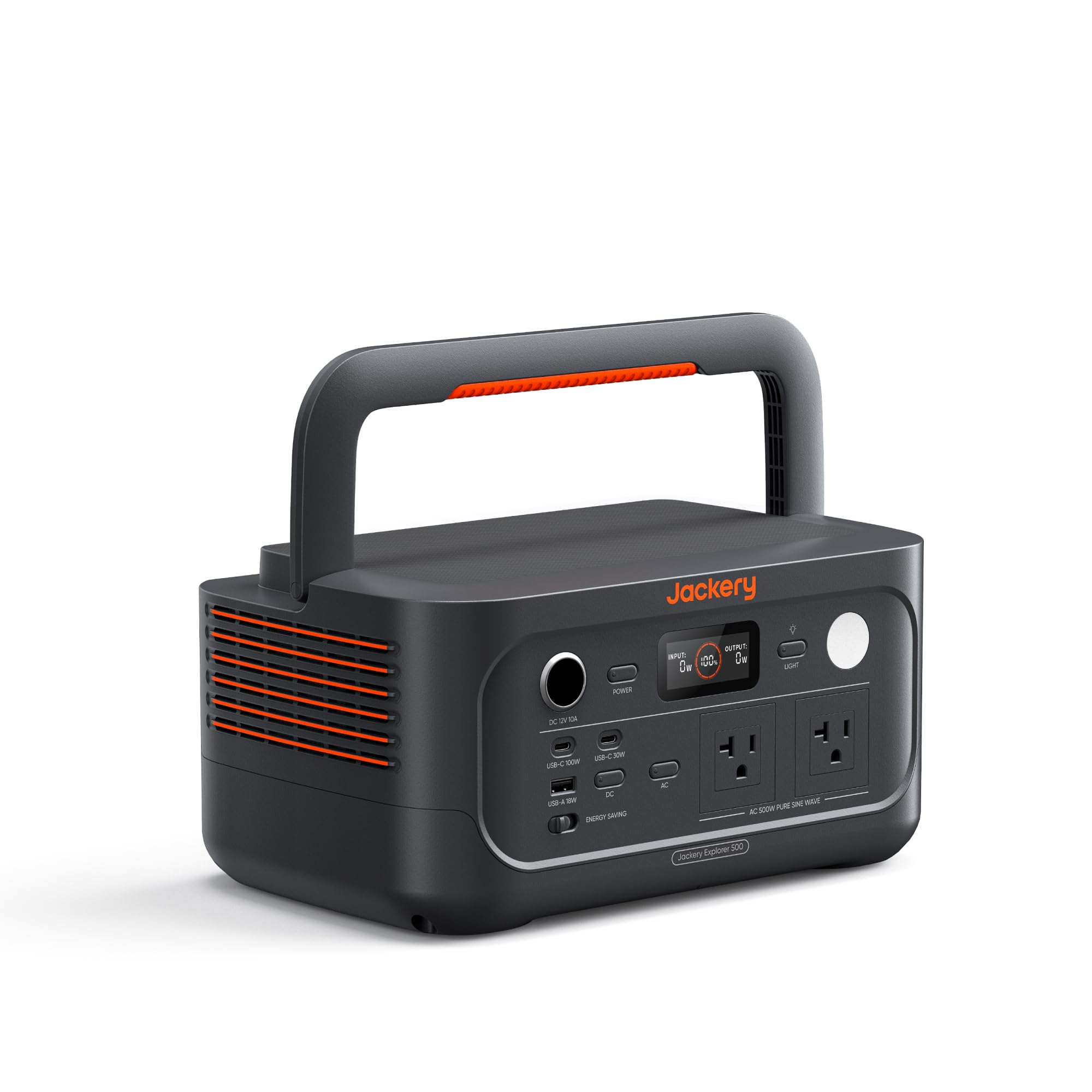
The Jackery Explorer 500 v2 hits the sweet spot for car campers who need reliable multi-night power without the weight of a full-size generator. At 14 pounds with a 512Wh LiFePO₄ battery rated for 6,000 cycles, it delivers roughly 8 to 10 hours of CPAP runtime per charge when using a 12V DC adapter (drawing around 50W). The 500W pure sine wave AC inverter also gives you the flexibility to run a heated humidifier for shorter trips, though you will pay the efficiency penalty of AC conversion. The built-in LED light and compact folding handle make it genuinely convenient inside a tent or RV.
The two AC outlets, two USB-A ports, and one USB-C port handle device charging simultaneously, and the 10ms UPS switchover keeps your therapy running through brief power drops. Recharge from 0 to 80 percent in under an hour via AC — a major advantage over older lithium-ion packs that take four to five hours. Solar charging is supported up to 200W, though the panel is sold separately. The regulated 12V DC output (13.2V nominal) is particularly important for CPAP users because it delivers stable voltage even as the battery depletes, unlike many cheaper power stations whose DC voltage sags under load.
The trade-off is that the Explorer 500 v2 is too large for airline carry-on and heavy for backpacking, so it is best suited for car, van, or RV camping. Customer reports confirm it powers a ResMed AirSense 10 at pressure 10 without humidification for roughly 26 hours from the 12V port, translating to over three full nights. The fan runs quietly at about 28 dB — barely audible over a CPAP blower. Jackery’s customer service is widely praised, and the included 16.4-foot extension cable adds flexibility for positioning the station outside your sleeping area.
Why it’s great
- 6,000-cycle LiFePO₄ battery lasts more than a decade of regular use
- Fast 0-80% AC recharge in 52 minutes
- Regulated 12V DC output provides stable CPAP power without inverter losses
Good to know
- At 14 pounds, it is too heavy for backpacking or air travel
- Solar panel sold separately; 55W max solar input is slow for full recharge
2. BLUETTI Elite 200 V2

The BLUETTI Elite 200 V2 is a full-sized power station designed for extended off-grid living, not just weekend camping. With 2073.6Wh of LiFePO₄ capacity and a 2600W pure sine wave inverter, it can power a CPAP machine for six to eight nights without humidification — or three to four nights with a heated humidifier running — while simultaneously running a mini-fridge, fans, and charging phones. The HyperWatt technology supports a 3900W power-lifting mode for high-surge appliances like coffee makers, though CPAP users will never need that headroom. What matters for sleep therapy is the dual AC and USB-C ports that let you run the CPAP on AC while topping off the station from shore power or solar at the same time via pass-through charging.
The Elite 200 V2 recharges from 0 to 80 percent in just 50 minutes using dual AC and DC inputs, and it supports up to 1000W of solar input via a built-in MPPT controller. At 53.4 pounds, this station is strictly for RV, van, or base-camp use — you will not carry it to a tent site. But for a travel trailer or overlanding rig where a CPAP is part of your permanent kit, the Elite 200 V2 eliminates the anxiety of running out of power mid-week. The battery is certified for 6,000 cycles to 80 percent capacity, which translates to roughly 17 years of nightly use if you drain and recharge it daily. The app-controlled charging modes (Turbo, Standard, Silent) let you prioritize speed or noise depending on your campsite etiquette.
Real-world testing from owners confirms the Elite 200 V2 runs a 60W CPAP for over 30 hours on a full charge, and the <15ms UPS mode ensures no therapy interruption during grid flickers at RV parks. The key limitation is that it lacks a dedicated regulated DC port for CPAP direct connection, so you will use the AC inverter, which wastes about 15 percent of the battery’s energy as conversion heat. If you want maximum efficiency, add a third-party DC-to-DC adapter for your specific machine. The build quality is excellent — steel and aluminum frame, dual handles, and a clear LCD that shows input/output wattage in real time.
Why it’s great
- Massive 2073.6Wh capacity delivers 6+ nights of CPAP use
- 0-80% recharge in 50 minutes with dual AC+DC input
- App-controlled silent mode runs at just 16-30 dB
Good to know
- 53.4-pound weight limits use to RV, van, or base camp setups
- No dedicated 12V/24V CPAP DC port; requires AC inverter use
3. EASYLONGER ES960 CPAP Battery Backup

The EASYLONGER ES960 is a purpose-built CPAP battery that bridges the gap between compact travel packs and full-sized power stations. Its 297.6Wh LiFePO₄ chemistry provides over 3,000 charge cycles, and it includes four dedicated DC cables for ResMed S9, AirSense 10/11, AirCurve 10/11, AirMini, and Philips DreamStation machines out of the box. That means no adapter hunting — just plug the color-coded cable into your machine and the battery’s DC port. With humidification and heating turned off, users report two to three nights of use from a single charge, depending on pressure settings. The ES960 also features a versatile 180W power station hub with USB-A, USB-C, and a 12V cigarette lighter socket for charging other devices.
The unit is relatively compact at 3.31 pounds, but its large footprint makes it more suited for car camping than backpacking. One standout feature is the integrated flashlight with SOS mode — practical for navigating a dark tent or signaling in an emergency. The battery charges via USB-C PD at 60W (6-8 hours) or AC adapter at 72W (5-6 hours), and it supports solar charging with a 100W panel via built-in MPPT. Pass-through charging works during AC or solar input, so you can power your CPAP and recharge simultaneously when you have access to shore power. The digital display shows remaining capacity, output wattage, and charging status clearly.
Early customer feedback highlights excellent runtime on the replacement unit (a full 36+ hours with 25 percent remaining) after an initial unit underperformed, so test yours immediately upon arrival. The ES960’s voltage adjustability (12V, 16.5V, 20V, 24V) via the DC port means it can also power laptops, drones, and car refrigerators, making it a true multi-purpose camping accessory. Note that at 297.6Wh, it exceeds the TSA’s 100Wh limit for carry-on batteries and is not airline-approved. The included carrying case helps protect the battery and cables when stowed in your vehicle.
Why it’s great
- Four dedicated DC cables included for major ResMed and Philips machines
- Adjustable DC voltage (12V-24V) for wide device compatibility
- 3,000+ cycle LiFePO₄ battery with built-in flashlight and SOS mode
Good to know
- Exceeds 100Wh TSA limit — not allowed in carry-on luggage
- Some units required replacement due to inconsistent runtime on first charge
4. BLUETTI X30 CPAP Battery Backup

The BLUETTI X30 packs 297Wh into a 3.9-pound frame, making it one of the lightest high-capacity CPAP batteries on the market. Unlike the heavy power stations, the X30 is designed specifically for CPAP and BiPAP devices with three dedicated DC output ports (12V/5A, 15V/4A, 24V/4A) plus a USB-A port for phone charging. The battery’s internal electronics auto-detect the correct voltage for your machine, so you simply select the labeled cable for your model — the kit includes cables for ResMed S9, AirSense 10/11, Philips DreamStation, Transcend mini, and HDM Z1. Real-world tests from users show a ResMed AirSense 10 drawing just 16 percent battery per night (humidifier off), translating to five to seven nights per charge depending on pressure.
At 4.1 pounds actual weight (slightly above the advertised 3.9), the X30 is still light enough to toss in a duffel bag for car camping or RV use. The built-in handle and padded accessory bag keep everything organized. It recharges fully in about four to five hours via the included AC adapter, and the LCD screen provides a subtle backlight that won’t disturb a sleeping partner. The battery uses lithium-ion cells rated for approximately 2,000 recharge cycles, which is less than LiFePO₄ but still solid for a few years of regular camping use. One limitation: the X30 can only power one device at a time from a single DC port, so you cannot charge your phone from the same port that runs your CPAP.
The X30’s strongest selling point is its efficiency with high-pressure machines. BPAP users running an AirCurve 10 at pressures 12-17 report getting four six-hour nights with humidification off. The included cable set uses distinct color labels and printed compatibility information, so there is no guesswork in the dark. The battery does not support solar charging natively, and the AC adapter must be plugged into standard 110V power. For campers who prioritize weight and simplicity over multi-port flexibility, the X30 delivers excellent runtime per pound. At 297Wh, it exceeds the TSA carry-on limit and is best for vehicle-based trips.
Why it’s great
- Ultra-light 3.9-pound design with 297Wh capacity for 5-7 nights of CPAP use
- Three dedicated DC ports auto-detect correct voltage for your machine
- Color-coded cables with clear compatibility labels for easy dark setup
Good to know
- Only powers one device at a time from the DC ports
- No solar charging support; 110V AC adapter required for recharge
5. EASYLONGER ES720 CPAP Battery Backup

The EASYLONGER ES720 is an entry-level 266.4Wh lithium-ion battery that provides a cost-effective way to test CPAP camping before investing in premium gear. It ships with four DC cables for ResMed S9, AirSense 10/11, AirCurve 10/11, AirMini, and Philips DreamStation machines, plus a 180W cigarette lighter socket and four USB ports for charging other devices. Without humidification, users report enough power for one full night with roughly 20-30 percent remaining, making it a single-night backup rather than a multi-day solution. The built-in LED light with SOS function is a genuinely useful camping addition, especially when you need to navigate the tent without fumbling for a headlamp.
The ES720’s versatility comes from its 180W power hub, which can charge laptops, drones, car refrigerators, and gaming handhelds — effectively turning it into a mini power station when not running CPAP. The BMS (Battery Management System) protects against over-charge, over-discharge, over-current, and short-circuit, and it supports pass-through charging so you can power devices while the battery recharges from AC or solar. Four recharging options are available: AC adapter (4-5 hours), USB-C PD at 60W (4.5-5.5 hours), 100W solar panel (4-5 hours), and car charging via cigarette lighter (4.5-5.5 hours). The solar support is a standout at this price point, as few budget packs include built-in MPPT for direct panel connection.
The main drawback is that the ES720 uses standard lithium-ion cells rather than LiFePO₄, so cycle life is limited to roughly 500-800 charges. Several customer reviews note that runtime can be inconsistent: one user reported only five hours on the first night and just 40 minutes on the second, though the seller’s customer support resolved issues for most. The battery is also relatively large at 9.1 x 5.9 x 1.7 inches and weighs 3.31 pounds, so it is not particularly compact for its capacity. At 266.4Wh, it exceeds the 100Wh TSA limit and is best kept in a vehicle. For budget-conscious campers who need a reliable single-night solution and do not mind testing their unit on arrival, the ES720 provides good value with broad compatibility and solar readiness.
Why it’s great
- Broad compatibility with four DC cables for ResMed and Philips machines
- 180W power hub and USB ports charge laptops, phones, and gadgets
- Solar charging support via built-in MPPT controller
Good to know
- Standard lithium-ion cells have shorter cycle life than LiFePO₄ alternatives
- Some units show variable runtime; test immediately upon arrival
6. Zopec Explore 5700 Universal CPAP Battery

The Zopec Explore 5700 takes a different approach from most CPAP batteries by including a universal AC inverter that works with any PAP machine’s standard power cord, regardless of brand or voltage. This makes it the most flexible option for people who own multiple machines or switch between travel and home units. The 5700mAh lithium-ion battery (approximately 63Wh at 12V) is relatively small, but the built-in inverter allows you to plug your CPAP’s original AC adapter directly into the battery — no need for custom DC cables. Without humidification, users report one to two nights of use (7-8 hours per night at moderate pressure), though performance drops sharply if you run heated tubing or a humidifier.
Weighing in at just 2.5 pounds, the Explore 5700 is slim enough to fit inside a standard CPAP travel case and FAA-compliant for carry-on air travel. It includes a car charger for in-vehicle topping off and an AC wall charger. One of the most appreciated features is the “blue tooth” wireless status monitoring that lets you check remaining battery from your phone — useful when you are in the tent and the battery is tucked away in a dry bag. The battery’s universal input range (110-240V) means it works internationally without a voltage converter, a real advantage for global travelers who also camp abroad.
The main limitation is that running your CPAP through the AC inverter wastes about 20 percent of the stored energy as heat, so the Explore 5700’s effective runtime is lower than a comparable DC-direct battery of similar capacity. Customer feedback is mixed on runtime: some users get three full nights without humidification, while others report only four hours on the first night. The small total capacity (roughly 63Wh usable) simply cannot support a full night on machines with higher pressure settings above 12 cm H₂O. The Explore 5700 is best suited for lightweight travelers using a low-power travel CPAP like the ResMed AirMini, where it can reliably deliver one or two nights between charges.
Why it’s great
- Universal AC inverter works with any CPAP machine without custom cables
- FAA-compliant and compact enough to fit in a CPAP case
- Wireless phone monitoring for battery status from inside the tent
Good to know
- AC inverter wastes about 20% of energy compared to DC direct connection
- Small 5700mAh capacity may not last a full night on high-pressure machines
7. Medistrom Pilot-24 Lite 95Wh

The Medistrom Pilot-24 Lite is a dedicated 95Wh CPAP battery built specifically for 24V PAP devices like the ResMed AirSense 10 and AirMini. Its aluminum case houses genuine LG industrial-grade lithium-ion cells, giving it a premium feel and better heat dissipation than plastic-shell competitors. At just 2.25 pounds, it is FAA-compliant and TSA-approved for carry-on — critical for campers who fly to their trailhead. The unit includes cables for AirSense 10 and AirMini right in the box, and it charges directly from the CPAP’s own AC adapter, eliminating the need for a separate charger brick. With the AirMini, users report approximately 14 hours of runtime (two 7-hour nights) without humidification, and the built-in touchlight is handy for late-night tent navigation.
The Pilot-24 Lite supports pass-through charging, so you can run your CPAP from the battery while it is plugged into wall power — essentially using it as a UPS that seamlessly switches over during a power flicker. Recharge time is fast at two to three hours from empty, which is excellent for a 95Wh pack. The durable aluminum construction is noticeably more rugged than the plastic enclosures of most CPAP batteries, and the fabric carry case keeps everything organized. One thoughtful detail: the LED touchlight has a soft glow that won’t blind a sleeping partner but provides enough light to find your mask in the dark.
The clear limitation is that the Pilot-24 Lite is only certified for 24V PAP devices. It will not work with 12V machines like the Philips DreamStation without an additional voltage adapter, and Medistrom does not include a universal cable set. The 95Wh capacity is also tight for a full night if your pressure is above 12 cm H₂O — some users report only five hours with low water heating and no heated hose. For its intended use case (AirMini or AirSense 10 at moderate pressure), the Pilot-24 Lite delivers reliable, premium-quality backup power in a lightweight, flight-friendly package. It is not a multi-night solution, but for TSA-compliant camping trips and emergency home backup, it excels.
Why it’s great
- TSA-approved 95Wh capacity fits in airline carry-on luggage
- Durable aluminum case with genuine LG cells for long reliability
- Charges from your CPAP’s own AC adapter in just 2-3 hours
Good to know
- Only supports 24V PAP devices without an additional voltage adapter
- 95Wh capacity provides one night for most users, not multi-night camping
8. Pilot Flex 98Wh CPAP Battery

The Pilot Flex is a 98Wh CPAP battery that stands out for its dual-voltage auto-detect capability — it works with both 12V and 24V PAP machines without manual switching. At just 1.2 pounds and measuring 6.57 x 2.95 x 0.79 inches, it is one of the most compact TSA-approved batteries available, fitting easily into any CPAP carry bag. The package includes DC output cables for AirSense 11 and AirMini, and additional cables for AirSense 10 and other brands are sold separately. The aluminum case construction gives it a rugged feel that can handle the bumps of campground life, and the USB-C fast charging brings it from empty to full in two to three hours using a standard 65W phone charger.
The Flex’s auto-voltage detection is a significant convenience for campers who use different machines at home and on the road — just plug in the correct cable and the battery handles the rest. The 98Wh capacity (just under the 100Wh FAA limit) makes it fully compliant for carry-on air travel. For an AirMini user without humidification, real-world runtime is approximately 14 to 16 hours, or two full nights. For an AirSense 11 with humidity off, users report roughly one night (8 hours) with a single bar remaining. The battery can be daisy-chained with additional Pilot Flex units for extended trips, though each unit connects via a sold-separately cable.
The main criticism from users is that the DC cables require a very firm push to lock into place, and if the connection is not fully seated, the CPAP may cut out during the night. Several owners experienced the cable disconnecting mid-sleep until they learned the precise insertion technique. The Flex also does not include a universal AC inverter, so it relies entirely on DC direct connection — which is more efficient but means you must have the correct cable for your machine. For travelers who fly to their campsite and need a lightweight, airline-compliant battery that works with both 12V and 24V machines, the Pilot Flex is a strong, thoughtfully designed choice. It does not offer multi-night capacity for power-hungry machines, but its portability is unmatched in its class.
Why it’s great
- 1.2-pound weight and 98Wh capacity are fully TSA-compliant for air travel
- Auto-detects 12V or 24V to work with multiple PAP machine brands
- USB-C fast recharge in just 2-3 hours from any 65W charger
Good to know
- DC cables require a very firm insertion to maintain connection
- Roughly one night of runtime for higher-pressure 24V machines
9. Zopec Explore Mini CPAP Battery

The Zopec Explore Mini is the world’s smallest and lightest dedicated CPAP battery at just 1.1 pounds with dimensions of 6.5 x 3 x 1 inches. It uses Panasonic lithium-ion cells — the same cells found in Tesla vehicles — and features solid-state cooling that eliminates noisy fans entirely. Despite its minuscule size, it includes patented automatic multi-voltage technology that adapts to 12V, 19V, and 24V devices, making it compatible with virtually any CPAP machine using the correct cable. The Mini is FAA-compliant at 99.9Wh, so it clears airport security without question. With an AirMini sans humidification, owners report up to 2.75 nights of use — remarkable for a battery that fits in the palm of your hand.
The Explore Mini recharges in just 1.5 hours via the included 65W USB-C charger, and it can also charge phones, tablets, and laptops. The system supports unlimited daisy-chaining of additional Mini batteries for extended trips, though connecting multiple units adds cable complexity. The travel pouch and three included cables (for AirMini/AirSense 11, AirSense 10, and a charging adapter) cover the most common ResMed models, and additional cable kits are sold separately for DreamStation, Transcend, and other brands. The solid-state cooling is a game-changer for ultralight camping: no fan noise, no vibration, and no dust intake from sitting on a dusty tent floor.
The Explore Mini’s single vulnerability is its reliance on USB-C power delivery for both recharge and output. If you lose the USB-C charger, you cannot recharge from a standard AC outlet. The unit also lacks passthrough charging, so you cannot run your CPAP from the battery while it recharges. A small number of early units were dead on arrival due to USB-C charging circuit issues, though Zopec’s customer support has been responsive in resolving these. The battery can get warm during rapid charging, but the Panasonic cells handle the thermal load well. For backpackers, ultralight travelers, and anyone who prioritizes pack weight above all else, the Explore Mini provides an astonishing amount of CPAP runtime in a truly pocketable package.
Why it’s great
- World’s lightest CPAP battery at 1.1 pounds with 99.9Wh capacity
- Panasonic cells and solid-state cooling deliver silent, reliable power
- 1.5-hour USB-C recharge and up to 2.75 nights runtime with AirMini
Good to know
- No pass-through charging; cannot run CPAP while recharging
- USB-C charging circuit issues reported on some early units
FAQ
Can I run my heated humidifier from a CPAP battery while camping?
What is the best battery chemistry for CPAP camping — LiFePO₄ or standard lithium-ion?
Why does my CPAP battery runtime vary so much from the manufacturer’s claim?
How do I connect my CPAP to a power station’s DC port instead of the AC outlet?
Can I charge a CPAP battery from solar panels while camping?
Final Thoughts: The Verdict
For most users, the cpap for camping winner is the Jackery Explorer 500 v2 because it combines a high-cycle LiFePO₄ battery, fast recharge, and regulated 12V DC output in a truly portable 14-pound package — enough for multiple nights without sacrificing reliability. If you want ultralight air travel capability, grab the Zopec Explore Mini for its absurdly compact 1.1-pound design that still delivers two nights on an AirMini. And for extended RV or base-camp trips where capacity matters most, nothing beats the BLUETTI Elite 200 V2 with its massive 2073.6Wh capacity and 17-year lifespan.

Mo Maruf
I created WellFizz to bridge the gap between vague wellness advice and actionable solutions. My mission is simple: to decode the research and give you practical tools you can actually use.
Beyond the data, I am a passionate traveler. I believe that stepping away from the screen to explore new environments is essential for mental clarity and physical vitality.