Our readers keep the lights on and my smoothie glass nicely filled. As an Amazon Associate, I earn from qualifying purchases.
A pair of cowboy work boots needs to do two things at once: protect your feet from a falling pipe or a spooked animal while letting you walk on concrete for twelve hours without limping. That balance—steel-toe safety with all-day shock absorption—is where most budget options fail and where the best ones earn their keep.
I’m Mohammad Maruf — the founder and writer behind WellFizz. I’ve spent hundreds of hours cross-referencing leather thickness, outsole oil resistance, and insole rebound data across the – market to separate boots that last a season from boots that last a career.
This guide breaks down nine models, from the cushioned comfort of the Ariat Rebar Flex to the USA-made durability of the Double-H Dylan, so you can find the best cowboy work boots for your specific job site.
How To Choose The Best Cowboy Work Boots
Choosing cowboy work boots isn’t like picking casual ropers. The wrong toe shape can pinch after eight hours on a ladder, and the wrong outsole compound can send you sliding across a wet loading dock. Focus on these three areas before you click add to cart.
Toe Protection: Steel, Composite, or Soft
Steel toes remain the standard for heavy industrial work because they handle impact and compression better than any other material. Composite toes are lighter and don’t conduct cold, but they fail sooner under extreme loads. Soft toes offer zero impact protection—only choose them if your job site has no falling-object risks and you prioritize weight savings.
Leather Quality and Welt Construction
Full-grain leather is the thickest, most abrasion-resistant hide available. Top-grain is slightly thinner but still durable. Avoid corrected-grain or split leather for daily work use—they crack faster. A Goodyear welt or a cemented sole that’s stitched through the welt adds years to the boot’s life because the sole can be replaced when it wears out.
Outsole Traction and Oil Resistance
Look for outsoles marked oil- and slip-resistant by ASTM or SATRA standards. A deep, multi-directional lug pattern grips loose gravel and mud, while a flat or shallow tread works better on smooth concrete. The compound hardness matters too—softer rubber grips better but wears faster on abrasive surfaces like asphalt or warehouse floors.
Quick Comparison
On smaller screens, swipe sideways to see the full table.
| Model | Category | Best For | Key Spec | Amazon |
|---|---|---|---|---|
| Justin Original Work Driller | Mid-Range | Light industrial & daily wear | Square toe, 5.5 lb | Amazon |
| Durango Rebel | Mid-Range | All-day comfort on concrete | Cushion insole, 4.5 lb | Amazon |
| Ariat Rebar Flex | Mid-Range | Waterproof, OSHA-compliant | 4 lb, waterproof membrane | Amazon |
| Wolverine Rancher Claw | Mid-Range | Steel toe & waterproof combo | Steel toe, oil-resistant sole | Amazon |
| Irish Setter Marshall | Premium | Oil & gas, extended durability | 11″ shaft, 4.67 lb | Amazon |
| Ariat Groundbreaker | Premium | Zero break-in steel toe | Wide square toe, 1.9 lb | Amazon |
| Justin Conductor | Premium | Daily wear, decades-long life | Full-grain, 10″ shaft | Amazon |
| Ariat Hybrid VentTEK | Premium | Hot-weather & travel | Vented upper, 5.3 lb | Amazon |
| Double-H Dylan | Premium | Heavy industrial, USA-made | Steel toe, PermaFresh insole | Amazon |
In‑Depth Reviews
1. Ariat Men’s Rebar Flex Western Waterproof Work Boot

The Ariat Rebar Flex hits the sweet spot of comfort, protection, and price. Multiple buyers report all-day wear with zero foot fatigue, even on concrete and in chemical environments. The waterproof membrane keeps feet dry through wet grass and shallow puddles, and the Goodyear welt construction means the sole can be replaced when it wears out—extending the boot’s life well beyond a typical season.
Users consistently mention that half sizes run true, but several reviewers recommend ordering a full size up if you plan to wear thick work socks. The wide EE sizes provide the 1/8″ extra width that makes a noticeable difference for those who need it. OSHA compliance is confirmed out of the box, so this boot meets most industrial job site requirements without modification.
The arch support is stronger than what you get from mid-range competitors like Durango, and the Rebar Flex doesn’t require a long break-in period. After three months of daily wear, reviewers report the leather still looks good and the outsole retains its grip. This is a genuine work boot that you can also wear casually without looking out of place.
Why it’s great
- Waterproof with reliable membrane seal
- Goodyear welt allows sole replacement
- No break-in needed for most sizes
Good to know
- Runs a half to full size small; size up
- Shaft height may feel short to those used to 11″ boots
2. Double-H 12″ Dylan Steel Toe Work Boots
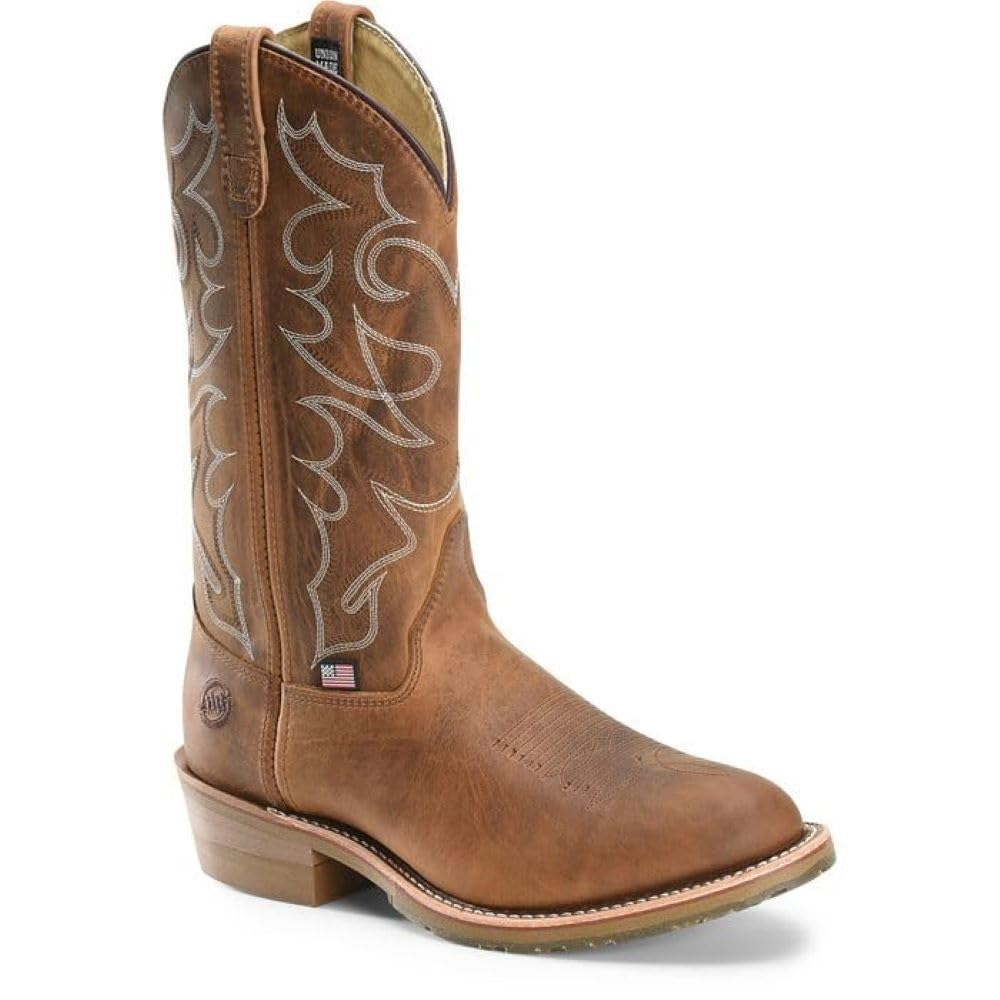
The Double-H Dylan is built for the hardest jobs. The PermaFresh insole manages moisture and odor, which matters when you’re inside a boot for 12 to 16 hours a day.
The I.C.E. outsole (Independent Cushion Engine) provides oil- and slip-resistance that meets industrial standards. The steel toe is ASTM-rated for impact and compression, and the 12-inch shaft offers more ankle coverage than standard 10-inch boots. Keep in mind that the break-in period is real—multiple reviews mention that the leather requires conditioning and several days of wear before it softens. Silicone sealer helps maintain water resistance over time.
Users who wear these daily emphasize the heel comfort specifically, noting that standing on hard surfaces for long shifts doesn’t cause the usual heel pain. The made-in-USA construction shows in the stitch density and leather quality. Monthly conditioning is recommended to get the full lifespan out of them, but for heavy industrial work, these are the boots that hold up longest.
Why it’s great
- Lasts over a year in heavy industrial use
- ASTM-rated steel toe protection
- PermaFresh insole reduces foot odor
Good to know
- Stiff leather requires a break-in period
- Needs regular conditioning for longest life
3. Durango Men’s Rebel Western Boots
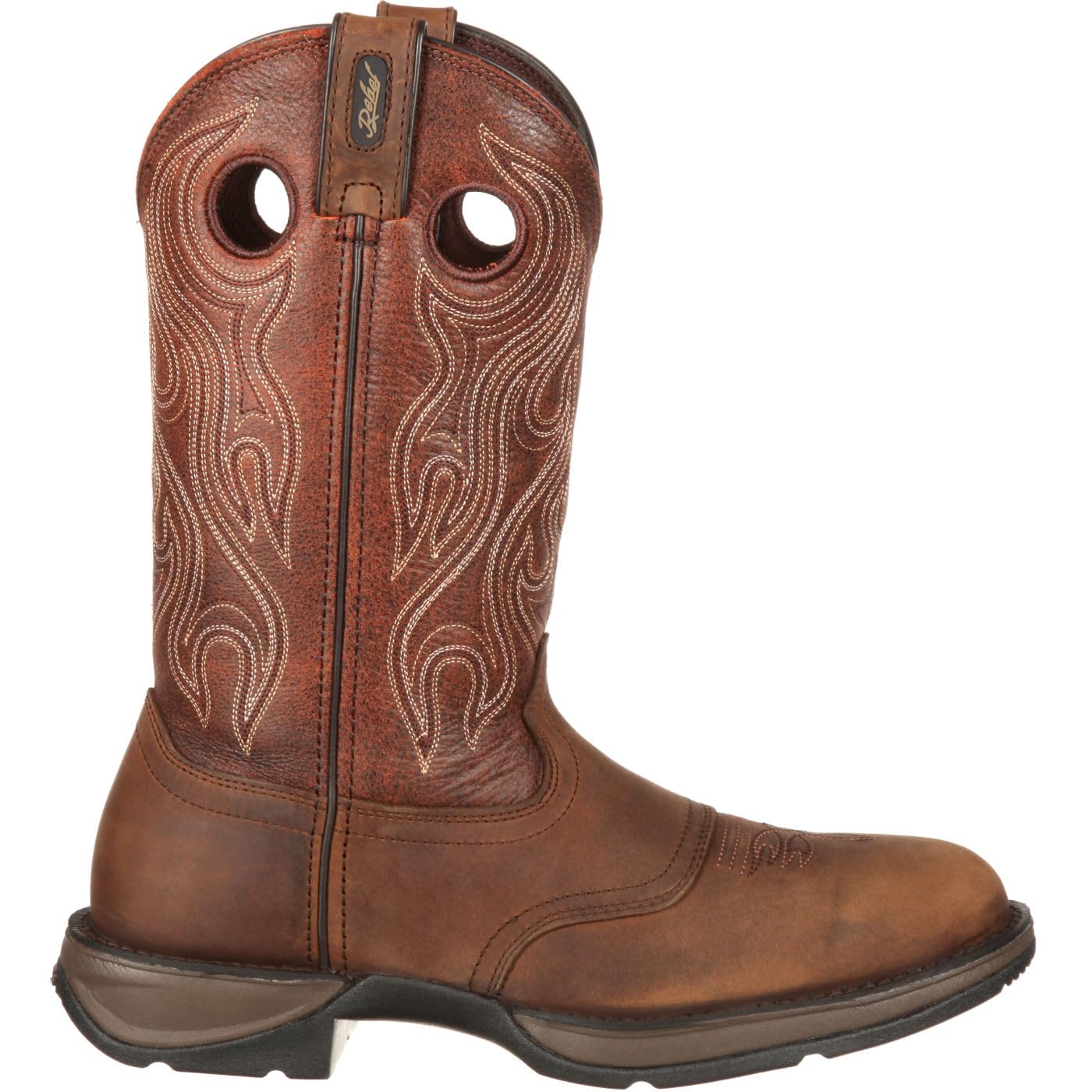
The Durango Rebel is the boot you buy when you need to stand or walk all day and you want a cushion that feels more like a sneaker than a work boot. Several reviewers report wearing theirs for multiple miles a day in metal shops, and one user with four pairs rotates them through a full work week. The springy walk and thick insole reduce foot fatigue noticeably.
The upper leather is genuine and the colors are accurate, though some users note that the flag color appears less bright in person than in online photos. The fit tends to be true to size, but a few reviewers mention that newer batches may feel slightly narrower than previous versions. The break-in period is short—most users find them comfortable straight out of the box.
Durability for heavy work use is the main question mark. The synthetic shaft and sole don’t provide the same ankle support as a full-leather boot, and a few reviewers express doubts about long-term toughness. If your work involves heavy abrasion or repeated kneeling, the Rebel may wear faster than a full-grain boot. For light industrial or standing shifts, the comfort makes it an easy choice.
Why it’s great
- Extremely comfortable out of the box
- Excellent arch and heel cushion
- True-to-size fit for most foot shapes
Good to know
- Synthetic shaft lacks full ankle support
- Long-term durability unclear for heavy use
4. Ariat Men’s Hybrid VentTEK Western Boot

The Hybrid VentTEK solves a specific problem: hot feet. The vented upper panel allows air circulation that noticeably lowers foot temperature compared to solid-leather boots. Users who wore these in hot climates and even on safari in Africa confirm the ventilation works and is not a gimmick. The rubber sole provides good grip on varied surfaces, from airport terminals to loose dirt.
Arch support is above average for a western-style boot, and the soft leather doesn’t require any break-in—several reviewers mention wearing them straight out of the box for full days of walking. The pull-on design makes them easy to take off for airport security checks, which is a practical bonus for travelers. The American flag detailing is subtle and not flashy.
There are trade-offs. The vented panels reduce water resistance significantly, so these are not the boots for wet job sites or rainy days. The sole is noticeably thicker than a traditional leather sole but still lighter than full steel-toe work boots. For indoor or warm-weather work where ventilation matters most, the VentTEK is a unique solution in the western boot market.
Why it’s great
- Ventilation system lowers foot temperature noticeably
- Soft leather with no break-in required
- Good arch support for all-day wear
Good to know
- Not waterproof due to vented panels
- Heavier than sneakers; 5.3 lb per pair
5. Irish Setter Marshall 11″ Waterproof Soft Toe

The Irish Setter Marshall has a loyal following among oil and gas workers and construction pros who put serious miles on their boots. Multiple reviews report one pair lasting two to five years depending on job conditions, which is exceptional for a western work boot. The 11-inch shaft provides more coverage than the standard 10-inch, helping keep debris out. The soft toe keeps weight down compared to steel toe versions.
Comfort out of the box is consistently praised—the Marshall requires little to no break-in, and the fit runs true to size for most foot shapes. The waterproof membrane works as advertised, tested in wet grass and shallow water. Sizing seems consistent, with wide-footed users reporting no issues with the EE width option.
A notable weakness is the outsole traction on slippery surfaces. Several reviewers caution that the Marshall can lose grip on snow or wet smooth floors, so this is not the best choice for icy conditions or polished concrete. The soft toe also means zero impact protection, so this boot is not OSHA-compliant for jobs with falling-object risks. For general outdoor work where traction is less critical and toe protection isn’t required, the Marshall offers unbeatable longevity.
Why it’s great
- Lasts 2-5 years in oil & gas work
- Minimal break-in required
- Tall 11-inch shaft protects against debris
Good to know
- Outsole traction is poor on snow or wet floors
- Soft toe offers no impact protection
6. Ariat Men’s Groundbreaker Wide Square Toe Steel Toe
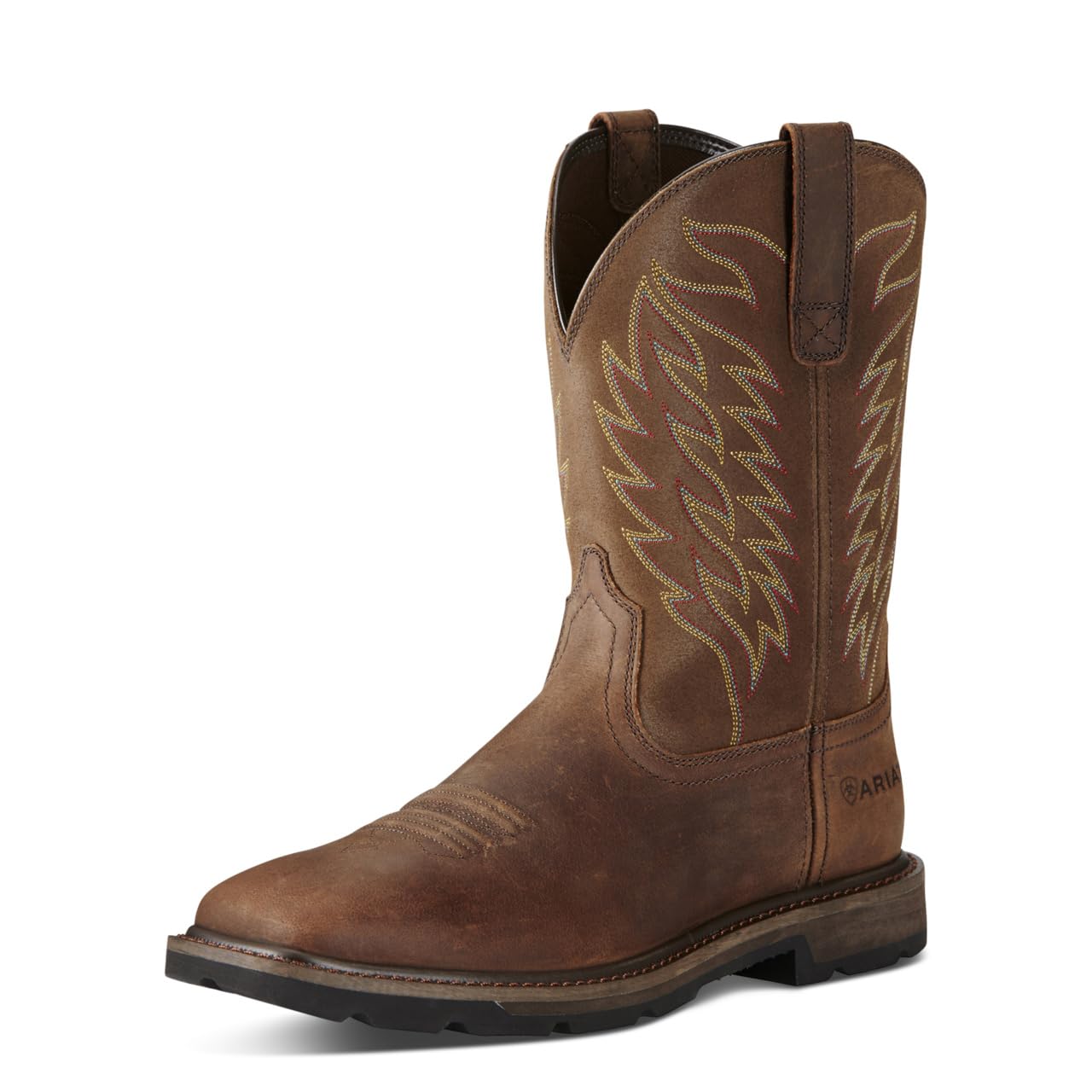
The Groundbreaker delivers what its name promises: a steel toe that feels broken in from the first wear. Buyers report wearing them straight into a 9-hour shift with no discomfort, which is rare for any steel-toe boot. The wide square toe gives the forefoot plenty of room to spread out, preventing the pinching that narrow toe shapes cause during long standing days.
The boot is surprisingly light for a steel-toe model—only 1.9 pounds—which reduces leg fatigue over an 8-hour shift. The fit generally runs true to size, though some users with narrow heels mention a slight looseness in the heel pocket. The pull-on handles make entry easy, and the shaft height is standard for western work boots.
Long-term durability data is limited because the Groundbreaker is relatively new to the market, but initial impressions from buyers who wear them daily suggest the leather holds up well and the sole doesn’t separate prematurely. If you need steel toe protection but can’t tolerate a long break-in period, this is the most comfortable entry point in the premium tier.
Why it’s great
- Zero break-in required for steel toe
- Lightweight at 1.9 lb for a steel toe boot
- Wide square toe prevents forefoot pinching
Good to know
- Heel pocket may feel loose for narrow heels
- Limited long-term durability reports available
7. Justin Conductor 10″ Round Toe Premium Work Boots

The Justin Conductor is a classic for a reason. One user reports wearing the same pair for 15 years in construction before a side seam finally failed, which is an extreme but telling data point for build quality. The full-grain leather upper is thick and resists abrasion well. The EH (Electrical Hazard) rating provides secondary protection against accidental contact with live circuits.
Fit is the main caveat—multiple reviews stress that these boots run large. Several buyers had to size down a half size or even a full size to get the right fit. Once sized correctly, the Conductor is comfortable out of the box with minimal break-in. The round toe offers a more traditional western look than square toes, which some users prefer for office-to-job-site versatility.
The Conductor is not waterproof, so it’s not ideal for wet environments unless you apply a leather conditioner with water repellent. The non-slip traction outsole performs well on dry surfaces. For daily wear and light-to-moderate work environments where you value decades-long durability in a classic silhouette, the Justin Conductor is hard to beat.
Why it’s great
- Exceptional build quality lasts years
- EH-rated for electrical hazard protection
- Classic round toe for versatile wear
Good to know
- Runs large; size down half to full size
- Not waterproof without treatment
8. Justin Original Work Boots Men’s Driller Pull-On Square Toe
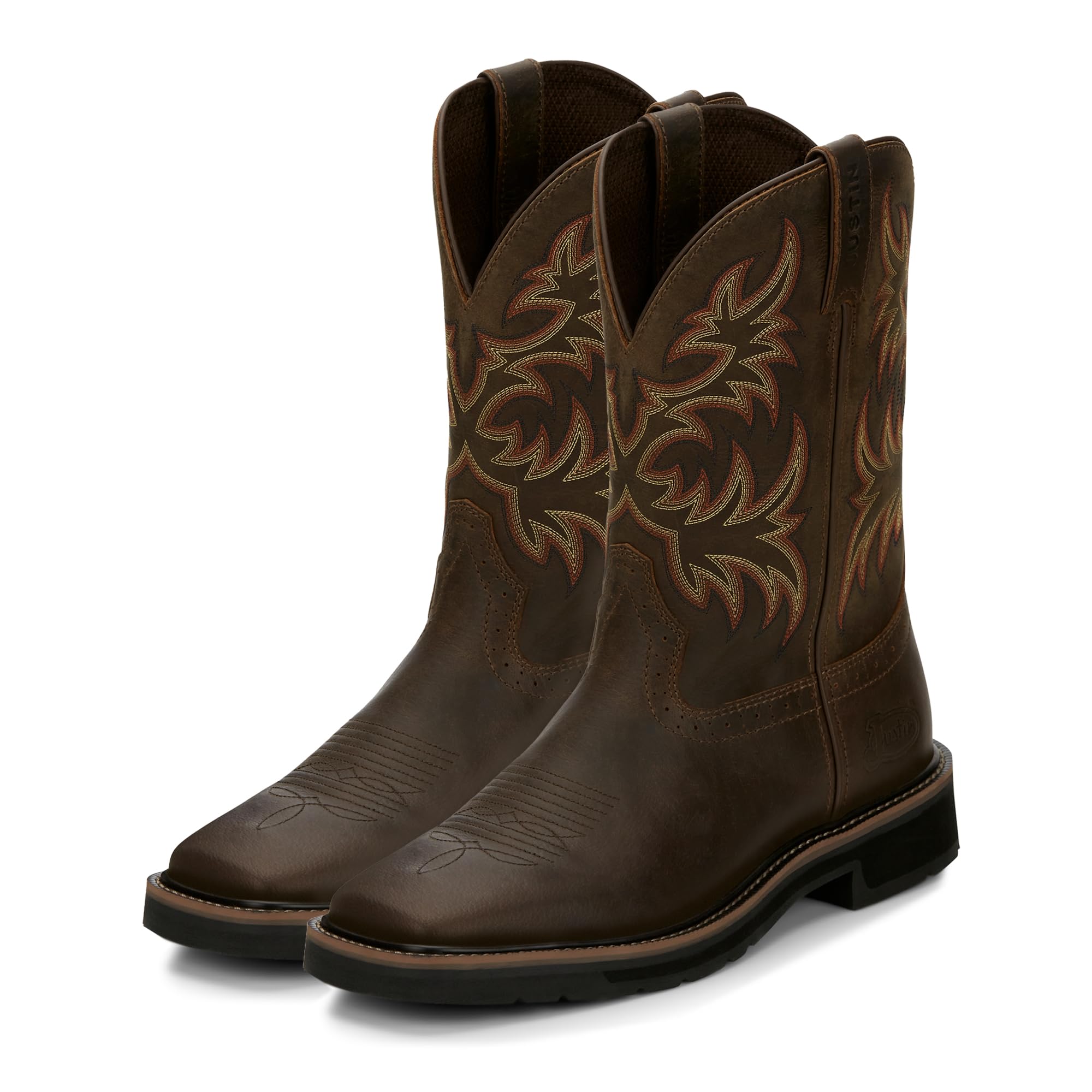
The Justin Driller is the entry-level work boot that proves you don’t need to spend top dollar for a decent pair. It’s a soft toe boot with no waterproofing, so it’s best suited for dry, light-duty environments like warehouse work, yard work, or after-hours wear. The square toe provides generous room in the toe box, which is a major plus for anyone who finds pointed toes uncomfortable.
Sizing runs large—most buyers report needing to go down a half size. The break-in period is moderate, with the boot becoming comfortable after a few days of wear. The thick rubber sole is preferred by many over leather soles for its better grip and durability on abrasive surfaces. The boot weighs 5.5 pounds, which is heavier than mid-range options, but the build quality at this price point is solid.
Durability expectations should be realistic. This is not a boot for heavy industrial use or wet job sites. Multiple reviewers hope the Driller will last as long as their previous Justin boots, but the materials and construction are clearly entry-level. For the price-conscious buyer who needs a western-style work boot for occasional or light use, the Driller delivers acceptable comfort and a good look.
Why it’s great
- Generous square toe box for comfort
- Thick rubber sole with good grip
- Budget-friendly price for daily wear
Good to know
- Not steel toe or waterproof
- Runs large; size down half a size
9. Wolverine Rancher Claw Steel-Toe Wellington
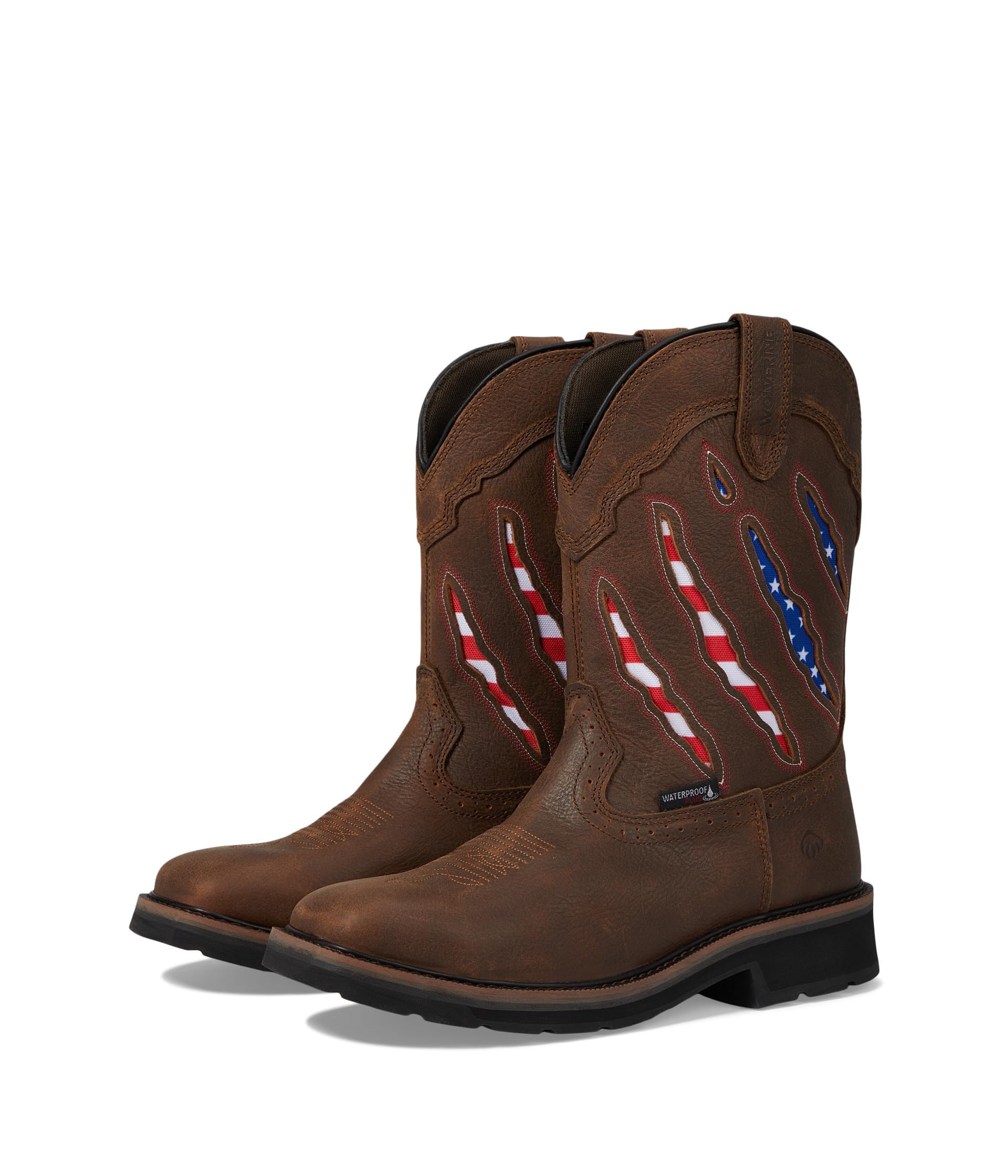
The Wolverine Rancher Claw combines steel toe protection with a cushioned insole that multiple reviewers describe as the most comfortable they’ve ever experienced, even compared to pricier boots. The unique insole material provides a soft, springy feel that reduces foot fatigue during long shifts. The shaft features ventilation panels that help in hot climates, and the waterproofing is effective up to the vent line.
Fit is true to size in wide widths, and the real leather upper feels substantial without being overly stiff. The oil-resistant outsole provides good traction on smooth and oily surfaces. Truck drivers and yard workers report wearing these both on and off the clock, which is a strong indicator of all-day comfort. The dark color shows scratches easily, so expect visible wear marks within the first week.
The break-in period is minimal, though the pull-on style may require a long shoehorn for the first few wears. Long-term durability is unproven since the design is relatively recent, but initial reports suggest the boot holds up well under daily yard and trucking use. For the price, you get steel toe protection, waterproofing, and a comfortable insole that rivals boots costing significantly more.
Why it’s great
- Exceptionally comfortable cushioned insole
- Steel toe and waterproof in one package
- Shaft vents help in hot weather
Good to know
- Dark color shows scratches very easily
- Vent panels limit waterproofing height
FAQ
How should cowboy work boots fit in the toe and heel?
Can I wear cowboy work boots every day without damaging them?
What is the difference between EH-rated and non-rated work boots?
Do I need a steel toe or a soft toe for ranch work?
How often should I replace the insoles in my work boots?
Final Thoughts: The Verdict
For most users, the best cowboy work boots winner is the Ariat Rebar Flex because it balances waterproofing, a Goodyear welt, and all-day comfort at a price that undercuts competitors without sacrificing safety features. If you need maximum durability for heavy industrial work, the Double-H Dylan is the boot that welders and pipefitters swear by. And for hot-weather environments where ventilation matters more than waterproofing, the Ariat Hybrid VentTEK keeps your feet cooler than any other western work boot on the list.

Mo Maruf
I created WellFizz to bridge the gap between vague wellness advice and actionable solutions. My mission is simple: to decode the research and give you practical tools you can actually use.
Beyond the data, I am a passionate traveler. I believe that stepping away from the screen to explore new environments is essential for mental clarity and physical vitality.