Our readers keep the lights on and my smoothie glass nicely filled. As an Amazon Associate, I earn from qualifying purchases.
Plantar fasciitis turns every step into a sharp reminder that your footwear choice matters. For anyone who loves the Western aesthetic but dreads the heel pain that often comes with traditional cowboy boots, the search for a pair that blends authentic style with genuine foot support feels impossible. The right pair exists, but it requires looking past the leather to the insole and shank construction beneath.
I’m Mohammad Maruf — the founder and writer behind WellFizz. I’ve spent countless hours analyzing the biomechanics of western footwear, comparing arch support systems, foam densities, and outsole flex patterns to identify which models genuinely reduce plantar fascia strain rather than just marketing it.
Whether you work on your feet all day or simply refuse to give up your favorite boot style, this guide breaks down the specific features that separate supportive boots from painful ones. My goal is to help you find the best cowboy boots for plantar fasciitis without sacrificing durability or appearance.
How To Choose The Best Cowboy Boots For Plantar Fasciitis
Selecting the right pair involves more than just picking a trusted brand. The interaction between the boot’s insole, midsole, shank, and toe shape determines whether your plantar fascia gets the support it needs or faces additional strain during every step.
Removable Insoles and Orthotic Compatibility
Not all cowboy boots allow you to swap the factory insole for a custom orthotic. Look for models that explicitly state a removable insole or a deep interior cavity. A boot with a glued-in insole forces you to rely on the original foam, which is rarely designed for plantar fasciitis support.
Shank Material and Arch Support
The shank — a rigid piece between the outsole and insole — provides the boot’s structural arch support. Steel and fiberglass shanks offer the most rigidity, which helps maintain the arch curve under load. Boots without a defined shank or with a flexible composite shank may not hold your arch sufficiently over a long day.
Toe Box Width and Forefoot Pressure
A narrow, pointed toe box crowds the metatarsal bones and can worsen forefoot pain, which often accompanies plantar fasciitis. Round toe and wide square toe designs give your toes room to splay naturally, reducing tension along the plantar fascia band during the push-off phase of your gait.
Outsole Cushioning and Heel Strike Absorption
Traditional leather outsoles transmit every shock directly to your heel, aggravating heel spurs and fascia inflammation. Rubber outsoles with a cushioned midsole, especially those with a shock-absorbing heel insert, reduce the impact force that travels up through your foot with each step.
Quick Comparison
On smaller screens, swipe sideways to see the full table.
| Model | Category | Best For | Key Spec | Amazon |
|---|---|---|---|---|
| Dan Post Alamosa | Premium Ostrich | Zero break-in comfort | Hybrid leather/rubber sole | Amazon |
| Ariat Point Ryder | Performance Western | All-day support | Ariat ATS Max midsole | Amazon |
| DOUBLE-H Jase | USA Made Work | Rigid arch support | Texon insole with cork inlay | Amazon |
| Ariat Hybrid VentTEK | Vented Mid | Ventilated comfort | Four-row stitch with mesh | Amazon |
| Justin Jackson Roper | Classic Roper | Wide foot comfort | J-Flex Comfort System | Amazon |
| Durango DDB0125 | Budget Work | Lightweight daily wear | Narrow shaft design | Amazon |
| Justin Rendon 11″ | Value Mid | Removable orthotic use | Removable orthotic insole | Amazon |
| Ariat Rowder VentTEK | Vented Entry | Back pain relief | VentTEK mesh panels | Amazon |
| Justin Canter 11″ | Entry Classic | Soft leather break-in | Full-grain leather upper | Amazon |
In-Depth Reviews
1. Dan Post Alamosa

The Dan Post Alamosa stands at the top of this list because its ostrich leather and hybrid sole design eliminate the brutal break-in period that typically aggravates plantar fasciitis. The combination of a leather welt with a rubber outsole provides enough shock absorption at the heel to reduce fascia strain during the first wear. Reviewers consistently note that these boots feel like slippers immediately, which is rare for a Western boot at any price.
The craftsmanship rivals brands costing twice as much, with buttery-soft leather that conforms to the foot without creating pressure points. The interior cavity is generous enough to accommodate a custom orthotic, allowing you to dial in arch support specific to your foot. True-to-size sizing with a slightly loose heel pocket is common, but that actually benefits orthotic users who need extra depth.
For plantar fasciitis sufferers who need immediate comfort without a prolonged break-in, the Alamosa delivers. The ostrich leather is flashy yet subtle enough for daily wear, and the all-day comfort reported by multiple wearers confirms that this boot supports the foot without sacrificing style.
Why it’s great
- Zero break-in period reduces early fascia irritation
- Hybrid sole absorbs heel shock better than full leather
- Ostrich leather is supple yet durable
Good to know
- Premium price point; not for tight budgets
- Heel may feel slightly loose for some wearers
2. Ariat Point Ryder
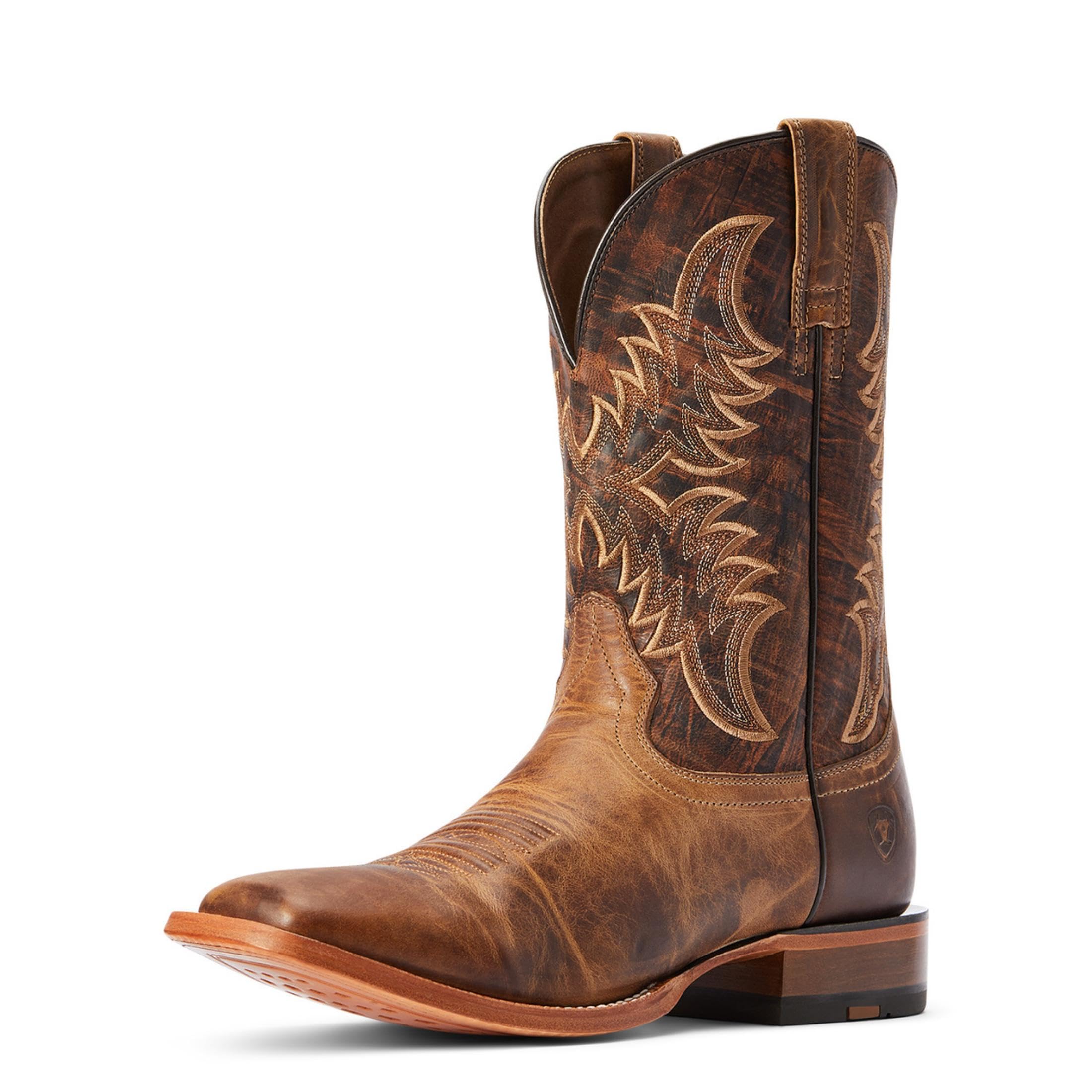
The Ariat Point Ryder uses the brand’s top-tier ATS Max midsole, which provides a structured arch support system that rivals many athletic shoes. For plantar fasciitis, this translates to reduced tension along the fascia band during prolonged standing. The boot features a leather outsole, which looks sharp but transmits more ground impact than rubber — a trade-off that a quality orthotic insole can offset.
Fit runs slightly small, so ordering half a size up is common advice. Once properly sized, the interior feels like a slipper due to the cushioned footbed and lightweight construction. The clean stitching and sharp profile make this boot appropriate for both work and social settings, and multiple users praise the lack of break-in pain.
One durability concern emerged around the leather sole wearing through at four months for one user. If you plan to walk on pavement daily, adding a rubber sole guard is a smart preventative step. For indoor work or occasional wear, the leather sole holds up fine and provides classic Western aesthetics.
Why it’s great
- ATS Max midsole provides strong arch support
- Minimal break-in required; feels cushioned immediately
- Lightweight and well-balanced for all-day wear
Good to know
- Leather sole lacks shock absorption without orthotic
- Sizing runs small; order half size larger
3. DOUBLE-H 11″ Jase Square Toe
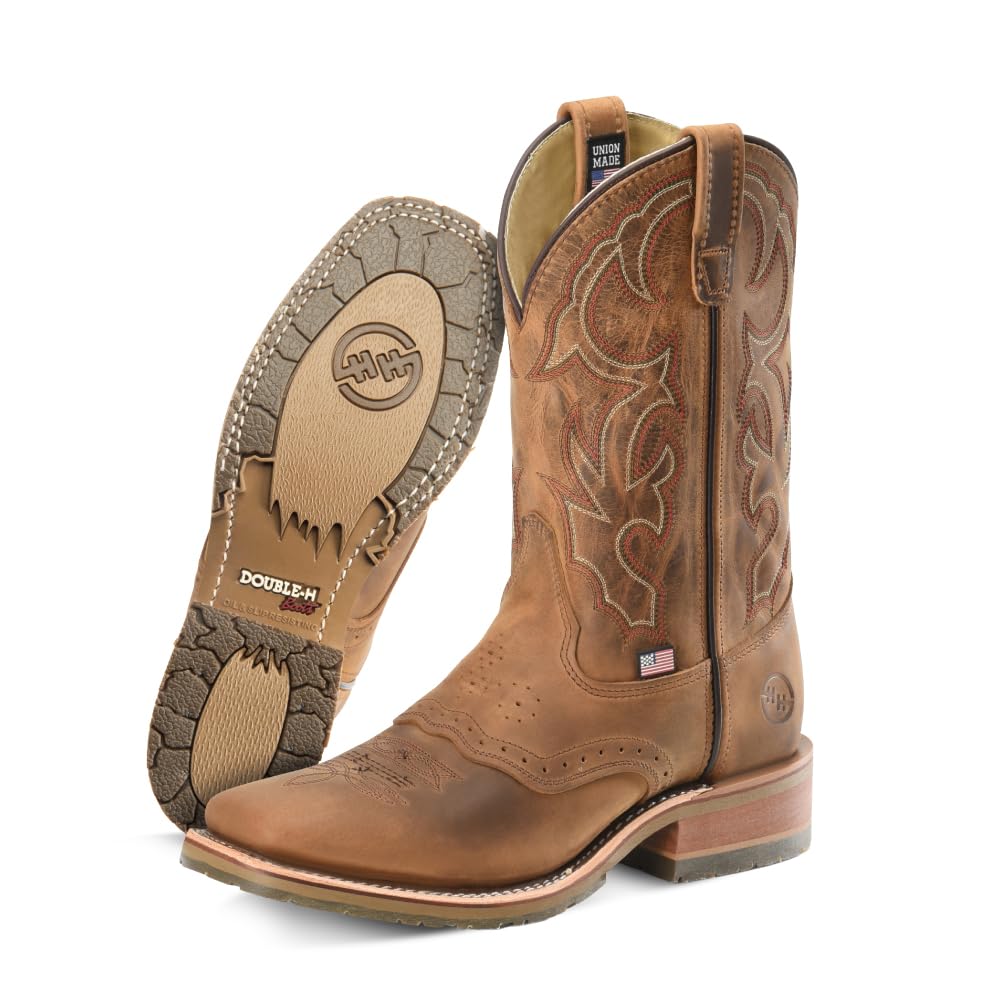
The DOUBLE-H Jase uses a Texon insole with a cork inlay that molds to your foot shape over time, offering a semi-custom arch contour. This is one of the few boots on this list that is Made in the USA and carries an EH (Electrical Hazard) rating, making it suitable for worksites where foot protection and arch support are both critical. The I.C.E. outsole is oil- and slip-resistant, providing stable footing that reduces the micro-adjustments your foot muscles make on uneven ground.
The square toe design gives the forefoot room to spread, which reduces pressure on the metatarsal heads and helps align the plantar fascia. However, the heel is notably firm — some users found it less cushioned than expected. Pairing these boots with a gel heel cup or orthotic can address that stiffness while preserving the excellent arch structure.
Sizing is true, and the high-quality full-grain leather is built for heavy use. For those who spend their days on concrete or in workshops, the DOUBLE-H Jase provides the rigid foundation that plantar fasciitis needs.
Why it’s great
- Texon cork inlay creates a custom arch mold
- Oil/slip-resistant I.C.E. outsole provides stable grip
- Square toe allows natural toe splay
Good to know
- Hard heel may need supplemental cushioning
- Not as instantly comfortable as softer boots
4. Ariat Hybrid VentTEK

The Ariat Hybrid VentTEK is engineered for hot conditions, with mesh panels integrated into the leather upper that allow airflow. For plantar fasciitis sufferers, temperature regulation matters because excessive heat can increase foot swelling, which tightens the plantar fascia. The ventilation genuinely works — users report a noticeable temperature difference compared to non-vented boots.
The boot is extremely easy to slide on and off, which is helpful for anyone who needs to switch into recovery sandals or ice packs throughout the day. The soft leather and good grip make it practical for travel and daily wear. The fit runs true, and the interior is roomy enough for a thin orthotic.
Durability across rough terrain is solid, with reviews citing use on African safaris and construction sites. The American flag design is subtle, and the boot cleans up well. If you work in a warm climate or simply run hot, the VentTEK keeps your feet dry and comfortable while still providing the arch support Ariat is known for.
Why it’s great
- Mesh ventilation reduces foot swelling and fatigue
- Soft leather and easy on/off for frequent changes
- Durable enough for outdoor work and travel
Good to know
- Not the most formal look for dress occasions
- Ventilation reduces weather protection in rain
5. Justin Jackson 10″ Roper

The Justin Jackson Roper is a classic choice for wide-footed individuals who struggle with narrow toe boxes that compress the metatarsals. The round toe and full-grain leather upper provide generous forefoot room, which helps reduce tension on the plantar fascia band. The J-Flex Comfort System adds a layer of shock absorption at the heel strike, softening each step for those with heel pain.
The hand-nailed leather outsole is traditional, but it does transmit more ground feel than a rubber sole. Roper-style boots have a lower, shorter heel than traditional cowboy boots, which places the foot in a more neutral position and reduces the calf tightening that can exacerbate plantar fasciitis. Sizing runs slightly large, according to reviewers, so trying half a size down may improve fit.
These boots are not designed for heavy work but perform well for daily casual wear. The leather holds a shine well, and after a short break-in period, they become very comfortable. For anyone who needs a wide toe box with a low heel profile, the Jackson Roper is a reliable pick.
Why it’s great
- Roper heel places foot in neutral, reducing fascia strain
- Round toe provides ample forefoot space
- J-Flex system absorbs heel shock
Good to know
- Leather outsole needs conditioning for longevity
- Not built for heavy work or rough terrain
6. Durango DDB0125

The Durango DDB0125 offers a budget-friendly entry point without completely sacrificing comfort. The rubber outsole provides better shock absorption than all-leather alternatives, which helps reduce heel strike impact. The narrow shaft prevents jeans from bunching, making them a practical choice for daily wear under denim.
These boots are made from non-leather materials, which means they won’t develop the same patina as full-grain leather but are lighter and require less maintenance. Users report that they are more comfortable than comparable Ariat models in the same price tier, with a lightweight feel that reduces foot fatigue over long days. No insoles are included specifically for plantar fasciitis, so swapping in a quality orthotic is highly recommended.
Durability is decent for the price, though the upper won’t take a high shine like real leather. For someone on a tighter budget who needs a basic Western boot that accommodates an orthotic, the Durango DDB0125 delivers functional value.
Why it’s great
- Rubber outsole dampens heel shock
- Lightweight build reduces daily fatigue
- Narrow shaft fits neatly under jeans
Good to know
- Non-leather upper won’t shine like real leather
- No built-in arch support; orthotic required
7. Justin Rendon 11″ Western Boot
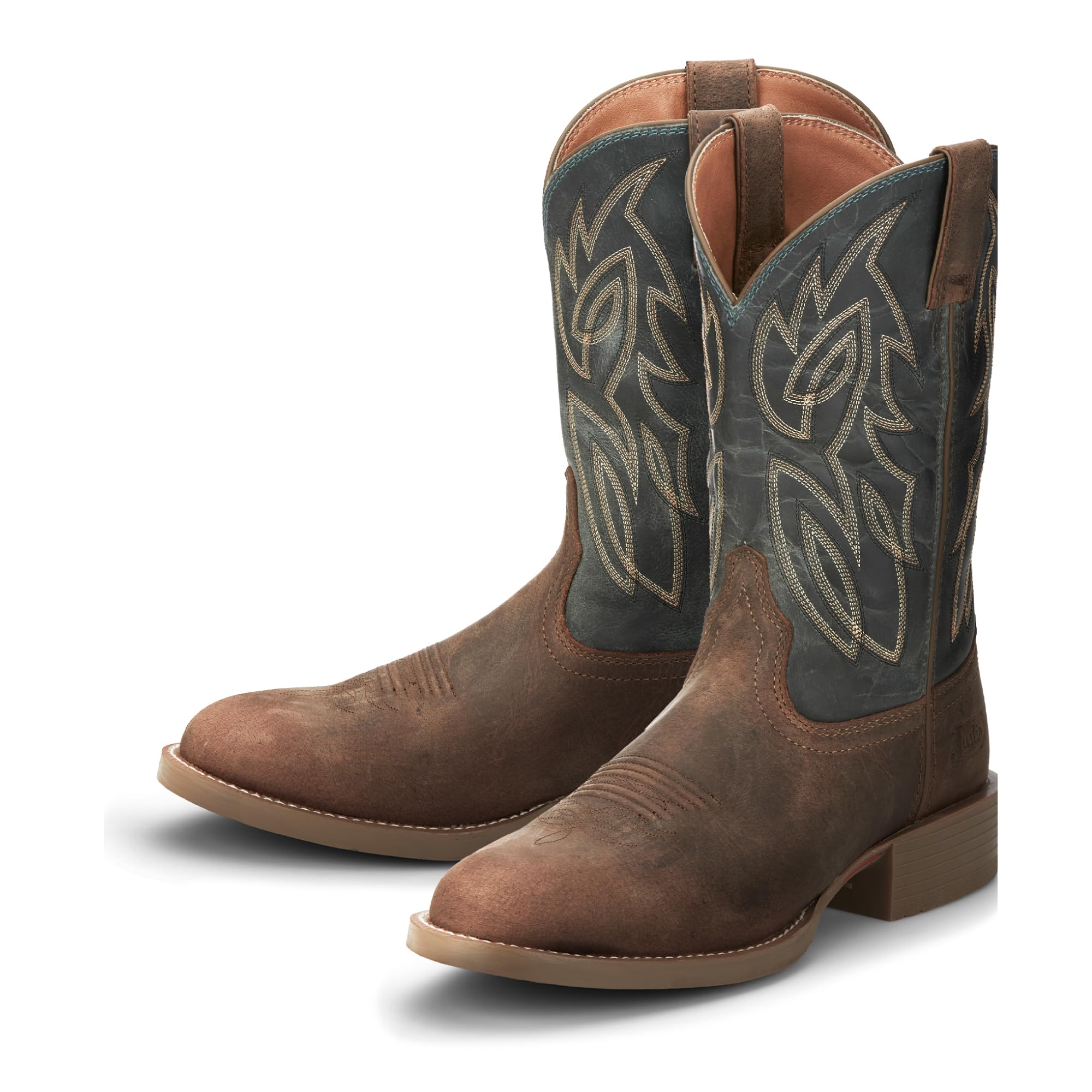
The Justin Rendon is a mid-range option that includes a removable orthotic insole, making it one of the few boots in this price tier that allows you to swap the factory footbed for a custom support insert. For plantar fasciitis, this is a critical feature — you are not stuck with a generic foam insole that collapses after a few weeks. The round toe shape provides adequate forefoot space, reducing pressure on the ball of the foot.
The full-grain cowhide leather is soft and comfortable right out of the box, according to reviewers, with minimal break-in discomfort. The slip-resistant rubber outsole provides reliable traction on slick surfaces. Sizing seems to run slightly large, with some users needing to size down by half or go wider than usual, so trying multiple sizes is wise.
These boots are well-built for the price, with a classic look that works for casual wear and light work environments. If you already own a pair of custom orthotics and just need a boot that accepts them, the Justin Rendon is a practical, affordable choice.
Why it’s great
- Removable insole accepts custom orthotics
- Soft, supple leather requires little break-in
- Rubber outsole provides solid grip
Good to know
- Sizing inconsistent; may need to try half size down
- Not suitable for heavy-duty work environments
8. Ariat Rowder VentTEK

The Ariat Rowder VentTEK combines the brand’s signature arch support with breathable mesh panels, a combination that has real benefits for plantar fasciitis sufferers who also deal with back pain. Multiple user reviews highlight that switching to these boots alleviated their back problems, which often correlates with improved foot support and gait alignment.
The VentTEK mesh panels keep the foot cooler and reduce moisture buildup, which helps prevent the foot swelling that can worsen fascia tightness. The four-row stitch pattern adds durability, and the soft leather upper does not rub against the legs during wear. These boots are best suited for daily city wear rather than heavy work, but they hold up well over months of regular use.
Sizing is true to size, and the overall fit is comfortable enough for all-day wear without blisters. The Western styling is modern and sharp, making these a good choice for someone who wants a stylish boot that doesn’t aggravate their plantar fasciitis.
Why it’s great
- Breathable mesh reduces foot swelling
- Strong arch support helps with back pain
- Soft leather prevents leg irritation
Good to know
- Not designed for heavy work or construction
- Mesh reduces water resistance in wet conditions
9. Justin Canter 11″ Western Boot
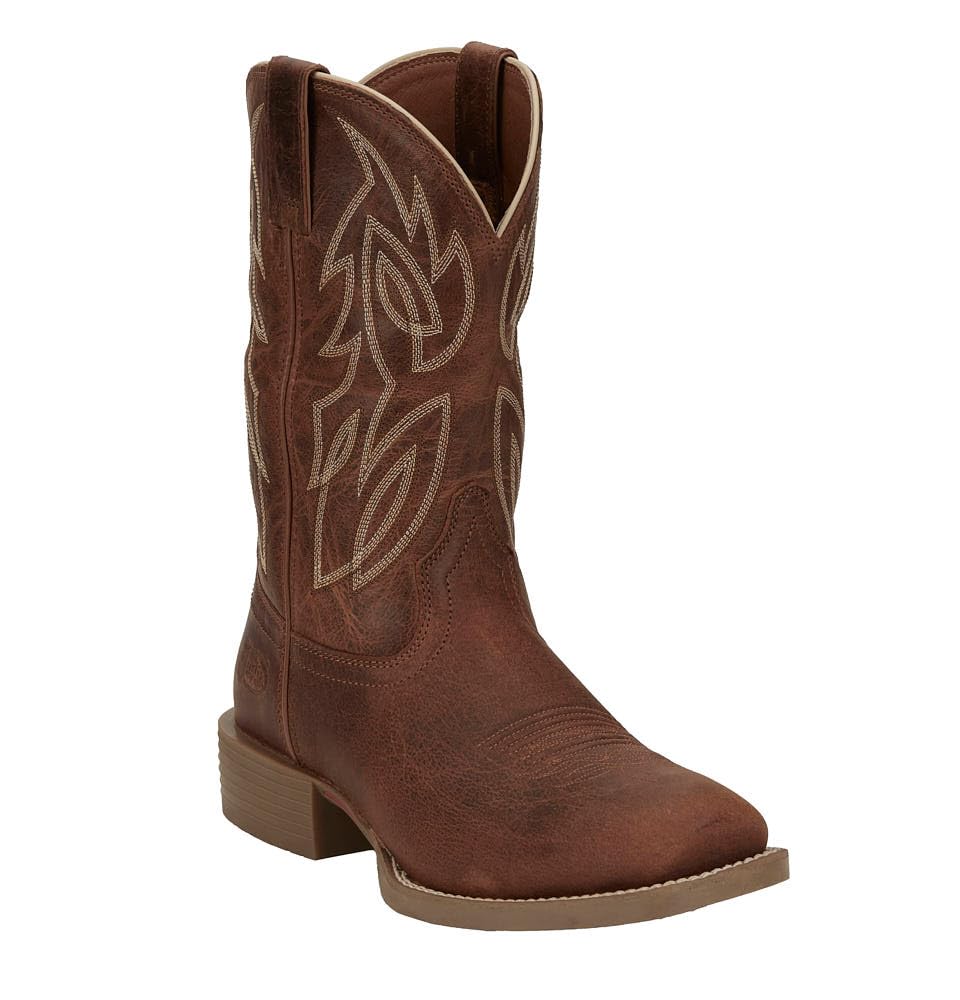
The Justin Canter is the most affordable option on this list, making it a viable starting point for someone who needs plantar fasciitis relief on a tight budget. The full-grain leather upper is soft and high-quality, with a woven lining that reduces friction against the foot. The square toe design gives the toes room to spread, which is beneficial for reducing forefoot pressure.
Reviewers consistently praise the quality of the leather and the fit, though multiple users noted sizing issues with the brand. Justin boots generally run true to size, but some buyers experienced inconsistency between models. The slip-resistant rubber outsole provides adequate traction, and the boot is comfortable enough for walking around town or light work.
For plantar fasciitis, you will almost certainly need to add an aftermarket orthotic insole, as the factory footbed offers minimal arch support. But the boot’s construction and materials are solid for the price, and the soft leather means less break-in friction on your heel and ankle.
Why it’s great
- Soft, high-quality full-grain leather
- Square toe provides forefoot room
- Woven lining reduces foot friction
Good to know
- Minimal arch support; orthotic needed
- Inconsistent sizing between models
FAQ
Can I wear custom orthotics inside any cowboy boot?
Should I choose a square toe or round toe for plantar fasciitis?
How does heel height affect plantar fasciitis in cowboy boots?
Final Thoughts: The Verdict
For most users, the best cowboy boots for plantar fasciitis winner is the Dan Post Alamosa because its ostrich leather and hybrid sole provide immediate comfort with zero break-in irritation. If you want a more traditional leather sole with strong arch support, grab the Ariat Point Ryder. And for heavy use on concrete or worksites, nothing beats the rigid arch foundation of the DOUBLE-H Jase.

Mo Maruf
I created WellFizz to bridge the gap between vague wellness advice and actionable solutions. My mission is simple: to decode the research and give you practical tools you can actually use.
Beyond the data, I am a passionate traveler. I believe that stepping away from the screen to explore new environments is essential for mental clarity and physical vitality.