Our readers keep the lights on and my smoothie glass nicely filled. As an Amazon Associate, I earn from qualifying purchases.
Standing outside in single-digit temperatures while your core stays warm depends entirely on one piece of gear: insulated coveralls. The right ones trap body heat, block wind, and let you move without that stiff, restricted feeling that makes a long workday miserable. But the wrong pair can leak warmth through thin fabric or bind your shoulders until you can’t lift a tool.
I’m Mohammad Maruf — the founder and writer behind WellFizz. I’ve spent hundreds of hours analyzing insulation materials, fabric weights, zipper durability, and temperature ratings across winter workwear to separate the real performers from the ones that just look warm on a hanger.
Whether you need them for outdoor labor, hunting, or shoveling a long driveway, the best coveralls for winter must balance thermal efficiency with freedom of movement and a durable outer shell that can handle daily abuse.
How To Choose The Best Coveralls For Winter
Winter coveralls are a multi-season investment, so picking the right one means looking past the outer fabric and understanding the insulation, closure system, and cut. The biggest mistake buyers make is choosing based on shell thickness alone — a heavy 12-ounce duck canvas with no liner won’t keep you warm if it lacks a proper thermal barrier.
Insulation Fill Weight and Type
The warmth of insulated coveralls is determined by the fill material and its weight, not the outer fabric. Polyester fiberfill insulation in the 6-ounce to 10-ounce range is standard for sub-freezing wear. Heavier fill traps more air and retains more heat, but also adds bulk. For temperatures around 0°F, look for at least 6-ounces of fill. For extreme cold below that, a quilted liner or a higher fill weight is necessary. Some premium models use a bonded insulation that doesn’t shift or clump after washing, maintaining consistent coverage across the torso and legs.
Shell Fabric: Duck Canvas vs. Twill vs. Nylon
The shell determines durability and wind resistance. Cotton duck canvas is the go-to for heavy work environments — it’s thick, abrasion-resistant, and blocks most wind, but can be stiff until broken in. Poly-cotton twill offers a softer feel with moderate durability and is often lighter. Nylon or polyester shells are preferred for extreme-low-temperature gear because they stop wind completely and shed moisture faster, but they don’t breathe as well. For all-day wear doing physical tasks, a duck canvas shell with a quilted liner provides the best balance of durability and comfort.
Zipper and Storm Flap Design
A two-way front zipper is essential for bending and sitting without pressure at the waist. Look for a full-length storm flap with snap buttons covering the zipper — this seals out wind and prevents the metal zipper from drawing heat away from your chest. Leg zippers from hem to knee are a major convenience factor; they let you pull the coveralls on and off over boots without fighting the fabric. Elastic knit wrist cuffs inside the sleeves seal your arms and prevent heat from escaping when you raise your hands.
Fit and Layering Freedom
Winter coveralls must be cut generously enough to fit over a base layer and a mid-layer fleece or hoodie without restricting shoulder movement. Adjustable suspenders or an elastic waist help fine-tune the fit and keep the rise of the bib from sagging. Inseam length is critical — too short and the leg cuffs ride up when you squat; too long and they drag on the ground. Many brands offer short, regular, and tall inseam options, which is worth seeking out for a proper fit.
Quick Comparison
On smaller screens, swipe sideways to see the full table.
| Model | Category | Best For | Key Spec | Amazon |
|---|---|---|---|---|
| RefrigiWear ChillBreaker | Premium | Extreme cold, sub-zero work | 0°F comfort rating, lightweight nylon shell | Amazon |
| Carhartt Firm Duck Insulated Bib | Premium | Heavy outdoor labor, below freezing | 12-oz duck canvas, quilted liner | Amazon |
| Berne Heritage Twill Insulated Coverall | Mid-Range | All-day wear, moderate cold | Poly/cotton twill, adjustable waist | Amazon |
| Rothco Insulated Coveralls | Mid-Range | Hunting, ATV riding, cold mornings | 6-oz poly fiberfill insulation | Amazon |
| Walls Frost Blizzard Pruf Bib | Mid-Range | Budget investment, durable bib | Full leg zippers, storm flap | Amazon |
| Carhartt Rigby Coverall | Mid-Range | Lighter chore work, layering | Summer-weight twill, no liner | Amazon |
| HISEA Insulated Bib Overalls | Budget | Entry-level warmth, value buy | Duck canvas, insulated liner | Amazon |
In‑Depth Reviews
1. RefrigiWear ChillBreaker Insulated Coveralls
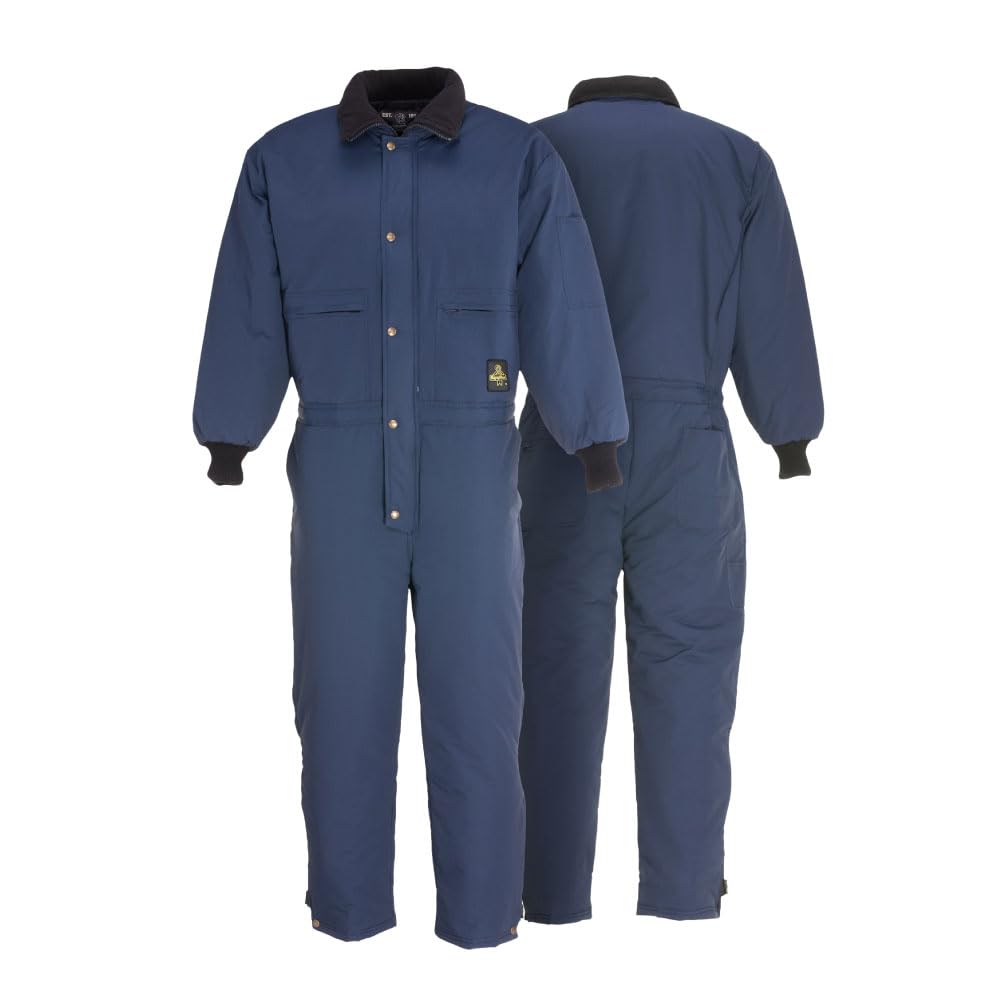
The RefrigiWear ChillBreaker is the warmest and most technically designed coverall in this guide, with a factory-tested 0°F comfort rating that holds true even in sustained wind. Its lightweight nylon outer shell blocks wind completely and dries fast if you’re working around snow or wet conditions, which is a notable advantage over cotton duck canvas models. The insulation is bonded to the shell to prevent shifting, so you get consistent thermal protection across the chest, back, and legs without cold spots developing after repeated wear.
The design prioritizes mobility as much as warmth — pleated sleeves allow full arm rotation without pulling the torso tight, and the two-way zipper lets you sit or bend without the fabric bunching at your waist. Pockets are abundant with two front zippered, two open, and a rear zippered pocket, though the upper chest pocket is shallow and larger phones can fall out during active movement. There is no hood included or available as an add-on, so you’ll need a separate hat or attached hood from your jacket.
For anyone regularly facing temperatures below 10°F — ice fishing, snowmobiling, or construction in northern winters — the ChillBreaker delivers reliable warmth without the heavy, stiff feel of traditional duck canvas gear. Sizing runs slightly generous to accommodate base layers, and the adjustable waist helps dial in the fit. If extreme cold is your primary concern, this is the benchmark.
Why it’s great
- Verified 0°F comfort rating with bonded insulation
- Windproof nylon shell dries quickly in wet snow
- Pleated sleeves allow excellent arm mobility
Good to know
- No hood available — must wear separate headwear
- Upper chest pocket is too shallow for large phones
- Zipper durability concerns reported after machine washing
2. Carhartt Men’s Firm Duck Insulated Bib Overall

The Carhartt Firm Duck Insulated Bib Overall is the gold standard for cold-weather workwear because it combines a dense 12-ounce cotton duck canvas shell with an integrated quilted liner that traps body heat effectively. The fabric is stiff out of the package but breaks in within a few wears, conforming to your body while retaining its abrasion resistance against concrete, wood, and metal. Reinforced knees add to the durability, making this bib ideal for construction, framing, or farm work where you’re kneeling or crawling frequently.
The fit is generous enough to layer a hoodie and thermal shirt underneath without restricting shoulder movement, and the adjustable suspenders let you raise the bib high enough to keep your lower back covered when you bend. Full ankle-to-knee leg zippers with snap-button storm flaps make on-off over boots straightforward, and the two-way front zipper with a snap-over storm flap seals out wind at the chest. A zippered fly eliminates the need to drop the bib for bathroom breaks, which is a significant daily convenience that many competitors skip.
For the combination of extreme durability, reliable insulation, and work-site practicality, the Carhartt bib earns the top recommendation for most buyers. The short inseam option fits shorter frames without dragging, and the inseam is cut wide enough to accommodate work boots. If you need one pair of coveralls to handle below-freezing conditions for years of heavy use, this is the one to buy.
Why it’s great
- 12-ounce duck canvas shell is extremely abrasion-resistant
- Quilted liner provides reliable warmth below freezing
- Full leg zippers and zippered fly add daily convenience
Good to know
- Fabric is stiff before break-in
- Short inseam must be selected for shorter frames
- Suspenders can tangle in washing machine without secure pin
3. Berne Men’s Heritage Twill Insulated Coverall
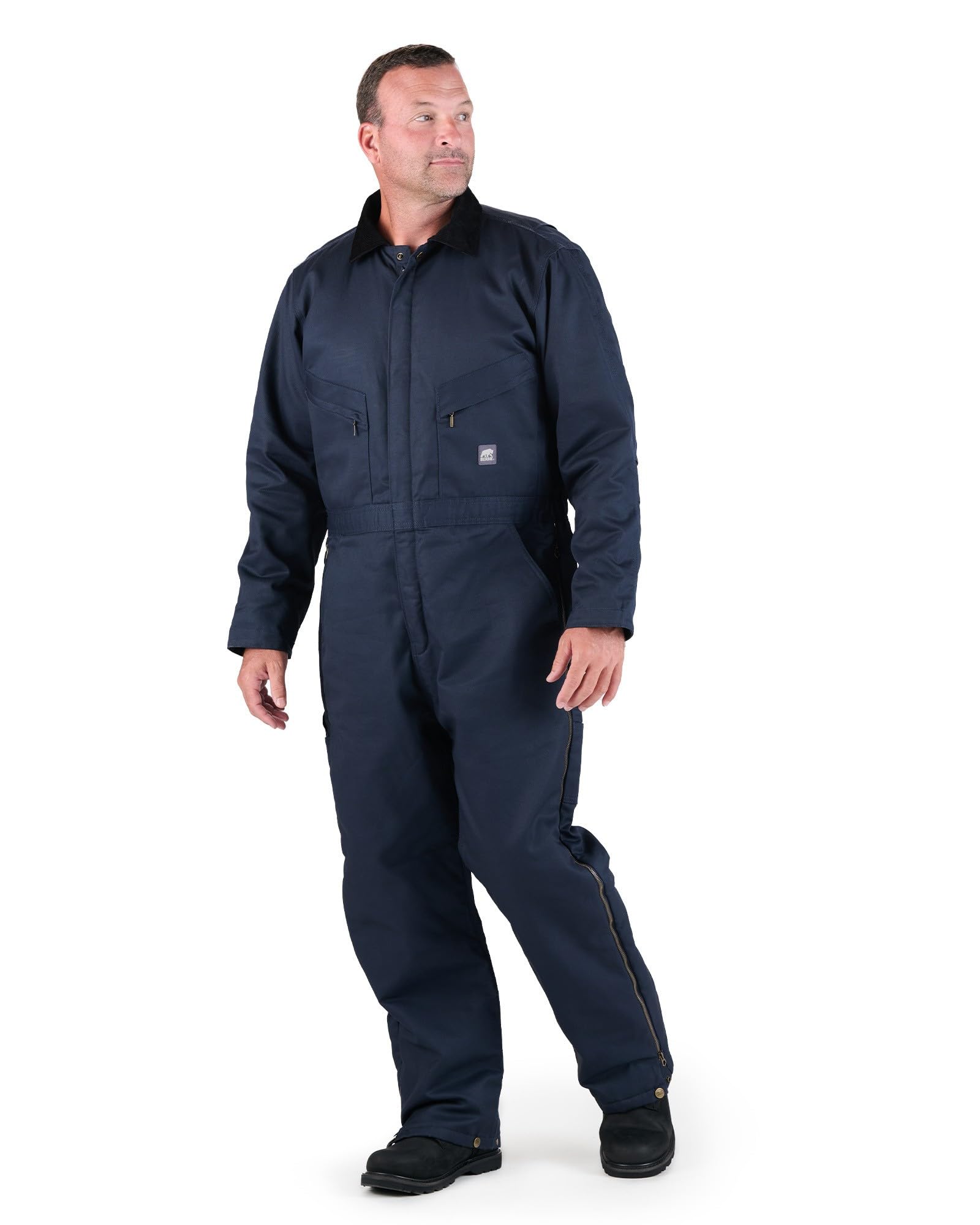
The Berne Heritage Twill Insulated Coverall delivers a balanced middle ground between weight, warmth, and mobility that many one-piece suits fail to achieve. The shell is a polyester-cotton twill that is noticeably softer and more comfortable against the skin than duck canvas, making it a better choice for all-day wear when you’re not dealing with heavy abrasion. The insulation is sufficient for temperatures in the 20°F to 30°F range without feeling bulky or restrictive, and users report that it doesn’t weigh them down like thicker insulated models.
One standout detail is the back design — the cut allows improved arm movement compared to many traditional coveralls, so reaching overhead or working with tools doesn’t pull the entire suit tight across your shoulders. The adjustable waist keeps the coveralls from sagging, and the two-way zipper combined with a snap storm flap provides adequate wind sealing for moderate conditions. The overall length runs long on shorter frames — even the medium/short size was reported as too long for a 5’6″ user — so measuring your inseam and ordering accordingly is essential.
For someone who works outdoors in relatively cold but not extreme temperatures and wants a suit that doesn’t feel like a stiff canvas tube, the Berne is an excellent mid-range option. It pairs well with a hoodie or a heavy flannel underneath. If you need maximum abrasion resistance for rough worksites, the Carhartt duck canvas models are tougher, but for everyday comfort and freedom of movement in the cold, the Berne is a strong contender.
Why it’s great
- Softer twill shell is comfortable for all-day wear
- Back cut allows excellent arm mobility
- Adjustable waist prevents sagging during bending
Good to know
- Runs long even in short sizes
- Not as durable as duck canvas for abrasive environments
- Limited insulation for single-digit temperatures
4. Rothco Insulated Coveralls
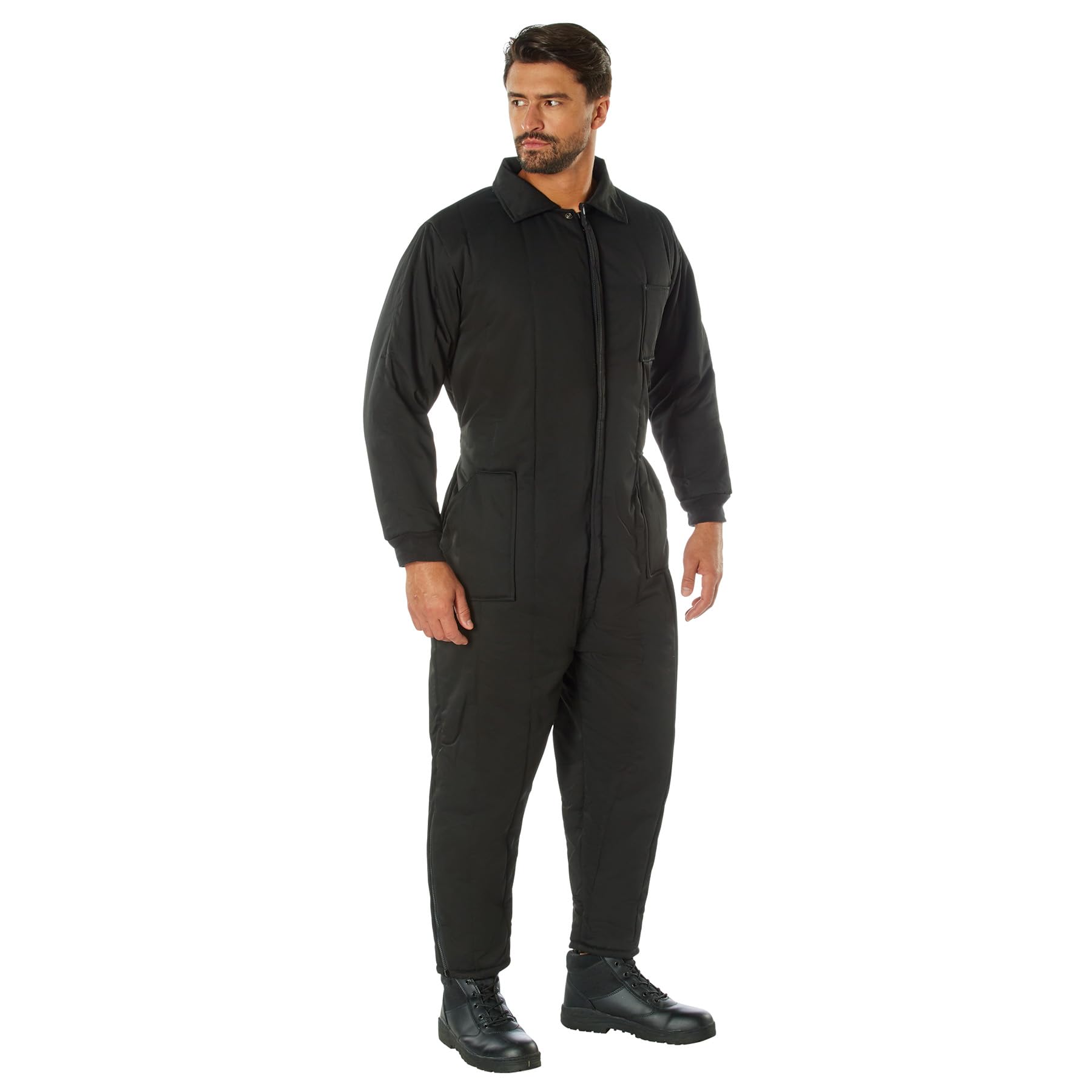
The Rothco Insulated Coveralls bring a heavyweight 6-ounce poly fiberfill insulation packed into a poly-cotton twill shell, providing genuine warmth at a lower price point than the premium brands. The insulation is dense enough that users have reported standing in blizzard conditions for 30 minutes with only their head getting cold, which confirms the thermal seal is effective. The shell is 65% polyester and 35% cotton, offering decent wind resistance and a soft hand feel that doesn’t require a long break-in period.
Elastic knit wrist cuffs inside the sleeves seal your arms and prevent cold air from rushing up the sleeves when you raise your hands. The elastic waist helps the coveralls sit close to your body, retaining heat in your core without excessive bulk. Leg zippers allow easy on-off over boots, which is a welcome feature at this price tier. The pockets are functional but not luxurious — the two front slash pockets are nylon-lined for hand warming, and the single chest pocket works for small essentials but is shallower than ideal.
For buyers on a tighter budget who still need reliable warmth for hunting, ATV riding, or working in temperatures down to about 15°F, the Rothco delivers excellent thermal performance per dollar. The biggest caveat is quality control — third-party sellers may ship used or factory-second units, so verify the seller is Rothco directly. Sizing requires attention: 6’1″ and 240 pounds with a belly needed a 3X for a comfortable fit, so consult the size chart carefully.
Why it’s great
- 6-ounce fiberfill provides strong cold-weather insulation
- Elastic waist and wrist cuffs create a good thermal seal
- Leg zippers for easy boot on-off at this price
Good to know
- Pockets are shallow — items may fall out during movement
- Buyer must verify seller to avoid defective units
- Fit is less forgiving for taller or larger frames without sizing up
5. Walls Men’s Frost Blizzard Pruf Insulated Bib Overall

The Walls Frost Blizzard Pruf Bib Overall is a throwback to traditional insulated bib design that prioritizes durability and warmth over modern fit refinements. The outer shell uses a heavy-duty fabric with a quilted liner, and the construction quality is consistent with what Walls has been known for — users report expecting 4-plus years of service with light use. The full-length leg zippers with snap closures and rear ankle protection are standout features that many bibs at this price tier lack.
The pockets are lined and deep, and side slits allow access to pants pockets underneath, which is a thoughtful detail for carrying pocket knives or phones. The adjustability comes from traditional suspender straps rather than an elastic waist, so you have precise control over the rise. Sizing is the trickiest part of this bib — the Large Short fit a 5’6″, 180-pound user with a wide chest after three wash-and-dry cycles, but the same size was too long for a similarly short but smaller-framed person. The inseam runs long even in short sizes, so shorter buyers should plan for cuff drag unless they wear thick boots.
For someone who values traditional build quality and wants a solid insulated bib at a sensible price, the Walls Blizzard Pruf delivers without the premium markup of Carhartt. It is best suited for moderate cold in the 20°F to 30°F range and for buyers who don’t need a slim, athletic cut. The annual production run means sizes sell out quickly, so early purchase is recommended if your size is available.
Why it’s great
- Heavy-duty construction expected to last multiple seasons
- Full leg zippers with snaps and rear ankle protection
- Side slits allow access to pants pockets underneath
Good to know
- Inseam runs long even in short sizes
- Sizing is inconsistent between different body types
- Only one production run per year — sizes sell out fast
6. Carhartt Men’s Rigby Coverall
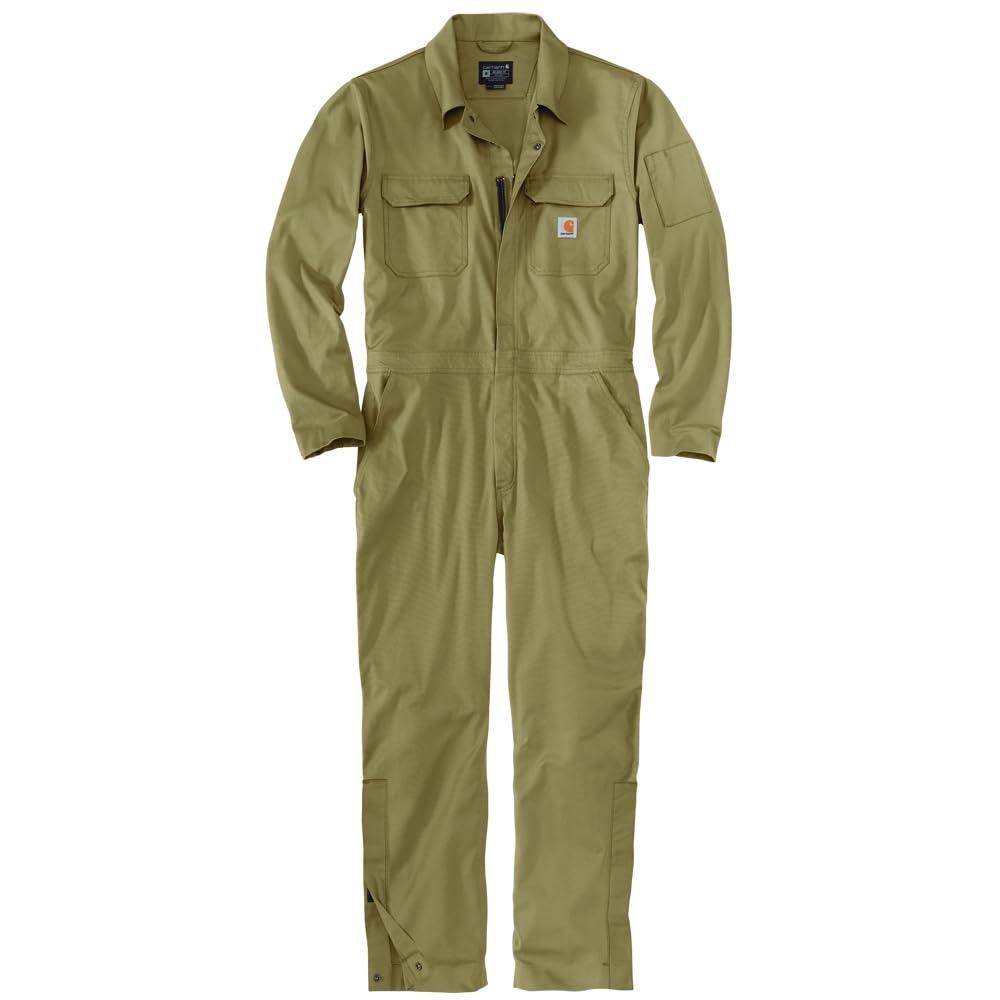
The Carhartt Rigby Coverall is fundamentally different from the insulated options in this guide — it is a summer-weight twill coverall with no built-in liner, designed as a light-duty chore suit rather than a winter warmth piece. The 8-ounce twill fabric is sturdy and comfortable against the skin, making it suitable for dirty work like crawlspace insulation or garage projects where you want full coverage without overheating. The large cuffs with snap closures and oversized leg cuffs accommodate boots easily, though buyers note that the leg cuffs need an additional snap to cinch tighter around thin ankles.
Fit is where the Rigby shines for tall frames — a 6’3″, 195-pound user in Large/Tall reported a perfect fit with room for layering a hoodie underneath without looking baggy. The cut is loose enough to allow full range of motion for crawling under vehicles or reaching overhead, and the material holds up to repeated washing. It is not waterproof and has no thermal insulation, so treating the fabric with a water repellent is necessary if you plan to wear it in snow or rain. For cold weather, it functions best as a shell over a thick insulating layer like a fleece jumpsuit.
The Rigby is the right choice only if you need a durable one-piece coverall for warmer conditions or if you prefer to build your own layering system underneath. If you want a single garment for winter without relying on additional mid-layers, the insulated options earlier in this guide are better suited. For mild winter days in the 30°F to 40°F range with a good base layer, it works, but it won’t replace a properly insulated bib for sub-freezing work.
Why it’s great
- Excellent fit for tall frames with generous length
- Durable twill fabric stands up to dirty work and washing
- Loose cut allows full mobility for crawling and reaching
Good to know
- No insulation — requires heavy layering for cold weather
- Not waterproof without treatment
- Leg cuffs may be too loose for smaller ankles
7. HISEA Men’s Insulated Bib Overalls
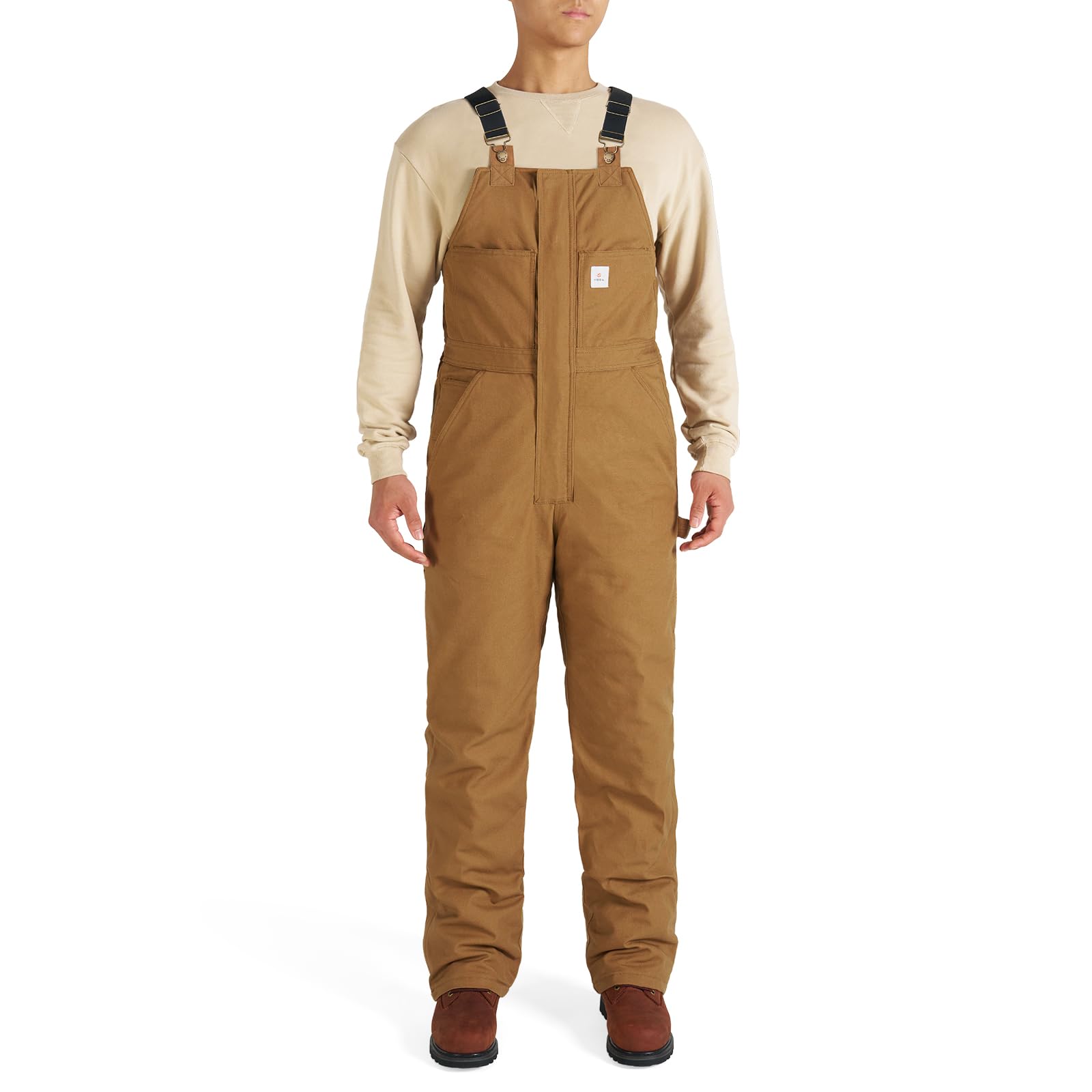
The HISEA Insulated Bib Overalls offer a compelling value proposition: a strong cotton duck canvas outer shell with an insulated liner at a price that undercuts most competitors by a significant margin. The fabric quality exceeds what the price suggests — reviewers consistently describe it as sturdy, with a nice hand feel and construction that doesn’t feel cheap. The insulation provides genuine warmth, and the loose fit accommodates layering underneath without feeling tight in the hips or shoulders, though sizing runs large enough that many users recommend sizing down.
The pocket layout is practical with multiple storage options, and the overall design includes the essential features of more expensive bibs: adjustable suspenders, leg zippers for boot clearance, and a two-way front zipper. The inseam is notably long — a 5’5″ user needed Large Short to avoid drag, and even then it fell well over work boots. The sizing table is unreliable; a 5’10”, 180-pound person with a 32-inch waist ordered Medium based on the chart and found it too tight in the hips, suggesting the chart pushes you into smaller sizes than appropriate.
For anyone who needs an insulated bib for occasional cold-weather use or wants to try the insulated coverall experience without a large upfront investment, the HISEA delivers impressive bang for the buck. The main trade-offs are the unpredictable sizing and slightly less refined zipper and button hardware compared to the Carhartt or Berne. If you get the fit right, it performs on par with bibs costing multiple times more.
Why it’s great
- Cotton duck canvas shell feels sturdy and well-made
- Effective insulation for cold-weather warmth
- Exceptional value compared to premium bib pricing
Good to know
- Size chart is unreliable — almost always need to size up
- Inseam runs long for shorter users
- Zipper and hardware feel less refined than top-tier brands
FAQ
How do I determine the right size for insulated coveralls?
Can duck canvas coveralls be worn in wet snow?
Final Thoughts: The Verdict
For most users, the best coveralls for winter winner is the Carhartt Firm Duck Insulated Bib Overall because it combines extreme durability, reliable insulation, and a cut that allows real mobility for heavy work. If you need a lighter suit for all-day comfort in moderate cold, grab the Berne Heritage Twill Insulated Coverall. And for sub-zero conditions where warmth is the only priority, nothing beats the RefrigiWear ChillBreaker.

Mo Maruf
I created WellFizz to bridge the gap between vague wellness advice and actionable solutions. My mission is simple: to decode the research and give you practical tools you can actually use.
Beyond the data, I am a passionate traveler. I believe that stepping away from the screen to explore new environments is essential for mental clarity and physical vitality.