Our readers keep the lights on and my smoothie glass nicely filled. As an Amazon Associate, I earn from qualifying purchases.
The shooting pain that radiates from your elbow down your forearm the moment you grip a coffee mug, shake a hand, or lift a grocery bag isn’t a mystery—it’s your extensor tendon screaming for a mechanical break. A counterforce brace doesn’t immobilize your elbow like a bulky sleeve; it wraps the muscle belly just below the joint, creating a new fulcrum that absorbs shock and lets your damaged tendon heal mid-activity.
I’m Mohammad Maruf — the founder and writer behind WellFizz. I spent dozens of hours combing through engineering specs, material science details, and user case studies to measure how each strap’s pad geometry, closure system, and compression profile actually alter force vectors on the common extensor tendon during real-world motion.
This guide breaks down the five most effective models available so you can stop guessing and start selecting the best counterforce brace for tennis elbow tailored to your activity level and arm shape.
How To Choose The Best Counterforce Brace For Tennis Elbow
Choosing correctly means matching the brace’s mechanical design to the specific activity that triggers your pain. A strap that works for weekend tennis may fail entirely during sustained grip-intensive work like carpentry or factory assembly. Focus on these three decisive factors.
Pad Geometry & Material Density
The pressure pad is the actual treatment mechanism. Hard circular pads concentrate force into a small area, which works well for pinpoint tendon unloading but can dig into the skin during repetitive motion. Wider oval or contoured pads spread compression across the muscle belly, reducing the risk of circulation restriction and making the brace more tolerable for all-day wear. Neoprene pads retain body heat to boost blood flow, while rigid plastic inserts offer zero give and a more aggressive mechanical stop.
Closure Type & Strap Width
Hook-and-loop closures allow micro-adjustments on the fly, critical when you need to tighten mid-game as the brace settles. Double-ring or D-ring systems provide a more secure, non-slip hold but require a bit more dexterity to tension. Strap width matters: a 2-inch band spreads compression better than a 1-inch band, reducing the risk of creating a secondary pressure point on the brachioradialis muscle. Narrower straps work fine for short-duration sports but can cause discomfort during prolonged wear.
Material Breathability & Weight
All neoprene retains heat, but the liner quality separates a tolerable strap from a sweaty one. Open-cell neoprene with a nylon facing wicks moisture better than closed-cell foam. The brace’s overall weight should stay under 3 ounces—anything heavier shifts the strap during rapid arm motion and creates a nuisance that makes you take it off early. Lightweight construction also keeps the brace invisible under long sleeves, which matters for occupational use.
Quick Comparison
On smaller screens, swipe sideways to see the full table.
| Model | Category | Best For | Key Spec | Amazon |
|---|---|---|---|---|
| MUELLER Tennis Elbow Support | Mid-Range | All-day comfort and therapy | Neoprene blend, 2.88 oz | Amazon |
| BraceAbility Epicondylitis Brace | Mid-Range | Smaller arm profiles | Double Ring closure, 0.5 in pad | Amazon |
| FUTURO Performance Comfort | Budget/Mid-Range | Light activity & typical wear | Breathable fabric, 0.16 oz | Amazon |
| BraceAbility Counterforce Brace | Premium | Maximum tendon unloading | Neoprene pad, 12 in max circumference | Amazon |
| McDavid Tennis Elbow Support | Premium | Heavy lifting & gym work | Contoured neoprene, Hook & Loop | Amazon |
In‑Depth Reviews
1. MUELLER Sports Medicine Tennis Elbow Support Strap
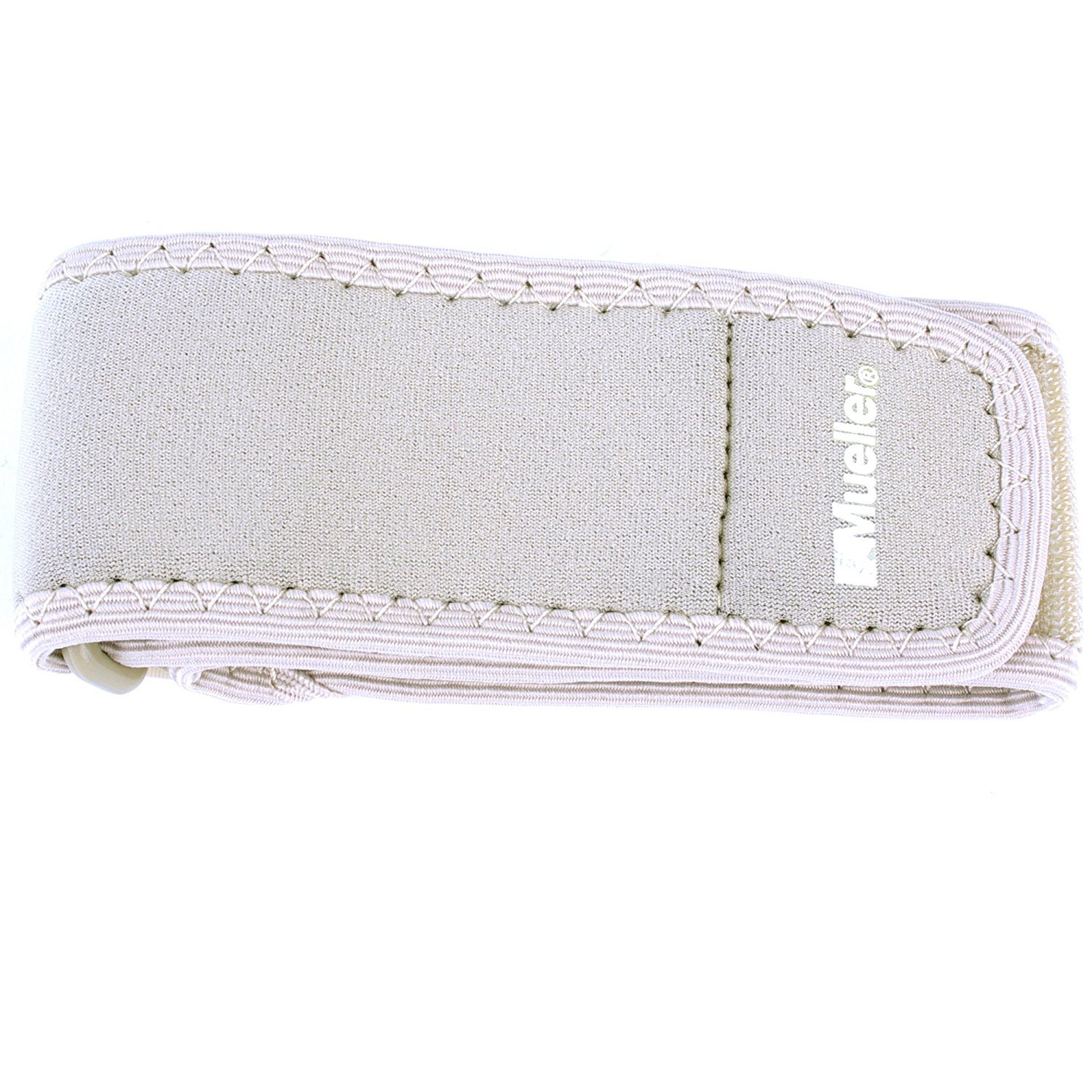
The MUELLER strap delivers the widest usable compression zone among the mid-range picks thanks to its full neoprene band that wraps rather than a hard pressure button. Weighing only 2.88 ounces, it stays in place during rapid arm movements in tennis, pickleball, and even heavy yard work without slipping or bunching. The neoprene blend also retains body heat, which accelerates healing by increasing blood flow to the damaged tendon while you remain active.
Customer reports consistently highlight dramatic pain reduction within three days of wear, with many users noting they could resume computer work, bowling, and household chores without the sharp jolt they had before. The one-size-fits-most design accommodates forearm circumferences between 7 and 14 inches, but its true strength is the flat profile—it fits under a dress shirt without creating a visible bulge, making it viable for office workers who need discreet daytime relief.
One tradeoff: the hook-and-loop closure, while easy to adjust, requires periodic tightening during prolonged activity as the neoprene warms up and relaxes. The strap lacks a dedicated gel or air bladder pad, so if your pain is sharply localized rather than diffuse across the forearm, the next option with a rigid pressure element may suit you better.
Why it’s great
- Lightweight and low-profile design hides under clothing
- Neoprene warmth promotes tendon healing without bulk
- Proven relief for a wide range of grip-based activities
Good to know
- No rigid or gel pressure pad for pinpoint unloading
- Needs occasional re-tightening during sweaty workouts
2. BraceAbility Epicondylitis Brace

The BraceAbility Epicondylitis Brace stands apart because of its embedded compression tube—a raised cylindrical pad that acts like a mechanical pressure point directly over the extensor tendon. This design applies more concentrated unloading than a flat neoprene band, making it especially effective for lateral epicondylitis when the pain is localized to a small, hot spot. The double-ring closure system provides a non-slip hold that stays locked even during sweaty pickleball matches or bowling sessions.
Multiple users with smaller arm circumferences report that this strap fits more snugly than bulkier alternatives, and the metal reinforcement inside the pad allows precise rotational alignment so the pressure targets exactly where the tendon inserts. The strap works for both tennis and golfer’s elbow because you can rotate the pad 180 degrees to address the medial side. The black elastic material is slim enough to wear under a work shirt without hindering movement.
The main downside is surface texture: the outer hook material can feel rough against bare skin after several hours, and some users with sensitive skin report irritation around the Velcro edges. The hard circular pad also feels wooden rather than cushioned, which may be uncomfortable if you need the brace for sedentary desk work rather than active sport.
Why it’s great
- Embedded compression tube delivers pinpoint tendon unloading
- Double-ring closure stays locked during high-motion activities
- Excellent fit for small to medium forearm sizes
Good to know
- Rough outer texture can irritate sensitive skin
- Hard pad may feel uncomfortable during prolonged static wear
3. FUTURO Performance Comfort Elbow Support
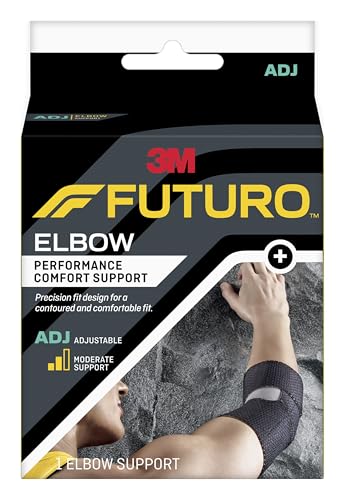
FUTURO’s entry is the lightest option on this list by a wide margin, weighing just 0.16 ounces. It’s not a pure counterforce strap in the traditional sense—the sleeve-like design wraps the entire elbow joint and provides moderate support while allowing air circulation through the breathable fabric. This makes it ideal for users whose primary complaint is general tendinitis stiffness rather than a sharp extensor pain point, especially during sleep or light daily activity.
The adjustable comfort straps let you dial in compression levels without a bulky pressure pad, and the sleeve material wicks moisture well enough to wear through a full workday without sweat pooling. Users report significant pain reduction after wearing it nightly for about a week, though results lean more toward reducing inflammation through gentle restriction rather than mechanically offloading the tendon like a dedicated counterforce band. It works for both medial and lateral epicondylitis because the sleeve applies uniform pressure around the joint.
The biggest compromise is that the sleeve does not provide the targeted mechanical stop that a narrow strap with a hard pad delivers. If you need to grip a heavy tool or swing a racket at full speed, this support will take the edge off but won’t eliminate the pain during high-load activities. The hook-and-loop closure also feels less durable than the ring systems on dedicated counterforce braces.
Why it’s great
- Extremely lightweight and breathable for all-day wear
- Customizable compression via adjustable comfort straps
- Works well for nighttime wear and light daily activity
Good to know
- Lacks a hard pressure pad for targeted tendon unloading
- Not designed for high-load grip sports or heavy lifting
4. BraceAbility Counterforce Brace
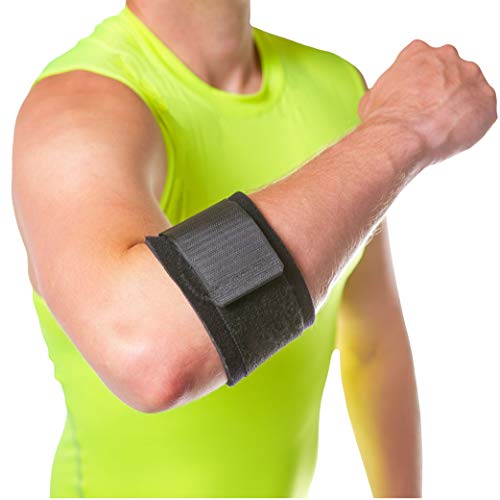
The BraceAbility Counterforce Brace is purpose-built around a rectangular neoprene compression pad that sits directly over the extensor muscle belly, distributing force across a wider area than a cylindrical button while still providing a distinct mechanical stop. The double-ring closure ratchets down evenly, preventing the strap from spinning around the forearm during rotational moves like a tennis serve or a golf swing. The fit range of 10 to 12 inches covers the average adult arm snugly without excess strap tail flapping.
Users with severe tennis elbow who have cycled through multiple braces report that this model holds the tendon tight enough to enable pain-free full swings after two months of consistent use. The neoprene material is soft against the skin, washable, and retains shape after many adjustment cycles. The pad’s placement can be shifted slightly forward or backward on the strap to find the exact pressure point that stops the sharp pain, which is a crucial feature for people whose injury site varies from the textbook location.
The main friction point is the Velcro hook strip—it is extremely aggressive, making it difficult to detach one-handed, especially for users whose elbow pain radiates into the hand and reduces grip strength. Some users resort to sliding the brace off rather than unfastening it, which defeats the purpose of easy on-off access during sports.
Why it’s great
- Wide neoprene pad provides balanced force distribution
- Double-ring closure prevents strap rotation during sports
- Soft, washable material holds up to repeated adjustments
Good to know
- Aggressive hook strip is difficult to detach with weak grip
- Pad coverage may be too small for very large forearms
5. McDavid Tennis Elbow Support
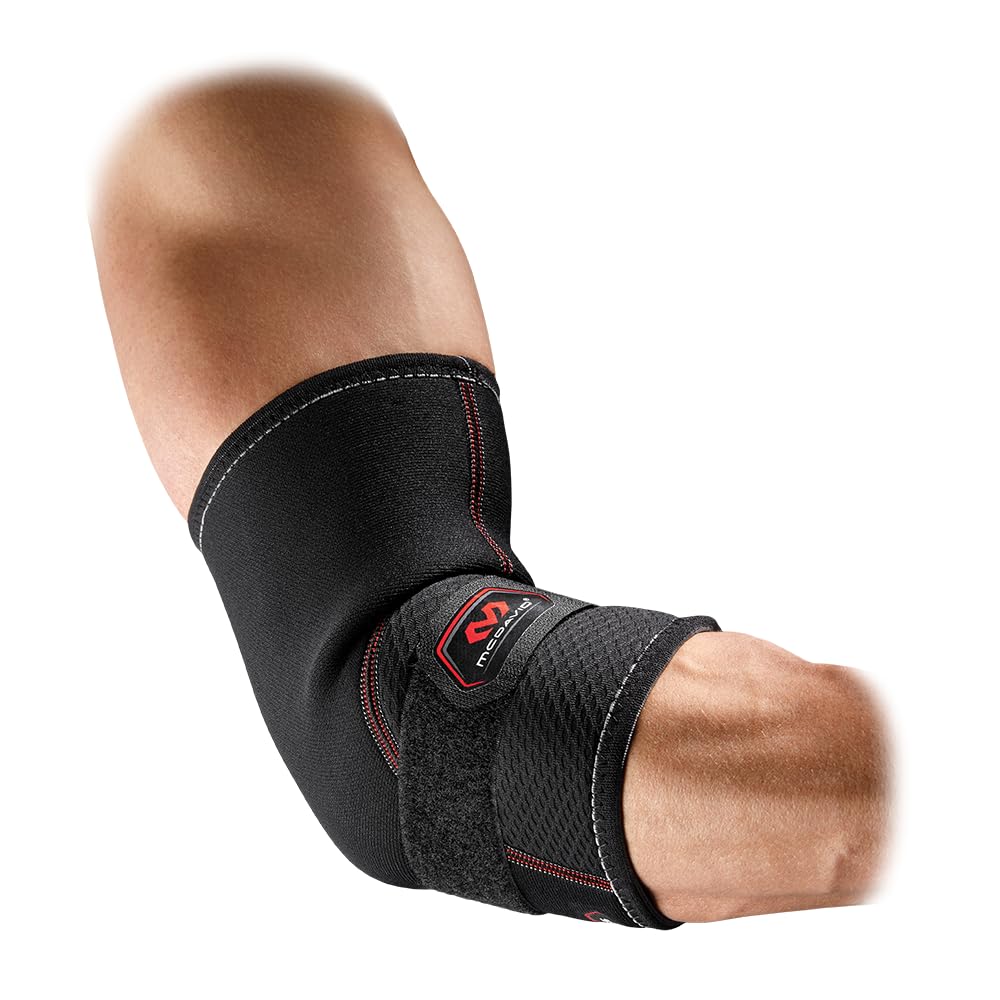
The McDavid support breaks the pattern of simple straps by covering the entire elbow joint with a contoured neoprene sleeve that has an integrated adjustable strap running across the forearm. This dual-layer construction means you get the warmth and proprioceptive feedback of a full sleeve along with the targeted compression of a counterforce band. The strap cinches down independently, allowing you to keep the sleeve loose for comfort while tightening the band specifically over the extensor tendon for heavy lifts.
Weightlifters and bodybuilders gravitate toward this model because the sleeve stays put during bench press, deadlifts, and pull-ups where a loose strap would slide down the arm. The material is thick 5mm neoprene that provides significant support for olecranon bursitis and tendinitis alike, and the adjustable strap lets you dial in more tension for the working set and loosen it between lifts. The contoured cut follows the elbow’s natural flex angle, so it doesn’t bunch behind the joint during curls or overhead presses.
The tradeoff for that support level is bulk and restricted range of motion. The sleeve limits full elbow extension and makes pull-ups and dumbbell curls uncomfortable because the fabric compresses the joint crease. Sizing can also be tricky—users with muscular forearms often need to size up to XL for the sleeve to fit, but then the strap becomes too long. If your activity is primarily day-to-day movement rather than maximal lifts, the sleeve form factor may be more than you need.
Why it’s great
- Full sleeve plus adjustable strap for dual support layers
- Stays anchored during heavy compound lifts and pulling movements
- Thick neoprene provides thermal therapy and joint proprioception
Good to know
- Sleeve restricts full elbow extension and joint movement
- Bulkier profile makes sizing inconsistent for muscular arms
FAQ
Can I wear a counterforce brace while sleeping?
How tight should the counterforce strap be?
What is the difference between a counterforce brace and an elbow sleeve?
Will a counterforce brace cure my tennis elbow?
Final Thoughts: The Verdict
For most users, the best counterforce brace for tennis elbow winner is the MUELLER Tennis Elbow Support because it combines lightweight neoprene comfort with proven pain relief across tennis, pickleball, and daily tasks without a bulky pad. If you need pinpoint unloading for a localized tendon hot spot, grab the BraceAbility Epicondylitis Brace with its embedded compression tube. And for protecting the elbow during heavy gym lifts, nothing beats the McDavid Tennis Elbow Support with its full sleeve and adjustable strap that stays locked through deadlifts and bench press.

Mo Maruf
I created WellFizz to bridge the gap between vague wellness advice and actionable solutions. My mission is simple: to decode the research and give you practical tools you can actually use.
Beyond the data, I am a passionate traveler. I believe that stepping away from the screen to explore new environments is essential for mental clarity and physical vitality.