Our readers keep the lights on and my smoothie glass nicely filled. As an Amazon Associate, I earn from qualifying purchases.
Compression socks promise better circulation and less leg fatigue, but many are made from synthetic blends that feel hot, stiff, and irritating against the skin. Cotton offers breathability and comfort that synthetics simply cannot match, but finding a pair that combines that soft feel with genuine graduated compression is surprisingly difficult.
I’m Mohammad Maruf — the founder and writer behind WellFizz. For this guide, I spent dozens of hours analyzing material blends, compression ratings, customer feedback, and durability data to separate the true performers from the pretenders in the cotton compression category.
Whether you need all-day support for long shifts, travel, or managing mild swelling, the right pair changes everything. This guide breaks down the five best options to help you find the best cotton compression socks for your lifestyle and comfort needs.
How To Choose The Best Cotton Compression Socks
Cotton compression socks sit at the intersection of two demands: the soft, breathable feel of natural fibers and the firm, supportive structure needed for medical-grade leg compression. Getting the balance right requires understanding a few key specifications that define how these socks perform.
Compression Level (mmHg) and Your Daily Needs
The mmHg rating measures the pressure the sock applies to your legs. For cotton compression socks, the most common levels are 15-20 mmHg (mild, perfect for travel, prolonged sitting, or mild fatigue) and 20-30 mmHg (moderate, better for nurses, runners, or significant swelling). A 15-20 mmHg sock will feel snug but comfortable for all-day wear, while 20-30 mmHg provides stronger therapeutic support but may feel tighter, especially in a cotton blend that has less sheer stretch than nylon.
Cotton Blend Ratio and Breathability
Pure cotton lacks the elasticity needed for compression. Look for a blend that combines cotton (for softness and breathability) with nylon, spandex, or copper-infused fibers (for stretch and recovery). A higher cotton percentage generally means better moisture absorption and less skin irritation, but the sock must still snap back to shape after washing. Socks with too little structural fiber will lose compression over time, while those with too much nylon can feel slick or hot.
Fit, Toe Seam, and Band Design
Compression socks fail when they bunch at the ankle, dig into the knee bend, or cause irritation across the top band. Look for a sock with a smooth, flat toe seam to prevent friction on toes. A wide, non-rolling top band prevents the sock from sliding down or cutting into circulation behind the knee. The length should end just below the knee without folding over — especially important for shorter individuals. Some brands offer left/right foot markings for a more anatomic fit, which can significantly improve comfort during long days.
Quick Comparison
On smaller screens, swipe sideways to see the full table.
| Model | Category | Best For | Key Spec | Amazon |
|---|---|---|---|---|
| Dickies Dri-Tech Moisture Control | Casual/Work | Everyday wear and light activity | Moisture-wicking fibers, arch compression | Amazon |
| Physix Gear Compression Socks | Therapeutic | Nurses, athletes, swelling relief | 20-30 mmHg graduated compression | Amazon |
| Bluemaple Copper Compression Socks | Medical/Active | Long shifts and pain relief | Copper-infused, graduated gradient | Amazon |
| LALAPAPA Thick Soft Cotton Compression | Comfort Focus | Pregnancy, diabetes, cold weather | 15-20 mmHg, cushioned cotton sole | Amazon |
| Iseasoo Copper Compression 8-Pack | Value Pack | Weekly rotation, mild compression | 15-20 mmHg, copper fiber blend | Amazon |
In‑Depth Reviews
1. Dickies Men’s Dri-Tech Moisture Control Quarter Socks
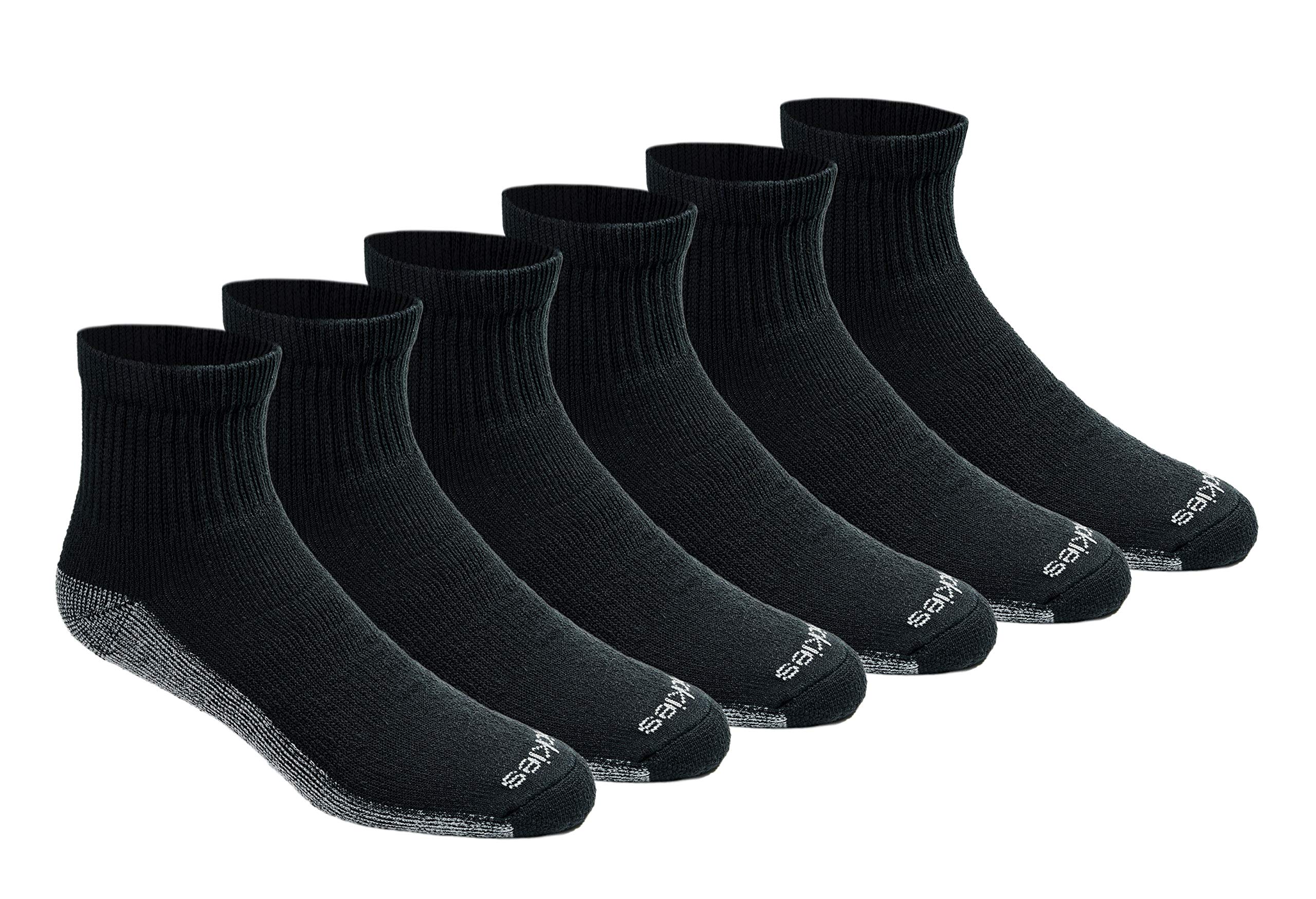
Dickies brings over 95 years of workwear durability into this multipack, which uses Dri-Tech moisture management fibers to keep feet dry through ventilation channels woven into the fabric. The arch compression is designed to hug the foot and provide in-step support without feeling restrictive, while the reciprocated heel and toe construction delivers a secure fit that resists twisting or bunching inside a shoe. This is not a medical-grade compression sock, but the snug arch band and overall fit offer light compression benefits suited for long days on your feet.
Customer reviews consistently highlight the thick yet breathable material, with many reporting that the socks hold their shape and color after months of regular washing. The XXL size accommodates shoe sizes up to 16, making this one of the more inclusive options for larger feet. Users also note the reinforced toe and heel areas resist wear, and the socks stay put without slipping down into the shoe during active use.
These are best described as high-quality work socks with a compression-adjacent fit rather than a dedicated therapeutic compression sock. They lack a graduated mmHg rating, so they won’t provide the same level of circulation support as the other products on this list. However, for anyone who wants breathable, thick socks with mild foot and arch squeeze, this multipack delivers exceptional value and proven durability.
Why it’s great
- Exceptional durability with reinforced toe and heel
- Moisture-wicking ventilation channels keep feet dry
- True-to-size fit even for larger feet (up to size 16)
Good to know
- No graduated mmHg compression rating
- May feel tight on top for those with larger calves
2. Physix Gear Compression Socks 20-30 mmHg

The Physix Gear socks deliver a firm 20-30 mmHg graduated compression that targets the ankle with the highest pressure and gradually decreases up the calf. This is the level most podiatrists recommend for managing moderate swelling, varicose veins, and post-surgery recovery. The fabric blend prioritizes stretch and recovery over pure cotton softness, so the sock retains its shape wear after wear without sagging at the ankle or bunching behind the knee.
Real-world feedback from nurses working 12-hour shifts is overwhelmingly positive, with many noting that the socks eliminated ankle swelling and knee pain associated with an LCL tear and osteoarthritis. The arch support and cushioned footbed add comfort for those who stand all day, while the graduated design prevents the sock from sliding down into the shoe. The floral and patterned designs are woven into the fabric rather than printed, so they don’t fade or peel after washing.
The main drawback is the length — some users with shorter legs find the sock reaches the bend of the knee, which can cause wrinkles at the ankle and deep grooves in the skin. The toe area is also slightly small for wider feet, with the seam covering only the first four toes for some wearers. These trade-offs are common with high-compression socks, but they make sizing accuracy critical before purchase.
Why it’s great
- True 20-30 mmHg graduated compression for therapeutic support
- Holds up to frequent washing without losing shape
- Effective relief for knee pain and ankle swelling
Good to know
- May be too long for shorter individuals
- Toe area runs small for sizes 10-11 wide feet
3. Bluemaple 6 Pack Copper Compression Socks

Bluemaple’s copper-infused compression socks use graduated technology that provides the strongest pressure at the ankle and gradually decreases up the leg to support natural blood flow. The copper fibers are woven throughout the fabric to offer antimicrobial and odor-reducing properties, which is a real benefit for anyone wearing compression socks for long hours or multiple days between washes. The wide top band is designed with 360-degree stretch to prevent rolling or digging into the skin behind the knee, a common complaint with tighter compression garments.
Customers praise the comfort level, with several noting that the socks maintained their compression level even after washing and drying without shrinking to an unusable tightness. Pregnant users found them easy to put on and comfortable for full-day wear, with the graduated gradient preventing the pinching sensation behind the knee that some socks cause. The lightweight spandex blend keeps legs warm without causing excessive sweating, even during long shifts or flights.
The biggest issue reported is an initial chemical smell from the packaging, which resolves after the first wash. Some users with smaller feet (size 6 women’s) found the fit adequate but wished the material was slightly softer — though this is a trade-off inherent to the structural fibers needed for compression. The copper content is not a replacement for medical treatment, but the socks provide noticeable relief for plantar fasciitis pain and general leg fatigue.
Why it’s great
- Copper-infused fibers for odor control and antimicrobial benefits
- Wide top band prevents rolling and skin irritation
- Maintains compression after multiple machine washes
Good to know
- Initial chemical smell requires first wash
- Fabric feels less soft than pure cotton blends
4. Iseasoo Copper Compression Socks 15-20 mmHg 8-Pack

This 8-pack from Iseasoo delivers a full week’s worth of 15-20 mmHg compression socks without the need for daily washing, making it a practical choice for travelers, busy professionals, or anyone who wants a rotation of socks ready to go. The fabric is a blend of 85% nylon, 10% polyester, and 5% copper fiber, which gives it a smooth, lightweight feel that slides easily into shoes without adding bulk. The copper content provides the same antimicrobial and odor-fighting benefits seen in higher-priced competitors.
Users consistently mention immediate relief from knee pain and ankle swelling, with several noting that wearing the socks overnight in combination with leg elevation eliminated existing edema. The 15-20 mmHg range provides noticeable squeeze without feeling restrictive, making these suitable for first-time compression sock users who may find 20-30 mmHg too aggressive. The pull-on closure is easy to manage, and the ribbed material leaves only slight indentation marks rather than deep grooves.
The main downside is the sizing — the foot portion appears designed for a narrower male foot, which can feel snug for women with wider toes. The material is not as breathable as a cotton-dominant blend, so extended use in hot environments may lead to moisture buildup. However, for the price per pair, this set offers reliable compression performance and a variety of color combinations that make them easy to incorporate into daily wear.
Why it’s great
- Excellent value with 8 pairs in the pack
- Effective 15-20 mmHg compression for mild swelling relief
- Copper fiber helps control odor between washes
Good to know
- Foot section is narrow and fits male feet best
- Lower breathability compared to cotton-dominant blends
5. LALAPAPA Thick Soft Cotton Compression Socks 15-20 mmHg
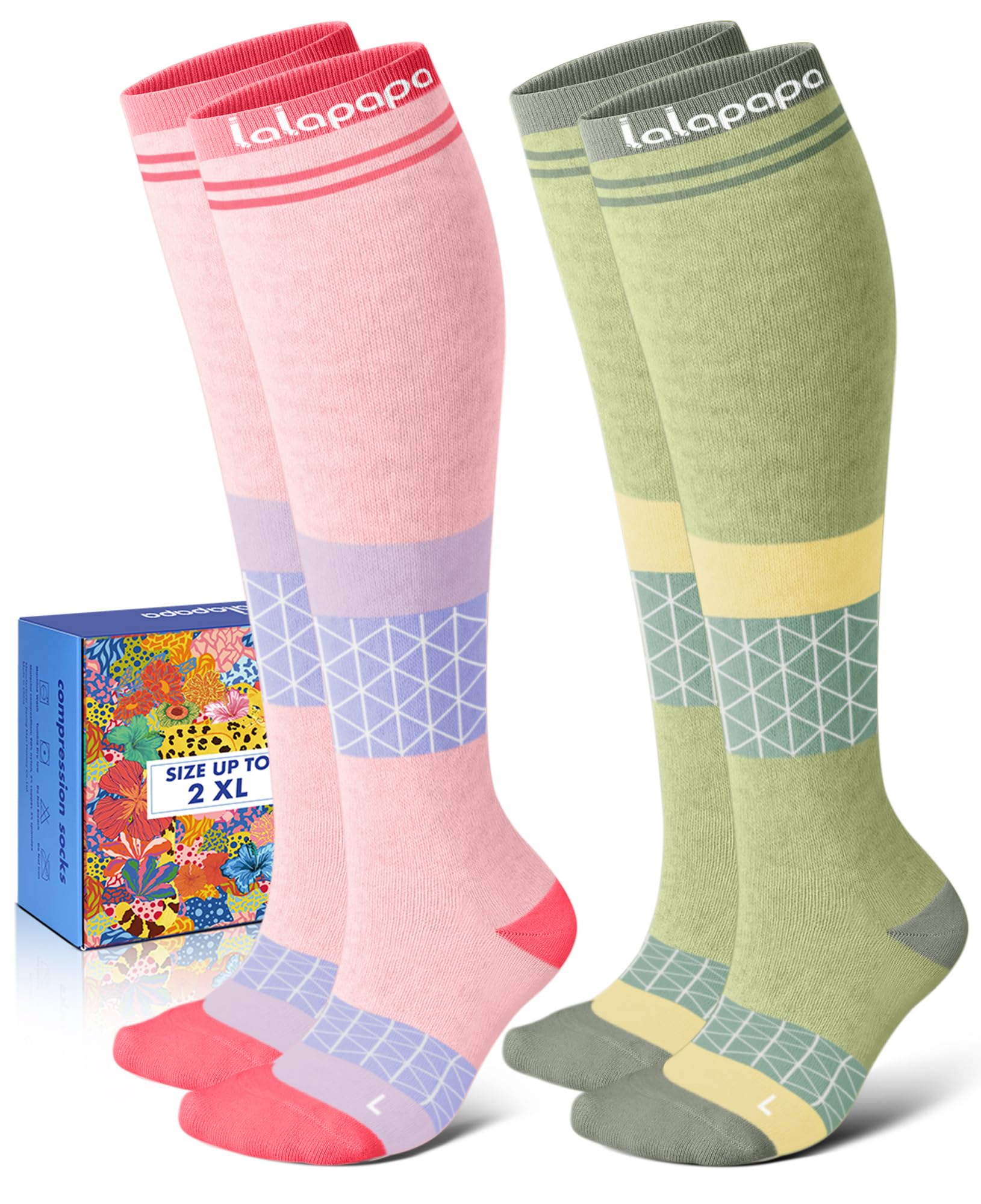
The LALAPAPA socks stand out for their cotton-rich construction, which provides a soft, cushioned feel against the skin that synthetic blends cannot replicate. The 15-20 mmHg compression is mild enough for all-day wear, making these a favorite among pregnant users dealing with swelling, people with diabetes who need gentle support without harsh pressure points, and anyone who hikes or walks in cold weather. The cushioned sole adds extra padding underfoot, which helps reduce fatigue during long standing sessions.
Customer reviews highlight the excellent fit for diabetic feet, with no discomfort around the pinky toe and smooth seams that don’t rub or irritate. The left/right foot markings indicate an anatomic design that improves fit accuracy, and the packaging includes clear size guidance based on calf circumference. The XXL size comfortably fits a women’s size 10-11 wide shoe, and the moisture-wicking properties keep feet dry even during active use in cold weather.
The top band can become uncomfortable after 3-4 hours of wear for some users in the S/M size, especially if sizing is borderline. Some shorter women report that the knee-high length rolls down slightly below the knee, which can create a tight band effect. The lack of a storage bag for travel is a minor inconvenience, but the overall compression quality and cotton softness make these a strong choice for everyday comfort seekers.
Why it’s great
- Cotton-rich blend offers superior softness and breathability
- Cushioned sole adds comfort for all-day standing
- Left/right foot markings for anatomic fit accuracy
Good to know
- Top band may feel tight after extended wear in smaller sizes
- Length can cause rolling at the knee for shorter users
FAQ
Can I wear cotton compression socks all day without skin irritation?
How do I measure my legs for the correct compression sock size?
What is the difference between 15-20 mmHg and 20-30 mmHg for cotton compression socks?
Will cotton compression socks lose their shape after washing?
Final Thoughts: The Verdict
For most users, the best cotton compression socks winner is the Physix Gear Compression Socks because they deliver genuine 20-30 mmHg therapeutic compression with the graduated design needed for real circulation support, all in a durable fabric that holds up to daily wear. If you want the softest, most breathable cotton feel for all-day comfort, grab the LALAPAPA Thick Soft Cotton Compression Socks. And for the best value in a weekly rotation with mild compression, nothing beats the Iseasoo Copper Compression 8-Pack.

Mo Maruf
I created WellFizz to bridge the gap between vague wellness advice and actionable solutions. My mission is simple: to decode the research and give you practical tools you can actually use.
Beyond the data, I am a passionate traveler. I believe that stepping away from the screen to explore new environments is essential for mental clarity and physical vitality.