Lower back pain turns simple tasks—standing at the sink, lifting a grocery bag, or getting out of a chair—into a guarded, painful event. A well-designed corset for lower back pain does more than squeeze; it stabilizes the lumbar spine, reduces muscle strain, and reminds your body to maintain neutral alignment throughout the day.
I’m Mohammad Maruf — the founder and writer behind WellFizz. I’ve spent hundreds of hours analyzing the fit, material science, and bracing architecture of over forty lumbar support designs to build this guide around measurable specs that actually matter for pain relief.
After comparing support bar configurations, compression systems, and breathability data across seven models, here is the definitive breakdown of the best corset for lower back pain on the market right now.
How To Choose The Best Corset For Lower Back Pain
Selecting a lumbar corset that actually reduces pain requires matching your specific condition—whether that is a herniated disc, sciatica, muscle strain, or post-surgery recovery—with the right balance of rigidity, adjustability, and comfort. Here are the key areas to evaluate before committing to a model.
Support Bar Configuration & Material
The number and composition of stays define how much your lower back gets immobilized. For mild to moderate sciatica or general soreness, four to six flexible stays (carbon fiber or thin steel) allow a natural range of motion while providing structure. For severe conditions like spinal stenosis or recovery after a discectomy, a semi-rigid brace with memory-aluminum stays or a bionic decompression plate limits unwanted forward bending by up to 80 percent. The stiffest braces often incorporate a molded back panel that locks the L1–S1 vertebrae in neutral alignment.
Compression & Cinching System
A corset that shifts during the day won’t deliver consistent pain relief. Look for dual adjustable straps or a pulley system (common in premium medical-grade braces) that allows you to ratchet tension evenly across the abdomen and lower back without creating pressure hot spots. Elastic pull-tabs with finger loops make it easier for users with arthritis or limited hand strength to achieve a snug fit independently. The best systems include a secondary compression mode—soothing versus strong pressure—so you can dial support up during heavy lifting and down during desk work.
Breathability & Fabric Construction
Wearing a back support for six to twelve hours a day makes fabric choice critical. Multi-layer mesh with open-hole ventilation (look for 4D knitting or 12-hole air mesh specifications) prevents moisture buildup and keeps skin dry during physical activity. Models made from moisture-wicking, copper-infused fabrics also help control odor. Heavier braces with plastic abdominal plates trade some ventilation for maximum rigidity, so prioritize those only when your condition demands near-total spinal stabilization.
Fit Range & Profile Under Clothing
An effective brace must stay put at your natural waistline. Measure the circumference at navel level—pant size is not a reliable reference. Models that offer extended size ranges (from 25 inches to over 60 inches) with multiple hook-and-loop anchor points accommodate weight fluctuations and allow a custom fit. For all-day wear, a low-profile, ultra-thin design that sits invisibly under shirts or scrubs makes consistent use far more practical than a bulky orthopedic shell that only works over bare skin.
Quick Comparison
On smaller screens, swipe sideways to see the full table.
| Model | Category | Best For | Key Spec | Amazon |
|---|---|---|---|---|
| BraceAbility LSO Decompression Brace | Premium Medical | Post-surgery & severe disc issues | Dual-pulley system with reinforced back panel | Amazon |
| Timtakbo LSO with Decompression Plate | High-Rigidity Brace | Spinal stenosis & post-op mobility | Adjustable 26° arch for lumbar extension | Amazon |
| FEATOL Lower Back Brace | Premium Daily Support | All-day wear at work or home | 5 reinforced stays covering 360° | Amazon |
| TheraCopper Copper Back Brace | Mid-Range Performance | Standing jobs & odd control | Copper-infused moisture-wicking fabric | Amazon |
| SOLOEVER Back Brace for Women | Mid-Range Value | Housework & light lifting | 6 steel bars with 2 springs | Amazon |
| Fitomo Reinforced Back Brace | Mid-Range Lightweight | Active tasks & outdoor work | 4 carbon fiber stays for low weight | Amazon |
| BraceUP Stabilizing Back Brace | Budget-Friendly Classic | Travel & post-injury recovery | 8 firm support stays | Amazon |
In‑Depth Reviews
1. BraceAbility Lumbar Decompression Back Brace
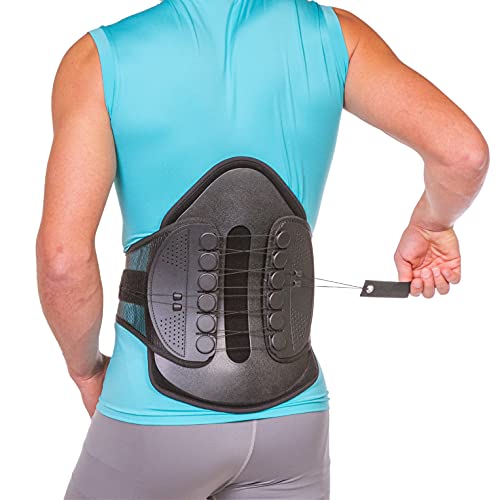
This is the closest thing to a hospital-grade brace available without a prescription. The semi-rigid lumbosacral design uses a dual-pulley system that triples compression force compared to a single-strap belt, making it a primary tool for recovery after discectomy, laminectomy, or spinal fusion. The reinforced back panel wraps around the L1–S1 vertebrae and resists forward flexion—exactly what someone with a fresh disc injury needs to prevent re-injury during daily movement.
The wraparound application does not require twisting or bending, which matters immensely when every spinal rotation triggers pain. Multiple long-term users have reported that this brace outlasts and outperforms the ones they received directly from physical therapy, noting its ability to lock the lower back in neutral even during extended sitting or light yard work. The hook-and-loop closure holds tension reliably without loosening through a full shift.
Some users note that the plastic back panel can feel rigid against hard surfaces when lying down, and very lean individuals may find the brace bulky under fitted clothing. A small number of users reported that the back panel moved slightly during bending, though this was mitigated by tightening the pulley straps further. For severe chronic conditions, this model remains the most capable corset in the roundup.
Why it’s great
- Dual-pulley system provides hospital-level compression that stabilizes post-surgery spines
- Effortless wraparound application eliminates painful twisting during setup
- Multiple users preferred it over the brace issued by their physical therapist
Good to know
- Plastic back panel can crack if pressed against hard floors or chair backs
- Some users found the sizing ran large and recommended measuring carefully
2. Timtakbo LSO Back Brace with Decompression Plate

What separates this brace from every other model in this guide is the adjustable arch that tilts your lumbar spine into 26 degrees of extension. This turns the brace into a passive stretching tool that can realign the lower back before activity and then be flattened for protective support during movement. It is one of the few designs that offers three distinct modes—full correction, stabilization, and basic protection—all in one unit.
The pulley system uses finger tabs that make cinching down the compression straightforward even for users with weaker grip strength. An included adjustable abdominal extension piece with a removable soft plastic plate targets postural support for those dealing with postpartum lumbar pain or abdominal obesity, where typical braces fail to provide enough frontal anchor. Multiple reviews confirm that this brace replaced a post-surgery model at a fraction of the cost.
Sizing is polarizing—some users found the L/XL too tight despite measuring correctly, and the brace can feel bulky under clothing. The abdominal plate piece adds warmth that may feel excessive in hot environments. For those who need both corrective extension and rigid stabilization, this brace offers a versatility that cheaper alternatives cannot match.
Why it’s great
- Three-position lumbar arch provides both corrective stretch and protective support
- Pulley system with finger tabs allows easy self-cinching without straining
- Includes abdominal support panel for postpartum or larger midsections
Good to know
- Some users reported sizing runs smaller than expected
- Bulky design may not fit discreetly under office attire
3. FEATOL Lower Back Brace with 5 Reinforced Stays
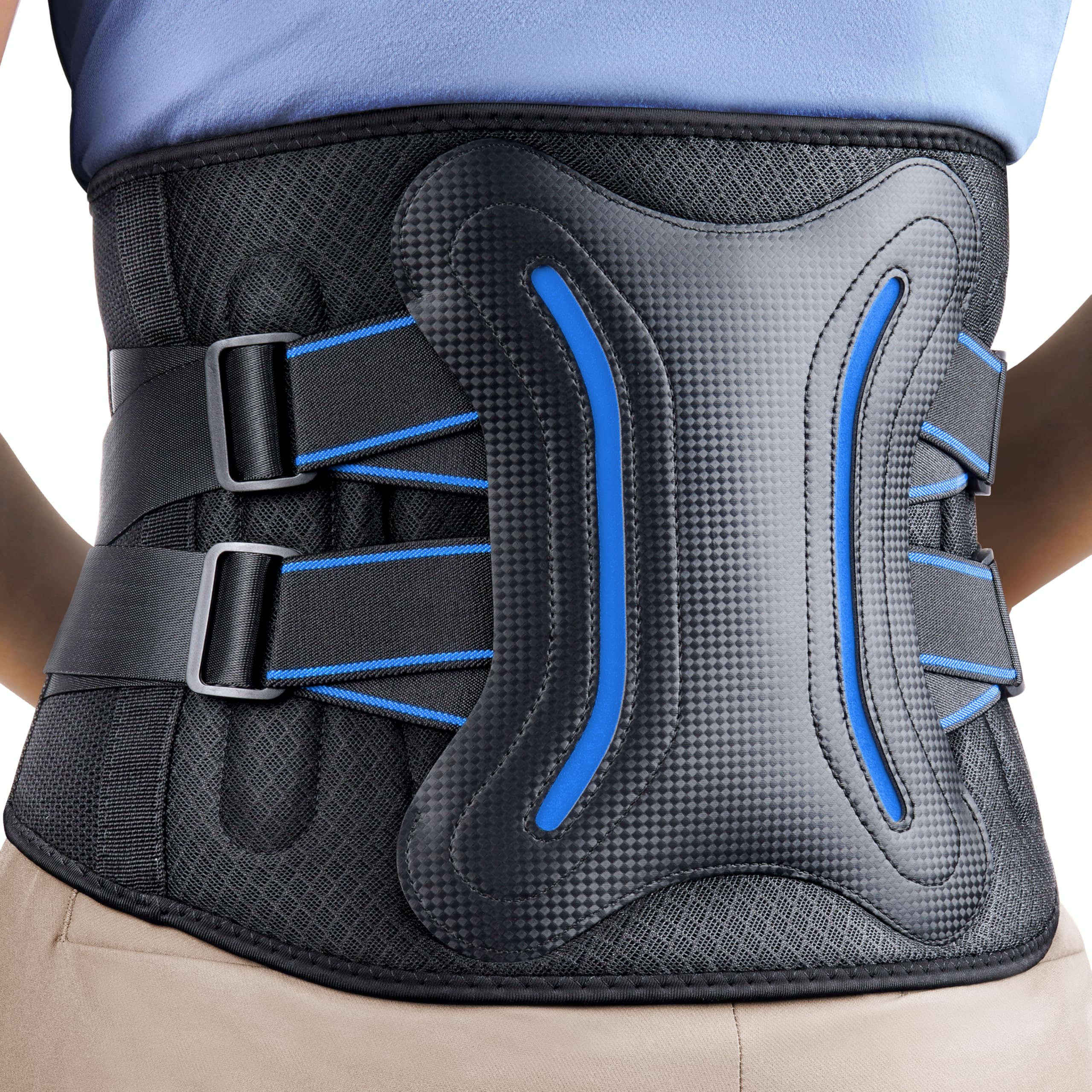
The FEATOL brace delivers 360-degree stabilization by combining three memory-aluminum stays with two rigid support plates, creating a cage-like structure that resists twisting and bending from any angle. This is ideal for users who spend entire shifts on their feet or perform repetitive lifting tasks where the back is stressed from multiple directions. The adjustable straps use finger loops at the ends for quick application, and the low-profile design slides under most work uniforms without obvious bulging.
Users recovering from severe back stenosis and those in their seventies reported that this brace restored confidence during walking and yard work, reducing the fear of sudden nerve pinching that often accompanies degenerative conditions. The elastic material stretches just enough to accommodate breathing while still maintaining firm compression. The strap system includes protective cloth tips over the Velcro that need to be removed before first use—a detail missing from the printed instructions but noted by experienced users.
The lack of a built-in abdominal plate means it offers less anterior support compared to the Timtakbo or BraceAbility models. Some users with very long torsos found the brace sat slightly high, pressing against the lower ribs when seated. For daily wear during moderate activity, the FEATOL strikes a near-perfect balance between rigidity and comfort.
Why it’s great
- Five-stay configuration provides 360° support that prevents twisting and lateral bending
- Finger loops simplify application for users with arthritis or limited hand strength
- Low-profile fit works well under work clothes and scrubs for all-day wear
Good to know
- No front abdominal plate for users who need added core compression
- Protective Velcro covers on straps are not mentioned in the manual
4. TheraCopper Copper Back Brace
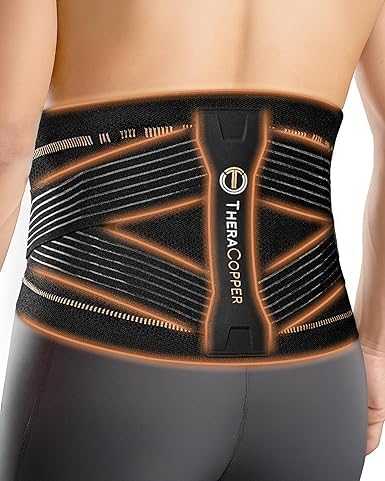
TheraCopper differentiates itself with a copper-infused fabric layer designed to wick moisture, reduce odor, and theoretically support circulation against the skin. Whether or not the copper actively reduces inflammation, the material is lightweight and breathable enough for long shifts—several cashiers and warehouse workers reported wearing it for six to ten hours without heat buildup. The brace uses five flexible supportive bars and dual Velcro straps, offering a moderate compression level suitable for sciatica and general lower back muscle fatigue.
The wider design prevents the edges from rolling up when sitting, a common failure point in narrower belts that dig into the hip flexors. Users who wore it under t-shirts noted that the copper lining contacts the skin directly for maximum effect, though it still functions over a thin base layer. Reviewers consistently praised the build quality, with many saying the brace held up through months of daily use without fraying straps or collapsing stays.
The main complaint involves sizing—multiple users stated the brace runs at least one size small, advising to order up for a comfortable fit. It is also noticeably heavier than the Fitomo or BraceUP models due to the denser copper weave. For someone with mild to moderate back pain who works a standing job, the TheraCopper offers a compelling combination of fabric innovation and everyday utility.
Why it’s great
- Copper-infused fabric resists odor and wicks moisture during long workdays
- Wide cut prevents edge roll and stays comfortable through extended sitting
- Five-bar support provides steady compression for sciatica and muscle strain
Good to know
- Sizing runs small—most buyers recommended ordering one size larger than measured
- Heavier construction compared to mesh-based braces at the same price tier
5. SOLOEVER Back Brace for Women
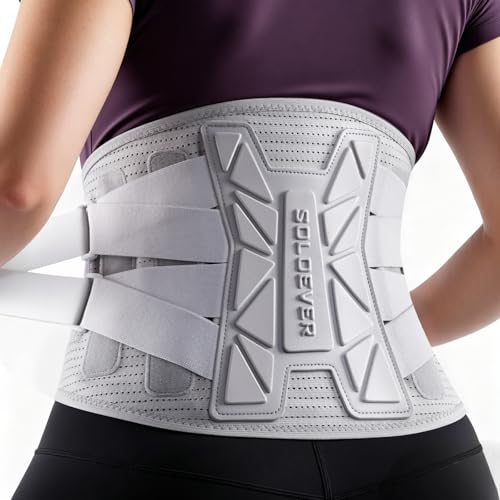
The SOLOEVER brace is engineered specifically for the female form, accounting for waist-to-hip ratio and rib cage clearance to avoid the stomach compression and breast discomfort that unisex braces often cause. Its patented H-shaped back panel integrates six steel bars and two springs to mimic natural core muscle motion, providing dynamic support that responds when you bend, twist, or stand. This makes it an excellent option for women managing herniated discs, sciatica, or arthritis who want support that moves with them rather than against them.
The 4D knitting and 12-hole air mesh produce exceptional breathability—users gardening or doing heavy housework for hours reported no sweat accumulation or heat discomfort. The eight adjustable straps and two compression modes (soothing and strong) let you dial in gentle relief for sitting at a desk or maximum stabilisation for lifting. Multiple reviewers noted that the brace also slims the waistline under clothing, offering a subtle hourglass silhouette that adds confidence alongside pain relief.
Some users with narrower waist-to-hip differences found the brace shifted slightly during high-intensity movement despite the anti-slip interior. The sizing guide uses navel-level measurement, but a few reviewers recommended adding two inches to their measurement for a comfortable fit during long wear. For women seeking a supportive brace that does not compress the abdomen or rib cage, the SOLOEVER is a purpose-built standout.
Why it’s great
- Frame design avoids rib cage compression and accommodates the female waist-to-hip ratio
- Bionic H-shaped panel with six steel bars and springs provides adaptive support for movement
- Breathable 12-hole air mesh keeps skin dry during hours of physical activity
Good to know
- May shift slightly during very high-movement activities despite anti-slip lining
- Some users recommended sizing up by two inches from their navel measurement
6. Fitomo Reinforced Back Brace
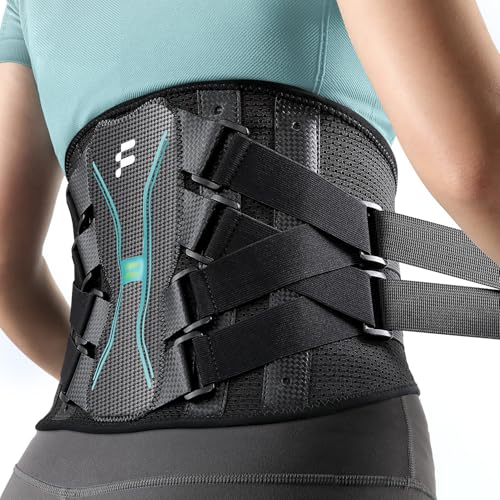
The Fitomo brace is built around four carbon fiber stays that match the strength of aluminum but eliminate the bulk, making it the lightest semi-rigid option in this lineup. The overall weight is under one pound, and the ultra-thin air mesh profile slips invisibly under scrub tops, dress shirts, or athletic wear. A removable 3D lumbar pad boosts targeted reinforcement during demanding tasks and can be taken out for lighter days, giving the user two distinct support levels in a single product.
Healthcare workers and umpires who stand and crouch for hours reported that the brace provided excellent lumbar support without restricting range of motion when bending or twisting. The breathable fabric performed well during summer yard work, and the hook-and-loop closure system felt secure even after repeated repositioning. Reviewers specifically praised the spine insert for encouraging better sitting posture without the rigid pressure that some metal-stay braces create.
During heavy lifting or sustained physical work, the brace can shift slightly as the abdominal pad loses contact with the body—a limitation of the ultra-light design. The sizing chart is accurate, but buyers between measurements should size up because the carbon stays offer less flexibility than steel equivalents. For users who need a lightweight, nearly invisible brace for active daily routines, the Fitomo is an excellent choice.
Why it’s great
- Carbon fiber stays deliver aluminum-level rigidity at half the weight
- Removable lumbar pad lets you switch between light posture support and heavy-duty reinforcement
- Ultra-thin mesh design disappears under fitted clothing for discreet daily wear
Good to know
- Abdominal contact may loosen during sustained heavy lifting or stooping
- Carbon stays are less forgiving than steel for users between standard sizes
7. BraceUP Stabilizing Back Brace
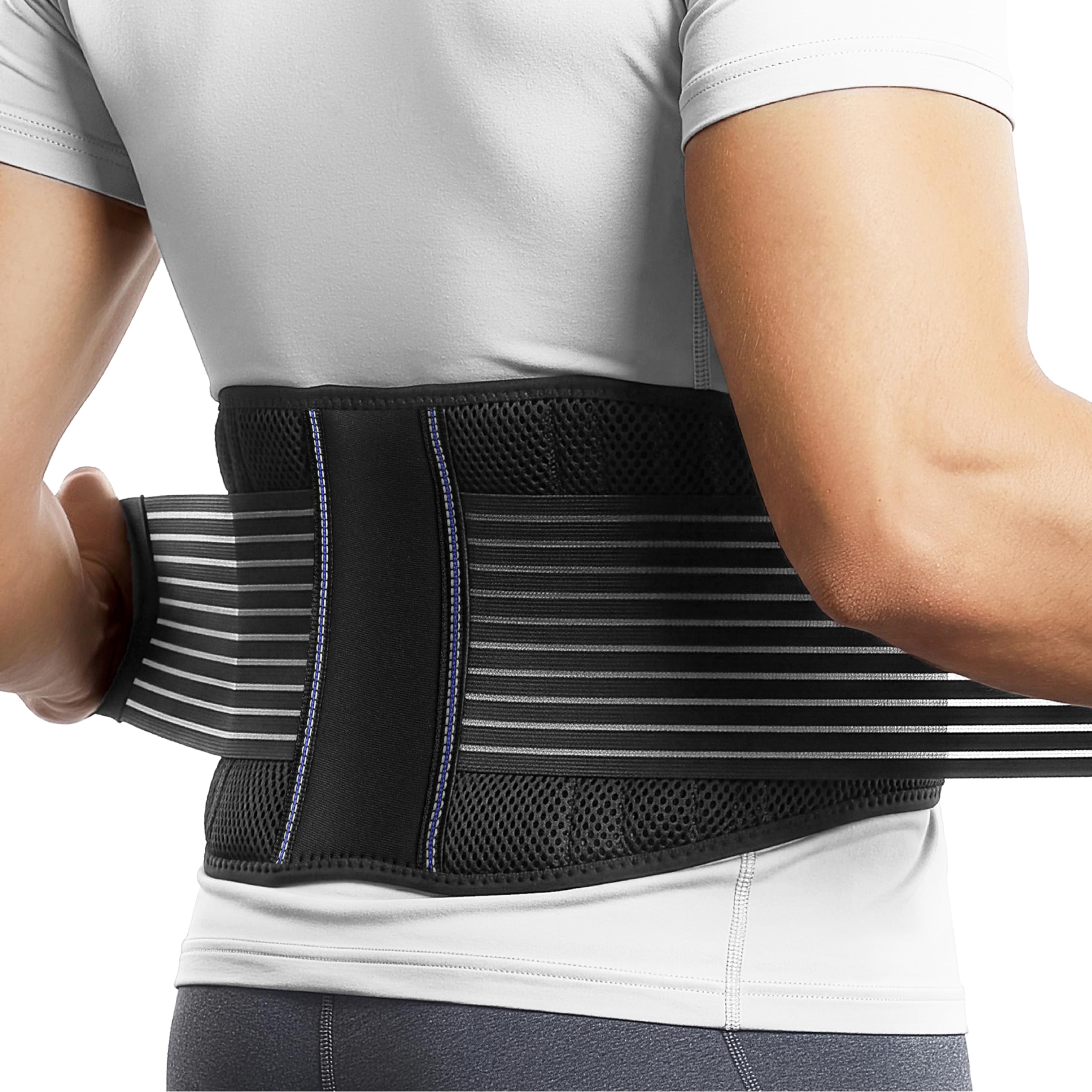
The BraceUP is the most established design in this guide, with a decade of customer feedback confirming its reliability as a straightforward, no-frills lumbar support. Eight firm stays run the length of the belt, providing even distribution of compression across the lower back. The dual adjustable straps allow fast tension modification without removing the brace, and four anti-slip silicone strips on the interior keep the belt locked in place even during exercise or bending.
Users recovering from back surgery or managing chronic sciatica appreciated that the brace offers a middle ground between the ultra-stiff hospital brace and a flimsy cloth belt. It provides enough structure to prevent re-injury during walking and light housework while remaining flexible enough to roll up and pack in a travel bag. The mesh panel material vents heat effectively, and the low-profile anatomical design fits under most clothing without creating visible ridges.
The rubber lining that holds the boning in place can degrade over months of heavy use, as multiple long-term reviewers noted. The brace also lacks a top-anchoring belt, meaning you must completely rethread the straps if you loosen them between uses. For the price-conscious buyer who needs a proven, reliable support system for moderate pain conditions, the BraceUP delivers consistent performance.
Why it’s great
- Eight firm stays distribute compression evenly for consistent relief across the lumbar spine
- Four anti-slip silicone straps keep the brace from riding up during movement
- Proven design with a decade of positive feedback from post-surgery and sciatica users
Good to know
- Rubber lining holding the boning can fail after several months of daily use
- Straps require full rethreading when loosened, adding setup time between sessions
FAQ
How tight should a lower back corset feel when worn correctly?
Can I sleep in a back brace designed for lower back pain?
Does a back brace weaken your back muscles over time?
How do I clean a back brace without damaging the stays or fabric?
What is the difference between a flexible back brace and a semi-rigid back brace?
Final Thoughts: The Verdict
For most users, the corset for lower back pain winner is the FEATOL Lower Back Brace because its five-stay 360° support system and finger-loop design provide the ideal balance of rigidity, breathability, and all-day comfort for both work and daily activity. If you need maximum spinal immobilization after surgery or for severe disc issues, grab the BraceAbility LSO Decompression Brace. And for an ultra-light, nearly invisible option that disappears under clothes while still offering targeted reinforcement, nothing beats the Fitomo Reinforced Back Brace.

Mo Maruf
I created WellFizz to bridge the gap between vague wellness advice and actionable solutions. My mission is simple: to decode the research and give you practical tools you can actually use.
Beyond the data, I am a passionate traveler. I believe that stepping away from the screen to explore new environments is essential for mental clarity and physical vitality.