Our readers keep the lights on and my smoothie glass nicely filled. As an Amazon Associate, I earn from qualifying purchases.
A cork yoga mat promises a non-slip surface that actually gets grippier as you sweat, but finding one that delivers that promise without cracking, creasing, or smelling like a damp forest floor requires sorting through real specifications. The natural cork top layer offers antimicrobial properties and a tactile grip that foam mats simply cannot match, yet the base material, thickness, and weight determine whether your mat stays flat, supports your joints, and travels well.
I’m Mohammad Maruf — the founder and writer behind WellFizz. I’ve spent countless hours analyzing the construction details, customer durability reports, and material science behind cork yoga mats to separate the genuinely functional options from those that only look good in product photography.
This guide compares seven models across real-world metrics like thickness, weight, base composition, and long-term wear so you can confidently pick the best cork yoga mat for your practice.
How To Choose The Best Cork Yoga Mat
Choosing a cork yoga mat involves more than just picking a color. The interaction between the cork top layer and the base material dictates grip, durability, and how the mat feels underfoot. Beginners often assume all cork mats are equally non-slip when wet, but the truth depends on the cork’s density and the base’s ability to stay put on the floor. You also need to weigh portability against cushioning — a heavier mat stays flat but requires more effort to carry to class.
Base Material: TPE vs. Natural Rubber
The base layer determines the mat’s weight, grip on the floor, and environmental footprint. TPE (thermoplastic elastomer) bases are lighter, typically under 3 pounds, and are recyclable, making them ideal for travelers. Natural rubber bases are heavier, often exceeding 6 pounds, but provide superior floor-stick and a more grounded feel. Rubber bases also last longer but may have a noticeable new-rubber smell initially and are not suitable for those with latex allergies.
Thickness and Cushioning
Cork yoga mats typically range from 5mm to 7mm. A 5mm mat offers a firmer connection to the floor, preferred by advanced practitioners for balance in standing poses, but provides less padding for knees and wrists. A 7mm mat delivers more shock absorption for joint-sensitive practices like hot yoga or Pilates, though it rolls up slightly bulkier. A thickness below 5mm is not recommended for floor work, as the cork layer alone cannot compensate for insufficient base cushioning.
Weight and Portability
If you carry your mat to a studio, weight becomes a daily consideration. Cork mats with TPE bases weigh between 2 and 3 pounds, making them easy to sling over a shoulder with the included strap. Rubber-based mats can weigh 5 to 8 pounds, offering stability at the cost of portability. Consider your commute — a heavier mat works fine for home practice, while a lighter mat suits the traveling yogi.
Alignment Lines and Aesthetic
Alignment lines printed on the cork surface help beginners position hands and feet correctly, but the quality of the printing matters. Low-quality prints may fade or wear off within months. Some mats embed the lines into the pattern so they remain visible without distracting from the natural cork look. If you prefer a minimalist appearance, choose a mat without printed guides, as cork’s natural grain already offers subtle visual cues.
Quick Comparison
On smaller screens, swipe sideways to see the full table.
| Model | Category | Best For | Key Spec | Amazon |
|---|---|---|---|---|
| YOGA DESIGN LAB Cork Mat | Premium | Hot yoga & studio use | 70″ x 24″ / 4mm / Natural rubber base | Amazon |
| Y O GAYO Premium Cork Mat | Premium | Extra space & stability | 72″ x 26″ / 5mm / Heavy rubber base | Amazon |
| EKE Cork Mat with Body Lines | Mid-Range | Alignment & value | 72″ x 25.6″ / 7mm / TPE base | Amazon |
| StrongTek Eco-Friendly Cork Mat | Mid-Range | Lightweight & cushioned travel | 72″ x 24″ / 7mm / TPE base | Amazon |
| GURUS Sweat Proof Cork Mat | Mid-Range | Travel & durability | 72″ x 25″ / 5mm / Natural rubber base | Amazon |
| Gaiam Cork Exercise Mat | Mid-Range | Budget-friendly durability | 68″ x 24″ / 5mm / TPE base | Amazon |
| Numat Cork Yoga Mat 6mm | Entry-Level | Budget entry & beginners | 72″ x 24″ / 6mm / TPE base | Amazon |
In‑Depth Reviews
1. YOGA DESIGN LAB The Cork Yoga Mat

The YOGA DESIGN LAB mat combines a 100% natural rubber base with a renewable cork top layer, creating a luxury feel that serious hot yoga practitioners appreciate. The rubber bottom grips the floor tenaciously, preventing creeping during vigorous flows, while the cork surface becomes tackier as moisture increases. At roughly 3 pounds and 4mm thickness, it prioritizes portability and floor feedback over plush cushioning, making it a favorite for those who want a direct connection to the ground.
Customer feedback consistently praises the mat’s ability to hold sweaty hands without requiring a towel, though a small number of users note that the cork surface takes a few sessions to fully break in and reach peak tackiness. The printed Mandala design remains intact after months of use, and the mat rolls out flat immediately with no curling at the edges. The included carrying strap complements its travel-friendly weight, but the 70-inch length may feel slightly short for taller practitioners in extended poses.
This mat is not for those needing extra knee padding for floor work. The 4mm thickness is on the thinner side, and users with sensitive joints should consider pairing it with a knee cushion or looking at thicker options. The natural rubber base has a distinct smell during the first week, though it dissipates with airing. For studio-quality grip in a lightweight package, this mat sets a high standard.
Why it’s great
- Excellent wet grip improves with sweat for hot yoga
- Lightweight and easy to carry with included strap
- Natural rubber base stays flat and unmoving on any floor
Good to know
- 4mm thickness offers minimal cushioning for knees
- Initial break-in period needed for tackiness
- Rubber smell may linger for first week
2. Y O GAYO Premium Yoga Cork Mat

The Y O GAYO mat stands out with its 26-inch width, offering 2 inches more space than standard mats — a meaningful advantage for broad-shouldered practitioners or those who prefer a wider stance in standing poses. The cork top is paired with a dense natural rubber base that weighs about 8.4 pounds, giving it a planted, stable feel that resists bunching even during dynamic vinyasa transitions. The 5mm thickness provides a middle-ground cushion that supports joints without sacrificing balance.
Users report that the mat lays flat immediately and maintains its shape without curling, a common issue with thinner cork mats. The subtle alignment lines printed on the cork surface offer guidance without dominating the natural aesthetic, and the cork develops a soft, grippy texture over time. The included nylon strap is sturdy, but the mat’s weight makes it less ideal for daily commuting — it is better suited for home practice or studio use where you carry it a short distance.
A small number of users note that the mat’s heavy weight can be a drawback for storage or travel, and a few report that the ends remain slightly curled after several weeks of use. The natural rubber base also carries a “new car” smell that fades over a week or two. For practitioners who prioritize stability and extra surface area over portability, this mat delivers a premium, grounded experience.
Why it’s great
- Wider than standard mats for more comfortable positioning
- Heavy rubber base stays put without slipping
- Subtle alignment lines aid positioning without distraction
Good to know
- Weighs over 8 pounds, not ideal for frequent travel
- Some units may have initial edge curling
- Rubber smell needs time to air out
3. EKE Cork Yoga Mat with Body Lines
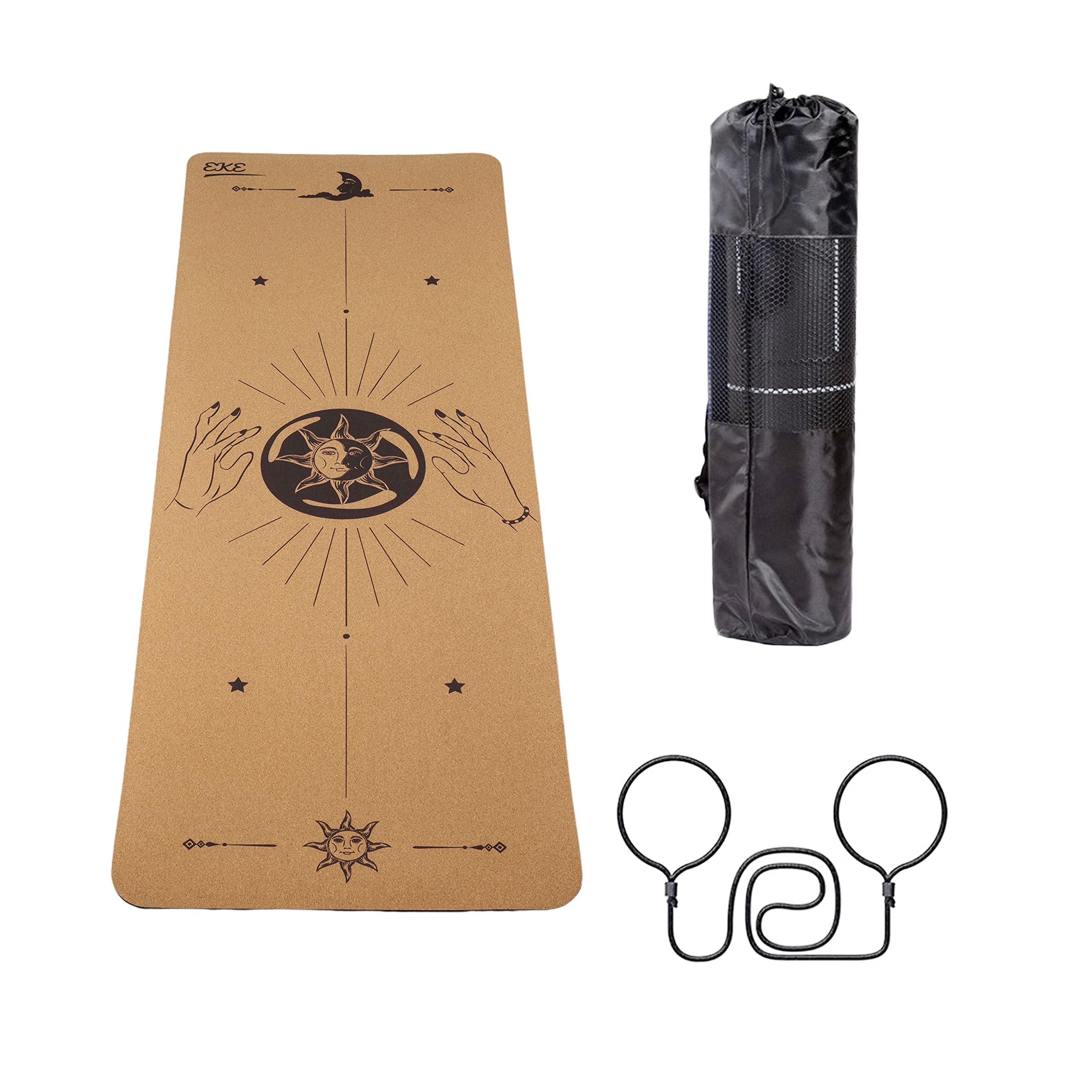
The EKE cork mat combines a thick 7mm TPE base with a generous 25.6-inch width and hidden alignment lines themed around sun and moon motifs. The extra thickness provides noticeable cushioning for knees and wrists, making it a strong contender for those with joint sensitivities. The cork surface grips well when damp, and the TPE bottom is lightweight enough — around 2.8 pounds — to carry easily with the included strap and bag.
The alignment lines are a thoughtful design touch: they integrate into the pattern so they are visible when you need them but do not clash with the natural cork look. Customer reviews highlight the mat’s excellent value for money, with many noting it performs comparably to mats costing significantly more. The mat rolls out flat and stays in place on hardwood and tile, though a few users mention that the cork surface can feel slightly slippery during initial use before breaking in.
Durability reports are mixed — while many users enjoy months of daily hot yoga without issues, a small number experienced bubbling or delamination after extended use. The seller’s customer service appears responsive, offering replacements for defective units. For yogis seeking a cushioned, feature-rich mat at a mid-range price point, the EKE delivers strong performance with a few caveats around long-term construction consistency.
Why it’s great
- Thick 7mm cushioning supports joints during floor work
- Hidden alignment lines are functional and attractive
- Lightweight with included bag and strap for easy transport
Good to know
- Cork may feel slippery before break-in
- Occasional quality control issues reported
- TPE base less durable than natural rubber long-term
4. StrongTek Eco-Friendly Cork Yoga Mat

StrongTek’s cork mat combines a 7mm thickness with a featherlight 2.2-pound weight, making it one of the most portable cushioned cork mats on the market. The TPE base provides decent shock absorption without the heft of rubber, and the cork top layer offers a smooth, slightly textured surface that grips better with moisture. The 72-by-24-inch dimensions provide ample space, and the included carry strap makes rolling up and heading to a studio effortless.
Users consistently note the lack of chemical smell out of the box — a common complaint with rubber-based mats — and appreciate the non-toxic construction. The mat stays put on carpet and hardwood alike without sliding, and the cork surface does not attract pet hair as aggressively as standard foam mats, according to several pet-owner reviews. The 7mm thickness is enough to cushion knees during low-lunge poses and kneeling stretches without feeling unstable.
A small caveat: the cork surface may show scratch marks from pets or fingernails over time, though this does not affect function. The mat should be cleaned with a damp cloth only — alcohol-based sprays can damage the cork finish. For practitioners who prioritize lightweight portability and joint-friendly thickness, the StrongTek mat punches well above its weight class.
Why it’s great
- Exceptionally light for a 7mm thick mat
- No chemical smell out of the box
- Cork surface resists pet hair compared to regular mats
Good to know
- Cork can scratch from pets or fingernails
- Avoid alcohol-based cleaners on the cork
- TPE base may wear faster than rubber alternatives
5. GURUS Sweat Proof Durable Cork Yoga Mat

The GURUS cork mat is built for heavy sweaters and hot yoga enthusiasts. Its natural rubber base provides a firm, non-slip foundation on the floor, while the cork surface leverages its waxy structure to become more grippy as moisture increases. The 72-by-25-inch dimensions offer extra width without feeling oversized, and the 5mm thickness strikes a balance between cushioning and ground feel that advanced practitioners often prefer.
Customer feedback from hot yoga practitioners practicing at 105°F with high humidity confirms that the mat remains non-slip throughout class, dries within minutes after use, and does not absorb sweat odors even after months of daily practice. The cork surface is smooth but not slippery, requiring only a brief warm-up or light mist to reach peak tackiness. At around 1.5 pounds, it is also remarkably lightweight for a cork mat with a natural rubber base, making it a top choice for traveling yogis.
Some users report minor initial indentations from tight rolling that flatten out after a few sessions, and the smooth cork may feel slightly slick for those practicing gentle, non-sweaty styles like yin yoga. The mat’s 3-month guarantee adds peace of mind, and many users report it outlasting thicker, more expensive mats by years. For those whose practice generates serious heat, this mat delivers consistent, reliable grip.
Why it’s great
- Exceptional wet grip ideal for hot yoga
- Lightweight and easy to carry anywhere
- Does not absorb sweat or develop odors
Good to know
- May feel slick for non-sweaty or yin yoga styles
- Initial indentations from tight rolling
- Natural rubber base may not suit latex allergies
6. Gaiam Cork Exercise Mat

Gaiam is a well-known name in the yoga mat space, and their cork exercise mat offers a reliable entry point for those curious about cork without a large investment. The 5mm TPE base keeps the mat lightweight at about 1.8 pounds, and the cork top layer includes a printed design that adds visual interest. The mat measures 68 by 24 inches, which is slightly shorter than the 72-inch standard — something taller practitioners should note.
Users who have owned this mat for multiple years report that the cork surface holds up well under regular use, resisting odors and maintaining its grip. The moisture-reactive cork becomes softer and easier to grip when damp, making it functional for warm yoga classes. However, the 5mm thickness offers minimal cushioning for joints, and several reviews mention that the mat develops creases if rolled too tightly for storage, which can become permanent over time.
For the price point, the Gaiam mat delivers consistent quality from a brand with established customer support. The main trade-offs are the shorter length, thinner padding, and tendency to crease, which may push dedicated practitioners toward a thicker or longer option. For occasional use or beginners testing the cork mat experience, this is a solid, low-risk choice.
Why it’s great
- Trusted brand with proven long-term durability
- Cork grip improves with moisture for warm sessions
- Lightweight and easy to transport
Good to know
- 68-inch length is shorter than standard mats
- Prone to creasing when rolled tightly
- 5mm thickness provides limited joint cushioning
7. Numat Cork Yoga Mat 6mm

The Numat cork mat is designed with beginners in mind, offering a 6mm thickness that provides noticeable cushioning without feeling unstable. The cork top layer is paired with a TPE base, keeping the weight around 2 pounds for easy portability. Printed alignment lines for hand and foot placement make this mat especially useful for those learning proper positioning in standing poses and seated stretches.
Customer reviews note that the mat’s double-layer grip system — cork on top and TPE on bottom — works well for hot yoga and Pilates, with the cork becoming tackier as the session heats up. The mat rolls out flat and includes a black carrying bag with a strap for storage.
The main limitation is the 24-inch width, which is standard but may feel narrow for those used to extra-wide options. Some users also mention that the cork surface has a subtle texture that takes a session or two to get used to. For beginners seeking an affordable cork mat with clear guidance lines and ample cushioning, the Numat delivers a well-rounded package.
Why it’s great
- Printed alignment lines help beginners learn posture
- 6mm thickness offers good cushioning for the price
- Lightweight with included carrying bag
Good to know
- Standard 24-inch width may feel narrow
- Cork texture requires brief adaptation period
- TPE base less durable than rubber alternatives
FAQ
How do I clean and maintain a cork yoga mat?
Why does my cork mat feel slippery at first?
Can I use a cork yoga mat for hot yoga?
How long does a cork yoga mat typically last?
How does cork compare to PVC and TPE in terms of eco-friendliness?
Final Thoughts: The Verdict
For most users, the best cork yoga mat winner is the YOGA DESIGN LAB The Cork Yoga Mat because it combines premium natural rubber base grip with a lightweight profile and a cork surface that truly performs in hot, sweaty conditions. If you want extra width and stability for a grounded home practice, grab the Y O GAYO Premium Cork Mat. And for the best blend of cushioning, alignment guidance, and travel-friendly weight at a mid-range price, nothing beats the EKE Cork Yoga Mat with Body Lines.

Mo Maruf
I created WellFizz to bridge the gap between vague wellness advice and actionable solutions. My mission is simple: to decode the research and give you practical tools you can actually use.
Beyond the data, I am a passionate traveler. I believe that stepping away from the screen to explore new environments is essential for mental clarity and physical vitality.