Our readers keep the lights on and my smoothie glass nicely filled. As an Amazon Associate, I earn from qualifying purchases.
A stable, powerful core is the foundation of every strong lift, explosive run, and pain-free day. Yet the equipment aisle is cluttered with gimmicks that promise six-pack abs but deliver little more than floor space wasted. The buying decision narrows to a few proven categories — stability balls, ab rollers, weight benches, and dedicated core machines — each solving a different piece of the puzzle: spinal stability, rotational strength, anti-extension control, or loaded flexion.
I’m Mohammad Maruf — the founder and writer behind WellFizz. My research process for this guide cross-referenced real consumer stress tests, material composition, weight ratings, and assembly complexity across seven sharply different core tools to separate the genuine builders from the shelf-dust collectors.
A stability ball builds bracing endurance; an ab roller trains spinal control under load; a folding bench unlocks incline crunches and leg raises. This guide evaluates each contender for durability, real-world stability, and how well it matches your current strength level so you can confidently choose the best core workout equipment for your home or gym setup.
How To Choose The Best Core Workout Equipment
Core training equipment falls into two broad camps: free-stability tools (balls, rollers) that challenge your body’s natural bracing reflex, and loaded-stability tools (benches, hydraulic trainers) that add external resistance. Knowing which camp fits your current training phase is the first decision.
Stability vs. Load — Two Paths to a Strong Core
A stability ball forces your deep abdominal muscles to fire continuously just to keep you upright — excellent for developing endurance and proprioception. An ab roller shifts the demand to anti-extension strength (resisting spinal collapse under movement). Weight benches and hydraulic trainers let you add progressive overload through external resistance, which is essential once bodyweight moves stop feeling challenging. The best home setup combines at least one tool from each category.
Build Quality That Matches Your Body Weight and Intensity
For stability balls, look for anti-burst PVC construction rated above your body weight by a comfortable margin — a 55 cm ball supports users under 5’7″ generally, but the material thickness and valve quality matter more for long-term air retention. With ab rollers, the wheel width and steel shaft gauge determine wobble control; a single narrow wheel demands much more balance than a dual 3.2-inch wide wheel. For benches, the steel frame thickness, triangular bracing, and leg base width predict real stability more accurately than the claimed max capacity.
Adjustability and Storage — The Home Gym Reality
Core equipment that can’t be adjusted to different body sizes or folded away becomes a space-wasting obstacle. A weight bench needs at least three backrest positions (flat, incline, decline) to serve compound lifts and isolation moves equally. Ab trainers with adjustable height settings accommodate beginners and advanced users on the same frame. If you live in a small space, confirm the folded footprint — a bench that slides under a bed or stands in a closet is far more likely to be used consistently than one that demands a dedicated corner.
Quick Comparison
On smaller screens, swipe sideways to see the full table.
| Model | Category | Best For | Key Spec | Amazon |
|---|---|---|---|---|
| MERACH Ab Machine | Dedicated Core Machine | Controlled, variable-angle core isolation | Split-track / 440-lb load capacity | Amazon |
| MAIDOMA 8-IN-1 Bench Set | Multi-Function Bench | Full-body strength with leg developer and squat rack | 1500-lb capacity / Foldable | Amazon |
| FitinOne Folding Bench | Compact Weight Bench | Space-saving incline/flat/decline pressing | 660-lb capacity / 3-sec fold | Amazon |
| WAKISA 3-in-1 Twister Arm Trainer | Hydraulic Core + Arms | Joint-friendly resistance with ab roller mode | 15 resistance levels / 22-440 lbs | Amazon |
| DMoose Ab Roller with Elbow Support | Dual-Wheel Ab Roller | Anti-extension core training with knee pads | 3.2″ dual wheels / 440-lb steel core | Amazon |
| OPPSDECOR Folding Weight Bench | Entry-Level Bench | Budget-friendly incline/decline pressing | 660-lb capacity / 8 backrest positions | Amazon |
| GoFit Stability 65cm Ball | Stability Ball | Bracing endurance, yoga, and desk-posture | 55 cm diameter / Anti-burst PVC | Amazon |
In‑Depth Reviews
1. MERACH Ab Machine
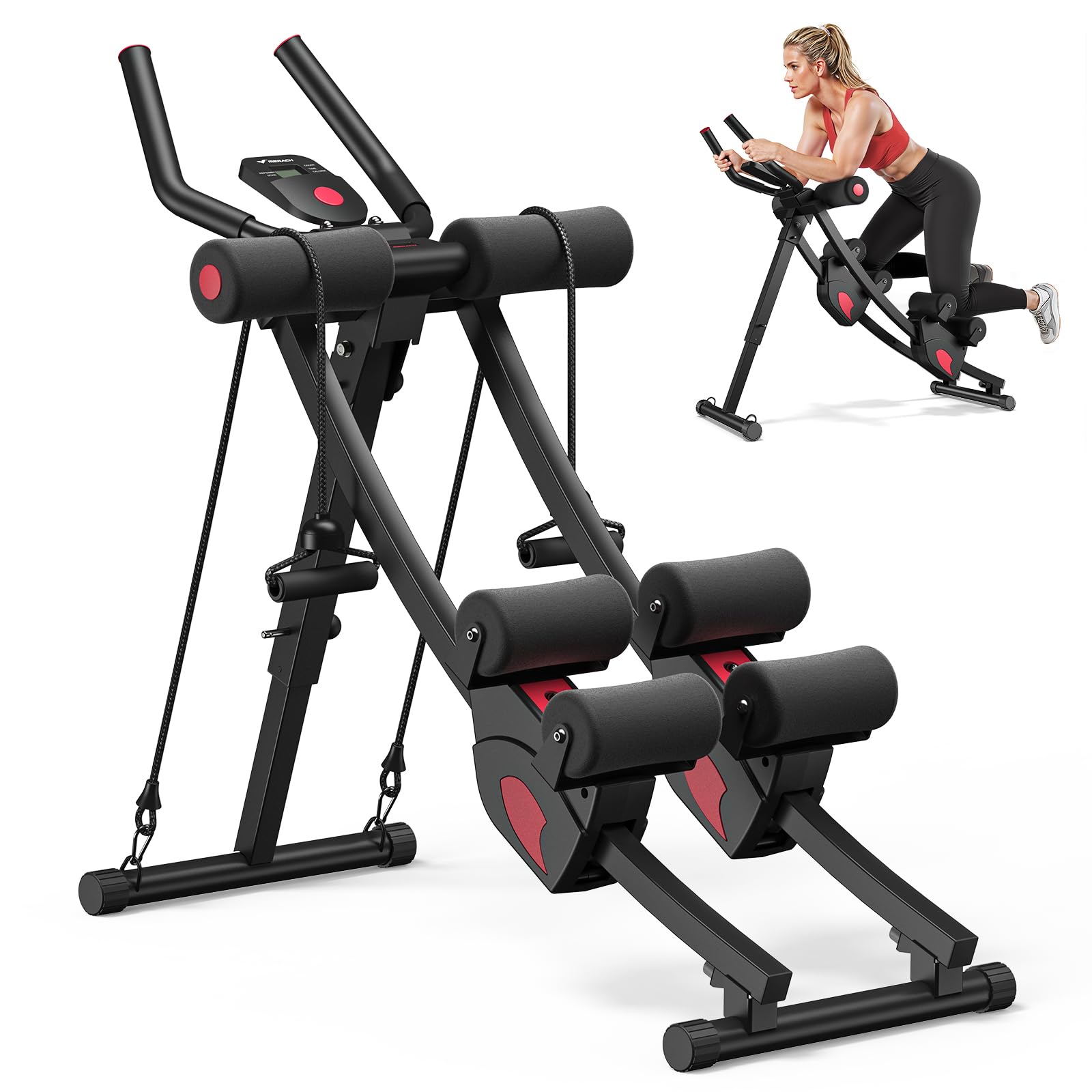
The MERACH Ab Machine stands out because of its independent dual-track system that allows alternating leg movement — essentially turning a standard crunch machine into a mountain climber trainer. The 110-degree curved track matches the natural arc of spinal flexion, while the 50 percent longer track length extends the range of motion beyond what most dedicated ab machines offer. The steel frame supports up to 440 lb, and the foam padding on the knee and elbow rests is thick enough to prevent pressure points during high-rep sessions.
Assembly is straightforward with the included hardware, and the LCD screen tracks reps, time, and estimated calories burned — useful feedback for pacing progressive overload. Four height adjustments let you dial in the difficulty from light core activation to full-body dynamic work. The machine folds vertically for storage, which keeps it from dominating a small room.
The foam padding and non-slip handles stay secure even during sweaty sets, and the build quality feels reassuringly solid at this tier. The machine’s primary limitation is that it specializes in the crunch/mountain-climber movement pattern — you won’t get anti-rotation or anti-extension work from it alone. Pair it with a simple ab roller for a complete core stack.
Why it’s great
- Split-track system enables alternating leg drive and mountain climber variations
- 110-degree curved track follows natural spine movement
- Folds compactly and supports up to 440 lb
Good to know
- Movement pattern is limited to flexion/extension — add a roller for rotational work
- LCD screen is basic; no Bluetooth or app connectivity
2. MAIDOMA Foldable 1500LBS Capacity 8-IN-1 Weight Bench Set
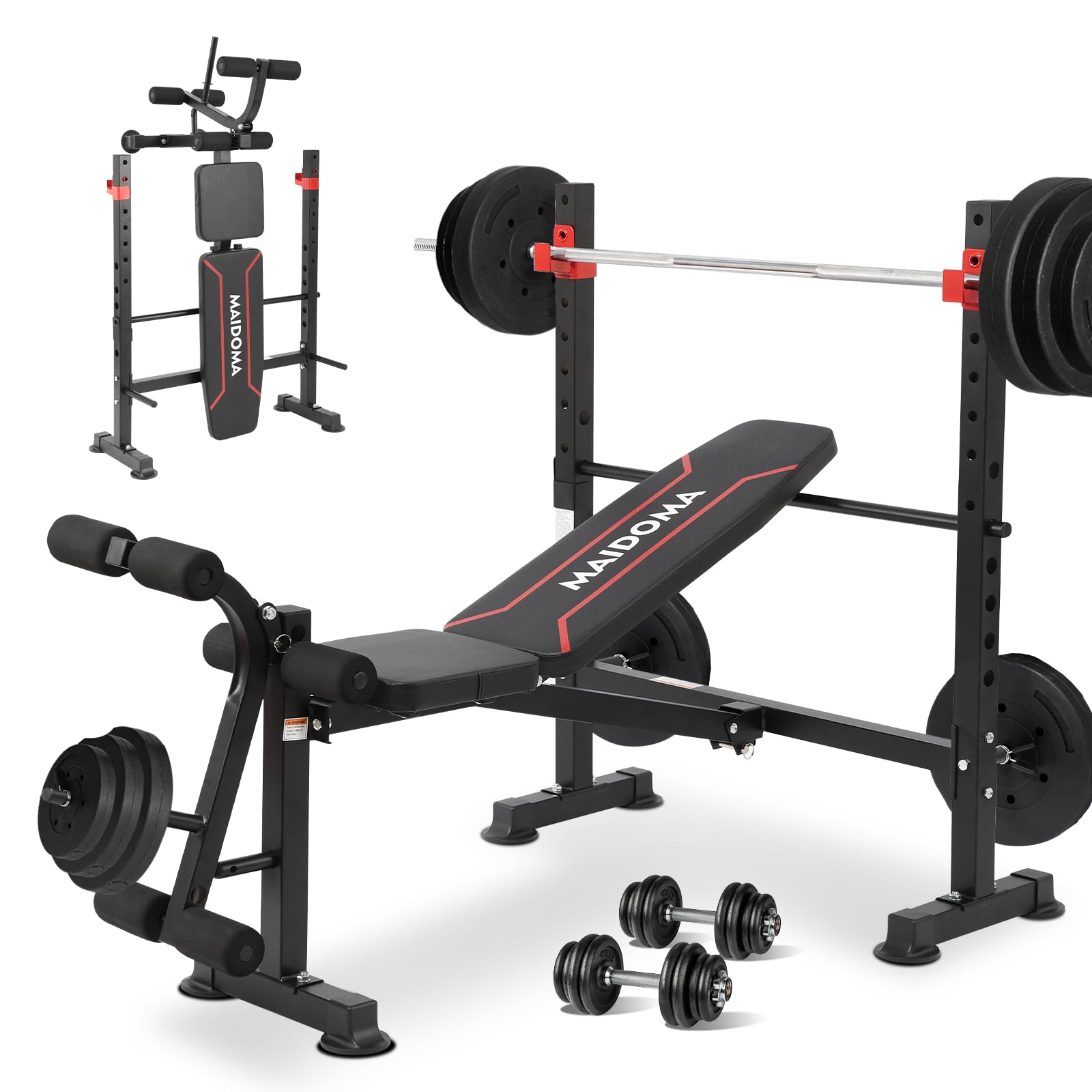
The MAIDOMA bench set is built around commercial-grade alloy steel with a claimed 1500-lb frame capacity — an extreme overbuild that eliminates any worry about structural flex during heavy leg presses or barbell work. The 8-in-1 design integrates a squat rack, preacher curl pad, leg developer, chest fly attachment, and V-handle, making it a complete strength station rather than just a bench. The backrest adjusts to four positions (flat, incline, decline, and a neutral setting), while the sliding seat accommodates taller users.
The leg developer is dual-function, targeting quadriceps through leg extensions and hamstrings through leg curls — a rare feature in foldable bench sets. The triangular frame geometry and non-slip rubber foot pads keep the unit planted, even during explosive movements. Assembly is straightforward with the included tools, and the whole unit folds to reclaim floor space when not in use. The weight arms and barbell are not included, so factor that into your total setup cost.
Users consistently comment on the stability under heavy loads — the front and back tubes allow weight plate storage that further anchors the bench. The preacher curl pad is wide enough for comfortable arm isolation, and the squat rack j-cups are adjustable across four height settings. The only ergonomic compromise is the seat adjustment mechanism, which requires removing a pin rather than a quick-release lever. For anyone building a serious home gym with space constraints, this set delivers a remarkable equipment-to-footprint ratio.
Why it’s great
- Integrated squat rack, preacher curl, and leg developer in one foldable frame
- 1500-lb frame overbuild provides zero-wobble stability
- Four backrest positions and adjustable j-cups for varied exercises
Good to know
- Barbell and weight plates sold separately
- Seat adjustment uses pin system rather than quick-release lever
3. FitinOne Adjustable Folding Weight Bench
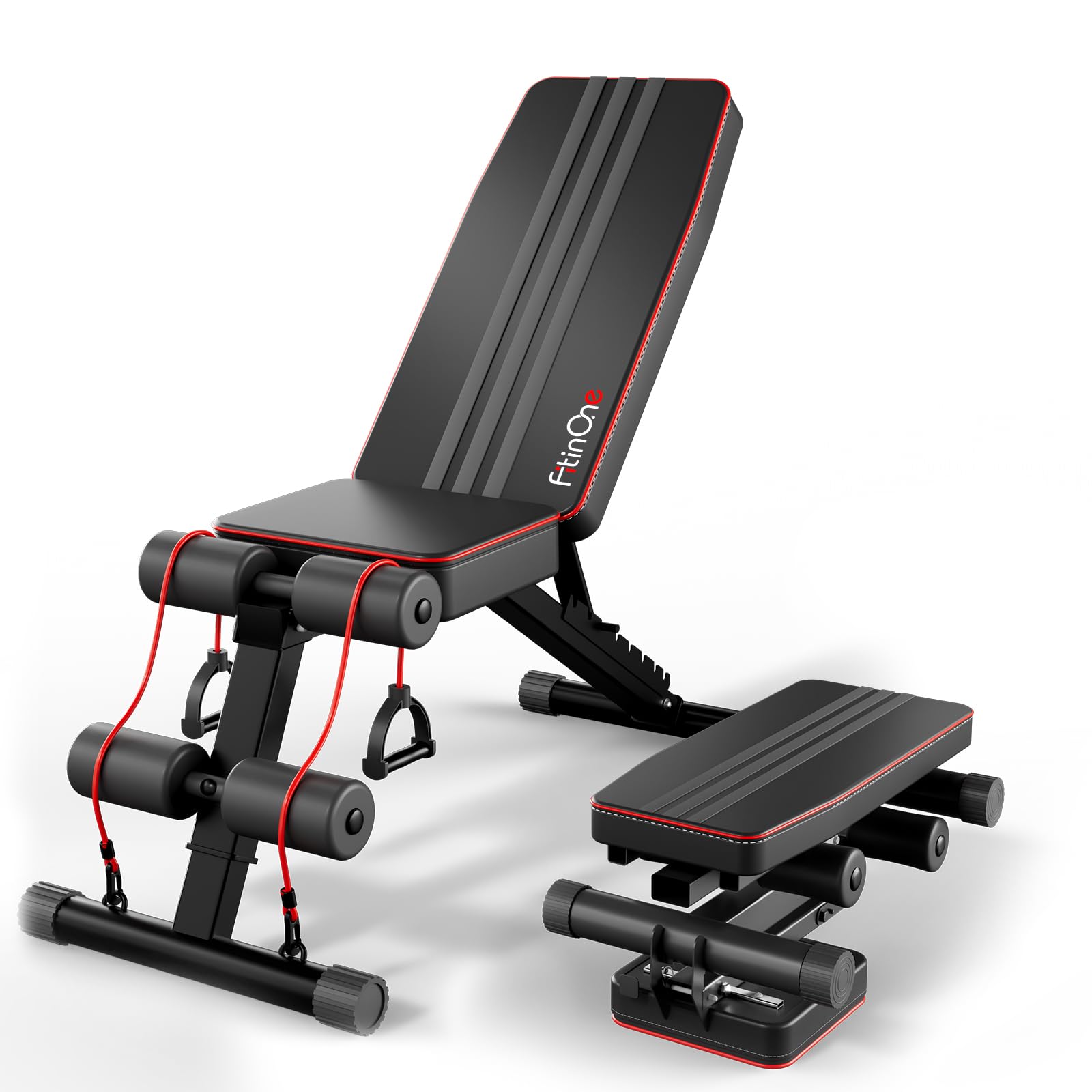
The FitinOne bench is engineered for the space-conscious lifter who still wants a stable platform for incline, flat, and decline pressing. The 2023-upgraded steel frame uses pro-triangle bracing, and the bench is load-tested to 660 lb static weight plus 396 lb dynamic force — a meaningful margin for most home lifters. The 50 mm thickened cushion is covered with premium leather that resists sweat absorption and wear, and the pad width is generous enough to support the scapulae during pressing movements.
The folding mechanism is the standout feature: three pins pull out, the bench collapses, and it slides under a bed or stands in a closet — occupying roughly 20 percent of its open footprint. Assembly takes about 10 minutes out of the box, with most of the frame pre-connected. The backrest locks securely into each of the adjustable positions with no play, which is crucial for safe incline dumbbell work. Users who travel with RVs or move between apartments report that the portability encourages consistent training.
The bench’s simplicity works in its favor — no leg developer, no preacher curl attachment, no extra parts to lose or break. That purity of design also means you need separate equipment for leg isolation and core-specific moves like crunches, but the neutral-grip foot caps keep the base planted for hip thrusts and glute bridges. For a lifter who needs a reliable press station that vanishes when not in use, this is the most practical mid-range choice.
Why it’s great
- 3-pin fold collapses bench to 20% of open footprint
- 50 mm thickened pad with sweat-resistant leather cover
- 660-lb static / 396-lb dynamic load rating
Good to know
- No leg developer or preacher curl attachment
- Backrest adjusts but seat does not slide
4. WAKISA 3-in-1 Twister Arm Trainer (Hydraulic)

The WAKISA Twister Arm Trainer uses a hydraulic cylinder with 15 micro-adjustable resistance levels ranging from 22 to 440 lb equivalent — but the real draw is its 3-in-1 versatility. The central unit includes three detachable ab wheels and elastic band hooks, so it converts from a chest/twist trainer into a dual-wheel ab roller or a resistance band anchor point. The hydraulic system delivers smooth, controlled motion with minimal rebound, unlike spring-loaded trainers that can snap back unpredictably.
The arm length adjusts to fit different body frames, which matters for maintaining proper shoulder alignment during chest squeezes and core twists. The reinforced triangular center structure and double-layer steel tubes keep the frame rigid during heavy resistance levels. Users note that level 10 feels like a warm-up for intermediate lifters, while level 15 is genuinely challenging — the linear progression allows incremental overload without buying heavier bands or plates.
The included knee pad and ab wheel parts make this a genuinely all-in-one tool for core and upper body work. The unit is compact enough to keep in an office drawer or gym bag, and the 2-year warranty adds peace of mind. The hydraulic resistance does not provide the same eccentric loading as free weights, so it works best as a finishing tool or warm-up device rather than a primary strength builder. For a single device that delivers chest, arms, and core work without needing a bench, it delivers exceptional versatility.
Why it’s great
- 3-in-1: chest trainer, ab roller, and band anchor
- 15-level hydraulic resistance with smooth, controlled motion
- Adjustable arm length fits various body sizes
Good to know
- Hydraulic resistance lacks heavy eccentric loading
- Ab roller wheels feel less stable than dedicated roller units
5. DMoose Fitness Ab Roller Wheel with Elbow Support
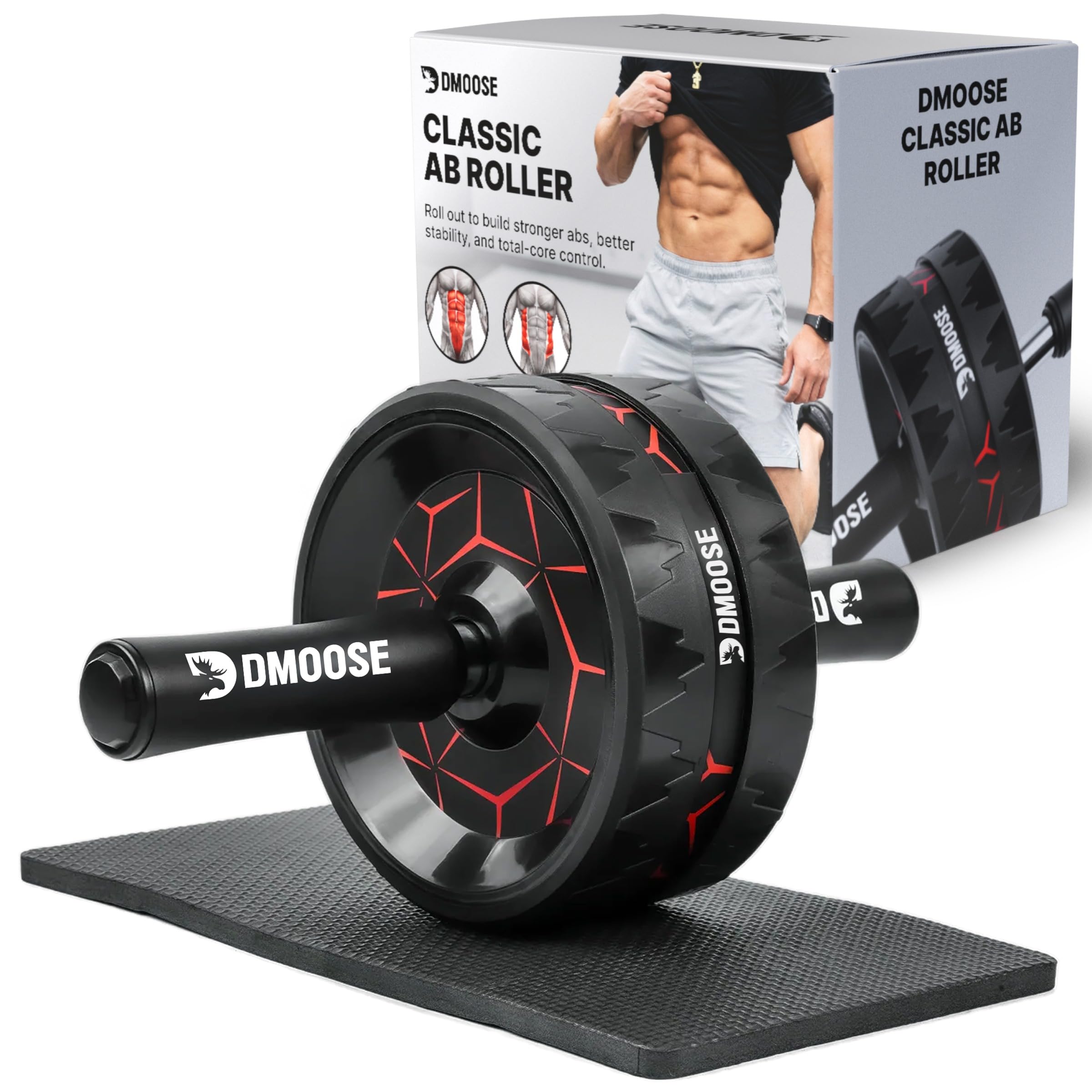
The DMoose Ab Roller replaces the wobbly single-wheel rollers that punish your shoulders before your abs with a stable 3.2-inch dual-wheel design. The wider base tracks straighter on both gym mats and home flooring, reducing the side-to-side sway that dilutes abdominal tension. The steel shaft is rated to 440 lb and uses a heavy-duty stainless steel core that resists bending even under aggressive rollouts and slow negatives — the most demanding phase for any ab roller.
The elbow support pads and non-slip EVA handles shift load away from the wrists and distribute it through the forearms, which allows deeper range of motion without shoulder impingement. The included knee pads are thick enough for hardwood floors, and the entire unit requires no assembly — it comes ready to roll out of the box. Users between 5’8″ and 6’2″ report comfortable posture alignment, and the four-inch wheel width leaves zero marks on LVP flooring.
The only drawback is the price point sits above basic wheel-only rollers, but the build quality justifies the investment — the frame feels substantially more rigid than budget alternatives. The forearm supports cannot be removed without tools if you prefer a traditional hand-grip position, but that is a minor compromise for the added stability. For anyone serious about anti-extension core strength (the ability to resist spinal collapse), this roller is the most effective tool in the list for that specific goal.
Why it’s great
- 3.2-inch dual-wheel design eliminates side-to-side wobble
- 440-lb stainless steel shaft resists bending under heavy load
- Zero assembly required — use immediately
Good to know
- Price is higher than basic wheel-only rollers
- Forearm supports are not removable without tools
6. OPPSDECOR Weight Bench

The OPPSDECOR bench is an entry-level folding bench that prioritizes raw utility over frills. The alloy steel frame is rated for 660 lb and uses a widened front base (17 inches) and rear base (20 inches) to reduce lateral wobble — a common failure point in cheap folding benches. The backrest offers eight adjustable positions, allowing incline, flat, and decline angles for dumbbell presses, rows, and core exercises like decline crunches and leg raises.
The distinguishing feature at this tier is the four high-density support foams: two under the legs and two under the popliteal area (behind the knees). Those extra foams do reduce pressure points during decline work and leg-supported moves. The pad cover is premium leather that resists sweat, and the reinforced stitching extends the bench’s usable life beyond what most entry-level benches deliver. Assembly takes about 30 minutes with the included manual, and the bench folds by removing three pins.
The seat does not adjust independently from the backrest, which limits comfort during some seated shoulder press positions. The bench also lacks a leg developer or preacher curl attachment, so it is strictly a press-and-crunch station. For a beginner building a first home gym on a tight budget, the OPPSDECOR delivers a surprisingly stable platform with enough adjustability to support progression from bodyweight to light-medium dumbbell work without feeling flimsy.
Why it’s great
- Eight backrest positions provide full incline/decline range
- Widened base reduces lateral wobble during presses
- Four support foams improve comfort during leg-supported moves
Good to know
- Seat does not adjust independently from backrest
- No leg developer or attachment points for bands
7. GoFit Stability 55cm Ball
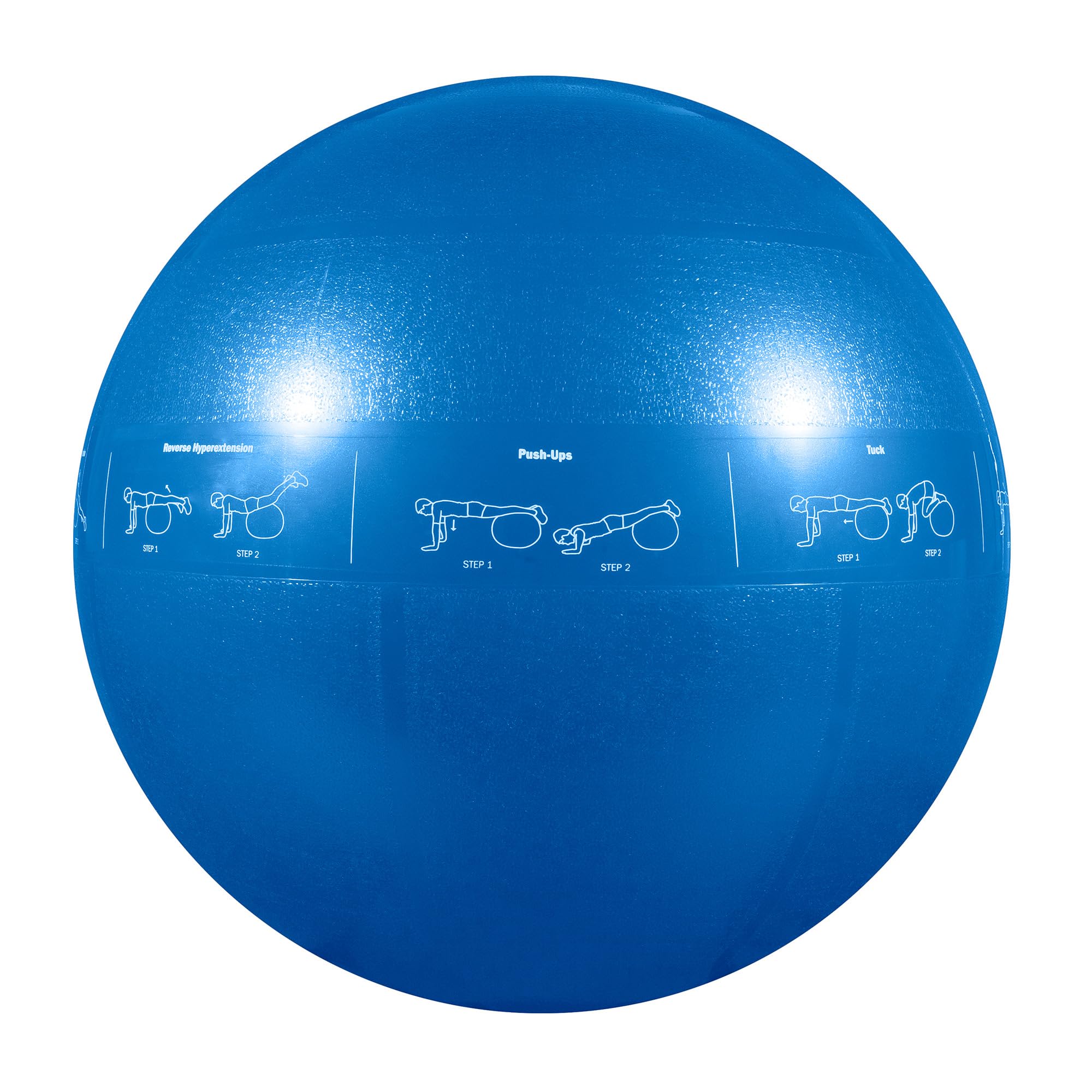
The GoFit Stability Ball is the simplest tool on this list, but also one of the most versatile for core endurance training. The 55 cm diameter fits users around 5’3″ to 5’7″, and the anti-burst PVC construction means it deflates slowly if punctured rather than exploding. The textured non-slip surface provides enough grip for yoga flows, Pilates exercises, and dynamic stability work on hardwood or carpet.
The included hand pump works but requires significant effort — roughly 3000 strokes to reach full inflation based on user feedback. A bicycle pump or air compressor with a ball adapter reduces that to under two minutes and is highly recommended. Once inflated, the ball holds air well with minimal top-ups over a year of regular use, and the commercial-grade material feels slightly soft without losing shape. Users up to 215 lb report the ball supports them comfortably for crunches, pushups, and desk sitting.
The 55 cm size also makes it usable as an office chair alternative for active sitting, which engages the core throughout the workday beyond formal workout sessions. The ball does not replace a bench for loaded pressing or a roller for anti-extension work, but it fills the endurance and mobility niche at a low cost. The pump quality is the only notable weak point, and swapping it for a better pump solves that immediately. For the price, it is a low-risk entry into core stability training.
Why it’s great
- Anti-burst PVC deflates slowly on puncture
- Non-slip textured surface works on multiple floor types
- Versatile for yoga, Pilates, active sitting, and core endurance
Good to know
- Included hand pump is slow and inefficient
- 55 cm size limits use to shorter users
FAQ
Can I build visible abs using only a stability ball?
What is the difference between anti-extension and anti-rotation core training?
How much weight should a folding bench support for safe core work?
Are hydraulic ab trainers suitable for beginners with lower back issues?
Final Thoughts: The Verdict
For most users, the best core workout equipment winner is the MERACH Ab Machine because its split-track design and adjustable resistance scale from basic core activation to intense mountain-climber finishers within a compact, foldable frame. If you want the raw anti-extension strength that protects your spine under heavy squats and deadlifts, grab the DMoose Ab Roller with Elbow Support. And for a transformational full-body solution that replaces half a commercial gym, nothing beats the space-saving engineering of the MAIDOMA 8-IN-1 Bench Set.

Mo Maruf
I created WellFizz to bridge the gap between vague wellness advice and actionable solutions. My mission is simple: to decode the research and give you practical tools you can actually use.
Beyond the data, I am a passionate traveler. I believe that stepping away from the screen to explore new environments is essential for mental clarity and physical vitality.