Our readers keep the lights on and my smoothie glass nicely filled. As an Amazon Associate, I earn from qualifying purchases.
Standard telephones simply weren’t built for the reduced frequency sensitivity that comes with hearing loss. Conversations devolve into straining, repeating, and frustration—not the connection you deserve. The right cordless telephone changes that equation entirely, using targeted amplification, tone shaping, and even real-time captions to restore clarity.
I’m Mohammad Maruf — the founder and writer behind WellFizz. I’ve spent hundreds of hours analyzing amplification circuits, T-coil compatibility, decibel output curves, and the real-world usability of every cordless and corded phone designed specifically for the hard of hearing community.
Whether you need 40dB of gain, Bluetooth pairing for hearing aids, or on-screen captions you can read while you listen, this guide breaks down the absolute best options. You’ll find the best cordless telephone for hard of hearing that fits your specific level of hearing loss and preferred way of staying in touch.
How To Choose The Best Cordless Telephone For Hard Of Hearing
The right phone doesn’t just play louder—it plays *clearer* for the specific frequencies your ears need most. Here’s exactly what to check before you click buy.
Amplification: Not All “Loud” Is Created Equal
A phone advertising “up to 30dB” may only hit that peak at the highest, most distorted setting. Look for a model that delivers at least 20dB of clean, low-distortion gain, with tone control to emphasize high-frequency consonants (like “s,” “f,” and “th”) that are hardest to hear. Some premium units reach 40dB or more.
Hearing Aid Compatibility: T-Coil vs. Bluetooth
For older hearing aids with a T-Coil, you need an FCC-compliant phone that generates a magnetic field the coil can pick up. For newer Bluetooth-enabled aids, look for a phone with built-in Bluetooth to stream calls directly into your ears—this eliminates background noise entirely and delivers studio-quality clarity.
Real-Time Captioning: When Hearing Isn’t Enough
Captioning phones display every word the caller says on a screen as they speak, using either automated speech-to-text or a live operator. These require high-speed internet and a landline or VoIP service. They are a life-changer for profound hearing loss, but registration with a certified captioning service is usually required.
Extra Features That Matter
Visual ring flashers, extra-loud ringers (measured in decibels—look for 85dB+), photo memory dialing for one-touch calls, and an SOS emergency key that dials multiple numbers in sequence can make the difference between a phone you use and one you ignore. Large backlit keys and high-contrast screens also reduce dialing errors.
Quick Comparison
On smaller screens, swipe sideways to see the full table.
| Model | Category | Best For | Key Spec | Amazon |
|---|---|---|---|---|
| Hamilton CapTel 2400iSPNBT | Captioning | Profound hearing loss & reading speech | 40dB gain + real-time captions | Amazon |
| Panasonic KX-TGD892S | Bluetooth | Streaming to Bluetooth hearing aids | Bluetooth pairing for wireless earbuds | Amazon |
| Clarity E814CC | Combo | Corded + cordless versatility | Dual keypad, combo design | Amazon |
| Gigaset E560A | Senior | Emergency SOS & safety features | SOS key dials 4 numbers | Amazon |
| AT&T BL102-2 | Call Block | Robocall protection & large screen | DECT 6.0, audio assist, 2-inch screen | Amazon |
| ClearSounds CSC500 | Amplified | Simple one-touch photo dialing | 30dB boost + visual ring flasher | Amazon |
| Clarity P300 | Basic | Mild-to-moderate hearing loss | 26dB amplification, adjustable pitch | Amazon |
In‑Depth Reviews
1. Hamilton CapTel 2400iSPNBT Captioned Telephone
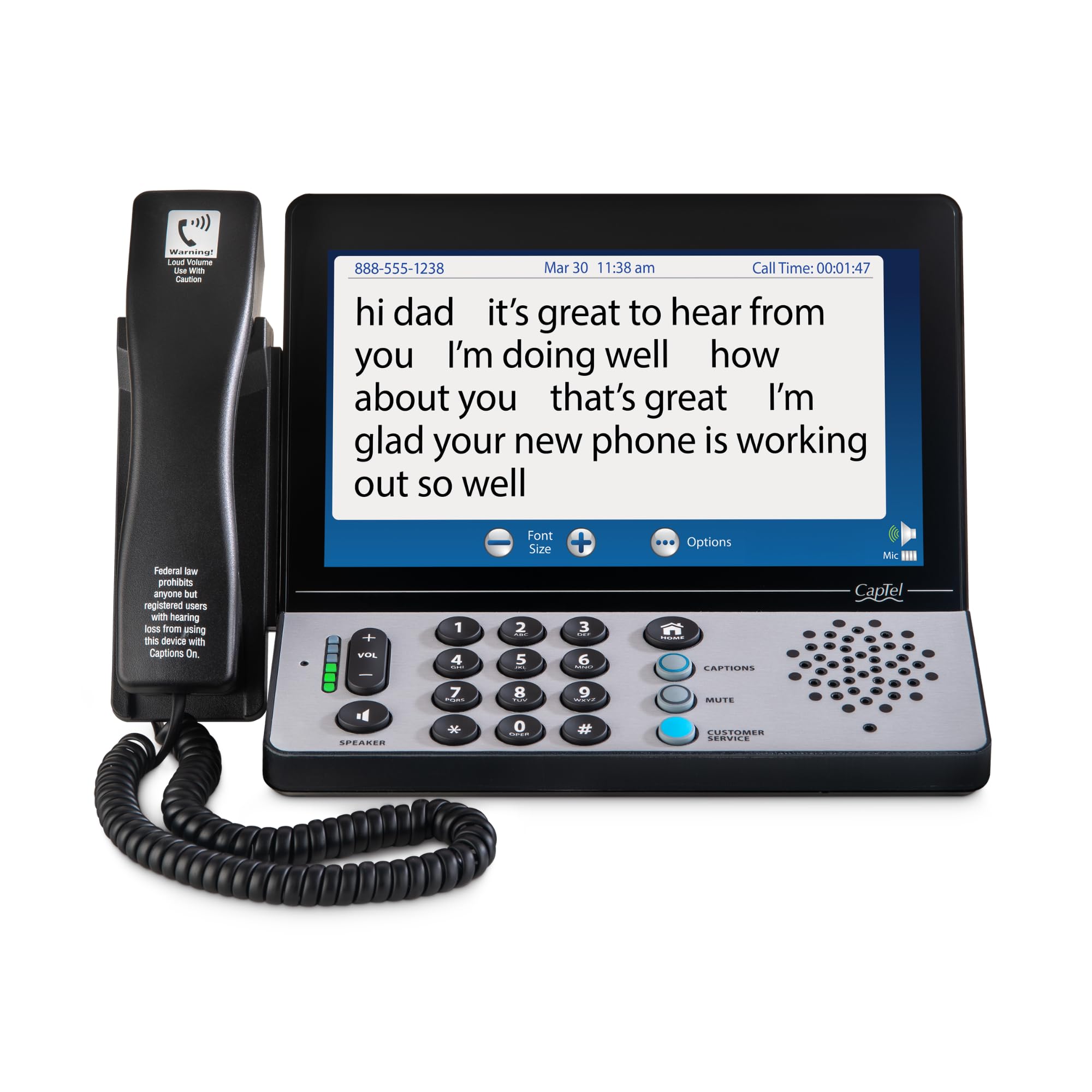
This is the one device that solves hearing loss two different ways simultaneously: massive 40dB amplification plus real-time on-screen captions of everything the caller says. The large touchscreen displays text in adjustable sizes, so if a voice is unclear you simply read the words. It requires high-speed internet and registration with CapTel’s free service, but the payoff is total conversation accuracy—no guessing, no repeating, no frustration.
The phone supports both auto-captions (fully automated) and assisted captions (with a live operator for higher accuracy). A built-in digital answering machine even shows voicemail as text on the screen. Volume control spans six levels with separate tone adjustment, and the speakerphone is loud and clear enough for group listening. The unit itself is larger than a typical phone, but the 3-pound weight gives it a solid, desk-stable feel.
Setup requires some patience for adding contacts with photos, and outgoing calls for a non-tech-savvy user may need a quick walkthrough (press the star icon, then select a name). Once configured, the combination of reading and listening is unmatched for severe hearing loss. The ringer is extremely loud, and the visual screen flash alerts you to incoming calls.
Why it’s great
- Real-time captions eliminate guesswork—read and listen simultaneously
- 40dB amplification is among the highest available
- Voicemail transcribed to text for at-a-glance review
- Adjustable caption size and tone controls for personalization
Good to know
- Requires high-speed internet and registration for caption service
- Large footprint—needs dedicated desk space
- Teaching elderly users the outgoing call process may take time
2. Panasonic KX-TGD892S Expandable Cordless Phone

This Panasonic system is the only phone on this list that pairs directly with Bluetooth wireless headphones, earbuds, and even hearing aids. Instead of the phone’s speaker, your call streams straight into your ear—eliminating room noise, echo, and distance from the handset speaker. It supports pairing up to four devices, so multiple family members can use their own buds.
Beyond Bluetooth, the phone includes a full-duplex speakerphone, a digital answering machine with 17 minutes of storage, and an advanced call-blocking system that pre-blocks robocalls before they ring. Talking Caller ID announces the caller’s name in English or Spanish, so you don’t need to rush to the handset to see the screen. The 1.7-pound base is compact, and the silver/black finish looks modern in any room.
Some users report that the Bluetooth volume is quieter than handset volume, and reconnecting after stepping out of range can require a manual re-pair. For Kirkland KS-10 and Phonak hearing aids, pairing is successful but may need a few restarts. Once dialed in, the call clarity through hearing aids is stellar—no feedback, no background hiss.
Why it’s great
- Bluetooth streams calls directly into hearing aids or wireless earbuds
- Pairs up to 4 devices for multi-user convenience
- Advanced robocall blocking stops spam before it rings
- Talking caller ID announces names aloud without looking
Good to know
- Bluetooth volume on the quieter side for some hearing aids
- May lose pairing when hearing aids power off; manual reconnect needed
- Box may appear previously opened—check contents immediately
3. Clarity E814CC Amplified Corded/Cordless Combo

The E814CC is Clarity’s hybrid solution: a powerful corded base station with an additional cordless handset, so you never have to run to the phone to answer. Both units feature Clarity’s signature amplification with tone control, and the cordless handset extends range throughout the house. The dual keypad design means you can dial from the base or the handset equally easily.
Sound clarity on this model is among the best—users consistently praise it for intelligible, distortion-free amplification even at high volume levels. The base includes a digital answering machine, and the cordless handset has a speakerphone for hands-free use. The large buttons and high-contrast display make dialing accurate even with reduced vision. The overall build feels durable, with a 3-pound weight on the base unit.
Programming is straightforward, though some users recommend taping the programming buttons to prevent accidental changes. The ringer is loud enough to be heard across two floors, but the message-waiting beep (a single tone) may be too quiet or easily missed by someone with significant hearing loss—a visual indicator would help here. The cordless handset cradle can feel slightly loose on the charger stand.
Why it’s great
- Hybrid corded/cordless offers flexibility throughout the home
- Superb sound clarity with tone control for speech comprehension
- Large, high-contrast buttons reduce dialing errors
- Includes answering machine and speakerphone on both units
Good to know
- Message-waiting beep too quiet for profound hearing loss
- Programming buttons can be pressed accidentally—tape them
- Complex operation for erasing missed calls may confuse non-tech users
4. Gigaset E560A Cordless Phone for Seniors

The Gigaset E560A prioritizes safety alongside amplification. A dedicated SOS key on the handset can be programmed to dial up to four emergency contacts in sequence until someone answers—a critical feature for anyone living alone or at risk of falls. The phone’s “extra loud” button on the side of the handset doubles the volume instantly, providing a quick boost without navigating menus.
Sound quality is excellent, with Gigaset’s German-engineered acoustics delivering clear, natural speech reproduction. The DECT ECO mode reduces radiation output significantly while maintaining long range. Large, well-spaced keys and a bright, easy-to-read screen aid those with both hearing and vision challenges. The handset is lightweight at just 4.93 ounces, comfortable to hold for long conversations.
Some users note that the maximum volume may still not be enough for severe hearing loss due to FCC regulatory limits on handset amplification. The answering machine interface is more complex than basic models, and the protective covers over the charging contacts can be stiff to remove. Battery recharge is slower than some competitors, and the phone can ring then stop without the answering machine picking up—a potential bug.
Why it’s great
- SOS key automatically dials up to 4 emergency contacts
- One-touch “extra loud” button doubles volume in a second
- German build quality with ECO DECT for low radiation
- Large, backlit keys and bright screen for easy dialing
Good to know
- Maximum volume may not satisfy profound hearing loss
- Answering machine operation can be unintuitive
- Battery recharge takes longer than average
5. AT&T BL102-2 DECT 6.0 Cordless Phone
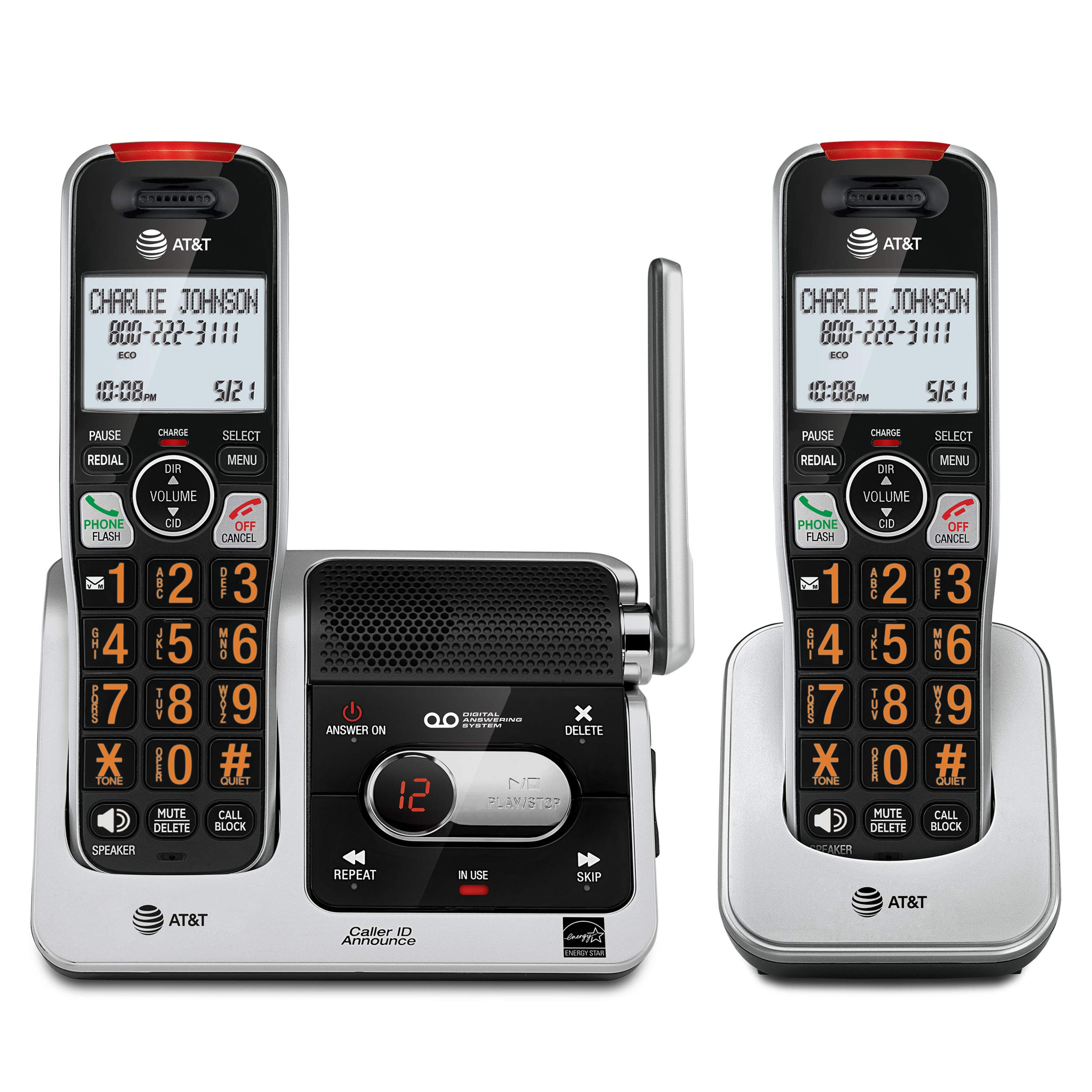
Don’t let the entry-level price fool you: the BL102-2 packs serious utility for the hearing-impaired user. AT&T’s Audio Assist feature boosts high-frequency speech sounds specifically, making consonants clearer without blasting overall volume. The large 2-inch screen with high-contrast text and extra-large backlit keypad is a boon for anyone with combined hearing and vision challenges.
The smart call blocker is a standout—it automatically prevents robocalls from ever ringing, and you can permanently blacklist numbers with one touch. Digital answering machine records 22 minutes of messages, and the handset speakerphone allows both ends to speak simultaneously (full-duplex). The DECT 6.0 technology provides superior range and interference-free audio across 2,500+ sq ft homes.
A few users report occasional static on certain VoIP lines, and the Talking Caller ID announcement can feel disruptive if you prefer quiet calls. Some find the handset build a bit plasticky, but overall durability is solid. For the price, the combination of Audio Assist, call blocking, and a large illuminated interface is hard to beat.
Why it’s great
- Audio Assist enhances high-frequency consonants for clearer speech
- Automatic smart call blocker stops 98% of robocalls
- Large 2-inch backlit screen and enormous illuminated keypad
- DECT 6.0 provides long range and clear audio throughout the home
Good to know
- Some minor static reported with certain VoIP providers
- Talking Caller ID may be annoying for some users
- Handset build feels lightweight, not premium
6. ClearSounds CSC500 Amplified Landline Phone

The CSC500 is built around one simple idea: make it as easy as possible to call family by pressing a photo. Eight photo-frame buttons let you store a picture of the person next to a one-touch dial key, perfect for users with memory challenges alongside hearing loss. The amplification delivers up to 30dB of gain with tone control to reduce distortion at higher volume levels.
A visual flasher alerts you to incoming calls without relying on the ringer, and the ringer itself can be adjusted to a maximum of 85dB—enough to be heard from another room. The phone is T-coil compatible, working with most cochlear implants and hearing aids equipped with that feature. The speakerphone adds hands-free convenience for those who cannot hold the handset comfortably.
The main durability concern: the handset cradle lip is only about 0.5 inches deep, so the handset can slip off if the phone is bumped. Some units have failed after 6–9 months, with the handset speaker gradually cutting out. Programming the photo buttons requires careful attention to avoid dialing errors, and the 3-second pause delay before dialing can feel long.
Why it’s great
- Photo memory buttons make one-touch dialing intuitive for memory loss
- 30dB amplification with tone control for clearer highs
- Visual flasher alerts without relying on ringer
- T-coil compatible for hearing aids and cochlear implants
Good to know
- Shallow handset cradle prone to slipping off when bumped
- Some units report premature handset speaker failure
- Photo button labels are small—fine print to read and program
7. Clarity P300 Corded Amplified Phone
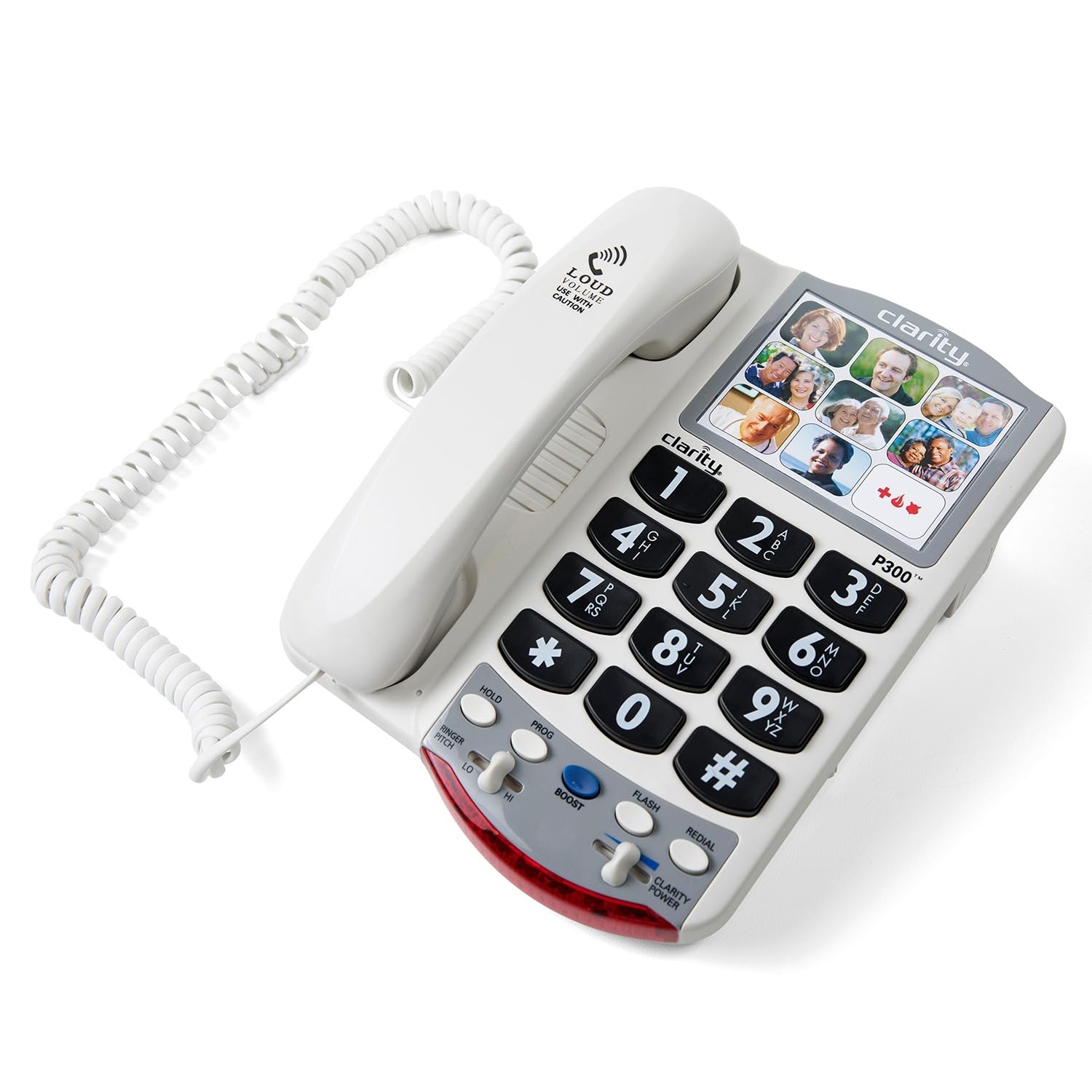
The Clarity P300 is the simplest possible path to clearer phone conversations: plug it into a standard phone jack, and you instantly get 26dB of targeted amplification. No batteries to charge, no Wi-Fi to configure, no software updates. You just turn the volume dial up until the caller’s voice is loud and clear. The adjustable ringer pitch lets you select a tone frequency that cuts through your specific hearing loss, so you actually hear the ringer.
The large, raised buttons are easy to press with arthritic hands or reduced dexterity. Speed-dial slots use writable card inserts behind a clear cover—no computers or photo printing needed. The bundle includes a generous 25-foot telephone line cord, giving you flexibility in placement. Users consistently report the phone allows normal conversation volume without needing to shout or repeat.
There is no speakerphone, which is a limitation for anyone who wants hands-free calls. A few units have reported a defective switch-hook mechanism that causes intermittent sound (hissing, crackling). The handset can squeal when amplification is maxed out, particularly with certain phone lines. It is corded only, so mobility is restricted to the length of the cord.
Why it’s great
- Plug-and-play simplicity—no setup, no pairing, no internet needed
- 26dB clean amplification with adjustable ringer pitch
- Large, tactile buttons and writable speed-dial cards
- Includes 25-foot line cord for placement flexibility
Good to know
- No speakerphone available for hands-free conversations
- Handset can squeal at maximum volume setting
- Corded only—cannot walk around while talking
- Occasional switch-hook defect causing intermittent sound
FAQ
What does the decibel gain rating on an amplified phone actually mean?
Do I need internet service for a captioning telephone?
Can I use a Bluetooth hearing aid directly with any amplified cordless phone?
What is the difference between T-coil and Bluetooth streaming for hearing aids?
Final Thoughts: The Verdict
For most users, the best cordless telephone for hard of hearing winner is the Hamilton CapTel 2400iSPNBT because its combination of 40dB amplification and real-time captions eliminates the two biggest obstacles to phone conversations: volume and comprehension. If you prefer to stream calls directly into your hearing aids for noise-free clarity, grab the Panasonic KX-TGD892S. And for a simple, reliable plug-and-play solution that works without any setup, nothing beats the Clarity P300.

Mo Maruf
I created WellFizz to bridge the gap between vague wellness advice and actionable solutions. My mission is simple: to decode the research and give you practical tools you can actually use.
Beyond the data, I am a passionate traveler. I believe that stepping away from the screen to explore new environments is essential for mental clarity and physical vitality.