Our readers keep the lights on and my smoothie glass nicely filled. As an Amazon Associate, I earn from qualifying purchases.
The cord is the enemy of every trim router user: it snags on bench corners, limits your reach on a ladder, and forces you to wrestle the tool instead of focusing on the cut. Breaking free from that tether transforms how you work on edge profiles, flush trimming, and detail routing — but only if the tool delivers the RPM and run time you actually need.
I’m Mohammad Maruf — the founder and writer behind WellFizz. I’ve spent hundreds of hours cross-referencing brushless motor torque curves, battery platform ecosystems, collet precision tolerances, and real-world user durability reports to separate the truly portable routers from the underpowered compromises.
This guide cuts through the marketing to compare battery voltage classes, speed ranges, depth adjustment precision, and dust collection effectiveness — so you can confidently choose the right best cordless router for your shop.
How To Choose The Best Cordless Router
Choosing your first cordless router — or upgrading from a corded model — means balancing battery ecosystem, motor type, and the specific routing tasks you actually do. A 12V palm router excels at quick roundovers on cabinet doors; an 18V trim router handles deeper dados and harder woods. The sections below break down the four specs that separate a precision tool from a frustrating toy.
Battery Voltage and Platform
Voltage determines the power ceiling. 12V platforms (like Bosch 12V Max) deliver a lighter, more compact tool ideal for edge profiling and flush trimming softer woods. 18V/20V platforms (Ryobi ONE+, Craftsman V20, DEWALT 20V Max, Metabo HPT 18V, Bosch 18V) offer the torque to cut deeper profiles and denser materials like oak or maple. The real consideration is which battery system you already own — sticking with one platform saves money on bare-tool purchases and simplifies charger management.
Brushless vs. Brushed Motor
Brushless motors are standard at the premium tier and increasingly common in mid-range models. They deliver more power per amp-hour, run cooler, and last significantly longer than brushed motors because there are no carbon brushes to wear out. Every model reviewed below uses a brushless motor except the Ryobi PCL424B — its brushed motor is acceptable for light DIY use but will eventually need brush replacement after heavy service.
Variable Speed Range and Constant Torque
A variable speed dial (typically 10,000–30,000 RPM) lets you match RPM to bit diameter and material — larger bits and harder woods require lower speeds to avoid burning. Constant speed circuitry maintains that set RPM under load, preventing the motor from bogging down mid-cut. The Genmitsu 710W offers a wide 6,500–30,000 RPM range, though its corded design limits portability. Among the true cordless options, the Craftsman CMCW400B, Metabo HPT M1808DAQ4, and Bosch GKF18V-25N provide useful 16,000–30,000 / 10,000–30,000 ranges with decent load compensation.
Depth Adjustment and Base Ergonomics
Fine depth adjustment (1/64-inch increments per revolution) is critical for repeatable passes on edge profiles and rabbets. Look for a system that combines a coarse macro adjustment with a micro dial — the DEWALT DCW600B and Bosch GKF18V-25N both excel here. The baseplate material also matters: clear polycarbonate bases improve work visibility, while metal bases offer greater durability against wear. All the cordless routers here use a fixed base with no plunge capability, which simplifies construction but requires manual bit plunge for internal cuts.
Quick Comparison
On smaller screens, swipe sideways to see the full table.
| Model | Category | Best For | Key Spec | Amazon |
|---|---|---|---|---|
| Metabo HPT M1808DAQ4 | Trim Router | Precision trim & edge work | 2.5 lbs, 10,000–30,000 RPM | Amazon |
| Bosch GKF18V-25N | Palm Router | Cabinetry & heavy trimming | 1.39 HP brushless, dust extraction | Amazon |
| DEWALT DCW600B | Compact Router | All‑day trim & edge forming | 3.9 lbs, 20V Max XR | Amazon |
| Bosch GKF12V-25N | Palm Edge Router | Ultra‑light edge profiling | 2.2 lbs, 13,000 RPM fixed speed | Amazon |
| Craftsman CMCW400B | Fixed Base Router | Budget DIY edge routing | 16,000–30,000 RPM brushless | Amazon |
| RYOBI PCL424B | Compact Router | Entry‑level DIY portability | 3.2 lbs, 20,000–30,000 RPM | Amazon |
| Genmitsu GM7100E | Spindle Motor | CNC upgrade / bench use | 710W, 6,500–30,000 RPM | Amazon |
In‑Depth Reviews
1. Metabo HPT M1808DAQ4

The Metabo HPT M1808DAQ4 hits the sweet spot of portable power and features at a mid-range price point. Its brushless motor delivers 10,000–30,000 RPM — enough range to handle 1/4-inch roundovers on maple and slower dados in plywood — while the soft start and electric brake add safety and control. At just 2.5 pounds, this is one of the lightest full-featured cordless routers available, making one-handed operation on vertical surfaces genuinely manageable. The included straight guide, template guide, and dust collection port (with a clear plastic base for visibility) make it a complete package out of the box.
Real-world feedback from trim carpenters and cabinet installers consistently praises its precise speed dial and the smooth depth adjustment micro-dial, which locks firmly and stays put during vibration. The LED light illuminates the bit area effectively, reducing shadows on dark workpieces. Several users report that this Metabo HPT model has replaced their corded trim router for everyday edge work — a strong indicator of adequate torque for soft and hardwoods alike.
The only compromise is the bare-tool format: you need an 18V or 36V MultiVolt battery from the Metabo HPT ecosystem. The tool’s dust collection port works but isn’t sealed as tightly as the Bosch GKF18V-25N, so fine dust escapes at higher speeds. For most precision routing tasks, though, this router delivers professional-grade results at a price that undercuts premium competitors.
Why it’s great
- Best weight-to-power ratio under 3 lbs
- Includes straight guide, template guide, and dust port
- Soft start and electric brake for safety
- 10,000 RPM low end for larger bits
Good to know
- Bare tool — requires Metabo HPT 18V/36V battery
- Dust collection not fully sealed at high RPM
- Plastic base shows wear over time
2. Bosch GKF18V-25N

The Bosch GKF18V-25N represents the premium tier in cordless palm routers, and it earns that status with a 1.39 peak-horsepower brushless motor that competes with many corded models. The variable speed range (10,000–30,000 RPM) is complemented by constant speed circuitry that holds your selected RPM even when plowing through a 1/2-inch rabbet in white oak. Weight sits at a manageable 2.4 pounds, and Bosch designed the grip with high and low soft positions — a thoughtful ergonomic detail that reduces fatigue during extended overhead work.
The standout feature here is the dust extraction system. Bosch includes both an edge-routing dust hood and a surface-routing dust hood, plus two vacuum adapters that click directly into compatible Bosch vacuums without adapters. This means you can route shelves or trim with visible dust control — a rare advantage among cordless routers. The flip-and-release spindle lock makes bit changes fast, and the depth adjustment in 1/64-inch increments allows micro-level repeatability for successive passes.
Drop detection automatically shuts off the router if it falls — a genuine safety feature for anyone working on ladders or scaffolding. The downside is the price point, which sits firmly in premium territory. Additionally, the GKF18V-25N uses Bosch Professional 18V batteries, which are excellent but expensive if you’re not already in the ecosystem. For serious woodworkers and cabinet installers who prioritize dust control and raw power, this is the ultimate cordless palm router.
Why it’s great
- Best dust extraction of any cordless router tested
- 1.39 HP brushless motor rivals corded performance
- Drop detection and restart protection
- Precise 1/64-inch depth adjustment
Good to know
- Premium price — highest in this roundup
- Bosch 18V batteries are expensive
- No plunge base included (available separately)
3. DEWALT DCW600B

The DEWALT DCW600B is a refined compact router that fits seamlessly into the 20V Max ecosystem. Its brushless motor runs smoothly across the speed range, and the tool feels solidly built — 3.9 pounds with a metal base that resists wear far better than the plastic bases on budget competitors. The micro-adjustment depth ring provides precise incremental control, and the spindle lock makes bit changes tool-free. Multiple real-world users report mortising door hinges and trimming laminate edges on a single 5Ah charge, a testament to the efficiency of the brushless motor and DEWALT’s battery management.
The tool’s dust port adapter works with standard 1-1/4-inch and 1-1/2-inch vacuum hoses, and the included edge guide is accurately machined for consistent offset cuts. The LED light is bright and positioned to minimize shadow on the cut line — a small detail that matters during precision work. The DCW600B also accepts the DEWALT plunge base (sold separately), converting it into a capable plunge router for dados and inlays, which adds versatility without buying a second tool.
The main drawback is weight: at 3.9 pounds, it’s noticeably heavier than the Metabo HPT and Bosch palm routers, which can cause fatigue during extended one-handed use. Some users also report that the dust collection shroud is effective but slightly awkward to attach/detach. Still, for a mid-range price, the DCW600B delivers DEWALT reliability, excellent battery life, and the flexibility to grow into a plunge router system.
Why it’s great
- Metal base plate resists wear
- Excellent battery life with 5Ah packs
- Accepts DEWALT plunge base (separate)
- Bright LED with good shadow reduction
Good to know
- Heavier than palm routers (3.9 lbs)
- Dust shroud attachment is fiddly
- Bare tool — requires 20V Max battery
4. Bosch GKF12V-25N
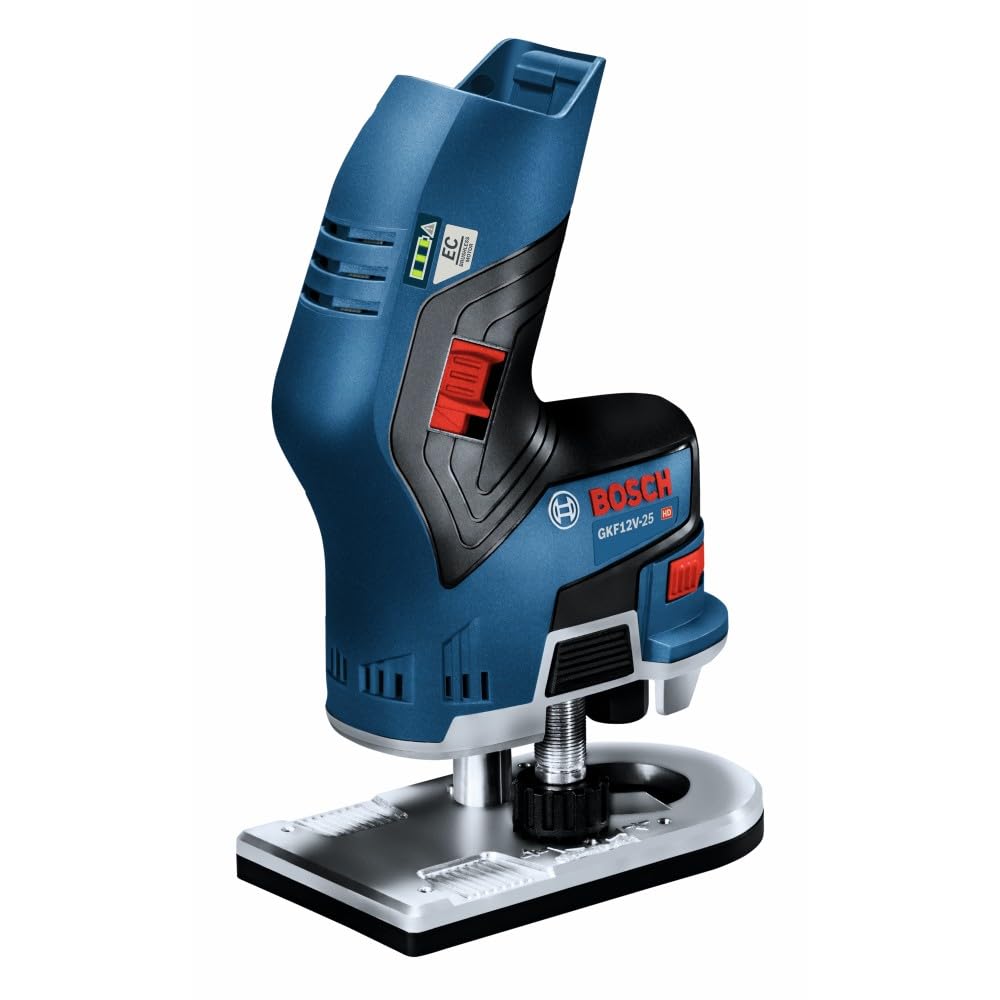
This Bosch palm edge router redefines what a 12V cordless tool can do. Weighing just 2.2 pounds with a 4Ah battery installed, the GKF12V-25N is the lightest tool in this roundup — and it feels like an extension of your hand during edge profiling. The offset design places the grip directly over the workpiece, giving you maximum stability during roundovers and chamfer cuts on cabinet doors and face frames. The EC brushless motor spins at a fixed 13,000 RPM, which is ideal for 1/4-inch and smaller bits on soft and hardwoods.
The depth adjustment system is precise — 0.04 inches per dial revolution — and the lock prevents accidental drift during use. The self-releasing collet and one-wrench spindle lock make bit changes fast and frustration-free. Users consistently praise the ergonomics: the rubber grip is well-contoured, and the tool is quiet enough to use without hearing protection for short bursts. The Bosch 12V battery platform is compact and shares chargers with the entire 12V line, making this an excellent add-on for anyone already invested.
The limitations are real and important. The fixed 13,000 RPM means you cannot slow down for larger bits or harder materials — attempting a 3/8-inch rabbit in oak will stall the motor. There’s no dust collection port, so you’ll be brushing chips away after each pass. The clear plastic base is unmarked for template work. This router is an absolute specialist: exceptional for edge profiling and flush trimming, but not a general-purpose router. For its intended job, it’s the best tool you can buy.
Why it’s great
- Lightest cordless router tested — 2.2 lbs
- Superb ergonomics for one-handed operation
- Precise depth adjustment with lock
- Quiet and smooth brushless motor
Good to know
- Single speed 13,000 RPM — no low-speed option
- No dust collection of any kind
- Limited to light edge work only
- Requires Bosch 12V platform
5. Craftsman CMCW400B

The Craftsman CMCW400B enters the mid-range with a brushless motor that punches above its price tier. The variable speed dial covers 16,000 to 30,000 RPM — a usable range for most edge work and light trimming — and the motor delivers enough torque to handle 1/4-inch roundovers in red oak without bogging down. The depth adjustment knob provides decent macro/micro control, and the included edge guide and dust port adapter add immediate usability. For DIYers already on the Craftsman V20 platform, this is an affordable entry into cordless routing.
Customer reports are generally positive: the tool feels solid in the hand, the LED light is helpful in dim corners, and the brushless motor runs efficiently on a 4Ah battery. Several users note that the dust collection shield distorts their view of the bit entry point — a minor but persistent irritation. The plastic base shows scratches sooner than metal alternatives, but that’s expected at this price bracket. Bit changes are straightforward with the included wrench, and the collet accepts standard 1/4-inch shank bits.
The biggest compromises come in build quality details. The plastic dowel that secures the dust shroud is fragile and prone to breaking if overtightened. The speed dial lacks positive detents, making it easy to knock off your setting accidentally. And while the motor is brushless, the overall fit and finish don’t match DEWALT or Metabo HPT. Still, for homeowners and weekend woodworkers who need a reliable cordless router for occasional use, the CMCW400B offers strong value — especially if you catch it on sale.
Why it’s great
- Brushless motor at a budget-friendly price
- Includes edge guide and dust port
- Works with Craftsman V20 batteries
- Variable speed with decent range
Good to know
- Dust shield obstructs view of the bit
- Plastic dowel for shroud is fragile
- Speed dial lacks detents
- Build quality not as tight as premium brands
6. RYOBI PCL424B

The RYOBI PCL424B is the most affordable dedicated cordless router in this guide, and it serves as a capable gateway tool for homeowners and DIYers who already own ONE+ batteries. The brushed motor delivers 20,000–30,000 RPM — a narrower band than most competitors, but perfectly adequate for trimming laminate, softening sharp edges on pine, and flushing up jointed boards. At 3.2 pounds, it’s light enough for one-handed use on horizontal surfaces, and the compact fixed base fits into tight cabinet interiors where larger routers cannot reach.
Users consistently describe it as “great for small jobs” and “perfect for home projects.” The clear polycarbonate base offers decent visibility, and the micro dial depth adjustment provides enough control for repeatable passes on consistent thicknesses. The LED light is a welcome addition, and the dust port accepts standard vacuum hoses. Several reviewers note that the tool encourages them to reach for a router more often — precisely because there’s no cord to manage — which is the entire value proposition of cordless routing.
The brushed motor is the Achilles’ heel. It lacks the power and runtime efficiency of brushless alternatives, meaning heavy or prolonged cuts will drain a 4Ah battery noticeably faster than the DEWALT or Bosch brushless models. The plastic base feels less durable than metal competitors, and the included wrench is basic. This router cannot handle deep rabbets in hardwood or sustained production work. But for occasional edge work and trimming around the house — and especially for anyone already invested in the RYOBI ecosystem — the PCL424B is a smart, low-risk entry point.
Why it’s great
- Most affordable cordless router in the guide
- Lightweight and compact for tight spaces
- Works with ubiquitous RYOBI ONE+ batteries
- Clear base for good visibility
Good to know
- Brushed motor less efficient than brushless
- Narrower speed range (20,000–30,000 RPM)
- Plastic base less durable than metal
- Not suitable for heavy-duty or production work
7. Genmitsu GM7100E

The Genmitsu GM7100E is the outlier in this cordless router list — it is a corded spindle motor designed primarily as an upgrade for CNC engraving machines. Its 710W brushless motor delivers a wide 6,500–30,000 RPM range with constant torque control and soft start, making it a significant upgrade over the underpowered spindles found on many entry-level CNC routers. The 65mm diameter body fits standard CNC mounts, and the included ER11 collet accepts 1/8-inch bits with typical run-out under 0.05mm for clean engraving passes.
Reviewers who replaced stock CNC spindles report noticeable improvements in power consistency and reduced static noise interference. The 11.5-foot power cord provides flexibility for gantry movement, and the extension connector lets you adjust length further. The four included spare carbon brushes extend service life. Some users praise it as quieter and smoother than previous spindles, though a few note that Chinese QC can result in loose brush holders — tightening them before use resolves the issue.
This tool is not a hand-held router. It lacks a baseplate, depth adjustment, edge guide, or any of the ergonomic features that define the other products here. Attempting to use it as a freehand trim router would be unsafe and impractical. Its value lies in CNC upgrades and dedicated bench-mounted routing where consistent torque and wide speed range matter more than portability. If you need a cordless router for woodworking, skip this — but if you’re upgrading a CNC spindle on a tight budget, the GM7100E is a smart choice.
Why it’s great
- Very wide speed range (6,500–30,000 RPM)
- Low run-out under 0.05mm for precision
- Constant torque with soft start
- Includes spare carbon brushes
Good to know
- Corded — not a true cordless router
- Not suitable for hand-held routing
- Inconsistent QC on brush holders
- Supplied collet wrenches are soft pot metal
FAQ
Can a cordless router replace a corded router for heavy work?
What is the difference between a fixed base and a plunge base on a cordless router?
Why does my cordless router lose power mid-cut?
Can I use a cordless router for CNC work?
Final Thoughts: The Verdict
For most users, the best cordless router winner is the Metabo HPT M1808DAQ4 because it delivers the best balance of weight, power, variable speed range, and included accessories at a mid-range price — a genuine professional tool that doesn’t break the bank. If you want maximum dust control and raw horsepower for cabinet shop work, grab the Bosch GKF18V-25N. And for ultra-portable edge profiling where every ounce counts, nothing beats the Bosch GKF12V-25N — but stay within its light-duty limits. Choose the platform that matches your existing battery system, and you’ll never fight a power cord again.

Mo Maruf
I created WellFizz to bridge the gap between vague wellness advice and actionable solutions. My mission is simple: to decode the research and give you practical tools you can actually use.
Beyond the data, I am a passionate traveler. I believe that stepping away from the screen to explore new environments is essential for mental clarity and physical vitality.