Our readers keep the lights on and my smoothie glass nicely filled. As an Amazon Associate, I earn from qualifying purchases.
Specs are compiled from manufacturer listings and verified buyer reviews and can change over time — please confirm the key details on the product page before buying.
Picking the right cordless 7 1/4 circular saw means choosing between raw power, runtime, weight, and the feel of the saw in your hands. A bad choice leaves you struggling through thick lumber or swapping batteries mid-cut, while a good one makes framing, sheathing, and ripping feel easy.
I’m Mohammad Maruf — the founder and writer behind WellFizz. This guide is built by comparing the manufacturers’ published specifications and the patterns across verified customer reviews, so you get each pick’s real strengths and trade-offs instead of marketing spin.
After looking at everything from power to price against bevel range, we’ve put together this guide to the cordless 7 1/4 circular saw market to help you find the one that suits your build and your budget.
Our Picks at a Glance

How To Choose The Best Cordless 7 1/4 Circular Saw
A cordless 7 1/4-inch circular saw is your main cutting tool for framing, decking, and sheathing. Buy the wrong one and you get a saw that stalls in thick wood, drains batteries too fast, or wears out your arm by lunch. Focus on these three things to get it right.
Power and RPM: Don’t Just Look at Voltage
Higher voltage (60V vs 18V) usually means more sustained power, but the motor type matters more. A brushless motor delivers more torque per watt, while a brushed motor loses energy as heat. Look at RPM as a starting point: 5,100 RPM is standard for a 7 1/4 saw, but premium models hit 6,000 RPM for noticeably faster cuts through pressure-treated lumber and engineered wood.
Blade Position and Bevel Range
Blade-left saws give you a clearer view of the cut line if you’re right-handed, because you see the blade directly without leaning over the saw. Blade-right saws let the saw’s weight rest on the waste side of the cut, which is helpful when making rip cuts along a long board. Bevel capacity (the angle the base tilts) ranges from about 50° to 57° — a higher number lets you cut steeper angles for roofing rafters or compound miters without flipping the material. Stops at 22.5° and 45° help you lock in common angles quickly.
Weight and Balance
Weight is the second-biggest factor after power because you hold a circular saw one-armed for most cuts. A sidewinder (motor beside the blade) can weigh as little as 7.9 pounds, making it easier to use overhead or on ladders. A rear-handle saw (motor behind the blade) is heavier — around 10-12 pounds — but the weight distribution feels more balanced for long straight cuts because the handle sits at the back like a corded worm-drive saw. If you cut all day, the lighter sidewinder saves your shoulder. If you frame walls and need precision, the rear-handle layout is worth the extra weight.
Quick Comparison
| Model | Best For | RPM | Weight | Bevel Range | Amazon |
|---|---|---|---|---|---|
| DEWALT FLEXVOLT 60V (DCS577X1)★ Best Overall | Framing pros who want a kit | — | 10.9 lb | 53° | Amazon |
| CRAFTSMAN V20 RP (CMCS551B)Budget Champion | Budget-conscious DIYers | — | 9.3 lb | 56° | Amazon |
| CRAFTSMAN V20 (CMCS550B)Mid-Range Value | Mid-range value | — | 8.8 lb | 56° | Amazon |
| Metabo HPT 36V Rear Handle (C3607DWAQ4) | Lightest rear-handle saw | 5,100 RPM | 8.2 lb | 53° | Amazon |
| Milwaukee M18 FUEL (2834-20) | Maximum cuts per charge | — | 11 lb | — | Amazon |
| BOSCH PROFACTOR (GKS18V-26LN) | Blade-left precision | — | 8.8 lb | 50° | Amazon |
| Metabo HPT 36V Torque Boost (C3607DB) | Speed through dense materials | 6,000 RPM | 7.9 lb | 55° | Amazon |
| Makita XSR01PT 36V (18V X2) | Heavy-duty framing | 5,100 RPM | 23.1 lb | — | Amazon |
| DEWALT FLEXVOLT 60V (DCS578X2) | Premium power with brake | — | 8.2 lb | 57° | Amazon |
In‑Depth Reviews
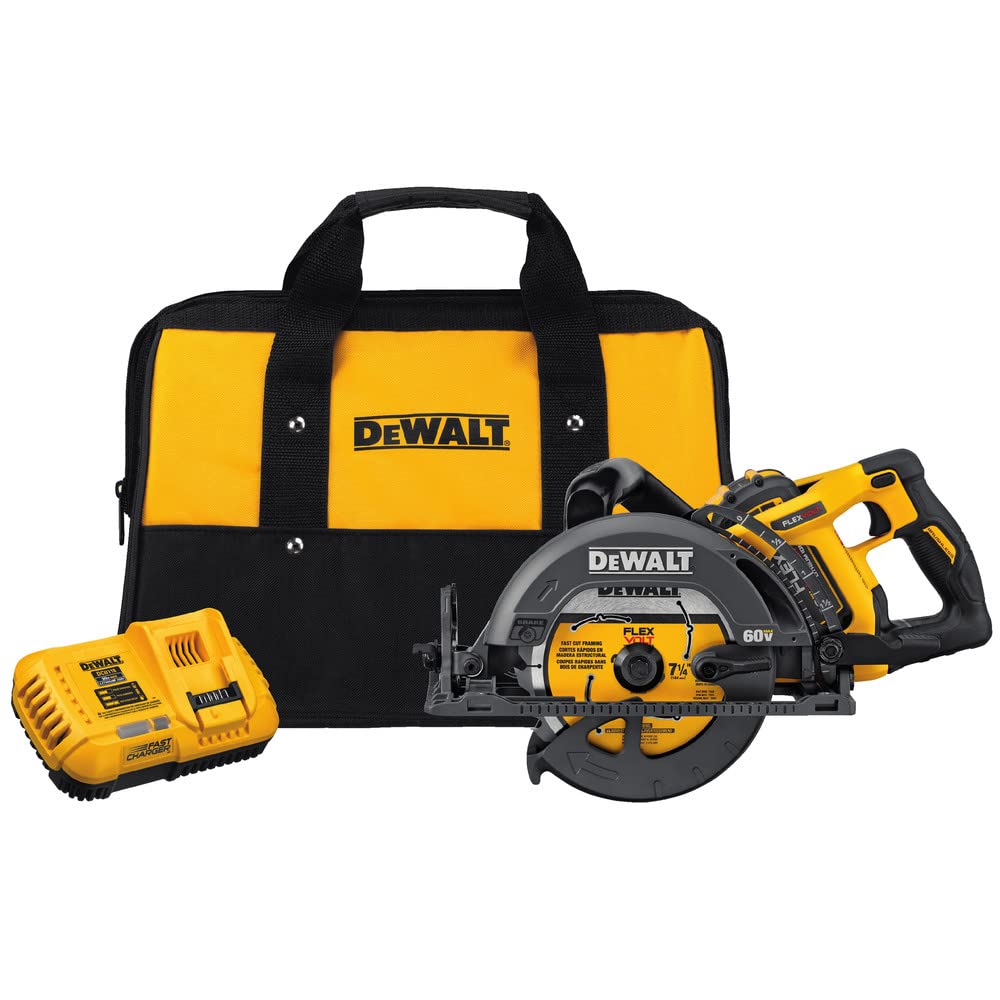
1. DEWALT FLEXVOLT 60V MAX* Circular Saw Kit, 7-1/4-Inch, Worm Style, 9.0Ah Battery (DCS577X1)
Our pick — over 4.5★ from 850+ verified ratings; the strongest balance of quality and price.
The worm-drive layout you know, now free of the cord.
This DEWALT saw handles like a traditional worm-drive, with the blade on the left and the handle at the rear so you see the cut line completely unobstructed. That rear-handle design gives you the balanced feel that framers love for long, straight cuts through stacked lumber. The brushless motor and the 60V battery system deliver sustained power without the cord — buyers report it keeps cutting through treated 2x12s without slowing down, unlike some 18V saws that stall under load.
One reviewer noted the electronic brake is fast enough that you never have to wait for the blade to stop between cuts, and the integrated dust blower keeps the cut line visible without you having to blow the sawdust away manually. The kit includes a 9.0Ah battery, a fast charger, a carbide-tipped blade, and a contractor bag, so you are ready to work right from the start. The magnesium shoe is tough while staying light, and the rafter hook lets you hang the saw from a joist when you need two hands free.
For a pro building walls every day, the power and ergonomics justify the cost, but a weekend DIYer might find the weight and investment excessive for occasional use.
What Makes It Sing
- Worm-drive rear handle mimics corded feel for precision cuts
- Electronic brake stops the blade instantly after trigger release
- High-grade magnesium shoe for durability without adding weight
- Includes 9.0Ah battery, fast charger, and carrying bag
Where It Falls Short
- Premium kit price is a big upfront investment
- 60V batteries are heavier than standard 20V packs
- Overpowered for light DIY tasks like trim work
Reach for this saw if: you frame or renovate professionally and need a cordless saw that matches the balance and power of a corded worm-drive.
Look elsewhere if: you only cut plywood occasionally and want a lighter, less expensive bare-tool option.
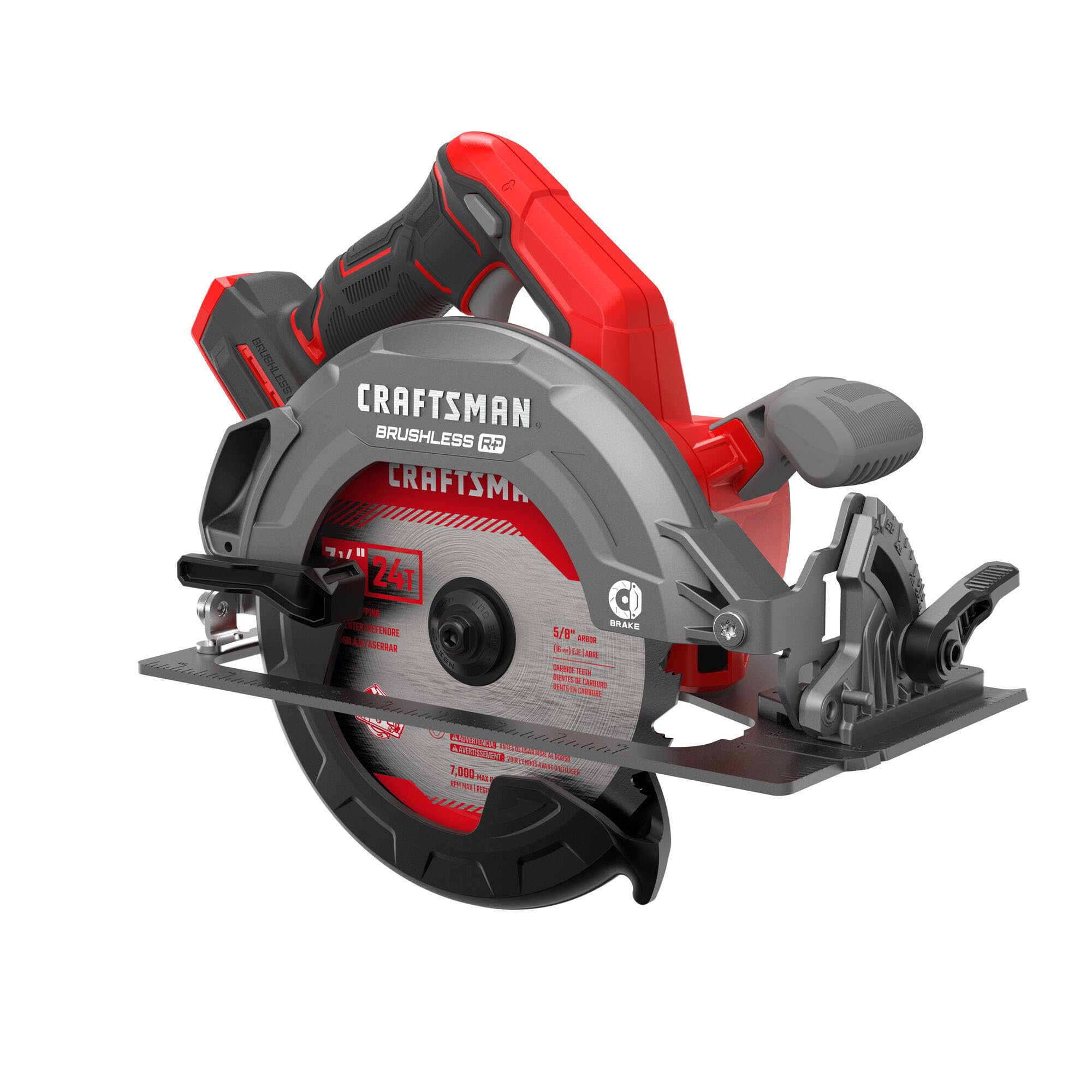
2. CRAFTSMAN V20 RP Cordless Circular Saw, 7-1/4 inch, Bare Tool Only (CMCS551B)
A surprising amount of saw for its shelf price.
For a budget-tier bare tool, the CRAFTSMAN V20 RP packs a brushless motor that the manufacturer claims delivers up to 75% more power than its brushed predecessor — enough to rip through 2x4s and plywood sheeting without you feeling the motor lag. The LED is positioned above the base, lighting the cut line so you see where the blade is going even in dim job-site corners or inside a dark garage.
The max bevel of 56 degrees with positive stops at 22.5 and 45 degrees gives you the range to cut compound angles for rafter tails and stair stringers without making you guess. The upper metal guard adds resilience — owners mention it handles drops onto concrete without cracking, which matters for a tool that lives on active job sites. At 9.3 pounds, this saw sits in the middle of the weight range: not the lightest, but not tiring over a half-day of cutting. The main trade-off is that this is a bare tool — no battery or charger included — so you must already be in the V20 system or buy a starter kit.
The Highlights
- Brushless motor gives strong power for budget price
- 56° bevel range covers most angle cuts
- Upper metal guard adds job-site durability
- LED illuminates cut line in low light
The Compromises
- Bare tool only — requires separate battery purchase
- Plastic handle may feel less premium than rubberized grips
- Weight of 9.3 pounds is average, not class-leading
Best for: a handyman or serious DIYer who uses CRAFTSMAN V20 batteries and wants a solid 7 1/4 saw without spending premium-tier money.
skip it if: you need a saw that comes ready to cut from the start with battery and charger included.
3. CRAFTSMAN V20 Cordless Circular Saw, 7-1/4 inch, Bare Tool Only (CMCS550B)
A step above the cheapest CRAFTSMAN, the motor does the heavy lifting.
This CRAFTSMAN V20 (CMCS550B) shares the same 56-degree max bevel and the same up-to-75%-more-power brushless motor claim as its younger sibling above, but customers note it feels slightly more balanced in the hand, likely because of the 8.8-pound weight and the different handle geometry. The LED does the same job — lighting the cut line and work surface so you don’t have to guess where the blade is going in a shaded corner.
The upper metal guard provides that same drop durability, keeping the saw functional even after the occasional ladder tip or bench fall. One builder mentioned that the saw’s cut consistency through pressure-treated 2×6 lumber felt better than expected for a mid-range tool, giving clean edges with less blade wobble. Like the RP version, this is a bare tool — batteries and charger sold separately — so you need to factor that into your total investment. The CMCS550B sits at a slightly higher price than the RP, which translates into a more sturdy-feeling chassis but the same core motor and bevel specs.
Why It’s Worth It
- Same powerful brushless motor as higher-end V20 models
- Upper metal guard improves durability on active job sites
- 56° bevel covers compound cuts without separate miter saw
The Drawbacks
- No battery, charger, or blade included in the package
- Plastic handle base can feel less secure in wet gloves
- LED placement is functional but not as bright as premium ones
This saw fits if: you are already in the CRAFTSMAN V20 system and want a brushless 7 1/4 saw with a solid bevel range and durable guards.
Consider the RP version instead if: you want to save money and don’t need the slightly better build quality of this model.
4. Metabo HPT 36V MultiVolt 7-1/4 Inch Rear Handle Circular Saw, Tool Only – Lightest Weight in Its Class, 53° Bevel Capacity (C3607DWAQ4)

Rear-handle balance without the punishing shoulder fatigue.
At 8.2 pounds, this Metabo HPT rear-handle saw is the lightest in its class — it weighs 2 pounds less than many competitors, making a real difference when you are cutting overhead sheathing or working up on scaffolding all day. The rear handle layout gives you that worm-drive-style balance where the saw tracks straight along a chalk line without you having to fight it, but the weight is low enough that your tricep doesn’t burn out by midday.
The motor spins at 5,100 RPM, and the 36V MultiVolt system delivers up to 500 cuts of 2×4 per charge, so you can frame a wall without swapping batteries. The bevel capacity goes to 53 degrees with stops at 0°, 45°, and 53°, giving you enough range for roof pitches and complex angle cuts. The magnesium base (a lightweight but strong metal) keeps the shoe durable and flat, which matters for cuts that need to be dead accurate. A rafter hook lets you hang it from a joist when you need both hands to reposition material. Unlike the heavier Metabo HPT Torque Boost model, this one prioritizes low weight and endurance over peak speed.
The Standout Features
- Class-leading 8.2-pound weight reduces fatigue on long cuts
- Rear-handle design offers exceptional balance and cut-line visibility
- 500 cuts per charge means fewer battery changes on the job
- Lifetime tool body warranty backs up the build
The Trade-Offs
- RPM of 5,100 is standard, not top-tier speed
- Bare tool only — requires separate battery purchase
- Green color scheme may not match existing tool battery systems
Ideal for the roofer or framer who: cuts overhead all day and needs a rear-handle layout that doesn’t weigh them down.
Pick a different saw if: you need the fastest blade speed possible and are willing to carry extra weight for it.
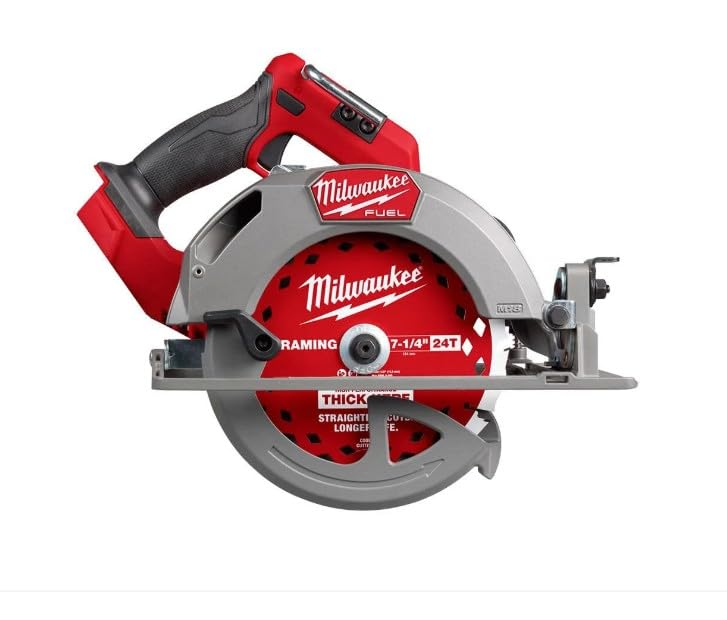
5. Milwaukee M18 FUEL 7-1/4 Inch Circular Saw (Bare Tool)
This Milwaukee trades featherweight feel for jaw-dropping runtime.
The POWERSTATE brushless motor inside this saw is built for demanding applications — it delivers the cut speed to rip through stacked LVL and pressure-treated beams without the motor bogging down. The REDLINK PLUS intelligence system monitors the tool to protect it from overloads, overheating, and over-discharge, so the saw lasts through years of daily pro use.
The cut capacity reaches 2-5/8 inches, meaning you can cut through 3x material in a single pass without flipping the wood. At 11 pounds, this is one of the heavier saws on the list. That weight provides stability during cuts, but it is noticeably heavier than the Metabo HPT rear-handle (11 pounds versus 8.2 pounds). Reviewers point out the weight is fine for ground-level framing but becomes tiresome overhead. The bare-tool format means you need an M18 battery already in your kit.
Why Pros Buy It
- Up to 750 cuts per charge with HD12.0 battery, reducing downtime
- REDLINK PLUS intelligence prevents motor damage from overloads
- 2-5/8 inch cut depth cuts 3x lumber in one pass
What You Give Up
- At 11 pounds, it is the heaviest standard sidewinder on this list
- Bare tool only — requires separate M18 battery purchase
- Higher cut count comes with a high upfront cost
This saw is for you if: you are a professional framer who values uninterrupted cutting above all else and already owns M18 batteries.
Think twice if: weight is your main concern, especially for overhead cuts or all-day use on ladders.
6. BOSCH GKS18V-26LN PROFACTOR™ 18V 7-1/4 In. Blade-Left Circular Saw (Bare Tool)

A blade-left design that rewards right-handers with a clear view.
BOSCH’s PROFACTOR saw puts the blade on the left of the motor, so when you hold it in your right hand you see exactly where the blade enters the wood without craning your neck. That visibility makes it easier to follow a pencil line or a chalk mark with confidence. The BITURBO brushless technology uses a high-performance motor and drive-train system engineered to take full advantage of the power from the CORE18V high power batteries (sold separately), delivering corded performance from an 18V package.
The electronic convenience brake stops the blade quickly between cuts, reducing the wait time when you are moving from one cut to the next. The bevel range goes to 50 degrees with locks in the front, and the cut capacity of 2-5/8 inches lets you cut through 2x material across the entire bevel range without repositioning. The auxiliary handle is designed at an exacting height to allow for 2x guided straight cuts — a small touch that experienced users notice. The saw comes with a carbide blade and a hex wrench for blade changes. At 4 Kilograms (about 8.8 pounds), it matches the weight of the CRAFTSMAN V20 but feels more balanced due to the blade-left layout.
what separates it
- Blade-left design gives right-handed users a clear line of sight
- BITURBO motor delivers corded-level power from 18V system
- Auxiliary handle height is tuned for 2x guided cuts
- Five-year limited warranty and 180-day return guarantee
The Limitations
- Bare tool only — no battery or charger included
- Bevel range of 50° is less than the 56° to 57° of some competitors
- BOSCH batteries are not interchangeable with other common systems
A natural pick if: you value cut-line visibility above all else and want a saw that feels balanced for rip cuts with the right hand.
Look for a higher bevel range if: you frequently cut steep roof angles that exceed 50°.
7. Metabo HPT 36V MultiVolt™ 7-1/4-Inch Circular Saw w/Torque Boost Technology, C3607DB

At 6,000 RPM, this is the fastest-spinning blade on the list.
The Metabo HPT Torque Boost saw is the upgrade from the standard MultiVolt model, and the headline spec is the RPM: 6,000 RPM versus the standard model’s 5,100 RPM. That extra spin speed means the blade cuts through thick and dense materials like LVL, hardwood, and treated 6×6 posts faster, with less resistance felt in your arms. The Torque Boost button activates a mode designed specifically for cutting thicker and denser materials, giving you a surge of twisting force when the blade starts to slow down.
At just 7.9 pounds, this saw is noticeably lighter than many competitors (it is nearly 3 pounds lighter than the Milwaukee M18 FUEL saw). The durable aluminum base plate reduces overall weight while staying flat and strong for accurate cuts. A visible cutting depth indicator on the side of the saw lets you set your depth without having to eyeball it or measure with a separate tool. Buyers mention the saw cuts faster than it has any right to at this weight, and the rafter hook stores it conveniently on the job site. The kit includes a 36V/18V MultiVolt 4.0Ah/8.0Ah battery, charger, saw blade, and carrying bag — a fully ready-to-cut package.
The Defining Edge
- Industry-leading 6,000 RPM for noticeably faster cutting speed
- Ultra-light 7.9-pound weight reduces fatigue all day
- Torque Boost button cuts through dense material without stall
- Includes battery, charger, blade, and bag
Considerations
- Higher speed may require good blade control on start
- Plastic handle may not survive rough drops as well as metal
- Torque Boost is great but drains the battery faster
Reach for this one if: speed matters most — you cut thick engineered lumber daily and want the fastest blade in the class.
The standard Metabo HPT rear-handle is a better choice if: you value more cuts per charge and rear-handle balance over top speed.
8. Makita XSR01PT 36V (18V X2) LXT® Brushless Rear Handle 7-1/4″ Circular Saw Kit (5.0Ah)

Two batteries power one beastly rear-handle saw.
Makita’s X2 LXT system uses two 18V batteries (included 5.0Ah packs) to deliver 36V of power, giving this rear-handle saw the voltage of a corded saw without a cord. The Makita-built electronically controlled brushless motor spins at 5,100 RPM and runs 50% longer per charge compared to older brushed models. The motor eliminates carbon brushes entirely, which reduces friction and heat, so the saw runs cooler and lasts longer over years of heavy use.
Automatic Speed Change technology is the standout feature here — it adjusts the cutting speed and torque in real-time during the cut, so when you hit a knot or a denser section of wood, the saw automatically adds torque to keep the blade moving without stalling. Makita claims the saw delivers up to 558 crosscuts per charge in 2×4 SPF lumber and up to 291 crosscuts per charge in 2×10 SPF lumber using the included 5.0Ah batteries. The kit includes two 5.0Ah batteries, a charger, a 24-tooth carbide-tipped blade, and a wrench. At 23.1 pounds with batteries, this is the heaviest saw on the list, but that weight comes with the stability of a full-scale framing saw.
The Heavyweight Advantages
- Automatic Speed Change adjusts power mid-cut through variable material
- Brushless motor runs 50% longer per charge than previous models
- Up to 558 crosscuts in 2×4 per charge — class-leading endurance
- High stability on long straight cuts due to weight and layout
The Weighty Downsides
- At 23.1 pounds with batteries, significantly heavier than any other pick here
- Two-battery system means you have to keep two packs topped up
- Overkill and exhausting for overhead or one-handed work
This is the saw for a framer who: works from the ground or a bench, takes hundreds of cuts per day, and wants the stability of a heavy rear-handle saw with automatic torque adjustment.
Avoid this saw if: you need to cut overhead, on ladders, or carry your saw through tight spaces.
9. DEWALT FLEXVOLT 60V MAX* Circular Saw with Brake Kit, 7-1/4-Inch (DCS578X2)

A 60V saw with 57 degrees of bevel and a dedicated electric brake.
This DEWALT FLEXVOLT saw uses a 60V MAX battery system that delivers up to 47% more power than the DCS575, according to the manufacturer, making it a noticeable upgrade for anyone who has used an older DEWALT 20V saw. The cut depth reaches 2-9/16 inches at a 90-degree bevel, which is deep enough for cutting through stacked 2x material in one pass. The 57-degree max bevel capacity with stops at 22.5 degrees and 45 degrees is the widest range on this list (tied with the CRAFTSMAN’s 56-degree but with the extra degree), giving you the flexibility to cut very steep compound angles without having to flip the material over.
An integrated LED lights the cut line, which shoppers say is bright enough to see clearly even in direct sunlight. The electric brake stops the blade the instant you release the trigger, giving you confidence when you are making sequential cuts and need the blade to stop fast. The kit includes two 60V FLEXVOLT batteries so you can work continuously while one pack charges. Buyers report the saw feels powerful and smooth through thick hardwood, with less vibration than some 18V saws that struggle with dense grain. At 8.2 pounds, it is surprisingly light for a 60V saw, matching the Metabo HPT rear-handle’s weight while offering more bevel range.
The Premium Perks
- Widest bevel range at 57° for steep roof and miter cuts
- Electric brake stops blade instantly for safe sequential cutting
- Two batteries included for continuous job-site operation
- Integrated LED provides clear cut-line visibility in sun or shade
The Fine Print
- Premium kit price is among the highest on this list
- 60V batteries require compatible chargers and storage
- More power and speed than a weekend DIYer will ever need
Ideal for the serious contractor who: wants a complete kit with two batteries, a wide bevel range for complex cuts, and the power of a 60V system.
Save your money if: you cut mostly 2x4s and plywood and won’t use the 57° bevel or need two batteries on day one.
Understanding the Specs
RPM (Revolutions Per Minute)
RPM is how fast the blade spins. A 7 1/4 circular saw typically runs between 5,100 and 6,000 RPM. Higher RPM means faster cutting, especially through dense materials like pressure-treated lumber or hardwood. Lower RPM gives you more torque, but for most framing cuts, you want the blade to spin as fast as it can to reduce the effort you need to push the saw forward. The trade-off is that a higher RPM saw usually drains the battery slightly faster, and can be more aggressive at the start of a cut.
Bevel Capacity
Bevel capacity is the angle the saw’s base can tilt in relation to the blade. A 0° bevel means a straight 90-degree cut (perpendicular to the material). A 45° bevel gives you a common miter angle for trim and corners. Saw ranges from 50° to 57° allow you to cut steeper angles for roof rafters and compound miters. Positive stops at 22.5° and 45° let you lock the saw at those angles without measuring. A wider bevel range is useful for framers, but a DIYer will rarely need more than 45°.
Blade Position (Blade-Left vs Blade-Right)
Blade-left means the blade sits on the left side of the motor when you are looking at the saw from the handle. For a right-handed user, this gives you a clear view of the cut line because your body is behind the blade, not leaning over it. Blade-right puts the blade on the right side, so the saw’s weight rests on the waste piece of the wood during rip cuts, making it easier to track a long straight cut. Neither is better — it depends on whether you prioritize visibility during crosscuts or stability during rip cuts.
Electric Brake
An electric brake (sometimes called an electronic brake) stops the blade from spinning within a second or two after you release the trigger. Without a brake, a 7 1/4 blade can keep spinning for several seconds after you finish a cut, which is dangerous if you set the saw down or reach near the blade. A brake is a safety feature that also saves time when you are making rapid sequential cuts, because you don’t have to wait for the blade to stop before repositioning.
FAQ
Can I use a 6.5 inch blade on a 7 1/4 inch cordless circular saw?
How many cuts per charge should I expect from a 7 1/4 cordless saw?
What is the difference between a sidewinder and a rear-handle circular saw?
Is a 60V circular saw worth the extra cost over an 18V or 20V model?
What does blade-left mean for left-handed users?
How deep can a 7 1/4 inch cordless circular saw cut?
Can I use my cordless circular saw with a guide rail?
Why does my circular saw kick back and how do I prevent it?
How long does a brushless motor last in a cordless saw?
What size battery do I need for a 7 1/4 cordless saw?
Final Thoughts: The Verdict
If you want one dependable pick, the cordless 7 1/4 circular saw winner is the DEWALT FLEXVOLT 60V Kit (DCS577X1) because it combines a professional-grade worm-drive layout with the power of a 60V system and includes everything you need to start cutting. If you want the lightest high-speed option, grab the Metabo HPT Torque Boost (C360DB). And for maximum cuts per charge on an M18 platform, the standout is the Milwaukee M18 FUEL (2834-20).
How We Picked
We do not accept paid placement. Every pick is matched to a real buyer and a real use-case; we do not hands-on test units.
Sources & Methodology
Specifications: manufacturer listings and product documentation. Review insights: verified customer reviews, as of July 2026. Pricing: not shown on this page (it changes often); check the current price via the retailer link.
As an Amazon Associate, WellFizz earns from qualifying purchases. This does not affect which products we feature.
Related Guides

Mo Maruf
I created WellFizz to bridge the gap between vague wellness advice and actionable solutions. My mission is simple: to decode the research and give you practical tools you can actually use.
Beyond the data, I am a passionate traveler. I believe that stepping away from the screen to explore new environments is essential for mental clarity and physical vitality.