Our readers keep the lights on and my smoothie glass nicely filled. As an Amazon Associate, I earn from qualifying purchases.
Whether you’re building subtle plant supports, experimenting with electroculture coils, or creating custom tomato cages that won’t rust by mid-season, the gauge, purity, and temper of your copper wire determine whether your garden project holds together or frays apart. Pick the wrong diameter and your wire either snaps under a heavy branch or lacks the stiffness to hold a simple spiral.
I’m Mohammad Maruf — the founder and writer behind WellFizz. I’ve spent countless hours analyzing the gauge tolerances, copper purity certifications, and annealing processes that separate craft-grade spools from garden-ready bundles in this category.
After reviewing five top-selling spools on Amazon and cross-referencing their real-world performance in electroculture setups and structural supports, this guide cuts through the marketing to reveal the single best copper wire for gardening.
How To Choose The Best Copper Wire For Gardening
Garden wire isn’t one-size-fits-all. The right pick depends on your project: a heavy gauge (12 AWG) provides the skeletal stiffness for a freestanding trellis, while a finer gauge (24 AWG) is better for winding electroculture spirals around bamboo stakes. Beyond thickness, the wire’s temper — dead soft versus half-hard — dictates how well it holds a bent shape under wind and rain.
Gauge Thickness and Structural Purpose
Gauge numbers are counterintuitive: the smaller the number, the thicker the wire. For garden structures that need to bear weight — tomato cages, cucumber trellises, arched supports — 12 to 16 gauge is the practical range. Thinner gauges (20 to 24) lack the column strength to stand upright on their own and are best reserved for electroculture coils or securing lightweight vines.
Purity and Outdoor Longevity
Look for wire labeled 99.9% pure copper or higher. Alloyed wire or copper-plated steel will corrode faster when buried or left exposed to moisture. Bare, uncoated copper develops a natural patina over time — that’s protective, not rust — but a clear lacquer coating (found on some craft spools) can block the electrical conductivity required for electroculture experiments.
Spool Winding and Kink Resistance
Dead-soft copper is easy to bend by hand, but cheap spooling introduces tight kinks that can’t be fully straightened. A clean, evenly wound spool reduces frustration during trellis weaving and coil winding. For serious garden use, avoid wire that arrives with tangled loops or visible crimps in the first few feet.
Quick Comparison
On smaller screens, swipe sideways to see the full table.
| Model | Category | Best For | Key Spec | Amazon |
|---|---|---|---|---|
| WSICSE 16 Gauge 45ft | Mid-Range | Small garden coils & craft | 1.3 mm diameter, 45 ft | Amazon |
| D.MATIALL 16 Gauge 151ft | Premium | Full garden frames & electroculture | 1.3 mm diameter, 151 ft | Amazon |
| YEZHET 24 Gauge 850ft | Premium | Fine electroculture spirals | 0.5 mm diameter, 850 ft | Amazon |
| YEZHET 12 Gauge 1 lb | Premium | Heavy trellises & cage frames | 2.05 mm diameter, 1 lb | Amazon |
| YEZHET 20 Gauge 330ft | Premium | Versatile garden ties & coils | 0.8 mm diameter, 330 ft | Amazon |
In‑Depth Reviews
1. D.MATIALL 16 Gauge 151ft Copper Wire
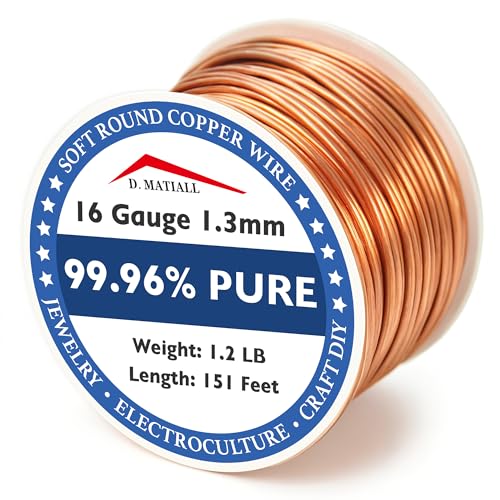
The D.MATIALL spool hits every important mark for a serious gardener: 16 gauge is thick enough to form self-supporting tomato cages yet flexible enough for electroculture coils, and the 151-foot length covers multiple raised beds without needing a second purchase. The C11000 designation means 99.96% pure copper, which resists soil corrosion far better than the recycled or plated alloys found on bargain spools.
Buyers report using this wire for DIY trellises and plant cages with clean results — the wire holds its bend without springing back. A few users noted that the spool arrived with some uneven winding, producing isolated kinks in the first layer, but the straight sections are long enough for most garden arcs and frames. At this price per foot, it undercuts local hardware stores by a wide margin.
If you want one spool that transitions from heavy structural support to fine electroculture experiments, this is the most versatile mid-range option available. The reddish-brown polished finish also weathers into an attractive patina rather than flaking or rusting.
Why it’s great
- High purity C11000 copper resists corrosion in soil
- 151-foot run covers large garden projects
- Holds shape well for trellis and cage construction
Good to know
- Spool winding can introduce minor kinks in the first few feet
- Some users found the wire too stiff for intricate jewelry work
2. YEZHET 12 Gauge 1 lb Copper Wire

When your garden project demands real backbone — a freestanding arch, a heavy-branch tomato cage, or a ground stake that won’t buckle under wind — 12 gauge is the threshold, and YEZHET delivers it in a pure, dead-soft temper. The 2.05 mm diameter is noticeably thicker than 16 gauge wire and can support climbing beans or sprawling squash vines without additional reinforcement.
Multiple layers of protective packaging kept the copper bright and untarnished upon arrival, a detail that matters for outdoor installations where surface contaminants can accelerate corrosion. The wire bends cleanly with hand tools and holds its angle permanently — no spring-back. Several reviewers specifically praised how well this gauge worked when wound around thick bamboo stakes for electroculture antennas.
The trade-off is that 12 gauge requires pliers for most bends; you won’t be shaping this with your fingers. At 1 pound, you get roughly 12 to 15 feet of wire, so plan your cuts carefully for large trellis frames.
Why it’s great
- Thick gauge holds permanent shape for heavy plant support
- Lead-free and nickel-free for safe soil contact
- Excellent packaging prevents tarnishing before use
Good to know
- Requires pliers or cutters for bending and cutting
- Short total length per pound limits large-scale coverage
3. YEZHET 24 Gauge 850ft Copper Wire
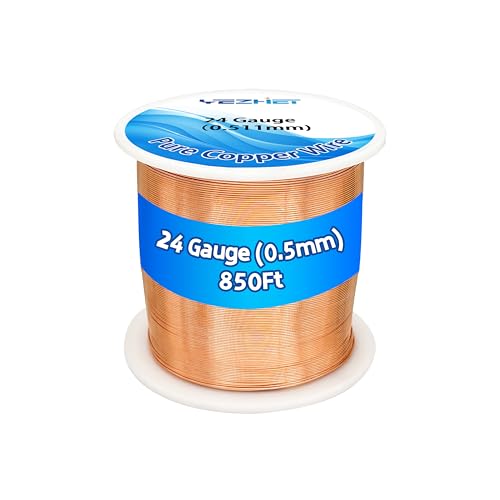
For gardeners focused on electroculture — winding copper spirals around dowels, bamboo stakes, or tree branches — the 24 gauge YEZHET spool provides the fine diameter that makes tight, even coils possible without excessive bulk. At 0.5 mm thick, this wire wraps neatly around sticks and holds its position without needing glue or tape.
The 850-foot length is the standout feature here: you can coil dozens of electroculture antennas for an entire garden bed from a single spool. The wire is dead soft and shiny right out of the packaging, and multiple buyers commented that it bends smoothly without snapping. It’s also lead-free and nickel-free, which eliminates any concern about heavy metals leaching into vegetable beds.
The obvious limitation is that 24 gauge has almost no structural strength on its own. It cannot support the weight of a tomato plant or form a freestanding frame. This is a purpose-built tool for coil antennas and lightweight vine training, not for general garden construction.
Why it’s great
- 850-foot spool covers massive electroculture projects
- Soft and malleable for tight wrapping without kinking
- Bright shiny finish with protective multi-layer packaging
Good to know
- No structural strength for trellises or plant cages
- Very fine diameter can be difficult to handle with gloves
4. WSICSE 16 Gauge 45ft Copper Wire
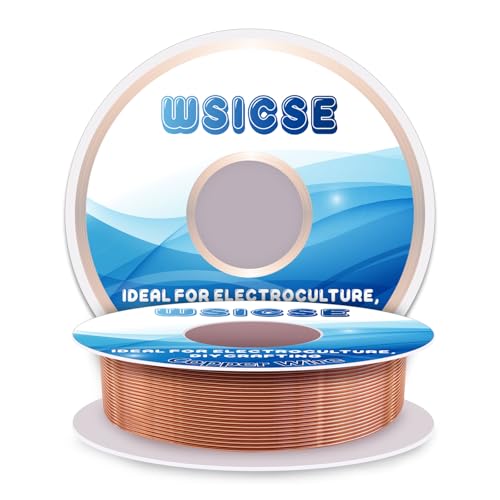
The WSICSE spool is a solid entry point for gardeners who only need a short run — a few tomato rings, an electroculture test coil, or a single raised bed of supports. The 16 gauge thickness matches the D.MATIALL option in diameter, so it offers the same structural versatility, but the 45-foot length limits you to smaller-scale projects.
Customers praised the wire for jewelry and beading work, noting that it’s easy to manipulate and hardens quickly with working. For garden use, the 1.3 mm diameter is stiff enough to hold a spiral shape around a stake but flexible enough to wrap by hand. One reviewer pointed out that the wire seems to have a thin clear coating that keeps it from developing a natural patina — this preserves the bright copper look but may reduce conductivity in electroculture applications.
If you’re testing electroculture for the first time or need a low-commitment spool for weekend garden projects, this compact option avoids the waste of a 150-foot coil while still delivering true 16 gauge performance.
Why it’s great
- Entry-level price for a genuine 16 gauge spool
- Flexible enough for hand bending without tools
- Compact spool stores easily in a toolbox or drawer
Good to know
- Possible thin coating may block electroculture conductivity
- 45-foot length runs out fast on larger garden beds
5. YEZHET 20 Gauge 330ft Copper Wire

At 20 gauge, the YEZHET spool sits in a useful middle zone: thicker than the 24 gauge craft wire, so it offers moderate structural support for tying vines and securing lightweight plants, yet fine enough to wrap multiple turns around a bamboo stake without adding bulk. The 330-foot length provides generous coverage for an entire vegetable patch of ties and training loops.
The 0.8 mm diameter is the sweet spot for gardeners who want one spool for everything — electroculture coils, vine training, light trellis weaving, and craft projects. Users described it as “dead soft,” meaning it bends with gentle finger pressure and holds its new shape without springing back. The packaging includes multiple protective layers that keep the copper bright and free of oxidation during storage.
That said, 20 gauge won’t support a heavy fruit-laden branch on its own — you’ll need to double it up or use it in combination with thicker stakes. For soil-contact applications, the bare copper will develop a natural patina over time, which is harmless and actually protective against further corrosion.
Why it’s great
- Versatile gauge works for both electroculture coils and vine ties
- 330-foot spool provides excellent project coverage
- Dead soft temper allows hand bending without tools
Good to know
- Not thick enough for self-supporting trellis frames
- Natural patina develops in outdoor conditions over time
FAQ
What gauge copper wire is best for electroculture gardening?
Can I use insulated copper wire for garden plant supports?
How long does bare copper wire last outdoors in the garden?
Final Thoughts: The Verdict
For most users, the copper wire for gardening winner is the D.MATIALL 16 Gauge 151ft because it combines high-purity C11000 copper with a generous 151-foot length at a competitive value. If you want a thick gauge for heavy trellises and cage frames, grab the YEZHET 12 Gauge 1 lb. And for fine electroculture coil work across an entire garden, nothing beats the YEZHET 24 Gauge 850ft.

Mo Maruf
I created WellFizz to bridge the gap between vague wellness advice and actionable solutions. My mission is simple: to decode the research and give you practical tools you can actually use.
Beyond the data, I am a passionate traveler. I believe that stepping away from the screen to explore new environments is essential for mental clarity and physical vitality.