Our readers keep the lights on and my smoothie glass nicely filled. As an Amazon Associate, I earn from qualifying purchases.
Specs are compiled from manufacturer listings and verified buyer reviews and can change over time — please confirm the key details on the product page before buying.
The phrase “cooperative card game” sounds like a trick — most card games are built on one winner and a pile of losers. But the nine games here flip that entirely: you either win as a group or you all lose together, which means the real enemy is the game itself, not the person next to you. This guide breaks down the best cooperative card games across every style — from five-minute chaos rounds to sprawling deck-building campaigns — so you can find the one that matches your group’s vibe without wasting a single dollar on a box that will sit unopened.
I’m Mohammad Maruf — the founder and writer behind WellFizz. This guide is built by comparing the manufacturers’ published specifications and the patterns across verified customer reviews, so you get each pick’s real strengths and trade-offs instead of marketing spin.
if you need a fast travel-friendly game for two or a deep strategic boss battle for a full party, the right cooperative card games here transform game night from a showdown into a shared story you will be retelling for years.
Our Picks at a Glance


How To Choose The Best Cooperative Card Games
The first rule of co-op gaming is to ignore the theme and look at the player count. A game that shines with 6 players can fall flat with 2, and a tense two-player experience like piloting a plane together will feel empty with a bigger group. Your real choice starts with how many people are at the table, then moves to how much time and brainpower everyone is willing to invest.
Player Count and Group Dynamics
A game built for exactly 2 players creates a very different pressure than one designed for 4 or 6. Two-player titles often rely on silent trust and tight coordination, while larger groups need mechanics that keep everyone involved and prevent one dominant player from quarterbacking the whole session. Check the listed player range and consider whether your group enjoys open discussion or needs individual roles that force each person to contribute independently.
Play Time and Commitment Level
Real-time games that wrap up in 5 or 15 minutes offer a completely different energy than strategic sessions that run past 60 minutes. Fast games work well as warm-ups, for younger players, or when attention spans are short. Longer games reward investment with deeper strategy and bigger payoffs, but they also require everyone to stay engaged for the full duration. Match the estimated playtime to your group’s typical game-night window.
Difficulty Scaling and Replayability
A good cooperative game needs to stay challenging after multiple plays, or the group will solve it once and shelve it. Look for adjustable difficulty levels, variable setups, modular scenarios, or randomized card pools that change the puzzle each time. Games with multiple bosses, scenarios, or difficulty modes keep the experience fresh and justify the box size on your shelf.
Quick Comparison
| Model | Best For | Players | Play Time | Age Range | Amazon |
|---|---|---|---|---|---|
| Asmodee So Clover!★ Best Overall | Wordplay Groups | 3-6 | 30 min | 10+ | Amazon |
| Sky TeamPremium Pick | Two-Player Tension | 2 | 20 min | 12+ | Amazon |
| That Escalated QuicklyTop Performer | Hilarious Ranking | 2-8 | 15 min | 10+ | Amazon |
| Bandido | Quick Family Fun | 1-4 | 15 min | 6+ | Amazon |
| Castle Panic 2nd Ed | Tower Defense Teamwork | 1-6 | 45 min | 8+ | Amazon |
| 5-Minute Dungeon | Chaotic Speed Runs | 2-5 | 5 min | 8+ | Amazon |
| Disney Lorcana Palace Heist | Solo or Family Co-op | 1-4 | 20 min | 8+ | Amazon |
| Aeon’s End 2e | Deep Deck Building | 1-4 | 60 min | 14+ | Amazon |
| Slay The Spire Board Game | Video Game Adaptation | 1-4 | 45 min | 12+ | Amazon |
In‑Depth Reviews
1. Asmodee So Clover! Party Game
Our pick — over 4.5★ from 950+ verified ratings; the strongest balance of quality and price.
The rare party game where every single player is thinking at the same time — no one sits waiting for a turn.
So Clover! hands each player a clover board with four keyword pairs, and your job is to write one clue that connects two random words on your leaf. Your teammates then have to figure out which pairs your clue links. It sounds simple, but the creativity required to make one word bridge two seemingly unrelated terms creates the kind of laugh-out-loud moments that keep a group going for hours. The game plays in just 30 minutes with 3 to 6 players, and the crowd consensus — drawing from over 120 mentions of positive gameplay — is that this is among the most engaging word games to hit the table. Buyers report that the creative pressure pushes everyone to think in unexpected ways, making it a fixture at family gatherings.
The box packs 220 password cards, 6 clover boards, 6 markers, and a scorecard, and the whole thing is portable enough for a car trip. Unlike Bandido, which supports only 1-4 players, So Clover handles larger groups more naturally, and at 9.06 x 6.3 x 6.46 inches, the box is bigger than Bandido’s pocket-size 4.3 x 2.4 x 1.2 inches — but the trade-off is a richer, more cerebral experience. The thing everyone raves about is that the game truly works at every age from 8 to 80, with no downtime between rounds. The only real consideration is that you need at least three players to get the full effect; a duo will miss the collective brainpower the game is built on. As the reviews put it: “Have played countless hours and will do many more.”
Why players love it
- Zero downtime — everyone participates on every single round
- Infinite replayability thanks to the massive card pool and creative clues
- Easy to teach in under two minutes, even to non-gamers
The honest limits
- Requires at least 3 players to feel truly cooperative
- Relies heavily on vocabulary — younger players may need adult help
- Not ideal for groups that prefer physical action over wordplay
Best for: Anyone hosting a family gathering or party where creativity and laughter matter more than competition — this is the game that gets everyone talking.
Think twice if: Your group prefers fast, tactical decisions over verbal creativity or if you are routinely playing with just two people.
2. Sky Team
Voted Game of the Year 2024 — and it earns every bit of that praise by making two people feel like they are landing a 747 together.
Sky Team is a cooperative game for exactly two players, and it simulates the tension of landing a commercial airliner using nothing but dice and trust. You and your co-pilot each control specific tasks — one manages speed and altitude, the other handles flaps and brakes — and you place your dice silently on a shared cockpit board. The catch is that you cannot talk during the action phase; you plan before the round and then trust your partner to execute their half. The result is a pulse-pounding 20-minute session where every roll matters. The board itself is a beautifully illustrated control panel, and the 20 different airport scenarios each introduce new challenges like ice on the tarmac or kerosene leaks, keeping the puzzle fresh for dozens of plays.
Compared to the word-based fun of So Clover!, Sky Team is a tighter, more focused experience. It is a true test of communication and strategy, and the community response — with nearly a thousand owners chiming in — is overwhelmingly positive about its design. The included components are high-quality: 8 custom dice, a control panel, altitude and approach tracks, tokens, and player aid screens. The clever coffee-token mechanic lets you reroll bad results, which adds a layer of resource management without removing the tension. If you and a partner want a game that makes you feel like a real crew, this is the one.
Perfect for duos: Sky Team is the best two-player cooperative card game on the market right now, with nearly universal agreement that it avoids the “alpha player” problem by design — neither partner can dominate because each has unique, non-overlapping responsibilities.
The only warning: This game is strictly for two players. If your group has three or more, you will need a different game entirely, because the silent-coordination mechanic does not scale.
Reach for this if: You have one regular gaming partner and you crave a tense, strategic challenge that rewards real teamwork over individual brilliance.
Look elsewhere if: Your game nights involve more than two people, or if you prefer lighthearted chaos over concentrated pressure.
3. That Escalated Quickly by Exploding Kittens
A ranking game built on the simple question “how bad is this really?” — and the answers get absurd fast.
That Escalated Quickly asks players to rank scenarios on a scale of 1 to 10 based on intensity, but the twist is that the numbers are secret. Each player holds a hand of number cards, and after hearing a question card, everyone secretly plays a card they think matches the “intensity level” the group will agree on. If your card falls within the group’s consensus range, everyone scores. The game includes 150 question cards and 10 number cards, and rounds fly by in about 15 minutes. The dual-sided cards double the scenario count, and the portable box makes it easy to bring to any gathering. The most-discussed aspect is the gameplay itself — 74 owners highlight how the game sparks creative thinking and hilarious debates about whether “finding a spider in your shoe” is a 3 or a 7.
At 5.87 x 2 inches, the box is much smaller than So Clover!’s, yet it supports up to 8 players, making it among the most versatile options for larger groups. Players report that the fun scales directly with how willing everyone is to be specific and elaborate in their answers — generic replies fall flat, but detailed, personal scenarios generate the best laughs. The rules take about 4 minutes to explain, and the game encourages creative thinking across ages, though some owners note the rules can require multiple reads before they click. If your group loves absurd hypothetical debates, this will be a hit.
Why it stands out: That Escalated Quickly supports the widest player range in this list — from 2 to 8 — which means it works for an intimate couple or a loud party crowd equally well.
The honest trade-off: The game’s humor depends entirely on the group’s willingness to be creative. A quiet or literal-minded table will get less out of it than a group that loves improv.
Pick it for: Large gatherings where you need a game that accommodates 6-8 players without splitting into teams, and where the entertainment comes from the conversation, not the mechanics.
Pass on it if: Your group prefers structured strategy over open-ended discussion, or if you are looking for a game with deep, long-term progression.
4. Bandido Card Game

The prison break card game that packs more teamwork into its tiny box.
Bandido is a cooperative route-building game where you and your team of 1 to 4 players work together to block all possible escape routes for a fleeing prisoner. The setup takes 30 seconds, the rules take 30 seconds to explain, and a full game runs about 15 minutes. The box is pocket-sized at 4.3 x 2.4 x 1.2 inches — barely bigger than a deck of cards — making it the most portable game in this roundup. Inside are 69 cards plus one super card, and the goal is to place matching paths to seal every exit before the deck runs out. Despite its luck-based draw, the fast pace and low barrier to entry make it a favorite for families, and reviews confirm it works perfectly for ages 7 to 70.
Compared to the 30-minute So Clover!, Bandido is a much quicker, lighter experience that trades depth for accessibility. The cooperative mechanic is pure: everyone plays simultaneously, discussing where to place cards, and there is no quarterbacking because the randomness of the draw keeps every game unpredictable. Owners love it as a travel companion and as a filler game between longer sessions.
What makes it great
- Fast to learn and even faster to play — perfect for young children and non-gamers
- Extremely portable and durable components that survive travel
- True cooperative play with no downtime between turns
The honest caveats
- Relies heavily on luck — no strategic depth for veteran players
- Limited replayability; the puzzle can feel solved after several sessions
- Only supports 1-4 players, capping out smaller than other options here
Grab it for: Young families or anyone who wants a pocket-sized game that can be pulled out at a restaurant, on a plane, or during a 10-minute break — it delivers instant cooperative fun with zero fuss.
skip it if: You are a seasoned board gamer looking for strategic depth or a game that will stay challenging after 20 plays.
5. Castle Panic 2nd Edition

The tower defense board game that turns your family into a medieval tactical unit — and everyone has to work together to survive.
Castle Panic drops your team into the middle of a siege. Monsters approach from all sides, and you must trade cards, coordinate attacks, and keep at least one of your castle’s three towers standing to win. The 2nd Edition adds 3D towers, vibrant monster tokens, and an illustrated game board that makes the threat feel immediate. The game plays in about 45 minutes and supports 1 to 6 players ages 8 and up. Four different modes — cooperative, solo, competitive, and an Overlord mode where one player controls the monsters — give the box serious shelf life. The core mechanic revolves around trading cards with teammates to get the right colors for monster slaying, which forces constant communication and planning.
Unlike the abstract wordplay of So Clover! or the real-time chaos of 5-Minute Dungeon, Castle Panic gives you time to think, trade, and strategize together. The difficulty escalates as plagues and boss monsters appear, and the tension builds naturally as the castle walls get closer to crumbling. The community feedback is strong — 53 owners highlight the gameplay as addictive, and the cooperative element is praised by 30. However, the game components are solid rather than premium, and experienced board gamers may find the strategic decisions somewhat straightforward after a few plays. The expansions mentioned in reviews add significant depth for those who want to invest further.
Ideal for mixed-age groups: Castle Panic hits a balance where an 8-year-old can participate meaningfully while adults still feel challenged — the adjustable difficulty keeps everyone engaged.
One thing to note: The artwork and component quality, while good, do not match the premium feel of options like Aeon’s End. If component polish matters to you, consider the expansions or look at higher-end picks.
Choose this for: A family game night where you want everyone from 8 to 80 to feel like a key part of the team — the rules are simple, the teamwork is genuine, and the tower defense theme is universally understood.
Consider another option if: Your group consists entirely of hardcore strategists who need complex, multi-layered decisions every turn.
6. Wiggles 3D 5-Minute Dungeon

A real-time dungeon crawl where the clock is the real boss and your only hope is yelling directions at each other.
5-Minute Dungeon is exactly what the name promises: each dungeon run lasts 5 minutes, and you have to defeat all 6 bosses to win. The catch is that everyone plays simultaneously, frantically matching symbols on their cards to the symbols appearing on the dungeon deck. There are no turns, no waiting, no time to overthink — just pure chaos. The box includes 275 cards, 5 double-sided hero mats (giving you 10 unique heroes to choose from), and 3 double-sided boss mats (6 bosses total). The free companion timer app adds six different themed narrators who count you down, and the new Dungeon Master: Final Form boss increases the challenge for veteran players.
If Castle Panic is a slow burn, 5-Minute Dungeon is a sprint. The game is intense — owners word it as “lots of yelling” — and that intensity is the main draw. The cooperative element is front and center because no single player can manage the card flood alone; you need teammates covering different dungeon symbols. The most-praised aspect is the non-stop pacing, with 46 owners singling out the speed. That said, the intensity is also the main trade-off: some players find it stressful rather than fun, and a few mention the quality of the card materials could be better for the price of the box. It works best for players who love fast, physical reactions over chess-like strategy.
The adrenaline upside
- Every single round is a high-energy, scream-filled race against the clock
- Easy to learn in under a minute — perfect for breaking the ice at a party
- Ten unique heroes with special abilities add variety between games
The calm downsides
- The chaotic pace can overwhelm players who prefer measured turns
- Limited number of dungeons — beating all six bosses removes some mystery
- Card quality is functional but not premium; expect wear after many sessions
Reach for 5-Minute Dungeon when: You need a high-energy warm-up game or you are hosting a group that loves fast, loud, physical reactions over quiet strategy — think party energy, not library vibes.
Look away if: Any player in your group has anxiety about time pressure or prefers to take their time making tactical decisions.
7. Ravensburger Disney Lorcana TCG: Illumineer’s Quest – Palace Heist
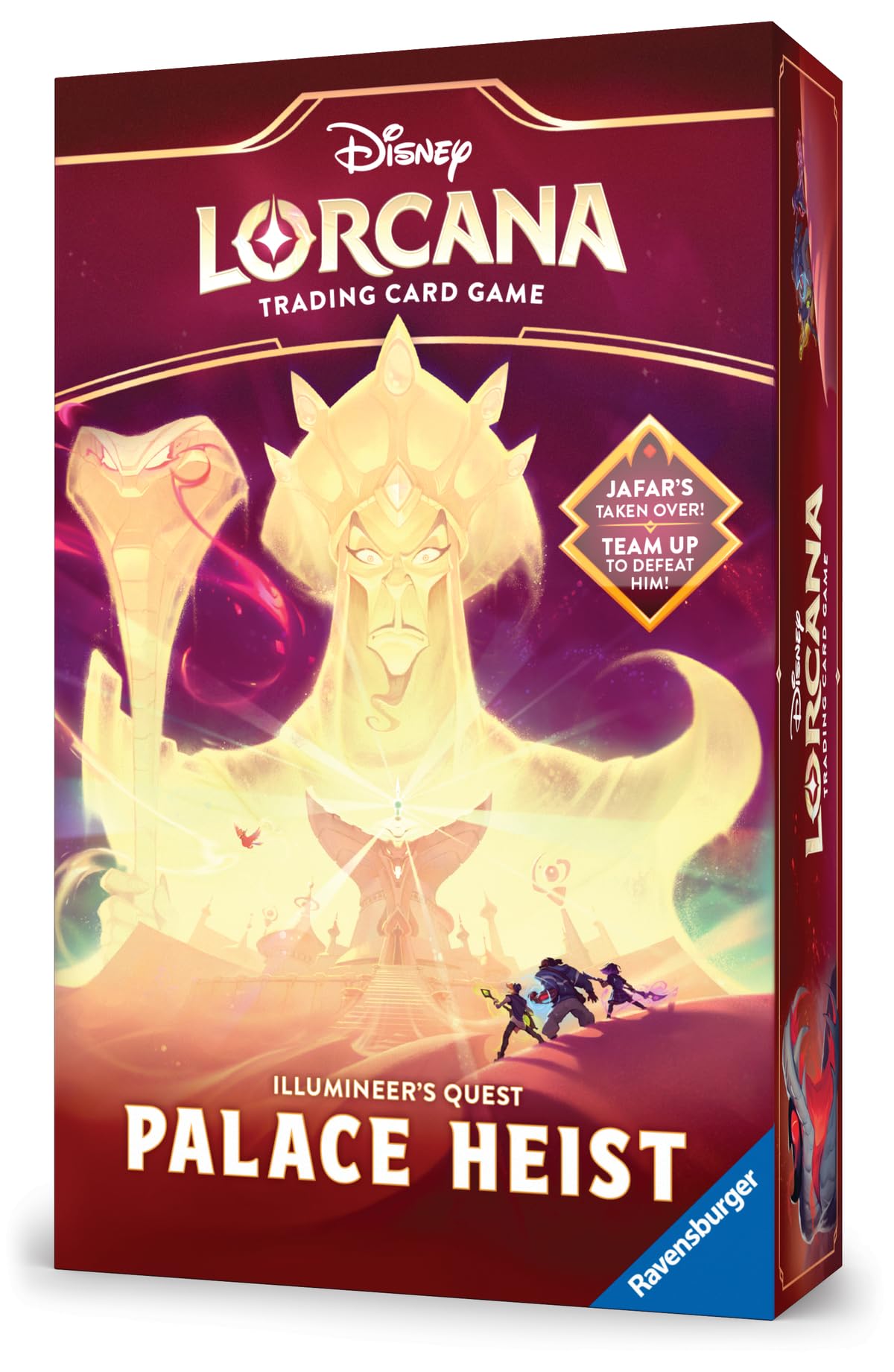
A cooperative boss fight against Jafar that comes ready to play from the start — no collection required.
Palace Heist is the cooperative expansion for the Disney Lorcana trading card game, but it works as a standalone experience. Inside the box you get two 60-card player decks and a 50-card Jafar scenario deck that plays itself as the “automa” boss. The goal is to steal Jafar’s crown before he transforms into the Supreme Sorcerer. The game uses battleground cards to adjust difficulty from easy to expert, making it approachable for first-time Lorcana players while offering a real challenge for veterans. Each round lasts about 15-20 minutes, and the three decks provide plenty of replay as you try different strategies against Jafar’s evolving defenses.
Compared to other cooperative card games here, Palace Heist occupies a unique niche: it is a trading card game product that works as a standalone cooperative board game. The two included starter decks work for standard competitive play too, adding extra value. Owners praise the gameplay and difficulty, but a few note that the included hero decks do not perfectly match the Aladdin theme, and some feel the value is best when bought at its typical street price rather than full MSRP. The component quality is solid, with a rigid playmat and tokens that improve on earlier Lorcana products. If your family enjoys Disney or is curious about TCGs, this is a low-commitment entry point.
Best for Disney families: Palace Heist turns the competitive trading card game into a shared adventure where parents and kids face Jafar together — and the adjustable difficulty ensures no one gets crushed on the first try.
The honest callout: At full suggested retail, some owners feel the value is diminished. It shines at its typical discounted price, where the three decks and playmat feel like a generous package.
Pick it for: A family with older kids who love Disney and are ready to move beyond simple party games into real card-game strategy with a cooperative twist.
pass on it if: You are not interested in the Disney theme or if you are looking for a fully self-contained game with hundreds of unique cards like Aeon’s End offers.
8. Aeon’s End 2e – Cooperative Deck Building Card Game

The deck builder that refuses to let you shuffle.
Aeon’s End throws your team of 1 to 4 players into a battle to defend the underground city of Gravehold. You build your deck by buying spells, relics, and gems, but the twist is that your discard pile stays in order — you never shuffle. This “gravehold” mechanic means you can plan which cards you will draw in which order, adding a layer of strategic foresight most deck builders lack. The 2nd Edition box includes 8 different mages, multiple nemesis bosses, and a huge pool of cards that makes each game feel distinct. Estimated playtime is 60 minutes, and the game is designed for ages 14 and up due to its complexity.
This is the heaviest game on the list alongside Slay The Spire. Compared to the light, fast Bandido or the verbal fun of So Clover!, Aeon’s End demands real strategic thinking and teamwork. The variable turn order system simulates the chaos of battle effectively, and the lack of shuffling forces you to plan your deck’s sequence carefully. Owners praise the high replayability — the 8 mages, many spells, and 4-5 bosses offer significant variety — and the gameplay is consistently rated as engaging. The trade-off is a steep learning curve; the rulebook is dense and the first game can feel overwhelming. A typical session runs about an hour, and setup takes 3-5 minutes after you learn the system.
The strategic strengths
- No-shuffle mechanic adds real depth to deck building and planning
- 8 unique mages and multiple bosses provide hundreds of possible combinations
- Truly cooperative with no quarterbacking — each player manages their own hand
The barriers to entry
- Steep learning curve; the rulebook is confusing for first-time players
- 60-minute playtime plus setup may be too long for casual groups
- Thematic depth is light — the story is secondary to the mechanics
Buy Aeon’s End for: A regular gaming group that enjoys strategic deck building and is willing to invest one or two sessions to learn the rules — the payoff is one of the deepest cooperative card game experiences available.
Pass it by if: You want something you can teach in two minutes and play in 15, or if your group includes younger kids who will struggle with the complexity.
9. Slay The Spire: The Board Game
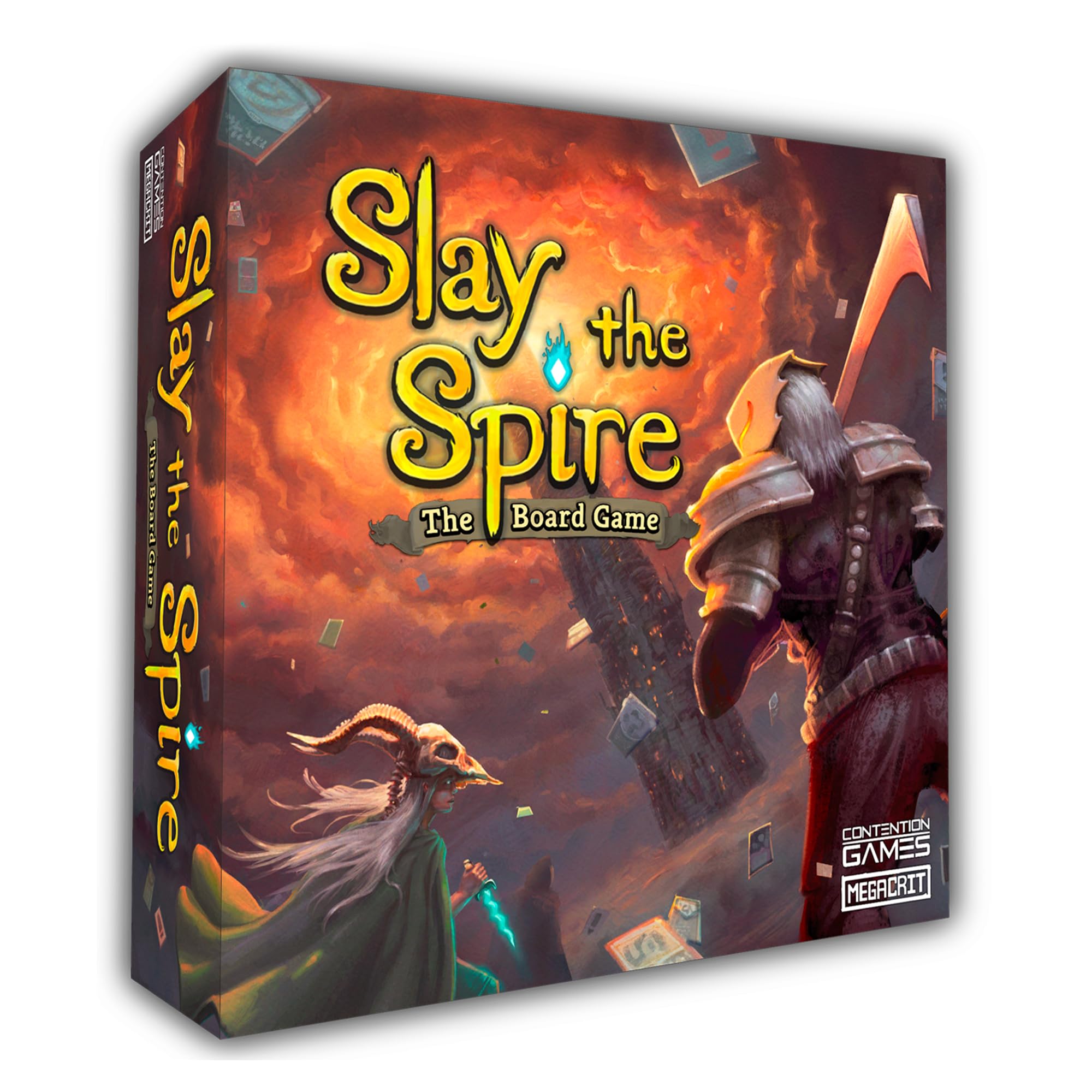
The video game adaptation that captured every deck-building nuance on cardboard — with over 650 cards and a learning time that actually respects your intelligence.
Slay The Spire: The Board Game translates the hit video game into a tabletop cooperative experience with stunning fidelity. You and up to 3 friends each choose a character, build a deck from over 650 cards, and fight through a fantasy spire filled with bizarre creatures and powerful relics. The box includes 4 detailed miniatures, 4 player boards, 2 main boards, and 112 small cards plus 26 large cards. The estimated 45-minute learning time is honest — the game is complex, but the rulebook is clear, and players report that the mechanics click once you run through your first fight. The standard edition is designed for ages 12 and up, and a full session averages 45 minutes once everyone knows the flow.
Slay The Spire sits at the premium end of this list in both price and component quality. Compared to Aeon’s End, the game offers a similar level of strategic deck-building but with the added weight of an established video game fanbase. Owners — especially those who love the original game — are near-unanimous in praising the adaptation’s faithfulness. The cooperative element is strong; you can share relics and strategize together, though each player manages their own deck independently. The biggest practical downsides are the table space required — it needs a generous area — and the slow setup and teardown. The first playthrough can stretch to 5 hours as you learn, but subsequent runs settle into the 45-minute cadence. The box includes labeled bags for saving progress mid-game, a thoughtful touch for epic sessions.
The definitive co-op deck builder: If you want the most content-rich, beautifully produced cooperative card game available and your group is ready for the commitment, Slay The Spire is class-leading in its depth and replay value.
Reality check: The price point and table footprint mean this is not a casual pickup. It is an investment in both money and shelf space. The included card sleeves are a welcome bonus, but relics and blessings come unsleeved, so be prepared to buy additional sleeves if that matters to you.
Reach for this if: Your group loves the video game or has experience with heavy deck builders and wants a cooperative experience that delivers hundreds of hours of varied, strategic gameplay.
Think twice if: Your budget or shelf space is limited, or if your game nights tend to be spontaneous affairs where a quick setup is essential — this one demands planning and a clear table.
Understanding the Specs
Player Count
The number of players a game supports is the single most important spec because a co-op game that feels amazing with 4 players can be awkward or boring with 2 — or vice versa. A game like Sky Team is built for exactly 2 and will not function with more, while That Escalated Quickly scales from 2 to 8 because its discussion-based format works at any size. Always check the listed player range against your typical group size before buying.
Cooperative Mechanics
Not all co-op games distribute teamwork the same way. Some games let all players talk openly and plan together, others enforce silence during action phases (like Sky Team), and a few use real-time pressure where everyone acts simultaneously (like 5-Minute Dungeon). The style of cooperation drastically changes the feel of the game — a group that loves open discussion may find silent games stressful, while players who hate being told what to do by a dominant player may prefer roles-based mechanics that force individual responsibility.
FAQ
What is the difference between a cooperative card game and a regular card game?
Can cooperative card games be played solo?
Which cooperative card game is best for young children?
How do I prevent one player from dominating a cooperative card game?
What does “estimated playing time” include?
Are these games expandable with additional content?
How many cards come with each game?
Which game has the best replay value?
Final Thoughts: The Verdict
Across the board, the cooperative card games winner is the Asmodee So Clover! because it balances accessibility, creativity, and genuine teamwork better than any other entry here — it works for families, parties, and casual gamers alike and has the highest overall rating in this list. If you want a tense, dedicated two-player experience that feels like a real challenge, grab the Sky Team. And for deep, strategic deck-building that will keep your group coming back for dozens of sessions, the Slay The Spire board game is the one to reach for.
How We Picked
We do not accept paid placement. Every pick is matched to a real buyer and a real use-case; we do not hands-on test units.
Sources & Methodology
Specifications: manufacturer listings and product documentation. Review insights: verified customer reviews, as of July 2026. Pricing: not shown on this page (it changes often); check the current price via the retailer link.
As an Amazon Associate, WellFizz earns from qualifying purchases. This does not affect which products we feature.
Related Guides

Mo Maruf
I created WellFizz to bridge the gap between vague wellness advice and actionable solutions. My mission is simple: to decode the research and give you practical tools you can actually use.
Beyond the data, I am a passionate traveler. I believe that stepping away from the screen to explore new environments is essential for mental clarity and physical vitality.