Our readers keep the lights on and my smoothie glass nicely filled. As an Amazon Associate, I earn from qualifying purchases.
Mornings in the coop should involve collecting clean eggs, not scrubbing mud and manure off the shells. The wrong bedding turns nest boxes into a damp, dusty mess, invites pests, and forces you to waste time on cleanup instead of enjoying your flock. Choosing the right material transforms that daily chore into a simple lift-and-replace task.
I’m Mohammad Maruf — the founder and writer behind WellFizz. I’ve spent countless hours analyzing the material composition, absorbency ratings, dust levels, and real-world durability of every major chicken bedding option so you can buy with confidence.
Whether you keep a small backyard flock or manage a larger coop, the right foundation keeps eggs clean, hens comfortable, and your workload light. This guide to the best coop bedding breaks down the top options based on material science and actual keeper experience.
How To Choose The Best Coop Bedding
Coop bedding does more than cushion eggs — it manages moisture, controls odor, and affects your flock’s respiratory health. Selecting the right type depends on your setup, cleaning schedule, and whether you prioritize deep litter composting or quick swap-outs. Below are the critical factors to weigh before buying.
Absorbency & Odor Control
Moisture is the enemy inside a coop. Bedding that fails to absorb liquids quickly creates ammonia buildup, which irritates chicken lungs and leads to respiratory issues. Hemp products absorb roughly twice as much moisture as pine shavings and straw, making them the top choice for deep litter systems. Aspen-based pads also wick moisture away from eggs, keeping shells clean and dry for longer stretches between changes.
Dust Levels & Respiratory Safety
Chickens have highly sensitive respiratory systems — dust from cedar or cheap pine shavings can trigger chronic issues over time. Look for bedding labeled “dust-free” or “low dust,” especially if your coop is enclosed with limited ventilation. Hemp and aspen excelsior pads produce minimal airborne particles compared to chopped straw or traditional wood shavings.
Ease of Cleaning & Nest Box Design
If you have standard 12×12 or 13×13 nest boxes, pre-cut pads with a paper backing simplify cleanup dramatically. You lift the entire pad, shake off droppings, and replace only when eggs break or material degrades. Loose bedding like straw or hemp requires sifting and spot-cleaning, which takes more time but suits larger floor areas and deep litter methods.
Compostability & Environmental Impact
Most natural bedding materials break down in a compost pile, but the speed and nutrient value vary. Hemp and aspen are fully biodegradable and compostable, enriching garden soil after use. Straw takes longer to decompose and may contain weed seeds that germinate in your compost. If sustainability matters to you, choose bedding that’s grown without pesticides and sourced domestically.
Quick Comparison
On smaller screens, swipe sideways to see the full table.
| Model | Category | Best For | Key Spec | Amazon |
|---|---|---|---|---|
| Eaton Pet and Pasture Hemp Bedding | Hemp Flakes | Deep litter odor control | 2x absorbency vs. wood shavings | Amazon |
| Small Pet Select Nesting Pads | Paper-Backed Aspen | Easy nest box cleanup | 13×13 inch pre-cut pads | Amazon |
| Rural365 Nest Box Liners | Paper-Backed Aspen | Budget-friendly nest mats | 13×13 inch, 12-pack | Amazon |
| Standlee Chopped Straw | Chopped Straw | Large volume winter bedding | 23.8 lbs per bag | Amazon |
| Trendiees Nesting Pads | Premium Aspen Excelsior | Professional-grade egg cushion | 2.5-inch thick excelsior pad | Amazon |
In‑Depth Reviews
1. Eaton Pet and Pasture Hemp Bedding

Eaton’s hemp bedding outperforms conventional wood shavings in the most critical metric for coop health: absorbency. Testing shows hemp soaks up roughly twice the moisture of pine, which directly translates to fewer ammonia spikes and longer intervals between full coop cleanouts. The flake form stays soft underfoot, and the low-dust profile is a serious advantage for breeds prone to respiratory irritation.
Real keepers using the deep litter method report no detectable smell after six months, with no pest issues and active composting in the bedding layer. The 28-liter bag covers a standard brooder or a few nesting boxes with room to spare. Chickens enjoy foraging through the fibrous texture, which provides enrichment beyond basic comfort.
The bag size is the main compromise — at 6.26 pounds, it goes quickly in larger coops, and shipping speed varies since it’s not stocked in every local retailer. Still, for anyone prioritizing odor control, respiratory safety, and sustainable sourcing, this hemp bedding delivers on every front.
Why it’s great
- Exceptional absorbency reduces ammonia and odor for months
- Near-zero dust protects chicken respiratory health
- Grown without pesticides, fully compostable
Good to know
- Bag is relatively small for large deep-litter setups
- Shipping may be slower than local feed-store options
2. Small Pet Select Nesting Pads

The Small Pet Select nesting pads solve the classic chicken-keeper frustration of cleaning poop off eggs. Each 13×13 pad combines a soft aspen fiber layer with a paper bottom, so droppings sit on top and you simply shake the pad clean. The fibers stay fluffy and forgiving, cushioning eggs well enough that users report zero cracked shells even with heavy hens.
One 12-pack lasts most small flocks for months because the pads hold up to regular scratching and only need replacement after a broken egg. The aspen material is sustainably sourced and compostable, so spent pads go straight into the garden pile. Backyard keepers with slanted plastic nest boxes find these pads fit securely without sliding around.
The main downside is that the thick fiber layer can stick slightly to the paper backing when first unpacked, but a quick fluff separates them. Compared to loose straw, these pads keep the nest box dramatically cleaner and cut daily chores down to a simple lift-and-shake routine.
Why it’s great
- Paper backing makes cleanup fast — lift, shake, replace
- Thick aspen layer cushions eggs and reduces breakage
- Biodegradable and compostable after use
Good to know
- Fibers may stick to paper backing right out of the pack
- Not designed for deep litter floor coverage
3. Rural365 Nest Box Liners

The Rural365 liners offer a straightforward paper-backed aspen design at a lower per-pad cost than many competitors. Each 13×13 square fits standard nest boxes and holds its shape well, with aspen shavings that absorb moisture without becoming soggy. The paper backing keeps the pad intact so you can lift the entire liner out for quick changes between flock cycles.
Users consistently mention these pads last a long time when eggs stay intact, with some keepers reporting months of use from a single liner. The aspen material is lighter than pine or straw, making the 12-pack easy to store and carry. Broody hens sometimes tear at the edges, but the core structure holds together well enough to maintain a clean nest bowl.
The main caution is that these liners work best in boxes where chickens don’t aggressively scratch them apart — heavy diggers may shred the paper backing faster than premium excelsior pads. For standard laying hens in well-maintained boxes, however, the Rural365 liners deliver reliable performance at a friendly price point.
Why it’s great
- Low-cost per pad for budget-conscious keepers
- Lightweight aspen holds shape and absorbs well
- Paper backing enables fast, clean removal
Good to know
- Broody or digger hens may tear the paper backing
- Less cushioning thickness than premium excelsior pads
4. Standlee Chopped Straw

When you need to fill a large coop floor or outdoor shelter quickly, the Standlee chopped straw delivers the highest volume per dollar of any option here. Each bag weighs 23.8 pounds and comes tightly compressed, expanding into a substantial fluffy layer once opened. The straw is chopped into roughly 4-inch pieces, which makes it easier to manage than long bale straw and reduces waste by letting you discard only soiled sections.
The material is heat-treated to kill weed seeds, a critical detail if you plan to compost the used bedding or use it for erosion control. The straw remains dry and does not retain moisture like hay, making it suitable for winter outdoor cat shelters or drafty coops. Users report it has a faint pleasant smell and arrives clean without excessive dust or dirt.
Quality consistency has been a minor issue recently, with some buyers receiving bags that were less compressed and covered fewer bedding changes than previous orders. Straw also offers lower absorbency than hemp or aspen, so you’ll need thicker layers and more frequent spot-cleaning in damp coops.
Why it’s great
- Highest volume per bag — 23.8 lbs covers large areas
- Heat-treated to prevent weed seed germination
- Chopped 4-inch pieces reduce waste and are easy to handle
Good to know
- Less absorbent than hemp or aspen bedding options
- Recent bags may have inconsistent compression levels
5. Trendiees Chicken Nesting Pads
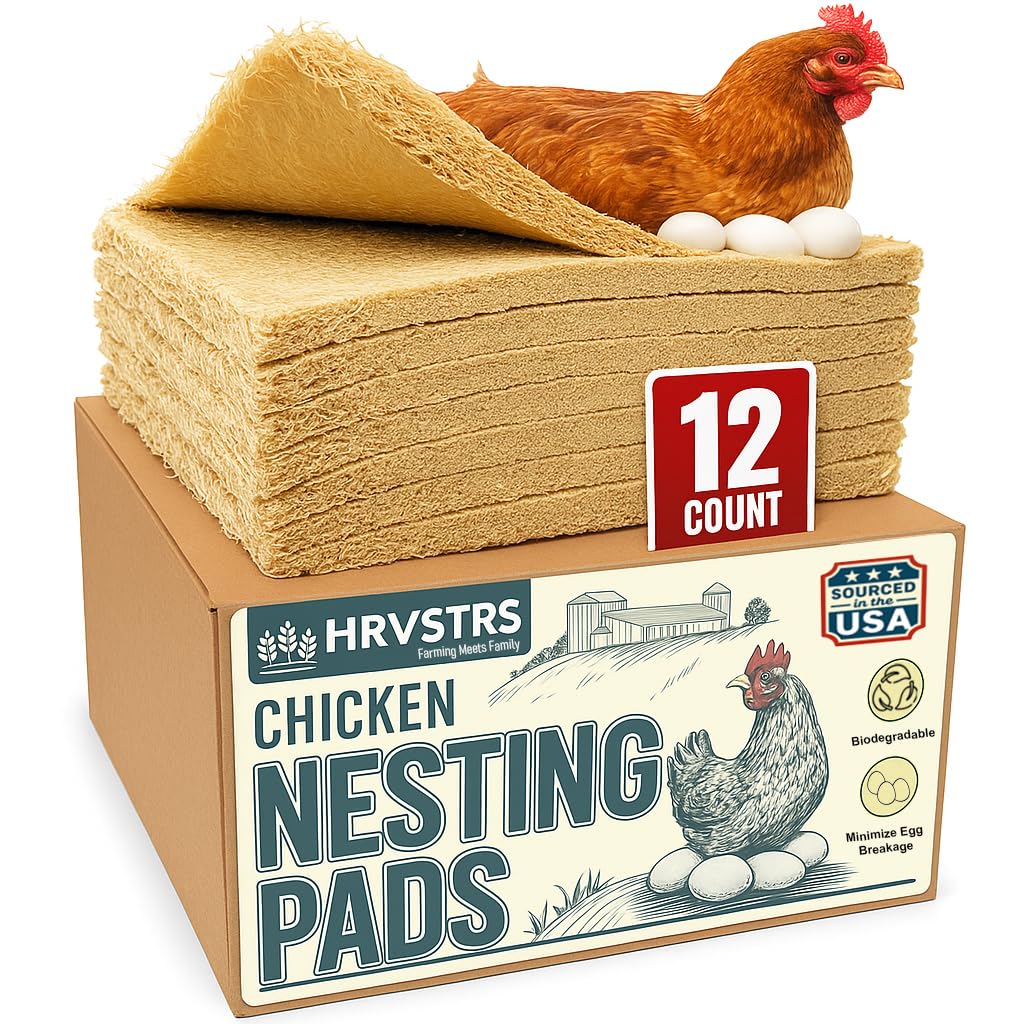
The Trendiees pads represent a step up in construction quality from basic aspen liners. Each 13×13 pad uses excelsior-grade aspen fibers compressed to a 2.5-inch thickness, creating a dense, springy surface that cradles eggs and resists flattening even under heavy hens. The dust-free claim holds up — the aspen is processed to eliminate the fine particles that irritate chicken respiratory tracts.
Moisture-wicking is built into the fiber structure, so droppings dry quickly and fall through rather than smearing onto eggs. The paper backing on each pad keeps the whole unit together, letting you lift out soiled pads in one piece for composting. Backyard keepers with limited coop space find these pads especially practical because they keep eggs visibly clean without scrubbing.
The higher price per pad reflects the thicker material and professional-grade construction. Some users note that the fibers stick to the packing paper on the first pad, but simply placing the paper side down in the nest box solves the issue. For keepers who value maximum egg protection and the fastest possible cleanup, these pads justify their premium positioning.
Why it’s great
- 2.5-inch excelsior thickness cushions eggs from cracks
- 100% dust-free aspen protects flock respiratory health
- Moisture-wicking fibers keep eggs clean and dry
Good to know
- Per-pad cost is higher than basic aspen liners
- Fibers may temporarily stick to packing paper
FAQ
How often should I replace coop bedding in nesting boxes?
Can I compost used aspen or hemp bedding from the coop?
What is the difference between aspen excelsior and aspen shavings?
Final Thoughts: The Verdict
For most keepers, the best coop bedding winner is the Eaton Pet and Pasture Hemp Bedding because its twice-the-absorbency rating and near-zero dust profile make it the healthiest, lowest-maintenance option for deep litter systems. If you want the fastest nest box cleanup with no loose material, grab the Small Pet Select Nesting Pads. And for maximum egg protection and premium construction in a professional-grade pad, nothing beats the Trendiees Chicken Nesting Pads.

Mo Maruf
I created WellFizz to bridge the gap between vague wellness advice and actionable solutions. My mission is simple: to decode the research and give you practical tools you can actually use.
Beyond the data, I am a passionate traveler. I believe that stepping away from the screen to explore new environments is essential for mental clarity and physical vitality.