Our readers keep the lights on and my smoothie glass nicely filled. As an Amazon Associate, I earn from qualifying purchases.
Watching your bike’s temperature needle climb past the midpoint while stuck in traffic or crawling up a rocky trail is a sinking feeling every rider dreads. The wrong coolant won’t just fail to cool—it can corrode water pump seals, leave mineral deposits in narrow passages, and cause a boil-over that strands you miles from home. Choosing a formulation that matches your bike’s metallurgy and your riding conditions is the difference between a reliable machine and a roadside repair.
I’m Mohammad Maruf — the founder and writer behind WellFizz. I’ve spent hundreds of hours researching chemical formulations, analyzing lab-test data, and cross-referencing real-world ride reports to understand exactly what makes a coolant protect an engine under sustained load.
Whether you ride a sportbike, dual-sport, or adventure tourer, finding the right coolant for bikes involves understanding additive packages, base chemistry, and compatibility with your engine’s metals—not just grabbing the cheapest jug on the shelf.
How To Choose The Best Coolant For Bikes
A motorcycle cooling system is smaller and runs hotter than a car’s, so the coolant you pour in must handle higher thermal stress without breaking down. The right choice protects aluminum cases, magnesium covers, copper-core radiators, and rubber seals from corrosion and cavitation damage.
Base Chemistry: Ethylene Glycol vs. Propylene Glycol
Ethylene glycol is the industry standard—it offers excellent heat transfer and high boiling-point elevation when mixed correctly. Propylene glycol is less toxic to pets and wildlife if spilled, but it has slightly lower thermal conductivity. For track days or desert riding, an ethylene-glycol formula with an advanced additive package typically provides better cooling margin, while propylene glycol is preferred for trail riders who frequently dispose of or spill coolant in remote areas.
Additive Technology: OAT, HOAT, and Si-OAT
Organic Acid Technology (OAT) coolants use organic corrosion inhibitors that last longer and protect aluminum better than older silicate-based formulas. Hybrid OAT (HOAT) adds a small amount of silicate for extra ferrous-metal protection. Silicon-Enhanced OAT (Si-OAT), used in some European engines, adds silicon compounds to protect aluminum surfaces at high pH levels. Check your owner’s manual—using the wrong additive type can void the warranty on a water pump or radiator replacement.
Quick Comparison
On smaller screens, swipe sideways to see the full table.
| Model | Category | Best For | Key Spec | Amazon |
|---|---|---|---|---|
| Engine Ice Off-Road | Premix | Track & off-road cooling | Propylene glycol, -26°F freeze point | Amazon |
| Maxima Coolanol 50/50 | Premix | Sportbikes & street riding | Ethylene glycol, biodegradable | Amazon |
| EVANS Powersports | Waterless | Extreme heat & racing | Waterless, 375°F boiling point | Amazon |
| Zerex G40 | Concentrate | Custom mix for severe cold | Si-OAT, 5 yr/150k mi warranty | Amazon |
| PEAK Global Lifetime | Concentrate | Budget-friendly top-offs | OAT, amber color, universal | Amazon |
In‑Depth Reviews
1. Engine Ice Off-Road High-Performance Motorcycle Coolant
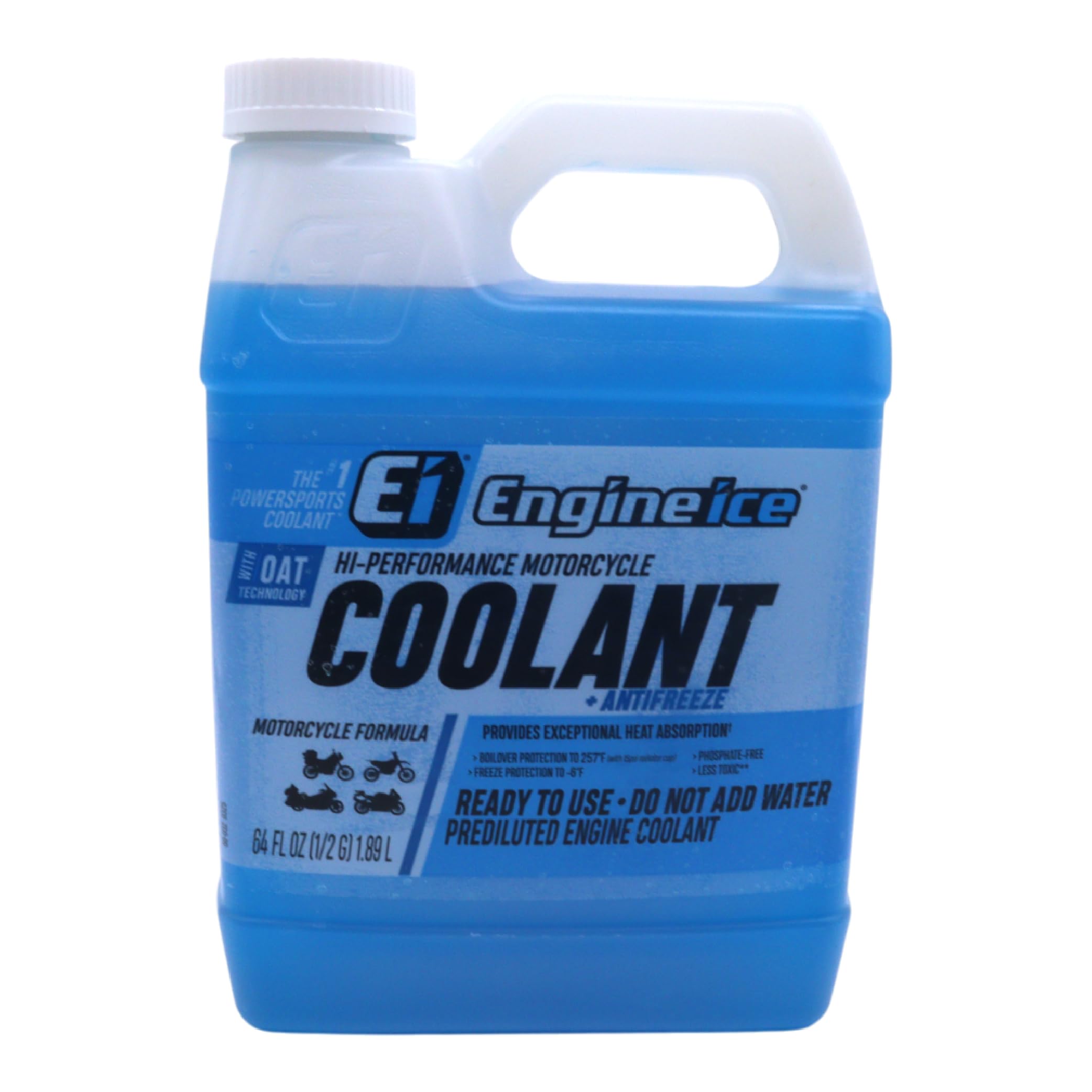
Engine Ice uses a propylene-glycol base that is far less toxic than standard ethylene-glycol coolants, making it a responsible choice for off-road environments where spills happen. Its pre-mixed formula eliminates guesswork—just open the bottle and pour directly into the radiator without adding distilled water. Riders consistently report a measurable drop in operating temperature, with several users on high-compression sportbikes seeing a reduction of 15 to 20 degrees Fahrenheit on the first ride.
The additive package contains no phosphates and is fully biodegradable in its unused form, yet still provides robust protection against cavitation and corrosion in the water pump and cylinder liners. Multiple track-day organizations accept it because it meets their environmental standards, so you won’t get flagged in tech inspection. The blue color makes it easy to spot leaks and check levels in translucent reservoirs.
Because it’s pre-diluted, you sacrifice the ability to fine-tune the freeze-point ratio for extreme winter conditions—it’s optimized for general use down to about -26°F. If you rarely ride below freezing, the convenience and cooling performance make it the most well-rounded option available for both street and dirt.
Why it’s great
- Lowers operating temperatures 15-20°F in many bikes
- Non-toxic and biodegradable for environmentally sensitive riding areas
- Ready-to-use premix saves time and prevents dilution errors
Good to know
- Slightly higher cost per quart than concentrate equivalents
- Fixed freeze point limits use in extreme sub-zero climates
2. Maxima Coolanol 50/50 Blend

Maxima’s Coolanol is pre-mixed with deionized water at the ideal 50/50 ratio, giving you a -34°F freeze point and 265°F boil-over protection straight from the bottle. The ethylene-glycol base uses an advanced corrosion inhibitor package that is free of nitrates, amines, and borates—three common additives that can degrade rubber seals and gaskets over time. For sportbike riders who push their engines hard on canyon roads, the thermal stability of this blend prevents hot-spot boiling in the cylinder head area.
The formulation is 100 percent biodegradable in its unused state, and it safely mixes with most OEM glycol-based coolants if you need a top-off. Users on GSX-Rs, YZF-Rs, and CBRs have reported consistent cooling performance even in stop-and-go traffic during summer months. The bright green color provides good visibility in the sight glass, making quick level checks straightforward during pre-ride inspections.
Because it’s a 50/50 premix, you cannot adjust the ratio for extreme cold-weather riding where a higher glycol concentration would be needed. Riders in northern climates who face sustained temperatures below -30°F may need to supplement with a concentrate instead. For the vast majority of street riders, though, the balance of convenience and cooling capacity is ideal.
Why it’s great
- Deionized water base prevents mineral deposits in the cooling system
- Nitrate, amine, and borate-free formula protects seals and gaskets
- Strong boil-over protection at 265°F for hard riding
Good to know
- Fixed 50/50 ratio cannot be altered for extreme cold
- Ethylene glycol is toxic to pets if spilled
3. EVANS Powersports Waterless Engine Coolant

EVANS takes an entirely different approach—its waterless formula contains zero water, which eliminates the root cause of corrosion, electrolysis, and cavitation erosion in the water pump and cylinder liner. With a boiling point of 375°F, it cannot boil over in the traditional sense, so you can run a lower-pressure radiator cap or even a cap-less system without losing coolant. Desert racers and extreme-enduro riders have trusted this fluid for years because it removes the fear of vapor lock on long, slow climbs.
The installation process is more involved than a standard coolant swap: you must completely remove all old water-based coolant and flush the system with EVANS Prep Fluid before filling. Any residual water dilutes the waterless properties and can cause performance issues. Once installed, however, riders report that the cooling fan cycles less frequently and the engine maintains a more stable temperature under sustained load.
The upfront cost per half-gallon is higher than traditional coolants, and a full fill on a large-displacement bike may require two bottles. Additionally, because the fluid never needs replacement under normal use, the long-term cost can actually be lower if you keep the bike for several seasons. It is not compatible with water-based coolants, so mixing or topping off with anything else will ruin the protection.
Why it’s great
- 375°F boiling point completely eliminates boil-overs
- No water means no corrosion or electrolysis in the cooling system
- Reduces fan cycling and stabilizes engine temps in extreme heat
Good to know
- Requires a thorough flush and special prep fluid for installation
- Higher per-bottle cost compared to standard ethylene glycol options
4. Zerex G40 Phosphate and Nitrite Free Concentrate
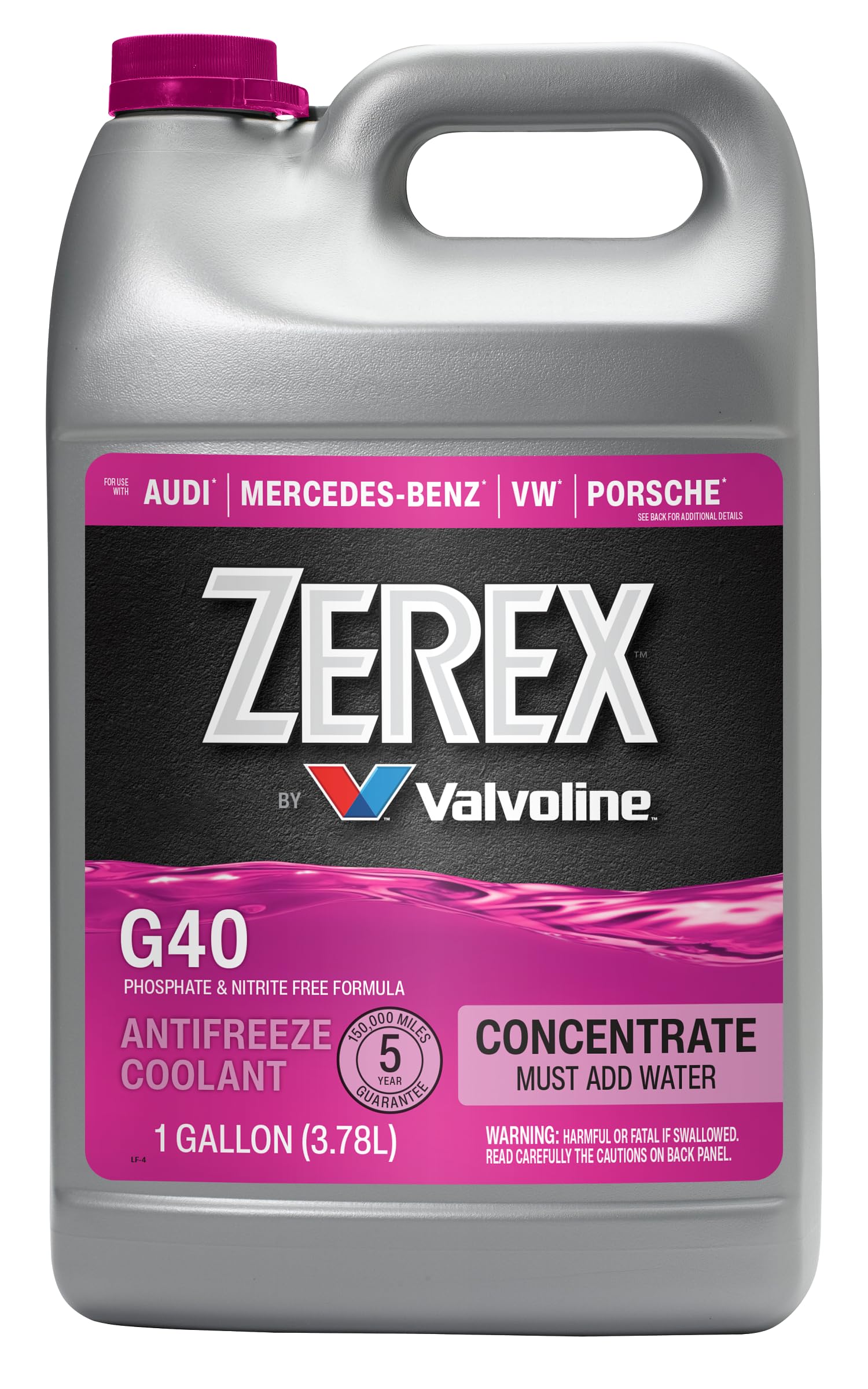
Zerex G40 uses silicon-enhanced organic acid technology (Si-OAT) that provides outstanding protection for aluminum components, which make up the majority of modern motorcycle engines and radiators. This concentrate must be mixed with demineralized water before use, giving you full control over the ratio—use 50/50 for a -34°F freeze point, or go to 60/40 for -62°F protection if you ride in extreme northern winters. The additive package is free of phosphates and nitrites, both of which can cause scaling on water pump seals over time.
The batch-tested formulation carries a 5-year or 150,000-mile guarantee against engine failure caused by freeze-ups or boil-overs, which speaks to its reliability in severe conditions. Users on adventure bikes and touring rigs have noted that the violet color is unmistakable in the radiator neck, making identification easy during maintenance. It outperforms many OEM-specific coolants in ASTM corrosion testing while costing significantly less than dealer-branded fluids.
Because it is a concentrate, you must invest the time to measure and mix with distilled water—using tap water can introduce minerals that reduce the coolant’s lifespan. Also, the Si-OAT chemistry is optimized for Asian and European engines, so riders of older American-made bikes should verify compatibility with their specific gasket materials. For riders who want to customize their freeze-point ratio, this is the most cost-effective way to get premium protection.
Why it’s great
- Si-OAT technology offers superior aluminum corrosion protection
- Adjustable mix ratios for extreme cold climates
- 5-year/150,000-mile warranty backs its reliability
Good to know
- Requires measuring and mixing with distilled water
- Violet color may not be as visible in dark reservoirs as green or blue
5. PEAK Global Lifetime Concentrate Antifreeze and Coolant

PEAK Global Lifetime uses an Organic Acid Technology formula that is compatible with all American, Asian, and European vehicles, making it a universal option for multi-bike households. The amber color does not impact the existing coolant color when you top off, so you can safely add it to whatever is already in the radiator without causing discoloration or chemical incompatibility with other OAT coolants. As a concentrate, one gallon of fluid yields two gallons of ready-to-use coolant when mixed with distilled water, providing excellent volume per unit cost.
The additive package includes denatonium benzoate as a bittering agent to discourage accidental ingestion, and the ethylene-glycol base is formulated with non-abrasive inhibitors that protect all cooling system metals equally. Users on older dual-sport bikes and budget-friendly commuters have reported leak-free performance and no signs of corrosion after multiple seasons of use. The lifetime performance claim applies when the coolant is maintained with proper periodic testing and replacement intervals.
This is not a bike-specific formulation—it lacks the fine-tuned additive balance that high-performance motorcycles require for extreme thermal cycling. Riders pushing a sportbike at a track day may find the cooling margin slightly narrower than with a dedicated powersports coolant. For casual riders, commuters, or older air-cooled conversions, however, it delivers dependable protection at a price that makes frequent changes economical.
Why it’s great
- One gallon of concentrate makes two gallons of usable coolant
- Universal compatibility with any OAT system across all vehicle origins
- Amber color won’t alter the existing coolant appearance
Good to know
- Not optimized for the thermal demands of high-performance motorcycles
- Lacks the specialized corrosion inhibitors of powersports-specific formulas
FAQ
Can I use car coolant in my motorcycle?
How often should I change the coolant in my bike?
What does the 50/50 ratio mean on a coolant bottle?
Is propylene glycol better than ethylene glycol for my bike?
Final Thoughts: The Verdict
For most riders, the coolant for bikes winner is the Engine Ice Off-Road because it balances cooling performance, environmental safety, and ready-to-use convenience better than any other option. If you want a waterless system that eliminates boil-overs in extreme conditions, grab the EVANS Powersports. And for a budget-friendly concentrate that lets you customize your freeze-point ratio, nothing beats the Zerex G40.

Mo Maruf
I created WellFizz to bridge the gap between vague wellness advice and actionable solutions. My mission is simple: to decode the research and give you practical tools you can actually use.
Beyond the data, I am a passionate traveler. I believe that stepping away from the screen to explore new environments is essential for mental clarity and physical vitality.