Our readers keep the lights on and my smoothie glass nicely filled. As an Amazon Associate, I earn from qualifying purchases.
Specs are compiled from manufacturer listings and verified buyer reviews and can change over time — please confirm the key details on the product page before buying.
Nothing ruins a pan of fish faster than oil that burns before the crust sets or that leaves a heavy, greasy taste on the fillet. The key to crispy, clean-tasting fried fish is matching the oil’s smoke point and flavor profile to your actual heat and cook time — most kitchens stock the wrong kind. This guide breaks down which oils hold steady under high heat, stay neutral enough not to compete with your seasoning, and deliver consistent results for shallow-frying cod or deep-frying catfish.
I’m Mohammad Maruf — the founder and writer behind WellFizz. This guide is built by comparing the manufacturers’ published specifications and the patterns across verified customer reviews, so you get each pick’s real strengths and trade-offs instead of marketing spin.
After matching specs and real-world feedback from dozens of user reports, these six oils earn their spot as the best on the shelf right now. if you need a massive jug for weekly fish fries or a premium bottle for delicate pan-seared fillets, this roundup of the best cooking oil for frying fish gives you a clear, no-fluff starting point.
Quick Picks
- La Tourangelle, Sear & Sizzle Avocado Oil — Best Overall
- Salute Santé! Cold Pressed Grapeseed Oil — Top Performer
- Amazon Grocery Vegetable Oil — Budget Champion
- Bertolli Cooking Olive Oil — Premium Pick
- Pure Wesson Vegetable Oil — Family-Size Choice
- Baja Precious Rice Bran Oil — Most Versatile
How To Choose The Best Cooking Oil For Frying Fish
Picking the right oil for frying fish depends on three things: smoke point, flavor neutrality, and the volume you need to buy and store. Here is what each factor means for your next batch.
Smoke Point and Heat Tolerance
The smoke point — the temperature at which the oil visibly starts to smoke and break down — is critical. For frying fish, you typically heat oil between 350°F and 375°F. An oil with a smoke point well above this range — say 400°F or higher — gives you a safety margin so the oil stays stable, the crust crisps up before the fish dries out, and no burnt flavor seeps into the food. Oils with a smoke point below 375°F will degrade fast in a hot pan.
Flavor and Neutrality
Fish has a subtle, delicate flavor that can be easily masked by a strongly flavored oil like extra virgin olive oil or toasted sesame oil. A neutral oil — where you barely taste the oil itself — lets your seasoning and the fish’s natural taste come through. For most fish frying, you want an oil that is described as “light”, “mild”, or “clean” so it acts as a cooking medium, not a flavor ingredient.
Volume, Reusability, and Value
If you fry fish weekly for a family, a gallon-sized jug makes much more sense than a 17-ounce bottle. Some oils, like rice bran oil, can be strained and reused multiple times, which changes how much each frying session actually costs. Check the bottle size and whether buyers report reusing the oil before you choose.
Quick Comparison
| Model | Best For | Size | Weight | Style | Amazon |
|---|---|---|---|---|---|
| La Tourangelle Avocado Oil | High-heat searing and pan-frying | 25.4 fl oz | 1.76 Pounds | Refined Avocado | Amazon |
| Salute Santé! Grapeseed Oil | Neutral flavor for delicate fillets | 17 fl oz | 1.34 Pounds | Cold Pressed Grapeseed | Amazon |
| Amazon Grocery Vegetable Oil | Budget bulk for big batches | 256 fl oz | 15.4 Pounds | Vegetable | Amazon |
| Bertolli Cooking Olive Oil | Grilling and high-temp roasting | 32 fl oz | 2.01 Pounds | Olive | Amazon |
| Pure Wesson Vegetable Oil | Large-volume all-purpose frying | 160 fl oz | 9.94 Pounds | Vegetable | Amazon |
| Baja Precious Rice Bran Oil | Reusable oil for frequent fryers | 128 fl oz | 8 Pounds | Rice Bran | Amazon |
In‑Depth Reviews
1. La Tourangelle, Sear & Sizzle Avocado Oil
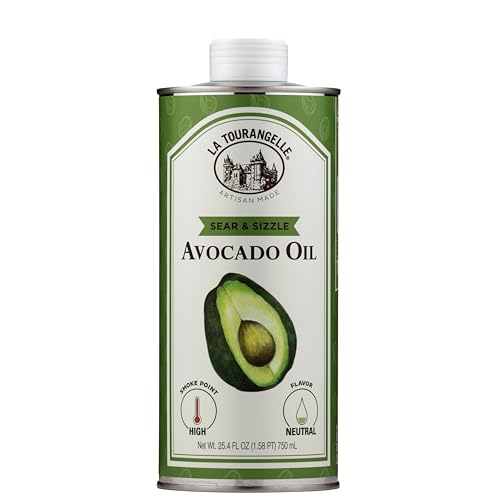
The avocado oil that shrugs off screaming-hot pans without a wisp of smoke.
You can preheat your pan to a full sear and drop in a battered fillet — this oil stays stable and gives you a shatteringly crisp crust. That is because its smoke point (the temperature it starts to burn) is 575°F, well above the 400°F where most vegetable oils degrade. Owners mention it is “fantastic to use” for high heat and applaud its neutral flavor. One reviewer noted it works for both stir-fry and even cakes without leaving an oily taste, so your fish seasoning stays front and center.
It comes in a 25.4 fl oz light-blocking tin that protects the oil from going rancid, though a few users mention the pour spout tends to drip. The refined processing keeps the flavor clean. The 1.76-pound bottle is lighter and more manageable than the 15.4-pound vegetable oil jugs, though it will run out faster if you deep-fry large batches weekly. This oil outperforms the Amazon Grocery Vegetable Oil for pan-frying and searing fish where you need intense, brief heat.
Heat champion: The 575°F smoke point gives you total confidence that this oil will not smoke or burn, even during aggressive pan-searing — something most vegetable oils cannot match.
Pouring quirk: Several buyers flag the tin’s pour spout for dripping down the side after use, which is a minor annoyance during cleanup.
Reach for this if: You pan-sear or shallow-fry fish on high heat and want an oil that simply will not smoke. — that confidence is worth the mid-range price tag.
Look elsewhere if: You deep-fry huge batches regularly and need a bulk-sized jug — this 25.4 oz bottle goes faster than a gallon.
2. Salute Santé! Cold Pressed Grapeseed Oil

A clean, light oil that lets the fish taste like the fish — not like the fryer.
Your seasoning drives the flavor here, not the oil. This grapeseed oil is cold pressed (meaning no chemical solvents were used in extraction) and filtered for a clear, neutral finish. Customers note it “works just like canola or vegetable oil” but is better for you, and one reviewer even uses it for homemade mayonnaise, proving how clean the flavor profile is. The high smoke point handles frying, searing, and roasting without breaking down or leaving a heavy residue on your fillets.
At 17 fl oz, the 1.34-pound bottle is substantially smaller than the 256 fl oz Amazon Grocery jug — it holds about 15 times less oil. That makes it a perfect choice if you fry fish for one or two people and do not want a bulky gallon under your sink. It naturally contains vitamin E and antioxidants from grapes, and the cold-pressed process retains those compounds better than heavily refined oils. For a mid-week pan-fried trout or a quick shallow-fry of tilapia, the neutral flavor and steady heat make it a reliable kitchen staple.
What shines
- Clean, neutral taste — your seasoning drives the flavor
- Cold pressed with retained vitamin E and antioxidants
- High smoke point handles frying without residue
Where it falls short
- 17 fl oz is small for frequent large-batch frying
- At 1.34 lbs, the per-ounce cost is higher than bulk options
Ideal for small-batch cooks: Best if you fry fish for 1-2 people and want a neutral, unrefined oil.
Not ideal for big gatherings: The small bottle runs out fast when feeding a crowd or deep-frying whole fish.
3. Amazon Grocery Vegetable Oil
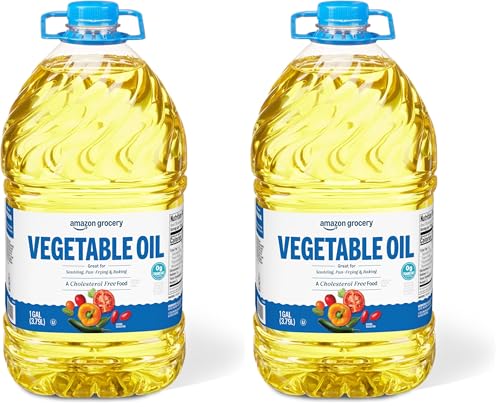
The no-fuss gallon jug that keeps the fish fry running all afternoon without a refill.
Two 128 fl oz bottles give you a total of 256 fl oz — more than 15 times the volume of the Salute Santé! grapeseed oil. At 15.4 pounds, it is a heavy box, but each pour yields enough oil for deep-frying multiple batches of fish without stopping to top up the pot. Reviewers point out it has a “high smoke point” and “tastes like standard vegetable oil”, and one reviewer specifically says it works well for frying and baking. It contains 0g trans fat per serving and is cholesterol-free, which makes it a straightforward choice for everyday cooking. The flavor is neutral enough — one buyer called it “light, tasty and clear in color” — so your batter and seasoning do the work.
The trade-off is that vegetable oil has a lower smoke point than avocado or rice bran oil, so you need to monitor your frying temperature more carefully to avoid the oil breaking down over long sessions. This is a pure commodity oil, not an artisan product.
Unbeatable value for volume: At 256 fl oz, this is the most frying per dollar on the list — ideal for anyone who cooks for a crowd or runs a weekly fish fry.
Moderate smoke point: Vegetable oil handles standard frying temps but will smoke sooner than avocado or rice bran oil, so keep your burner in check.
Best for: High-volume fryers who need a massive, affordable supply and do not fuss over premium oil attributes.
Skip if: You want a high-smoke-point oil for searing or an unrefined, nutrient-rich option.
4. Bertolli Cooking Olive Oil

An olive oil that actually holds up to frying without turning bitter.
Regular extra virgin olive oil smokes around 320°F, which makes it useless for frying. This Bertolli bottle is formulated differently — it is a refined olive oil with a 392°F smoke point. One buyer shared that “it handles high temperature cooking like a champ” and is perfect for grilling, roasting, and deep frying. The mild flavor, as another reviewer put it, “keeps my dishes from tasting like oil and still blends with everything”, so your fish batter’s seasoning stays intact.
The 32 fl oz bottle weighs 2.01 pounds, making it a middle-ground size — bigger than the grapeseed oil but far smaller than the gallon jugs. Bertolli’s olive oil legacy stretches over 160 years, and this bottle is Non-GMO Certified. A few buyers noted they wish the smoke point were a bit higher and that the cap could pour more cleanly, but most agree it is a solid everyday cooking oil for high heat. Because the smoke point is 392°F, this oil works well for shallow-frying fillets on the stovetop but you need to stay attentive during long deep-fry sessions where the oil might push past that limit. Pick this over the La Tourangelle Avocado if you want a mild olive taste for pan-frying rather than extreme heat tolerance.
Why it works
- Mild olive flavor that does not overpower fish
- 392°F smoke point is high enough for most stovetop frying
- Non-GMO Certified from a trusted olive oil brand
Where it’s limited
- Smoke point is lower than avocado or rice bran oil
- Some buyers want a more intense olive flavor for other uses
Grab this for: Pan-frying or oven-roasting fish where you want a mild olive oil that won’t burn at standard cooking temps.
Not the best for: Deep-frying large batches at sustained high heat — you risk hitting the smoke point.
5. Pure Wesson Vegetable Oil

A trusty, all-purpose 1.25-gallon bottle that disappears into the background while the fish shines.
Wesson is a decades-old kitchen staple, and this 160 fl oz bottle (1.25 gallons) holds enough oil for multiple deep-fry sessions without a restock. It is 100% natural, contains zero grams of trans fat per serving, and has no preservatives added. One buyer who orders it repeatedly said, “I love to cook with Wesson oil, everything always turn out great,” highlighting its consistency for everyday frying and baking.
At 9.94 pounds, this jug is hefty but noticeably lighter than the 15.4-pound Amazon Grocery double-pack, and it offers a similar all-purpose vegetable oil profile. The oil is naturally cholesterol-free, and shoppers say it stays sealed and fresh for a few months of regular use. Like most vegetable oils, its smoke point is adequate for standard frying (around 400-450°F) but it will not tolerate the extreme heat of a screaming-hot cast iron pan the way the La Tourangelle avocado oil does. This is a pure commodity oil — no artisan claims, no special extraction process — which is exactly what many home cooks want.
Solid bulk workhorse: 1.25 gallons gives you deep-frying freedom for weeks, and the no-preservative formula keeps things simple.
Standard smoke tolerance: Works fine for medium-high frying but will smoke faster than premium high-heat oils if you push the burner too high.
Ideal for: Regular home frying where you want a large, affordable supply of a familiar, reliable oil. It is the budget-friendly workhorse for a family that fries fish weekly.
Not for: High-heat searing or cooks who want a nutrient-dense or unrefined oil.
6. Baja Precious Rice Bran Oil
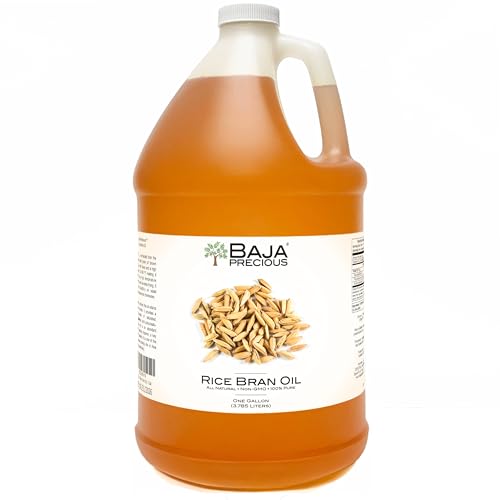
The oil that keeps frying — batch after batch — without losing its cool.
Rice bran oil is a secret weapon among frequent fryers, and Baja Precious delivers a gallon jug (128 fl oz) with a heavy-duty cap and safety foil seal. That reusability means the 8-pound jug goes further than a standard vegetable oil jug of similar size — you can filter and reuse the oil for multiple fish fry sessions before it degrades.
It is 100% pure, all-natural, and non-GMO, with an oryzanol (a naturally occurring antioxidant found in rice bran) content of 8000 PPM. The smoke point is high enough for steady deep-frying without burnt notes transferring to your fillets. If you deep-fry fish often enough to reuse oil, the value equation flips in your favor compared to the Pure Wesson Vegetable Oil. The one catch is that rice bran oil is less commonly stocked than vegetable or canola oil, so you are ordering a specialty product rather than a supermarket commodity.
what separates it
- Can be strained and reused 10+ times, saving money per batch
- High smoke point with a very neutral, clean flavor
- All-natural, non-GMO with 8000 PPM oryzanol antioxidants
What to know
- Less mainstream than vegetable oil — may be harder to find locally
- Gallon jug is heavy (8 lbs) for pouring; store near your fry station
Perfect for frequent fryers: If you deep-fish fish weekly and want an oil you can reuse, this pays off fast. This is the smartest long-term buy in the list for heavy users.
Not the first choice for: One-off pan-searing — a smaller bottle of avocado oil is easier to handle.
Understanding the Specs
Smoke Point
The smoke point is the temperature at which an oil starts to break down, smoke, and release potentially bitter or burnt flavors into your food. For frying fish, you generally heat oil to between 350°F and 375°F. An oil with a smoke point well above that range — 400°F or higher — gives you a safety buffer so the oil stays stable, your batter crisps up fast, and the fish cooks through without absorbing any acrid taste. Oils with a lower smoke point, like unrefined olive oil, will degrade quickly in a hot pan and may ruin your fillets.
Flavor Neutrality
Flavor neutrality describes how much the oil’s own taste impacts the final dish. Fish has a relatively mild, delicate flavor that can be easily overwhelmed by a strong oil like extra virgin olive oil or toasted sesame oil. A neutral oil — one that is described as “light,” “clean,” or “mild” — simply acts as a heat-transfer medium and does not compete with your seasoning. For most fried fish recipes, a neutral oil is the safe, reliable choice because it lets your batter, spices, and the fish itself be the star of the plate.
FAQ
What smoke point do I need for frying fish?
Can I reuse frying oil for fish?
Is olive oil good for frying fish?
What is the healthiest oil for frying fish?
How much oil do I need to deep fry fish?
Does the flavor of the oil affect the fish?
What is the difference between refined and unrefined oil?
Which size bottle should I buy for occasional fish frying?
How should I store cooking oil after opening?
What oil makes the crispiest fried fish?
Final Thoughts: The Verdict
For the majority of shoppers, the best cooking oil for frying fish winner is the La Tourangelle Avocado Oil because its 575°F smoke point gives you total freedom to sear, pan-fry, or shallow-fry without ever worrying about burnt oil. If you want a neutral, cold-pressed oil for smaller batches, grab the Salute Santé! Grapeseed Oil. And for deep-frying enthusiasts who want reusability and bulk value, the standout is the Baja Precious Rice Bran Oil.
How We Picked
We do not accept paid placement. Every pick is matched to a real buyer and a real use-case; we do not hands-on test units.
Sources & Methodology
Specifications: manufacturer listings and product documentation. Review insights: verified customer reviews, as of July 2026. Pricing: not shown on this page (it changes often); check the current price via the retailer link.
As an Amazon Associate, WellFizz earns from qualifying purchases. This does not affect which products we feature.

Mo Maruf
I created WellFizz to bridge the gap between vague wellness advice and actionable solutions. My mission is simple: to decode the research and give you practical tools you can actually use.
Beyond the data, I am a passionate traveler. I believe that stepping away from the screen to explore new environments is essential for mental clarity and physical vitality.